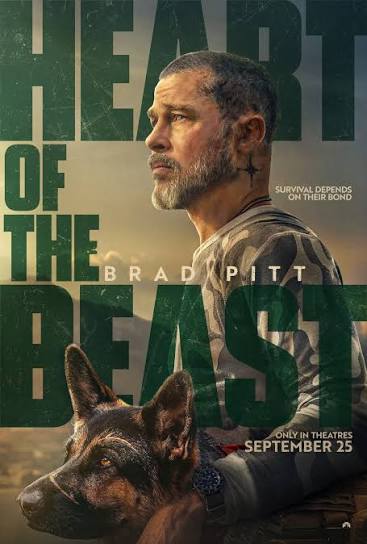
SUPERGIRL (2026) superhero movie review

Sometimes the greatest superpower a movie can possess is embracing its genre.

Supergirl delivers the kind of summer movie you remember from when you were a kid. For years, superhero films have become increasingly preoccupied with expanding cinematic universes, subverting audience expectations, or convincing viewers they are watching something more sophisticated than a comic-book movie. Supergirl takes a refreshingly different approach. It embraces the genre without apology, tells a straightforward story populated by engaging characters, and remembers that summer blockbusters are supposed to be fun.

About: When an unexpected and ruthless adversary strikes too close to home, Supergirl (Milly Alcock) reluctantly joins forces with an unlikely companion (Eve Ridley) for an interstellar journey of vengeance and justice.

An encouraging trend has begun to emerge this summer. Rather than chasing prestige or attempting to deconstruct their own genres, films like Mortal Kombat II, Masters of the Universe, and Supergirl have embraced the fundamentals of classical storytelling. Their plots are straightforward, their characters are engaging, and their primary objective is to entertain. In a season that has also produced films weighed down by self-seriousness and underdeveloped ideas, these adventures stand as reminders that fun and craftsmanship are not opposing virtues—they are often companions.

Despite a handful of technical shortcomings—including editing that occasionally lacks refinement and several action sequences hampered by murky lighting—Supergirl captures the spirit of the summer movies many of us grew up with. It moves confidently from one adventure to the next, balancing action, humor, and heart with an efficiency that keeps its brisk runtime moving at a steady pace.

Its greatest strength lies in its characters.

Kara Zor-El is more than simply another superhero navigating impossible circumstances. Her emotional journey is mirrored by that of Ruthye, whose determination and resilience immediately reminded me of Arya Stark from Game of Thrones. Together, the two characters offer contrasting responses to grief and trauma.

Kara represents what can happen when loss is internalized—when sorrow quietly shapes one’s identity and worldview. Ruthye, by contrast, refuses to allow tragedy to dictate her future. Rather than denying her pain, she demonstrates that healing begins when we decide to master our trauma rather than allowing it to master us.

The relationship between these two characters provides the emotional foundation for the entire film. Then, there is Lobo.

Played with infectious enthusiasm by Jason Momoa, Lobo provides much of the movie’s comic relief while simultaneously embodying a completely different response to suffering. If Kara internalizes trauma and Ruthye overcomes it, Lobo simply laughs in its face. His chaotic, nihilistic worldview makes him feel like an intergalactic descendant of Meat Loaf’s Eddie from The Rocky Horror Picture Show—equal parts absurd, dangerous, and strangely lovable. Momoa clearly understands exactly what kind of movie he’s in, and his performance is all the better for it.

Visually, Supergirl offers one of the most imaginative alien landscapes seen in a mainstream science-fiction film in years. Not since Star Trek: The Next Generation—or perhaps the original Star Wars trilogy—have I seen such a delightful assortment of extraterrestrial species occupying the same cinematic space. The production wisely relies on a combination of practical costumes, prosthetic makeup, and computer-generated creatures. Ironically, the practical work often proves more convincing than the fully digital creations, lending the universe a tangible charm that many contemporary blockbusters lack.

Perhaps the film’s most surprising accomplishment, however, is its confidence in traditional storytelling.

Rather than endlessly chasing twists or deconstructing the superhero formula, Supergirl embraces classical screenwriting structure. Every major dramatic beat—from the inciting incident and catalyst through the midpoint, crisis, climax, and resolution—arrives naturally and purposefully. The result is a narrative that feels coherent, satisfying, and remarkably well-paced. In an era where many blockbuster films mistake unpredictability for sophistication, there is something refreshing about a movie that understands the enduring value of solid dramatic construction.

No, Supergirl is not reinventing the superhero movie, nor should it have done so.

Instead, it reminds audiences why they fell in love with comic-book adventures in the first place. It delivers colorful worlds, memorable characters, genuine humor, emotional sincerity, and enough spectacle to satisfy without ever losing sight of the people at the center of the story. Sadly, that combination is becoming increasingly rare these days.

Supergirl may not aspire to redefine the genre, but it succeeds at something arguably more difficult: reminding us just how enjoyable a well-told superhero story can be.

Ryan is the morning host on WLRH Public Radio in Huntsville, AL and host of the show  ReelTalk  “where you can enjoy the cinematic conversations frame by frame each week.” Additionally, he is the author of the upcoming film studies book titled Monsters, Madness, and Mayhem: Why People Love Horror. After teaching film studies for over eight years at the University of Tampa, he transitioned from the classroom to public media. He is a member of the Critics Association of Central Florida and Indie Film Critics of America. If you like this article, check out the others and FOLLOW this blog! Follow him on Twitter: RLTerry1 and LetterBoxd: RLTerry
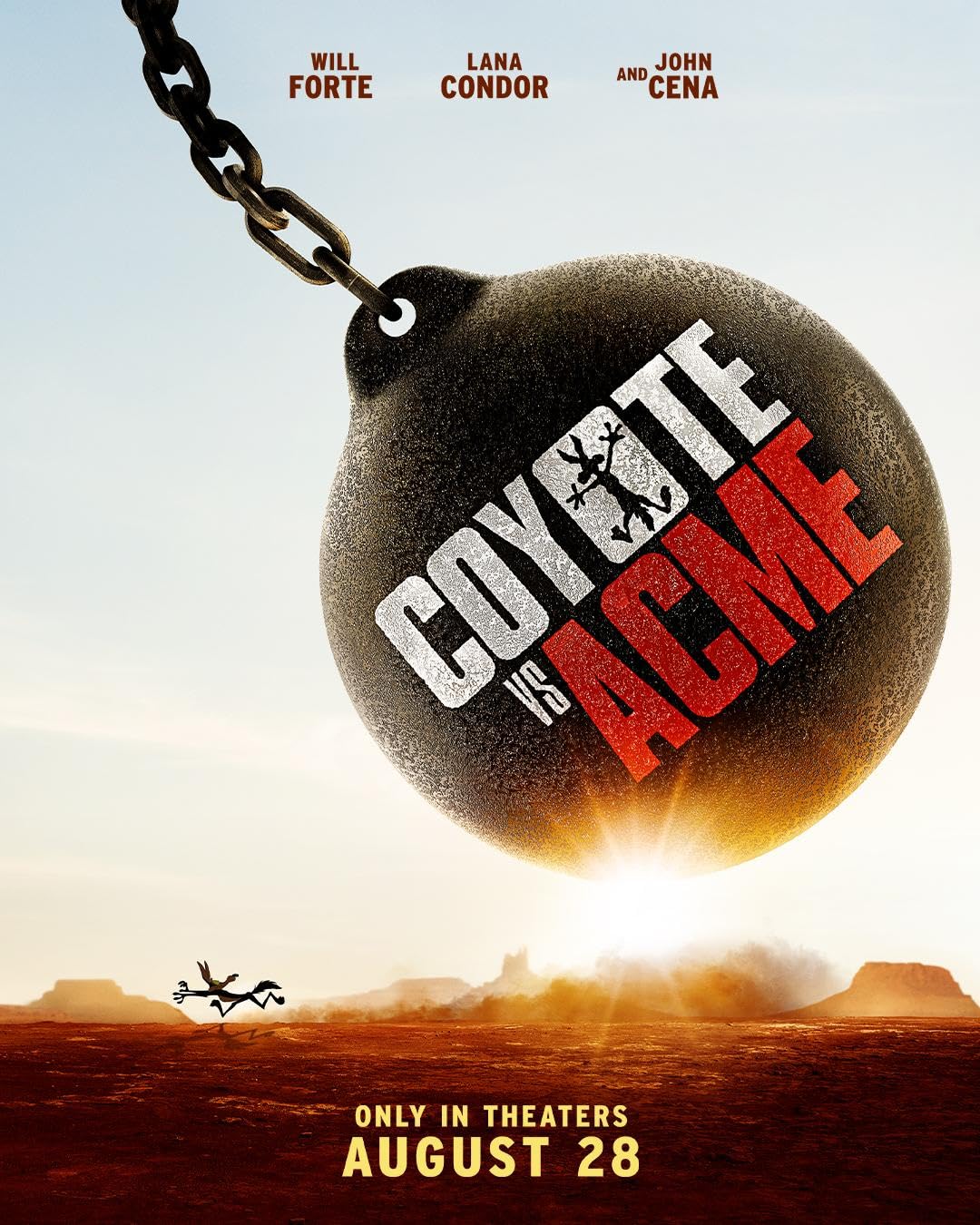
PRESSURE (2026) film review

Some of history’s most consequential battles are won before the first shot is fired.

Few people associate D-Day with weather forecasting. Fewer still know the name James Stagg. Yet without his forecast, one of the most important military operations in history may have unfolded very differently.

Based on the stage play by David Haig, who also adapts his own work for the screen, Pressure transforms a little-known chapter of World War II into an engaging drama about uncertainty, responsibility, and the burden of decision-making. On paper, a film centered on meteorologists debating atmospheric conditions in the days leading up to the Normandy invasion sounds like the sort of project destined for educational television or a museum visitor center. Instead, it becomes a surprisingly compelling thriller, one driven less by combat than by anticipation.

At the center of the story is Dr. James Stagg, portrayed by Andrew Scott in a performance that quietly anchors the entire film. Stagg is tasked with delivering the weather forecast that will help determine whether General Dwight Eisenhower proceeds with the largest amphibious invasion in military history. Scott understands that the drama lies not in weather patterns themselves, but in the crushing responsibility that accompanies them. Every cloud formation, pressure system, and forecast carries potentially catastrophic consequences. His performance is restrained, thoughtful, and deeply human. Even when surrounded by military officers and strategic planners, Scott commands the audience’s attention.

One of the film’s greatest strengths is its structure. Although audiences know D-Day ultimately proceeds, Pressure still manages to generate genuine suspense. The ticking clock becomes a powerful dramatic device as military leaders await Stagg’s final recommendation. Every conversation, disagreement, and meteorological update points toward the same looming decision. Unlike many contemporary films that mistake a series of events for storytelling, Pressure understands the value of narrative momentum. Every scene serves a purpose. Every moment contributes to the mounting tension.

The film’s theatrical origins are occasionally visible, particularly in its dialogue-heavy scenes and confined settings. Yet rather than feeling limited by its stage roots, Pressure successfully expands beyond them. Haig’s screenplay retains the intimacy and character focus of a play while allowing the camera to explore a broader world. The result feels cinematic without sacrificing the strengths of the source material.

Kerry Condon provides excellent support as Kay Summersby, Eisenhower’s driver and confidante. Summersby injects welcome humor into an otherwise tense environment, but more importantly, she serves as one of the film’s most grounded voices. In rooms often dominated by military hierarchy and scientific debate, she offers practical observations and challenges assumptions with refreshing directness. Condon ensures the character never feels relegated to the sidelines.

The film’s most significant weakness comes in the form of Brendan Fraser’s portrayal of General Dwight Eisenhower. Fraser never quite settles into the role. Where Scott’s performance is measured and restrained, Fraser operates at a perpetual state of intensity. Eisenhower spends much of the film sounding as though every conversation represents the climax of a different movie. Rather than conveying the quiet burden of command, Fraser often feels as though he is performing the idea of leadership. It is not a disastrous performance, but it remains the film’s least convincing element.

When the invasion finally arrives, Pressure wisely avoids attempting to compete with films such as Saving Private Ryan or 1917. The D-Day sequences lack the spectacle and visceral emotional impact of those celebrated works, but they remain effective because they are viewed through a different lens. This is not a film about the men storming the beaches. It is a film about the people whose decisions helped determine when that assault would begin.

Watching Pressure on June 6—the anniversary of D-Day itself—felt particularly fitting. The film shines a spotlight on an overlooked participant in one of history’s defining moments and reminds us that history is often shaped not only by those who fight battles, but also by those who make the difficult decisions behind them.

It may never achieve the stature of the great World War II epics, but it succeeds admirably on its own terms. By transforming weather forecasting into compelling drama, Pressure honors an unsung hero and proves that suspense can be found in the most unlikely places.

Listen to my conversation with Brad Biewer of the CinemaSpeak Podcast on this week’s episode of ReelTalk. (Podbean, Apple, Spotify, etc).

Ryan is the morning host on WLRH Public Radio in Huntsville, AL and host of the show ReelTalk “where you can enjoy the cinematic conversations frame by frame each week.” Additionally, he is the author of the upcoming film studies book titled Monsters, Madness, and Mayhem: Why People Love Horror. After teaching film studies for over eight years at the University of Tampa, he transitioned from the classroom to public media. He is a member of the Critics Association of Central Florida and Indie Film Critics of America. If you like this article, check out the others and FOLLOW this blog! Follow him on Twitter: RLTerry1 and LetterBoxd: RLTerry
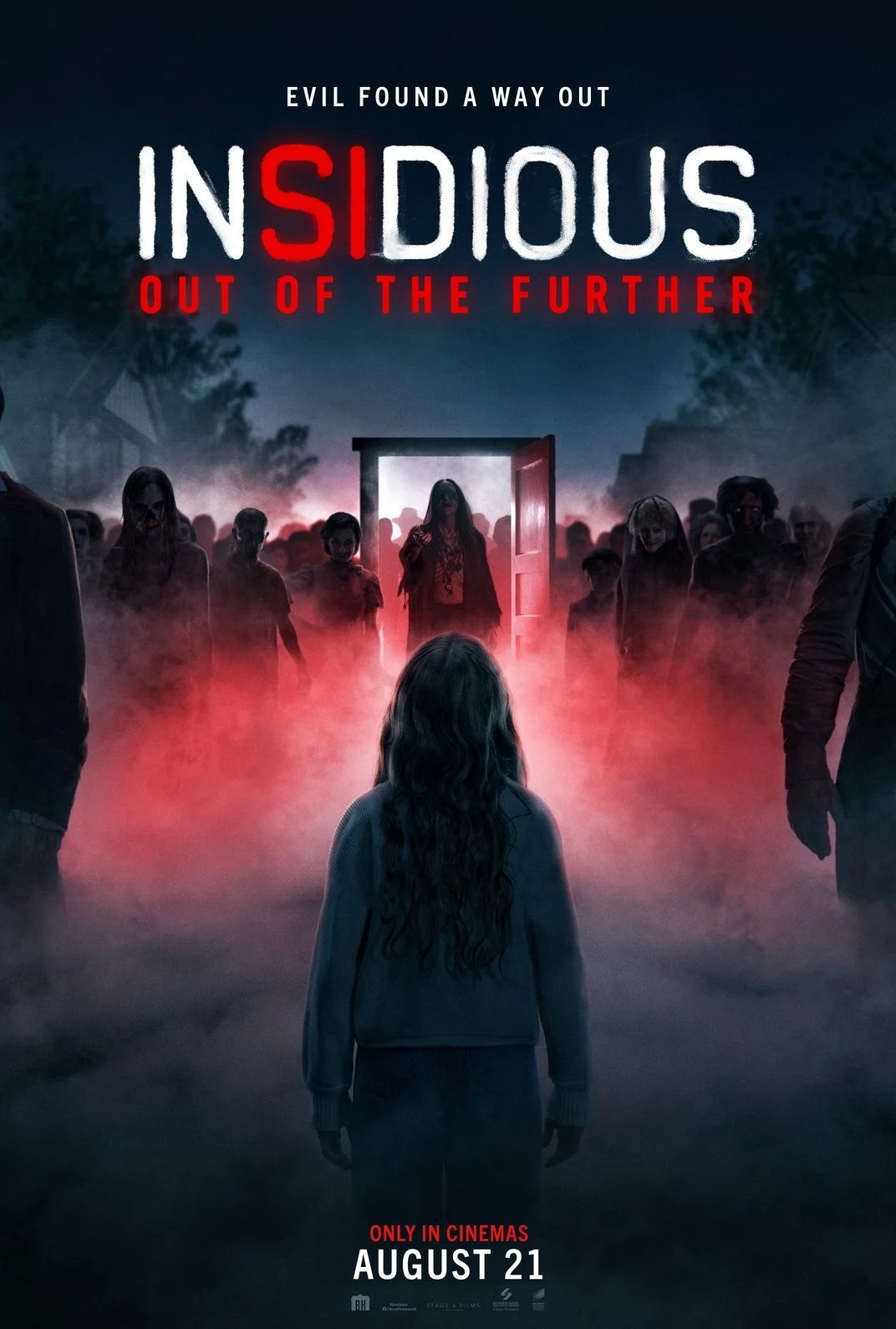
OBSESSION horror movie review

Feels like a collection of strong ideas searching for a stronger story

Written and directed by Alabama native and YouTuber Curry Barker, Obsession has become one of the surprise success stories of the year. Produced on a modest budget and propelled by enthusiastic word-of-mouth, the film has resonated with audiences looking for something original in a marketplace increasingly dominated by sequels and established franchises. And there is much in his filmmaking to admire here, but filmmaking and storytelling are not the same discipline. For all of its visual confidence, Obsession often feels like a collection of strong ideas searching for a stronger story. The film offers memorable moments, unsettling imagery, and a clever variation on the classic Monkey’s Paw concept, yet those moments frequently feel as though they were designed to punctuate a more fully developed screenplay rather than serve as the foundation for one.

About: After breaking the mysterious “One Wish Willow” to win his crush’s heart, a hopeless romantic gets exactly what he asked for. However, he soon discovers that some desires come at a dark and sinister price.

Barker demonstrates a keen eye for composition, editing, and atmosphere. He understands how to create tension how to stage a reveal, how to keep an audience engaged, and of the upmost importance, he understands how to sustain tension and keep an audience engaged. Concerning his competence in the technical elements, there is little doubt he has a firm grasp; however, there is more to cinematic storytelling than the technical dimension. A person can possess extraordinary visual instincts while still struggling with the fundamentals of dramatic construction–and it’s that tension that sits at the heart of Obsession.

Demonstrably, he does not yet fully understand screenwriting fundamentals. For example, this movie is nearly devoid of moments of emotional reset–those moments wherein we can breathe. Like wine usually shouldn’t be consumed immediately after removing the cork, movies too need moments of breathing, emotional reset in order to cleanse the palate and mitigate the possibilities of exhausting the audience.

Coming down hard on his lack of screenwriting talent may sound harsher than intended, but it’s yet another example of how those that know how to build a following on YouTube or other social media app do not necessarily know how to tell a compelling story. Knowledge of technical elements? Yes. Knowledge of screenwriting mechanics and fundamentals? Not so much–usually anyway.

But there are many elements that are admirable in Barker’s movie. The film contains numerous effective scenes, memorable images, and genuinely unsettling moments. Barker clearly knows how to build individual sequences that work. The problem is that those sequences often feel as though they were designed to punctuate a stronger screenplay that never materialized around them. The result is a movie that frequently feels less like a cohesive narrative and more like a collection of good ideas forced together into a feature-length runtime.

At its core, Obsession functions as a contemporary variation of W. W. Jacobs’ classic Monkey’s Paw premise. Desire collides with consequence. Wishes become curses. Human longing opens the door to forces beyond one’s control. It is fertile dramatic territory and one that has generated countless effective horror stories over the years.

What distinguishes the best versions of that premise, however, is not the supernatural mechanism itself. It is the moral and emotional framework surrounding it. The Monkey’s Paw is ultimately about temptation. Pet Sematary is about grief. Needful Things is about greed. Even many episodes of The Twilight Zone work because they place ordinary people in extraordinary situations that reveal something meaningful about human nature.

Obsession never quite discovers its equivalent thematic center.

The film gestures toward ideas involving desire, fixation, and unhealthy attachment, but these concepts remain largely underdeveloped. The horror functions effectively on a mechanical level, yet rarely acquires the emotional or ethical weight necessary to elevate it beyond its premise. The same problem extends to the characters.

While the film introduces individuals who serve the narrative adequately, few emerge as fully realized people. Their decisions often feel driven more by the needs of the plot than by clearly established psychology. As a result, the audience understands what is happening without necessarily becoming invested in whom it is happening to. That lack of emotional grounding becomes increasingly noticeable as the story escalates.

And yet, despite these shortcomings, I find it difficult to dismiss Obsession. Many films fail because their creators lack vision. Barker’s film suffers from the opposite problem. The vision is clearly present. The talent is clearly present. The technical proficiency is clearly present. What remains underdeveloped is the narrative architecture needed to support those strengths. That distinction matters. A filmmaker who struggles with shot composition or pacing may never overcome those limitations. A filmmaker who already possesses those skills but needs to improve as a writer represents a far more intriguing proposition.

Which is why Obsession ultimately succeeds less as a finished work than as evidence of potential. The film may not offer compelling characters, a fully realized dramatic structure, or a particularly profound exploration of its themes. What it does offer is a glimpse of a filmmaker who understands cinema as a visual medium and appears capable of creating memorable moments.

The challenge now is learning how to connect those moments into a story worthy of them.

Ryan is the morning host on WLRH Public Radio in Huntsville, AL and host of the show ReelTalk “where you can enjoy the cinematic conversations frame by frame each week.” Additionally, he is the author of the upcoming film studies book titled Monsters, Madness, and Mayhem: Why People Love Horror. After teaching film studies for over eight years at the University of Tampa, he transitioned from the classroom to public media. He is a member of the Critics Association of Central Florida and Indie Film Critics of America. If you like this article, check out the others and FOLLOW this blog! Follow him on Twitter: RLTerry1 and LetterBoxd: RLTerry
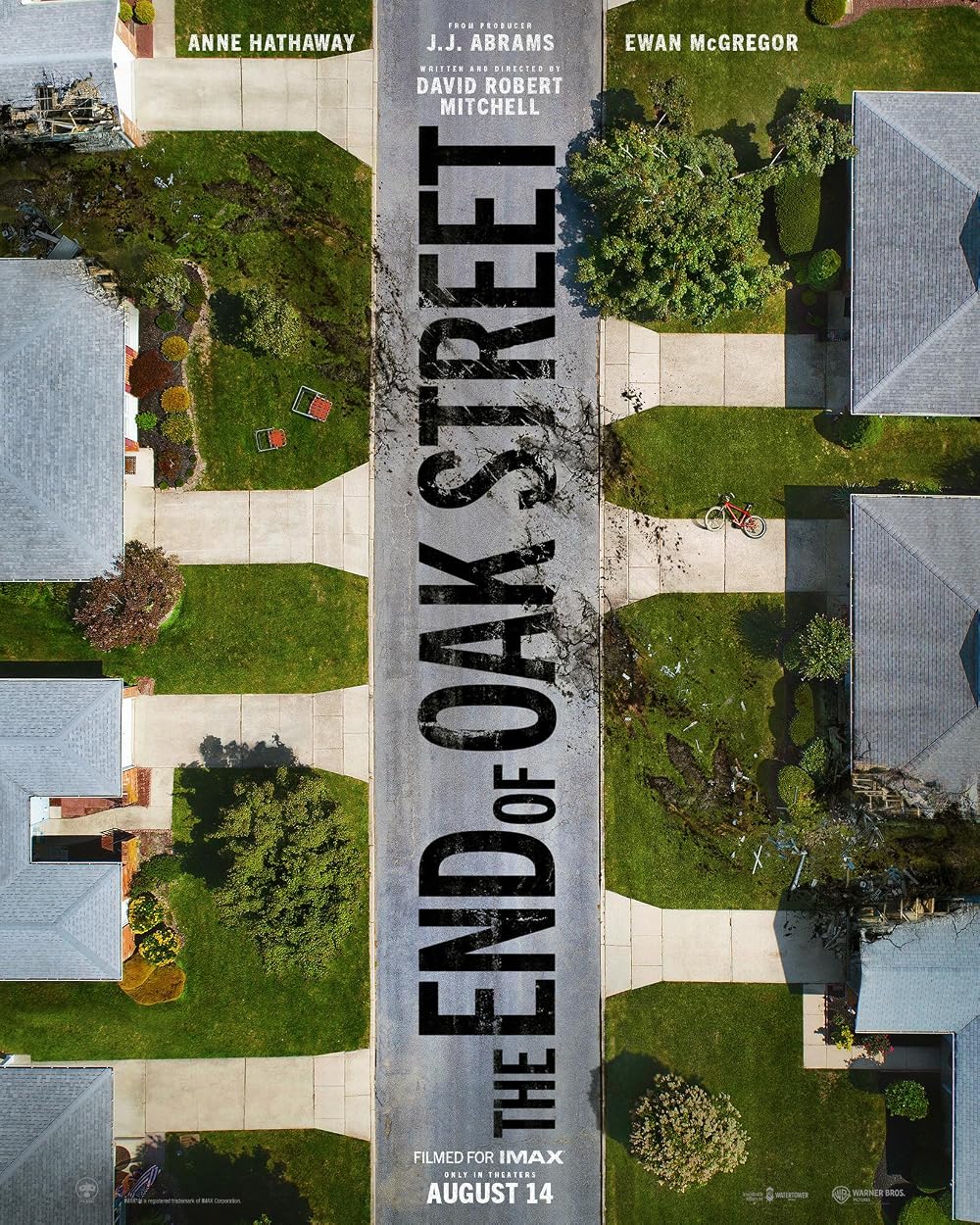
MORTAL KOMBAT II (2026) movie review

A fun, energetic way to kick off the summer movie season.

Mortal Kombat II understands something that many modern blockbuster adaptations still struggle to grasp: audiences do not necessarily want filmmakers to reinvent beloved source material—they want filmmakers to respect it while translating it effectively into cinematic language. And surprisingly enough, this sequel largely succeeds. It is not attempting profound philosophical commentary or emotional devastation. Nor should it. The film knows exactly what it is, embraces its absurdity with confidence, and delivers a thoughtful sequel that also functions as one of the more effective big-screen adaptations of a video game in recent memory.

Mortal Kombat II is about how Johnny Cage joins other fighters in the ultimate, no-holds-barred battle to defeat the dark rule of Shao Kahn, a powerful tyrant who threatens the very existence of the Earthrealm and its defenders.

At the end of the day, Mortal Kombat II is a popcorn movie—an unapologetically violent, nostalgic crowd-pleaser designed first and foremost to entertain. The characters remain recognizable to longtime fans while also possessing enough cinematic depth to sustain an actual narrative. That balancing act matters. Too often, video game movies reduce their characters to costumes and catchphrases. Here, however, the fighters feel like people rather than playable avatars waiting for controller input.

As someone who always gravitated toward Kitana in the games, it was particularly satisfying to see her positioned as an emotional and narrative centerpiece. She is not simply present for fan service or aesthetic appeal; she has agency, motivation, and an arc that helps drive the story forward. In fact, one of the film’s greatest strengths is that no character feels disposable. Nobody feels like an NPC wandering through the background waiting to deliver exposition before disappearing. Each fighter is given at least some measure of journey or development.

Visually, the movie also strikes an effective balance between homage and expansion. Many of the settings evoke the iconic backgrounds from the games—the gothic arenas, shadowy temples, and otherworldly battlegrounds longtime fans will immediately recognize. But the film never feels trapped within them. Instead, those environments are punctuated throughout a larger cinematic world that feels appropriately expansive.

Narratively, the story is a fairly classical variation of good versus evil, but there is enough thematic grounding to give the conflict weight. Beneath the martial arts spectacle and supernatural mythology lies a struggle between freedom and authoritarian control—between individuality and the oppressive force of conformity. It is not especially subtle, but subtlety is not really the point here.

The point is fun. And on that level, the movie absolutely works.

The fight choreography is energetic, the pacing rarely drags, and yes—the fatalities are brutal. But importantly, the violence never tips into unpleasantness. The film retains enough of its heightened video-game aesthetic that the gore feels stylized rather than exploitative. There is restraint within the excess. The movie understands the difference between brutality and ugliness.

Most importantly, Mortal Kombat II remembers that adaptation does not require embarrassment. It never apologizes for being based on a video game. Instead, it embraces the mythology, the characters, the iconography, and even the inherent silliness of the premise with complete sincerity. That sincerity goes a long way.

This is a fun, energetic way to kick off the summer movie season, and longtime fans—particularly those who grew up with the original games—will likely leave the theater with a smile on their face. And sometimes, that is enough.

Ryan is the general manager for 90.7 WKGC Public Media and host of the show ReelTalk “where you can join the cinematic conversations frame by frame each week.” Additionally, he is the author of the upcoming film studies book titled Monsters, Madness, and Mayhem: Why People Love Horror. After teaching film studies for over eight years at the University of Tampa, he transitioned from the classroom to public media. He is a member of the Critics Association of Central Florida and Indie Film Critics of America. If you like this article, check out the others and FOLLOW this blog! Follow him on Twitter: RLTerry1 and LetterBoxd: RLTerry

THE DEVIL WEARS PRADA 2 movie review

A sequel about decline that unintentionally embodies it

The Devil Wears Prada 2 arrives with an intriguing premise: the decline of traditional print media and the cultural erosion that follows in its wake. On paper, that is fertile dramatic territory—especially for a franchise rooted in the world of fashion magazines, where prestige once carried weight and authority. But while the film gestures toward thoughtful commentary on the changing media landscape, its ambition collapses under the weight of its own excess. The sequel’s attempt to explore the decline of traditional print journalism—and the cultural loss that represents—is buried beneath rushed subplots and thin character work. The sharp bite that defined the original is gone, replaced by interactions that feel oddly dull and listless.

About the movie: Andy Sachs (Anne Hathaway) returns to Runway as Miranda Priestly (Meryl Streep) navigates a new media landscape and Runway‘s position within it. They reconnect with another former assistant, Emily (Emily Blunt), who is now the head of a luxury brand that possesses funding which could ensure Runway‘s survival.

The irony is difficult to ignore: a movie about the fading relevance of print media ends up feeling like a diminished version of its former self. What made the original The Devil Wears Prada so compelling was not merely its fashion or its humor, but its brazen confidence. The characters were bold, unapologetic, and sharply drawn. They possessed edge—sometimes cruelty, sometimes wit—but always energy.

That energy is conspicuously absent here. The sequel lacks the chutzpah that defined the original. The characters feel like muted versions of their former selves—recognizable, but drained of vitality.

Even Miranda Priestly, once a towering figure of authority and intimidation, feels diminished. She is simply not the same Miranda. Nor is she a believable evolution of that character in an era defined by the decline of print media and the increasing irrelevance of traditional fashion magazines. Instead, she feels like a sanitized, diluted interpretation—a kind of bargain-bin version of the woman who once commanded every room she entered.

Andy, meanwhile, remains recognizable as her former self, but a shallower one—less conflicted, less driven, less interesting. Emily comes closest to recapturing her original spark, yet even she feels like a low-resolution facsimile. Nigel is perhaps the most faithful to his earlier incarnation, but he is given remarkably little to do, functioning more as a reminder of the past than as an active participant in the present.

One of the film’s most significant problems is not a lack of ideas—it is an overabundance of them. The movie attempts to comment on a wide array of contemporary issues, each of which could have sustained a compelling narrative on its own. Among them:

  • The exploitation of labor in global fashion supply chains
  • The decline of print journalism and professional writing
  • Body positivity and changing beauty standards
  • Workplace political correctness
  • The tension between art and commerce
  • The fallibility of institutions and authority figures
  • Agism

These are all worthwhile themes. But instead of selecting one or two central ideas and developing them with clarity, the film introduces them in rapid succession, only to abandon them before they gain dramatic traction. The result is a story that feels scattered and unfocused.

There is a fundamental principle of storytelling that seems to have been forgotten here:
When your story is about everything, it is ultimately about nothing.

Adding to the problem is a roster of side characters who function less as people and more as props. They appear when needed, deliver exposition, and disappear without leaving any meaningful impression. They exist to move the plot forward rather than to inhabit it.

Even the film’s musical landscape reflects this sense of creative fatigue.

The soundtrack is largely forgettable—pleasant enough in the moment, but lacking the memorable punch that defined the original film’s sonic identity. One exception, of course, is Vogue, which remains as exhilarating as ever. Its inclusion feels less like nostalgia and more like a reminder of what bold artistic expression once sounded like.

By contrast, the contributions from Lady Gaga feel surprisingly inert—polished, competent, but oddly impersonal. The songs lack the distinctive flair and theatricality audiences have come to expect from an artist of her caliber. They register less as creative statements and more as algorithmic approximations of style.

From beginning to end, The Devil Wears Prada 2 feels like a discount version of its predecessor—an imitation rather than a continuation. It tries hard to recapture the magic of the original, but its creative DNA seems shaped by the streaming era: content designed for breadth rather than depth, immediacy rather than longevity. The film moves quickly, introduces ideas rapidly, and resolves conflicts hastily—mirroring the rhythms of modern digital consumption.

In that sense, the movie unintentionally becomes a commentary on the very cultural shifts it seeks to critique.

It is a product of the moment.

And like much of contemporary media, it feels engineered for engagement rather than crafted for impact. The Devil Wears Prada 2 reminds us that sequels are not sustained by familiarity alone. They require conviction, clarity of purpose, and characters who evolve in meaningful ways. This film has ideas—many of them compelling—but acks the narrative discipline necessary to bring those ideas to life. What remains is a glossy, well-dressed production that gestures toward relevance without ever achieving it.

The original film had bite—had fire.
This one barely leaves a mark.

Ryan is the general manager for 90.7 WKGC Public Media and host of the show ReelTalk “where you can join the cinematic conversations frame by frame each week.” Additionally, he is the author of the upcoming film studies book titled Monsters, Madness, and Mayhem: Why People Love Horror. After teaching film studies for over eight years at the University of Tampa, he transitioned from the classroom to public media. He is a member of the Critics Association of Central Florida and Indie Film Critics of America. If you like this article, check out the others and FOLLOW this blog! Follow him on Twitter: RLTerry1 and LetterBoxd: RLTerry