SPIDER-MAN: BRAND NEW DAY movie review

A Compelling Hero in Search of a Consistent, Equally Compelling Villain

Spider-Man: Brand New Day may be the darkest live-action Spider-Man film since The Amazing Spider-Man 2. More significantly, it may be the most human. Peter Parker no longer emerges from every battle protected by the reassuring elasticity of comic-book storytelling. He bleeds, bruises, and brushes against death with an immediacy rarely felt in earlier installments. The physical injuries linger, as do the psychological ones.

That vulnerability gives Tom Holland some of the strongest material he has received as Peter Parker. It may, in fact, be his finest performance in the role. Holland appears older, wearier, and more fully aware of the cost attached to his extraordinary life. This is not merely a hero confronting another threat; it is a young man discovering that courage does not make him invulnerable.

The entire ensemble performs well. From beginning to end, the performative dimension is considerably stronger than the screenplay supporting it. Unfortunately, the actors are too often asked to sustain scenes that linger without sufficiently advancing character, conflict, or consequence. They give the film emotional credibility, but the writing rarely provides enough dramatic momentum to match their efforts.

Listen to the ReelTalk episode by clicking HERE. You can also find it on Apple, Spotify, and other pod-catchers.

The central problem is the absence of a sustained character of opposition. Brand New Day contains adversaries and dangerous circumstances, but it never establishes a traditional central villain capable of defining the conflict and forcing Peter through a complete heroic journey. What initially appears to be the enemy does not remain the enemy. Simply stated, this is a superhero movie with a hero but no true villain.

Breaking with convention is not inherently more intelligent, sophisticated, or artful than following it. Conventions often endure because they perform essential dramatic functions. A formidable antagonist does more than provide someone for the hero to defeat. The antagonist applies pressure, clarifies the stakes, exposes the hero’s weaknesses, and forces decisions that transform the character. Internal conflict can certainly drive a story, but cinema must still dramatize that struggle through meaningful external opposition.

Without that sustained force, Peter’s journey lacks a clear dramatic destination. The movie contains considerable emotional weight but surprisingly little propulsion.

This contributes to the film’s pacing problems. Although Brand New Day is shorter than several entries in the Marvel Cinematic Universe, it frequently feels longer. Runtime and pacing are not synonymous. A lengthy film can pass quickly when every scene builds naturally upon the one preceding it; a shorter film can drag when its scenes repeat emotional information or fail to change the dramatic equation. Too much of Brand New Day remains at the same level of solemn intensity.

Darkness itself is not the problem. Tim Burton’s Batman and Batman Returns demonstrated that comic-book films could be brooding, psychologically complicated, and visually macabre while still providing considerable entertainment. Brand New Day, by contrast, delivers a heavy helping of melodrama without enough tonal contrast, exhilaration, or playfulness. Its seriousness is often admirable, but seriousness alone does not create depth.

There is nevertheless much to appreciate. The decision to emphasize Peter’s physical and emotional fragility restores something essential to the character. Spider-Man has always endured because his powers do not liberate him from ordinary human suffering. He still experiences fear, exhaustion, disappointment, and loss. His victories cost him something, and Holland communicates that burden with remarkable conviction.

Spider-Man: Brand New Day ultimately works better as a Peter Parker character study than as satisfying superhero entertainment. Its interest in consequence is thoughtful, its performances are strong, and its humanity is genuine. Yet the absence of a clearly defined villain and the resulting lack of dramatic momentum leave the film feeling incomplete.

Tom Holland gives the movie a compelling hero. The screenplay simply forgets that even the most human hero still needs something—or someone—substantial to oppose him. However, it’s an enjoyable movie that sticks to one universe–and that’s a relief.

Ryan is the morning host on WLRH Public Radio in Huntsville, AL and host of the show  ReelTalk  “where you can enjoy the cinematic conversations frame by frame each week.” Additionally, he is the author of the upcoming film studies book titled Monsters, Madness, and Mayhem: Why People Love Horror. After teaching film studies for over eight years at the University of Tampa, he transitioned from the classroom to public media. He is a member of the Critics Association of Central Florida and Indie Film Critics of America. If you like this article, check out the others and FOLLOW this blog! Follow him on Twitter: RLTerry1 and LetterBoxd: RLTerry

THE ODYSSEY film review

Magnificent moments in search of an epic story.

When audiences leave The Odyssey, they’ll likely be talking about the Trojan Horse, the Cyclops, the sea monsters, and the breathtaking images Christopher Nolan has conjured for the largest screens imaginable. And rightly so. Few filmmakers working today possess Nolan’s ability to stage spectacle on such an astonishing scale. Yet for all its technical brilliance and jaw-dropping visual achievement, The Odyssey left me admiring its individual moments and technical achievement far more than the story connecting them.

About the film: Odysseus (Matt Damon) embarks on a dangerous voyage back to Ithaca following the Trojan War, encountering treacherous creatures like the Cyclops Polyphemus, Sirens, and the gates of Hades.

While few filmmakers have demonstrated the talent and skill to craft motion pictures on the scale and scope of Nolan’s, many have been able to create motion picture offerings truly deserving of the big screen treatment. But, cinema has become so enamored with spectacle that audiences increasingly mistake scale for storytelling. The two are not synonymous. A breathtaking image may inspire awe, but without dramatic architecture it struggles to resonate beyond the moment it appears on screen.

This is the central irony of Christopher Nolan’s The Odyssey. Adapting the foundational epic of Western storytelling—a tale whose dramatic framework has influenced literature and cinema for nearly three millennia—Nolan delivers some of the most astonishing imagery ever projected onto a movie screen while simultaneously diminishing the very narrative mechanics that made Homer’s poem endure.

Nolan has long challenged conventional storytelling, but innovation alone neither elevates nor diminishes a work of art. The irony here is especially striking because The Odyssey originates from the civilization that gave us many of the dramatic principles still underpinning Western storytelling. Homer didn’t simply tell an adventure; he created the definitive mythic journey—a narrative whose emotional power comes from watching Odysseus endure one impossible trial after another as he struggles home.

Nolan’s adaptation rarely allows that journey to accumulate. Instead, the film drifts between spectacular episodes much as Odysseus himself drifts across the sea. Each sequence is magnificent in isolation, but the nonlinear structure continually interrupts the dramatic momentum needed for the voyage to feel emotionally cumulative.

For viewers already familiar with Homer’s epic, reconstructing the chronology isn’t especially difficult. For those encountering The Odyssey for the first time, however, the film provides surprisingly little connective tissue or narrative context. Rather than deepening the myth, the fragmented structure often obscures it. As odd as it may sound, the 1990s Wishbone adaptation arguably communicates the story’s emotional architecture more effectively.

Some have dismissed my criticism by suggesting I simply dislike nonlinear storytelling. The opposite is true. Some of my favorite films—including Mulholland Drive, Rashomon, Arrival, Pulp Fiction, Memento, and The Godfather Part II—all abandon linear chronology. What unites those films is that their structures reveal character, reinforce theme, or place the audience inside a unique perspective that chronological storytelling could not achieve. Their nonlinear construction enriches the drama.

Here, Nolan primarily uses a nonlinear structure to reorganize the plot.

That distinction matters, because the result is a film whose storytelling often feels less powerful than its individual scenes. Fortunately, those scenes are truly extraordinary.

One observation from fellow critic Sean Boelman has lingered with me since seeing the film. Sean—who admired The Odyssey far more than I did—suggested that Nolan’s nonlinear structure feels reminiscent of oral storytelling. The more I’ve reflected on that idea, the more I think he’s right. There is a quality to the film that resembles hearing an ancient bard recount Odysseus’ adventures, jumping from one episode to another as memory and emphasis dictate rather than strict chronology.

Where we ultimately diverge is whether that approach serves the medium of cinema. Oral storytelling and visual storytelling are not identical languages. What works around a fire or in the halls of ancient Greece does not necessarily produce the strongest dramatic experience on a movie screen. Cinema possesses tools that oral tradition never could: editing, visual composition, performance, and dramatic pacing that build cumulative emotional momentum. By adopting the rhythms of oral storytelling, Nolan creates an undeniably fascinating interpretation of Homer’s epic, but one that, for me, sacrifices too much of the dramatic architecture that gives the journey its emotional force.

This is what makes The Odyssey such a fascinating film to evaluate. Rarely have I encountered a movie in which spectacle and dramatic architecture diverge so dramatically. As a visual achievement, Nolan’s film ranks among the most impressive epics of the modern era. As a piece of dramatic storytelling, I found it considerably less satisfying.

The Trojan Horse sequence is among the most awe-inspiring moments Nolan has ever filmed. Every set, every landscape, every battle possesses a mythological grandeur rarely seen in modern filmmaking. Watching The Odyssey, I found myself imagining what audiences must have experienced seeing Metropolis or The Ten Commandments for the first time. Those films redefined cinematic scale for their generations. Nolan’s achievement feels similarly monumental.

Which is why The Odyssey absolutely deserves to be seen on the biggest screen available. Whether that’s 70mm IMAX or another premium format matters far less than simply experiencing its overwhelming visual and sonic presentation in a theater. A larger screen won’t solve the screenplay’s structural shortcomings, but it will allow viewers to fully appreciate one of the most ambitious technical achievements of recent years.

Matt Damon anchors the film with quiet confidence, delivering perhaps the strongest performance of the ensemble. He fully inhabits Odysseus, carrying both the physical burden of the journey and the emotional weariness of a man desperate to return home. The remainder of the cast performs capably without leaving much of a lasting impression. Tom Holland never entirely escapes echoes of Peter Parker, Anne Hathaway provides the elegance and composure we’ve come to expect, and Robert Pattinson is surprisingly underutilized. There are no poor performances—only few that linger after the credits.

Ultimately, I suspect The Odyssey will be remembered as one of the year’s biggest cinematic events, and deservedly so. Nolan has once again reminded audiences why epic filmmaking belongs in theaters, where stories of mythic scale can be experienced communally rather than consumed individually at home.

I only wish the storytelling had matched the magnificence of the filmmaking.

For all its extraordinary craftsmanship, The Odyssey left me marveling at its images more than feeling the weight of Odysseus’ journey. In the end, Nolan delivers an unforgettable cinematic experience, but not, for me, an unforgettable telling of Homer’s timeless epic.

Ryan is the morning host on WLRH Public Radio in Huntsville, AL and host of the show  ReelTalk  “where you can enjoy the cinematic conversations frame by frame each week.” Additionally, he is the author of the upcoming film studies book titled Monsters, Madness, and Mayhem: Why People Love Horror. After teaching film studies for over eight years at the University of Tampa, he transitioned from the classroom to public media. He is a member of the Critics Association of Central Florida and Indie Film Critics of America. If you like this article, check out the others and FOLLOW this blog! Follow him on Twitter: RLTerry1 and LetterBoxd: RLTerry

UNCHARTED action-adventure movie review

The Goonies meets Raiders of the Lost Ark in the moderately entertaining movie adaptation of the hit Uncharted video game series. Of course, therein lies a tonal problem: the movie is never quite sure what tone it wants to strike. Tom Holland and Mark Wahlberg star in the Ruben Fleischer helmed high-flying action-adventure movie that hopes you haven’t played or know much about the video game. Fortunately for me, I wouldn’t even know the cover art of the game, let alone anything about it other than the title. And that is probably why I enjoyed it as much as I did–but that isn’t saying much. #FilmTwitter was up in arms about the boyish Holland playing the grizzled Nathan Drake when the casting was announced. And while I cannot comment on his particular interpretation of the main character from the video game, I can comment on an inability to buy him as the character, as written, for the movie. It’s indicative of the trend of endowing teens and young adult actors (and by extension, characters) with the same qualities and experiences that come with age and experience. I’ll give him this, he is a charismatic actor. The slapdash storytelling comes across as a movie that feels more like a curation of cut-scenes from a video game, a problem that plagues most video game movie adaptations.

Nathan Drake and his wisecracking partner Victor “Sully” Sullivan embark on a dangerous quest to find the greatest treasure never found while also tracking clues that may lead to Nate’s long-lost brother.

What ultimately keeps this movie afloat is the witty, quippy dialogue, completely devoid of any subtext, but will elicit periodic laughter throughout the movie. While I know next to nothing about the video game, I did learn from a fan of the video game that there is a major element from the game that is completely absent from the movie. I won’t mention what that is in order to avoid spoilers. Be sure to wait around for the mid and post credit scenes that setup a sequel. If you do plan to see it, you’ll definitely want to watch it in the biggest premium format in your area. Many of the scenes, especially in the third act, deliver immense size and scope that are best appreciated and experiences on the biggest screen possible.

While I am unsure of the plot of the video game, the movie sets up an emotionally-driven subplot of the Nathan’s search for his long-lost (or gone) brother. But, it never feels that is plays any significant role in the main action plot. In fact, you can remove the whole search for his brother and the movie plays out the same. This is a movie that could have been a nice hybrid between The Goonies and Raiders of the Lost Ark, but it tries to be both of them instead of finding its own expression. Perhaps this is yet another example of how most video game adaptations simply don’t translate to the screen well, because the interactive element is missing.

At the end of the day, it’s a decent popcorn flick to experience in IMAX that is a perfectly fine way to pass the time on an afternoon.

Ryan teaches Film Studies and Digital Citizenship at the University of Tampa. If you like this article, check out the others and FOLLOW this blog! Interested in Ryan making a guest appearance on your podcast or contributing to your website? Send him a DM on Twitter or email him at RLTerry1@gmail.com! If you’re ever in Tampa or Orlando, feel free to catch a movie with him.

Follow him on Twitter: RLTerry1

Disney-Pixar’s “Onward” Movie Review

You are going to catch feels! Disney-Pixar’s Onward is a powerful animated motion picture that will take you on an exciting and emotionally charged journey. There is such a tremendous beauty in the simple storytelling that explores familial relationships through the conduit of a fantastical quest. Onward reminds me of a classic Spielberg-like coming-of-age action-adventure movie with heart. Interestingly, I am reminded of many DreamWorks movies, including How to Train Your Dragon, in the overall look of the movie. It’s almost as if Pixar saw what DreamWorks was doing right, and in a very Apple way, set out to do it better. Onward is what you get when you take the visual design and themes of DreamWorks movies and pair them with a quintessential Pixar story. Much like Coco provided us with a compelling story that would forever change how we view family tradition and history, this movie explores the relationship between brothers on their quest to bring their dad back from the dead for one day. In a day and age in which relationships between brothers or sons and fathers seem to be largely absent from themes in movies, this is a refreshing look at these relationships in a positive, healthy light. While this is an animated motion picture, it is every bit pure cinema as a live-action counterpart. The great Cecil B. DeMille stated, “the greatest art in the world is the art of storytelling,” and Onward is a great story for the whole family! You will encounter joy and warmth in the plot and characters as you set forward and press onward in your adventure along with Ian and Barley. Unlike a typical action-adventure movie, this one does take a little while to get up to speed. But once that second act kicks into gear, you will experience a thrilling good time that will have you laughing and crying in true Pixar fashion.

Two teenage elf brothers, Ian (Tom Holland) and Barley (Chris Pratt) Lightfoot, go on a journey to discover if there is still a little magic left out there, after receiving a mysterious gift from their mother on Ian’s birthday, in order to spend one last day with their father, who died when Barley was little and before Ian was born (IMDb).

Not your usual fantasy movie! While Onward starts out with a voiceover narration providing exposition against the backdrop of a fantastical world of elves, wizards, mythological creatures and more, the prologue lays out the historical piping to provide important context for the modern story that is about to unfold. We are told that the world was once full of magic, but over time, the industrial revolution and invention of technology took the place of magic. Eventually the world simply forgot about its very existence. I love this setup, because it’s a mirror of our own world in which technology has radically altered how we interact with the world around us and even each other. When we rewrite or forget the past, it has a profound impact upon our present and future. I appreciate how this film highlights the importance of not forgetting the past, not forgetting where we came from. Looking to the past, even recent past, can help to shift our focus from ourselves to others. Sometimes we can even find a whole new appreciation of the present by stepping back and realizing the indirect meaning behind actions that have impacted our growth and development. One can even read this as a commentary on art versus commercialization. For the sake of cost and simplicity, much that was once crafted is now churned out on an assembly line. We forget the importance of personal investment of time and energy into everyday elements. Perhaps we can even liken this to film versus digital. Many different ways of reading this analogy!

I often comment in my screenwriting class at the University of Tampa that some of the best movies out there have simple plots and complex characters. For a visualization of what that looks like, think of that little black dress or classic black suit that lives in many of our closets. Those simple outfits can be accessorized in so many different ways to make a lasting statement or impression. There is a beauty in the simplicity. Same with the story in Onward. At its core, this movie is about a quest to find the long lost Phoenix stone in order to bring Ian and Barley’s dad back to life for one day. But along the way, our two central characters encounter conflict after conflict that reveals to us the various layers of our characters. We learn so much about their history, goals, needs, and more in how they each uniquely respond to the same obstacles. Lasting conflict can often be achieved by giving two characters the same goal, but they each have vastly different methods for achieving the goal. This concept is played out over and over again throughout the movie, and it works incredibly well! I also appreciate this movie for just how funny it is! Honestly, this is probably one of Pixar’s funniest movies in a long time! All the action and emotional elements of the Onward are superbly satisfying and work completely in sync, just like all the section of a symphony playing in perfect harmony!

Each and every obstacle that creates conflict between our two brothers moves the story forward; never once do we reach a point in the plot in which we are spinning our figurative wheels. Representing a microcosm of a larger plot structure, each and every scene in a movie is made up of a setup, conflict, and resolution. And the resolution (be it negative or positive) points to the next scene, and the following scene does the very same. Every scene is a piece of the track that points to the end of the movie. With a tight script, Onward is consistently moving us forward to the showdown and realization of this movie. What makes the conflict we witness in the movie all the more relatable is just how common, everyday much of it is. We may be in a world of fantasy, but the problems experienced by the brothers are the same as the ones we experience in real life. Most of us with siblings don’t always get along–certainly in our growing up years, it can be that way–but this movie is a testament to the importance of connecting and appreciating our siblings for what they teach us and how they impact our lives even when we don’t realize it. For those whom may have lost a parent, often times, you can find your parent in the life of your sibling and vice versa. Loving parents leave a legacy in their children.

Visually, the movie is stunning! I love just how “not” Pixar it looks. Ever since Pixar started striving for quasi photorealism, I’ve not been as impressed with the animation. For example, I prefer the look of Toy Story 3 to Toy Story 4. The production design and animation in Onward reminds me of much of what DreamWorks has produced over the years in terms of themes and design. Perhaps DreamWorks will see Onward and think to themselves, “gee, they took a page from our playbook and did it better.” The plot is tighter, the comedy is better developed, and the characters more fleshed out. Essentially, this movie indirectly highlights what is missing in many DreamWorks movies, and that is stronger screenplays. Onward delivers an animation design that is rich with everything that you want to see in a world of fantasy! So many fantastical creatures that feel right at home within their world. And this world feels incredibly believable. In many ways, it looks just like our world in which the modern can be right up next to the ancient, where sometimes historical buildings are at risk for being torn down to make way for something new. Looking across the landscape, you will be delighted at the attention paid to effective world building and the little things that make such a difference.

Don’t think of this as Pixar’s throwaway movie, as some have, this is an outstanding animated motion picture that delivers an engaging adventure paired with an emotional roller coaster that will have you laughing and crying.

Ryan teaches screenwriting at the University of Tampa. If you like this article, check out the others and FOLLOW this blog! Interested in Ryan making a guest appearance on your podcast or contributing to your website? Send him a DM on Twitter or email him at RLTerry1@gmail.com! If you’re ever in the Tampa area, feel free to catch a movie with him!

Follow him!

Twitter: RLTerry1

Instagram: RL_Terry

“The Current War” historical movie review

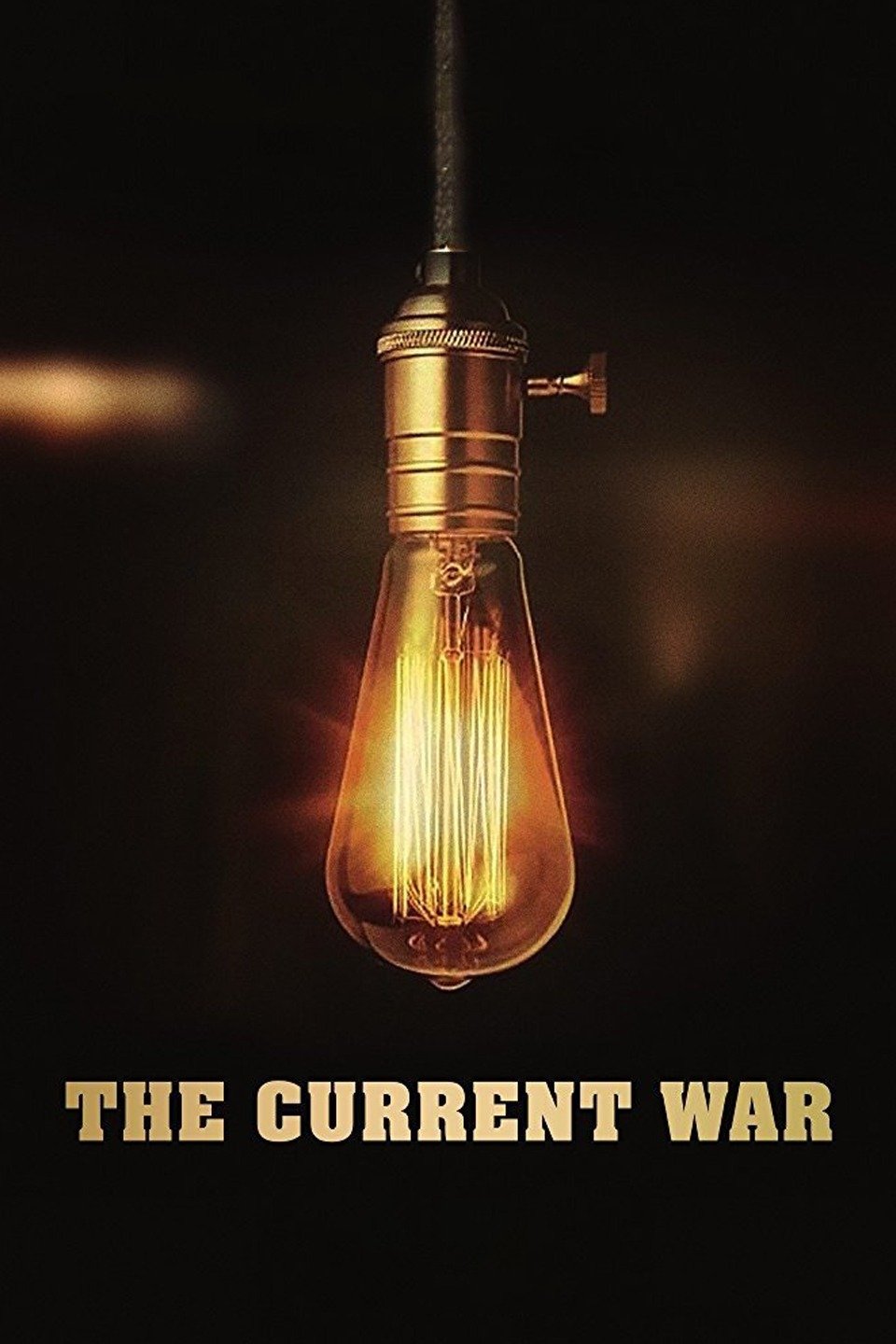
When the History Channel comes to cinemas. Despite what the title and tagline suggests, this movie is not electrifying and unfortunately plays off as forgettable Oscar bait. The only difference between this movie and one that you may catch on The History or Discovery Channels is the A-list cast. For students of history or those whom normally seek out and enjoy historical movies, you will most likely find this story interesting if not fascinating. Perhaps nearly as interesting as the historical background of this movie is the story of this movie’s journey from concept to screen. After the collapse of The Weinstein Company, this movie’s fate to never see the distribution was all but sealed. Enter from stage left Executive Producer Martin Scorsese to save this movie. With the backing of Scorsese, director Alfonso Gomez-Rejon recut the film to that which he originally intended before Harvey has his way with it (and others in Hollywood). While the details of the plot lack anything truly memorable, and the characters are one-dimensional, where this film shines is in the cinematography and editing. All throughout the movie, the camera becomes a character in and of itself, providing audiences with carefully crafted angles and beautiful tracking shots that attempt to draw us into the story on an intimate level with this cast of legendary inventors and businessmen. Perhaps we would be talking cast too had they been given anything to work with. Ultimately, the screenplay is to blame for this steady but low wattage story of one of the greatest chapters in US history.

Thomas Edison (Benedict Cumberbatch) and George Westinghouse (Michael Shannon)– the greatest inventors of the industrial age — engage in a battle of technology and ideas that will determine whose electrical system will power the new century. Backed by J.P. Morgan, Edison dazzles the world by lighting Manhattan. But Westinghouse, aided by Nikola Tesla (Nicholas Hoult), sees fatal flaws in Edison’s direct current design. Westinghouse and Tesla bet everything on risky and dangerous alternating current. (IMDb)

Upon watching this movie, it is clear that screenwriter Michael Mitnick forgot the cardinal rule of composing a well-developed screenplay with visual dimension: dramatize don’t tell (or simply show). Everything needed for a great screenplay is here: two central characters that equally function as the character(s) of opposition, a well-defined external goal (providing the electricity for the Chicago World’s Fair), motivated by an internal need (to prove that he is the best). It’s a relatively simple plot with complex characters–well characters that should have been more complex than they were written to be. Unfortunately, the plot was made complicated by too much technical jargon and felt too “telly” because of the perpetual exposition dumps. Further evidence of the weak screenwriting is witnessed in the lack of character development. What we are left with is a simple (yet dull) plot and simple characters. This would explain why all the elements for a great historical movie are there, but it still feels kind of weird.

As fantastic as the cinematography is, it certainly needed something to work with in order to deliver the luscious imagery we get in this movie. Fortunately, the cinematographer was given gorgeous sets, outstanding costumes, and locations that function as de facto characters. Good thing too, because the cinematographer was not given a script or characters to highlight. The stylistic cinematography provided by Chung-Hoon illuminates the dark with visually stunning choices that exude a strong commitment to visual storytelling. Had Chung been given a visually-driven screenplay, then perhaps we might be talking Oscar noms next year. Performing as strongly as the cinematography is the editing. If you like the way Broadway movies are edited, then you will enjoy the editing techniques employed to cut together this story. Just as this is a movie about inventors (of either inventions or clever ways of acquiring patents), the editing feels highly inventive for this style of movie. Whereas the screenplay feels very History Channel, the editing is fresh, sharp, and never feels dull (unlike the story itself).

Personally, what I found most interesting was the Edison story. Not because he was my favorite character, quite the contrary. After all, Edison comes off as the Ray Kroc of electricity. Why I was particularly interested in his story is because I’ve had the opportunity to visit the Ford and Edison Winter Estates in Fort Myers, Florida. For example, I’ve seen that same lightbulb map at the museum as well as one of his laboratories. Having visited his winter nome (which functioned as his supplementary research lab), I could literally place myself in his world. One of the labs that used to exist on the property has since been relocated to Henry Ford’s Greenfield Village, which is home to many historical houses and buildings that have been relocated from their original standing place to the living museum. After the movie has provided me with the inside story on Edison, next time I visit his Winter Estate, I will view it with new eyes. If you have the opportunity to visit Greenfield Village or the Ford and Edison Winter Estates, I highly encourage you to take your time to walk through the history of two of the greatest minds that transitioned us into the modern era though ingenuity and determination.

Ryan teaches screenwriting at the University of Tampa. If you like this article, check out the others and FOLLOW this blog! Interested in Ryan making a guest appearance on your podcast or contributing to your website? Send him a DM on Twitter or email him at RLTerry1@gmail.com! You can catch Ryan most weeks at Studio Movie Grill Tampa, so if you’re in the area, feel free to catch a movie with him!

Follow him!

Twitter: RLTerry1

Instagram: RL_Terry