A mesmerizing triumph of stop-motion animation whose craftsmanship ultimately exceeds its storytelling
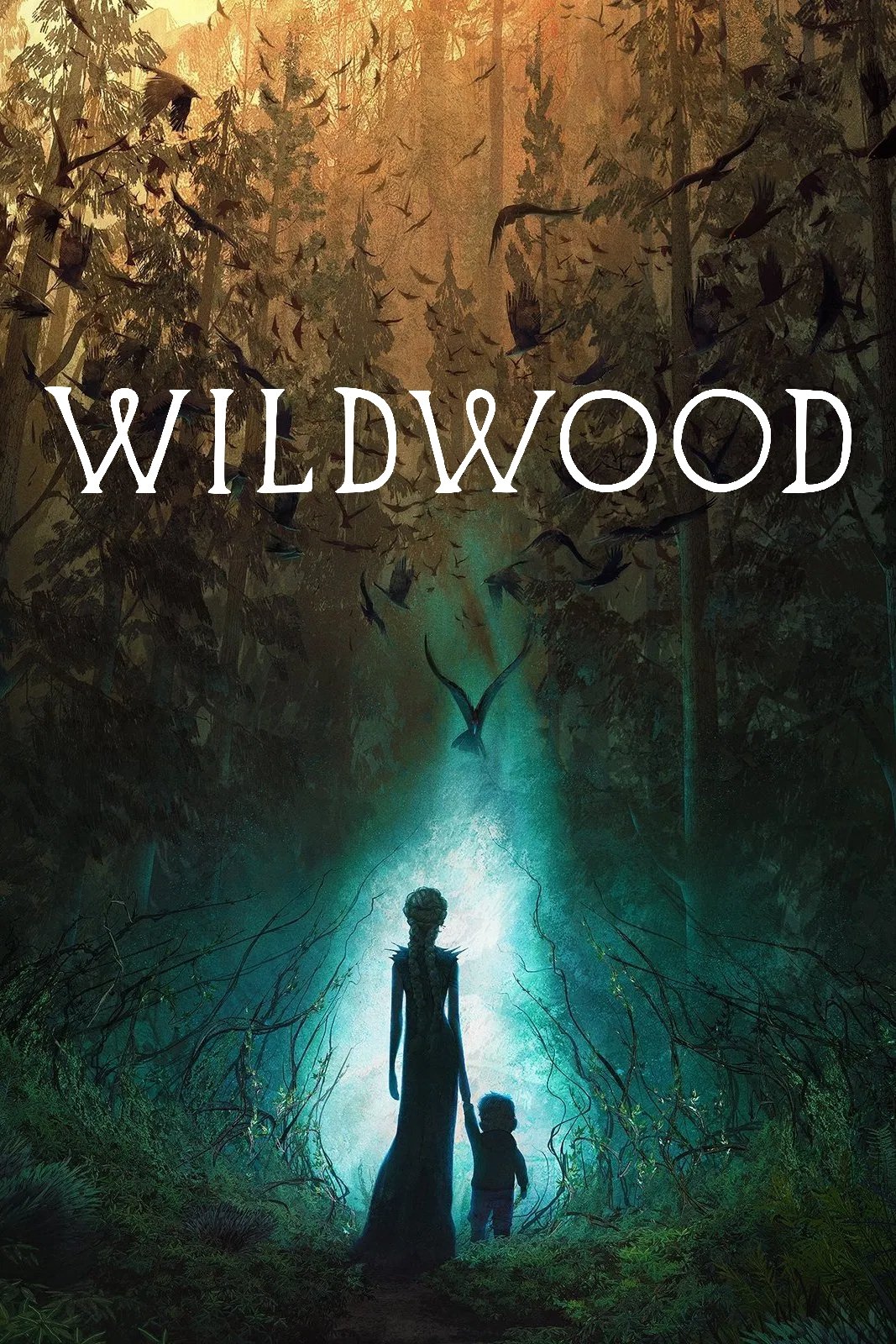
Wildwood is a triumph of animation. Its mesmerizing stop-motion draws audiences into a cinematic adventure that is equal parts beautiful and terrifying, pushing the art and craft of animation to extraordinary new heights in scale and scope.
Nearly every frame inspires awe.
Yet for everything Wildwood accomplishes—and it accomplishes a great deal—Kubo and the Two Strings still tells the better story.
Based on the novel by Colin Meloy and illustrated by Carson Ellis, Wildwood follows Prue McKeel, a young girl whose baby brother is taken into the Impassable Wilderness outside Portland. Determined to rescue him, Prue enters a hidden world inhabited by talking animals, mystics, soldiers, and competing political factions. Alongside her classmate Curtis, she discovers that the wilderness is not merely magical but divided—and that her connection to it may be far more consequential than she imagined.
The result is an astounding achievement in stop-motion animation that transports viewers from their theater seats into a world of magic, nightmares, and discovery. The expansive setting benefits from the sixteen years of heart and soul poured into the production. Not since LAIKA’s Kubo and the Two Strings has the studio delivered such an exquisitely crafted motion picture.
I have said it before, and I will say it again: nothing can replace the way real light strikes real objects and travels into a camera lens.
That physical interaction gives stop-motion a quality computer-generated animation cannot fully reproduce. The world and characters of Wildwood feel tangible because they are tangible. These figures occupied physical space. Artists built their clothing, shaped their faces, positioned their limbs, illuminated their environments, and moved them one painstaking increment at a time.
CGI has nothing on witnessing the hand of the artist.
Like Kubo, Wildwood represents an ideal relationship between artists and engineers. Its handcrafted charm exists in harmony with sophisticated cameras, lighting systems, fabrication technologies, and visual-effects tools. Technology supports the artistry rather than replacing it. The result is not merely animation but cinematic art: hundreds of artists and craftspeople collectively breathing life into objects that otherwise could not move.
If stop-motion pioneer Ray Harryhausen could see what LAIKA has created here, I suspect he would congratulate its artists for taking the form he helped popularize and pushing it beyond anything achievable during his lifetime. They have surpassed the master technologically, but the soul of Harryhausen’s work remains present in every frame. The tiny irregularities, textures, shadows, and tactile movements do not diminish the illusion of life. They create it.
(In the defense of CGI, however, there was a minimal amount used to fill in “gaps” that were otherwise highly impractical or nearly impossible to achieve with stop-motion alone.)
Prue’s journey is fundamentally about growing up and reconciling the past with what she is learning about herself. She believes she has put away those things associated with childhood, only to discover that some needs remain with us as we enter adulthood. Imagination, wonder, courage, and our desire to believe in something beyond ourselves do not have to disappear simply because we grow older.
Perhaps adulthood should always leave a little room for magic.
Prue also learns that actions have consequences—both good and bad. Good intentions cannot prevent mistakes, and failure does not absolve us of responsibility. When we fall, we must acknowledge what happened, rise again, and decide what to do next.
Although Prue is the central character, Curtis is in many respects the heart of the story. He represents the idea that growing older does not require abandoning imagination, magic, or optimism. His enthusiasm initially appears naïve beside Prue’s skepticism, but the movie gradually reveals it as a source of strength.
Curtis also undergoes the more pronounced transformation. He begins as timid, shy, and uncertain, yet ultimately demonstrates extraordinary bravery. Much of the film’s humor comes through him, but he never exists merely as comic relief. His humor, vulnerability, and courage make him an essential emotional counterweight to Prue.
The film correctly advertises itself as a dark fantasy. It channels the qualities that made so many dark fantasies of the 1980s provocative, frightening, and beautiful. At times, it feels as though Wildwood has absorbed elements of Labyrinth, The Dark Crystal, and The NeverEnding Story and filtered them through LAIKA’s singular visual language.
Its clearest parallel with Labyrinth is the abduction of Prue’s baby brother and the heroine’s journey into a fantastical realm to bring him home. Wildwood ultimately delivers a more compelling narrative than Labyrinth, although its story is neither as thoughtful nor as dramatically satisfying as those of The Dark Crystal or The NeverEnding Story.
Where Wildwood becomes nearly indescribable is in its final battle.
Words cannot adequately capture the magnificence of that extended series of sequences. The scale evokes the great battles of The Lord of the Rings, while the astonishing level of detail makes each movement, figure, and environmental element worthy of individual study. More remarkably, the animation captures the horror of war with an intensity I have seldom encountered in the medium.
It is thrilling without making combat feel inconsequential. The spectacle never entirely erases the terror.
By most measurable standards, Wildwood is nearly peerless in the art and science of animation. The creatures, costumes, sets, lighting, cinematography, and physical scale represent a staggering achievement.
Unfortunately, the story does not appear to have received the same degree of care.
Although the movie is adapted from a novel, one senses that significant connective tissue remains somewhere on the page. I have not read the source material, so this can only be inferred from the adaptation itself. The cinematic narrative contains compelling ideas and memorable individual passages, but some developments lack the clarity, emotional foundation, or dramatic progression required to make them completely satisfying.
A closer reading also reveals an ideological division within its fantasy world. Whether consciously or unconsciously, the Governor and Dowager Governess can be interpreted as representatives of Western ideals, while the mystics and ancients embody ideas more closely associated with the East. It therefore comes as little surprise when the narrative dismantles one system in favor of the other.
That interpretation introduces provocative material, but the film does not examine the competing philosophies with enough depth or balance to transform them into a fully persuasive thematic argument. Like several other narrative elements, the idea is present without being developed as thoroughly as the physical world surrounding it.
This imbalance separates Wildwood from Kubo and the Two Strings.
Kubo combined exquisite animation with a simple, intimate, and emotionally profound story about memory, loss, family, and storytelling itself. Its images were not merely beautiful; they served a narrative of comparable beauty. Wildwood may surpass Kubo in technical scope, but it does not equal the earlier film’s dramatic precision or emotional clarity.
Nevertheless, Wildwood remains an extraordinary cinematic experience.
At a moment when studios increasingly treat animation as information generated inside a computer, LAIKA reminds us that animation can still bear the fingerprints of its creators. It can possess weight, texture, imperfection, and evidence of human labor. We can witness the passion in every movement, detail, creature, and landscape.
The film returns us from the business of manufacturing content to the art of making motion pictures.
If Wildwood succeeds at the box office, perhaps it will demonstrate to studios and distributors that audiences still want practical effects, puppetry, miniatures, and stop-motion animation. Perhaps viewers have not lost their appetite for work that is tactile, patient, and unmistakably handmade.
Wildwood does not tell a story equal to the magnificence of its construction. But that construction is so astonishing—and the world it creates so beautiful, frightening, and alive—that the film demands to be experienced on the largest screen possible.
It is a monument to the artists who touched every puppet, constructed every set, manipulated every expression, and transformed still objects into living characters.
The hand of the artist is visible throughout Wildwood. And that hand creates magic.

Ryan is the morning host on WLRH Public Radio in Huntsville, AL and host of the show ReelTalk “where you can enjoy the cinematic conversations frame by frame each week.” He also teaches film studies at the University of Alabama in Huntsville. Additionally, he is the author of the upcoming film studies book titled Monsters, Madness, and Mayhem: Why People Love Horror. Prior to public broadcasting, he taught film studies for over eight years at the University of Tampa. He is a member of the Critics Association of Central Florida and Indie Film Critics of America. If you like this article, check out the others and FOLLOW this blog! Follow him on Twitter: RLTerry1 and LetterBoxd: RLTerry