DISCLOSURE DAY movie review

Full disclosure: this movie is in need of higher intelligence.

There are few filmmaker collaborations in modern cinema as successful as that of Steven Spielberg and David Koepp. Together, they helped bring audiences some of the most beloved blockbusters of the past three decades, including Jurassic Park. Watching Disclosure Day, however, one cannot help but wonder how much of that film’s enduring magic originated with Michael Crichton’s source material and screenplay draft. Because while Spielberg and Koepp’s latest collaboration contains intriguing ideas, technical proficiency, and occasional flashes of emotional resonance, it ultimately feels less like a finished screenplay and more like a collection of story notes elevated by accomplished filmmaking.

The result is a science-fiction drama that is intermittently engaging but rarely compelling.

About: A meteorologist and a cybersecurity expert find themselves at the center of a movement to expose the government’s cover-up of extraterrestrial secrets.

Movies featuring extraterrestrials have been a staple of cinema for generations. From the cautionary tales and Cold War allegories of the 1950s to the philosophical and emotionally rich science-fiction films that followed, alien stories have repeatedly provided filmmakers with opportunities to explore humanity from an outsider’s perspective. Even television programs such as The Twilight Zone managed to produce dozens of memorable alien stories that balanced suspense, wonder, humor, and moral inquiry in less than thirty minutes. (More on that later).

That is not because the premise lacks potential.

On the contrary, the central concept is fascinating. Spielberg and Koepp introduce numerous provocative ideas, several of which could have sustained an entire film on their own. The problem is that these ideas rarely develop beyond their introduction. Rather than building upon one another, they arrive as individual moments, scenes, and conversations that often feel disconnected from the larger narrative. The film frequently resembles a series of intriguing sequences searching for a story capable of connecting them.

This structural weakness becomes increasingly apparent as the movie progresses. The first act is remarkably protracted, spending an excessive amount of time establishing a premise the audience already understands. By contrast, the second act feels abbreviated, as though key dramatic developments have been compressed in the interest of reaching the finale. The third act, meanwhile, overstays its welcome, stretching material that would have benefited from greater economy and focus.

The irony is that Spielberg eventually finds the emotional center that has defined many of his greatest works.

For a brief period, audiences can glimpse the filmmaker responsible for E.T. the Extra-Terrestrial and Close Encounters of the Third Kind. Human connection begins to emerge. Characters start to feel like people rather than narrative devices. The film develops something resembling a heart.

Unfortunately, it arrives too late.

By the time the emotional foundation finally reveals itself, much of the audience’s investment has already been exhausted by a story that spent too long wandering without clear direction.

Tonally, Disclosure Day suffers from a different but related problem. The film takes itself extraordinarily seriously—so seriously, in fact, that it often resembles a historical biopic or documentary rather than a work of speculative fiction. There is nothing inherently wrong with seriousness. Many great science-fiction films are serious. The issue is that Disclosure Day frequently mistakes solemnity for profundity.

The movie is so determined to be important that it forgets to be imaginative.

This is particularly frustrating because Spielberg has historically excelled at balancing wonder with reflection. Films such as Close Encounters and E.T. understood that mystery and awe are just as important as intellectual inquiry. Here, however, the sense of wonder is surprisingly muted, replaced by a self-importance that often weighs down the narrative.

The film’s treatment of faith and spirituality proves similarly uneven. At times, Spielberg and Koepp offer nuanced and believable portrayals of religious individuals grappling with extraordinary circumstances. One character in particular—a nun whose role I will leave undisclosed—provides some of the film’s most thoughtful and surprising moments. Yet elsewhere, the screenplay appears content to take easy shots at organized religion, resulting in a portrayal that feels inconsistent rather than insightful.

Technically, the film is well crafted. Spielberg remains one of cinema’s most accomplished visual storytellers, and there are moments of undeniable craftsmanship throughout. The exception is the visual effects work surrounding several of the film’s alien creatures, which often possess a strangely artificial, video-game quality that undermines their intended impact.

Still, technical proficiency can only carry a film so far.

After watching Disclosure Day, I found myself reflecting on a rather uncomfortable observation: nearly every alien-themed episode of The Twilight Zone delivered more thoughtful ideas, stronger characters, and more satisfying dramatic construction than what is presented here.

Perhaps the film’s greatest indictment is that it arrives decades after The Twilight Zone already explored many of the same questions more effectively. Rod Serling’s landmark anthology routinely delivered stronger characters, clearer themes, more compelling moral dilemmas, and greater dramatic economy than Disclosure Day manages across its entire runtime. Working within the confines of a twenty-five-minute television episode, The Twilight Zone often challenged audiences to reconsider humanity’s place in the universe while simultaneously telling complete and satisfying stories.

Nearly all the episodes of The Twilight Zone linger in the imagination long after the credits roll. Disclosure Day, by contrast, feels destined to become little more than a temporary water-cooler conversation—an intriguing premise discussed for a few days before fading from memory. The difference is not one of budget, technology, or visual spectacle. It is the difference between a story built around an idea and a story that understands what to do with that idea once it arrives.

Great science fiction requires compelling characters, coherent storytelling, and ideas that evolve beyond their initial presentation. Disclosure Day contains pieces of all three, but never assembles them into a satisfying whole.

If audiences enter the theater hoping for another E.T. or Close Encounters of the Third Kind, they are likely to leave disappointed. While Disclosure Day contains intriguing concepts and occasional flashes of Spielberg’s enduring humanity, it never develops the compelling characters, narrative cohesion, or sense of wonder that made those earlier films endure.

What remains is a technically proficient science-fiction drama built around fascinating questions but surprisingly few satisfying answers. Disclosure Day proves that even legendary filmmakers cannot rely on ideas alone. Great science fiction requires compelling characters, coherent storytelling, and a sense of wonder equal to its ambitions. Despite occasional flashes of Spielberg’s enduring humanity, this is one disclosure that never fully reveals its potential.

Ryan is the morning host on WLRH Public Radio in Huntsville, AL and host of the show ReelTalk “where you can enjoy the cinematic conversations frame by frame each week.” Additionally, he is the author of the upcoming film studies book titled Monsters, Madness, and Mayhem: Why People Love Horror. After teaching film studies for over eight years at the University of Tampa, he transitioned from the classroom to public media. He is a member of the Critics Association of Central Florida and Indie Film Critics of America. If you like this article, check out the others and FOLLOW this blog! Follow him on Twitter: RLTerry1 and LetterBoxd: RLTerry
PRESSURE (2026) film review

Some of history’s most consequential battles are won before the first shot is fired.

Few people associate D-Day with weather forecasting. Fewer still know the name James Stagg. Yet without his forecast, one of the most important military operations in history may have unfolded very differently.

Based on the stage play by David Haig, who also adapts his own work for the screen, Pressure transforms a little-known chapter of World War II into an engaging drama about uncertainty, responsibility, and the burden of decision-making. On paper, a film centered on meteorologists debating atmospheric conditions in the days leading up to the Normandy invasion sounds like the sort of project destined for educational television or a museum visitor center. Instead, it becomes a surprisingly compelling thriller, one driven less by combat than by anticipation.

At the center of the story is Dr. James Stagg, portrayed by Andrew Scott in a performance that quietly anchors the entire film. Stagg is tasked with delivering the weather forecast that will help determine whether General Dwight Eisenhower proceeds with the largest amphibious invasion in military history. Scott understands that the drama lies not in weather patterns themselves, but in the crushing responsibility that accompanies them. Every cloud formation, pressure system, and forecast carries potentially catastrophic consequences. His performance is restrained, thoughtful, and deeply human. Even when surrounded by military officers and strategic planners, Scott commands the audience’s attention.

One of the film’s greatest strengths is its structure. Although audiences know D-Day ultimately proceeds, Pressure still manages to generate genuine suspense. The ticking clock becomes a powerful dramatic device as military leaders await Stagg’s final recommendation. Every conversation, disagreement, and meteorological update points toward the same looming decision. Unlike many contemporary films that mistake a series of events for storytelling, Pressure understands the value of narrative momentum. Every scene serves a purpose. Every moment contributes to the mounting tension.

The film’s theatrical origins are occasionally visible, particularly in its dialogue-heavy scenes and confined settings. Yet rather than feeling limited by its stage roots, Pressure successfully expands beyond them. Haig’s screenplay retains the intimacy and character focus of a play while allowing the camera to explore a broader world. The result feels cinematic without sacrificing the strengths of the source material.

Kerry Condon provides excellent support as Kay Summersby, Eisenhower’s driver and confidante. Summersby injects welcome humor into an otherwise tense environment, but more importantly, she serves as one of the film’s most grounded voices. In rooms often dominated by military hierarchy and scientific debate, she offers practical observations and challenges assumptions with refreshing directness. Condon ensures the character never feels relegated to the sidelines.

The film’s most significant weakness comes in the form of Brendan Fraser’s portrayal of General Dwight Eisenhower. Fraser never quite settles into the role. Where Scott’s performance is measured and restrained, Fraser operates at a perpetual state of intensity. Eisenhower spends much of the film sounding as though every conversation represents the climax of a different movie. Rather than conveying the quiet burden of command, Fraser often feels as though he is performing the idea of leadership. It is not a disastrous performance, but it remains the film’s least convincing element.

When the invasion finally arrives, Pressure wisely avoids attempting to compete with films such as Saving Private Ryan or 1917. The D-Day sequences lack the spectacle and visceral emotional impact of those celebrated works, but they remain effective because they are viewed through a different lens. This is not a film about the men storming the beaches. It is a film about the people whose decisions helped determine when that assault would begin.

Watching Pressure on June 6—the anniversary of D-Day itself—felt particularly fitting. The film shines a spotlight on an overlooked participant in one of history’s defining moments and reminds us that history is often shaped not only by those who fight battles, but also by those who make the difficult decisions behind them.

It may never achieve the stature of the great World War II epics, but it succeeds admirably on its own terms. By transforming weather forecasting into compelling drama, Pressure honors an unsung hero and proves that suspense can be found in the most unlikely places.

Listen to my conversation with Brad Biewer of the CinemaSpeak Podcast on this week’s episode of ReelTalk. (Podbean, Apple, Spotify, etc).

Ryan is the morning host on WLRH Public Radio in Huntsville, AL and host of the show ReelTalk “where you can enjoy the cinematic conversations frame by frame each week.” Additionally, he is the author of the upcoming film studies book titled Monsters, Madness, and Mayhem: Why People Love Horror. After teaching film studies for over eight years at the University of Tampa, he transitioned from the classroom to public media. He is a member of the Critics Association of Central Florida and Indie Film Critics of America. If you like this article, check out the others and FOLLOW this blog! Follow him on Twitter: RLTerry1 and LetterBoxd: RLTerry
MORTAL KOMBAT II (2026) movie review

A fun, energetic way to kick off the summer movie season.

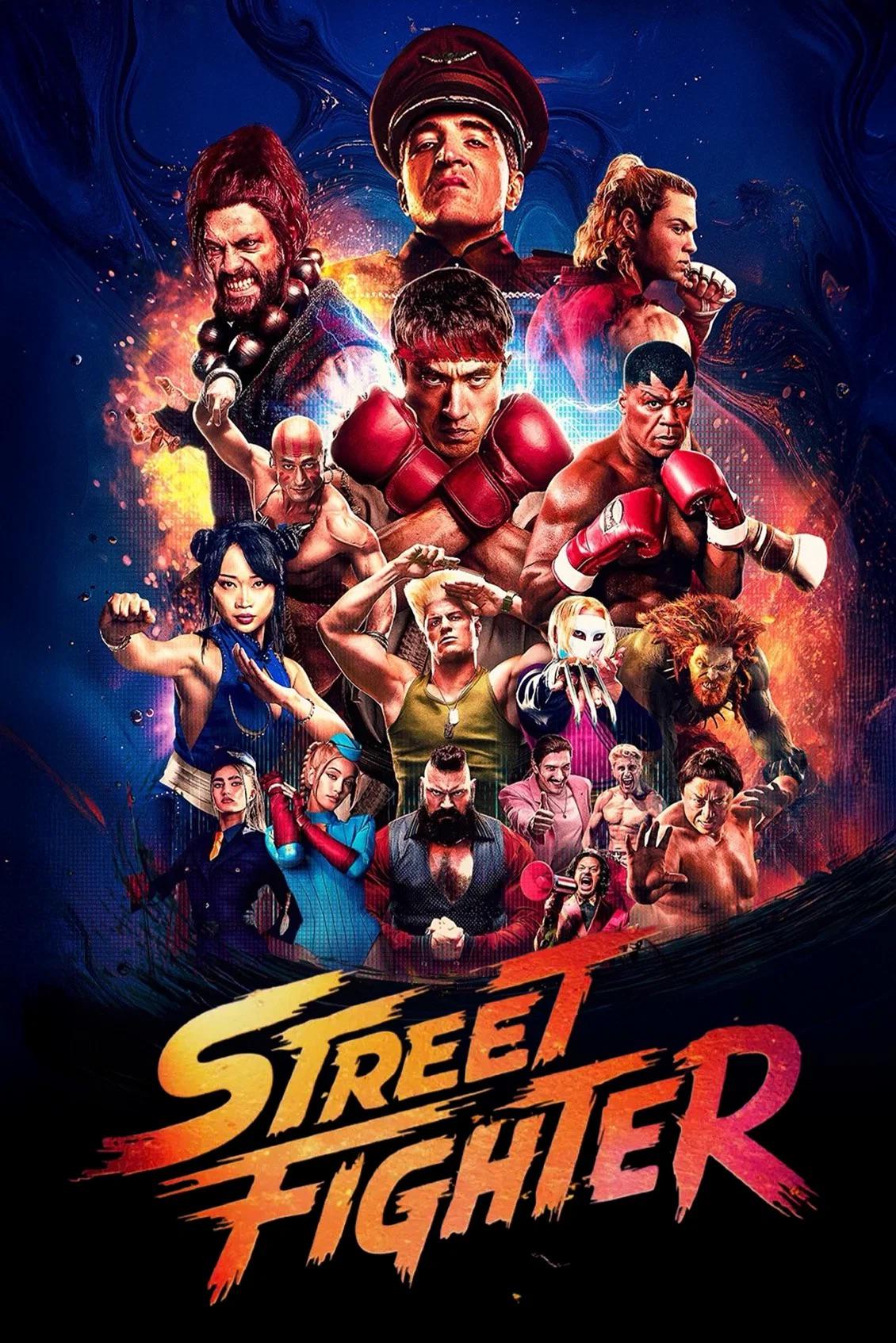
Mortal Kombat II understands something that many modern blockbuster adaptations still struggle to grasp: audiences do not necessarily want filmmakers to reinvent beloved source material—they want filmmakers to respect it while translating it effectively into cinematic language. And surprisingly enough, this sequel largely succeeds. It is not attempting profound philosophical commentary or emotional devastation. Nor should it. The film knows exactly what it is, embraces its absurdity with confidence, and delivers a thoughtful sequel that also functions as one of the more effective big-screen adaptations of a video game in recent memory.

Mortal Kombat II is about how Johnny Cage joins other fighters in the ultimate, no-holds-barred battle to defeat the dark rule of Shao Kahn, a powerful tyrant who threatens the very existence of the Earthrealm and its defenders.

At the end of the day, Mortal Kombat II is a popcorn movie—an unapologetically violent, nostalgic crowd-pleaser designed first and foremost to entertain. The characters remain recognizable to longtime fans while also possessing enough cinematic depth to sustain an actual narrative. That balancing act matters. Too often, video game movies reduce their characters to costumes and catchphrases. Here, however, the fighters feel like people rather than playable avatars waiting for controller input.

As someone who always gravitated toward Kitana in the games, it was particularly satisfying to see her positioned as an emotional and narrative centerpiece. She is not simply present for fan service or aesthetic appeal; she has agency, motivation, and an arc that helps drive the story forward. In fact, one of the film’s greatest strengths is that no character feels disposable. Nobody feels like an NPC wandering through the background waiting to deliver exposition before disappearing. Each fighter is given at least some measure of journey or development.

Visually, the movie also strikes an effective balance between homage and expansion. Many of the settings evoke the iconic backgrounds from the games—the gothic arenas, shadowy temples, and otherworldly battlegrounds longtime fans will immediately recognize. But the film never feels trapped within them. Instead, those environments are punctuated throughout a larger cinematic world that feels appropriately expansive.

Narratively, the story is a fairly classical variation of good versus evil, but there is enough thematic grounding to give the conflict weight. Beneath the martial arts spectacle and supernatural mythology lies a struggle between freedom and authoritarian control—between individuality and the oppressive force of conformity. It is not especially subtle, but subtlety is not really the point here.

The point is fun. And on that level, the movie absolutely works.

The fight choreography is energetic, the pacing rarely drags, and yes—the fatalities are brutal. But importantly, the violence never tips into unpleasantness. The film retains enough of its heightened video-game aesthetic that the gore feels stylized rather than exploitative. There is restraint within the excess. The movie understands the difference between brutality and ugliness.

Most importantly, Mortal Kombat II remembers that adaptation does not require embarrassment. It never apologizes for being based on a video game. Instead, it embraces the mythology, the characters, the iconography, and even the inherent silliness of the premise with complete sincerity. That sincerity goes a long way.

This is a fun, energetic way to kick off the summer movie season, and longtime fans—particularly those who grew up with the original games—will likely leave the theater with a smile on their face. And sometimes, that is enough.

Ryan is the general manager for 90.7 WKGC Public Media and host of the show ReelTalk “where you can join the cinematic conversations frame by frame each week.” Additionally, he is the author of the upcoming film studies book titled Monsters, Madness, and Mayhem: Why People Love Horror. After teaching film studies for over eight years at the University of Tampa, he transitioned from the classroom to public media. He is a member of the Critics Association of Central Florida and Indie Film Critics of America. If you like this article, check out the others and FOLLOW this blog! Follow him on Twitter: RLTerry1 and LetterBoxd: RLTerry
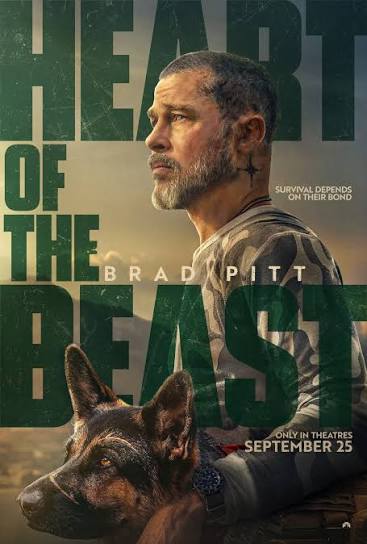
THE DEVIL WEARS PRADA 2 movie review

A sequel about decline that unintentionally embodies it

The Devil Wears Prada 2 arrives with an intriguing premise: the decline of traditional print media and the cultural erosion that follows in its wake. On paper, that is fertile dramatic territory—especially for a franchise rooted in the world of fashion magazines, where prestige once carried weight and authority. But while the film gestures toward thoughtful commentary on the changing media landscape, its ambition collapses under the weight of its own excess. The sequel’s attempt to explore the decline of traditional print journalism—and the cultural loss that represents—is buried beneath rushed subplots and thin character work. The sharp bite that defined the original is gone, replaced by interactions that feel oddly dull and listless.

About the movie: Andy Sachs (Anne Hathaway) returns to Runway as Miranda Priestly (Meryl Streep) navigates a new media landscape and Runway‘s position within it. They reconnect with another former assistant, Emily (Emily Blunt), who is now the head of a luxury brand that possesses funding which could ensure Runway‘s survival.

The irony is difficult to ignore: a movie about the fading relevance of print media ends up feeling like a diminished version of its former self. What made the original The Devil Wears Prada so compelling was not merely its fashion or its humor, but its brazen confidence. The characters were bold, unapologetic, and sharply drawn. They possessed edge—sometimes cruelty, sometimes wit—but always energy.

That energy is conspicuously absent here. The sequel lacks the chutzpah that defined the original. The characters feel like muted versions of their former selves—recognizable, but drained of vitality.

Even Miranda Priestly, once a towering figure of authority and intimidation, feels diminished. She is simply not the same Miranda. Nor is she a believable evolution of that character in an era defined by the decline of print media and the increasing irrelevance of traditional fashion magazines. Instead, she feels like a sanitized, diluted interpretation—a kind of bargain-bin version of the woman who once commanded every room she entered.

Andy, meanwhile, remains recognizable as her former self, but a shallower one—less conflicted, less driven, less interesting. Emily comes closest to recapturing her original spark, yet even she feels like a low-resolution facsimile. Nigel is perhaps the most faithful to his earlier incarnation, but he is given remarkably little to do, functioning more as a reminder of the past than as an active participant in the present.

One of the film’s most significant problems is not a lack of ideas—it is an overabundance of them. The movie attempts to comment on a wide array of contemporary issues, each of which could have sustained a compelling narrative on its own. Among them:

  • The exploitation of labor in global fashion supply chains
  • The decline of print journalism and professional writing
  • Body positivity and changing beauty standards
  • Workplace political correctness
  • The tension between art and commerce
  • The fallibility of institutions and authority figures
  • Agism

These are all worthwhile themes. But instead of selecting one or two central ideas and developing them with clarity, the film introduces them in rapid succession, only to abandon them before they gain dramatic traction. The result is a story that feels scattered and unfocused.

There is a fundamental principle of storytelling that seems to have been forgotten here:
When your story is about everything, it is ultimately about nothing.

Adding to the problem is a roster of side characters who function less as people and more as props. They appear when needed, deliver exposition, and disappear without leaving any meaningful impression. They exist to move the plot forward rather than to inhabit it.

Even the film’s musical landscape reflects this sense of creative fatigue.

The soundtrack is largely forgettable—pleasant enough in the moment, but lacking the memorable punch that defined the original film’s sonic identity. One exception, of course, is Vogue, which remains as exhilarating as ever. Its inclusion feels less like nostalgia and more like a reminder of what bold artistic expression once sounded like.

By contrast, the contributions from Lady Gaga feel surprisingly inert—polished, competent, but oddly impersonal. The songs lack the distinctive flair and theatricality audiences have come to expect from an artist of her caliber. They register less as creative statements and more as algorithmic approximations of style.

From beginning to end, The Devil Wears Prada 2 feels like a discount version of its predecessor—an imitation rather than a continuation. It tries hard to recapture the magic of the original, but its creative DNA seems shaped by the streaming era: content designed for breadth rather than depth, immediacy rather than longevity. The film moves quickly, introduces ideas rapidly, and resolves conflicts hastily—mirroring the rhythms of modern digital consumption.

In that sense, the movie unintentionally becomes a commentary on the very cultural shifts it seeks to critique.

It is a product of the moment.

And like much of contemporary media, it feels engineered for engagement rather than crafted for impact. The Devil Wears Prada 2 reminds us that sequels are not sustained by familiarity alone. They require conviction, clarity of purpose, and characters who evolve in meaningful ways. This film has ideas—many of them compelling—but acks the narrative discipline necessary to bring those ideas to life. What remains is a glossy, well-dressed production that gestures toward relevance without ever achieving it.

The original film had bite—had fire.
This one barely leaves a mark.

Ryan is the general manager for 90.7 WKGC Public Media and host of the show ReelTalk “where you can join the cinematic conversations frame by frame each week.” Additionally, he is the author of the upcoming film studies book titled Monsters, Madness, and Mayhem: Why People Love Horror. After teaching film studies for over eight years at the University of Tampa, he transitioned from the classroom to public media. He is a member of the Critics Association of Central Florida and Indie Film Critics of America. If you like this article, check out the others and FOLLOW this blog! Follow him on Twitter: RLTerry1 and LetterBoxd: RLTerry
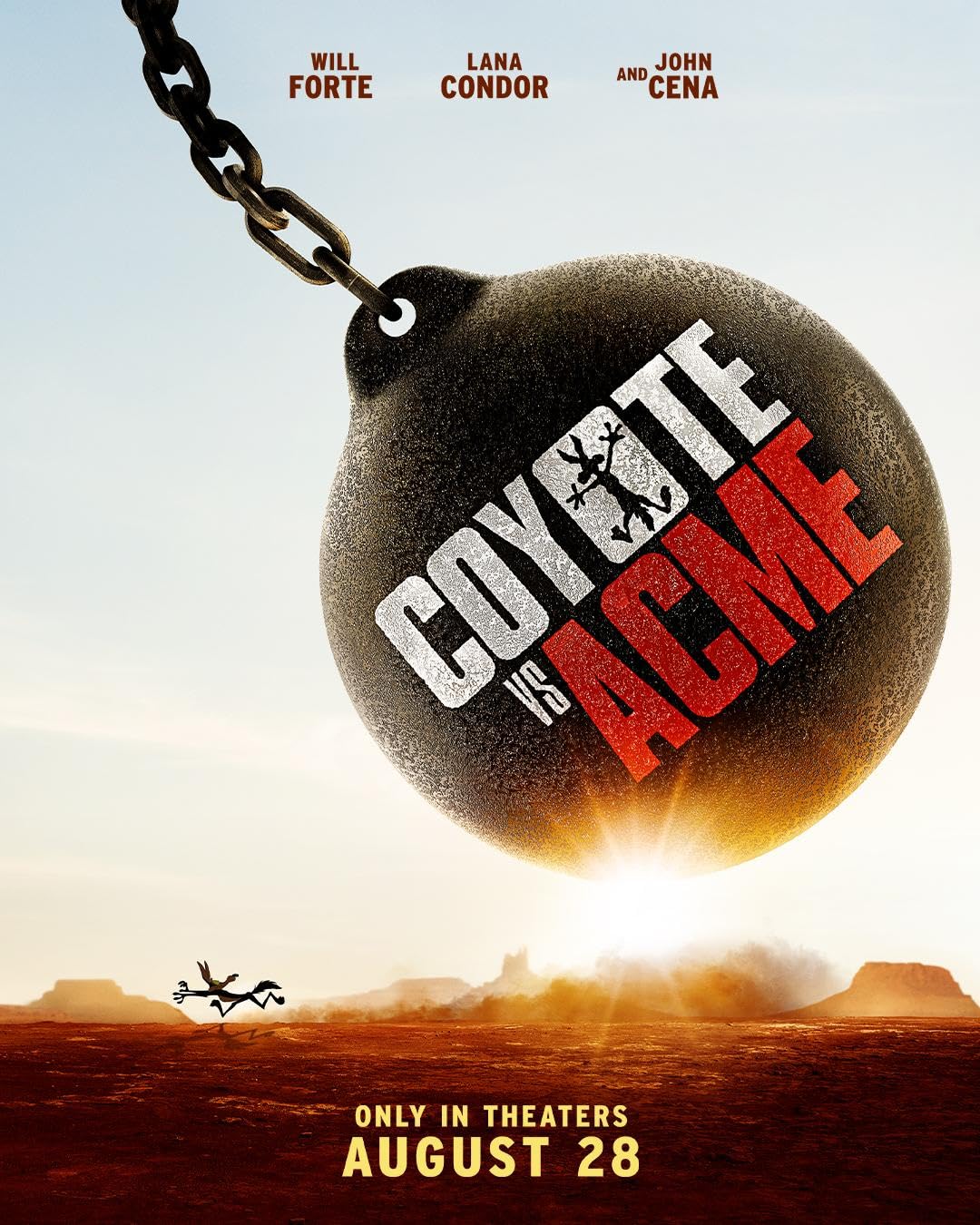
MICHAEL (2026) biopic review

Electrifying in look, disjointed in prose.

Michael is, at its best, a spectacle. At its worst, it is a sequence of moments searching for a story to connect them. The film dazzles with electrifying musical numbers and a transformative performance from Jaafar Jackson, recreating the energy and precision that made Michael Jackson a global icon. Yet beneath the surface of that spectacle lies a surprisingly thin dramatic foundation. Rather than unfolding as a cohesive narrative, the movie plays more like a curated timeline—an impressive collection of scenes and set pieces that rarely build upon one another. The result is a biopic that captures the look and sound of greatness, but seldom pauses long enough to explore the human motivations and emotional currents that made that greatness possible.

Michael is the story of the first half of the King of Pop’s life–from his extraordinary early days in the Jackson 5 to the visionary artist whose creative ambition fuels a relentless pursuit to become the biggest entertainer in the world.

Without a doubt, Jaafar Jackson’s performance as his uncle, Michael Jackson, is nothing short of electrifying. He captures the look, the voice, the posture, and—most impressively—the kinetic energy of the King of Pop with uncanny precision. There are stretches in this film where the illusion is so convincing that you genuinely forget you are watching an actor. You feel, instead, as though Michael himself has stepped back onto the stage.

And the film knows it.

The concert and music-video sequences are spectacular—lavish in scale, meticulously choreographed, and technically impressive. From the lighting design to the sound mixing to the camera movement, these moments recreate the experience of a Michael Jackson performance with remarkable fidelity. If you never had the opportunity to see him live, this movie brings you about as close as cinema can.

But spectacle alone cannot sustain a narrative. Despite its visual electricity, Michael plays less like a cohesive drama and more like a curated highlight reel. Scene after scene unfolds with little connective tissue, rarely building upon what came before. The only true continuity in the film is Michael himself—his presence serving as the thread holding together a collection of otherwise disconnected sequences.

As a result, character development is surprisingly thin—even for the central figure. Yes, we hear Michael express his desire to be the best. We see his ambition. We witness his relentless pursuit of perfection. But we rarely feel the emotional engine driving those impulses. Motivation is stated rather than dramatized. The film tells us who Michael is, but seldom allows us to experience how he became that person.

That limitation extends to the supporting characters as well.

Take Joseph Jackson. The film hints at his greed and severity, but it stops short of exploring the deeper complexity of his motivations. There is an important story there—one about a father determined to ensure his children would not spend their lives working in a steel mill in Gary, Indiana. His methods were often harsh, even repulsive, but his ambition was rooted in a desire for something better. That tension, which could have provided dramatic depth, remains largely unexplored.

Many of the characters in this film—including the leads—feel one-dimensional, defined more by their roles in Michael’s life than by their own inner lives. To its credit, the film does succeed in weaving a thematic motif that carries from beginning to end: the enduring influence of Peter Pan. We learn why the story of the boy who never grew up resonated so deeply with Michael from childhood onward, and that thread provides one of the few elements of emotional continuity in the narrative. We also meet his famous chimpanzee, Bubbles—an inclusion that underscores the film’s fascination with the mythology surrounding the man.

Narratively, the movie traces Michael’s journey from his early days in Gary to his 1988 concert in London. But the film feels less like an exploration of his life and more like a survey of it—an overview rather than an examination.

One might argue that such breadth is necessary to capture what amounts to the first half of an extraordinary life within a two-hour runtime. Yet history suggests otherwise. Consider What’s Love Got to Do with It, anchored by a career-defining performance from Angela Bassett as Tina Turner. That film covers decades of triumph and trauma while still delivering character development, narrative momentum, and emotional clarity. It demonstrates that a larger-than-life story can be both expansive and dramatically coherent.

Perhaps the difference lies not in structure, but in subject.

Unlike Turner’s story, Michael Jackson’s legacy remains complicated—shaped not only by unprecedented artistic achievement but also by controversy, scandal, and public scrutiny. For some viewers, that context may make it difficult to fully embrace a film that focuses primarily on the years before his fall from favor. And with the movie ending on a clear “to be continued” note, it seems inevitable that the darker chapters of his life will be addressed in a future installment.

Still, for all its narrative shortcomings, Michael delivers where it matters most to fans: the music. The recreation of the Thriller sequence is a particular highlight—an exhilarating reminder of why Michael Jackson became a global phenomenon. The film’s reverence for his artistry is unmistakable, even if its storytelling discipline is not. I was disappointed, however, that the great Vincent Price receives little more than a passing acknowledgment, though his brief appearance via House of Wax offers a welcome nod to cinema history.

In the end, Michael succeeds as an experience more than as a narrative.

Go for the concert.
Go for the spectacle.
Go to witness an astonishing performance.

But do not expect to leave with a deeper understanding of the man behind the music.

Ryan is the general manager for 90.7 WKGC Public Media and host of the show ReelTalk “where you can join the cinematic conversations frame by frame each week.” Additionally, he is the author of the upcoming film studies book titled Monsters, Madness, and Mayhem: Why People Love Horror. After teaching film studies for over eight years at the University of Tampa, he transitioned from the classroom to public media. He is a member of the Critics Association of Central Florida and Indie Film Critics of America. If you like this article, check out the others and FOLLOW this blog! Follow him on Twitter: RLTerry1 and LetterBoxd: RLTerry