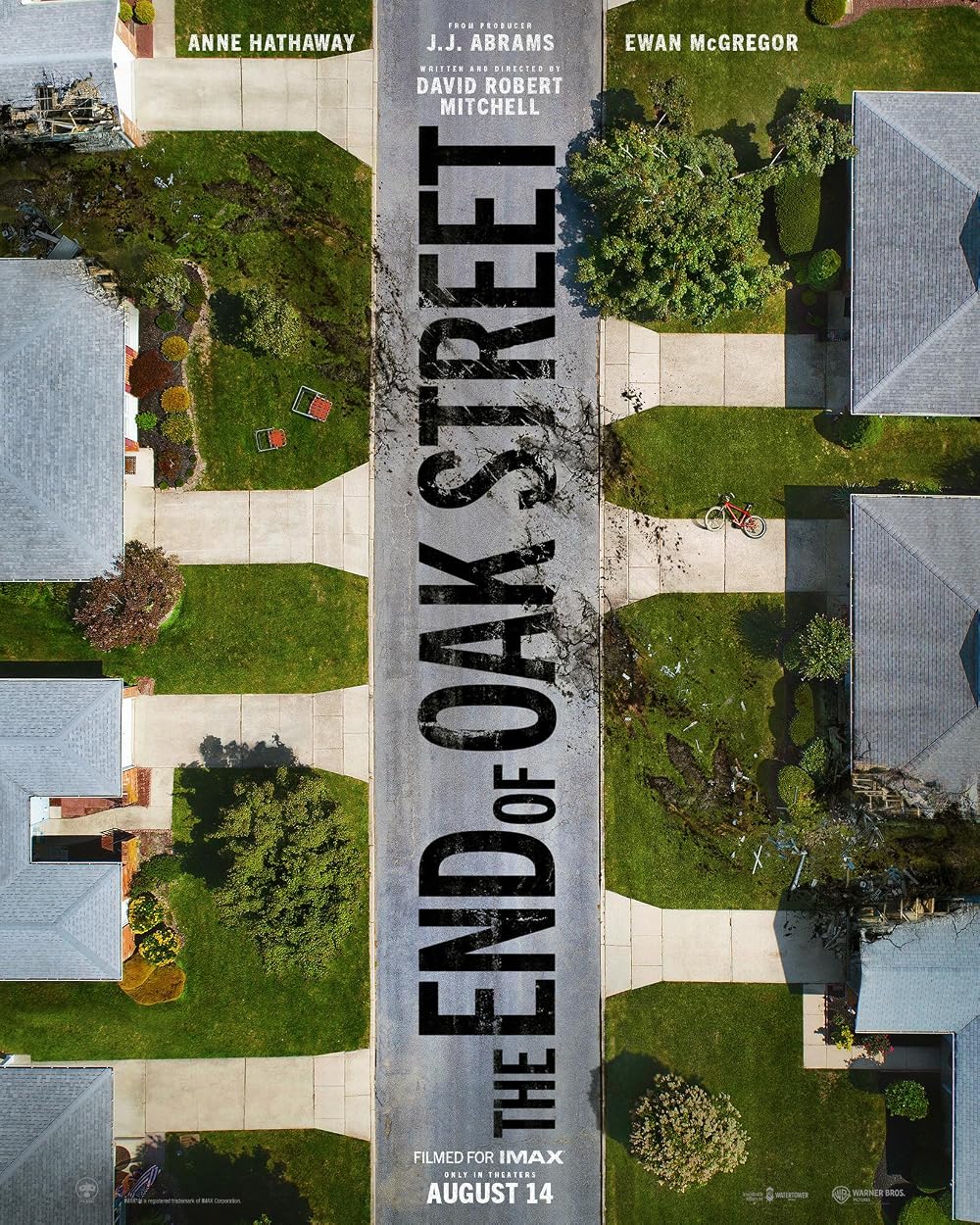
THE END OF OAK STREET dino-horror movie review

Dinosaurs are scary again.

The End of Oak Street is a solid piece of summertime entertainment—a fun, action-packed journey through the hidden dangers of suburbia that plays like a throwback to a 1960s B-movie. Most importantly, it makes dinosaurs scary again.

About: A mysterious cosmic event rips Oak Street from suburbia and transports a neighborhood to someplace unknown. The Platt family soon discovers that their very survival depends on sticking together as they navigate their now unrecognizable surroundings.

Shot on 35mm film, the picture has a warm, soft texture that somehow makes the terror feel even more immediate. Its old-school look and brisk pacing give the movie a tactile personality often missing from contemporary creature features. The external action plot works well, and the film understands the primal appeal of watching prehistoric predators invade an ordinary neighborhood.

In that respect, The End of Oak Street feels like the manifestation of a childhood fear many of us carried after seeing Jurassic Park. I certainly wondered what would happen if dinosaurs suddenly appeared in my own neighborhood after watching that film in theaters in 1993. Mitchell taps into that anxiety effectively, transforming familiar suburban streets and houses into places of danger.

The film also struggles to settle on a consistent tone. Mitchell seems caught between making a dinosaur horror movie and a dark comedy, and the picture repeatedly oscillates between the two without fully committing to either. Both approaches could have worked, but the uncertainty occasionally makes it difficult to determine how certain scenes are meant to land. The tonal inconsistency never overwhelms the film’s entertainment value, though it remains noticeable throughout.

Where the film falls short is in its unwillingness to fully explore the more reflective themes it introduces. The ideas are there, but they remain largely beneath the surface. The film introduces the question of God’s existence without meaningfully exploring it. One character explicitly rejects belief, another appears similarly skeptical, one is Catholic, and two others at least express curiosity. That range of perspectives could have supported a genuinely compelling thematic thread. Instead, the subject feels shoehorned into the screenplay in a way that subtly privileges a faithless worldview—particularly because the two characters coded as the most intelligent are also the least believing. Given that several others believe or remain open to belief, the film had an opportunity for balance and nuance that it ultimately leaves unexplored.

Mitchell also does not give the characters enough to do beyond reacting to the immediate crisis. The cast performs capably with the material provided, but the performative dimension is ultimately just that: capable. The characters are sufficiently compelling to carry the action, though few develop enough to linger afterward. But Anne Hathaway being chased by and fighting off dinosaurs…yes please! She did great.

The dinosaurs generally look good, and the visual effects are more convincing than the computer-generated creatures in many recent movies. They do not approach the groundbreaking naturalism of Jurassic Park, but they are considerably stronger than much of the CGI produced in its wake.

I could have done without the feathers. While there are scientific theories supporting feathered dinosaurs—and we cannot know with absolute certainty how every species appeared—the designs are initially distracting. Filmmakers should often strive for naturalism rather than strict realism. A creature must first look as though it belongs within the visual world of the movie, regardless of whether every detail reflects the latest scientific interpretation.

As a recent creature-feature comparison, The End of Oak Street shares some DNA with Crawl, although Crawl remains the stronger and more dramatically developed film. Still, Mitchell’s movie has heart, momentum, and enough old-fashioned monster-movie energy to make it an enjoyable capstone to the summer season.

This is also one to see on the big screen rather than postponing until streaming. The story may be simple, but its scale, sound, and creature action benefit considerably from a theatrical presentation. The End of Oak Street may not fully capitalize on all its ideas, but it delivers an entertaining ride—and reminds us that sometimes the most frightening monsters are the ones waiting just beyond the front lawn.

Ryan is the morning host on WLRH Public Radio in Huntsville, AL and host of the show  ReelTalk  “where you can enjoy the cinematic conversations frame by frame each week.” Additionally, he is the author of the upcoming film studies book titled Monsters, Madness, and Mayhem: Why People Love Horror. After teaching film studies for over eight years at the University of Tampa, he transitioned from the classroom to public media. He is a member of the Critics Association of Central Florida and Indie Film Critics of America. If you like this article, check out the others and FOLLOW this blog! Follow him on Twitter: RLTerry1 and LetterBoxd: RLTerry
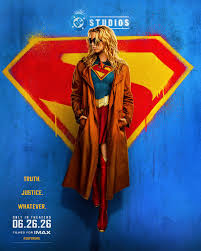
SUPERGIRL (2026) superhero movie review

Sometimes the greatest superpower a movie can possess is embracing its genre.

Supergirl delivers the kind of summer movie you remember from when you were a kid. For years, superhero films have become increasingly preoccupied with expanding cinematic universes, subverting audience expectations, or convincing viewers they are watching something more sophisticated than a comic-book movie. Supergirl takes a refreshingly different approach. It embraces the genre without apology, tells a straightforward story populated by engaging characters, and remembers that summer blockbusters are supposed to be fun.

About: When an unexpected and ruthless adversary strikes too close to home, Supergirl (Milly Alcock) reluctantly joins forces with an unlikely companion (Eve Ridley) for an interstellar journey of vengeance and justice.

An encouraging trend has begun to emerge this summer. Rather than chasing prestige or attempting to deconstruct their own genres, films like Mortal Kombat II, Masters of the Universe, and Supergirl have embraced the fundamentals of classical storytelling. Their plots are straightforward, their characters are engaging, and their primary objective is to entertain. In a season that has also produced films weighed down by self-seriousness and underdeveloped ideas, these adventures stand as reminders that fun and craftsmanship are not opposing virtues—they are often companions.

Despite a handful of technical shortcomings—including editing that occasionally lacks refinement and several action sequences hampered by murky lighting—Supergirl captures the spirit of the summer movies many of us grew up with. It moves confidently from one adventure to the next, balancing action, humor, and heart with an efficiency that keeps its brisk runtime moving at a steady pace.

Its greatest strength lies in its characters.

Kara Zor-El is more than simply another superhero navigating impossible circumstances. Her emotional journey is mirrored by that of Ruthye, whose determination and resilience immediately reminded me of Arya Stark from Game of Thrones. Together, the two characters offer contrasting responses to grief and trauma.

Kara represents what can happen when loss is internalized—when sorrow quietly shapes one’s identity and worldview. Ruthye, by contrast, refuses to allow tragedy to dictate her future. Rather than denying her pain, she demonstrates that healing begins when we decide to master our trauma rather than allowing it to master us.

The relationship between these two characters provides the emotional foundation for the entire film. Then, there is Lobo.

Played with infectious enthusiasm by Jason Momoa, Lobo provides much of the movie’s comic relief while simultaneously embodying a completely different response to suffering. If Kara internalizes trauma and Ruthye overcomes it, Lobo simply laughs in its face. His chaotic, nihilistic worldview makes him feel like an intergalactic descendant of Meat Loaf’s Eddie from The Rocky Horror Picture Show—equal parts absurd, dangerous, and strangely lovable. Momoa clearly understands exactly what kind of movie he’s in, and his performance is all the better for it.

Visually, Supergirl offers one of the most imaginative alien landscapes seen in a mainstream science-fiction film in years. Not since Star Trek: The Next Generation—or perhaps the original Star Wars trilogy—have I seen such a delightful assortment of extraterrestrial species occupying the same cinematic space. The production wisely relies on a combination of practical costumes, prosthetic makeup, and computer-generated creatures. Ironically, the practical work often proves more convincing than the fully digital creations, lending the universe a tangible charm that many contemporary blockbusters lack.

Perhaps the film’s most surprising accomplishment, however, is its confidence in traditional storytelling.

Rather than endlessly chasing twists or deconstructing the superhero formula, Supergirl embraces classical screenwriting structure. Every major dramatic beat—from the inciting incident and catalyst through the midpoint, crisis, climax, and resolution—arrives naturally and purposefully. The result is a narrative that feels coherent, satisfying, and remarkably well-paced. In an era where many blockbuster films mistake unpredictability for sophistication, there is something refreshing about a movie that understands the enduring value of solid dramatic construction.

No, Supergirl is not reinventing the superhero movie, nor should it have done so.

Instead, it reminds audiences why they fell in love with comic-book adventures in the first place. It delivers colorful worlds, memorable characters, genuine humor, emotional sincerity, and enough spectacle to satisfy without ever losing sight of the people at the center of the story. Sadly, that combination is becoming increasingly rare these days.

Supergirl may not aspire to redefine the genre, but it succeeds at something arguably more difficult: reminding us just how enjoyable a well-told superhero story can be.

Ryan is the morning host on WLRH Public Radio in Huntsville, AL and host of the show  ReelTalk  “where you can enjoy the cinematic conversations frame by frame each week.” Additionally, he is the author of the upcoming film studies book titled Monsters, Madness, and Mayhem: Why People Love Horror. After teaching film studies for over eight years at the University of Tampa, he transitioned from the classroom to public media. He is a member of the Critics Association of Central Florida and Indie Film Critics of America. If you like this article, check out the others and FOLLOW this blog! Follow him on Twitter: RLTerry1 and LetterBoxd: RLTerry
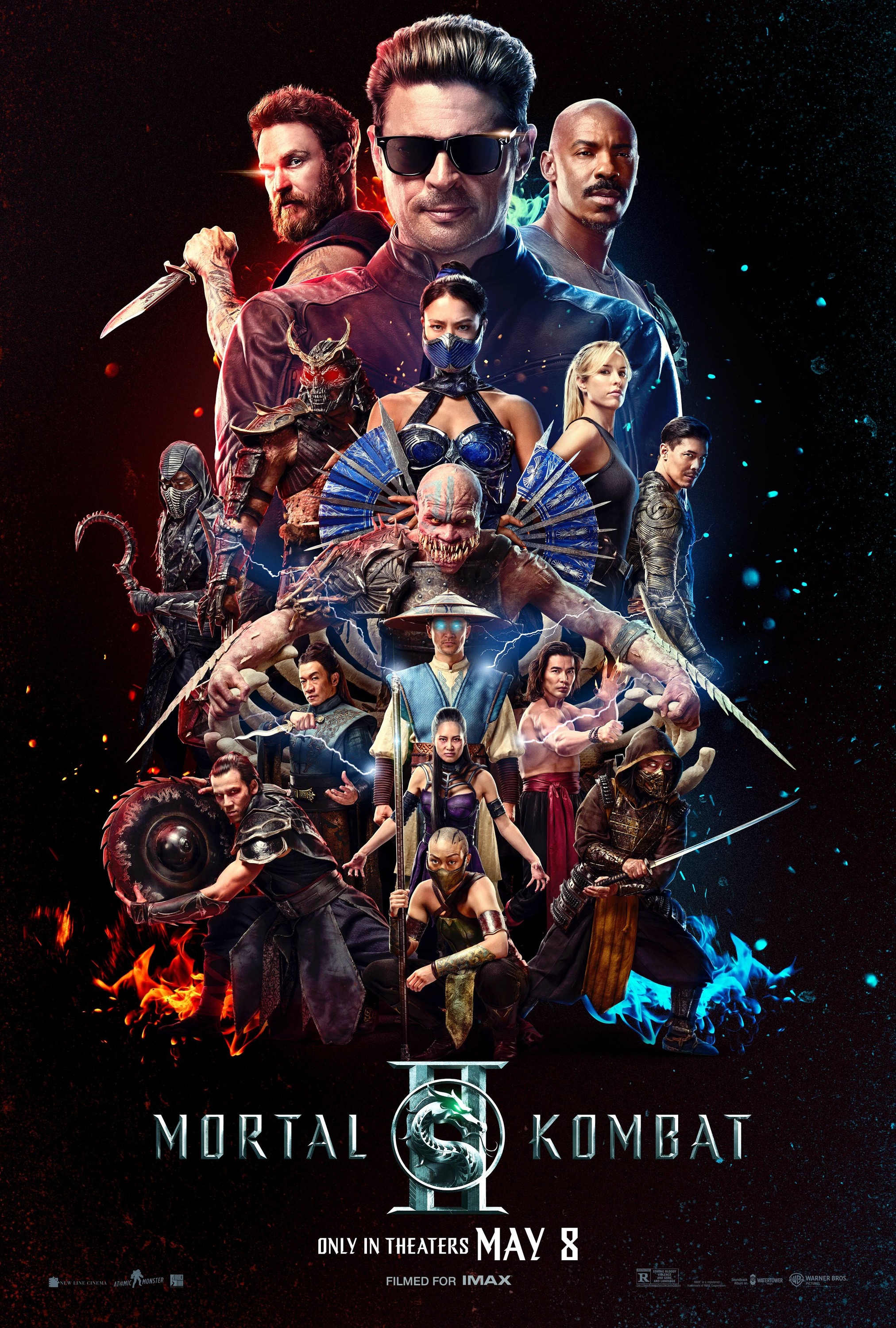
MORTAL KOMBAT II (2026) movie review

A fun, energetic way to kick off the summer movie season.

Mortal Kombat II understands something that many modern blockbuster adaptations still struggle to grasp: audiences do not necessarily want filmmakers to reinvent beloved source material—they want filmmakers to respect it while translating it effectively into cinematic language. And surprisingly enough, this sequel largely succeeds. It is not attempting profound philosophical commentary or emotional devastation. Nor should it. The film knows exactly what it is, embraces its absurdity with confidence, and delivers a thoughtful sequel that also functions as one of the more effective big-screen adaptations of a video game in recent memory.

Mortal Kombat II is about how Johnny Cage joins other fighters in the ultimate, no-holds-barred battle to defeat the dark rule of Shao Kahn, a powerful tyrant who threatens the very existence of the Earthrealm and its defenders.

At the end of the day, Mortal Kombat II is a popcorn movie—an unapologetically violent, nostalgic crowd-pleaser designed first and foremost to entertain. The characters remain recognizable to longtime fans while also possessing enough cinematic depth to sustain an actual narrative. That balancing act matters. Too often, video game movies reduce their characters to costumes and catchphrases. Here, however, the fighters feel like people rather than playable avatars waiting for controller input.

As someone who always gravitated toward Kitana in the games, it was particularly satisfying to see her positioned as an emotional and narrative centerpiece. She is not simply present for fan service or aesthetic appeal; she has agency, motivation, and an arc that helps drive the story forward. In fact, one of the film’s greatest strengths is that no character feels disposable. Nobody feels like an NPC wandering through the background waiting to deliver exposition before disappearing. Each fighter is given at least some measure of journey or development.

Visually, the movie also strikes an effective balance between homage and expansion. Many of the settings evoke the iconic backgrounds from the games—the gothic arenas, shadowy temples, and otherworldly battlegrounds longtime fans will immediately recognize. But the film never feels trapped within them. Instead, those environments are punctuated throughout a larger cinematic world that feels appropriately expansive.

Narratively, the story is a fairly classical variation of good versus evil, but there is enough thematic grounding to give the conflict weight. Beneath the martial arts spectacle and supernatural mythology lies a struggle between freedom and authoritarian control—between individuality and the oppressive force of conformity. It is not especially subtle, but subtlety is not really the point here.

The point is fun. And on that level, the movie absolutely works.

The fight choreography is energetic, the pacing rarely drags, and yes—the fatalities are brutal. But importantly, the violence never tips into unpleasantness. The film retains enough of its heightened video-game aesthetic that the gore feels stylized rather than exploitative. There is restraint within the excess. The movie understands the difference between brutality and ugliness.

Most importantly, Mortal Kombat II remembers that adaptation does not require embarrassment. It never apologizes for being based on a video game. Instead, it embraces the mythology, the characters, the iconography, and even the inherent silliness of the premise with complete sincerity. That sincerity goes a long way.

This is a fun, energetic way to kick off the summer movie season, and longtime fans—particularly those who grew up with the original games—will likely leave the theater with a smile on their face. And sometimes, that is enough.

Ryan is the general manager for 90.7 WKGC Public Media and host of the show ReelTalk “where you can join the cinematic conversations frame by frame each week.” Additionally, he is the author of the upcoming film studies book titled Monsters, Madness, and Mayhem: Why People Love Horror. After teaching film studies for over eight years at the University of Tampa, he transitioned from the classroom to public media. He is a member of the Critics Association of Central Florida and Indie Film Critics of America. If you like this article, check out the others and FOLLOW this blog! Follow him on Twitter: RLTerry1 and LetterBoxd: RLTerry
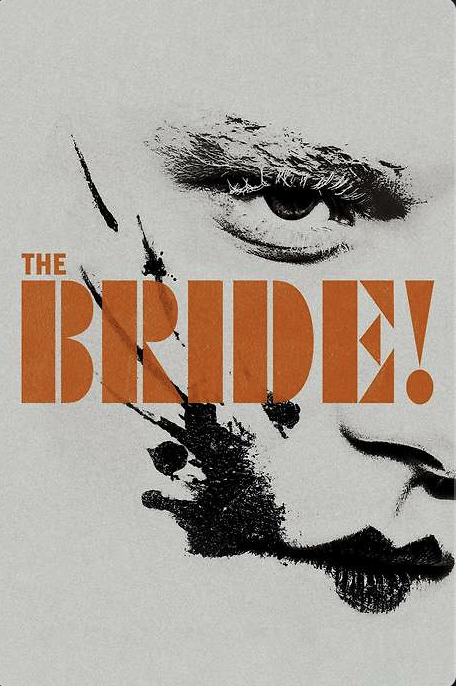
THE BRIDE! (2026) movie review

There’s a good movie somewhere inside The Bride!—perhaps several.

There’s a good movie somewhere inside The Bride!—perhaps several. The irony is that the film itself feels as Frankensteined together as the titular creation at its center. Maggie Gyllenhaal’s ambitious reinterpretation of Mary Shelley’s Frankenstein and James Whale’s immortal Bride of Frankenstein (1935) clearly springs from a place of imaginative vision. The problem is not the ideas. The problem is that too many of them are stitched together without the narrative cohesion necessary to bring the creature fully to life. What emerges is a fascinating but uneven cinematic experiment: a film whose strongest parts often struggle against the whole.

In 1930s Chicago, groundbreaking scientist Dr. Euphronious (Annette Bening) brings a murdered young woman Ida (Jessie Buckley) back to life to be a companion for Frankenstein’s monster (Christian Bale). What happens next is beyond what either of them could ever have imagined.

There is little doubt that Gyllenhaal set out to craft an imaginative and thought-provoking reexamination of Frankenstein mythology. The ambition is evident in nearly every frame. Yet the screenplay and editing lack the discipline required to shape that ambition into something structurally coherent. In an ironic parallel to Frankenstein’s own creation, the film is assembled from intriguing narrative parts—each compelling in isolation—but collectively they never quite form a unified organism. Any one of those narrative threads might have served as a more stable foundation than the combination presented here.

It is possible that The Bride! may one day find a second life as a cult curiosity. Cinema history is filled with examples of films—The Rocky Horror Picture Show and even Showgirls—that were initially met with confusion before later audiences embraced their eccentricities. But both of those films possessed an essential ingredient that this one struggles to sustain: entertainment. Each of them understood its own satirical target and leaned confidently into the theatricality of its premise. The Bride! gestures toward satire but never fully commits to it. The result is a tonal tug-of-war between melodrama and camp. Had the film embraced the latter more confidently, the experience might have been far more exhilarating. Intentional camp signals to the audience that the filmmakers are in on the joke; here, the film often takes its own eccentricities too seriously.

Narratively, the film wanders. Yet the performative dimension proves far sturdier. Jessie Buckley and Christian Bale share a compelling chemistry that anchors the film whenever the plot threatens to drift. Annette Bening brings welcome gravitas to her doctor, while Penélope Cruz’s detective—though played with conviction—is underserved by a character that ultimately has too little to do. Indeed, the performances are what keep the audience invested when the narrative itself begins to lose its footing.

Visually, however, Gyllenhaal demonstrates undeniable directorial confidence. Her eye for composition yields moments of striking cinematic beauty. The cinematography and production design elegantly bridge old and new interpretations of the mad scientist mythos. Laboratories glow with stylized menace while the broader world of the film evokes both classical Hollywood romanticism and contemporary visual flair. Particularly during the musical interludes, lighting and camera movement become expressive tools rather than mere ornamentation.

One of the film’s most charming creative flourishes lies in its affectionate nods to classic romantic melodramas and golden-age song-and-dance spectacles. Busby Berkeley’s Footlight Parade, Gold Diggers of 1933, and other Warner Bros. musical traditions echo throughout the film, not merely as nostalgic references but as narrative devices that illuminate the emotional worlds of the characters. The moments when Frank (Bale), Ida (Buckley), and the camera operator drift into choreographed reverie feel as though they have stepped directly off a 1930s soundstage. In these sequences, the film’s imagination briefly achieves the synthesis the rest of the narrative seeks.

Yet structurally the film remains overburdened. Elements of Romeo and Juliet, Bonnie and Clyde, and The Bride of Frankenstein all compete for narrative dominance, while the shadow of Mary Shelley herself looms as an interpretive framework. Any one of these inspirations could have produced a compelling through-line with traces of the others woven in. Instead, the film attempts to juggle all of them simultaneously. The result is a narrative compass that spins without settling on a clear direction.

This imbalance points toward a broader issue increasingly visible in contemporary cinema: the challenge of the writer-director auteur. Gyllenhaal clearly possesses a strong visual sensibility and a director’s instinct for atmosphere and composition. But here the screenplay does not display the same level of discipline as the filmmaking. The modern industry often encourages directors to function simultaneously as writers and producers, yet history demonstrates that some of the greatest films emerge from collaboration rather than singular authorship. There are exceptional writer-directors—but they remain the exception rather than the rule. In this case, Gyllenhaal’s imaginative vision might have benefited enormously from the partnership of a dedicated screenwriter capable of translating those ideas into a tighter narrative structure.

None of this diminishes the ambition behind The Bride!. The film is imaginative, visually striking, and intermittently electrifying. It simply struggles to unify its many inspirations into a cohesive whole. With a stronger narrative foundation, Gyllenhaal’s directorial instincts might have produced something truly extraordinary.

Instead, we are left with a fascinating creature assembled from promising parts—alive, perhaps, but never quite fully formed. And like Frankenstein’s creation itself, the result inspires equal parts admiration and frustration.

Ryan is the general manager for 90.7 WKGC Public Media and host of the show ReelTalk “where you can join the cinematic conversations frame by frame each week.” Additionally, he is the author of the upcoming film studies book titled Monsters, Madness, and Mayhem: Why People Love Horror. After teaching film studies for over eight years at the University of Tampa, he transitioned from the classroom to public media. He is a member of the Critics Association of Central Florida and Indie Film Critics of America. If you like this article, check out the others and FOLLOW this blog! Follow him on Twitter: RLTerry1 and LetterBoxd: RLTerry

WUTHERING HEIGHTS (2026) film review

A very lose adaptation.

Is it a bold, thoughtful reinterpretation of a literary classic—or a grotesquely self-indulgent fever dream? Emerald Fennell’s Wuthering Heights positions itself squarely at the intersection of gothic romance and modern sensibility, daring to reimagine Emily Brontë’s tempestuous novel for contemporary audiences. The question is not whether Fennell has vision—she undeniably does—but whether that vision honors Brontë’s architecture or merely rearranges it to suit her own aesthetic impulses.

Tragedy strikes when Heathcliff falls in love with Catherine Earnshaw, a woman from a wealthy family in 18th-century England. What follows, in Brontë’s telling, is a slow-burning study of pride, cruelty, class, and decay.

Let us begin where praise is due. Emerald Fennell is undeniably a visionary director. Her eye for composition, color, texture, and environmental immersion is extraordinary. Every frame feels curated—shadow and candlelight carefully balanced, fabrics heavy with implication, the moors rendered both seductive and foreboding. The costuming and production design are exquisite, nearly flawless in execution. If one were evaluating this film purely as visual art, it would stand among the most striking adaptations of Brontë ever mounted. There is a neo-gothic confidence in its aesthetic—modern, tactile, and immersive.

Unfortunately, that same discipline is absent from the screenplay.

Fennell the director and Fennell the writer feel like two different artists. Subtlety is sacrificed in favor of blunt-force reinterpretation. When Fennell adheres closely to Brontë’s plotting, the film works. When she strays—and she strays often—the adaptation buckles under the weight of unnecessary revisionism.

The most egregious example is the character assassination of Catherine’s father. In both the novel and the 1939 William Wyler adaptation, he is a kindly, stabilizing force—the glue that holds the family together. It is only upon his death that his biological son, Hindley, descends into cruelty and degradation, transforming Heathcliff from adopted son to servant in a perverse Cinderella inversion. Fennell eliminates Hindley altogether, redistributing his vices—gambling, drunkenness, cruelty—onto the father himself, rendering him a monstrous, bigoted drunk from the outset. This is not reinterpretation; it is structural sabotage.

By corrupting the father from the beginning, the narrative loses its axis of decay. And decay is central to Wuthering Heights. The estate should mirror the relationships within it—beautiful at first, falling gradually into ruin as love curdles into vengeance. Yet Fennell presents Wuthering Heights as decrepit from the outset. If everything is already broken, there is no meaningful deterioration to witness. The symbolism collapses before it can resonate.

Isabella Linton suffers a similar flattening. In Brontë’s novel and prior adaptations, she possesses dimension, agency, and tragic complexity. Here, she is comparatively inert, stripped of the inner life that once made her more than a narrative device. Again, when Fennell stays close to Brontë, the film steadies itself. When she diverges, the narrative weakens.

Pacing further undermines the film’s impact. What could have been told effectively in an hour and forty-five minutes stretches to two hours and fifteen, with a protracted second act that tests even patient viewers. Entire opening sequences could be excised without loss, and substantial portions of the middle tightened considerably. One feels the absence of editorial restraint—the checks and balances that a separate, more disciplined screenwriter might have imposed.

And yet, there are cinematic pleasures here.

While the narrative falters, the film’s visual architecture is nothing short of extraordinary. Production design, cinematography, and costuming operate in near-perfect harmony, creating a world deeply rooted in Gothic romance yet unmistakably filtered through contemporary sensibilities. The estate’s textures—weathered wood, cold stone, candlelit interiors—create a tactile atmosphere that is immersive and deliberate. The color palette oscillates between muted earth tones and saturated bursts of crimson and shadow, suggesting emotional volatility beneath composure.

The costuming deserves particular recognition. Fennell understands silhouette and line as psychological tools. Structured bodices, layered fabrics, and stark contrasts in texture mirror emotional rigidity and suppressed desire. There is a modern sharpness in the tailoring—a recalibration that prevents the film from feeling museum-bound. This is Gothic romance rendered through a contemporary lens without collapsing into gimmickry.

The cinematography further elevates the material. Light and shadow are deployed not merely for aesthetic pleasure but for emotional suggestion. Faces emerge from darkness as though haunted by memory; candlelight flickers against stone walls like unstable devotion. Fennell’s compositional instincts are impeccable—symmetry fractured at key moments, framing that isolates characters even when they occupy the same space. Visually, this Wuthering Heights breathes.

Fennell’s restraint also deserves applause. After the provocative spectacle of Saltburn—and the social media speculation that followed—many anticipated a sexually explicit interpretation of Brontë. Instead, this adaptation is comparatively restrained. Passion is implied more often than shown. Edginess exists, yes—but it is measured, not gratuitous. Ironically, this restraint underscores her discipline as a director even while her writing falters.

Performatively, the film is strong. Robbie and Elordi deliver committed, emotionally grounded performances, leaning into the operatic intensity of the material without tipping into parody. Hong Chau, as Nelly, provides a compelling presence—observant, restrained, and quietly anchoring the emotional chaos around her. The cast frequently elevates what the script undermines.

There are even moments—brief, surprising—that are genuinely funny. Fennell understands tonal modulation, allowing dry humor to flicker through the gloom like shafts of unexpected light.

Ultimately, 2026’s Wuthering Heights is immersive and visually arresting but narratively anemic. It demonstrates how essential the collaborative checks and balances of cinema truly are. A more disciplined screenwriter paired with Fennell’s formidable directorial skill could produce something extraordinary. Instead, we are left with an adaptation that is imaginative, occasionally exhilarating—and unlikely to command a rewatch.

It is not without merit. But it mistakes alteration for insight, excess for depth, and provocation for revelation. And for a story as enduring as Brontë’s, that is a costly miscalculation.

Ryan is the general manager for 90.7 WKGC Public Media and host of the show ReelTalk “where you can join the cinematic conversations frame by frame each week.” Additionally, he is the author of the upcoming film studies book titled Monsters, Madness, and Mayhem: Why People Love Horror. After teaching film studies for over eight years at the University of Tampa, he transitioned from the classroom to public media. He is a member of the Critics Association of Central Florida and Indie Film Critics of America. If you like this article, check out the others and FOLLOW this blog! Follow him on Twitter: RLTerry1 and LetterBoxd: RLTerry