SUPERGIRL (2026) superhero movie review

Sometimes the greatest superpower a movie can possess is embracing its genre.
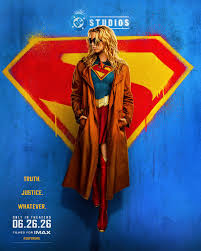
Supergirl delivers the kind of summer movie you remember from when you were a kid. For years, superhero films have become increasingly preoccupied with expanding cinematic universes, subverting audience expectations, or convincing viewers they are watching something more sophisticated than a comic-book movie. Supergirl takes a refreshingly different approach. It embraces the genre without apology, tells a straightforward story populated by engaging characters, and remembers that summer blockbusters are supposed to be fun.

About: When an unexpected and ruthless adversary strikes too close to home, Supergirl (Milly Alcock) reluctantly joins forces with an unlikely companion (Eve Ridley) for an interstellar journey of vengeance and justice.

An encouraging trend has begun to emerge this summer. Rather than chasing prestige or attempting to deconstruct their own genres, films like Mortal Kombat II, Masters of the Universe, and Supergirl have embraced the fundamentals of classical storytelling. Their plots are straightforward, their characters are engaging, and their primary objective is to entertain. In a season that has also produced films weighed down by self-seriousness and underdeveloped ideas, these adventures stand as reminders that fun and craftsmanship are not opposing virtues—they are often companions.

Despite a handful of technical shortcomings—including editing that occasionally lacks refinement and several action sequences hampered by murky lighting—Supergirl captures the spirit of the summer movies many of us grew up with. It moves confidently from one adventure to the next, balancing action, humor, and heart with an efficiency that keeps its brisk runtime moving at a steady pace.

Its greatest strength lies in its characters.

Kara Zor-El is more than simply another superhero navigating impossible circumstances. Her emotional journey is mirrored by that of Ruthye, whose determination and resilience immediately reminded me of Arya Stark from Game of Thrones. Together, the two characters offer contrasting responses to grief and trauma.

Kara represents what can happen when loss is internalized—when sorrow quietly shapes one’s identity and worldview. Ruthye, by contrast, refuses to allow tragedy to dictate her future. Rather than denying her pain, she demonstrates that healing begins when we decide to master our trauma rather than allowing it to master us.

The relationship between these two characters provides the emotional foundation for the entire film. Then, there is Lobo.

Played with infectious enthusiasm by Jason Momoa, Lobo provides much of the movie’s comic relief while simultaneously embodying a completely different response to suffering. If Kara internalizes trauma and Ruthye overcomes it, Lobo simply laughs in its face. His chaotic, nihilistic worldview makes him feel like an intergalactic descendant of Meat Loaf’s Eddie from The Rocky Horror Picture Show—equal parts absurd, dangerous, and strangely lovable. Momoa clearly understands exactly what kind of movie he’s in, and his performance is all the better for it.

Visually, Supergirl offers one of the most imaginative alien landscapes seen in a mainstream science-fiction film in years. Not since Star Trek: The Next Generation—or perhaps the original Star Wars trilogy—have I seen such a delightful assortment of extraterrestrial species occupying the same cinematic space. The production wisely relies on a combination of practical costumes, prosthetic makeup, and computer-generated creatures. Ironically, the practical work often proves more convincing than the fully digital creations, lending the universe a tangible charm that many contemporary blockbusters lack.

Perhaps the film’s most surprising accomplishment, however, is its confidence in traditional storytelling.

Rather than endlessly chasing twists or deconstructing the superhero formula, Supergirl embraces classical screenwriting structure. Every major dramatic beat—from the inciting incident and catalyst through the midpoint, crisis, climax, and resolution—arrives naturally and purposefully. The result is a narrative that feels coherent, satisfying, and remarkably well-paced. In an era where many blockbuster films mistake unpredictability for sophistication, there is something refreshing about a movie that understands the enduring value of solid dramatic construction.

No, Supergirl is not reinventing the superhero movie, nor should it have done so.

Instead, it reminds audiences why they fell in love with comic-book adventures in the first place. It delivers colorful worlds, memorable characters, genuine humor, emotional sincerity, and enough spectacle to satisfy without ever losing sight of the people at the center of the story. Sadly, that combination is becoming increasingly rare these days.

Supergirl may not aspire to redefine the genre, but it succeeds at something arguably more difficult: reminding us just how enjoyable a well-told superhero story can be.

Ryan is the morning host on WLRH Public Radio in Huntsville, AL and host of the show  ReelTalk  “where you can enjoy the cinematic conversations frame by frame each week.” Additionally, he is the author of the upcoming film studies book titled Monsters, Madness, and Mayhem: Why People Love Horror. After teaching film studies for over eight years at the University of Tampa, he transitioned from the classroom to public media. He is a member of the Critics Association of Central Florida and Indie Film Critics of America. If you like this article, check out the others and FOLLOW this blog! Follow him on Twitter: RLTerry1 and LetterBoxd: RLTerry
SUPERMAN (2025) movie review

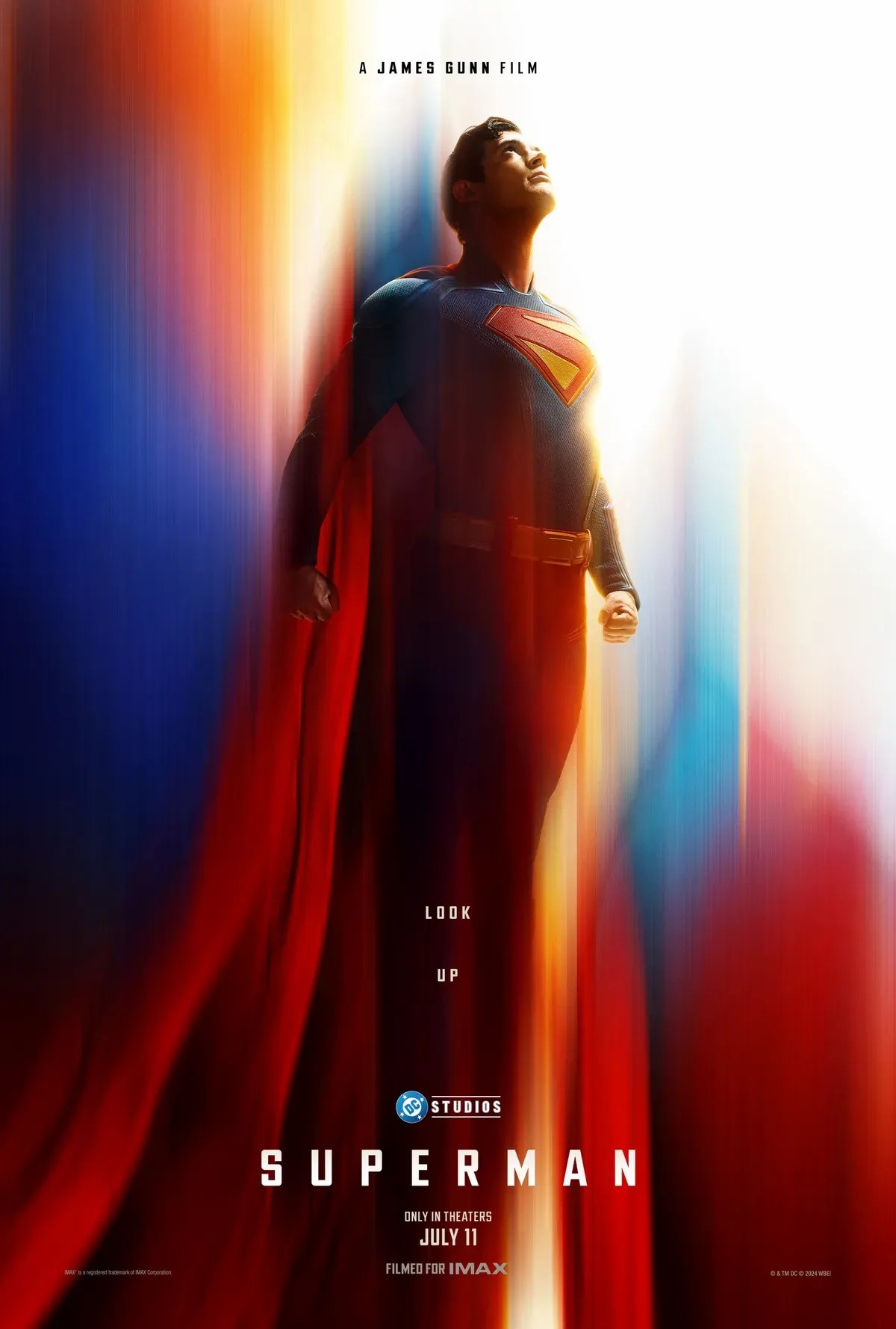
SuperFULL. James Gunn’s Superman is bursting at the seams with plots and characters, resulting in an overwhelming experience. But, the lead characters and hero’s journey are truly super. While weak on narrative, Gunn’s take on the man of steel sticks the landing on the lead characters. And it’s the characters that will keep you sufficiently enough vested in the movie.

When Superman gets drawn into conflicts at home and abroad, his actions are questioned, giving tech billionaire Lex Luthor the opportunity to get the Man of Steel out of the way for good. Will intrepid reporter Lois Lane and Superman’s four-legged companion, Krypto, be able to help him before it’s too late?

While the plotting and many characters lack fine-tuning, David Corenswet’s Clark/Superman and Nicholas Hoult’s Lex Luthor feel like extensions of their comic book origins–in all the best ways possible. Corenswet delivers a Superman that displays the strength and powers that are synonymous with the character, but Gunn adds in a discernible human dimension that has long-since been missing in Superman to make him more human, more relatable. Hoult’s Lex Luthor is nightmarishly deplorable and demonstrates the power of greed. Rachel Brosnahan’s Lois Lane strikes a fantastic balance between hard-hitting journalist and romantic; the chemistry between Corenswet and Brosnahan land on an ideal formula for character development and an old-fashioned romance.

Gunn underscores the movie with some thoughtful social commentary on the fickleness of society, terrifying power of social media, and fickle nature of broadcast media. He cleverly embeds this timely commentary beneath the movie’s spectacle, offering a pointed critique of our shallow, performative culture. Through Clark’s interactions with a world obsessed with optics and outrage, the film holds a mirror to the hollow validation of social media, where sincerity is traded for virality and truth becomes secondary to trend. Gunn also confronts the fickle nature of society itself — how easily the public elevates heroes only to tear them down at the slightest misstep, revealing more about our own insecurities than the hero’s flaws. Even broadcast media doesn’t escape unscathed; the film paints it as a machine of half-truths and spectacle, perpetuating narratives that distort rather than illuminate. In these ways, Superman emerges not just as a story of a man learning to save the world, but as a subtle indictment of a world that seems increasingly uninterested in being saved — at least, not sincerely.

James Gunn’s choice to craft a more human, more relatable Superman is not just a bold creative pivot — it’s an overdue course correction for a character who, for decades, has too often felt like a distant monument rather than a man. Traditionally, Superman has been written and portrayed as a flawless demigod: morally unassailable, physically unstoppable, and emotionally impenetrable — admirable, yes, but also alienating and, frankly, boring. Gunn understands that audiences connect most deeply not with perfection but with struggle, doubt, and vulnerability. By leaning into Clark Kent’s humanity — his insecurities, his quiet kindness, his yearning to belong — Gunn breathes new life into a character long encased in marble. In doing so, he not only makes Superman interesting again but also reminds us that heroism is not about being invincible; it’s about being profoundly, recognizably human.

For all its noble intentions and flashes of brilliance, Gunn’s Superman suffers from a narrative that simply has far too much going on — and not in a way that feels rich or layered, but cluttered and exhausting. In trying to weave together a pantheon of ancillary characters, subplots, and Easter eggs, the film forgets that its emotional core should be Clark Kent’s journey, not a checklist of cameos and teases for future installments. The supporting players, while individually intriguing on paper, pile up to such an extent that they suffocate the story rather than enrich it, leaving audiences with a nagging sense of being overwhelmed rather than immersed. Instead of honing in on what makes Superman compelling, the movie disperses its energy in too many directions, diluting its impact and leaving the viewer wishing it had trusted more in simplicity — and in its titular hero.

Definitely not your dad or grandfather’s Superman; however, this is a Superman that remains super yet connects with audiences through the human dimension.

Ryan is the general manager for 90.7 WKGC Public Media in Panama City and host of the public radio show ReelTalk “where you can join the cinematic conversations frame by frame each week.” Additionally, he is the author of the upcoming film studies book titled Monsters, Madness, and Mayhem: Why People Love Horror. After teaching film studies for over eight years at the University of Tampa, he transitioned from the classroom to public media. He is a member of the Critics Association of Central Florida and Indie Film Critics of America. If you like this article, check out the others and FOLLOW this blog! Follow him on Twitter: RLTerry1 and LetterBoxd: RLTerry
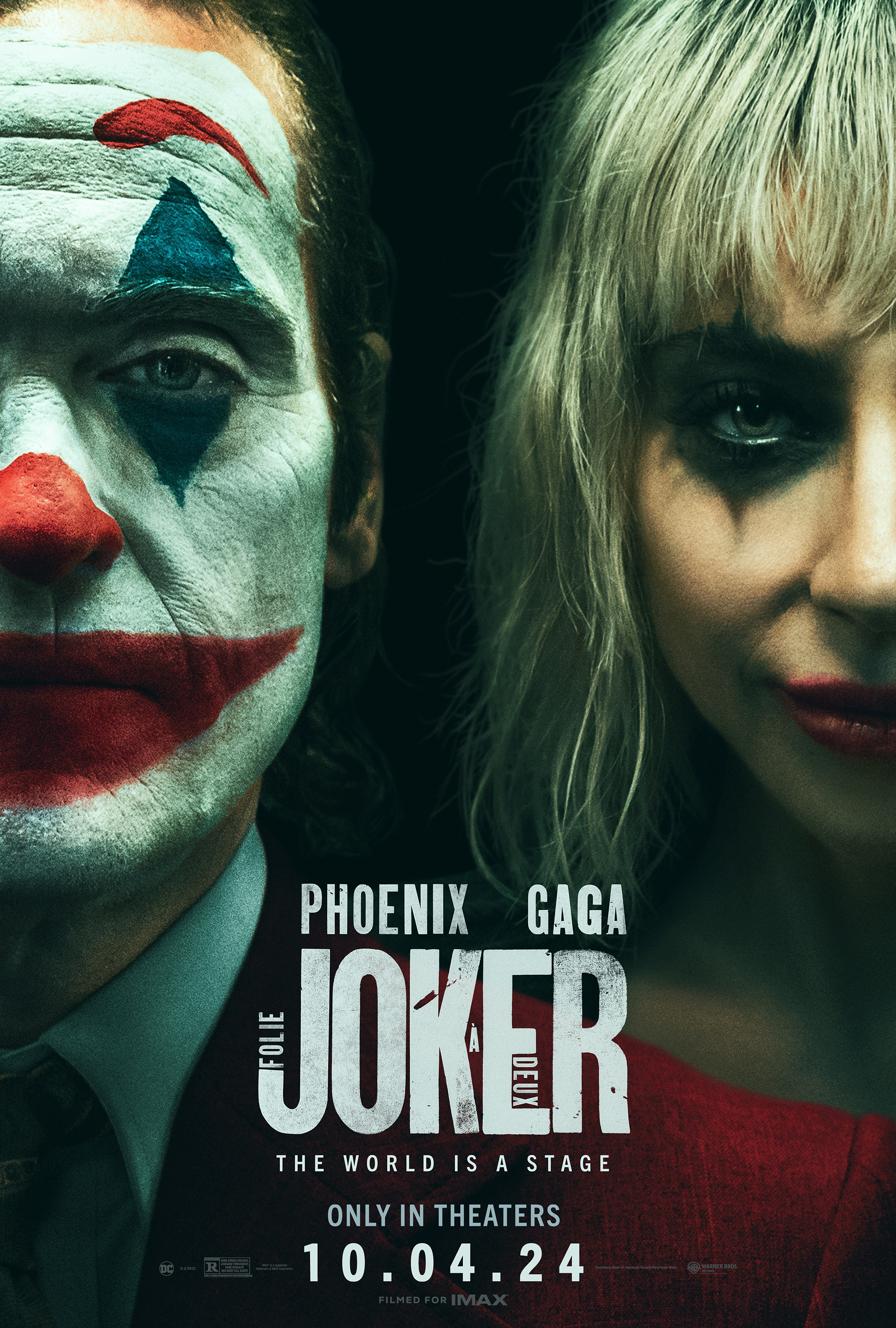
JOKER: FOLIE À DEUX movie review

Audacious reach undercut by horrendous storytelling. Director Todd Phillips’ Joker: Folie à Deux, which is a sequel to 2019’s Joker, delivers on both a spectacular shot composition and a compelling performative dimension, but falters nearly everywhere else.

The film demonstrably hopes to communicate a sense of gravitas, but it just comes off as a disjoined mess that is punctuated with musical numbers. The musical numbers themselves are actually the most enjoyable parts of the movie, with their blend of Broadway standards, gospel-inspired music, and even energetic swing. But the storytelling, complete with slapdash plotting and cynical, anarchist tone, is simple unbearable. The real joke here is on the audience, for sitting through this cacophony of fragmented plots and characters. Lady Gaga shines brightly–no real surprise there–but Phoenix’ Joker just painful to watch, despite the exceptional quality of his performance. Additionally, the film’s deplorable depiction of law enforcement is inexcusable, even though Phillips attempts to justify that dynamic dramatically. Aside from the abysmal storytelling, the film is blatantly anti-cop, which perpetuates negative, dangerous propaganda associated with our brave men and women serving and protecting our communities. That’s all I have to say about this film. Do yourself a favor, and find something else to watch this weekend at the cinema.

Ryan teaches Film Studies and Screenwriting at the University of Tampa and is a member of the Critics Association of Central Florida and Indie Film Critics of America. If you like this article, check out the others and FOLLOW this blog! Interested in Ryan making a guest appearance on your podcast or contributing to your website? Send him a DM on Twitter. If you’re ever in Tampa or Orlando, feel free to catch a movie with him.

Follow him on Twitter: RLTerry1 and LetterBoxd: RLTerry
THE FLASH movie review

Electrifying! From beginning to end, The Flash is a highly entertaining, funny, well-written thrill ride with a tremendous amount of heart! In an oversaturated superhero/CBM (comic book movie) live-action cinema landscape, dominated by MCU (and MCU-adjacent) movies, comes a breath of fresh air that works both visually and narratively.

Worlds collide when the Flash uses his superpowers to travel back in time to change the events of the past. However, when his attempt to save his family inadvertently alters the future, he becomes trapped in a reality in which General Zod has returned, threatening annihilation. With no other superheroes to turn to, the Flash looks to coax a very different Batman out of retirement and rescue an imprisoned Kryptonian — albeit not the one he’s looking for.

Andy Muschietti delivers a superb superhero motion picture that defies expectations set for anything the DCEU had to offer audiences. Christina Hodson’s fantastic screenwriting paired with John Francis Daley, Jonathan Goldstein, and Joby Harold’s story, provides a solid foundation upon which Muschiette crafts the motion picture for the screen. Nearly everything about this picture works incredibly well, except the CGI battle sequence at the end that felt right out of an early 2010s video game. In addition to the compelling visual storytelling, Muschietti and Hodson successfully, and organically) pay homage to Tim Burton, Zach Snyder, and even Richard Donner. Never before has a superhero multiverse been explored so well! Where other multiverse movies struggle narratively, this one excels in both form and function. And of course, the movie features THE definitive Batman Michael Keaton in a triumphant return to the screen as the Burton-verse caped crusader! While many other films in recent times have placed far less emphasis on plotting than visual composition, The Flash delivers on both.

Just when the general public and critics alike were genuinely wondering if there was anything left in the DCEU, The Flash is the strongest cinematic story to come out of this universe of characters since Wonder Woman, and perhaps the most fun superhero movie since Batman Returns. I know, positively using The Flash in the same statement as Batman Returns is high praise, as it’s my opinion that Batman Returns is the best comic book (or superhero) movie of all time. While The Flash isn’t as campy as the Batman 1960s TV series or the Schumacher movies, it strikes a balance between camp and melodrama in the same vein as Batman Returns struck a brilliant balance between camp and gothic romance. Wherein character expression may lean into camp. The Flash delivers heartfelt thoughtfulness in character interpersonal dynamics and plot. We empathize with Barry Allen’s obsessive plight to save the life of both his mother and father.

Simple plot, complex characters. That is precisely what you get in this movie. I know, what must he be thinking equating a multiverse setup with simple plot. That’s because the plot can be boiled down to when Barry Allen realizes that he has the ability to travel back in time, he returns to stop the death of his mother, but in doing so, unleashes a cataclysm of effects throughout the space-time continuum that must be corrected. There is one plot: save the life of his mother and father, whom is on trial for the death of his mother. Everything that Barry/The Flash does revolves around the central plot of stopping the death of his mother which will keep his father from being accused of her murder. No matter where we go in the multiverse, the external goal motivated by the internal need never changes.

The complexities in the narrative are character-driven. Barry Allen (Sr.) is hyper-focused on stopping the murder of his mother, no matter the cost, Bruce Wayne/Batman is wrestling with his identity as the caped crusader in a world that doesn’t need him anymore (or so it seems), and Barry Allen (Jr.) is struggling to find his place in the world as he is caught between childhood and adulthood. And the central plot connects all these characters and forces them to grow emotionally and psychologically. Apart from the central plot, none of the character growth would occur. Never once does the focus of the story shift, but the central themes of identity, overcoming trauma, and the dangers of obsession with control allow the movie to explore deeper meanings in the otherwise high concept story.

The central cast is fantastic! Never having seen The Flash TV show, I cannot comment on that expression of Barry Allen/The Flash, but Ezra Miller delivers a compelling performance of the lightning-fast superhero struggling with anxiety. We haven’t has a superhero that feels this genuinely human and vulnerable since Tim Burton’s Bruce Wayne/Batman played by Keaton. While they express their humanity differently, both play their respective everyman identities and super-alter egos with equal charisma and authenticity that is maintains its own identity depending on if they are wearing their respective masks. The idea of and meaning of the masque is something that entire books have been written on, but for the sake of argument, the masque represents a different identity and should be expressed differently unless, for dramatic purposes, the character’s humanity peaks through the superhero masque.

Miller’s portrayal of Allen/Flash is one that is unapologetically relatable and without pretense. Furthermore, I appreciate the inclusion of an individual struggling with anxiety, social awkwardness, and comes from average beginnings with no superhuman characteristics other than the ones bestowed through the electrical/chemical accident.

Many articles and podcasts have been published on Michael Keaton’s Batman, so I won’t spend too much time on him; however, we cannot talk The Flash without acknowledging the impact of the definitive Batman and Bruce Wayne returning to the big screen in a big way! At very first sights of Keaton, the Batcave, and the iconic Burton Batmobile, there were waves of applause and cheering from the audience, but nothing compares to the sheer deluge of cheering, shouting, and applauding for Michael Keaton when he appears in his Batman uniform for the first time since 1992. If this was a live performance in front of a studio audience, then all action would have stopped on stage for several minutes as the audience showed their affection for Keaton’s Batman. Even though he is not the central character, he factors heavily into the second and third acts of the movie. And you know what? He’s still got it!

Where the film simultaneously delivers and falters is in the integration of heavy CGI. The CGI works very well in the various effects of The Flash’s super speed and when exploring the multiverse; where the CGI is conspicuously unrealistic is in the final battle scenes. This is where and why the Tim Burton Batman movies will forever be timeless, but prolific use of CGI will date a film. You cannot replace the way real light bounces off real objects into the camera lens. There is a sense of real danger when practical effects, stunts, and pyro is used–it’s REAL–the danger is real. There is a dimension to practical sets and effects that CGI will never be able to replicate. Simply stating, the CGI in the battle sequences at the end takes the audience out of the film. However, the film doesn’t cheapen out on anything at Wayne Manor, the Batcave, Batmobile, or Batplane.

The score for The Flash is excellent, especially when Danny Elfman’s iconic Batman theme is integrated into the original score for this film. While I could have gone for the film to lean a little more heavily into the Elfman Batman theme, I appreciate the nuance of the theme when anything Burton-verse is on the screen. Outside of the Elfman Batman theme, the orchestration feels like an extension of each scene that never becomes the center of attention, but is always present.

About the cameos. Yes, there are some great cameos, but I am not going to disclose them as you need to experience them for yourself. What I will divulge on that subject is the conspicuous absence of Michelle Pfeiffer’s definitive Catwoman. Even though she’s stated in interviews that she hasn’t been asked to reprise her career-defining role, even thought she admittedly would love to wield the whip again, I thought that perhaps is was all a ruse and she would surprise us in this movie. But with the unparalleled positive response from audiences concerning Keaton’s return to the Batsuit, then perhaps we will get the incomparable Michelle Pfeiffer as Catwoman one last time.

Thrilling and fun for the whole family, I highly recommend watching The Flash. It was certainly the most fun I’ve had at the cinema all year.

Ryan teaches Film Studies and Screenwriting at the University of Tampa and is a member of the Critics Association of Central Florida and Indie Film Critics of America. If you like this article, check out the others and FOLLOW this blog! Interested in Ryan making a guest appearance on your podcast or contributing to your website? Send him a DM on Twitter. If you’re ever in Tampa or Orlando, feel free to catch a movie with him.

Follow him on Twitter: RLTerry1 and LetterBoxd: RLTerry

THE BATMAN movie review

Emo Batman: the detective. Matt Reeves’ highly anticipated adaptation of the caped crusader hits cinemas this week, and it is sure to elicit quite the polarized opinions amongst fans. Some will undoubtedly enjoy the gritty, realistic expression of Batman in an attempt at crafting a neo-noir detective story while others will find it to be poorly paced, overly emo, and joyless. While I am seldom completely in one camp or another on a polarized film, I am certainly closer to the latter moreso than the former. I certainly appreciate this take on the caped crusader as a detective and the aesthetically dark film; however, I agree that it is poorly paced, overtly emo, and completely joyless. Reeves’ adaptation shines best in its character development and interactions; furthermore, it’s equal parts plot and character-driven, which helps in the thoughtfulness, but the poor pacing and lack of anything joyful hold it back from the potential it clearly had. Clearly, this film is positioning itself as the anti MCU in that it places far greater value on the aesthetic of the film moreso than the entertainment value or dialogue. After watching it, I am left wondering what a neo-noir detective Batman movie directed by David Fincher would look like? In my opinion as a critic and film professor, the only director to accurately capture the essence of what we love about the BatVerse is Tim Burton is his brilliant Batman 89, and Batman Returns.

Batman ventures into Gotham City’s underworld when a sadistic killer leaves behind a trail of cryptic clues. As the evidence begins to lead closer to home and the scale of the perpetrator’s plans become clear, he must forge new relationships, unmask the culprit and bring justice to the abuse of power and corruption that has long plagued the metropolis.

For some, the characters won’t feel like Batman characters as much as explorations of various forms of trauma; that stated, the characters have undeniable chemistry on screen, which makes them believable. The only characterization with which I take particular negative issue is Alfred; he is reduced from an integral element in the Batman mythos too little more than an expositional plot device. Costume wise, the new Batsuit works very well, and the Riddler’s costume is incredibly creepy, but Catwoman’s ski mask doesn’t work and The Penguin lacks any truly defining features. The Batmobile works great! It’s fantastic combination of a stock car (which Bruce Wayne would realistically have access to) and a little comicbook flare. While the score isn’t memorable, it offers some gorgeous orchestral movements that attempt to give this film gravitas. Still to this day, the best Batman score is Danny Elfman’s for 89 and Returns. The score of The Batman never feels like an extension of the characters, despite it being (as a musical composition) beautiful.

Since I am not a comicbook reader nor am I generally a fan of superhero movies, I do not feel that it is inaccurate to posit that idea that comicbooks and superhero movies were originally written and designed to be escapism. There was something special about being invited into a world similar to our own, but with a certain degree of whimsy that kept them entertaining and fun. The hand of the artist, an extension of their imagination is what seems to so often be missing in contemporary CBMs (comicbook movies). You have the agenda-driven post-End Game MCU on one side, and the overly dark, joyless DCEU on the other. Of course, there are exceptions such as Shang Chi and Wonder Woman. CBMs have strayed from their roots, and appear to have a blatant disregard for that which made them fun for mass audiences. From CBMs including elevated levels of colorful adjectives to reinforcing unfair characterizations which have a counterintuitive effect upon the idea of representation, it would be refreshing to have superhero movies that are entertainment and clever again, where there are suitable for older kids and teens, yet there are jokes, references, and double entendres that only adults will appreciate.

Who is the audience for The Batman? A question for which I am still searching for the answer.

Ryan teaches Film Studies and Digital Citizenship at the University of Tampa. If you like this article, check out the others and FOLLOW this blog! Interested in Ryan making a guest appearance on your podcast or contributing to your website? Send him a DM on Twitter or email him at RLTerry1@gmail.com! If you’re ever in Tampa or Orlando, feel free to catch a movie with him.

Follow him on Twitter: RLTerry1