Exquisite, edge-of-your-seat survival thriller with genuine heart
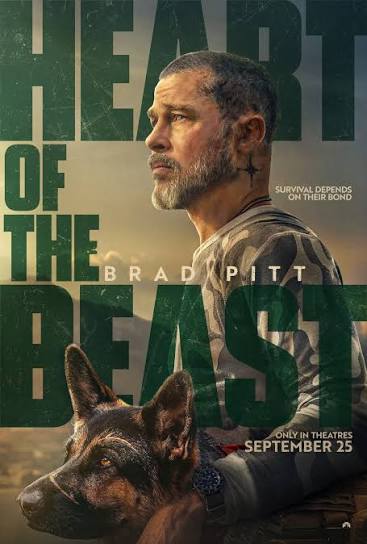
Brad Pitt and a remarkable canine co-star take audiences deep into the Alaskan wilderness in Heart of the Beast, a survival picture that understands the most dangerous terrain is not always physical. The film immediately establishes a dual struggle: surviving a landscape that is as beautiful as it is deadly while confronting the psychological wreckage left by war. That distinction is what elevates Heart of the Beast beyond the familiar survival-thriller formula. Rather than relying solely on escalating encounters with the elements, the film makes physical and emotional survival inseparable. Every external threat places additional pressure on characters already carrying wounds that cannot be bandaged, and every setback forces them to confront whether endurance alone is enough.
Pitt plays James Belmont, a retired Green Beret traveling with Odin, his former combat dog. After a devastating plane crash leaves them stranded in the mountains, the two must rely upon their training—and each other—to survive.
Director David Ayer reunites with Pitt after Fury, but this is not the survival movie I expected. Having not been particularly fond of Fury, I approached this collaboration with cautious optimism. Needless to say, Heart of the Beast completely won me over. By the time the story reached its conclusion, I was moved to tears—not because of one isolated moment, but because the film gradually draws audiences into the emotional experience of its characters until we are no longer merely observing their struggle. We are participating in it.
The external objective is clear: escape the mountains and reach safety. Beneath that action, however, is a character-driven story about James and Odin living with the lingering effects of trauma. Unlike many films that treat post-traumatic stress as a dramatic gimmick or allow it to consume a character’s identity, Heart of the Beast lets trauma emerge organically through behavior, memory, instinct, and the bond these two share.
That restraint gives the film unusual emotional authenticity. James and Odin are affected by what happened to them, but they are not defined solely by it. The story quietly argues that trauma may influence memory, fear, and behavior, but it does not erase agency. We may not control what has happened to us or how certain memories return, but we can still control how we respond.
The result is a riveting, character-driven survival picture in which the question is never simply whether its leads will make it out of the wilderness alive. The deeper question is whether they can survive what they brought into the wilderness with them.
Explaining exactly how the story develops would venture too far into spoiler territory. Suffice it to say, Heart of the Beast delivers one surprise after another. It vividly embodies the expression “two steps forward, one step back”—although for James and Odin, it frequently becomes two steps forward and three, four, or five steps back.
Pitt and his canine co-star, Uber, deliver compelling performances. When James and Odin hurt, we hurt. When they become frightened, we share their fear. Although James is a retired Green Beret, the screenplay never transforms him into an invincible action hero. He is highly trained, resourceful, resilient, and strong, but he is also vulnerable, fallible, and recognizably human. Odin is equally well developed. Anyone who has loved a dog—or another animal companion—will recognize something of their own relationship in the trust between these two characters. Uber communicates fear, loyalty, pain, and determination with extraordinary clarity, often without the film needing to underline what we are meant to feel.
The cinematography does not attempt anything particularly novel, but it captures the beauty and hostility of the Alaskan wilderness exceptionally well. The landscapes are breathtaking yet inhospitable, beautiful enough to inspire awe and cold enough to send a chill down your spine.
In lesser survival films, landscape photography can become a substitute for dramatic substance, allowing striking imagery to compensate for thin characters or a mediocre story. Not so here. The compositions and camera movements emphasize both the grandeur and hostility of the wilderness without allowing the environment to overshadow James and Odin. The mountains remain formidable, but they never become more important than the people trying to survive them.
The musical score operates with similar restraint. Beautifully composed and emotionally expressive, it provides an additional current beneath the drama without demanding attention for itself. Like the cinematography, the music serves the characters and story rather than competing with them. It feels less like accompaniment than an extension of the emotional life already present on screen.
Cameron Alexander’s tightly constructed screenplay deserves particular praise. Survival films frequently protract their ordeals, but Heart of the Beast runs under an hour and forty-five minutes, and very little of that time feels wasted. The pacing is excellent: the story never drags, yet it never feels as though it is sprinting toward its conclusion. Alexander appears to understand one of the most valuable principles of economical screenwriting: enter a scene as late as possible and leave it as soon as its dramatic purpose has been fulfilled. Nearly every scene advances character, conflict, or consequence, and each sequence points naturally toward the third act and resolution.
It is also a compelling example of the benefits of separating the writer and director roles. Ayer can concentrate on performance, atmosphere, visual storytelling, and execution, while Alexander provides the dramatic architecture beneath those choices. Their collaboration demonstrates what can happen when distinct creative disciplines complement rather than compete with one another.
As we approach the final quarter of the year and begin considering the best films of 2026, Heart of the Beast is firmly on track to make my list. It is a reminder that some of the most affecting motion pictures are those that reveal the best people can be—to one another, to the animals who depend upon us, and to ourselves—even when the world seems to be collapsing around us.
At a time when so much contemporary storytelling gravitates toward cynicism, there is something refreshing about a film that treats resilience, loyalty, compassion, and perseverance without embarrassment. More motion pictures should aspire to leave audiences feeling that the human experience, difficult as it may be, is still worth fighting for.
Heart of the Beast is equal parts exhilarating and heartwarming, delivering an emotional payoff that may send you rushing home to embrace the furry companion waiting for you. I certainly hugged my dog, Fizzgig, as soon as I returned from the cinema.
Although I am not entirely convinced a Shih Tzu would fare especially well in the Alaskan wilderness. Then again, he is a “lion dog.”

Ryan is the morning host on WLRH Public Radio in Huntsville, AL and host of the show ReelTalk “where you can enjoy the cinematic conversations frame by frame each week.” He also teaches film studies at the University of Alabama in Huntsville. Additionally, he is the author of the upcoming film studies book titled Monsters, Madness, and Mayhem: Why People Love Horror. Prior to public broadcasting, he taught film studies for over eight years at the University of Tampa. He is a member of the Critics Association of Central Florida and Indie Film Critics of America. If you like this article, check out the others and FOLLOW this blog! Follow him on Twitter: RLTerry1 and LetterBoxd: RLTerry