Understands that movie magic isn’t merely that which you watch—it’s something you feel.
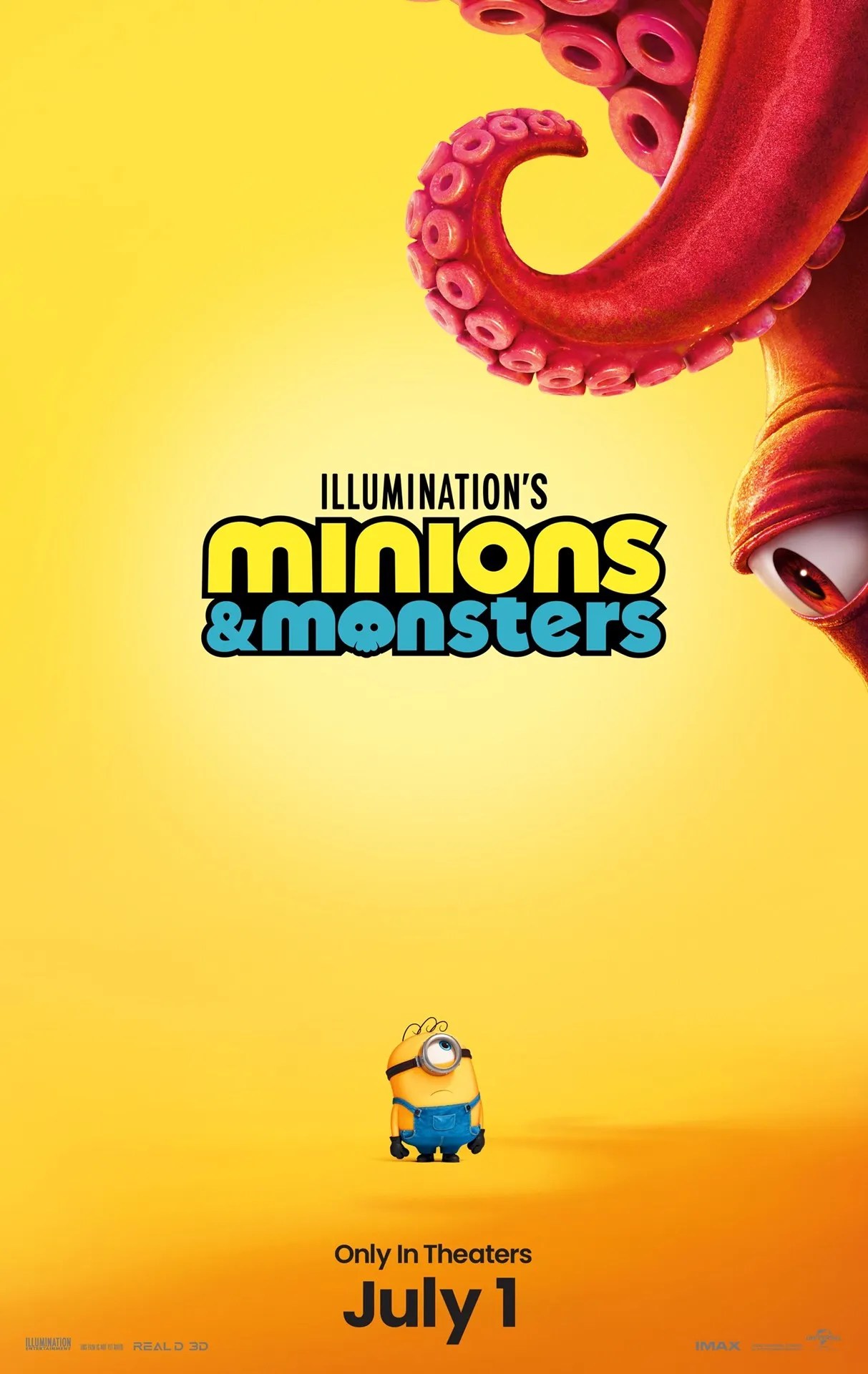
Some movies entertain us. Others remind us of why we fell in love with movies int he first place–Minions & Monsters is the latter. The Minions franchise has always revolved around a simple premise: these delightfully chaotic yellow creatures are forever searching for the next great master to serve. It is a formula that has produced plenty of laughs over the years, but Minions & Monsters wisely recognizes that every successful franchise eventually reaches a point where it must grow beyond its original concept. This film does exactly that.
Rather than centering its story on finding another larger-than-life villain, Minions & Monsters becomes something far more personal. It is about loving something so deeply that it becomes an extension of who you are. In this case, that something is the movies themselves.
Following the Minions through the history of Hollywood, the film functions simultaneously as a celebration of cinema, a playful history lesson, and a heartfelt story about pursuing dreams despite setbacks. Along the way, audiences are reminded of an era when movies were events rather than simply another form of “content” competing for our attention.
The filmmakers understand that cinema has always been more than projected images on a screen. Movies preserve dreams. They inspire careers. They connect generations. They remind us that imagination has value.
That affection radiates from nearly every frame.
The film’s greatest strength is its sincerity. It never treats its love of Hollywood as irony or nostalgia for nostalgia’s sake. Instead, it celebrates the people who built the industry and the enduring magic of storytelling itself. Watching the Minions stumble through different periods of filmmaking becomes less a parade of references and more a reminder of why the medium has endured for more than a century.
There is also an unmistakably classical quality to the storytelling. The narrative is clean, purposeful, and emotionally satisfying. Rather than chasing endless subplots or frantic spectacle, the film remains focused on its characters and their journey. It understands a lesson that many contemporary blockbusters have forgotten: audiences become invested in stories because they care about the people experiencing them.
Perhaps that is why Minions & Monsters feels so refreshing.
It channels the optimism and emotional earnestness of the great Hollywood studio era. One can almost imagine producers like Darryl F. Zanuck or David O. Selznick smiling at the film’s belief that stories—and the people who tell them—matter. More importantly, the movie reminds us that cinema is not merely something we watch. It is something we feel.
That is a surprisingly profound message for an animated comedy featuring yellow, gibberish-speaking creatures. Yet somehow, it works.
Minions & Monsters is highly entertaining, frequently funny, and filled with genuine heart. More than that, it serves as a joyful celebration of the movies themselves—a reminder that behind every projector beam lies the possibility of wonder. And in an era when so much of the entertainment industry speaks of algorithms, franchises, and content, that’s a message well worth celebrating.

Ryan is the morning host on WLRH Public Radio in Huntsville, AL and host of the show ReelTalk “where you can enjoy the cinematic conversations frame by frame each week.” Additionally, he is the author of the upcoming film studies book titled Monsters, Madness, and Mayhem: Why People Love Horror. After teaching film studies for over eight years at the University of Tampa, he transitioned from the classroom to public media. He is a member of the Critics Association of Central Florida and Indie Film Critics of America. If you like this article, check out the others and FOLLOW this blog! Follow him on Twitter: RLTerry1 and LetterBoxd: RLTerry