Gloriously unhinged.
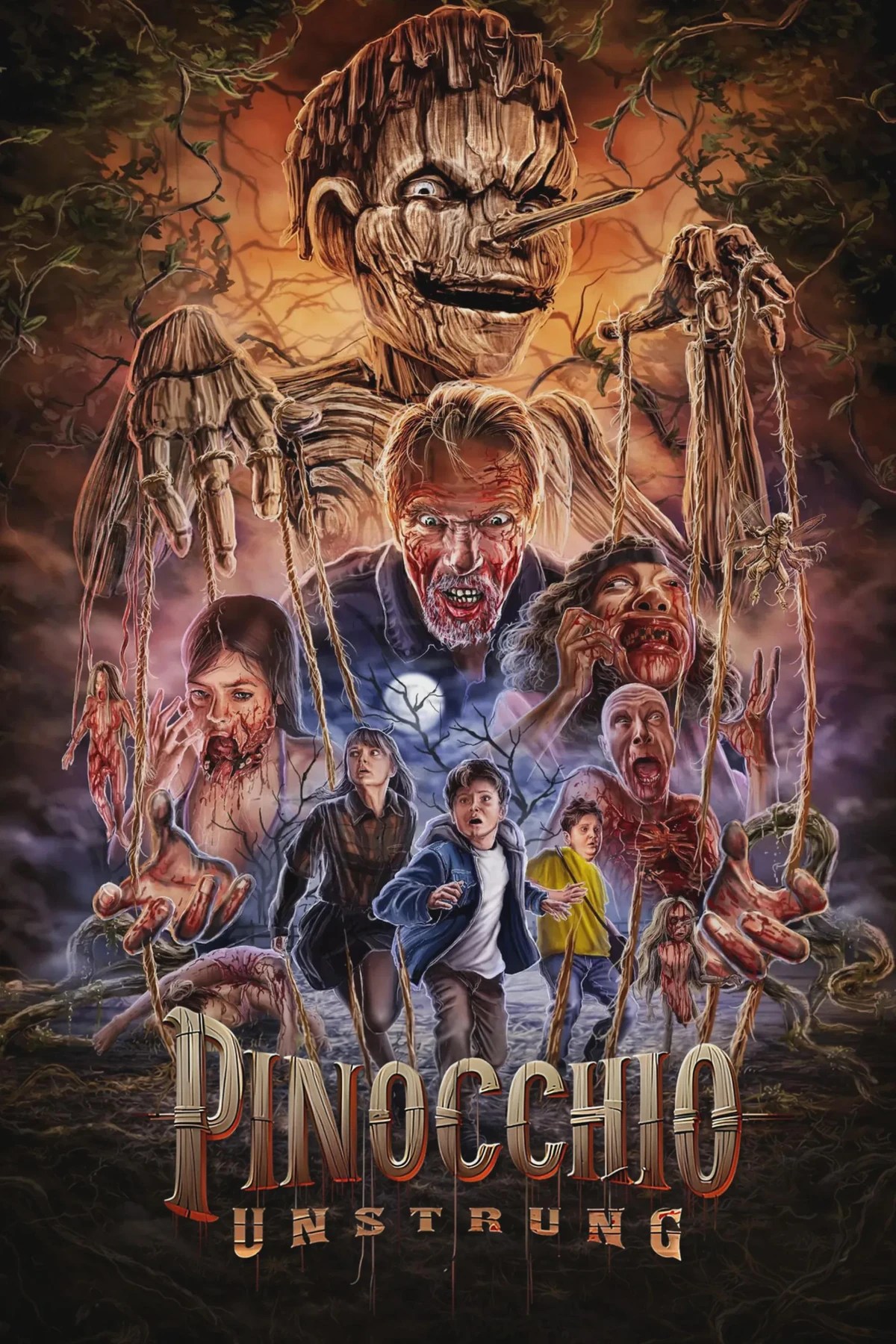
There is a profound difference between watching visual effects and watching craftsmanship, and the latest twisted fairy tale from the filmmakers behind Winnie the Pooh: Blood and Honey may not possess the screenplay necessary to become a horror classic, but it does possess something increasingly rare in contemporary filmmaking: artistry you can literally see with your own eyes. Every puppet, animatronic, prosthetic, and practical effect reminds audiences that movie magic isn’t created by algorithms or render farms. It’s created by artists with paintbrushes, carving tools, strings, latex, wood, and imagination.
About: A wooden doll named Pinocchio embarks on a violent crusade to carve itself into a real boy, one piece at a time.
Within minutes of the opening credits, it becomes obvious this is a film made by people who genuinely love the craft of filmmaking. The opening title sequence immediately establishes that philosophy, using light, shadow, carved wood, and puppetry before transitioning into a remarkable prologue staged with two-dimensional articulated wooden figures reminiscent of Lotte Reiniger’s The Adventures of Prince Achmed. It’s an inspired artistic decision that immediately distinguishes the film from countless independent horror productions that simply chase gore.
And yes…there’s plenty of gore.
When the violence embraces the exaggerated, cartoonish sensibilities of 1980s splatter films, it’s gleefully entertaining. Occasionally, however, the filmmakers push the violence toward a level of realism that becomes less fun than uncomfortable. Those moments feel at odds with the otherwise playful tone established throughout the picture.
The screenplay itself is considerably less inspired. Character development is minimal, dialogue rarely rises above functional, and the narrative exists primarily as a framework upon which to hang increasingly inventive practical effects. Yet unlike Pooh: Blood and Honey, Pinocchio Unstrung rarely feels cynical or mean-spirited. It delights in twisting familiar fairy tale iconography without ever suggesting contempt for the source material.
Robert Englund’s vocal performance as the Cricket is a delightful bonus for horror fans, and the filmmakers sprinkle affectionate nods to A Nightmare on Elm Street throughout the production. They’re playful rather than distracting, another reminder that this is a movie made by lifelong horror enthusiasts.
But the real stars are the effects artists.
Not since the golden age of Jim Henson productions like The Dark Crystal and Labyrinth has puppetry been employed with such confidence in a genre film. Likewise, the animatronic work recalls an era when creatures occupied physical space alongside actors rather than existing exclusively inside computers. Watching these creations come alive inevitably brings Jurassic Park to mind—not because the scale is comparable, but because the same tangible sense of craftsmanship is present.
That appreciation only deepens during the film’s unusually generous post-credit sequence, which abandons the traditional Marvel-style tease in favor of something far more rewarding: an extended behind-the-scenes look at how the effects were achieved. It plays less like a sequel setup than a Blu-ray special feature celebrating the dozens of artists responsible for bringing this bizarre vision to life. Ironically, those few minutes may be the movie’s greatest triumph.
While Pinocchio Unstrung never develops into a compelling dramatic experience, it succeeds magnificently as a celebration of practical filmmaking. In an era increasingly dominated by digital imagery, this film proudly wears the fingerprints of its creators. You can feel the hands of the artists in every frame. And for that alone, it’s worth seeing.
Listen to the full conversation with fellow critic Sean Boelman HERE. You can also find it on Apple Podcasts and Spotify.
Ryan is the morning host on WLRH Public Radio in Huntsville, AL and host of the show ReelTalk “where you can enjoy the cinematic conversations frame by frame each week.” Additionally, he is the author of the upcoming film studies book titled Monsters, Madness, and Mayhem: Why People Love Horror. After teaching film studies for over eight years at the University of Tampa, he transitioned from the classroom to public media. He is a member of the Critics Association of Central Florida and Indie Film Critics of America. If you like this article, check out the others and FOLLOW this blog! Follow him on Twitter: RLTerry1 and LetterBoxd: RLTerry