“Ready Player One” movie review

A spectacular journey that will have you on the edge of your seat. Ready Player One is a throwback to the classic Spielberg blockbuster films from the 70s, 80s, and 90s that many of us know, quote, and love. You’ll do far more than wax nostalgic in this film, because the focus is on the conflict at hand and not the pop culture references. Spielberg’s adaptation of the best-selling novel, written by Ernest Cline, takes on the challenge of crafting a visually compelling narrative that shows the benefits of virtual reality (VR) and gaming, juxtaposing it against the harshness of a reality following socio-economic and natural disasters in the near future. Although the story highlights the benefits of VR and shows the wonders of the imagination through the exquisitely designed scenes, there is one element seen throughout the story that transcends the illusion of Oasis (the virtual world); and that is humanity. Generosity of spirit and integrity are showcased brilliantly through the various central characters. I found myself, at the end of the movie, thinking about how much it reminds me of the magic of Willy Wonka and the Chocolate Factory. Never once, will you find an opportunity for boredom to set in. And you’ll find yourself rooting for this open source of entertainment and information to remain available to all those who want to participate, and not regulate content based upon how much someone is willing to pay.

From filmmaker Steven Spielberg comes the science fiction action adventure “Ready Player One,” based on Ernest Cline’s bestseller of the same name, which has become a worldwide phenomenon. The film is set in 2045, with the world on the brink of chaos and collapse. But the people have found salvation in the OASIS, an expansive virtual reality universe created by the brilliant and eccentric James Halliday (Mark Rylance). When Halliday dies, he leaves his immense fortune to the first person to find a digital Easter egg he has hidden somewhere in the OASIS, sparking a contest that grips the entire world. When an unlikely young hero named Wade Watts (Tye Sheridan) decides to join the contest, he is hurled into a breakneck, reality-bending treasure hunt through a fantastical universe of mystery, discovery and danger. (IMDb)

Pop culture, geek-dom, and nerd-dom for everyone! Whereas the book primarily contains 1980s references, the movie adaptation spans pop culture from the 80s to today. This was an important and strategically solid move in order to appeal to a wide age-range of movie-goers. Not being a gamer myself, I am unable to comment on the various references in the film and how they are placed perfectly in the narrative; however, I LOVE movies and TV, so I can definitely comment on those references, and they were spot on! Loved every one of them. And not just because these references were in the movie–anyone can just shove references and product placements into a movie without thought of the meaning or contribution to the plot–each and every movie or TV reference was selected specifically to fulfill a larger purpose and placed precisely where it needs to be. It would have been far too easy for the pop culture references to steel attention away from the plot, but the structure and pacing of the movie is such that the references enhance the experience without becoming sheer spectacle that could have been interpreted and pandering to audiences.

Of all the references, my favorite is Stanley Kubrick’s The Shining. That’s right. Return to the infamous Overlook Hotel during one of the quests to search for the Jade Key. The Overlook Hotel from Kubrick’s horror masterpiece (that was, interestingly enough, disliked strongly by Stephen King) was incredible. I felt that I was legitimately transported to the macabre setting in which we encounter unimaginable terror. This referenced worked particularly well because I cannot imagine another setting that could have been used in such an instrumental fashion. There are times in films that a location could be swapped out for another similar setting and achieve the same result because the plot is not predicated on it–essentially, the plot would play out just as well and effectively through another comparable location. The Overlook Hotel and specific events from The Shining (that I won’t go into because of spoiling the experience) were nearly as integral to the advancement of the plot as the characters themselves. No sooner could you replace The Shining sequence than you could the main turning points between Acts I/II and II/III. Although there are many excellent sequences to choose from in the movie, the series of scenes during the time spent at The Overlook are definitely my favorite.

It’s not often that an action-adventure or fantasy movie is deep enough to provide social commentary on real issues facing us in the real world or what it means to be human; but Ready Player One contains fantastic material for philosophical discussions regarding the current trends and challenges facing present-day society. The subtext of this movie contains material on human values, equitable access to content online, and the dangers of falling victim to only “existing” in a virtual world. Man vs technology, greed vs generosity are ways to look at the story, not to oversimplify the subtext. Because of the present crisis of the ending of net neutrality facing the United States, there is clearly a message that everyone has the right to equitable access to the universe of entertainment and information online. When a greedy capitalist attempts to disrupt that access and determine someone’s access based upon how much someone is willing to pay, we see that the system runs the risk of breaking down and not allowing for the joy that was once ran through the very framework of the virtual world. The film also provides audiences with commentary on the importance of actively participating in the real world to form tangible, physical relationships with others in order to find love and forge friendships. Furthermore, if a society becomes so fixated on avoiding the problems of the real world by transporting to a virtual world, then the problems of the real world grow worse, bigger, and more devastating than if society takes the time and effort to combat that which seeks to destroy our world.

Such an excellent movie! If you are a fan of the Black Mirror series on Netflix for its Twilight Zone approach to tackling tough subject matter involving the degree to which technology permeates our lives, then you’ll enjoy Ready Player One. I find that many elements of this movie feel like the San Junipero episode, and the successful show at large, because of the terrifying visions of the near future distorted by the abuse of technology. Thoroughly enjoyed every moment on the more than two-hour runtime. I was initially afraid that the movie would feel too much like a video game, but that is not the case. The design is such that the virtual world and real world feel just as tangible. Being that I am not a gamer, I don’t want to attend the cinema and feel that I am watching cut scenes from a video game, so this was handed extremely well. You’ll easily find characters that you can identify with and root for, and the opposition forces are well-developed too.
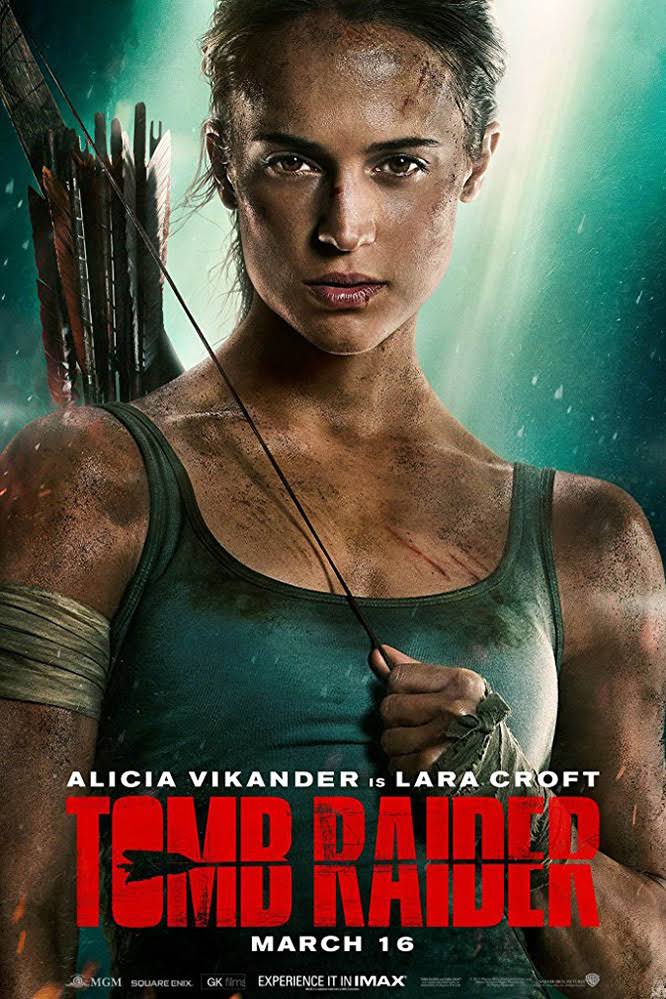
“Tomb Raider” (2018) review PLUS exploring the “video game movie” problem

Strives to put cinematic storytelling first and video game representation second, but still comes across as tropey and borrows heavily from Indiana Jones and the Raiders of the Lost Ark and The Last Crusade. However, in all fairness, it does provide this generation with a moderately good action-adventure film based on a best-selling video game series. Alicia Vikander’s Lara Croft differs from that of Angelina Jolie’s in that she comes across to audiences as someone who’s impulsive, reckless, and experiencing difficulty in managing her life. Furthermore, she does not excel at everything she is trying to do to survive life and make ends meat. Those qualities give this Lara Croft a level of humanity that allows her to connect more with audiences. Moreover, she is a believable character–she feels real. In fact, that is probably the best element that this reboot has going for it–the realness of the adventure. Not that the film is without exaggerations and fantasy elements; but, the story almost feels like an adventure that could take place under the right circumstances and with the right tools. The realness might have been increased by not feeling like, at times, you were sitting there playing the video game version. Although this initial return to the video game turned motion picture adaptation is frocked with predictable plot beats and turning points, it does show promise for a solid franchise if tweaked. Moving forward, the stories need to be stronger, original, and leave room for SUBTEXT.

Lara Croft is the fiercely independent daughter of an eccentric adventurer who vanished years earlier. Hoping to solve the mystery of her father’s disappearance, Croft embarks on a perilous journey to his last-known destination — a fabled tomb on a mythical island that might be somewhere off the coast of Japan. The stakes couldn’t be higher as Lara must rely on her sharp mind, blind faith and stubborn spirit to venture into the unknown. (IMDb)

Video games turned motion pictures aren’t anything new. From Super Mario Bros to Mortal Kombat to Resident Evil to this year’s Tomb Raider, there have been many attempts to adapt interactive media (video games) for scripted/narrative cinematic storytelling. Ultimately, it has proven to be nearly impossible to create a successful motion picture from a video game. In short, Hollywood simply cannot seem to crack the code for a movie adaptation of a video game. There has yet to be a video game to film adaptation that has even encroached upon the fresh threshold of Rotten Tomatoes. But why is that? Often, movie adaptations of video games fail because their is more emphasis placed upon video game brand representation than the art of cinematic storytelling. In its defense, 2018’s Tomb Raider shows an effort to overcome that obstacle. Today’s Tomb Raider made a solid effort to spend time worrying about it’s quality as a film, but still fell victim to being too grounded in its interactive media roots. If studios who either own or license a video game intellectual property (IP) can spend time analyzing the source material for purposes of tapping into what makes the story itself work, then perhaps a successful video game movie can be produced.

Not just limited to interactive media –>film adaptations, but anytime there is a well-established franchise, the writers and director struggle to find where the happy medium is in satisfying the core of the fan base and translating the story between two forms of media. As much as modern interactive media has in common with films (referring to the cut scenes), there is still the human component that cannot be translated for the screen because there is no “choose your own adventure;” it’s this disconnect that often contributes to the poorly written plot for the screen. Much in the same way that movies based on comic books struggled for a long time until Iron Man, with the brilliant exceptions of Tim Burton’s Batman (a Barman movie directed by Burton) and Batman Returns (a Tim Burton movie that happens to have Batman characters), interactive media based movies will eventually find the sweet spot. I feel that this sweet spot will be found when writers and directors take the characters from a video game IP and place them in an original cinematic story that skews more towards the focus being on the cinematic storytelling than adhering to brand recognition and the existing story that can be played, and has been played, on the console or computer. Take Burton’s approach to Batman Returns. Create a story that works for the screen that happens to have the characters from the video game.

Movies aren’t the only adaptations of interactive media; themed entertainment has also spent time adapting a game for an entire attraction. According to Theme Park Tourist (2014), popular seasonally operating Paramount’s Kings Island (purchased by Cedar Fair in 2007 and all Paramount property removed) spent $20MIL on a ride that lasted a mere five years. Based on the hit video game and blockbuster action movie Tomb Raider: The Ride was on par with Disney and Universal in respect to story, setting, and special audio/visual effects; however, after Paramount sold off its theme park investments to Cedar Fair, the ride got rebranded as The Crypt, a generic theme, and all direct associations with the movie and game Tomb Raider were removed following the 2007 operating year. Interestingly, the ride attendance continually dropped following the rebranding, and the ride was eventually moved to Kings Dominion in Virginia in 2012. Although there may be other reasons as to why the ride became less popular and eventually moved to another park, it is conceivable to conclude that there is a special relationship between the characters and story of the game and a themed entertainment attraction. Both the attraction and the game have the advantage of the human component–the ability to truly experience the elements of the game. 

Over all, I found the new Tomb Raider to be a fun watch! Certainly don’t feel that my time or money was wasted. I remember playing Tomb Raider on the original Playstation and Playstation II (it was soon after that, that I lost interest in gaming), and as a mild fan, I feel that this film did the characters and story justice. By the end of the movie, it is obvious that MGM’s intention is to attempt to produce a blockbuster franchise. And to the film’s credit, this first installment had a satisfying ending plus it quickly setup the next movie. If you like action-adventure movies or even a fan of the video game series, I feel that you will enjoy Alicia Vikander as Lara Croft: Tomb Raider!

“Red Sparrow” film review

Intense. Riveting. Spine-tingling, A masterful spy thriller crafted in a classical fashion with sex appeal. Red Sparrow will harness your full attention from the opening. Directed by Francis Lawrence, this spy movie is the level of excitement that 2015’s Bridge of Spies wished it was. Whereas many espionage movies fail to develop a plot that keeps you guessing from beginning to end–allowing you to feel like a covert operative or detective–this film delivers a mesmerizing story filled with intriguing characters and close calls. In many ways, this film contains elements that could be likened to a Hitchcockian suspense thriller with influences from Billy Wilder and David Fincher. Jennifer Lawrence displays an uncanny performance that truly shows the versatility of the Oscar-winning actress. With tensions rising between the US and Russia in real life, this films comes at a perfect time because we may find ourselves in a cold war that’s reminiscent of the latter part of the 20th century. Not for those who are weak in the stomach, this film contains cringy visceral horror that will get under your skin. Without the need to rely on science-fiction gadgetry to carry the story, this film provides well-developed characters and an intriguing plot that’s filled with twists and turns.

Prima Bolshoi Ballet ballerina Dominika Egorova (Jennifer Lawrence) is faced with a bleak and uncertain future following a severe career-ending injury while on stage performing. Her high-ranking uncle persuades her to attend Sparrow School: an institution that trains seductive spies in order to pry information from targets by using extreme sensuality. Sparrows turn their minds and bodies into weapons for the state. Being determined to remain special, Dominika completes the sadistic training more quickly than the other students and is recruited for a covert assignment to track and report on an American CIA operative (Joel Edgerton) who Russia feels will lead them to the mole within their own ranks.

The beautiful opening of Red Sparrow is abruptly ended when Dominika suffers a horrific injury that instantly ends her ballet career. This acutely intense moment will cut you directly to the bone–you will undoubtedly wince or cringe, feel the break in your own legs. This is but a taste of what is to come throughout the movie. In an exquisite fashion, the gorgeous dance at the opening is juxtaposed against the alleged drug deal gone bad. Paralleling one another, the event that unfolds concurrently enable the plot to get a quickly paced fantastic start out the gate. Unfortunately, this excellent start does lead into a slower paced latter half of Act I. However, there is important background information that is revealed during Act I that foreshadows and sets up the remainder of the turning points in the plot. You will also notice the use of the color red in many places during the movie. Analyzing the shades of, and placement of the crimson hue has the potential to generate conversations between cinephiles.

The color red is not the only symbol in the movie that can be analyzed; there is a theme of your body belonging to the state. Essentially, this can be read as a commentary on celebrity. As a prima ballerina, Dominika’s body was weaponized for the stage and figuratively belonged to the Bolshoi and by extension to the public. Much in the same way her Sparrow weaponized body literally belongs to The State. It’s her body, but the Bolshoi and The State determine her career. But she is determined to not allow herself to become a commodity that can be abandoned, traded, or punished. This can be said about conventional celebrities and the public. In a manner of speaking, the public decides whether or not you are worth seeing on screen and how you should behave. Back during the days of the Studio System, this was a big problem because the Studio controlled your image, who you dated, slept with, when/if you had kids, your marriage, and more. There was mass exploitation in that system, and one of the reasons why it was ended. The empowering message of rebelling against The State, who is determined to own you and your body, can be witnessed through the covert actions of Dominika.

In the grand Hitchcockian fashion, there is a lot of suspense that increases tension but does not always provide a release. Though Hitch would have handled the level and pacing of the suspense more perfectly, you can read his famous bomb theory in Red Sparrow. Hitchcock knew how to take a two-dimensional situation and find a third-dimensional approach to impress the audiences and hold firm their attention. And to the film’s credit, there are a few times that the level of suspense coupled with the symphonic score channels Hitch. Unlike many spy movies that rely too heavily on a love story, the film brilliantly leaves you wondering whether or not Lawrence and Edgerton are in love or rather it is a facade employed in order to extract vital information for their respective allegiances. The level of romance and eroticism is just enough to add the sex-appeal to the relationship without the movie becoming about the romance between two individuals who serve two opposing countries.

Not for the faint of heart, there are some incredibly intense moments in the film that might make you queasy in the stomach. But the movie chooses to place more emphasis on the action, plot, and characters more so than that which threatens your eye. It’s certainly a new breed of spy movie, but it’s one that is incredibly interesting and will hold your attention for the more than 2hr runtime.

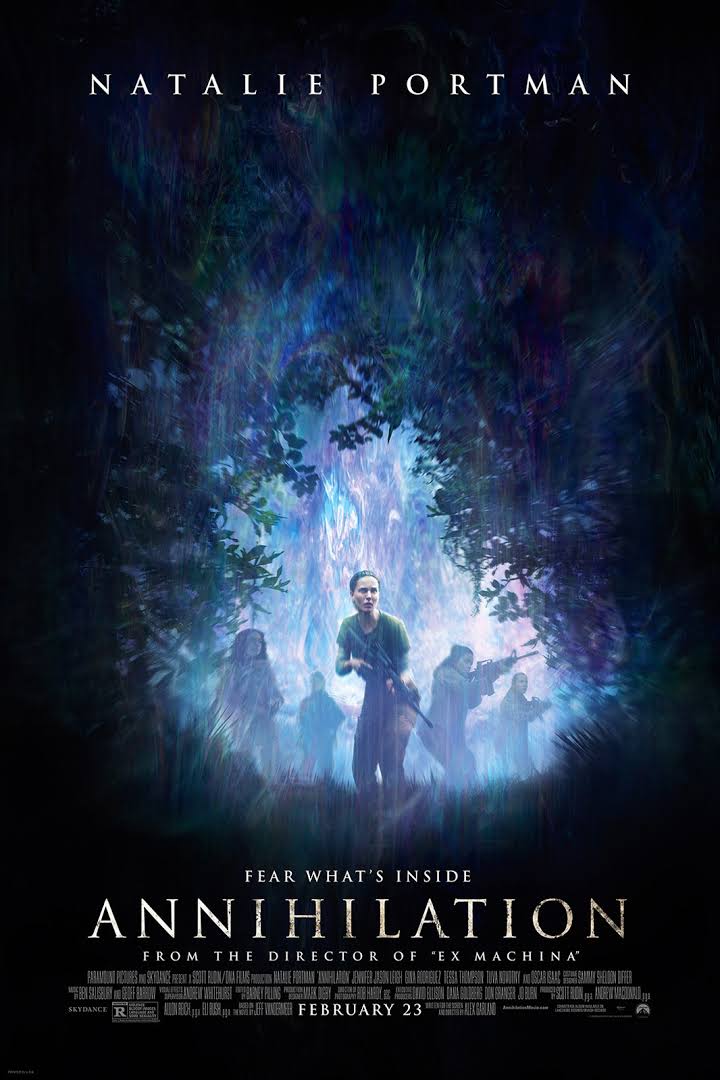
“Annihilation” film review

Outstanding craftsmanship that provides a trippy, surrealist experience! It’s been a long time since I’ve seen a horror science-fiction film like this one–one that harkens back to the manner in which Stanley Kubrick terrified audiences with his cinematic masterpieces. The brilliance of this film is the visually disturbing storytelling that’s built upon metaphysical and philosophical queries as well as Freud’s uncanny. Written and directed by Alex Garland (Ex Machina) and based upon the Southern Reach book series by Jeff VanderMeer, Annihilation boasts an all-female lead cast that takes the audience on a gripping, nail-biting adventure into the unknown that is frocked with wonder and tragedy. Falling in line with extraterrestrial films, this one exists somewhere between Alien and Arrival with influences from Kubrick and even Salvador Dali. Don’t wait for it to be released on Netflix internationally to avoid watching it at your local cinema; this IS a film best viewed, experienced, and enjoyed on the BIG screen–and not the 65in in your living room. For those who look for and appreciate science-fiction and/or horror films that explore psycho-social and institutional themes, then this is truly a film for you. Cognitively engaging and physiologically disturbing, Annihilation is a turbulent, horrific adventure.

After a mysterious meteor-like object strikes a lighthouse in Area X (most likely the swamplands of northwestern Florida), an increasingly growing membrane-like phenomenon is slowly swallowing up the land around it. When several paramilitary and scientific expeditions do not return from exploring the anomaly, biology professor Lena Kane (Natalie Portman) is aggressively recruited to work on the next team of scientists to track, report, analyze and potentially rescue former teams from what’s being called “the shimmer.” Professor Kane and her team have no idea that they will be facing their worst nightmares inside the shimmer as they explore this unknown world filled with dangerous opposition from the creatures that live within and the psychosis-like tension between the team members themselves.

Definitely not a film for the general masses. And you know what??? That is perfectly fine. In fact, that’s why this film works so incredibly well as an avant-garde-like science-fiction horror film. Had it directed for the masses, the film would not be nearly as stimulating psychologically and physiologically. Much like Garland did with the Oscar-winning Ex Machina, he crafts a world based on the best-selling series that takes the audience on a disturbing journey into the macabre, which juxtaposes the physical and metaphysical dimensions. Garland’s Annihilation is a masterful cinematic work that combines excellent writing with exceptional imagery and stunning practical effects. If Dali were alive today, this is the kind of film that he would have wanted to work on because there is such a heavy surrealist approach to the production design and visual effects. But this film is so much more than just the cinematic beauty of the motion picture. There are philosophical questions that one may ask oneself that create an added dimension of engagement that further immerses the audience into the world of the film.

Much like with Ex Machina, Garland shows an obsession with the need to see and see through when observing an unknown entity that may or may not be sentient. Paralleling how he set up the glass wall between Caleb and Ava (the AI) in the compound/lab designed by Nathan (Oscar Isaac, who is also in Annihilation), Garland sets up the interrogation room in which we are first introduced to Lena while she is being interviewed by the team in hazmat suits. I love the play on perspectives, vantage points if you will in both movies. That fluctuation between a filtered and unfiltered view of the phenomenon under observation offers much depth to the storytelling. In Annihilation, we are initially introduced to the shimmer, and world within, through sensors, readouts, and other “filters” but then we are thrust into the horrifying flora, fauna, and animal life without any type of protective boundary. Freud refers to the revealing of that which should remain hidden or the return of the repressed (which we literally get to witness in this film) as that which is uncanny (click for article). Just as our characters are constantly searching for clarity, you will find yourself paying close attention to the unknown to gain an unhindered understanding of what you are witnessing.

Not your average science-fiction horror film, this one will truly get under your skin–much like The Shimmer invades the bodies of those who choose to enter the dark twisted, refracted world of that which lies beyond our senses. Truly terrifying, this film is one for those who love a sci-fi horror that will prompt you to contemplate the themes and subtext of the movie. One of the quandaries that face the characters, and by extension, the audience is the idea of self-destruction versus suicide–the physiological versus the psychological components. For those who may worry that the film is “too intellectual,” the story is told in such a way that it not only appeals to film critics, academics, or horror aficionados but can be enjoyed by those who like a good, disturbing scare. The fact that there is the “intellectual” dimension to the film adds to the experience for those who appreciate that element in visual storytelling.

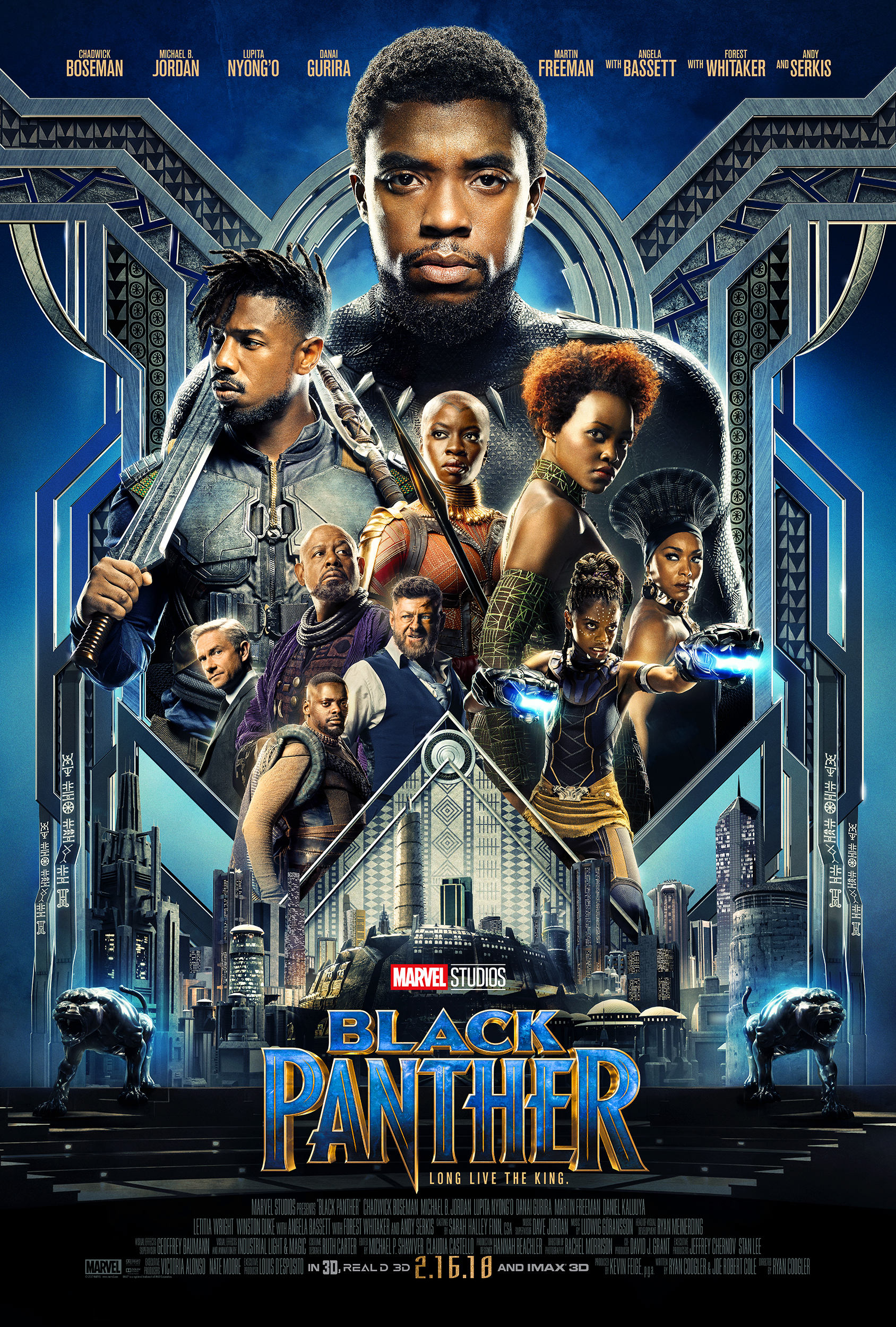
“Black Panther” movie review

A groundbreaking new perspective on the typical high concept superhero movie. Marvel’s Black Panther directed by Ryan Coogler is the type of movie that began with the desire to make a bold statement and then a narrative was built around the message. If you’ve heard it’s unlike any superhero movie you’ve seen before, then you’ve heard correctly. One of the things I’ve always appreciated about the Marvel universe (and DC by the same token) is the diversity of the characters. There are characters from a variety of backgrounds, creeds, cultures, ethnicities, etc that are represented in the characters. However, just because the characters were there does not mean they received reasonable screentime (or page time in comics). Up to this point, X-Men’s Storm (my favorite Marvel character) seems to be the only black character who receives comparable screen and page time to that of her white male or female counterparts. In a world that should teach us that our universe is a diverse place, filled with incredible people from a variety of backgrounds and origins, the representation of black heroes lagged behind. The beauty of Black Panther is not that is was simply created to finally give a predominantly black cast in a superhero universe the spotlight, the beauty is that the movie has something to teach everyone. There is a particularly strong message for young black boys and girls that their mythology is as fascinating as the Greeks and Romans, and that they can achieve greatness through teamwork, education, and loyalty.

Chadwick Boseman plays King T’Challa, of Wakanda, the fictional African nation housing secret sci-fi technology, who must step up and embrace the weighty responsibility of his birthright after the assassination of his father. When T’Challa returns home Wakanda to take his rightful place as king, a powerful enemy suddenly reappears and challenges T’Challa’s claim to the throne — and as Black Panther — T’Challa gets tested when he’s drawn into a conflict that puts the fate of Wakanda and the entire world at risk. Faced with treachery and danger, the young king must rally his allies and release the full power of Black Panther to defeat his foes and secure the safety of his people. (IMDb)

Although there is a lot of technology in Wakanda (and by extension, in the film), the focus is not on gadgetry or superpowers but on how T’Challa can be a better king than his father who made a poor judgment call that ultimately cost him his life and put the land of Wakanda at risk of rape, pillage, and plunder. That is a message that resonates with everyone–we all want to strive to be better as we go through life. Perhaps we are trying to be better than we were as kids or maybe you are trying to be a better parent than yours were. Whatever the case, we can all place ourselves in T’Challe’s boots. There is also a powerful message regarding how isolation can be detrimental to society at large. Not that the film is advocating the loss of sovereignty–Wakanda is highly sovereign–but there is the message that a country with so much to offer should return some of that to the world in order to help create a better society, more opportunities for growth, and the sharing knowledge that can heal and protect.

The cast is incredible! So many talented performers who truly bring their respective characters to life. My only negative critique regarding the cast is the underused Michael B Jordan as the main opposition character. His charisma shines brightly on screen! But sadly, he does not get much screen time. He is the type of opposition character that you love to see, but unfortunately, you don’t get that much time with him. Although many may be quick to liken Black Panther to Captain America—and for good reason, both shoot straight and almost piously righteous–there is a big difference between the two–and it’s a good one. Black Panther is humanized by his endearing relationship with his brilliant sister Shuri portrayed by the delightful Letitia Wright. Honestly, she was my favorite character in the entire movie. Every moment she was on screen was outstanding. She was the only one who wasn’t bruting–always positive–and has the BEST lines. Just her character alone is enough to give the movie rewatchabiity. On the topic of dialogue, I would like to have seen a powerful monologue that embodied the message of the film and evoked strong emotion. There are emotional parts, but I think an acute moment would have done the film well.

The film opens with a beautiful long tracking shot of exquisite editing that has a mystical feel to it. The opening alone is enough to hook your attention for the remainder of the narrative. No surprise here that all the technical elements were exemplary. There were only a few times that the visual effects felt artificial. For all the action movie tropes in the film, it plays as more of a character-driven story than action-driven. And that’s the brilliance of Black Panther. Simple plot, complex characters–that’s what I tell my screenwriting students at the University of Tampa.

Intensely riveting, Black Panther is clearly a standout Marvel film distinguished from the others in the MCU. All the elements that give it the fresh take on the superhero movie genre work to its advantage. You’ll certainly be left with a lasting impression.