THE CONJURING: LAST RITES horror film review

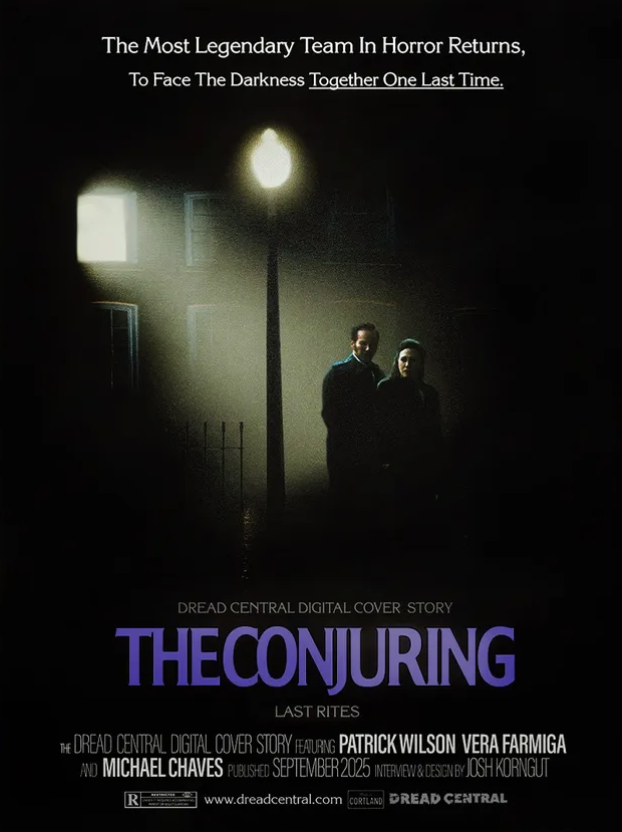
The screenplay should be exercised of the demons plaguing the narrative. While The Conjuring: Last Rites offers initial intrigue and a moderately compelling performative dimension, what substance the story had was undercut by a proliferation of monstrous encounters.

In 1986, paranormal investigators Ed and Lorraine Warren travel to Pennsylvania to vanquish a demon from a family’s home. This case would prove to be their last.

At its outset, the film suggests a promising return to the roots of this dozen-year-old horror franchise that began in 2013, hinting at a chilling and intimate confrontation with the supernatural. The mood is suitably dark, and the premise—while familiar—has just enough mystery to draw the viewer in for what would appear to be tapping into its desire to be in the same vein as The Exorcist. For a time, it even teases the prospect of a measured, atmospheric entry into the Warrens’ saga. Unfortunately, the promise of the first act quickly gives way to a chaotic barrage of hollow frights and set-piece monsters that smother any narrative tension the film might have cultivated.

The greatest asset in the film is, without question, the lead casting of (returning) Patrick Wilson and Vera Farmiga and the addition of Mia Tomlinson as daughter Judy Warren and Ben Hardy as her fiancé Tony. Farmiga and Wilson remain the heart of the franchise–they are the soul reason this franchise continued for as long as it did. Their impeccable chemistry continues to play a vital role in lending credibility and weight to this story and the others in the franchise that would otherwise struggles to stay grounded. Combining Farmiga and Wilson with Tomlinson and Hardy, their collective performances carry an emotional authenticity that suggests a deeper, more resonant film lurking beneath the surface–too bad it was largely kept beneath the surface of the picture. Additionally, the supporting players, too, offer moderately compelling turns, doing what they can with material that rarely allows for nuance.

Where Last Rites falters most egregiously is in its writing—particularly in the second and third acts. What begins with threads of intrigue quickly unravels into a tangle of formulaic plot beats, ill-defined stakes, and a near-total abandonment of narrative discipline. The dialogue oscillates between expositional over-explaining and perfunctory banter, never achieving the kind of earnestness that made earlier entries memorable. By the climax, the story feels more like a theme park attraction than a descent into the occult. (Speaking of which, The Conjuring-verse would make for a fantastic Halloween Horror Nights House if an agreement between New Line Cinema and Universal Parks and Resorts could ever be reached).

Equally troubling is the film’s shallow and often misguided treatment of spiritual warfare. While The Conjuring-verse has historically dabbled in theological and metaphysical ideas, this installment offers only a cursory exploration—at times bordering on ignorance. Themes of faith, redemption, and evil are reduced to ornamental set dressing rather than being woven meaningfully into the narrative. Fundamental tenets of spiritual warfare are neglected: Scripture teaches that “demons tremble at His name” and that they cannot force a person, calling on the Lord, to take their own life or that of another—tempt, yes; coerce, no. This misunderstanding undercuts the stakes, turning spiritual conflict into spectacle rather than a profound struggle. Even William Friedkin’s The Exorcist handled these dimensions with reverence and gravity, whereas here they are clumsily exploited for empty shocks.

From a film craft perspective, the overreliance on CGI monsters is perhaps the final nail in the coffin for this horror franchise and universe. Where practical effects could have imbued the film with texture, tangibility, and dread, we are instead subjected to a parade of vapid, weightless apparitions. Without giving way to spoilers too much, there is a scene in which Lorraine is staring in to a sink that overflows with blood–CGI blood. If Kubrick could pull off the bloody elevator scene in The Shining then this movie could have used practical effects for this scene. I am not suggesting that practical effects alone would have “saved” the soul of this movies, but an increase in the degree to which practical and mechanical effects were integrated into the narrative certainly would’ve helped the movie feel more tangible. The jump scares—frequent and rarely earned—feel like mechanical interruptions rather than organic outgrowths of fear. It is horror by checklist, and it shows. By the time we arrive at the third act, nearly every scene or sequence has a series of jump scares that are predictable at best and lazy at worst. More character-driven moments and dramatic conflict would’ve been a great tool for emotional resets and plot/character development.

In the end, The Conjuring: Last Rites is neither the triumphant sendoff nor the atmospheric chiller it aspires to be. It is a film at war with its own instincts: part haunted house, part monster mash, and ultimately, part missed opportunity. All that said, it’s not a bad movie–it’s better than many of the other installments. But a franchise that needed to end with an Annabelle: Creation would up ending with an Annabelle.

Ryan is the general manager for 90.7 WKGC Public Media in Panama City and host of the public radio show ReelTalk “where you can join the cinematic conversations frame by frame each week.” Additionally, he is the author of the upcoming film studies book titled Monsters, Madness, and Mayhem: Why People Love Horror. After teaching film studies for over eight years at the University of Tampa, he transitioned from the classroom to public media. He is a member of the Critics Association of Central Florida and Indie Film Critics of America. If you like this article, check out the others and FOLLOW this blog! Follow him on Twitter: RLTerry1 and LetterBoxd: RLTerry
SUPERMAN (2025) movie review

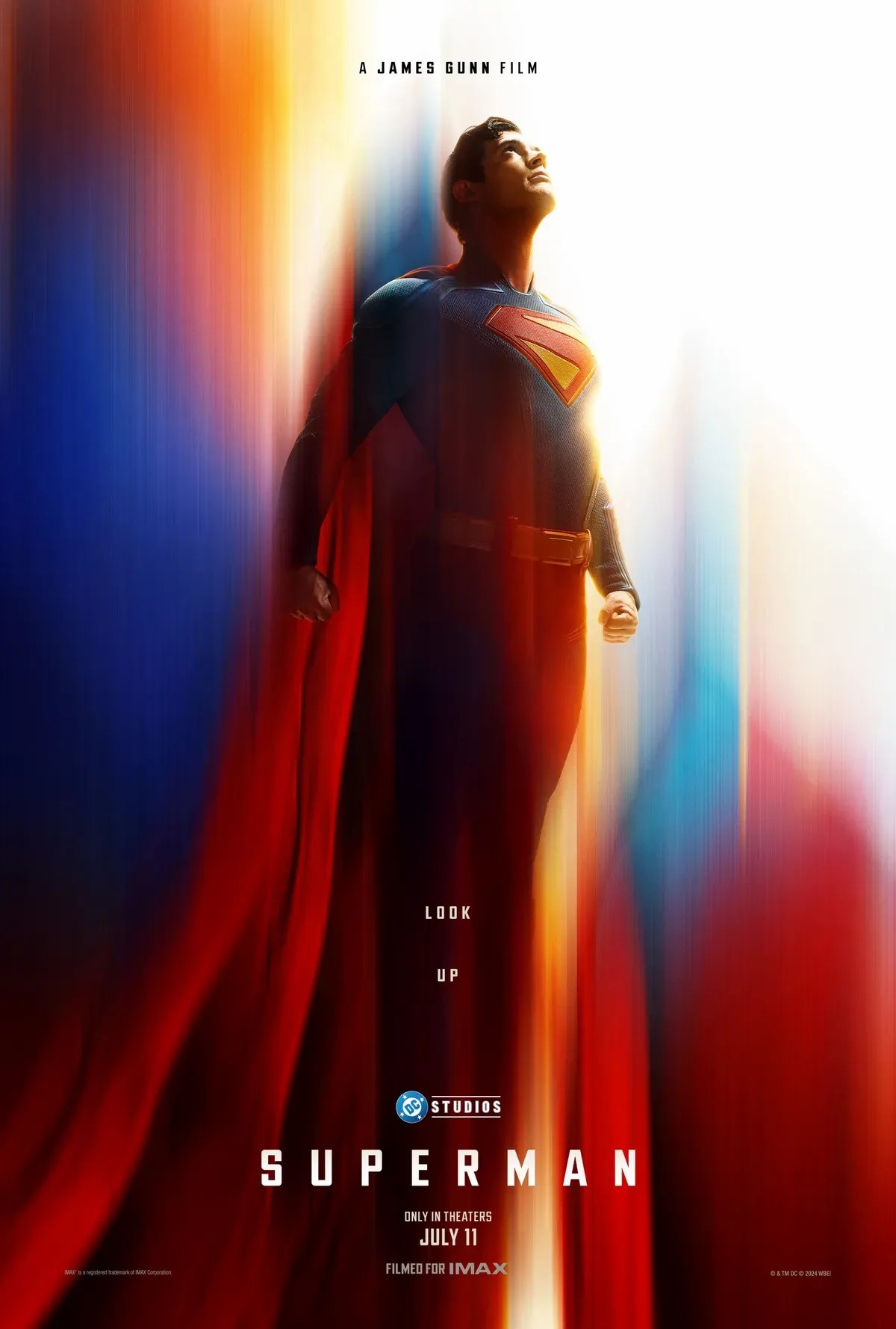
SuperFULL. James Gunn’s Superman is bursting at the seams with plots and characters, resulting in an overwhelming experience. But, the lead characters and hero’s journey are truly super. While weak on narrative, Gunn’s take on the man of steel sticks the landing on the lead characters. And it’s the characters that will keep you sufficiently enough vested in the movie.

When Superman gets drawn into conflicts at home and abroad, his actions are questioned, giving tech billionaire Lex Luthor the opportunity to get the Man of Steel out of the way for good. Will intrepid reporter Lois Lane and Superman’s four-legged companion, Krypto, be able to help him before it’s too late?

While the plotting and many characters lack fine-tuning, David Corenswet’s Clark/Superman and Nicholas Hoult’s Lex Luthor feel like extensions of their comic book origins–in all the best ways possible. Corenswet delivers a Superman that displays the strength and powers that are synonymous with the character, but Gunn adds in a discernible human dimension that has long-since been missing in Superman to make him more human, more relatable. Hoult’s Lex Luthor is nightmarishly deplorable and demonstrates the power of greed. Rachel Brosnahan’s Lois Lane strikes a fantastic balance between hard-hitting journalist and romantic; the chemistry between Corenswet and Brosnahan land on an ideal formula for character development and an old-fashioned romance.

Gunn underscores the movie with some thoughtful social commentary on the fickleness of society, terrifying power of social media, and fickle nature of broadcast media. He cleverly embeds this timely commentary beneath the movie’s spectacle, offering a pointed critique of our shallow, performative culture. Through Clark’s interactions with a world obsessed with optics and outrage, the film holds a mirror to the hollow validation of social media, where sincerity is traded for virality and truth becomes secondary to trend. Gunn also confronts the fickle nature of society itself — how easily the public elevates heroes only to tear them down at the slightest misstep, revealing more about our own insecurities than the hero’s flaws. Even broadcast media doesn’t escape unscathed; the film paints it as a machine of half-truths and spectacle, perpetuating narratives that distort rather than illuminate. In these ways, Superman emerges not just as a story of a man learning to save the world, but as a subtle indictment of a world that seems increasingly uninterested in being saved — at least, not sincerely.

James Gunn’s choice to craft a more human, more relatable Superman is not just a bold creative pivot — it’s an overdue course correction for a character who, for decades, has too often felt like a distant monument rather than a man. Traditionally, Superman has been written and portrayed as a flawless demigod: morally unassailable, physically unstoppable, and emotionally impenetrable — admirable, yes, but also alienating and, frankly, boring. Gunn understands that audiences connect most deeply not with perfection but with struggle, doubt, and vulnerability. By leaning into Clark Kent’s humanity — his insecurities, his quiet kindness, his yearning to belong — Gunn breathes new life into a character long encased in marble. In doing so, he not only makes Superman interesting again but also reminds us that heroism is not about being invincible; it’s about being profoundly, recognizably human.

For all its noble intentions and flashes of brilliance, Gunn’s Superman suffers from a narrative that simply has far too much going on — and not in a way that feels rich or layered, but cluttered and exhausting. In trying to weave together a pantheon of ancillary characters, subplots, and Easter eggs, the film forgets that its emotional core should be Clark Kent’s journey, not a checklist of cameos and teases for future installments. The supporting players, while individually intriguing on paper, pile up to such an extent that they suffocate the story rather than enrich it, leaving audiences with a nagging sense of being overwhelmed rather than immersed. Instead of honing in on what makes Superman compelling, the movie disperses its energy in too many directions, diluting its impact and leaving the viewer wishing it had trusted more in simplicity — and in its titular hero.

Definitely not your dad or grandfather’s Superman; however, this is a Superman that remains super yet connects with audiences through the human dimension.

Ryan is the general manager for 90.7 WKGC Public Media in Panama City and host of the public radio show ReelTalk “where you can join the cinematic conversations frame by frame each week.” Additionally, he is the author of the upcoming film studies book titled Monsters, Madness, and Mayhem: Why People Love Horror. After teaching film studies for over eight years at the University of Tampa, he transitioned from the classroom to public media. He is a member of the Critics Association of Central Florida and Indie Film Critics of America. If you like this article, check out the others and FOLLOW this blog! Follow him on Twitter: RLTerry1 and LetterBoxd: RLTerry
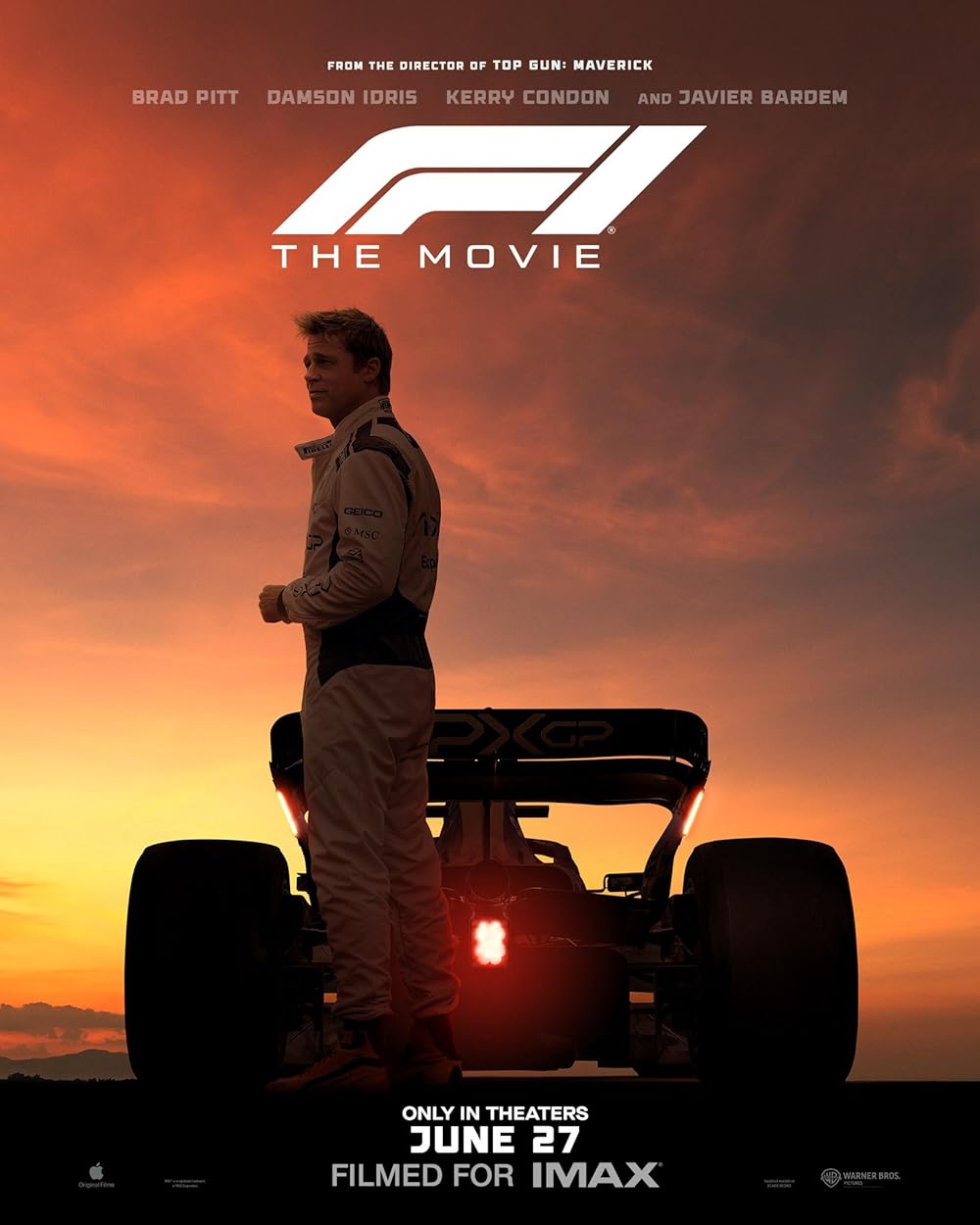
F1 THE MOVIE film review

Starts on high octane, finishes on fumes. From the exhilarating technical achievement to the fantastic cast chemistry to the underdog story of redemption, it would appear that the “formula” for F1 was of sound design and execution; unfortunately, the character development is rushed and the third act simply doesn’t offer the adrenaline-pumping suspense and action as do the firsts two acts.

In the 1990s, Sonny Hayes (Brad Pitt) was Formula 1’s most promising driver until an accident on the track nearly ended his career. Thirty years later, the owner of a struggling Formula 1 team convinces Sonny to return to racing and become the best in the world. Driving alongside the team’s hotshot rookie, Sonny soon learns that the road to redemption is not something you can travel alone.

If for no other reason, see this film on the biggest screen with the highest quality sound because Joseph Kosinski’s F1 is why the BIG screen was made. From beginning to end, the cinematography and editing deserve top billing for this picture because you will feel that you are right there in the crowd or with the drivers along the Grand Prix. Even if you know little to nothing about Formula 1 racing, you will never feel lost as there are sufficient context clues and exposition to keep you along for the 200mph ride. It would have been too easy to lean into the racing sequences, but the racing punctuates the rest of the story, so each and every time you are on the track of the Grand Prix, there has been an emotional and chemical reset from the previous racing scenes. Both the sound design and cinematography are outstanding in this octane-fueled motion picture.

The score from Hans Zimmer serves as a direct extension of both action and character in F1. His energetic score blends sweeping orchestration with pulsating electronic textures that wrap audiences in the big screen story. Zimmer’s ability to craft a human story inside a mechanical world is on full display in the film. Where his brilliance as a composer is witnessed most is in the rhythmic choices scene to scene. He employs musical motifs that emulate machinery or momentum, which in a sport where every millisecond matters, Zimmer’s percussive, syncopated techniques mirror the precision and stakes of the most elite motorsport. In a film that captures a motorsport that crosses cultural boundaries–a global sport–Zimmer’s score represents a cross-section of the various regions of the world that play host to Formula 1 and seamlessly transcends cultural boundaries, creating a sort of global score that resonates with audiences from around the world.

While the plotting is sound, and serves as the foundation for a compelling story, where the film suffers is in the character development and third act. The setup in the first act informs the audience of everything needed to understand our two central characters of Sonny and Joshua (Idris) and the two vastly different worlds in which they live yet are connected by the thrill and love of racing. Of course, this thrill and love is expressed differently based upon the difference in both generation and worldview. Everything needed for a compelling character journey formula is there, but falters in the third act. Underscoring the story is social commentary on our drive (or motivation) for pursuing a passion, be that a career or by extension, a hobby. And it’s in this motivation that we witness our central characters develop over the course of the narrative conflict.

Sonny is a cynical former (generation X) Formula 1 driver, that was once heralded as the newest star on the Grand Prix circuit. In contrast, Joshua “JP” is the (generation Z) talented and charismatic driver that is obsessed with his image (with help from his press manager). Both drivers excel in talent, but are each battling their own respective demons. Sonny and JP develop over the course of the film–each man’s worldview challenged. Sonny has to grow in team spirit and JP has to grow in humility. The character arcs on which both characters are traveling begin and even develop in compelling ways, even resonating with audience members that are somewhere on the spectrum between both individuals; but, the change in both characters is too rapid when the resolution comes in the third act. JP’s scenario appears to be the perfect canvas on which to paint a portrait of what happens when we lose focus on the love of a sport and rather find ourselves lost in the celebrity of it, lost in the toxic social media swamp. Sonny’s character arc feels more complete, but even his switch from where he was to where he ended resolved itself too quickly, losing the full impact that it could have had.

Kosinski’s casting decisions result in a cast that demonstrates excellence in chemistry. There is an authenticity in the relationships and dynamics among the lead and supporting cast. Never once, did I feel that I was watching actors–rather–I felt I was watching real Formula 1 drivers, crew, and investors. I completely buy the longtime relationship between Sonny and Reuben (Bardem), even though we spend minimal time on the history of their friendship. And the clashes between Sonny and the pit crew and directors never felt rehearsed or contrived.

Even though there are shortcomings in the third act, the film remains an exhilarating experience. Movies like this is that for which the BIG screen was created–to capture larger than life stories that most audience members will never face or experience.

Ryan is the general manager for 90.7 WKGC Public Media in Panama City and host of the public radio show ReelTalk “where you can join the cinematic conversations frame by frame each week.” Additionally, he is the author of the upcoming film studies book titled Monsters, Madness, and Mayhem: Why People Love Horror. After teaching film studies for over eight years at the University of Tampa, he transitioned from the classroom to public media. He is a member of the Critics Association of Central Florida and Indie Film Critics of America. If you like this article, check out the others and FOLLOW this blog! Follow him on Twitter: RLTerry1 and LetterBoxd: RLTerry
JOKER: FOLIE À DEUX movie review

Audacious reach undercut by horrendous storytelling. Director Todd Phillips’ Joker: Folie à Deux, which is a sequel to 2019’s Joker, delivers on both a spectacular shot composition and a compelling performative dimension, but falters nearly everywhere else.

The film demonstrably hopes to communicate a sense of gravitas, but it just comes off as a disjoined mess that is punctuated with musical numbers. The musical numbers themselves are actually the most enjoyable parts of the movie, with their blend of Broadway standards, gospel-inspired music, and even energetic swing. But the storytelling, complete with slapdash plotting and cynical, anarchist tone, is simple unbearable. The real joke here is on the audience, for sitting through this cacophony of fragmented plots and characters. Lady Gaga shines brightly–no real surprise there–but Phoenix’ Joker just painful to watch, despite the exceptional quality of his performance. Additionally, the film’s deplorable depiction of law enforcement is inexcusable, even though Phillips attempts to justify that dynamic dramatically. Aside from the abysmal storytelling, the film is blatantly anti-cop, which perpetuates negative, dangerous propaganda associated with our brave men and women serving and protecting our communities. That’s all I have to say about this film. Do yourself a favor, and find something else to watch this weekend at the cinema.

Ryan teaches Film Studies and Screenwriting at the University of Tampa and is a member of the Critics Association of Central Florida and Indie Film Critics of America. If you like this article, check out the others and FOLLOW this blog! Interested in Ryan making a guest appearance on your podcast or contributing to your website? Send him a DM on Twitter. If you’re ever in Tampa or Orlando, feel free to catch a movie with him.

Follow him on Twitter: RLTerry1 and LetterBoxd: RLTerry