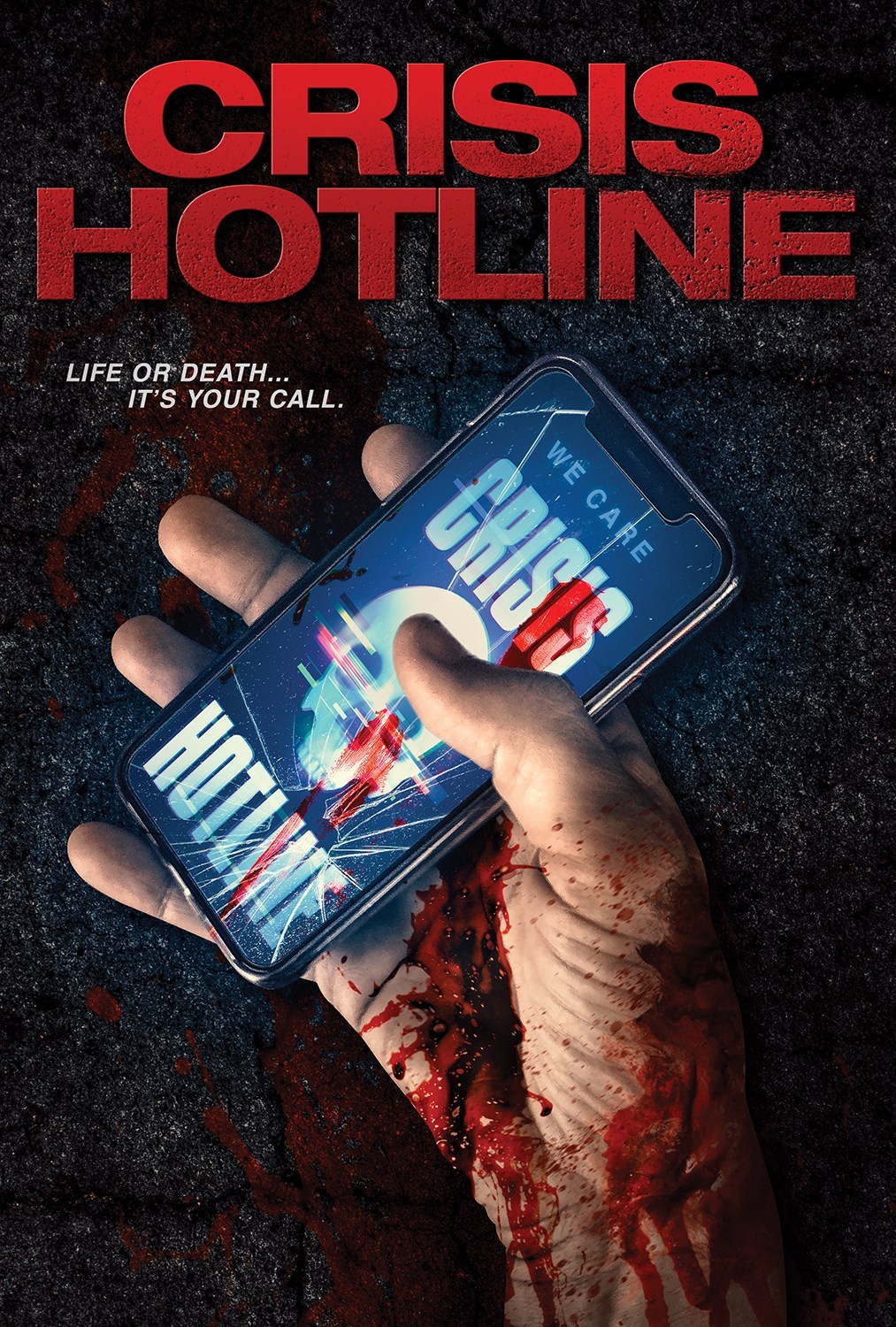
“Child’s Play” (2019) brief horror movie review

“Hi, I’m Chucky, wanna play?” It’s a fun horror movie, flaws and all. Let’s address the white elephant in the room. This is not as good as the original; however, instead of primarily focussing on what did not do right, I’d like to highlight what it did well. At the end of the day, this is a highly entertaining horror movie that brings Chucky’s origin into the 21st Century. Unlike the trajectory of the Child’s Play franchise after the original sequel that embraced the camp effect, 2019’s Child’s Play attempts to go full-on horror. Unfortunately, it should have gone the camp route, because I feel that would have been received more favorably. There are moments that you question whether or not they are supposed to be funny. And it’s that ambiguity that leaves us uncomfortably in the middle during many moments in the movie. Although each problem can be individually dissected to determine why it didn’t work, the long and short of it can be attributed to a weak screenplay. While the screenplay is responsible for many of the movie’s problems, the idea or premise is solid; it’s a fresh interpretation of the original premise. For the gore fans out there, the movie ups the ante quite a bit! There aren’t many kills, but the ones that we get are creative, painful, and gruesome. Whereas all the human characters are flat, lacking in anything truly redeemable, this movie does provide more time in developing the relationship between Andy and Chucky that allows us to empathize with Andy’s dilemma when confronted with Chucky’s violence. Contrary to the hype going into the anticipated voice acting of Mark Hamill as Chucky, the performance lacks anything memorable. Aubrey Plaza does a very Plaza job as Andy’s mom, and Gabriel Bateman delivers little more than a mediocre performance as Andy. You might be thinking that you could say some of these same things about 80s horror movies; however, 80s slashers were (1) a product of their time and (2) originated so many characters and ideas and (3) were largely built upon the idea of campy horror. Had the new Child’s Play went the camp route or stayed true to a serious, thought-provoking horror movie route, then it could have been received much more favorably. But hey, that marketing campaign inspired by Toy Story 4 was brilliant.

You can catch Ryan most weeks at Studio Movie Grill Tampa, so if you’re in the area, let him know and you can join him at the cinema.

Ryan teaches screenwriting at the University of Tampa. If you like this article, check out the others and FOLLOW this blog! Interested in Ryan making a guest appearance on your podcast or contributing to your website? Send him a DM on Twitter!

Follow him!

Twitter: RLTerry1

Instagram: RL_Terry

Sinister Summer: “The Birds” Retrospective Review

“You’ll never look at birds the same way again” (Jurassic Park). Although Dr. Grant was referring to velociraptors, you can say the very same thing about Alfred Hitchcock’s The Birds. Hitchcock directed more than fifty feature length films, only two of which are horror (Psycho and The Birds). However, he is widely credited, and rightly so, as the director who ushered in the modern horror film, with Psycho being regarded as the first modern horror film. On the heels of the success of Psycho, a film that revolutionized so much about the movie-going experience from movie start times to “not spoiling the ending” (now where have we recently heard that???), Hitch set out to deliver another horror film at the height of his powers.

But what would it be about? He turned to past collaborator Daphne du Maurier, author of Rebecca, Hitch’s first American film. Her best-selling novella The Birds had previously been adapted for radio and stage (I’ve actually seen the stage adaptation, and incidentally I prefer the film), but Hitch decided to adapt it (loosely I might add) for the small screen. That’s right, small screen. He originally intended The Birds to be adapted for his wildly popular and successful series Alfred Hitchcock Presents. But like Jordan Peele did with Us, which I am convinced started out as an idea for his Twilight Zone series, Hitch decided to take the idea from TV to the cinema! So with the decision to adapt du Maurier’s novella into a cinematic experience, Hitch made history.

Not only is it one of the most famous films in cinematic history, it sowed the birdseed for all the “when nature attacks” movies to follow including Jaws and Jurassic Park. This film was also influential in John Carpenter’s The Fog and Stanley Kubrick’s The Shining. With the question of why did the birds attack never being answered, it leaves the events of this movie lingering in our minds as a possible reality.

To hear a conversation with me on the CineMust podcast chatting about the must-see status of The Birds and Jaws, click HERE.

When wealthy well-known socialite Melanie Daniels (Hedron) finds herself to be the brunt of a practical joke played by lawyer Mitch Brenner (Taylor) at a bird shop while searching for a gift, she decides to return the favor by buying a couple of birds and dropping them off at his apartment. Upon finding that he spends the weekends with his younger sister and mother (Jessica Tandy) north of San Francisco in the small community of Bodega Bay, she drives to the remote town in order to deliver the birds. Soon after her unannounced arrival, the birds of the town begin to act incredibly strangely.

Following a seagull attacking Melanie, and Mitch’s mother discovering her neighbor dead from an apparent bird attack, the town realizes that the birds are a real threat. Eventually birds, in the thousands are attacking anyone without reason or explanation as to why this is happening. Trapped in the Brenner household, survival becomes the number one priority for not only our central characters but everyone in the town.

At the heart of The Birds is relationships. Relationships ranging from romantic to familial and then between an outsider and the natives of a close knit town. Paranoia is a common theme in this film as well. The characters and their relationships between one another are so incredibly strong and well–developed that you can ostensibly remove the birds from the equation and the movie still works. Now, it doesn’t work as a horror film, but it works as a drama.

The strength of this screenplay, written by Evan Hunter, lies in the complex characters and simple plot. Although the plot is largely changed from du Maurier’s novella, the setting, character dynamics, and the idea of the home invasion are extrapolated from the source material. Outside of the terrifying element of the attacking birds, the film’s subplot is about an outsider invading a close knit community and a de facto love quadrangle between Mitch, his mother, his sister, and his ex. Essentially, Melanie upsets the normal order of the town much in the same way that the birds upset the pecking order of humans vs nature.

The screenplay also delivers some outstanding tonal shifts that are seamlessly woven together. Way before the first bird attacks, The Birds begins as a screwball comedy right out of the 1930s, then changes into a soap opera, then suspense, followed by horror. Lastly, the movie takes one final tonal shift from horror to apocalyptic, complete with dead bodies, foreboding birds, and a lack of resolution. This movie has legitimately inspired the real fear of birds (ornithophobia) in how the scenes were shot and the lingering possibility that this could happen in your own town.

There is a brilliant lack of explanation of why the birds are attacking not is there any real means of escape for the townsfolk of Bodega Bay, all while chaos reigns supreme in this otherwise innocent seaside landscape. Yet, this cinematic work is a permanent resident of our sociological zeitgeist. Even those who have not seen the film are aware of its existence. And it has gone from screen to live experience at the former Universal Studios Florida attraction Alfred Hitchcock: the Art of Making Movies. The reason why we don’t focus on the lack of an explanation for the birds bizarre and violent behavior is for the same reason that we don’t ask why Bruce (Jaws) is attacking people. We accept it because the film is more concerned with its theme than points of origin expositional dumps. We don’t care about why the birds are doing what they are doing–that’s part of the horror. It’s the same reason why it’s important that we don’t know too much about Michael Myers; if we knew too much about him, why he ticks, then he would cease to be the boogeyman. These birds would cease to be terrifying if there was some sort of natural or supernatural explanation. The unknown is frightening.

There have been many hypotheses over the years as to what the birds represent. The most popular one is rooted in the red scare or communism. And perhaps that is true, but the real villain (character of opposition) is not the birds but the townsfolk of Bodega Bay. The birds are the personification of the mistreatment of and unwelcoming attitudes of the residents toward Melanie. In a similar fashion, the villain of Jaws is the mayor because he is the personification of the folly of man.

When the true oppositional character in a screenplay is an entity, force, or idea, that component has to be personified in a character(s) because film is a visual storytelling medium, so the outdated, nationalistic attitudes of the locals is personified in the birds. Moreover, the ornithologist in the diner stated that if birds of different species flocked together, then all hope would be lost for humanity as we couldn’t stand a chance against them.

That foreboding prediction came to pass as both crows and seagulls (who do not mix together in real life) massed together and terrorized the town and its people. As the birds are the original inhabitants of Bodega Bay, the humans represent the outsiders. This symbolism is also witnessed in how the townsfolk banned together to force Melanie out of the town and in how Mitch’s mother urges him to send Melanie back to San Francisco. All through the movie, there are images and sequences of the way outsiders can be marginalized by the majority of the native inhabitants. Human civilization has long sense been guilty of stigmatizing or marginalizing outsiders.

At the root of the symptoms of intolerance is fear. So, Hitchcock took that root cause of unwelcoming attitudes and mistreatment and adapted it into a timeless horror film. It holds up so well because fear is still evident in how certain groups of people treat another in our lives today. Hitchcock used a combination of blue screen and practical effect technologies to bring the terror to life. And of those two approaches, it’s mostly practical-effect driven, all the way down to the real birds that were used during the production (with proper bird trainers/wranglers).

Three scenes that I want to highlight are the birthday party, downtown attack scene, and the upstairs room at the showdown. Nowadays, these scenes would be full of CGI and other post-production work. The actors would be acting with no birds on set, or very few anyway. For authenticity, puppets, mechanical, and real birds were used for these scenes to increase the realness and give the actors something to truly be afraid of. In fact, so many real birds were used that there were multiple large bird enclosures on the set that used as the temporary home of the stars of the film. In addition to bird wranglers, the American Humane Society was on set every day to monitor the treatment of the birds.

The birthday party scene was composed of rotoscoping birds, blue screen shots of birds, papier-mache birds, and birds that were tied to actors and even more birds that were freely flying within the enclosure built around the set. Although most of the birds remained in the aviary, a few got out. And to this day, there are decedents of those birds living in the rafters of that sound stage on the Universal lot. In much the same way, the students fleeing the schoolhouse and down the hill to the town center–that scene–was accomplished in very much the same way. However, with this one, the added pyrotechnics were incorporated.

The iconic phonebooth was covered in birdseed and shrimp to get the birds to go completely crazy. The upstairs bedroom scene at the end of the movie was completely constructed inside a giant aviary with hundreds of birds. In addition to the birdseed and shrimp that was strewn about the room, real birds were thrown at Hedron. The terror in her eyes that you see in the scene is all too real. No amount of acting can replicate that authentic fear. Despite the very real attack of the birds, Hedron is eternally grateful to have been a part of cinematic history.

The single scene that find is the most fascinating and shows the power of Hitchcock’s innate ability to create suspense with a camera is the scene immediately preceding the schoolhouse evacuation–the scene with Melanie sitting on the park bench with the jungle gym int he background.

Ryan teaches Film Studies and Screenwriting at the University of Tampa and is a member of the Critics Association of Central Florida and Indie Film Critics of America. If you like this article, check out the others and FOLLOW this blog! Interested in Ryan making a guest appearance on your podcast or contributing to your website? Send him a DM on Twitter. If you’re ever in Tampa or Orlando, feel free to catch a movie with him.

Follow him on Twitter: RLTerry1 and LetterBoxd: RLTerry

“The Dark Crystal” Throwback Thursday Review

With the highly anticipated The Dark Crystal: Age of Resistance releasing on August 30th, I want to revisit the cult classic that is still equal parts beautiful and terrifying to this day. A couple of years ago, Fathom Events brought The Dark Crystal to the big screen, so I was able to watch this outstanding motion picture on the big screen for the first time ever. Despite the very macabre nature of many parts of the movie, my parents showed this movie to my sister and I at a young age. From the very first time we watched it, my sister and I became fans. As kids–back when kids played outside, in the woods, and in abandoned buildings using their imaginations to role play–we created characters that were ostensibly taken from the world of the movie, and spent hours imagining we were in Thra. As a kid, I was mesmerized by the spectacular production design and puppetry. I can only speculate the degree to which kid-me appreciated the artistic elements of the now iconic motion picture, but I imagine that it completely captured my imagination, otherwise I would not have rewatched it as many times as I did. As an adult, I am shocked that my parents allowed me to watch it at such a young age because there are moments that terrify first-time adult audiences today. Sometime last year, I introduced this movie to my penpal, and he was blown away by how dark this fantasy movie was. Of course, this movie came out at a time that fantasies were dark (case and point, The Neverending Story). On the surface, this may be a common premise of good triumphing over evil despite adversity, but there is so much more that makes this the timeless classic that it is. Jim Henson was an incredible genius who truly knew how to combine form with function to create a fantastical masterpiece.

What stands out more than the plot itself (which is pretty straight forward), is the fantastical practical effects that give the film incredible depth–levels of dimension that CGI-heavy movies with they had but won’t ever achieve. Why? Simply because you cannot replicate the way real light bounces off real objects and into the camera lens. The atmosphere that the setting and characters combine to make is a level of movie magic that only the genius of Jim Henson could have created. Frank Oz stated that children should not be sheltered from darkness because it is just as much a part of their lives as joy and laughter. There are some truly terrifying and sad moments in this movie. And it looks as if this sentiment is going to be channeled into the new series. The story does not shy away from topics such as torture, death, gender roles, independence, and courage. Whereas the plot itself is simple, the characters are highly complex. Moreover, each of the Skeksis represents one of the seven deadly sins, and each Mystic is the good counterpart. The gelflings represent the “human” or emotional component in the narrative, so they serve as the conduit through which we experience the plot. Aughra is our logical character whom provides the diegetic exposition to understand the gravity of the encroaching Great Conjunction. There is a beautiful poetry in how the characters all complement one another and their respective surroundings.

Although all Jim Henson movies feature muppets (Henson’s patented puppets) and other movies have puppetry, The Dark Crystal stands alone as the only film of his that is entirely puppets! Yes, you could argue that the few longshots are human actors, but that is splitting hairs. For all intents and purposes, only puppets appear in this movie. And these puppets were the most advanced to ever hit the screen, and still the most advanced puppets to have ever been witnessed on the silver screen. Fewer than 20yrs after The Dark Crystal, virtually all puppetry would be replaced with CGI to save money and time. Sacrificing experiential art for technical marvel and efficiency. These advanced puppets inspired the ones that have made appearances in Disney and Universal parks over the years. Some of the puppets had to be operated by multiple people, yet when you watch them on screen, you forget that they are a puppet because they truly exist within the fantastical world. I love how the design of each and every kind of puppet is an extension of the world in which they live. So much dimension in each and every creature. There are lines, shadows, textures, and more that CGI could never replicate. These are three-dimensional creatures that exist within a four-dimensional world that exemplify the absolutely peak of a combination of technical design, costuming, and articulated performance that the camera natively captures without need for post-production to create a significant effect after the fact. Very seldom do we get to witness such an attention to detail in the design of a character (we will get to the set soon). These puppet characters do not feel or look artificial, the manner in which the light reflects off them and they interact with the world around them gives them an outstanding ability to make us forget that there is someone pulling the strings. We emotionally connect with these characters in such a way that can so often only be done with human or animal actors.

The production design of the set is an outstanding, dazzling artistic achievement by standards then and now. You’ll be hard pressed to find another set that is created with such a high degree of tangible detail. No amount or quality of CGI can even hold a candle to the wildlife, plant life, and landscape of Thra. I absolutely love how the homes of each of the groups of characters (Skeksis, Mystics, Podlings, Gelflings, and everyone’s favorite Aughra), are designed to be an extension of the inhabitants themselves. Because there is nothing generic about any of the settings, the degree to which the lands feel real is astonishing. One of the reasons for that is because it IS real! Blue/green screen technology was still in its infancy so there was thankfully no real desire to integrate it into the set for most of the movie. However, the final scene of the movie does feature some green screen work that does not hold up today. Without a screen able to fill in the gaps for most of the movie, the artisans and craftsmen had the daunting task of bringing this world of fantasy in the age of wonder to life. And their tireless efforts pay off in spades. Diversity runs strong all through the story both visually and figuratively. No two landscapes or settings look alike, just as no two characters (even the podlings) look identical. Every line, corner, and texture radiates art. More than simply a backdrop for the scenes of the plot, the settings are essentially characters themselves. The way the characters interact with their surroundings holds the audience in an incredible suspension of disbelief as to the believability of the world that is on screen.

Although it was not a blockbuster in the US, as it was up against E.T. that same year, it was the highest grossing box office hit in France and Japan. Not being an initial box office success has not stopped the film from aging well and remaining an impressive work of art even by today’s audiences. Perhaps it is best known for being a cult classic, but that cult following has remained strong through the years. So much so that we have the Netflix prequel series with an all-star cast debuting in August. It’s refreshing to see that a prequel (or sequel) strives to embody the soul of the original in order to inspire a new generation of fans and future visual storytellers. We fell in love with the original because of the puppetry and production design, the unique characters, and fantastical elements that make it an exemplary motion picture.

You can catch Ryan most weeks at Studio Movie Grill Tampa, so if you’re in the area, let him know and you can join him at the cinema.

Ryan teaches screenwriting at the University of Tampa. If you like this article, check out the others and FOLLOW this blog! Interested in Ryan making a guest appearance on your podcast or contributing to your website? Send him a DM on Twitter!

Follow him!

Twitter: RLTerry1

Instagram: RL_Terry

“MA” Horror Movie Review

A delightfully disturbing and thought-provoking Carrie meets Misery horror movie. Oscar-winner Octavia Spencer delivers an outstanding performance; however, the movie is unfortunately hampered by a weak screenplay with flat characters. In short, the reason to watch this movie is for the terrifying performance by Spencer, solid world-building, and commentary on high school bullying and teen sexual assault. Tonally, MA is a throwback to 70s and 80s slasher horror complete with the slow-burn windup, off-beat comedic schticks, and a descent into gnarly violence. Not all the kills cause you to wince as the screen holds your eyes hostage in the pleasurable unpleasure, one of the kills will leave you cheering–no seriously, it will. Built upon the premise of the sins of the parents will be visited upon the children, the screenplay does not hold back when taking us to some very dark places that fester with anger, fear, and resentment. With so much going for it, it’s unfortunate that the movie suffers from on-the-nose dialogue, leaving little room for subtext. Furthermore, most of the characters lack significant dimension that could have propped up this movie. Some interesting relationship dynamics and backstory are touched on, but never followed through in a meaningful way. While Spencer is truly the glue holding this movie together, there are some highlights worth discussing.

A lonely middle-aged woman befriends some teenagers and decides to let them party in the basement of her home. But there are some house rules: One of the kids has to stay sober, don’t take the Lord’s name in vain, and never go upstairs. They must also refer to her as Ma. But as Ma’s hospitality starts to curdle into obsession, what began as a teenage dream turns into a terrorizing nightmare, and Ma’s place goes from the best place in town to the worst place on Earth. (IMDb)

While most of the characters lack any true dimension (except Ma), the ensemble cast is comprised of some highly relatable characters. At the forefront of the cast is our title character of Sue Ann (or Ma). If you are coming to this movie as a single individual over 30, then you will likely identify with her by empathizing with her backstory and understanding what it’s like to feel that life is a parade passing as you wave it by. Furthermore, Sue Ann suffered repeated bullying, rejection, and even teen sexual assault that left a lasting psychological trauma. Or maybe you are the former popular high school Erica who moved away from her jerkwater town to Los Angeles, lived a wealthy life, just to wind up a divorcee and back in your hometown as a cocktail waitress. Perhaps you are the new girl at school Maggie, who grew up in Los Angeles but now is back in dismal Ohio during your junior or senior year of high school because your dad left your mom (Erica) for another woman. You could be the Regina of your group of friends, the dude bro, or the all American boy with a touch of geek. Whatever your high school experience or how it affected your adulthood, there is likely a character with whom you can identify.

Although the film could have commented more on the PTSD associated with high school bullying in a more meaningful way, and derived even more horror from it, it does serve as an exploration of the real, lasting effects on the psyche. A brief character analysis of Sue Ann reveals someone who is trying to capture that which evaded her in high school: the parties, the romance, the care-free friends. Because of the abominable treatment of Sue Ann by many of her classmates in high school, she suffered a trauma that mitigated her ability to socialize properly and psychologically mature. Therefore, as she grew older, she was constantly reminded of that which she could not experience in high school. So, when she saw a moment to reconnect with her youthful self in being needed by the group of teens outside of the gas station to buy alcohol, she seized the opportunity. Of course, the fact that our all American boy Andy is the son of the guy she crushed on in high school, definitely helped her make the decision to help. Unfortunately, her high school crush was responsible for the sexual assault she endured. A sin for which both father and son would pay. It doesn’t take long for the teens to see the cracks in Sue Ann’s fragile veneer. While the teens enjoyed Sue Ann’s party house and the charismatic Ma, things were fine. When they rejected her, things took a grave turn for the worst. And just like that, she was reminded of the torment from their parents in high school and began to plot her revenge on both the teens and their parents. In this respect, she is a little like Freddy Krueger because in A Nightmare on Elm Street we have the concept of the sins of the parents will be visited upon the children.

If you went or are going into Ma with the desire to see a terrifying horror movie from start to finish, then I need to warn you that this is a slow burn horror movie. Not, that slow burn is without its intrigue and suspense, after all, this is where the world and relationship building happens. However, this movie does not reach its horror status until the third act. But once the horror hits, it hits hard–gnarly even. Even the kills/tortures that you saw in the trailer still pack a powerful punch. Most of kills are nightmarishly real. Very little visual effects here; you get the benefit of some highly authentic practical effects. Yes, even the lip sewing scene. Probably one of the most disturbing torture and kills involves animal blood; this moment is nice homage to both Misery and Carrie, but not a copy of either. There is a poetry to the tortures and kills. No one is targeted out of sheer happenstance, but targeted because of whom or what they represent. The sins by which Sue Ann judges the teens or parents are directly connect to or represented in the manner in which they meet their demise. More than the creativity in the actions of Sue Ann, the reasons why she feels the way she does are the most interesting. Even though we should be disgusted at the actions of Sue Ann, we cannot help but empathize with her because of her troubled history and past trauma. She wants what any of us want: to love, have our love returned, and be accepted.

Is it a great horror movie? No. But is is a solidly good one? Yes. If for no other reason, you watch Ma for the outstanding performance by Octavia Spencer! She is absolutely captivating and will leave you with many WTF moments. Interestingly, this is not Spencer’s first time in a horror movie; she was in Rob Zombie’s Halloween II. I hope that we get to see her in more horror movies in the future because she did such a fantastic job with this one. If you’re looking for a fun, popcorn horror movie that–to its credit–does have some thought-provoking content, then you’ll enjoy Ma.

You can catch Ryan most weeks at Studio Movie Grill Tampa, so if you’re in the area, let him know and you can join him at the cinema.

Ryan teaches screenwriting at the University of Tampa. If you like this article, check out the others and FOLLOW this blog! Interested in Ryan making a guest appearance on your podcast or contributing to your website? Send him a DM on Twitter!

Follow him!

Twitter: RLTerry1

Instagram: RL_Terry
“Rocketman” Movie Musical Review

Well, it’s better than BoRhap, but I should’ve rocketed passed this one. Before you throw tomatoes at me, as my opinion is clearly in the minority on this one, let me start out by stating that I do not care for rock n roll fever dream musicals. If you are unfamiliar with that subgenre of movie musicals, they are best described as those musicals that are surreal, nonlinear, and ultimately driven by emotion and image versus action or plot. Think of a poem versus prose. If you’re looking for an example of this type of movie, then look to Across the Universe. If you enjoyed Across the Universe or are simply a fan of Elton John’s music, then you will definitely enjoy Rocketman. If you are like me and do not care for the modern approach to a musical or unfamiliar with Elton John’s music beyond Step into ChristmasRocketman, or The Lion King, much like me, then you may want to consider blasting past this one. As outstanding as Taron Egerton’s impersonation of Elton John is, I am not ready to give him an Oscar nod. Personally, I do not consider excellent impersonations on par with acting. Impersonation and acting do not weigh the same, in my opinion. However, his performance appears to be highly committed and accurate to Elton John, which adds immense support to the tagline Taron Egerton is Elton John. Furthermore, this performance provides demonstrable evidence that Egerton is capable of a wide range of future roles. Where I do hope the film sees Oscar-nominations is in the spectacular costuming and mesmerizing production design. Those costumes were absolutely mind-blowing! For fans of Elton John’s music or simply the modern approach to the movie musical, then this will certainly be one to catch in the cinema on the big screen.

Rocketman is a modern movie musical that takes audiences on a fever dream journey through the highs and lows of Sir Elton John’s career from his breakout years to headlining Madison Square Garden to addict recovery and his resurgence in the 1980s.

Even before I told my friend that I did not care for the movie, she already knew. Why? Because she knew that I didn’t care for modern musicals; therefore, she extrapolated a hypothesis that I did not like Across the Universe. She knows me very well. Now, before you think that I only like classic musicals, let me elaborate. When I say modern, I am referring to a modern approach to the narrative structure and execution of the musical numbers. For instance, I absolutely loved La La Land and greatly enjoyed The Greatest Showman. However, both of those are classical in their respective approaches to the movie musical. In terms of Broadway, I love Sunset Boulevard and Mamma Mia, both of which are chronologically modern, but the former is still a classically structured musical and the latter’s worldwide success is attributed to the timeless music of ABBA, with which I am very familiar. If I use Mamma Mia or Mamma Mia Here We Go Again as modern movie musicals, that I liked, to which I compare Rocketman, then I assess that if I was more familiar with Elton John’s music, then I would have probably enjoyed the movie a lot more. After all, I went into it with the certainty that I was going to enjoy it. As there are no real shortcomings in the movie (except for some of the clunky dialogue), I am left with the evaluation that I simply do not care for this type of storytelling, so that is why I did not care for the movie.

My favorite moments in the movie are the ones between Elton and Bernie, specifically the one just before a concert in which Bernie urges Elton to reconnect with his child-self to remember why he loved music to begin with. Elton refuses to acknowledge his life before his Elton John persona, and snaps at Bernie. Two seconds later, he reaches out his hand to grab Bernie’s and apologizes. This shows the complexities of their longstanding platonic friendship, and therefore visually communicates the strength and depth of their relationship. At the core of this movie, it is about the rise, fall, and rise of the central character that is guided by an unreliable narrator. The nonlinear narrative begins in the present day, then flashes back to the past. And this goes back and forth until the showdown wherein we move past the moment that we opened with to jump forward to Elton’s recovery and end BEFORE The Lion King. I know. I was hoping that we were going to get a reference to The Lion King and then end the movie. Because this is a rock n roll fever dream musical, it was important to establish Elton John as an unreliable narrator because we then interpret what we are about to watch through a highly subjective lens. Subjectivity is important in the interpretation of a dream, and this story is very dream-like. Since the movie begins with an addict Elton John and ends with a recovered Elton, this unreliability allows for a greater character growth arc that is emotionally driven. Emotion is of vital importance because this story has far more in common with a poem than prose.

Perhaps the narrative execution is not to my liking, but the musical numbers are highly engaging and lots of fun to watch. If you love the music of Elton John then these musical numbers will tug at your heartstrings or make you jump to your feet and dance along with the movie. The first act is quite strong, and the second act is moderately strong, but the third act is a little clunky. Still, every moment of this movie was more enjoyable than BoRhap. The movie would have played stronger for me had it not been filled with one-dimensional characters wrapped up in a lackluster plot. But hey the music and costumes are great! If you want the full experience of Rocketman, then I feel that you want to watch it in a Dolby Cinema auditorium for the exquisite audio and picture quality. Whereas BoRhap was mostly about the music, this one is all about the imagery followed by the music.

You can catch Ryan most weeks at Studio Movie Grill Tampa, so if you’re in the area, let him know and you can join him at the cinema.

Ryan teaches screenwriting at the University of Tampa. If you like this article, check out the others and FOLLOW this blog! Interested in Ryan making a guest appearance on your podcast or contributing to your website? Send him a DM on Twitter!

Follow him!

Twitter: RLTerry1

Instagram: RL_Terry