Electrifying in look, disjointed in prose.
Michael is, at its best, a spectacle. At its worst, it is a sequence of moments searching for a story to connect them. The film dazzles with electrifying musical numbers and a transformative performance from Jaafar Jackson, recreating the energy and precision that made Michael Jackson a global icon. Yet beneath the surface of that spectacle lies a surprisingly thin dramatic foundation. Rather than unfolding as a cohesive narrative, the movie plays more like a curated timeline—an impressive collection of scenes and set pieces that rarely build upon one another. The result is a biopic that captures the look and sound of greatness, but seldom pauses long enough to explore the human motivations and emotional currents that made that greatness possible.
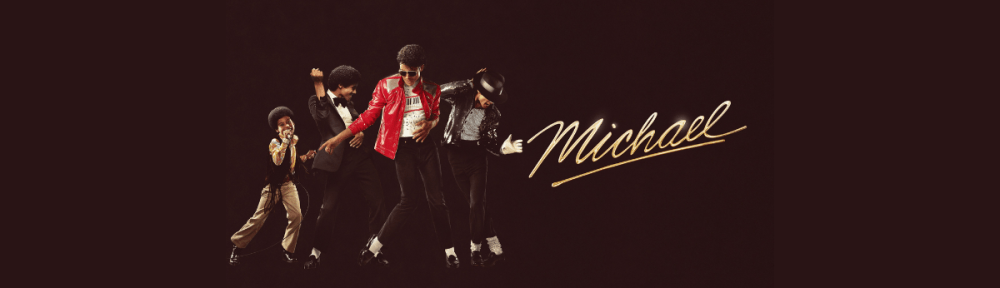
Michael is the story of the first half of the King of Pop’s life–from his extraordinary early days in the Jackson 5 to the visionary artist whose creative ambition fuels a relentless pursuit to become the biggest entertainer in the world.
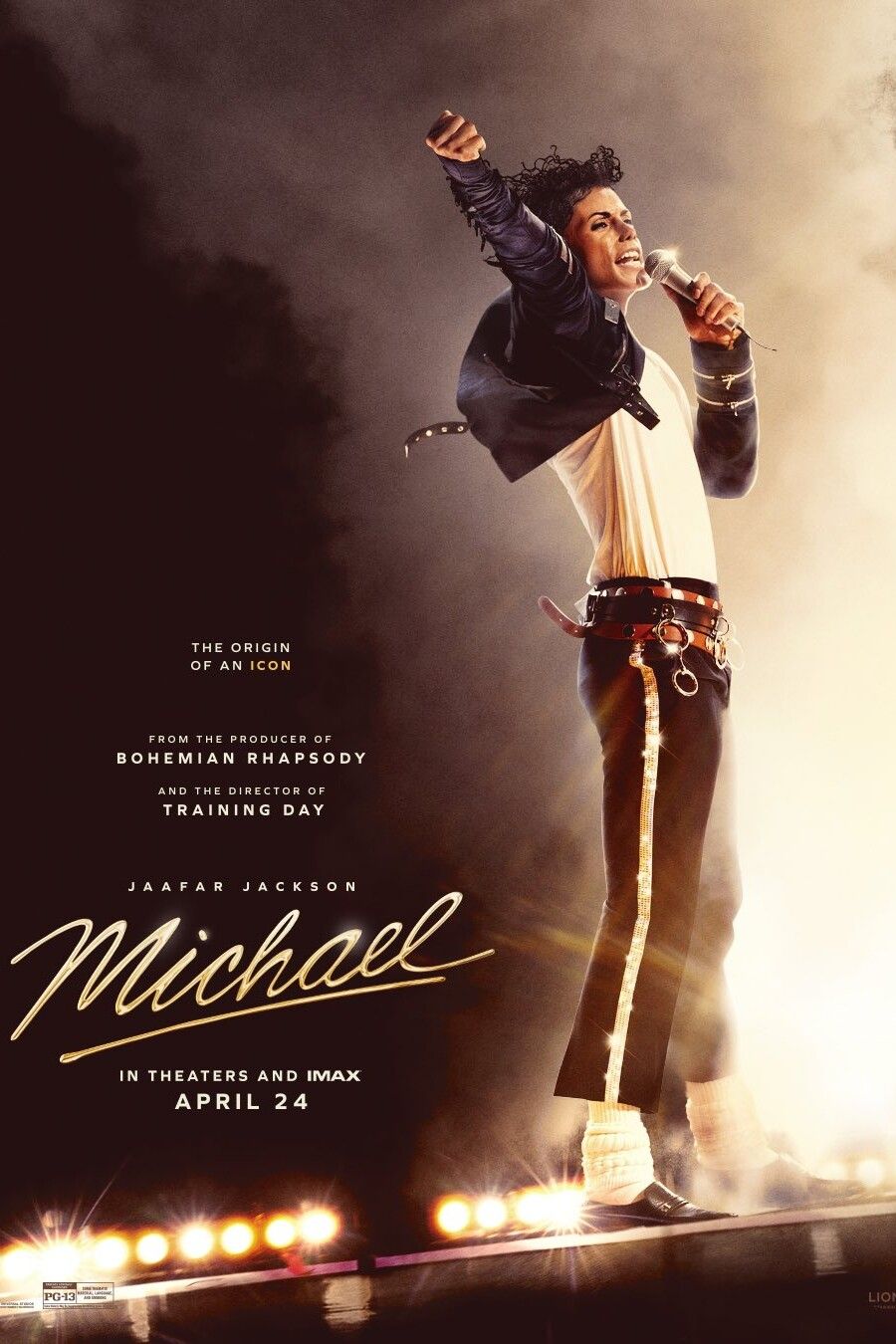
Without a doubt, Jaafar Jackson’s performance as his uncle, Michael Jackson, is nothing short of electrifying. He captures the look, the voice, the posture, and—most impressively—the kinetic energy of the King of Pop with uncanny precision. There are stretches in this film where the illusion is so convincing that you genuinely forget you are watching an actor. You feel, instead, as though Michael himself has stepped back onto the stage.
And the film knows it.
The concert and music-video sequences are spectacular—lavish in scale, meticulously choreographed, and technically impressive. From the lighting design to the sound mixing to the camera movement, these moments recreate the experience of a Michael Jackson performance with remarkable fidelity. If you never had the opportunity to see him live, this movie brings you about as close as cinema can.
But spectacle alone cannot sustain a narrative. Despite its visual electricity, Michael plays less like a cohesive drama and more like a curated highlight reel. Scene after scene unfolds with little connective tissue, rarely building upon what came before. The only true continuity in the film is Michael himself—his presence serving as the thread holding together a collection of otherwise disconnected sequences.
As a result, character development is surprisingly thin—even for the central figure. Yes, we hear Michael express his desire to be the best. We see his ambition. We witness his relentless pursuit of perfection. But we rarely feel the emotional engine driving those impulses. Motivation is stated rather than dramatized. The film tells us who Michael is, but seldom allows us to experience how he became that person.
That limitation extends to the supporting characters as well.
Take Joseph Jackson. The film hints at his greed and severity, but it stops short of exploring the deeper complexity of his motivations. There is an important story there—one about a father determined to ensure his children would not spend their lives working in a steel mill in Gary, Indiana. His methods were often harsh, even repulsive, but his ambition was rooted in a desire for something better. That tension, which could have provided dramatic depth, remains largely unexplored.
Many of the characters in this film—including the leads—feel one-dimensional, defined more by their roles in Michael’s life than by their own inner lives. To its credit, the film does succeed in weaving a thematic motif that carries from beginning to end: the enduring influence of Peter Pan. We learn why the story of the boy who never grew up resonated so deeply with Michael from childhood onward, and that thread provides one of the few elements of emotional continuity in the narrative. We also meet his famous chimpanzee, Bubbles—an inclusion that underscores the film’s fascination with the mythology surrounding the man.
Narratively, the movie traces Michael’s journey from his early days in Gary to his 1988 concert in London. But the film feels less like an exploration of his life and more like a survey of it—an overview rather than an examination.
One might argue that such breadth is necessary to capture what amounts to the first half of an extraordinary life within a two-hour runtime. Yet history suggests otherwise. Consider What’s Love Got to Do with It, anchored by a career-defining performance from Angela Bassett as Tina Turner. That film covers decades of triumph and trauma while still delivering character development, narrative momentum, and emotional clarity. It demonstrates that a larger-than-life story can be both expansive and dramatically coherent.
Perhaps the difference lies not in structure, but in subject.
Unlike Turner’s story, Michael Jackson’s legacy remains complicated—shaped not only by unprecedented artistic achievement but also by controversy, scandal, and public scrutiny. For some viewers, that context may make it difficult to fully embrace a film that focuses primarily on the years before his fall from favor. And with the movie ending on a clear “to be continued” note, it seems inevitable that the darker chapters of his life will be addressed in a future installment.
Still, for all its narrative shortcomings, Michael delivers where it matters most to fans: the music. The recreation of the Thriller sequence is a particular highlight—an exhilarating reminder of why Michael Jackson became a global phenomenon. The film’s reverence for his artistry is unmistakable, even if its storytelling discipline is not. I was disappointed, however, that the great Vincent Price receives little more than a passing acknowledgment, though his brief appearance via House of Wax offers a welcome nod to cinema history.
In the end, Michael succeeds as an experience more than as a narrative.
Go for the concert.
Go for the spectacle.
Go to witness an astonishing performance.
But do not expect to leave with a deeper understanding of the man behind the music.

Ryan is the general manager for 90.7 WKGC Public Media and host of the show ReelTalk “where you can join the cinematic conversations frame by frame each week.” Additionally, he is the author of the upcoming film studies book titled Monsters, Madness, and Mayhem: Why People Love Horror. After teaching film studies for over eight years at the University of Tampa, he transitioned from the classroom to public media. He is a member of the Critics Association of Central Florida and Indie Film Critics of America. If you like this article, check out the others and FOLLOW this blog! Follow him on Twitter: RLTerry1 and LetterBoxd: RLTerry
 R.L. Terry ReelView