
A sequel about decline that unintentionally embodies it
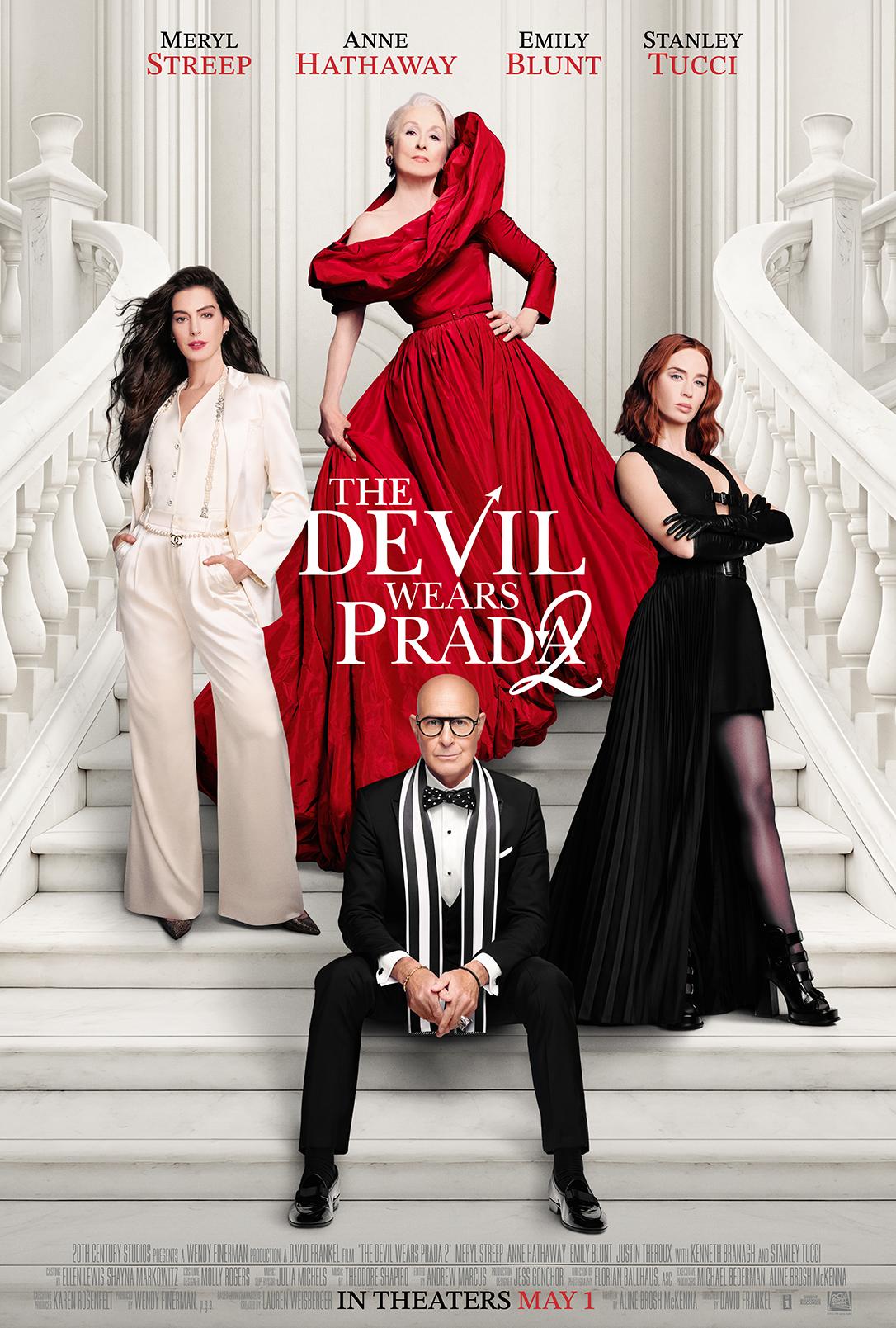
The Devil Wears Prada 2 arrives with an intriguing premise: the decline of traditional print media and the cultural erosion that follows in its wake. On paper, that is fertile dramatic territory—especially for a franchise rooted in the world of fashion magazines, where prestige once carried weight and authority. But while the film gestures toward thoughtful commentary on the changing media landscape, its ambition collapses under the weight of its own excess. The sequel’s attempt to explore the decline of traditional print journalism—and the cultural loss that represents—is buried beneath rushed subplots and thin character work. The sharp bite that defined the original is gone, replaced by interactions that feel oddly dull and listless.
About the movie: Andy Sachs (Anne Hathaway) returns to Runway as Miranda Priestly (Meryl Streep) navigates a new media landscape and Runway‘s position within it. They reconnect with another former assistant, Emily (Emily Blunt), who is now the head of a luxury brand that possesses funding which could ensure Runway‘s survival.
The irony is difficult to ignore: a movie about the fading relevance of print media ends up feeling like a diminished version of its former self. What made the original The Devil Wears Prada so compelling was not merely its fashion or its humor, but its brazen confidence. The characters were bold, unapologetic, and sharply drawn. They possessed edge—sometimes cruelty, sometimes wit—but always energy.
That energy is conspicuously absent here. The sequel lacks the chutzpah that defined the original. The characters feel like muted versions of their former selves—recognizable, but drained of vitality.
Even Miranda Priestly, once a towering figure of authority and intimidation, feels diminished. She is simply not the same Miranda. Nor is she a believable evolution of that character in an era defined by the decline of print media and the increasing irrelevance of traditional fashion magazines. Instead, she feels like a sanitized, diluted interpretation—a kind of bargain-bin version of the woman who once commanded every room she entered.
Andy, meanwhile, remains recognizable as her former self, but a shallower one—less conflicted, less driven, less interesting. Emily comes closest to recapturing her original spark, yet even she feels like a low-resolution facsimile. Nigel is perhaps the most faithful to his earlier incarnation, but he is given remarkably little to do, functioning more as a reminder of the past than as an active participant in the present.
One of the film’s most significant problems is not a lack of ideas—it is an overabundance of them. The movie attempts to comment on a wide array of contemporary issues, each of which could have sustained a compelling narrative on its own. Among them:
- The exploitation of labor in global fashion supply chains
- The decline of print journalism and professional writing
- Body positivity and changing beauty standards
- Workplace political correctness
- The tension between art and commerce
- The fallibility of institutions and authority figures
- Agism
These are all worthwhile themes. But instead of selecting one or two central ideas and developing them with clarity, the film introduces them in rapid succession, only to abandon them before they gain dramatic traction. The result is a story that feels scattered and unfocused.
There is a fundamental principle of storytelling that seems to have been forgotten here:
When your story is about everything, it is ultimately about nothing.
Adding to the problem is a roster of side characters who function less as people and more as props. They appear when needed, deliver exposition, and disappear without leaving any meaningful impression. They exist to move the plot forward rather than to inhabit it.
Even the film’s musical landscape reflects this sense of creative fatigue.
The soundtrack is largely forgettable—pleasant enough in the moment, but lacking the memorable punch that defined the original film’s sonic identity. One exception, of course, is Vogue, which remains as exhilarating as ever. Its inclusion feels less like nostalgia and more like a reminder of what bold artistic expression once sounded like.
By contrast, the contributions from Lady Gaga feel surprisingly inert—polished, competent, but oddly impersonal. The songs lack the distinctive flair and theatricality audiences have come to expect from an artist of her caliber. They register less as creative statements and more as algorithmic approximations of style.
From beginning to end, The Devil Wears Prada 2 feels like a discount version of its predecessor—an imitation rather than a continuation. It tries hard to recapture the magic of the original, but its creative DNA seems shaped by the streaming era: content designed for breadth rather than depth, immediacy rather than longevity. The film moves quickly, introduces ideas rapidly, and resolves conflicts hastily—mirroring the rhythms of modern digital consumption.
In that sense, the movie unintentionally becomes a commentary on the very cultural shifts it seeks to critique.
It is a product of the moment.
And like much of contemporary media, it feels engineered for engagement rather than crafted for impact. The Devil Wears Prada 2 reminds us that sequels are not sustained by familiarity alone. They require conviction, clarity of purpose, and characters who evolve in meaningful ways. This film has ideas—many of them compelling—but acks the narrative discipline necessary to bring those ideas to life. What remains is a glossy, well-dressed production that gestures toward relevance without ever achieving it.
The original film had bite—had fire.
This one barely leaves a mark.
Ryan is the general manager for 90.7 WKGC Public Media and host of the show ReelTalk “where you can join the cinematic conversations frame by frame each week.” Additionally, he is the author of the upcoming film studies book titled Monsters, Madness, and Mayhem: Why People Love Horror. After teaching film studies for over eight years at the University of Tampa, he transitioned from the classroom to public media. He is a member of the Critics Association of Central Florida and Indie Film Critics of America. If you like this article, check out the others and FOLLOW this blog! Follow him on Twitter: RLTerry1 and LetterBoxd: RLTerry


