Feels like a collection of strong ideas searching for a stronger story
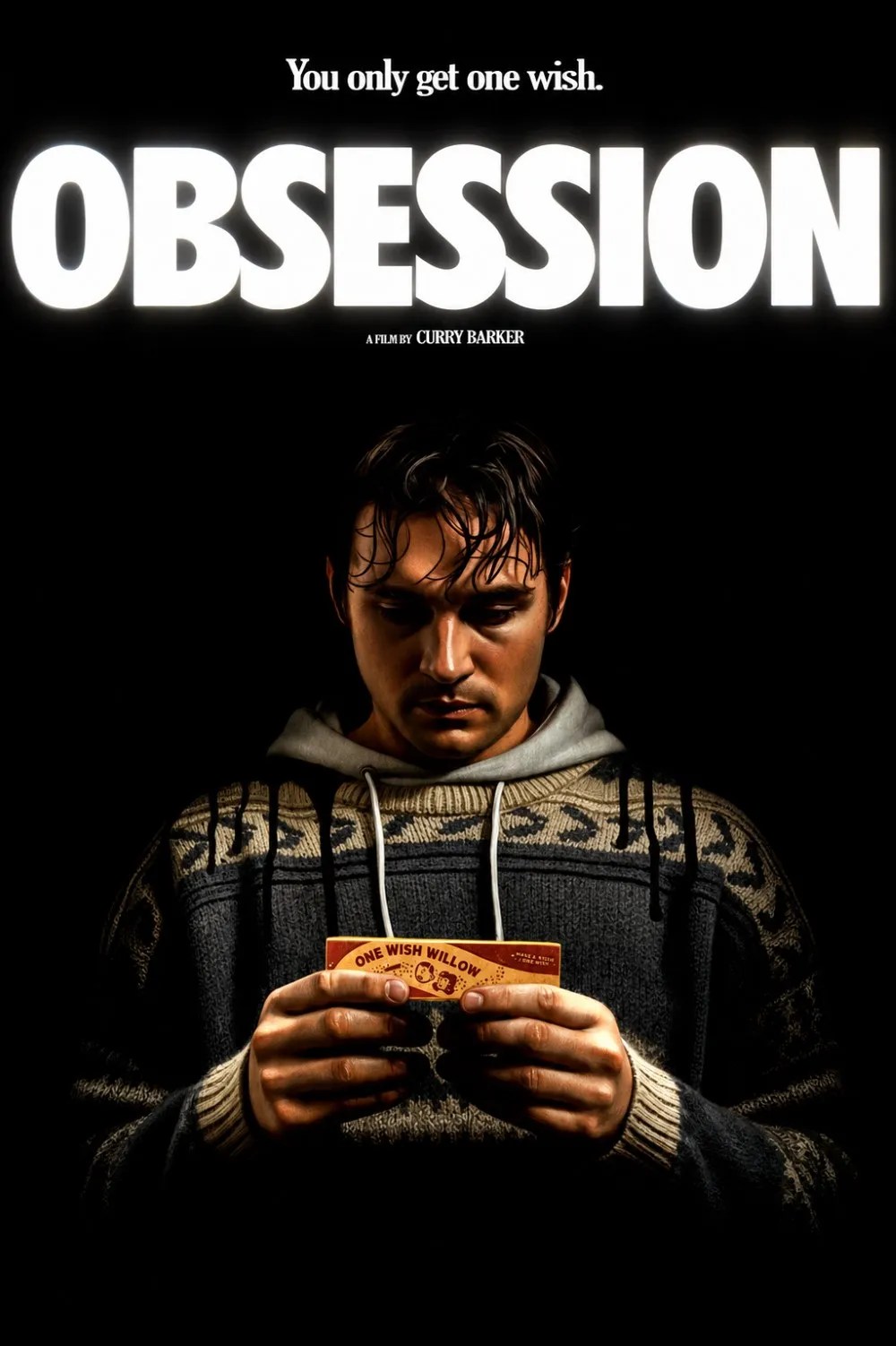
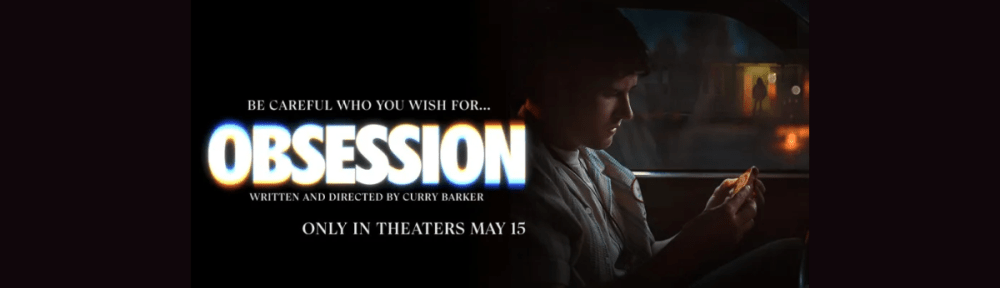
Written and directed by Alabama native and YouTuber Curry Barker, Obsession has become one of the surprise success stories of the year. Produced on a modest budget and propelled by enthusiastic word-of-mouth, the film has resonated with audiences looking for something original in a marketplace increasingly dominated by sequels and established franchises. And there is much in his filmmaking to admire here, but filmmaking and storytelling are not the same discipline. For all of its visual confidence, Obsession often feels like a collection of strong ideas searching for a stronger story. The film offers memorable moments, unsettling imagery, and a clever variation on the classic Monkey’s Paw concept, yet those moments frequently feel as though they were designed to punctuate a more fully developed screenplay rather than serve as the foundation for one.
About: After breaking the mysterious “One Wish Willow” to win his crush’s heart, a hopeless romantic gets exactly what he asked for. However, he soon discovers that some desires come at a dark and sinister price.
Barker demonstrates a keen eye for composition, editing, and atmosphere. He understands how to create tension how to stage a reveal, how to keep an audience engaged, and of the upmost importance, he understands how to sustain tension and keep an audience engaged. Concerning his competence in the technical elements, there is little doubt he has a firm grasp; however, there is more to cinematic storytelling than the technical dimension. A person can possess extraordinary visual instincts while still struggling with the fundamentals of dramatic construction–and it’s that tension that sits at the heart of Obsession.
Demonstrably, he does not yet fully understand screenwriting fundamentals. For example, this movie is nearly devoid of moments of emotional reset–those moments wherein we can breathe. Like wine usually shouldn’t be consumed immediately after removing the cork, movies too need moments of breathing, emotional reset in order to cleanse the palate and mitigate the possibilities of exhausting the audience.
Coming down hard on his lack of screenwriting talent may sound harsher than intended, but it’s yet another example of how those that know how to build a following on YouTube or other social media app do not necessarily know how to tell a compelling story. Knowledge of technical elements? Yes. Knowledge of screenwriting mechanics and fundamentals? Not so much–usually anyway.
But there are many elements that are admirable in Barker’s movie. The film contains numerous effective scenes, memorable images, and genuinely unsettling moments. Barker clearly knows how to build individual sequences that work. The problem is that those sequences often feel as though they were designed to punctuate a stronger screenplay that never materialized around them. The result is a movie that frequently feels less like a cohesive narrative and more like a collection of good ideas forced together into a feature-length runtime.
At its core, Obsession functions as a contemporary variation of W. W. Jacobs’ classic Monkey’s Paw premise. Desire collides with consequence. Wishes become curses. Human longing opens the door to forces beyond one’s control. It is fertile dramatic territory and one that has generated countless effective horror stories over the years.
What distinguishes the best versions of that premise, however, is not the supernatural mechanism itself. It is the moral and emotional framework surrounding it. The Monkey’s Paw is ultimately about temptation. Pet Sematary is about grief. Needful Things is about greed. Even many episodes of The Twilight Zone work because they place ordinary people in extraordinary situations that reveal something meaningful about human nature.
Obsession never quite discovers its equivalent thematic center.
The film gestures toward ideas involving desire, fixation, and unhealthy attachment, but these concepts remain largely underdeveloped. The horror functions effectively on a mechanical level, yet rarely acquires the emotional or ethical weight necessary to elevate it beyond its premise. The same problem extends to the characters.
While the film introduces individuals who serve the narrative adequately, few emerge as fully realized people. Their decisions often feel driven more by the needs of the plot than by clearly established psychology. As a result, the audience understands what is happening without necessarily becoming invested in whom it is happening to. That lack of emotional grounding becomes increasingly noticeable as the story escalates.
And yet, despite these shortcomings, I find it difficult to dismiss Obsession. Many films fail because their creators lack vision. Barker’s film suffers from the opposite problem. The vision is clearly present. The talent is clearly present. The technical proficiency is clearly present. What remains underdeveloped is the narrative architecture needed to support those strengths. That distinction matters. A filmmaker who struggles with shot composition or pacing may never overcome those limitations. A filmmaker who already possesses those skills but needs to improve as a writer represents a far more intriguing proposition.
Which is why Obsession ultimately succeeds less as a finished work than as evidence of potential. The film may not offer compelling characters, a fully realized dramatic structure, or a particularly profound exploration of its themes. What it does offer is a glimpse of a filmmaker who understands cinema as a visual medium and appears capable of creating memorable moments.
The challenge now is learning how to connect those moments into a story worthy of them.

Ryan is the morning host on WLRH Public Radio in Huntsville, AL and host of the show ReelTalk “where you can enjoy the cinematic conversations frame by frame each week.” Additionally, he is the author of the upcoming film studies book titled Monsters, Madness, and Mayhem: Why People Love Horror. After teaching film studies for over eight years at the University of Tampa, he transitioned from the classroom to public media. He is a member of the Critics Association of Central Florida and Indie Film Critics of America. If you like this article, check out the others and FOLLOW this blog! Follow him on Twitter: RLTerry1 and LetterBoxd: RLTerry