“Tully” film review

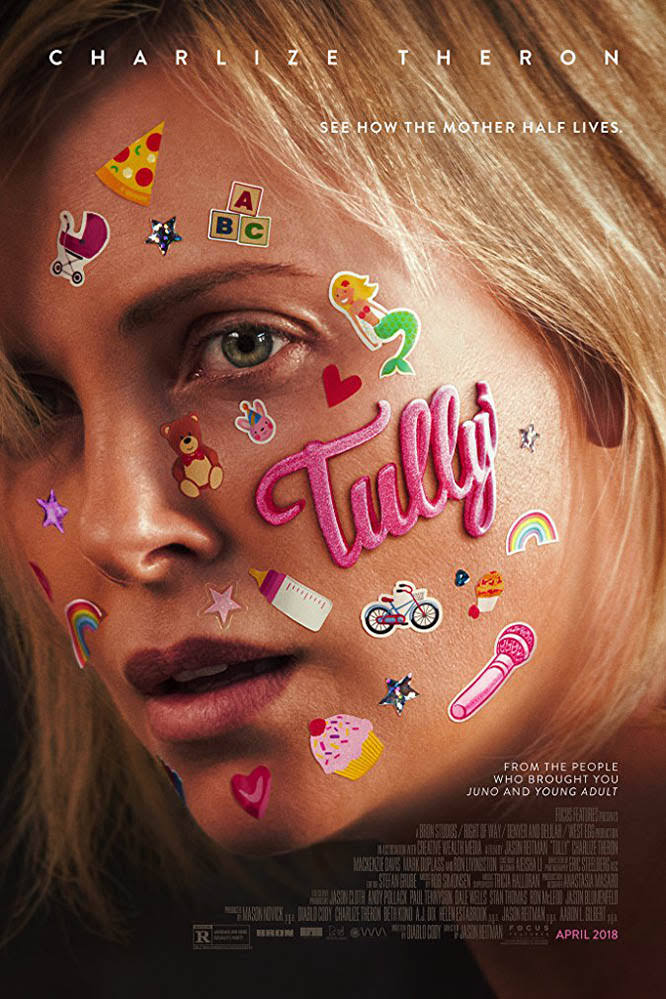
A no holds barred, unapologetic story of the realities of motherhood. Focus Features’ Tully starring Charlize Theron is a brilliant film that shies not away from what being a mom is truly about during postpartum depression, a subject seldom touched on in film or TV. Directed and written by Juno’s Jason Reitman and Diablo Cody respectively, this film represents the best work of Reitman and Cody since the groundbreaking Juno which was followed up by the outstanding Young Adult, and showcases just how incredibly diverse an actor Theron is. See her in a role unlike her typical roles as she so incredibly authentically brings to life a middle-class working mother who is faced with many obstacles as she rears her three kids, one of which is a newborn. As a male, I cannot begin to fathom just how difficult it is to be a mother (or by extension, a single father); but after watching this film, I have a whole new respect for the many hats that a mom has to wear in order to manage a household. Some might even say that this film is so incredibly effective at laying out the hardships of being a mom, that it may work better than more conventional birth control. However, the film is not only about the trials of motherhood, but it also spends time on the joys. Tully is what I characterize as a dark comedy that has some truly terrifying moments.

Already the working mother of two kids, one of which displays signs of a developmental disorder, Marlo (Charlize Theron) is not pregnant with baby number three, in what her brother identifies as an “unplanned pregnancy.” Marlo’s wealthy brother desires to help his sister by gifting her a night nanny in order to help Marlo through the rough transition of a newborn in an already chaotic house. Marlo’s husband is hardworking, makes lunches, and assists his oldest daughter with her homework, but fails to understand that Marlo needs to be taken care of as well. In order to not go completely insane during postpartum depression, Marlo reluctantly decides that she could use the night nanny that her brother offered to pay for. Hesitant to the extravagance of having a nanny at first, Marlo forms an unexpected bond with the unconventional, challenging hipster Mary Poppins named Tully.

No pretense about this story of motherhood. Cody’s brilliant penchant for self-deprecation, dry humor, and stark naked emotion is witnessed once again in Tully. I cannot think of a present screenwriter that could have created such a compelling story. Unlike her timeless modern classic Juno, Cody shies away from the comedy you may be accustomed to seeing from her, and focus on the darker side of being a mother. And it works superbly. I laughed, cringed, and cheered during the film, and so did many of the others in the audience. There is an authenticity in this story that is seldom seen in other melodramas. Possessing a raw, gritty narrative, Tully will have you empathizing quickly with the struggles Marlo continues to face throughout the film. There is so much that is praiseworthy in this story; but unfortunately the sharp, precision that supports the first two acts becomes a little dull during the realization (or resolution) on the third act–the same chutzpah that was in the DNA of the majority of the movie is not as apparent at the end. What Tully lacks is a well-defined external goal. The weak end game is uncharacteristic of Cody, as both Juno and Young Adult had solid realizations. As I tell my screenwriting students, dealing with life is not a goal (it’s incidental). Still, everything else about this film is effectively compelling.

Theron displays a genuine, uncompromising commitment to character in this motion picture. Aside from the fact she literally put on 50lbs for the role (that’s right, no fat suit), she provides audiences with a fearless portrayal that is both vulnerable and fiery. Coupled with waves of mania, anger, and complete exhaustion, Theron delivers a razor-sharp performance that will leave you breathless and bleeding from the unbridled intensity and emotional rawness. In this slice of life story, there was certainly the room to demonize Marlo’s husband, the sister-in-law, the former roommate, and school principal, but Cody includes these individuals that many moms actually have in their lives but chooses to focus on the physiological and emotional struggle of Marlo as she recovers from her unplanned pregnancy. Of course, there is a brilliantly funny scene of Marlo confronting the pretentious private school principal. It’s the kind of encounter that many of us want to have with those who refuse to shoot straight and annoyingly avoid confrontation because they are so afraid to be candid, and it just comes off as a facade. Theron’s ability to completely sell a mother on the verge of a breakdown who’s constantly facing situations in which she asks herself how-the-hell-am-I-going-to-get-through-this is unparalleled. I cannot think of another movie that has a character quite like Marlo in Tully.

The film’s title character is a Mary Poppins of sorts that comes to the aid of Marlo when she is at her wits’ end. You may be wondering why the film is named after the night nanny instead of Marlo. For the same reason Mary Poppins is the name of the story that is really about Mr. Banks. Marlo may be the central character, but Tully (Mackenzie Davis) is so incredibly instrumental in supporting Marlo through this time. Furthermore, she opens her mind to new possibilities and the joys of being a mom, even when Marlo isn’t feeling it. Tully embodies that free spirit that many of us have or had in our 20s that somehow gets lost as we get older. Tully enables Marlo to channel her younger self in an effort to be emotionally healthier for her kids. Taking care of yourself first so you can be there for your kids, is one of Tully’s many messages to Marlo. There is a whimsy about Tully that is contagious, and will put smiles on the audience’s faces amidst the majority of the film’s darker moments.

You’ll encounter all the different kinds of people that an emotionally struggling mom has to deal with on a regular basis. From an out-of-touch snobby sister-in-law to a husband who just doesn’t get you, from a pretentious and absurdly conflict aversive school principal to a former roommate, the film provides commentary on how each of these kinds of relationships affect a mom who’s trying her best to keep sane and not murder everyone. The film even touches on how having a kid with a developmental disability is physiologically and psychologically draining, even though you love your kid unconditionally. It’s important to note that Marlo’s husband is shown to be an active participant in his family by way of, not only his financial support, but being there for his kids in the evening and helping to make lunches. However, he does withdraw to playing video games after the kids have gone to bed; but that’s because he is like many fathers that are unaware that their spouses need to be comforted, cared for, and shown appreciation during this rough transitional time. Hopefully, after watching this movie, fathers will have a better idea of what their spouse may be going through. One of the strongest themes one can write into a film is a commentary on what it means to be human–the human condition–but seldom has a film been so specific to comment on what it means to be a mother. In this respect, Tully is provocatively groundbreaking.

Such a perfect film for the upcoming Mothers Day weekend. Even if you are not a mom or (let’s not forget) single father, there is something to learn from this film because you may have a mom or single father in your circle of friends or family. Never before has a film stripped away all the magic of motherhood at the time when your kids are little. No frivolous, ostentatious gender reveal parties, gym moms-to-be, or ridiculously lavish baby showers for this mom. Why? Because those are events and experiences typically found on Pinterest, in the movies, or reserved for upperclass society that is hasn’t a clue what it’s like to be a struggling mother balancing her full-time career and being a full-time mom. Tully tells it like it is for so many, and why it is such an outstanding motion picture.

Ryan is a screenwriting professor at the University of Tampa. If you like this article, check out the others and FOLLOW this blog!

Follow him!

Twitter: RLTerry1

Instagram: RL_Terry

Thrillz (theme parks): Thrillz.co
Now Playing: Netflix at a Theatre Near You?

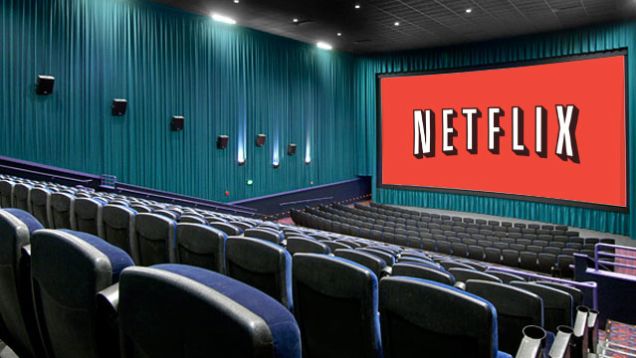
After pioneering the streaming service, is Netflix aiming to revolutionize the multiplex experience? Recently, the Twittersphere and blogosphere has been all abuzz regarding Netflix’ possible acquisition of multiplex cinemas. But what does that mean for the customer and for Netflix? Those questions have prompted me to explore the idea of a Netflix-owned chain of movie theatres. Who would’ve ever thought that the DVDs delivered-to-your-home distribution company would go on to essentially invent the streaming service concept, produce wildly popular original programming, would now possibly be in a position to own and operate multiplex cinemas. The irony here is that the company that tore down the brick-and-mortar walls of Blockbuster and whose system of delivering content put a huge dent into the bottom line of movie theatres would now look to build the walls it so effectively razed to the ground. Perhaps in how it completely demolished the legacy way of home video and original television content distribution for a more efficient system, it seeks to build a more cost-effective model of movie theatres to truly create a big screen experience for a Web2.0 universe.

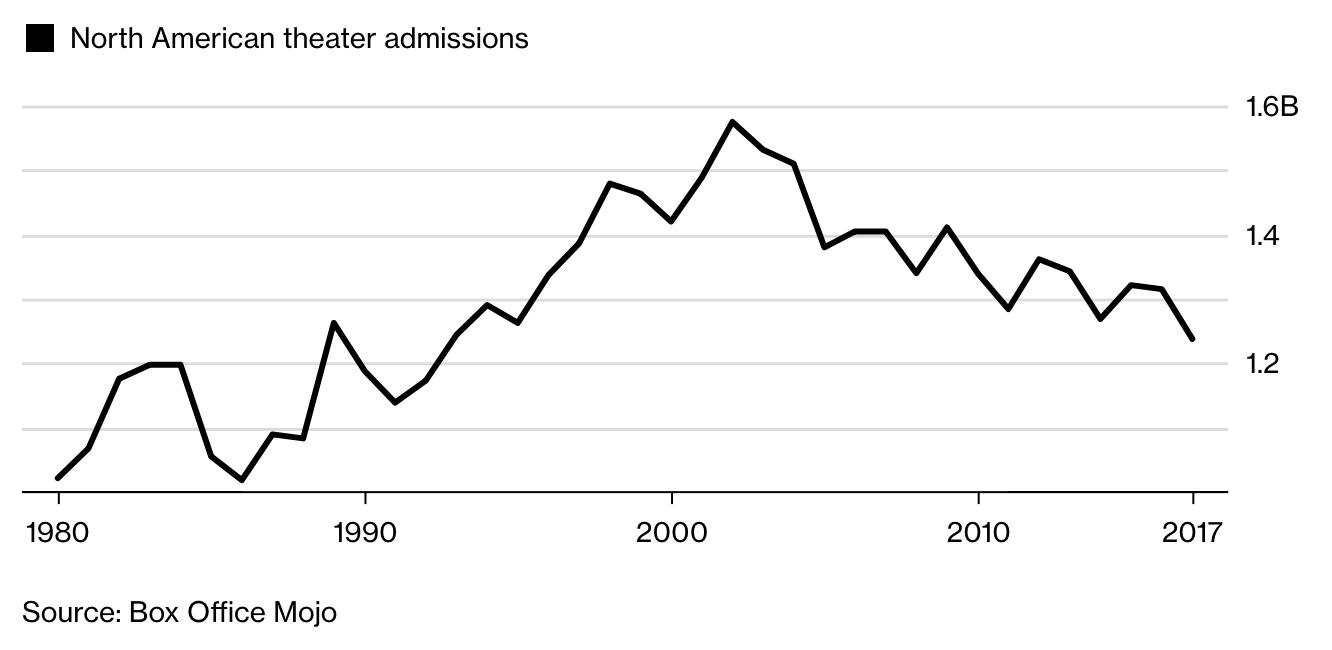
But, is going back to the brick-and-mortar model going to be lucrative for the entertainment giant? After all, Netflix virtually has no conventional overhead, in terms of how it now delivers content; but the addition of brick-and-mortar movie theatres would significantly increase the overhead cost of its business model. Just because there will be an increase does not necessarily mean that’s this may be a bad move for the company. However, it does beg for exploration of the effects of a decision like this. It’s no secret that fewer people attend the cinema now than before streaming became so prevalent. According to the Bloomberg Report citing a statistic from Box Office Mojo, movie theatre ticket sales have hit a 25 year low. After a high in the early 2000s, the number of ticket sales has overall been on a moderately steep decline. Although the the initial drastic drop could be contributed the tremendous growth of home theatre surround sound DVD systems and some recession from the aftermath of 9/11, the remaining downward trend from 2010 to today can be attributed to Netflix, Hulu, and other streaming services. Furthermore, many TV channels began allowing subscribed users to watch current and recent content on demand over the last few years.

So, if the empirical data suggests that ticket sales will continue to fall, why would Netflix express a desire to throw its hat into the ring with established leaders AMC, Regal, and Cobb? Not to overly simplify it, but Netflix wants its chance at winning a Best Picture Oscar. In a recent interview with Vanity Fair, Steven Spielberg stated in that Netflix should compete for Emmys not Oscars. It wasn’t long after this interview that Netflix stated that it’s considering buying cinema multiplexes. In addition to Netflix making the headlines, Amazon Studios has quietly been making maneuvers that suggest that it may also be interested in buying a movie theatre chain. In order to mitigate the cost of going into the multiplex business, Netflix is not looking to build from scratch, but buy up the Landmark Cinemas that has been on the market for quite sometime now. Landmark is known for catering to arthouse films in much the same way Alamo Drafthouse does.

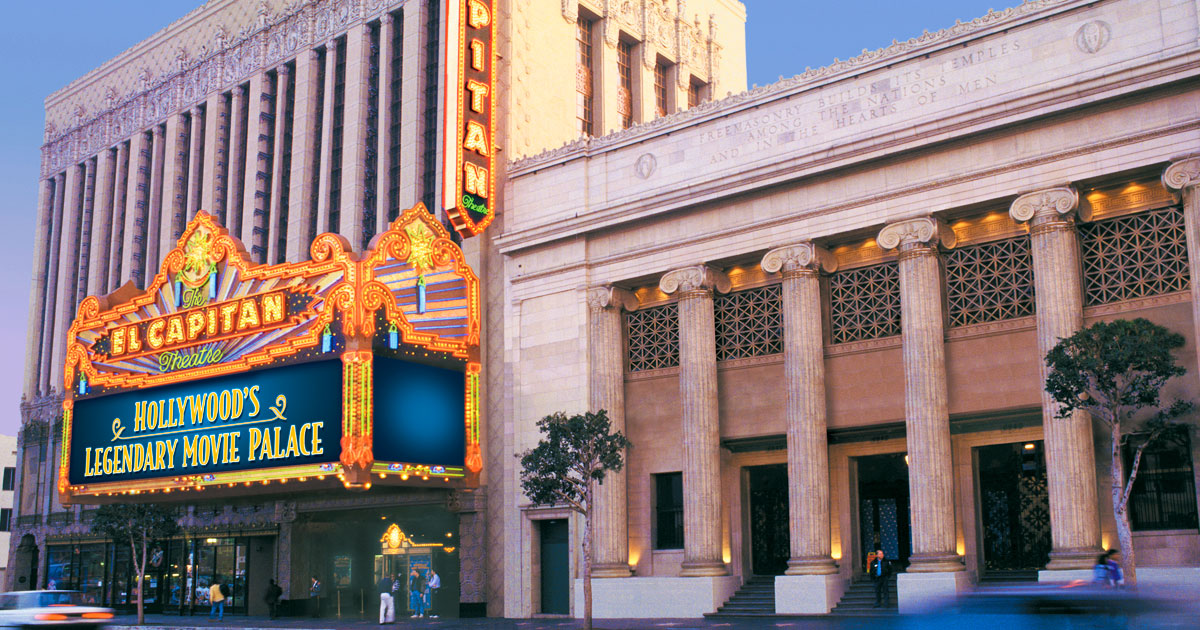
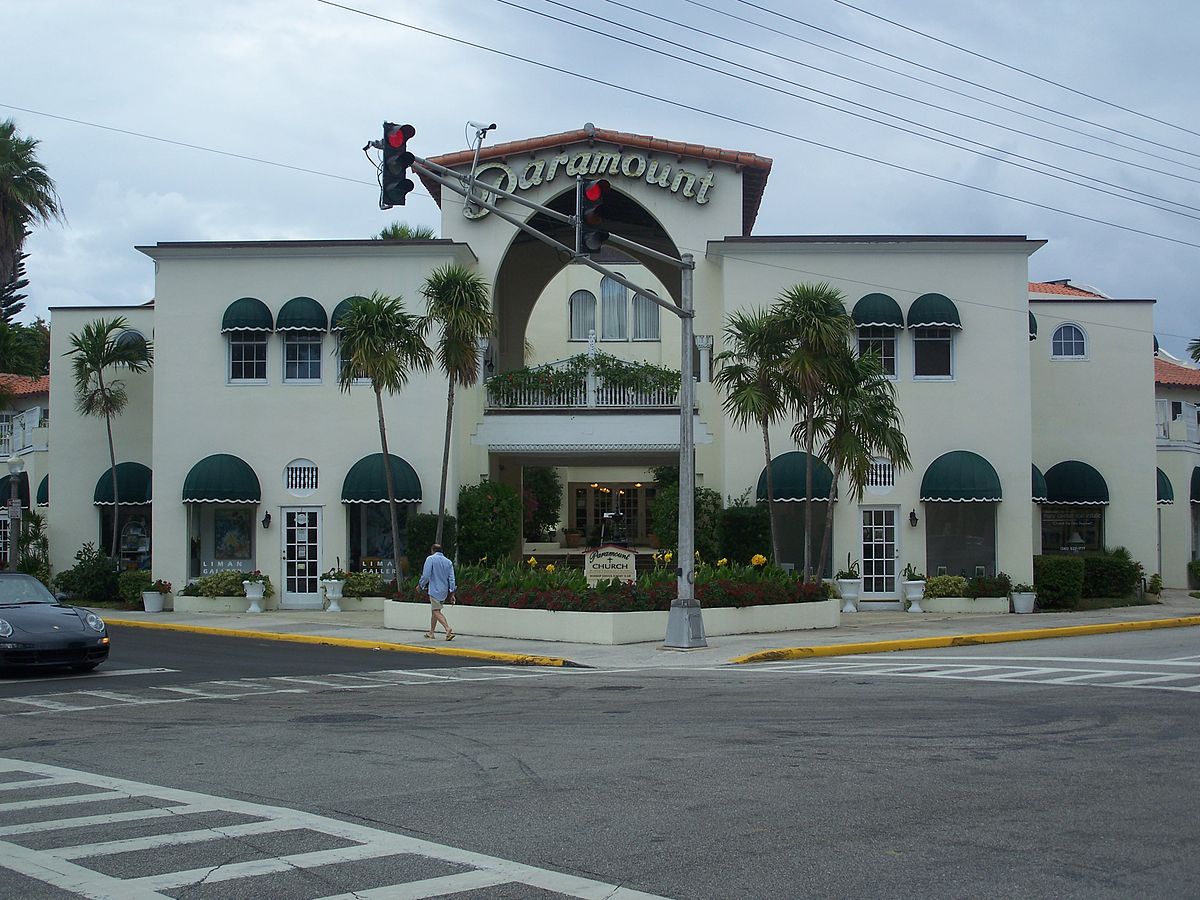
Ever since the landmark Paramount Decision in 1948, for reasons of violating anti-trust laws, movie studios (extending to distribution companies) are not permitted to own and operate chains of movie theatres. There are rare exceptions to this–Disney’s ownership of the historic El Capitan theatre across from TCL’s Grauman’s Chinese Theatre (the most famous movie palace in the world) being one of those. Since it’s not a chain and does run other company’s films, it is an exception to the ruling because it is a venue that anyone can rent, for the right price. Prior to the United States vs Paramount, it was customary for the studio to own and operate a chain of movie theatres that exclusively shows its movies. So, to see a Paramount movie, you’d have to go to a Paramount movie palace, for example. It was this gross lack of competition that violated anti-trust laws and led to the decision. With ticket sales slumping, large studios or distribution companies with deep pockets may find the best way to combat this is to own and operate theatres (that will have to be open to competition in order to remain within the confines of the law) that can be integrated into the branding, marketing, and promotion of a particular film.

A relationship between a studio and a movie theatre would allow for the production company or studio to forge a deeper relationship with the movie patron much in the same way Disney and Universal do with their theme parks. Not limited to Disney and Universal, Warner Pros, Paramount, Lionsgate, and DreamWorks have major theme park investments in Europe and Asia. The end result of owning a chain of movie theatres is the creation of an entire experience for the guest. For Netflix, this could mean premiering its successful series like Stranger Things, Black Mirror, and others at a movie theatre before it lands on the streaming service. Just like a homeowner can retrofit, remodel, and customize his or her home to benefit him, her, or the family, a movie studio could best custom design a completely immersive experience for the movie patron that creates an emotional connection that is sure to last and earn repeat business.

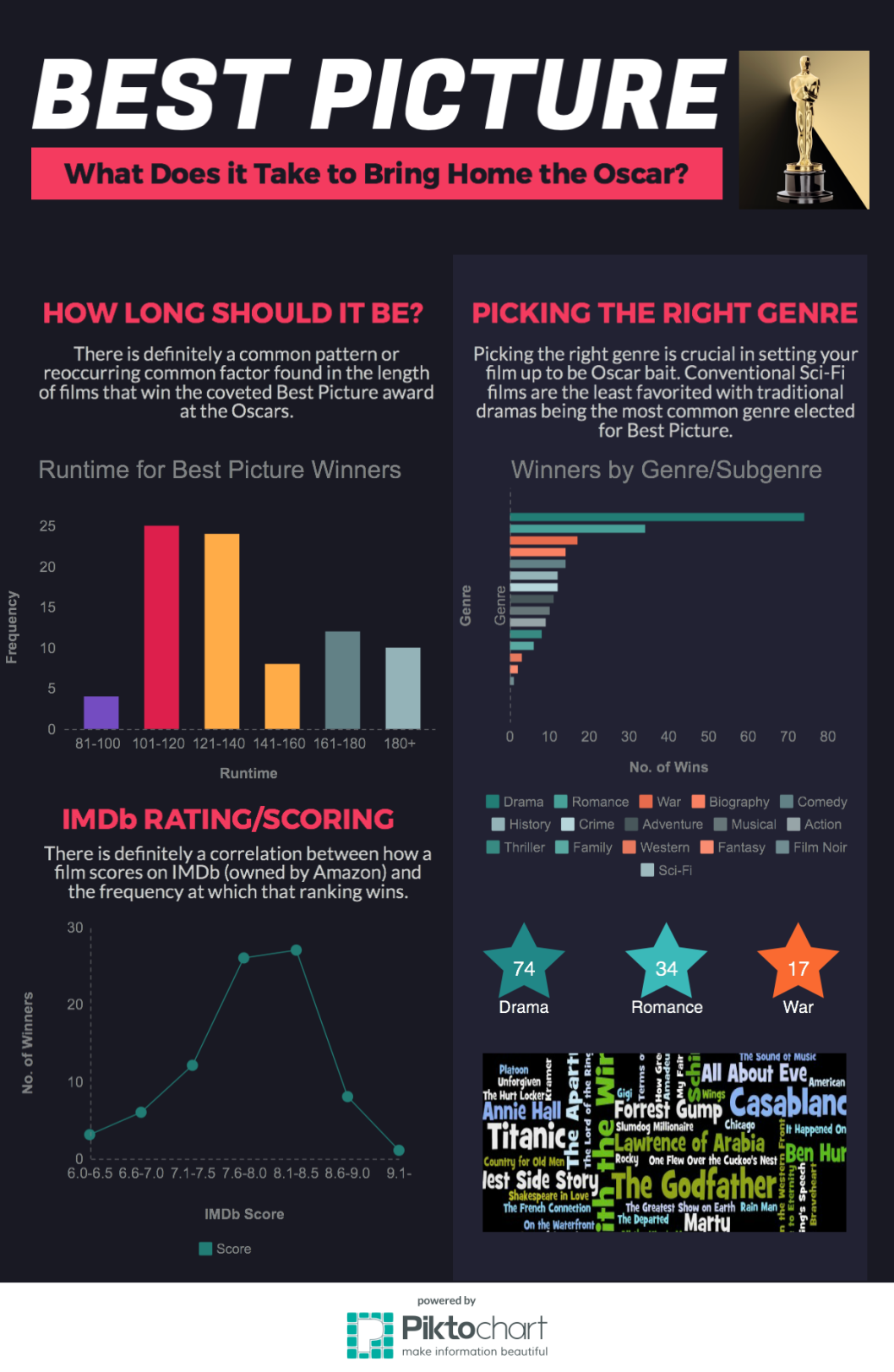
Aside from the cost and concept of creating a comprehensive experience for the movie patron, the standardization of start times and run dates should also be considered. Now, you can watch your Netflix, Hulu, and Amazon Prime programming whenever and wherever you so desire. No boundaries. After all, Netflix tore down those movie theatre walls and TV schedules. Is there a great enough interest from the typical consumer to buy tickets on a specific day at a predetermined time to watch Netflix original programming? Further research needs to be conducted in order to assess whether or not there is sufficient interest. Anecdotally, one can easily assess that Netflix’ original TV series are more popular than the original movies. But what does the empirical data show? According to a report at the Exstreamist, “the average rating on a Netflix original movie is markedly lower than what one finds with Hollywood movies.” Using IMDb ratings (note: Amazon owns IMDb), Toledo looked at a number of 2017 movie and TV releases across a variety of genres. Suffice it to say, Netflix consistently hits homers when it comes to original TV programming–their record is rather impressive at 8.1; however, their movies are ranked considerably lower than the TV series at 5.9. It would appear that there is sufficient interest in Netflix’ original series but not strong enough interest in the movies. And movies would be far easier to arrange into a schedule at a theatre than a TV series. Films win Oscars, series win Emmys. So, Netflix would have to rely upon its original movies in the theatre. Therefore, the quality has to increase significantly. Read my article on Best Picture criteria HERE.

Certainly, Netflix has proven that it can revolutionize media consumption and blaze new trails. Therefore, if Netflix makes the decision to acquire a chain of movie theatres, then reason stands that it must have a solid plan for success. While the data may suggest that this could be a risky venture for the entertainment giant, perhaps interested parties like Netflix and Amazon Studios know how to reinvent the multiplex experience to emerge as leaders of content creation and distribution. Who will the new owner of Landmark Cinemas be in the future? Only time will tell. But, it looks as if a Netflix or Amazon owned movie theatre chain may be in the near future.

“A Quiet Place” horror film review

Heart-pounding. Spine-chilling. A creepy creature-feature that will leave you speechless. The demonstrable excellence in terrifying visual storytelling can effectively be summed up by the queen of silent film herself Norma Desmond, “we didn’t need dialogue, we had faces” (Sunset Boulevard). A Quiet Place truly earns its place among “certified fresh” horror films. Not since Don’t Breath and 10 Cloverfield Lane have I encountered such a thrillingly intelligent motion picture. Writer-director John Krasinski’s post-apocalyptic horror masterpiece showcases the power of visual storytelling within the horror genre. Furthermore Krasinski brilliantly channeled the soul of the iconic (mostly Universal Pictures) silent and early horror films for his modern interpretation of the creature-feature. No gimmicks here. Only a solid plot that builds an incredible, immersive cinematic experience upon the foundation of a simple plot with simple limitations. Simple plot, complex characters. That basic screenwriting principle is where so many filmmakers and writers go astray. Film is a visual medium, often supported by well-crafted, lean dialogue, and this film has visual storytelling in spades. This film represents one of the best examples of embracing the concept of “show don’t tell.”

Shhhh. Don’t make a sound. One family finds themselves surviving a post-apocalyptic world now inhabited by an alien species that hunts by sound.

There has certainly been a resurgence of exceptional horror films over the last few years. I mentioned Don’t Breath and 10 Cloverfield Lane earlier, we also have the Academy Award nominated Get Out from last year and many others. While many may shrug their shoulders at horror because it is a proliferated genre with many cheep, tawdry horror flicks, this same genre can be incredibly intelligent in how it makes an observation of society and offers commentary, a new perspective, or provides a means to a discussion. Some of the most critically acclaimed films over the decades have been horror. Being among the first films commercially released, horror has also stood the test of time and provides audiences with a experience that challenges worldviews, provokes physiological responses, and fuels nightmares and imaginations.

One of the most brilliant aspects to A Quiet Place is the film’s innate ability to instantly hook the audience with loud silence. Going into the movie, audiences know that the arachnid-like creatures kill anything within an earshot. Therefore, the audiences hang onto every bump, snap, or thud as the tension rises and suspense is drawn out to terrifying levels. Impeccable audience engagement. It takes a special kind of movie to completely immerse the audience into the world of the film in a multidimensional way. In terms of viability of the film and cross-promotion, this movie certainly has what it takes to be a popular and successful adaptation for a house at Universal’s Halloween Horror Nights or Busch Gardens’ Howl-O-Scream. Definitely has a place among the best horror film experiences to date.

The successful suspense and tension building can be attributed to seldom getting a good look at the alien-arachnid-like creatures. Had the audience seen the creature repeatedly throughout the film, it would lose fright value. As Hitchcock stated, “there is nothing scarier than an unopened door.” Meaning, the filmmaker’s ability to transfer the terror on screen to the minds of the audience is far more powerful and impressive than relying upon on-the-nose scares and jump-scare gimmicks. Well-crafted suspense and rising tension carries far more weight, and has the ability to support a narrative so much more effectively than a cheap scare. Although the atmosphere in this film may remind you of Don’t Breath, and rightly so, Krasinski’s film does not quite measure up to the macabre, terrifying atmosphere that Fede Alvarez provided audiences; however, Krasinski’s A Quiet Place is extremely close to the aforementioned and deserves the accolades that it has received.

In terms of how to closely read A Quiet Place, the film provides exceptional social commentary on the perils parenting and, by extension, protecting one’s offspring. In fact, I imagine that the experience for parents watching this film exceeds the levels of terror felt by those of us who do not have kids. There is also plenty of material on how far a parent is willing to go in order to protect their children. I also appreciate the film’s commentary on expected mothers, and how they stop at nothing to protect their unborn child from that which seeks to do it harm. Responding to and working through grave tragedy is another heavy and shocking subject matter in the film. We all respond to death differently; many of us grieve differently than one another. Some bottle up all the negative feelings for fear of how to deal with them, and others blame themselves because they feel that there is something that could’ve been done differently to protect a lost loved one. On a lighter note, the film also provides metaphor on how to work with and handle your older kids when they seek to push the boundaries–boundaries that may be dangerous and place them in harm’s way. There is so much here to talk about, and I have just touched on the surface. That is why horror is the best genre for creatively exploring psycho-social constructs and other observations about humanity and the world in which we live.

Quietly make your way to your seat in the auditorium. A Quiet Place is definitely a film to be experienced on the big screen with a theatre full of others who seek to be frightened. Enjoy the refreshing originality of a film that could have so easily went by way of so many other creatures features that lack anything memorable, and just blend into the background with countless others in this subgenre of horror. It may not have the well-defined external goal and end game of Don’t Breath, but it is certainly exciting and fun! You’ll certainly be absorbed into this terrifying post-apocalyptic world, where YOU are afraid to go bump in the night.

“Ready Player One” movie review

A spectacular journey that will have you on the edge of your seat. Ready Player One is a throwback to the classic Spielberg blockbuster films from the 70s, 80s, and 90s that many of us know, quote, and love. You’ll do far more than wax nostalgic in this film, because the focus is on the conflict at hand and not the pop culture references. Spielberg’s adaptation of the best-selling novel, written by Ernest Cline, takes on the challenge of crafting a visually compelling narrative that shows the benefits of virtual reality (VR) and gaming, juxtaposing it against the harshness of a reality following socio-economic and natural disasters in the near future. Although the story highlights the benefits of VR and shows the wonders of the imagination through the exquisitely designed scenes, there is one element seen throughout the story that transcends the illusion of Oasis (the virtual world); and that is humanity. Generosity of spirit and integrity are showcased brilliantly through the various central characters. I found myself, at the end of the movie, thinking about how much it reminds me of the magic of Willy Wonka and the Chocolate Factory. Never once, will you find an opportunity for boredom to set in. And you’ll find yourself rooting for this open source of entertainment and information to remain available to all those who want to participate, and not regulate content based upon how much someone is willing to pay.

From filmmaker Steven Spielberg comes the science fiction action adventure “Ready Player One,” based on Ernest Cline’s bestseller of the same name, which has become a worldwide phenomenon. The film is set in 2045, with the world on the brink of chaos and collapse. But the people have found salvation in the OASIS, an expansive virtual reality universe created by the brilliant and eccentric James Halliday (Mark Rylance). When Halliday dies, he leaves his immense fortune to the first person to find a digital Easter egg he has hidden somewhere in the OASIS, sparking a contest that grips the entire world. When an unlikely young hero named Wade Watts (Tye Sheridan) decides to join the contest, he is hurled into a breakneck, reality-bending treasure hunt through a fantastical universe of mystery, discovery and danger. (IMDb)

Pop culture, geek-dom, and nerd-dom for everyone! Whereas the book primarily contains 1980s references, the movie adaptation spans pop culture from the 80s to today. This was an important and strategically solid move in order to appeal to a wide age-range of movie-goers. Not being a gamer myself, I am unable to comment on the various references in the film and how they are placed perfectly in the narrative; however, I LOVE movies and TV, so I can definitely comment on those references, and they were spot on! Loved every one of them. And not just because these references were in the movie–anyone can just shove references and product placements into a movie without thought of the meaning or contribution to the plot–each and every movie or TV reference was selected specifically to fulfill a larger purpose and placed precisely where it needs to be. It would have been far too easy for the pop culture references to steel attention away from the plot, but the structure and pacing of the movie is such that the references enhance the experience without becoming sheer spectacle that could have been interpreted and pandering to audiences.

Of all the references, my favorite is Stanley Kubrick’s The Shining. That’s right. Return to the infamous Overlook Hotel during one of the quests to search for the Jade Key. The Overlook Hotel from Kubrick’s horror masterpiece (that was, interestingly enough, disliked strongly by Stephen King) was incredible. I felt that I was legitimately transported to the macabre setting in which we encounter unimaginable terror. This referenced worked particularly well because I cannot imagine another setting that could have been used in such an instrumental fashion. There are times in films that a location could be swapped out for another similar setting and achieve the same result because the plot is not predicated on it–essentially, the plot would play out just as well and effectively through another comparable location. The Overlook Hotel and specific events from The Shining (that I won’t go into because of spoiling the experience) were nearly as integral to the advancement of the plot as the characters themselves. No sooner could you replace The Shining sequence than you could the main turning points between Acts I/II and II/III. Although there are many excellent sequences to choose from in the movie, the series of scenes during the time spent at The Overlook are definitely my favorite.

It’s not often that an action-adventure or fantasy movie is deep enough to provide social commentary on real issues facing us in the real world or what it means to be human; but Ready Player One contains fantastic material for philosophical discussions regarding the current trends and challenges facing present-day society. The subtext of this movie contains material on human values, equitable access to content online, and the dangers of falling victim to only “existing” in a virtual world. Man vs technology, greed vs generosity are ways to look at the story, not to oversimplify the subtext. Because of the present crisis of the ending of net neutrality facing the United States, there is clearly a message that everyone has the right to equitable access to the universe of entertainment and information online. When a greedy capitalist attempts to disrupt that access and determine someone’s access based upon how much someone is willing to pay, we see that the system runs the risk of breaking down and not allowing for the joy that was once ran through the very framework of the virtual world. The film also provides audiences with commentary on the importance of actively participating in the real world to form tangible, physical relationships with others in order to find love and forge friendships. Furthermore, if a society becomes so fixated on avoiding the problems of the real world by transporting to a virtual world, then the problems of the real world grow worse, bigger, and more devastating than if society takes the time and effort to combat that which seeks to destroy our world.

Such an excellent movie! If you are a fan of the Black Mirror series on Netflix for its Twilight Zone approach to tackling tough subject matter involving the degree to which technology permeates our lives, then you’ll enjoy Ready Player One. I find that many elements of this movie feel like the San Junipero episode, and the successful show at large, because of the terrifying visions of the near future distorted by the abuse of technology. Thoroughly enjoyed every moment on the more than two-hour runtime. I was initially afraid that the movie would feel too much like a video game, but that is not the case. The design is such that the virtual world and real world feel just as tangible. Being that I am not a gamer, I don’t want to attend the cinema and feel that I am watching cut scenes from a video game, so this was handed extremely well. You’ll easily find characters that you can identify with and root for, and the opposition forces are well-developed too.

“Jurassic Park” (1993), Sci-Fi Horror NOT Action-Adventure

In honor of Jurassic Park‘s 25th Anniversary, I want to revisit why the film works so incredibly well, and never gets old. Just like Dr. Alan Grant states at the beginning of the film, “raptors have far more in common with present day birds than they do with reptiles,” that same analogy can be drawn with the original Jurassic Park and its proximity to horror compared to action-adventure. Borrowing from Dr. Grant, the original Jurassic Park has far more in common with scifi-horror than it does with action-adventure, hence why it has held up over the years and continues to be a favorite film for many cinephiles and fans alike. While all the sequels, including Jurassic World are far more action-adventure than the original, Jurassic Park can be likened to Ridley Scott’s Alien. The latter is a quintessential space scifi-horror with action-adventure sequels just like the former. And like Jurassic Park, the original Alien is considered far superior to that of the sequels. But why is this? There are many reasons from script to director to cinematography; but at the end of the day, it’s the fact that both these critically acclaimed and admired films have their respective roots in the American horror film and not action-adventure movies. More so than any other genre, horror is (1) uniquely American and (2) the most time tested, given it can trace its roots back to the 1890s and was perfected by Universal Pictures in the 1920s and 30s.

So what separates Jurassic Park from the sequels? Both have life-threatening dinosaurs, both have action, both have adventure, etc. But, only the original carries with it social commentary, rich subtext, and well-developed themes told through a brilliant combination of horrific frights and believable sciences taking place within a world of fiction grounded in reality. Furthermore, the focus in both Jurassic Park and Alien is largely on the drama between the characters and the oppositional forces in the film. The sequels in both franchises place far less emphasis on well-developed conflict and drama, and instead sacrifice those golden elements of cinematic storytelling for high-concept CGI-filled adventure movies with lots of dinosaurs or aliens. The proliferation of gimmicks and effects is often used to hide a weak story. Fortunately, Jurassic Park provides audiences with a strong plot told through exceptional cinematic storytelling.

Jurassic Park‘s screenplay benefitted from being penned by the award-winning author Michael Crichton who also wrote the novel by the same name. Often times, when the author of the novel also writes the screenplay, the screenplay forms a stronger foundation upon which the technical elements can be build. A more recent example of a brilliant screenplay adaptation of a novel is Gone Girl, the author of the novel was the screenwriter. Although a screenplay is visually driven whereas a novel is internally driven, when a novelist with a penchant for visual storytelling writes the screenplay for the movie adaptation, the screenplay tends to contain better developed characters, strong subtext, effective conflict, and excellent dialogue. Crichton created incredibly memorable characters who each spoke with their own voice. Casting the right actors to portray the characters is obviously important–and the cast for Jurassic Park is exemplary–but even before the actor steps into the character’s shoes, the character has to be created. Each character in Jurassic Park possesses unique traits, strengths, weaknesses, dialect, and behaviors. Instead of the conflict being arbitrary, the conflict develops through the interpersonal relationships between the characters and the relationship between the characters and the opposition–human and nature.

I was in elementary school when the movie hit theatres in the summer of 1993; and although under 13, my parents allowed me to go see the movie. It was my first PG-13 film, and what an experience! Not unlike Dr. Grant’s reaction to his first encounter with a dinosaur in the film, my reaction to Spielberg’s masterpiece was eyes-wide-open, mouth gaping wide, and racing endorphins. And then comes the macabre contrast in Acts II and III. “Ooo, ahh–that’s how it begins, and then there’s running and screaming” (Dr. Ian Malcolm, The Lost World). Aptly stated. The opening scene hooks the audience with a disaster, but does not reveal much about the dinosaur in the secured transport–brilliant. Because this scene did not show a dinosaur, the audience’s curiosity is pricked which creates an eagerness to see a dinosaur and a degree of nervousness or apprehension accompanying that curiosity. We wanted to see more. If you’re familiar with Hitchcock’s bomb theory, he states “you must never let the bomb go off.” More than simply shock audiences with the death of that employee at the beginning of the movie, this scene serves as information more than a glimpse at that which would be horrific in real life. This delay of seeing a dinosaur forces the audiences to pay more attention to the characters, dialogue, and conflict than looking for the next dino. Furthermore, the delay in seeing a dinosaur, perfectly setup audiences for the grand reveal on the way from the helipad to the Visitors Center. Interestingly, if you add up all the screen time that dinosaurs receive in the film, you’ll find that they are only on screen for about 20-minutes. Just like Hitchcock transferred the terror from the screen into the minds of the audience after the Psycho “shower scene,” Crichton and Spielberg did the same with Jurassic Park.

It’s the soft introduction to the man-made dinosaurs that makes the horror of the dinosaurs feel so much more intense later on in the film–and make you scream! In terms of the type of science-fiction horror film Jurassic Park could be classified as, it shares many commonalities with man vs nature and man vs technology horror films. Crichton is known for his believable science within his works of fiction. It is obvious that genetics and paleontology were researched enough to use real, hard science to inspire a fictional science that feels just out of reach of the current trends in the science, technology, and engineering fields. Pair that with horror, and you have a solid cinematic film. The brilliance of horror films is how they can creatively comment on or provide a different perfective on a anthropological or psychological observation; moreover, it can be helpful when exploring philosophical questions. And these topics are visually explored through the movie and externalize the themes. One area that separates popcorn action-adventure movies from horror films is the cultural significance of the subtext and themes. Typically, action adventure movies do not carry with them social commentary nor significantly pull on our emotions and tap into our most primal fears. Jurassic Park contains all of this. There is something about horror films that beckons the audiences to find enjoyment in, that which in real life, would not be enjoyable—and not only see it once, but repeat it. And furthermore, find the unfamiliar and grotesque fascinating to behold as what should remain hidden comes to light. Certainly the dinosaurs in the movie should have remained “extinct,” but were brought back to life and engaged in violence in which we find enjoyment. 

Some of the themes found in Jurassic Park that are told through the visceral horror and tense dramatic moments are: man vs nature, foolishness and folly, greed, wisdom vs knowledge, man vs technology, and parenting. Why don’t the Jurassic films have the chache that the original does? You try to find to find rich themes such as these in the subsequent films. They don’t exist. Why? Because it is far more difficult to explore what it means to be human and social constructs in a scifi action movie than in scifi horror. An action movie would be ill-equipped to tackle questions of a philosophical nature because the focus is largely on the action itself and not necessarily the characters, and almost never the subtext and theme. For an action film to delve into that which causes the film to take on an intellectual nature, it would lose the attention of those who simply want a good popcorn movie. Don’t get me wrong, there are excellent action-adventure movies that contribute to the world of cinema in exceptional ways. Indiana Jones Raiders, Doom, and Last Crusade do that. Obviously, the inability to reconcile nature’s resistance to control is one of the most important themes of Jurassic Park. Dr. Ian Malcolm tells the group that “life finds a way,” and it immediately becomes the film’s mantra (and a quotable line), true in every demonstrable, measurable way; the dinosaurs survive outside their design and engineering, the lost children survive with the help of a kid-averted paleontologist who discovers his parental side, humanity survives despite meddling in the natural order of things by playing God because that’s what we do–we survive. Every character in the film either understands or is reminded of this–some of them, by force when it’s too late–through the course of events.

Jurassic Park uses horror film techniques in a brilliant fashion to force its audience into considering the larger philosophical questions mentioned in the previous paragraph. It reinforces those questions with clever parallels: Dr Grant’s way of paleontology is about to go “extinct” due to the rise of computer technology (the line “don’t you mean extinct” came from a comment behind-the-scenes regarding CGI encroaching upon animatronics, puppetry, and special effects); the power of the natural world is exponentially magnified when the park’s technology failure is combined with a disastrous tropical storm; money causes literally every ill in the film, even when it is being used for supposedly admirable purposes; and “you were so pre-occupied with whether or not you could, you didn’t stop to think if you should.” The inability to reconcile nature’s resistance to control is one of the most important themes of the film, of course. Ian Malcolm tells the group that “life finds a way,” and it abruptly becomes the tale’s rallying cry, true in every conceivable way; the dinosaurs survive outside their engineering, the lost children survive with the help of a paleontologist who discovers his paternal side, humanity survives despite its meddling because it’s what we do. Every character in the film either understands this, or is made to by the course of events.

Beyond exploring themes, it’s the intent of the film that determines whether is a thriller (suspense) or horror film. The films speak for themselves. If the intent is to horrify, then it’s a horror film; if the intent is to thrill, then it is a thriller. In all fairness, Jurassic Park is borderline; but it’s the level of shock, fear, and dread that may just be enough to tip the scale toward horror instead of thriller, and certainly evidence enough to prove that it is NOT simply a dark action-adventure movie. Much like Stanley Kubrick’s The Shining and Scott’s Alien, Spielberg’s Jurassic Park is also an intellectual film. Whereas an action-adventure movie would have provided audiences with a few minutes collectively of some surface-level chit-chat above ethics in order to technically give the film a theme, Jurassic Park provides audiences with an entire film about ethics that will have them talking about the various dilemmas and challenges facing the characters throughout the film. It’s brilliant! And quite the rarity these days. The hand of Spielberg’s penchant for horror (Jaws and Poltergeist) is seen in Jurassic Park from requesting that Crichton rewrite the original screenplay to be more cinematic and less internally driven because Spielberg desired to take the novel and adapt it to screen as a Jaws on land. If his intent was to make a sequel to Jaws, then we have to conclude that his intention was to horrify audiences in some measurable amount.

With a film as dynamic as Jurassic Park, it may be nearly impossible to prove that it is a horror film at its roots; but, the body of information provided in this article help to support the thesis that it is a horror film based upon the intention, conflict, themes, and visceral terror. “Well, there is it.”

You can catch Ryan most weeks at Studio Movie Grill Tampa, so if you’re in the area, let him know and you can join him at the cinema.

Ryan teaches screenwriting at the University of Tampa. If you like this article, check out the others and FOLLOW this blog! Interested in Ryan making a guest appearance on your podcast or contributing to your website? Send him a DM on Twitter!

Follow him!

Twitter: RLTerry1

Instagram: RL_Terry