BLACK PANTHER: WAKANDA FOREVER movie review

Wakanda Forever a.k.a. Postcolonial Theory: the Movie. The overly long, poorly paced latest installment in the MCU feels disjointed. Black Panther: Wakanda Forever goes on forever, and ever, and ever, and ever, because the movie is overstuffed with subplots to nowhere and one-dimensional (or plot device) characters that serve little substantive purpose except to augment the runtime. About 45-minutes can easily be carved out of the movie, and the action plot would be largely unaffected. Other times, it feels as if entire sequences or scenes are missing, because the editing (montage or assembly) is choppy. The absence of the late Chadwick Boseman is felt from beginning to end, and the movie constantly struggles to find its footing as it moves forward in the MCU. The tributes to Boseman at the beginning and of the movie are tastefully, and reverently crafted. While the writing of the movie is insufferable, the performative element of the mise-en-scene is chiefly supported by the incomparable Angela Bassett. Wouldn’t be surprised to see her receive a Golden Globe nomination for actress in a supporting role next year. There is a good followup to Black Panther somewhere in this nearly 2.75hr movie, but it must’ve been caught up in the snap.

Queen Ramonda (Bassett), Shuri (Letitia Wright), M’Baku, Okoye and the Dora Milaje fight to protect their nation from intervening world powers in the wake of King T’Challa’s death. As the Wakandans strive to embrace their next chapter, the heroes must band together with Nakia and Everett Ross to forge a new path for their beloved kingdom.

The command performance by Bassett is the highlight of the movie! Every scene that features her instantly increases in quality and gravitas. With just one look, she steels the scene and convinces you that what she is saying or feeling is incredibly important. Unfortunately, the rest of the characters are largely one-dimensional and lack meaningful arcs or characters development. One of the biggest problems is the writers’ refusal to bloody your central character, which holds the other lead and supporting characters back from forming empathetic connections with the audience. Princess Shuri is nearly a deus ex machnina in and of herself. In other words, we have (Star Wars) Rey: Vol.2 featured in Wakanda Forever.

When characters are too perfect, too capable (to an uncanny level), and the writer(s) refuses to bloody the central character, then the characters lacks–well–character (or a believable human dimension). Meaning, there is little doubt the character will succeed, and typically success is paired with a false sense of dread or suspense that the character will undoubtedly achieve that which will make them a de facto superhuman. Simply stated, superhuman (or superhuman-like) characters are neither fun to watch nor do they service the plot in a meaningful way. More like characters as a plot device.

Functioning as an overt attempt at subtext, there is a constant reminder of the narrative’s embrace of the cynical postcolonial theory, which is the overarching idea of the systematic deconstruction of The West in order to save the other, thus erasing universal truths and metanarratives from the world.

The goal of postcolonial theory is to decolonize our world: the systemic undoing of colonialism in all its manifestations and impacts. Powerful, albeit difficult to support with logic, postcolonial theory is concerned with the critique of the affects when a dominant culture interjects its values, beliefs, and cultural norms upon another culture. Twice in the film, Martin Freeman’s character is referred to as a colonizer in a rather pejorative attempt at humor. Not limited to the relationship between Wakanda and the rest of the world (mainly The West), but the same overt parallel is dramatized between another important world in the movie and The West.

This theoretical approach to sociology and scholarly activism advocates that colonized people react violently in order to maintain their increasingly fragile mental health and self-respect. Postcolonialism has formed the radical foundation upon which many marxist politics are built. Objective knowledge (and by extension science, facts, universal truth)—that which is true for everyone, regardless of cultural values—is seen as unobtainable because knowledge is a construct of the dominant group’s worldview, and must be forcibly removed from the world. Which is a large part of the movie–the elimination of The West. This factors into two competing story threads.

But why is this a dangerous theory upon which to build an entire movie? The framework of postcolonial theory urges those that see themselves as oppressed (even if that oppression was decades or centuries ago), to abandon evidence-based, rigorous testing, research, and critical thinking in exchange for assumptions, subjective observations, and hypotheses. Ironically, postcolonial scholar-activists attack systems of power by erecting systems of power. The radical, proactive denial of the existence of universality actually pushes a different universality (hmm…sounds like a metanarrative…but aren’t those supposed to be bad?).

Another cynical theory that is manifested in this movie is feminist theory. Whereas I do not feel the need to spend too much time on this more commonly known theory, it’s important to note that all the lead and chiefly supporting characters are women–powerful–women, and all the villains are men–inept or evil–men. When writers craft a mix of characters, there should be room for both, as that would be more representative of real life. Both the X-Men and The Avengers showcase a great mix of both powerful, cunning, intelligent men and women. Therefore, general audiences can connect with a character(s).

Augmenting the runtime of the movie is both a subplot that ostensibly goes nowhere and a supporting character that is little more than a plot device. Without getting into spoilers, there is a subplot featuring Freeman’s Everett K. Ross that fails to add anything substantive to the movie. Just when you think it’s going to provide a reveal about a rather mysterious characters from other MCU movies and Wanda Vision, nothing happens. If you remove this subplot from the movie, little to nothing changes. Connected with this subplot is a supporting character that is (supposed to be) the MacGuffin. But the writers attempt to give this character gravitas. Unfortunately, but there isn’t enough substance to this character, thus rendered one-dimensional. Furthermore, this character could be removed without changing much. And what little would change, could easily be given to another character of plotting element.

No doubt that Black Panther: Wakanda Forever will be a huge financial success at the box office, but without the late Chadwick Boseman, the movie feels like a bunch of ideas from a woke writers room that were thrown against the wall, and forcibly connected as coherently as possible. But, the movie does create a way, albeit of little to no surprise, for the Black Panther to continue protecting Wakanda.

Ryan teaches Film Studies and Screenwriting at the University of Tampa and is a member of the Critics Association of Central Florida. If you like this article, check out the others and FOLLOW this blog! Interested in Ryan making a guest appearance on your podcast or contributing to your website? Send him a DM on Twitter. If you’re ever in Tampa or Orlando, feel free to catch a movie with him.

Follow him on Twitter: RLTerry1
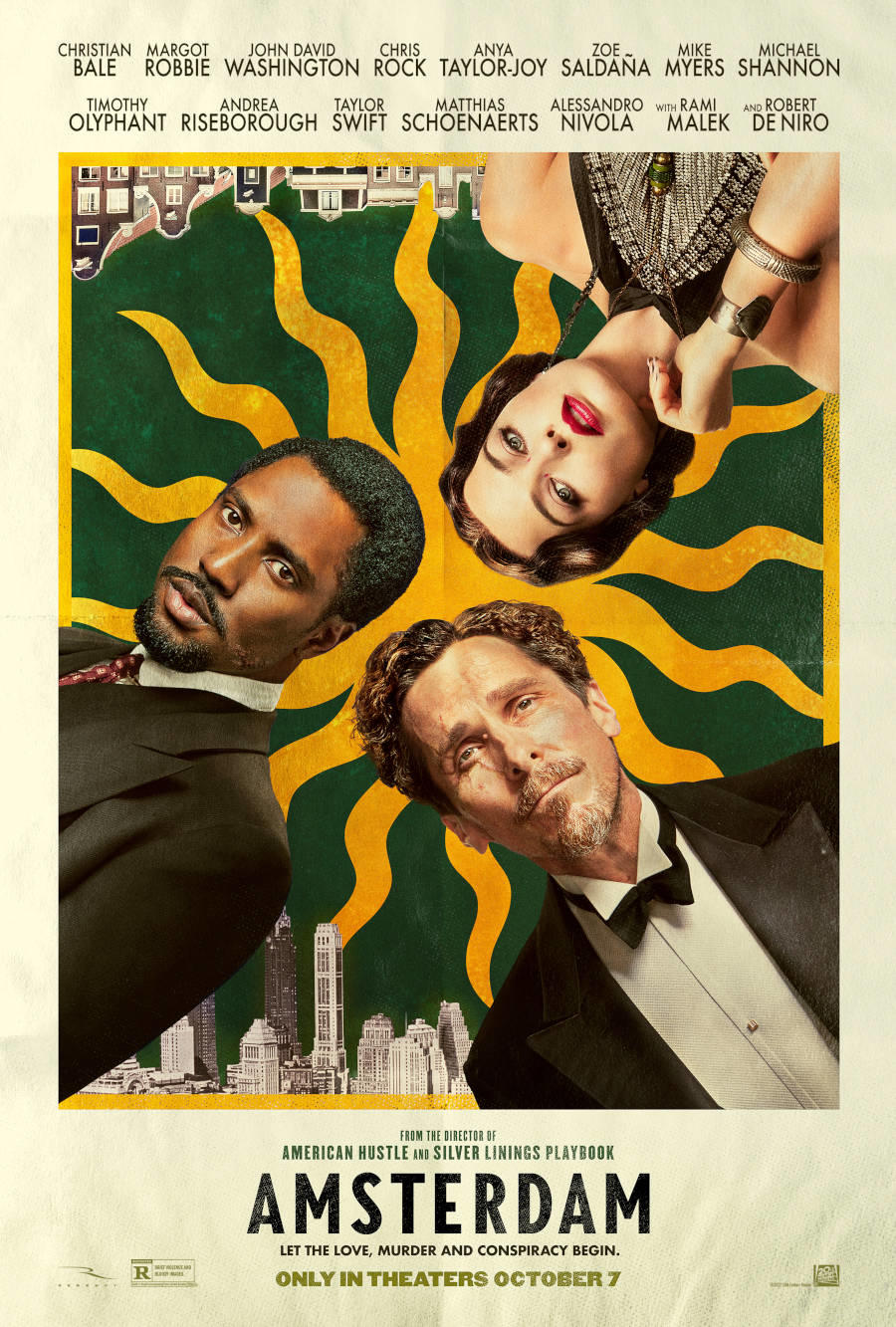
AMSTERDAM movie mini-review

There is a fascinating true story and great movie…in there…somewhere. David O. Russell’s star-studded Amsterdam is a bloated, poorly paced movie that places far more emphasis on repetitive, pedantic social commentary than it does on lean storytelling and strategic plotting. If not for the powerhouse cast, the movie would be nearly unwatchable. A litmus test I give a movie is (1) if I look at my watch and (2) if so, how often. If I am looking at the time, then I am not engrossed in the story. And I looked at my watch many times during this lengthy quasi-historical drama. Amsterdam demonstrably has little idea or security in what it wants to be. Is it a dark comedy? Is it a drama? Is it satire? All valid questions for which there is no clear answer, because it struggles to find the proper tone that best expresses its story. Although the social commentary on race relations quickly becomes redundant, it does highlight some areas of wartime history of which many, including myself, are likely unaware. Such as soldiers of color being forced to wear French uniforms–had no idea! So I am glad that this disrespectful chapter in history was highlighted for modern audiences. Clearly this movie should have been an Oscar vehicle for Russell, his cast, and crew, From beginning to end, it’s easy to read this film as a desperate attempt to win over general audiences and critics by convincing them that there is something to see here; unfortunately, what should have been an incredibly interesting mystery and untold true story suffocates under the poorly written and structured screenplay.

Ryan teaches Film Studies and Screenwriting at the University of Tampa and is a member of the Critics Association of Central Florida. If you like this article, check out the others and FOLLOW this blog! Interested in Ryan making a guest appearance on your podcast or contributing to your website? Send him a DM on Twitter. If you’re ever in Tampa or Orlando, feel free to catch a movie with him.

Follow him on Twitter: RLTerry1
DOCTOR STRANGE IN THE MULTIVERSE OF MADNESS movie review

Plot sacrificed for visual FX. While Raimi’s horror adjacent direction gives Doctor Strange in the Multiverse of Madness a unique aesthetic when compared to the typical superhero movie (with the exception of Batman Returns, which has long sense been praised for its otherworldly horror-adjacency), it isn’t enough to carry the story. Better brush up on End Game and Wanda Vision because you may be slightly lost the whole time. So full disclosure, I’ve only seen End Game once and do not subscribe to Disney+. Unfortunately, this movie does not sufficiently provide exposition for those of us that do not eat, sleep, breathe the MCU because Wanda/Scarlet Witch’s motivation for her antihero behavior cannot be fully realized and understood without the events of Wanda Vision (from what I’ve been told about the show). That’s the problem with the ever-expanding MCU–but–it’s also a brilliant marketing and merchandising move. Simply because, if you want to be able to understand the motivations of the characters in the movies, you have to watch the TV shows and every single movie (main line and side line). Specific to this movie itself, there is clearly a thoughtful story, but it’s ultimately held back by the wandering plot. Ironically, you may be asking yourself a variation of the cliche question actor’s ask directors: what’s my motivation? Instead, you’ll find yourself asking: what’s Wanda’s motivation???

Dr Stephen Strange casts a forbidden spell that opens a portal to the multiverse. However, a threat emerges that may be too big for his team to handle.

Story and plot are NOT the same thing. Without getting into a lot of what I teach in film studies and screenwriting, story is the overarching narrative whereas the plot is the map (how you get) from beginning to end. Raimi’s playing up on the whole witchy aspect to this movie, was great for someone like me that loves horror, but it seems that the horror-adjacency of the movie merely compensated for the slapdash plotting. While many that watch this movie have undoubtedly seen End Game multiple times, subscribe to Disney+ to watch all the shows, and have read the comics, many have NOT. Granted, a subgenre movie such as this should not play to the lowest common denominator because then the fanboys and girls in the audience will feel slighted or unappreciated, At the same time, the writers and director should have considered integrating sufficient exposition for those that do not watch all the ancillary material. Wouldn’t have taken much to provide enough exposition so that rewatching End Game or subscribing to Disney+ for Wanda Vision, What If?, and Loki wouldn’t be a prerequisite for this movie.

For those that love visual effects, you will likely be impressed, if not blown away by the mesmerizing landscape of digital imagery; however, there are many times in the movies that the characters do not feel that they are existing within the same world in which the dazzling display of graphics exist. You cannot replace the way real light bounces off real objects into the camera lens. Not opinion–fact. Perhaps one day, we will get an MCU (and this applies to the “whatever it’s called these days” DCEU) movie that spends as much time crafting tangible sets as it does investing into digital imagery. In no multiverse will characters look to truly be within a world that primarily exists in the expression of 0s and 1s on a computer. The only saving grace for the aesthetic of this movie, and the moments we see the cinema stylo (hand of the artist), is when Raimi leans into the horror-adjacency of this MCU entry. Whenever the movie took a turn towards horror, I enjoyed it the most, and felt it was trying to be different–not your typical superhero movie.

It’s really no spoiler that Captain Picard is back as Professor Charles Xavier! Okay, so I know he is really Sir Patrick Stewart, but he will always be the definitive Starfleet captain to me. X-Men fans, like me (see, I do like superhero movies that aren’t Batman Returns), we’ve been waiting for that moment in which we witness the integration of the X-Men into the MCU. And I’ll give the writers and Raimi this: how Professor X was integrated into Doctor Strange in the Multiverse of Madness was both meaningful and strategic. It wasn’t too much, didn’t feel forced, and the applause this cameo garnered from the audience (including myself) was outstanding! At my screening, the moment Sir Patrick Stewart reprised his role as the definitive (live-action) Professor X elicited more applause and cheers than any other moment in the movie. I am eager to witness how the X-Men are woven into the fabric of the MCU.

If you can watch this movie in a premium format like Dolby Cinema, IMAX, or Cinemark’s X-treme, then that is the best way to experience it. It is a BIG SCREEN movie for sure! While I am often highly negatively critical of superhero movies, I am thankful that they are getting people back to the cinema in masses.

Ryan teaches Film Studies, Screenwriting, and Digital Citizenship at the University of Tampa. If you like this article, check out the others and FOLLOW this blog! Interested in Ryan making a guest appearance on your podcast or contributing to your website? Send him a DM on Twitter or email him at RLTerry1@gmail.com! If you’re ever in Tampa or Orlando, feel free to catch a movie with him.

Follow him on Twitter: RLTerry1

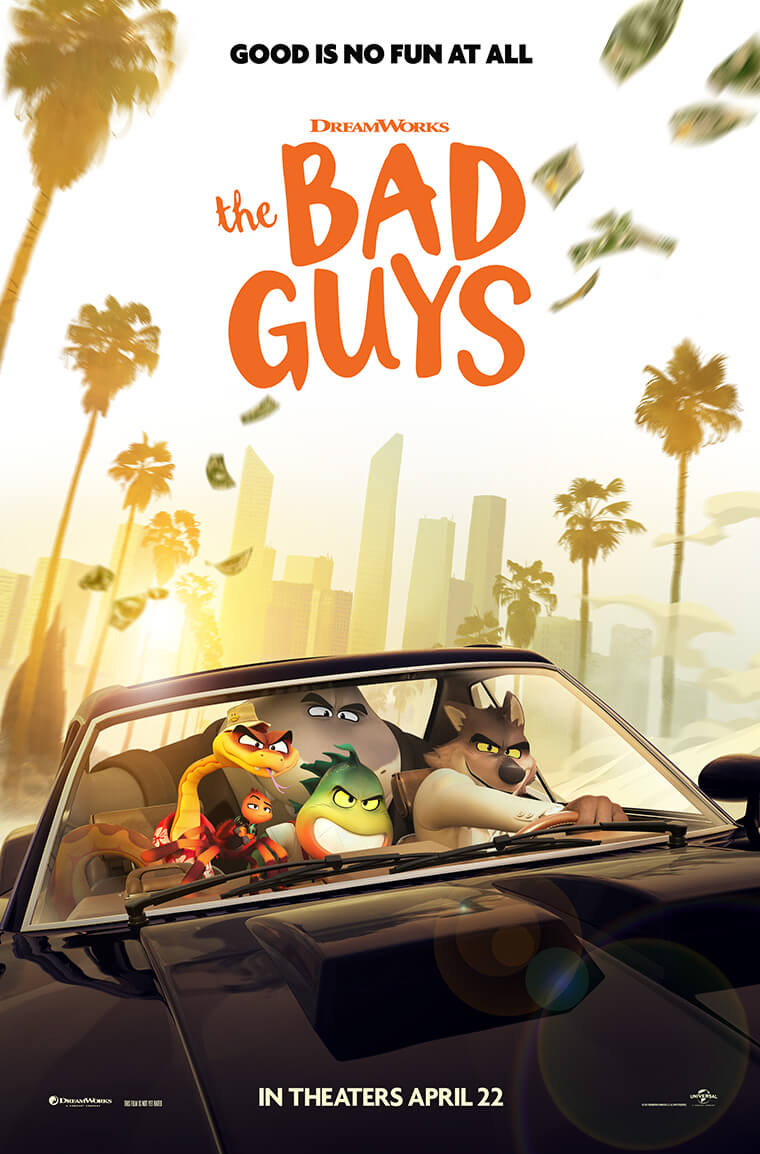
THE BAD GUYS animated film review

Highly entertaining with heart! Disney-Pixar, eat your heart out! Whether you’re typically interested in animated films or not, you don’t want to miss Universal-DreamWorks’ The Bad Guys opening this week only in cinemas. Prepare yourself for a refreshing, high octane Oceans 11 meets Zootopia heist comedy for the whole family. Honestly, this is the best animated film that I have seen in a long time. The Bad Guys delivers audiences a simple, lean plot with complex central characters that will completely delight you from beginning to end with its innate ability to find the humor in the smallest details. While the film borrows from Oceans 11 and Zootopia, it is crafted in an almost Tarantino for kids storytelling method. This atypical approach to animated film storytelling (popularized by Into the SpiderVerse), has opened the floodgates for subverting our expectations for styles we have long -since associated with animated films. Furthermore, films such as the remake of The Lion King have inspired CGI artists to go for more of a photorealistic aesthetic. What The Bad Guys does is paint a 2D world with some 3D enhancements, which demonstrates more of an affinity for stylization over realism–great! Too many animated motion pictures lean into realism therefore negating the magic of animation. In my opinion, if the animation is going to be so incredibly realistic-looking, then just make a live action picture. The advantage of the stylized approach is that there is very clearly a design to each and every frame. Perhaps it lacks the cinema stylo of hand-drawn frames, but it certainly delivers more style than anything released by Disney-Pixar in recent years. On a scale of Kubo and the Two Strings (the best animated film in the last decade) to The Lion King, I’d say The Bad Guys is much closer to a Kubo. With witty comedy and adrenaline-pumping action, you don’t want to miss seeing this film on the BIG SCREEN.

After a lifetime of legendary heists, notorious criminals Mr. Wolf, Mr. Snake, Mr. Piranha, Mr. Shark and Ms. Tarantula are finally caught. To avoid a prison sentence, the animal outlaws must pull off their most challenging con yet — becoming model citizens. Under the tutelage of their mentor, Professor Marmalade, the dubious gang sets out to fool the world that they’re turning good.

What a(n animated) picture. Seriously. It’s been a long time since I enjoyed an animated motion picture this much. Over the last decade, only Kubo, How to Train Your Dragon 2, and Onward stand out to me. As I was exiting the auditorium following the screening, I talked with the general audience members that were in attendance, and nearly every one with whom I spoke said variations of the same things: entertaining, fun, and thrilling. During the screening, I heard many kids (and their families) laughing along with the characters. Although it is clearly aimed at kids, there are comedic moments for adults too. What we have here is a good story! Remembering my Sunset Boulevard

Joe Gillis: “-Ah…one of those message kids. Just a story won’t do…”

Betty Schaefer: “I just think a picture should say a little something.”

I reference this exchange between the struggling screenwriter and the aspiring reader turned screenwriter because too many animated films (mostly from Disney/Pixar) suffocate their stories under oppressive, cynical social commentary; so much so, that the story suffers because the focus is on the sermon instead of the characters. You will find the absence of overt social commentary in The Bad Guys refreshing! Does that mean there is no depth or thoughtful elements? No. But the message of the film is that we are all capable of a redemption arc. Granted, it’s not as strong a redemption message as we have in A Christmas Carol, but for a kid’s movie, they will undoubtedly pickup on it.

The screenplay is well structured and paced. While the bones of the screenplay are rather paint by numbers, the the superstructure is creative and stylish! Furthermore, in a film that looks to be one that will throw a joke a minute at you, it holds back the cards, delivering the humorous dialogue and site gags in a method that allows them room to breath. The laughs are setup, reinforced, then twisted thoughtfully.

All around, this is a solid animated feature that should be on your watch list while it’s in cinemas.

Ryan teaches Film Studies and Digital Citizenship at the University of Tampa. If you like this article, check out the others and FOLLOW this blog! Interested in Ryan making a guest appearance on your podcast or contributing to your website? Send him a DM on Twitter or email him at RLTerry1@gmail.com! If you’re ever in Tampa or Orlando, feel free to catch a movie with him.

Follow him on Twitter: RLTerry1
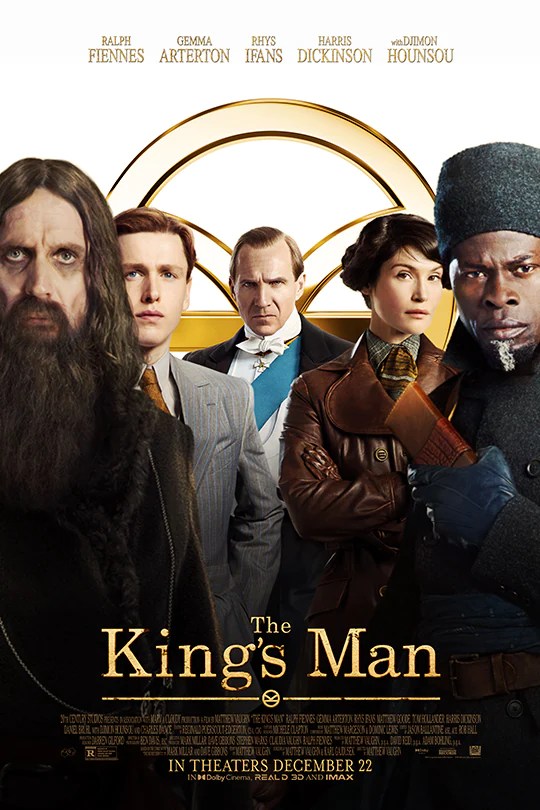
THE KING’S MAN movie review

Highly entertaining! This film can be read as a commentary on the necessities and atrocities of war and the emotional cost of freedom. After the disappointing sequel to the outstanding Kingsman: the Secret Service, I was unsure what to expect from this prequel-sequel. So often, prequels simply do not capture the magic of the original. While the original is still the best in this franchise, this prequel taking us back to the origins of the secret agency operating at the most extreme discretion, will keep you engaged as it parallels world history leading up to World War I. The movie is well-paced and structured, and will keep your eyes and ears glued to the screen for the duration of the movie that surprisingly exceeds two hours; you will not feel like you’ve sat there for over two hours. Teaching World Cinema, I spend a lot of time each semester discussing the historical events that helped to shape the content therein and direction of cinema, so I was particularly interested in how closely this film would follow the Russian Revolution and the preamble to the Third Reich in Germany. Even though this film is not intended to recreate all the actual events that plunged the Western world into World War I, there are quite a number of nods and references to major turning points in the revolutions and wars. Most notably in this film, is the subplot of Rasputin and the Romanov family. Ralph Fiennes’ role as the Duke of Oxford (founder of Kingsman) finds a nice balance between serious and campy. Tonally, the original still strikes the best balance, but this one is certainly aiming for that balance between serious espionage movie and camp; perhaps the landing is a little bumpy, but never does it detract away from the experience. If you enjoy spy movies that are exciting and take place within real world history, then you will undoubtedly enjoy this film!

One man must race against time to stop history’s worst tyrants and criminal masterminds as they get together to plot a war that could wipe out millions of people and destroy humanity.

Decades prior to the events of the original, Kingsman was formed, but only after the Western world was plunged into World War I, inclusive of the Russian Revolution and preamble to the Third Reich. While we know from history that there wasn’t an organization of villains who’s goal was to overthrow democracy and monarchy in exchange for socialism and totalitarianism, the film does a good job of applying some fiction to the real historical events. In terms of history, the months leading up to the Russian Revolution provide the bulk of the historic context. Yes, that means the infamous Rasputin plays a major role in the film. And the film plays it close to history, because unlike the Rasputin we get in Anastasia, this one isn’t a sorcerer; however, it does hint at him possessing some dark magic (but that mythos is grounded in reality). The real life Rasputin was a dark priest, alchemist, healer, and advisor to Tsar Nicholas Romanov II, the last emperor of Russia. One prominent historical theory suggests that the British Secret Service was involved in Rasputin’s assassination, and this film leans into that theory in order to motivate the founding of Kingsman. For a while, I thought that the legend of Anastasia (which lasted about 90 years) was going to factor into this movie, which would give rise to a plot point in its sequel. But sadly, I don’t think we will be searching for Anastasia in the next movie (if there is one, which there probably will be).

What I appreciate most about this film is the commentary on the atrocities and necessities of war and the emotional cost of victory. This isn’t really a spoiler because it happens in the first few minutes of the film, but we open on the death of the Duke of Oxford’s (Fiennes) wife, and it’s this death that radically alters his opinions on getting involved in war and fighting for your country. Moreover, his radical ideological shift was exhibited through his rearing of his son, whom he (over)protected and kept from entering into military service. Understandably, the Duke did not want to lose his son on the war front, in the same way he lost his wife and son’s mother. Without spoiling the plot, the Duke goes through a redemption arc and through various conflict, his pacifist ideology is challenged, and he must decide what he’s going to do about it, as the world is crumbling around him. Sometimes, war is necessary to fight for what is right. But even the most justified wars come as a cost. That cost may be emotional, psychological, or relational; yet, the cost is worth it because it may have saved tens of thousands or even millions of lives in the long run. The King’s Man challenges our views on war, by placing us in the family units and in the trenches along No Man’s Land (and no, Wonder Woman does not show up). Some things in life are truly worth fighting for, and fights are not always going to be debates on a stage. Furthermore, if you’re a parent, perhaps you will be challenged to be the kind of man or women your child would be.

You’ll want to add The King’s Man to your list of movies to watch in cinemas over Christmas! You get a little of everything: some classic espionage, a World War I film, and commentary that is applicable to our own lives.

Ryan teaches American and World Cinema at the University of Tampa. If you like this article, check out the others and FOLLOW this blog! Interested in Ryan making a guest appearance on your podcast or contributing to your website? Send him a DM on Twitter or email him at RLTerry1@gmail.com! If you’re ever in Tampa or Orlando, feel free to catch a movie with him.

Follow him on Twitter: RLTerry1