PRESSURE (2026) film review

Some of history’s most consequential battles are won before the first shot is fired.
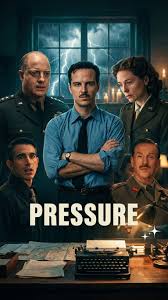
Few people associate D-Day with weather forecasting. Fewer still know the name James Stagg. Yet without his forecast, one of the most important military operations in history may have unfolded very differently.

Based on the stage play by David Haig, who also adapts his own work for the screen, Pressure transforms a little-known chapter of World War II into an engaging drama about uncertainty, responsibility, and the burden of decision-making. On paper, a film centered on meteorologists debating atmospheric conditions in the days leading up to the Normandy invasion sounds like the sort of project destined for educational television or a museum visitor center. Instead, it becomes a surprisingly compelling thriller, one driven less by combat than by anticipation.

At the center of the story is Dr. James Stagg, portrayed by Andrew Scott in a performance that quietly anchors the entire film. Stagg is tasked with delivering the weather forecast that will help determine whether General Dwight Eisenhower proceeds with the largest amphibious invasion in military history. Scott understands that the drama lies not in weather patterns themselves, but in the crushing responsibility that accompanies them. Every cloud formation, pressure system, and forecast carries potentially catastrophic consequences. His performance is restrained, thoughtful, and deeply human. Even when surrounded by military officers and strategic planners, Scott commands the audience’s attention.

One of the film’s greatest strengths is its structure. Although audiences know D-Day ultimately proceeds, Pressure still manages to generate genuine suspense. The ticking clock becomes a powerful dramatic device as military leaders await Stagg’s final recommendation. Every conversation, disagreement, and meteorological update points toward the same looming decision. Unlike many contemporary films that mistake a series of events for storytelling, Pressure understands the value of narrative momentum. Every scene serves a purpose. Every moment contributes to the mounting tension.

The film’s theatrical origins are occasionally visible, particularly in its dialogue-heavy scenes and confined settings. Yet rather than feeling limited by its stage roots, Pressure successfully expands beyond them. Haig’s screenplay retains the intimacy and character focus of a play while allowing the camera to explore a broader world. The result feels cinematic without sacrificing the strengths of the source material.

Kerry Condon provides excellent support as Kay Summersby, Eisenhower’s driver and confidante. Summersby injects welcome humor into an otherwise tense environment, but more importantly, she serves as one of the film’s most grounded voices. In rooms often dominated by military hierarchy and scientific debate, she offers practical observations and challenges assumptions with refreshing directness. Condon ensures the character never feels relegated to the sidelines.

The film’s most significant weakness comes in the form of Brendan Fraser’s portrayal of General Dwight Eisenhower. Fraser never quite settles into the role. Where Scott’s performance is measured and restrained, Fraser operates at a perpetual state of intensity. Eisenhower spends much of the film sounding as though every conversation represents the climax of a different movie. Rather than conveying the quiet burden of command, Fraser often feels as though he is performing the idea of leadership. It is not a disastrous performance, but it remains the film’s least convincing element.

When the invasion finally arrives, Pressure wisely avoids attempting to compete with films such as Saving Private Ryan or 1917. The D-Day sequences lack the spectacle and visceral emotional impact of those celebrated works, but they remain effective because they are viewed through a different lens. This is not a film about the men storming the beaches. It is a film about the people whose decisions helped determine when that assault would begin.

Watching Pressure on June 6—the anniversary of D-Day itself—felt particularly fitting. The film shines a spotlight on an overlooked participant in one of history’s defining moments and reminds us that history is often shaped not only by those who fight battles, but also by those who make the difficult decisions behind them.

It may never achieve the stature of the great World War II epics, but it succeeds admirably on its own terms. By transforming weather forecasting into compelling drama, Pressure honors an unsung hero and proves that suspense can be found in the most unlikely places.

Listen to my conversation with Brad Biewer of the CinemaSpeak Podcast on this week’s episode of ReelTalk. (Podbean, Apple, Spotify, etc).

Ryan is the morning host on WLRH Public Radio in Huntsville, AL and host of the show ReelTalk “where you can enjoy the cinematic conversations frame by frame each week.” Additionally, he is the author of the upcoming film studies book titled Monsters, Madness, and Mayhem: Why People Love Horror. After teaching film studies for over eight years at the University of Tampa, he transitioned from the classroom to public media. He is a member of the Critics Association of Central Florida and Indie Film Critics of America. If you like this article, check out the others and FOLLOW this blog! Follow him on Twitter: RLTerry1 and LetterBoxd: RLTerry
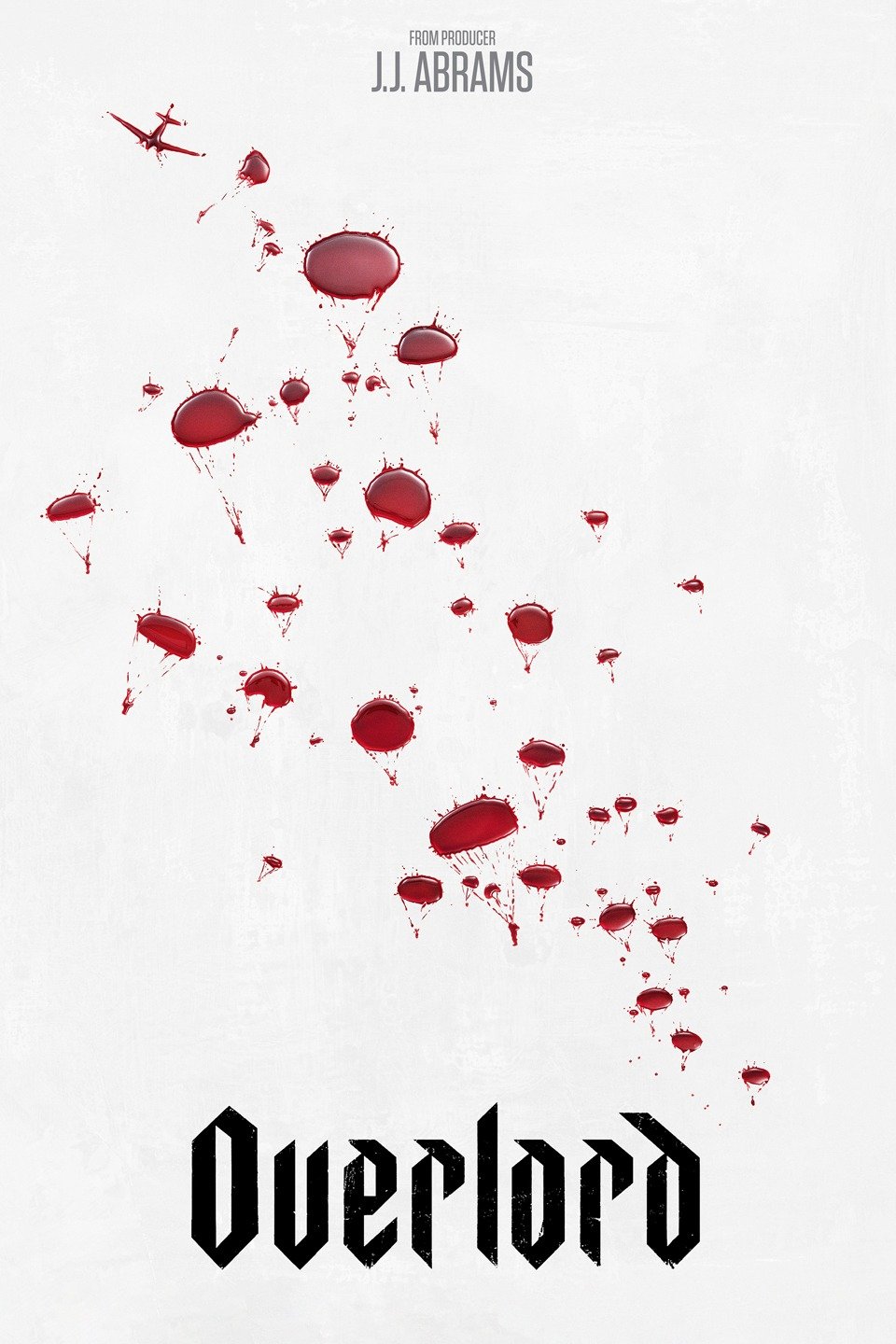
“Overlord” full movie review

Surprisingly deep! The best kind of bait and switch is when you go in with moderately low expectations and get blown away by how incredibly well an experimental film dances the line between two genres and provides us with rich writing and excellent direction. At the end of the day, it is still a glorified B-movie, but it’s a B-movie that has so many A-list qualities about it. Often when the term experimental is attributed to a film or movie, it is usually because of a particular stylistic choice by the director; however, I chose that description for this movie because it blends the war (WWII) genre with horror and action to create a movie experience that is incredibly thrilling and creepy. Not for the weak stomached, this movie contains quite a lot of war and horror violence, but the gore and violence are never the focus but used to enhance the visceral experience of the movie. The focus of the movie is on the mission of the American soldiers to take out a signaling tower for the Nazi forces, and we never forget that. For all the complexities of the film, the plot is superbly simple and the main characters moderately complex. If there is one singular fault of the movie, it is that the character of opposition (Wafner) is not as interesting as our central character of Boyce. Supporting the lead cast are fantastic side characters who are mostly there for some comedic relief. While the horrors of Nazi medical experimentation led by the sadistic Josef Mengele are still stomach-churning to this day, the end of this movie contains a brilliant payoff that takes what the Nazis may have been doing right before D-Day, and turns it against them. The Nazi’s are defeated by a member of a group that would have been on their extermination list. If you’re thinking that this is going to be another Dead Snow, you would be wrong. Takes what Dead Snow did well and combines it with the best of WWII movies to deliver an exhilarating movie!

Hours before the real life D-Day, a small group of American soldiers survive a airborne battle above France, and must work together, through their differences, to destroy a signaling tower in village near Normandy in order to allow the Allied forces to storm that infamous beach to deliver France from the clutches of Nazi occupation. The US soldiers soon realize that there is more going on than an oppressive Nazi occupation in the village. As the soldiers inch their way toward the former church, now a Nazi camp, they discover that the evil Nazi medical experimentation goes way beyond unethical and even immoral to downright sadistic. In an effort to solidify the Third Reich’s rein over the world, they have developed a serum to make super soldiers that has some horrific side effects. The allied forces must face not only the Nazi forces but the undead as well.

Why does this movie work as well as it does? Easy. The screenplay by Billy Ray and Mark L. Smith and direction by Julius Avery. Ray is known for Captain Philips and The Hunger Games, Smith for The Revenant. Avery is still relatively new to directing feature films, but demonstrates a strong ability to work with a blended genre that provides audiences with an exciting big screen time. With Avery still earning his chops for feature films, the fantastic screenwriting and story serve as a solid foundation upon which the other elements are built. At first glance, this movie seems like one that would essentially one that is just schlocky fun, or perhaps one that tries to take itself seriously but fails miserably in a way that makes it painful to watch, and ultimately forgettable. But to great surprise, the movie not only delivers a thrilling WWII horror movie but one that is produced with dimension, depth, and visual precision. Although not writing or directing, J.J. Abrams penchant for incredible visuals and heart-pumping action is seen throughout the movie.

Before discussing the performances and visuals of the film, I want to focus more on why this film is much deeper than it first appears. On the surface, it is a WWII action horror movie but beneath the surface, the screenwriters confront the audience with concepts and questions that are creatively woven into the high concept plot. Chief among these is found in our central character of Boyce. He’s a young black male fighting alongside these hard-hearted soldiers. While his counterparts are mostly jaded, he maintains a morally sound world view amidst the harsh realities of war. The fact that the film depicts a young black male as the hero during a time in our country that was about to experience great civil rights unrest, is a testament to the creative and effective approach to this story. He plays the role that is often given to a white actor, but I immensely enjoyed the charisma and talent he brought to this role that shows a progressive film. Regarding the rest of the American soldiers, each soldier represents a different kind of character, providing audiences one with whom they may be able to identify.

In addition to the fantastic casting choice in Boyce (Jovan Adepo), the screenwriters also confront the audience with the question of what truly separates us from our enemies when the only means to defeat them is stooping to their level. Including a message such as this one allows us to use the situation as an allegory in our present culture that is growing increasingly divided, and hate seems to abound. Where do you draw the line in the course of war or a philosophical battle? Ostensibly giving the middle finger to the damsel in distress, this film delivers an independent badass heroine in Chloe (Mathilde Ollivier). Such a strong female character in this movie, Chloe refuses to stay in her home and allow the American soldiers to fight for her. And she is so strong that even the most masculine of the soldiers accepts her tenacity and unbreakable spirit. Fortunately, the movie does not turn her into a love interest for the American soldiers. Many of the solders find her attractive, but she is never objectified by the Americans; however, she is objectified by the despicable Nazis. But fortunately for her, the infatuation the Wafner has with her, eventually brings about his demise.

Overlord delivers it’s visual tension brilliantly. And this is in party to the high degree of visual storytelling in this movie. The action sequences and special effects are extremely well produced. Avery’s movie rises above what we generally expect out of high concept action/horror movies to provide audiences with gritty, gnarly special effects and makeup effects. There is a realness to the atrocities of war felt in this movie that can be greatly appreciated. That realness is achieved by a large percentage of practical effects supplemented with digital effects. As I have pointed out before, relying upon mostly CGI robs the audience and the actors of authenticity. CGI cannot completely replicate the way real light bounces off real objects and into the camera. That sound mix, tho! If anything assaults your senses as much, if not more than the gruesome visuals, it is the ridiculous good sound design and mix. Definitely watch this film in IMAX or Dolby Digital (or the equivalent) if it is available in your area.

If you are seeking a horroresque gritty action movie, then this is one that you do not want to miss. It’s got everything you want from a movie that dances the line between horror and action. I cannot think of another horror action movie that does this as well with the exception of James Cameron’s Aliens (though, that one leans more towards action than horror).

Ryan is a screenwriting professor at the University of Tampa. If you like this article, check out the others and FOLLOW this blog!

Follow him!

Twitter: RLTerry1

Instagram: RL_Terry

Thrillz (theme parks): Thrillz.co