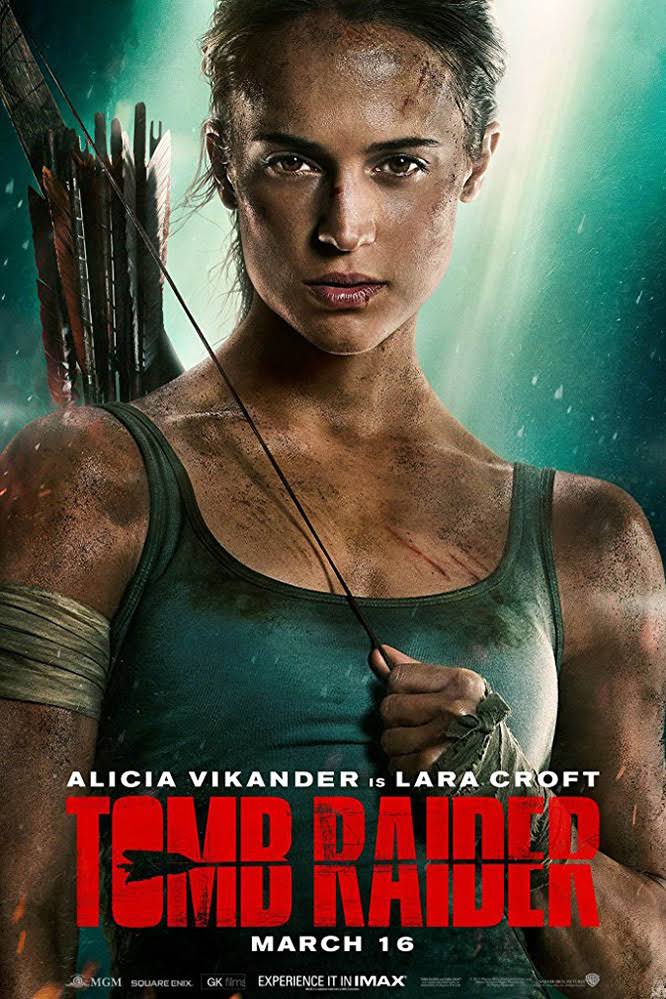
“Tomb Raider” (2018) review PLUS exploring the “video game movie” problem

Strives to put cinematic storytelling first and video game representation second, but still comes across as tropey and borrows heavily from Indiana Jones and the Raiders of the Lost Ark and The Last Crusade. However, in all fairness, it does provide this generation with a moderately good action-adventure film based on a best-selling video game series. Alicia Vikander’s Lara Croft differs from that of Angelina Jolie’s in that she comes across to audiences as someone who’s impulsive, reckless, and experiencing difficulty in managing her life. Furthermore, she does not excel at everything she is trying to do to survive life and make ends meat. Those qualities give this Lara Croft a level of humanity that allows her to connect more with audiences. Moreover, she is a believable character–she feels real. In fact, that is probably the best element that this reboot has going for it–the realness of the adventure. Not that the film is without exaggerations and fantasy elements; but, the story almost feels like an adventure that could take place under the right circumstances and with the right tools. The realness might have been increased by not feeling like, at times, you were sitting there playing the video game version. Although this initial return to the video game turned motion picture adaptation is frocked with predictable plot beats and turning points, it does show promise for a solid franchise if tweaked. Moving forward, the stories need to be stronger, original, and leave room for SUBTEXT.

Lara Croft is the fiercely independent daughter of an eccentric adventurer who vanished years earlier. Hoping to solve the mystery of her father’s disappearance, Croft embarks on a perilous journey to his last-known destination — a fabled tomb on a mythical island that might be somewhere off the coast of Japan. The stakes couldn’t be higher as Lara must rely on her sharp mind, blind faith and stubborn spirit to venture into the unknown. (IMDb)

Video games turned motion pictures aren’t anything new. From Super Mario Bros to Mortal Kombat to Resident Evil to this year’s Tomb Raider, there have been many attempts to adapt interactive media (video games) for scripted/narrative cinematic storytelling. Ultimately, it has proven to be nearly impossible to create a successful motion picture from a video game. In short, Hollywood simply cannot seem to crack the code for a movie adaptation of a video game. There has yet to be a video game to film adaptation that has even encroached upon the fresh threshold of Rotten Tomatoes. But why is that? Often, movie adaptations of video games fail because their is more emphasis placed upon video game brand representation than the art of cinematic storytelling. In its defense, 2018’s Tomb Raider shows an effort to overcome that obstacle. Today’s Tomb Raider made a solid effort to spend time worrying about it’s quality as a film, but still fell victim to being too grounded in its interactive media roots. If studios who either own or license a video game intellectual property (IP) can spend time analyzing the source material for purposes of tapping into what makes the story itself work, then perhaps a successful video game movie can be produced.

Not just limited to interactive media –>film adaptations, but anytime there is a well-established franchise, the writers and director struggle to find where the happy medium is in satisfying the core of the fan base and translating the story between two forms of media. As much as modern interactive media has in common with films (referring to the cut scenes), there is still the human component that cannot be translated for the screen because there is no “choose your own adventure;” it’s this disconnect that often contributes to the poorly written plot for the screen. Much in the same way that movies based on comic books struggled for a long time until Iron Man, with the brilliant exceptions of Tim Burton’s Batman (a Barman movie directed by Burton) and Batman Returns (a Tim Burton movie that happens to have Batman characters), interactive media based movies will eventually find the sweet spot. I feel that this sweet spot will be found when writers and directors take the characters from a video game IP and place them in an original cinematic story that skews more towards the focus being on the cinematic storytelling than adhering to brand recognition and the existing story that can be played, and has been played, on the console or computer. Take Burton’s approach to Batman Returns. Create a story that works for the screen that happens to have the characters from the video game.

Movies aren’t the only adaptations of interactive media; themed entertainment has also spent time adapting a game for an entire attraction. According to Theme Park Tourist (2014), popular seasonally operating Paramount’s Kings Island (purchased by Cedar Fair in 2007 and all Paramount property removed) spent $20MIL on a ride that lasted a mere five years. Based on the hit video game and blockbuster action movie Tomb Raider: The Ride was on par with Disney and Universal in respect to story, setting, and special audio/visual effects; however, after Paramount sold off its theme park investments to Cedar Fair, the ride got rebranded as The Crypt, a generic theme, and all direct associations with the movie and game Tomb Raider were removed following the 2007 operating year. Interestingly, the ride attendance continually dropped following the rebranding, and the ride was eventually moved to Kings Dominion in Virginia in 2012. Although there may be other reasons as to why the ride became less popular and eventually moved to another park, it is conceivable to conclude that there is a special relationship between the characters and story of the game and a themed entertainment attraction. Both the attraction and the game have the advantage of the human component–the ability to truly experience the elements of the game. 

Over all, I found the new Tomb Raider to be a fun watch! Certainly don’t feel that my time or money was wasted. I remember playing Tomb Raider on the original Playstation and Playstation II (it was soon after that, that I lost interest in gaming), and as a mild fan, I feel that this film did the characters and story justice. By the end of the movie, it is obvious that MGM’s intention is to attempt to produce a blockbuster franchise. And to the film’s credit, this first installment had a satisfying ending plus it quickly setup the next movie. If you like action-adventure movies or even a fan of the video game series, I feel that you will enjoy Alicia Vikander as Lara Croft: Tomb Raider!
“Black Panther” movie review

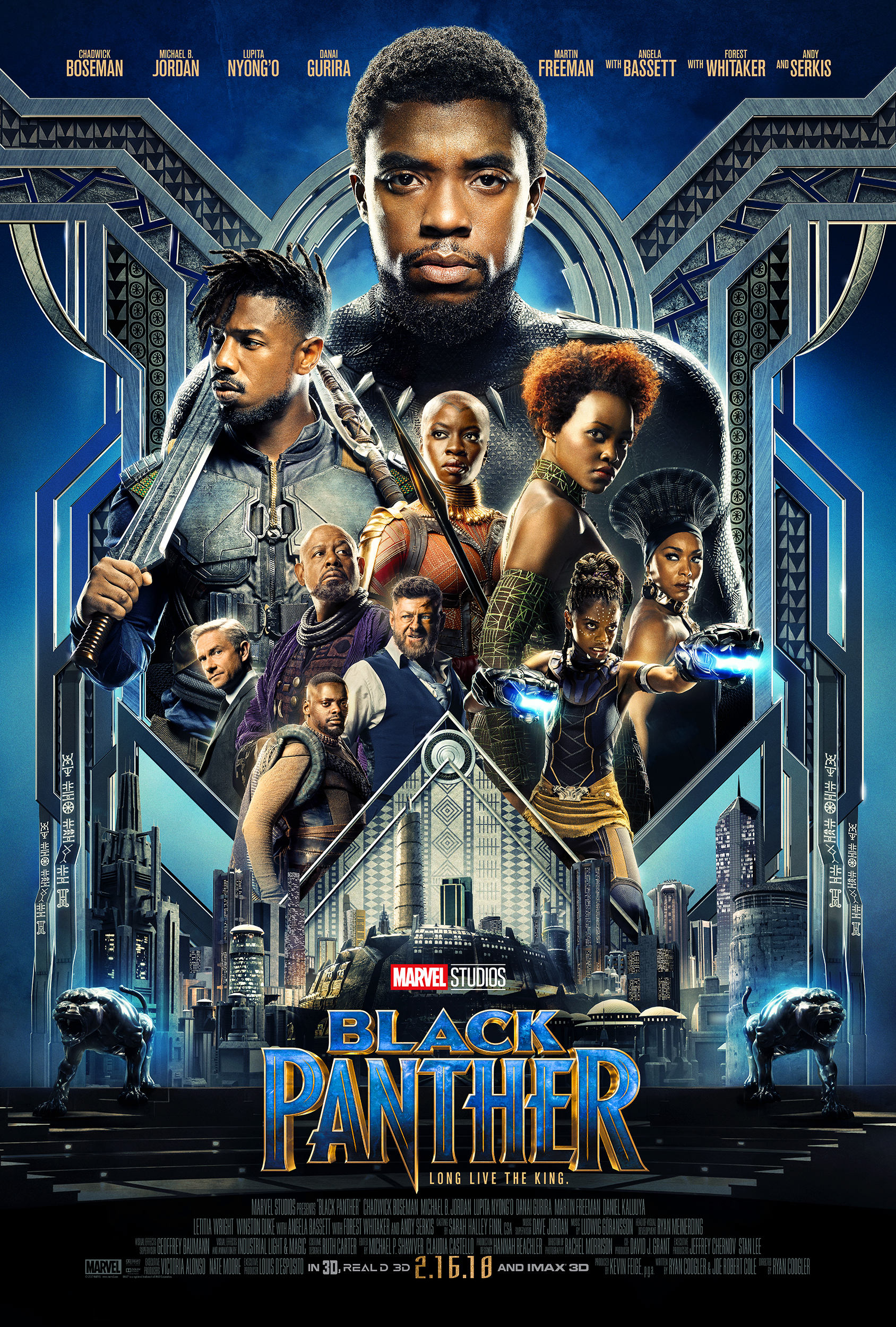
A groundbreaking new perspective on the typical high concept superhero movie. Marvel’s Black Panther directed by Ryan Coogler is the type of movie that began with the desire to make a bold statement and then a narrative was built around the message. If you’ve heard it’s unlike any superhero movie you’ve seen before, then you’ve heard correctly. One of the things I’ve always appreciated about the Marvel universe (and DC by the same token) is the diversity of the characters. There are characters from a variety of backgrounds, creeds, cultures, ethnicities, etc that are represented in the characters. However, just because the characters were there does not mean they received reasonable screentime (or page time in comics). Up to this point, X-Men’s Storm (my favorite Marvel character) seems to be the only black character who receives comparable screen and page time to that of her white male or female counterparts. In a world that should teach us that our universe is a diverse place, filled with incredible people from a variety of backgrounds and origins, the representation of black heroes lagged behind. The beauty of Black Panther is not that is was simply created to finally give a predominantly black cast in a superhero universe the spotlight, the beauty is that the movie has something to teach everyone. There is a particularly strong message for young black boys and girls that their mythology is as fascinating as the Greeks and Romans, and that they can achieve greatness through teamwork, education, and loyalty.

Chadwick Boseman plays King T’Challa, of Wakanda, the fictional African nation housing secret sci-fi technology, who must step up and embrace the weighty responsibility of his birthright after the assassination of his father. When T’Challa returns home Wakanda to take his rightful place as king, a powerful enemy suddenly reappears and challenges T’Challa’s claim to the throne — and as Black Panther — T’Challa gets tested when he’s drawn into a conflict that puts the fate of Wakanda and the entire world at risk. Faced with treachery and danger, the young king must rally his allies and release the full power of Black Panther to defeat his foes and secure the safety of his people. (IMDb)

Although there is a lot of technology in Wakanda (and by extension, in the film), the focus is not on gadgetry or superpowers but on how T’Challa can be a better king than his father who made a poor judgment call that ultimately cost him his life and put the land of Wakanda at risk of rape, pillage, and plunder. That is a message that resonates with everyone–we all want to strive to be better as we go through life. Perhaps we are trying to be better than we were as kids or maybe you are trying to be a better parent than yours were. Whatever the case, we can all place ourselves in T’Challe’s boots. There is also a powerful message regarding how isolation can be detrimental to society at large. Not that the film is advocating the loss of sovereignty–Wakanda is highly sovereign–but there is the message that a country with so much to offer should return some of that to the world in order to help create a better society, more opportunities for growth, and the sharing knowledge that can heal and protect.

The cast is incredible! So many talented performers who truly bring their respective characters to life. My only negative critique regarding the cast is the underused Michael B Jordan as the main opposition character. His charisma shines brightly on screen! But sadly, he does not get much screen time. He is the type of opposition character that you love to see, but unfortunately, you don’t get that much time with him. Although many may be quick to liken Black Panther to Captain America—and for good reason, both shoot straight and almost piously righteous–there is a big difference between the two–and it’s a good one. Black Panther is humanized by his endearing relationship with his brilliant sister Shuri portrayed by the delightful Letitia Wright. Honestly, she was my favorite character in the entire movie. Every moment she was on screen was outstanding. She was the only one who wasn’t bruting–always positive–and has the BEST lines. Just her character alone is enough to give the movie rewatchabiity. On the topic of dialogue, I would like to have seen a powerful monologue that embodied the message of the film and evoked strong emotion. There are emotional parts, but I think an acute moment would have done the film well.

The film opens with a beautiful long tracking shot of exquisite editing that has a mystical feel to it. The opening alone is enough to hook your attention for the remainder of the narrative. No surprise here that all the technical elements were exemplary. There were only a few times that the visual effects felt artificial. For all the action movie tropes in the film, it plays as more of a character-driven story than action-driven. And that’s the brilliance of Black Panther. Simple plot, complex characters–that’s what I tell my screenwriting students at the University of Tampa.

Intensely riveting, Black Panther is clearly a standout Marvel film distinguished from the others in the MCU. All the elements that give it the fresh take on the superhero movie genre work to its advantage. You’ll certainly be left with a lasting impression.

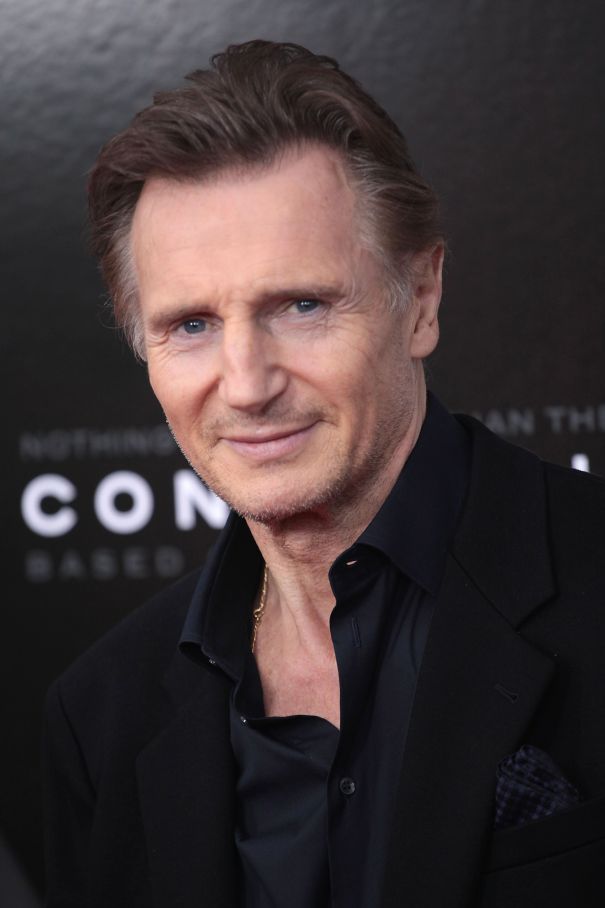
Lin Shaye and Liam Neeson | January Box Office Gold

Both Insidious and The Commuter are gems in the graveyard that is typically true “January” release films. I say true because films like The Shape of WaterI Tonya, and The Post are wide-released in January but were originally released on a limited run during the Holidays in order to qualify for The Oscars. For those who follow cinema closely, it’s no surprise that months like January and September are typically referred to as movie graveyard because that is ordinarily where movies go to die that cannot stand up to Spring, Summer, Fall, or Holiday release times. However, the last couple of years have seen some very strong films in January/February. Last year’s examples are Get OutLogan, and A Cure for Wellness. Last week’s Insidious: the Last Key and this week’s The Commuter are very much paint-by-the-numbers horror/action films respectively; but the cast–in particular, the leads–makes these films fun and even exciting to watch. From background actress to leading horror queen, Lin Shaye truly makes the Insidious films ones to be experienced on the big screen. Her flair for paranormal/supernatural films is uncanny, and take mediocre horror movies and transform them into movies you don’t want to wait until it comes to VOD. Likewise, Liam Neeson wowed audiences with his trademark character with a “particular set of skills” in the Taken movies, and has since played similar characters in other films. When you see his name, you expect that character-type and often times you get it! The Commuter may be a cliche action-thriller, but Neeson makes the film one that is a non-stop ride, one you don’t’ wanna miss when it leaves the station.

But why do both Shaye and Neeson draw the audiences the way they do? By all accounts, movies like the Insidious and Taken franchises or some iteration of the aforementioned are filled with horror and action tropes that seldom provide a truly new experience for audiences. However, their movies generally do very well at the box office and are consistently thrilling to watch. Placing Neeson in an action thriller or Shaye in a supernatural horror is essentially a guaranteed box office success for audiences and investors. In a manner of speaking, what we are dealing with here are legitimate movie stars. Truth be told, 21st-century cinema does not see movie stars in the same way that the early and mid 20th century did. In early days of cinema, films were built on the back of the studio system stars. It was a Betty Hutton film, a Humphrey Bogart movie, a William Holden picture, a Bette Davis film, etc. I’d argue that Tom Cruise is the closest to a contemporary era movie star in the traditional sense that we have. But by extension, you can apply the same attributes to Liam Neeson and  Lin Shaye by the cache that they bring to their films–they are a box office draw. Just their respective names are enough to invigorate audiences and generate ticket sales. At the end of the day, that’s when you know you have a true movie star. The name alone is enough to excite audiences and drive ticket sales.

Both actors are equally talented in their respective ways. The level of talent, entertainment, and thrill is consistent. You are never disappointed in their performances. If you remove/replace either of them in Insidious: the Last Key or The Commuter, the movies would likely not play out nearly half as well as they presently do. I’m not knocking the writing, directing, scores, editing, or cinematography, I am stating that the films are nothing remarkable in and of themselves; however, Shaye and Neeson bring a powerful screen presence with them that take the mediocre horror and action films to transform them into a cinematic experience that is incredibly enjoyable.

“Jumanji: Welcome to the Jungle” (2017) movie review

You know what, it’s actually good! I know, right??? For months now, many of us thought the sequel to the 90s classic was going to be a disaster. The truth is, this movie is incredibly well written, directed, and acted, and will ‘suck’ you right into the story. It’s been a long time since I’ve seen a movie that was this much fun to watch. In fact, Jumanji: Welcome to the Jungle has a high degree of entertainment value and rewatchability. Honestly, the only negative critique is that the stakes are not high enough because, at the end of the day, you know the characters are in a video game whereas the actual town was under attack in the original. Although this is a completely new story and fresh take on the 1995 film, there are enough nods and references to the original that keep it within the same universe. All the characters display excellent chemistry and are lovable! You have solid writing, characters that you love and love to hate, humor, and action! In short, it’s an excellent movie. I went into the movie expecting to laugh AT the movie, and my friend and I found ourselves laughing WITH the movie. Furthermore, I was worried about the movie having way too much CGI because the characters are in a video game, but I am delighted to report that there is, for all intents and purposes, little CGI compared to many other action-adventure films.   This movie goes to show that when you have well-developed characters with well-defined external goals opposed by external forces in a visually intriguing setting supported by effective direction that you have a recipe for a successful movie. I remember in the first movie the game directions “do not begin unless you intend to finish,” and those words were taken to heart because director Jake Kasdan began and finished well. Do yourself a favor, and catch Jumani: Welcome to the Jungle this holiday season with your friends or family!

“Blade Runner 2049” film review

Just as mesmerizing as the original! Denis Villeneuve’s Blade Runner 2049 is nothing short of a future classic that demonstrably possesses the soul of the original and pairs it with a new plot brought to life by a fantastic cast. Every minute is filled with beautiful cinematography that is perfect in every way and a haunting score that penetrates down to the bone. At its core, Blade Runner 2049 wrestles with this one central question: what does it mean to be human? A question that can spawn hours of debates or an exquisite nearly three-hour motion picture. Considering that Ridley Scott has not delivered the same quality for which he provided precise and poignant direction, it was a solid decision to attach Villeneuve as the director. This sequel 35 years in the making may not have had the classic Ridley Scott at the helm, but Villeneuve channels his inner Scott to provide audiences with the same profound cinematic experience today as Scott did when Blade Runner first released. From the color palette to the lighting to the sound design, this motion picture is one that typifies the power of the art of motion pictures and one that will surely be regarded as iconic as the years more along, very much in the same way that the original has been regarded over time.

Officer K (Ryan Gosling) is tracking down the remaining legacy Replicant models created by the infamous Tyrell Corporation, and his latest mission takes him to an obscure farm in the middle of dessert California. After retiring the replicant at the farm, K uncovers what will become a metaphor for Pandora’s Box, as it opens a mystery that law enforcement and the Wallace Corp. seek to solve. The secret contained within the box is one that could potentially plunge all “humanity” into complete chaos, not there there isn’t enough of that already for those left on earth. K’s journey takes him from the gritty, grimy streets of Greater Los Angeles to the dust bowl that was once Fabulous Las Vegas. There, he meets former Blade Runner Deckard  (Harrison Ford) who has been hiding from law enforcement and the Wallace Corporation for three decades. Together, they must work to locate the miracle that no one ever could have thought would happen–or could happen.

Despite not pulling the numbers that Blade Runner 2049 was forecasted to bring in over its October opening weekend, the film did what fans wanted–it kept the very essence of the original movie alive and well. For all the artificial intelligence in the film, there is nothing artificial about this long-awaited and highly anticipated sequel to the Ridley Scott classic. The reason for not pulling the numbers that it was predicted to do can likely be attributed to the tone of the film and the stylistic filmmaking approach that borders on neo-noir meets the avant-garde. Although not completely necessary, it is incredibly helpful to have seen the first film. And seeing the first film gives an appreciation for the sequel that cannot be experiences without having knowledge of the first. The slow-pace and dark atmosphere may be some of the reasons why more people did not wish out to see it as the weekend moved along. Looking at the two films side by side, this film is a direct extension of the original so the authenticity of this universe and story is genuine and almost visceral. For those who prefer more dialog or higher concept plots, the film may not strike the same level of enthusiasm because of the heavy visuals and dark themes in addition to the profound questions. This combination is not one that will attract the general populous in doves; however, this film IS what it needed to be. Sometimes a long-awaited sequel has to be made to remain true to its soul because that is what the fans want to see, and it’s the true fans who continue to visit the cinema year after year. Blade Runner 2049 may not win over new fans, but it keeps the diehard ones happy.

At the heart of Villeneuve’s cinematic masterpiece are existential questions that drive the plot forward. A plot driven by such questions told through a sedated pace is one that is not as easy to digest as one that is more superficial and more rapidly paced. Still, these questions are profound and cause one to think hard about what it means to be human. What sets this film apart from other science-fiction rapid fire blockbusters is the commitment to visual storytelling and the art of creating a motion picture. Blade Runner 2049 mirrors its predecessor and remains true to the experience of the first. Cinephiles will especially appreciate this film for it harkens back to a time when German expressionism was at the foundation of the set design and lighting. There are many exaggerated and elongated shapes that exist in a world of harsh shadows and dimly lit alleys throughout the film. Although the look of the future world in the original was one that audiences may not have believed would come true or could come true is seen differently by today’s audience that can easily see just how accurate the world of the Blade Runner movies actually is–the mediation of society today seems to be not that far off from this not-so-distant future.

Cinematographer Roger Deakins captures a wold through the lens that seems to go on forever in a world of greys and beiges. The only color to be found is in the prolific advertising on the sides of buildings. Deakins further extends the artistic approach to the cinematography by paying homage to Stanley Kubrick’s The Shining in a shot that was actually added to one of the more recent recuts of Scott’s Blade Runner. That score, though. The sound design and score are an audible extension of the visual landscape. Composers Benjamin Wallfisch and Hans Zimmer have created one of the most haunting scores to ever be heard in the cinema. The combination of ghostly groans and blood curdling howls echo the very look and feel of the landscape. I’ve rarely encountered such an immersive sound design and score in a film. Just as the world on screen is an uneasy place to live and one that contains faint images of the grandeur of a world that once was, the score accompanying this motion picture places you in the midst of this post-apocaltyic world that most natural-born humans have left.

Definitely a film that I want to watch for a second time in order to appreciate this film, boasting with artistic achievement, even more than I already do. Although most of the themes and subtext are centered in and around “what it means to be human,” there is a real message regarding the importance of bees. An important visual statement in the film because the populations of bees, the most prolific pollinators, are dwindling. Not for the casual movie-goer, this film is for those who want to experience a sequel in the vein of the original that shows the artistic side of the creation of motion pictures.