PREDATOR: BADLANDS movie review

Predator: Let’s Play. When streaming content hits the big screen.
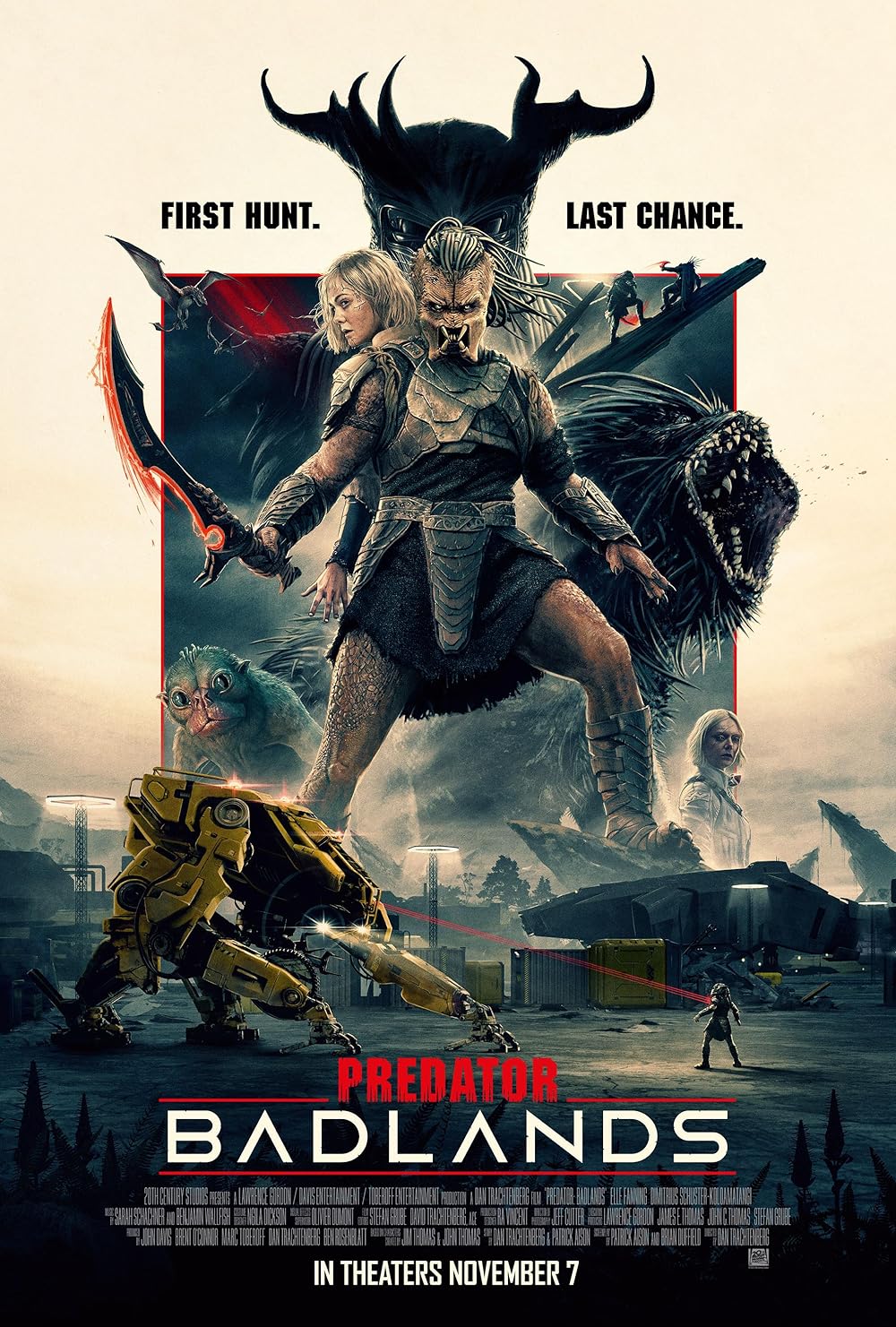
Predator: Badlands is the equivalent of a “Let’s Play,” but with bigger explosions. The nonstop action, constant motion offer little to no substantive emotional investment. You’re an observer, not a participant—which might be fine for streaming, but it’s a strange fit for cinema. The latest in the Predator franchise plays like a two-hour sizzle reel with delusions of grandeur. It’s a glossy barrage of explosions, digital dust, and quippy one-liners that evaporate before they even hit the floor. By the time the credits roll–that’s if you haven’t fallen asleep—you’ve seen everything and felt nothing. It’s not that the film is aggressively bad—it’s that it’s aggressively empty–little more than content to pander to short attention spans with shiny movement instead of meaningful momentum.

Cast out from its clan, a Predator and an unlikely synthetic ally embark on a treacherous journey in search of the ultimate adversary.

The screenplay feels like it was written by an algorithm trained on reaction videos and Reddit threads. Every line of dialogue sounds like a placeholder; it’s as if someone said, “We’ll fix it later” or “funny line here,” and neglected to return to the page in order to fix it–before principle photography. There’s no sense of escalation, tension, or rhythm; it’s a series of flashy moments loosely stitched together, like a highlight reel of a game you didn’t play. Even the humor feels synthetic–much like the characters– punching at air instead of connecting with character or tone.

As for the characters, they exist mostly as camera targets. They are little more than digital avatars running, shooting, and shouting for reasons that never feel personal or compelling. The lead could be replaced by a different actor mid-film and you might not notice. This critic isn’t even convinced that Dek (our central Predator character) wasn’t entirely CGI, though it may have only been the facial area. “What’s my motivation?” Difficult to say–there wasn’t much upon which to build. Motivations are paper-thin, arcs nonexistent. The Predator itself, once a symbol of primal fear and unseen menace, now feels like a boss-level NPC waiting to be triggered by the next quick-time event.

Visually, Badlands has all the spectacle money can buy; but its spectacle is divorced from any meaningful purpose. The explosions are massive, the sound mix thunderous, and yet it’s as emotionally engaging as watching someone else play Call of Duty. Every frame screams “look at me!” without ever inviting you to feel something. The editing, too, is manic. And it’s not even as though the narrative demanded it; rather, the dynamic editing was most likely employed because the movie was terrified that you’d look away or down at your watch, which I did several times.

And maybe that’s the point. Predator: Badlands is far less like a movie and more like a cinematic exercise in a large scale “Let’s Play.” For those that are unfamiliar with the term, it’s a type of (usually) YouTube video of someone playing a video game and often their reactions to the game play. Think of it as a passive experience of someone else’s thrill ride. The ultimate, disconnected form of living vicariously. Don’t question anything, because it won’t take long to realize that this movie is hollow. You don’t engage; you just witness. The irony is that the film could’ve been a fascinating critique of screen-mediated experiences, but it never once stops to think.

This is just the latest in a growing trend from Disney’s genre arm: a reliance on brand nostalgia and visual polish in place of storytelling. Ever since the corporate appetite turned to IP recycling, the studio has mistaken familiarity for depth. Badlands is what happens when you try to “optimize engagement” instead of crafting a narrative, resulting in the film equivalent of clickbait dressed in billion-dollar armor.

Predator: Badlands doesn’t so much hunt its audience as it does chase its own tail. A movie that is fast, flashy, and utterly pointless; and desperately wants to go viral but forgets to be cinema. You don’t leave exhilarated; you leave wondering if you accidentally spent $15 to watch a YouTube compilation in IMAX.
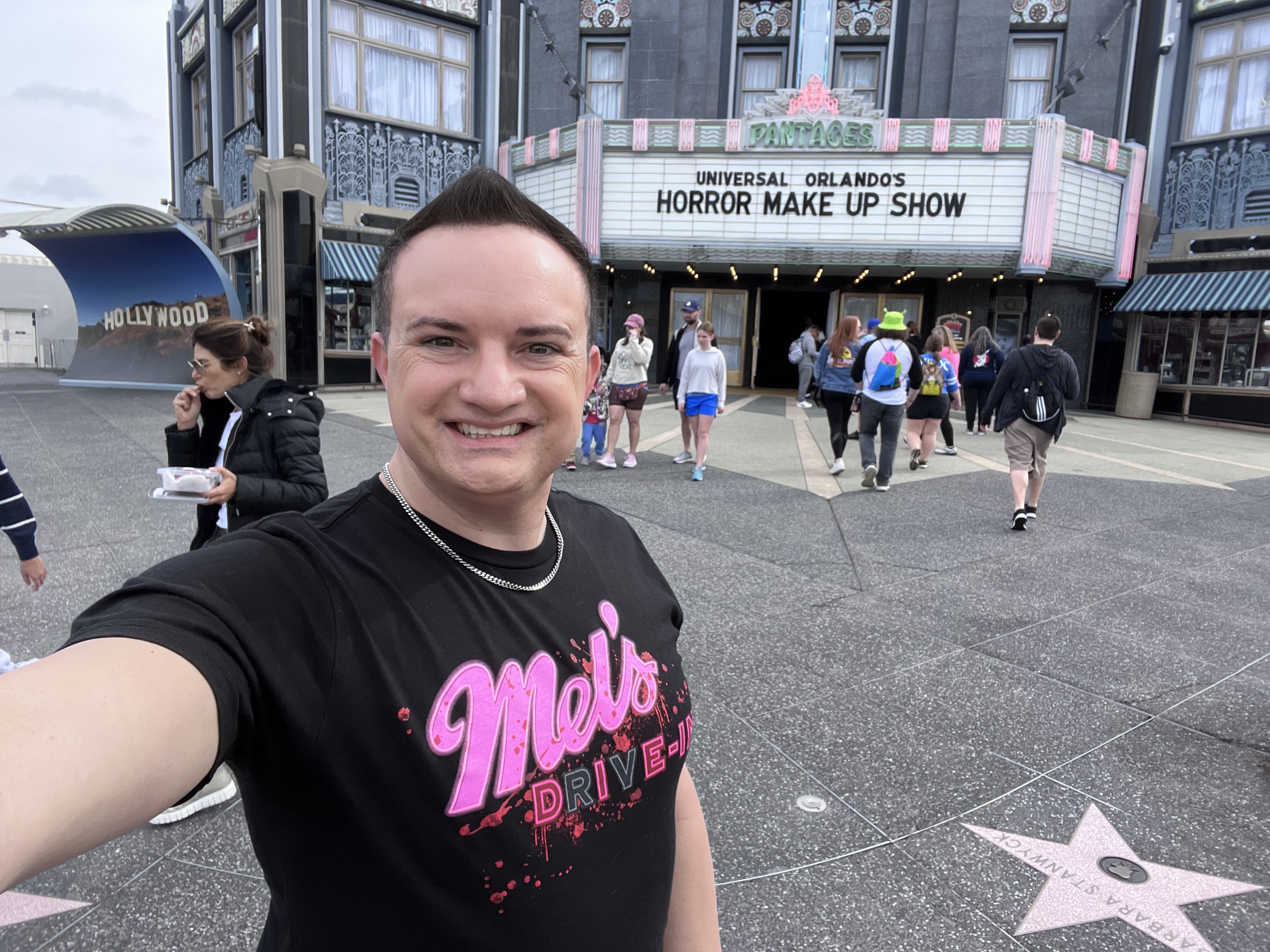
Ryan is the general manager for 90.7 WKGC Public Media and host of the show ReelTalk “where you can join the cinematic conversations frame by frame each week.” Additionally, he is the author of the upcoming film studies book titled Monsters, Madness, and Mayhem: Why People Love Horror. After teaching film studies for over eight years at the University of Tampa, he transitioned from the classroom to public media. He is a member of the Critics Association of Central Florida and Indie Film Critics of America. If you like this article, check out the others and FOLLOW this blog! Follow him on Twitter: RLTerry1 and LetterBoxd: RLTerry
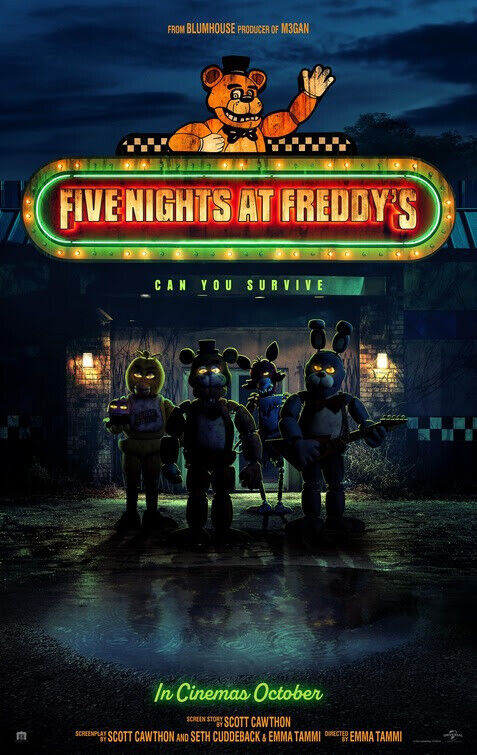
FIVE NIGHTS AT FREDDY’S horror movie review

Fun-filled and creepy! Blumhouse’s Five Nights at Freddy’s is surprisingly good! From the unnerving atmosphere to the practical effects, it’s entertaining and even thoughtful with its exploration of childhood trauma. However, for everything I liked about the movie, I do feel that it should have leaned a little more heavily into Gremlins or Chopping Mall territory because it is a little too serious at times. All in all, the movie is smartly written, with just the right amount of suspension of disbelief. There are even influences of Nightmare on Elm Street and Freddy Krueger’s MO in this movie. If you’re looking for a entertaining time to spend at the cinema on this weekend before Halloween, then you can’t go wrong with Five Nights. After watching the movie, I will now be anticipating Universal Orlando & Hollywood to feature this house at next year’s Halloween Horror Nights.

A troubled security guard begins working at Freddy Fazbear’s Pizzeria. While spending his first night on the job, he realizes the late shift at Freddy’s won’t be so easy to make it through.

I had no idea what to expect since I knew very little about the game. In fact, when I first heard of the game many years ago, I thought it was about the Freddy–Freddy Krueger. Nope. The game is about surviving an abandoned not Chuck-E-Cheese. It’s been probably twenty or more years since I’ve been to a Chuck-E-Cheese–come to think of it–I think the last time I went was when it was known as Showbiz Pizza. When I think of environments and settings that would be naturally creepy whether abandoned or not, Chuck-E-Cheese is one of them. I would imagine that on any given Tuesday night, a Chuck-E-Cheese is unnerving, let alone if it was haunted.

Since I’ve never played the game, I will not be commenting on the translation from interactive media to cinema, but from what I have learned, there is a lot of lore in the game, so I hope that lore is what was brought into the movie version.

Five Nights at Freddy’s benefits from a small cast and few locations. Furthermore, what the movie lacks in the screenwriting department, it makes up for in Emma Tammi’s directing. That’s not to suggest that it is poorly written–quite the contrary–I like how well it was written, given that it’s adapted from a video game and written for (primarily) teens that played the game as kids. Reminds me of a more mature version of Are You Afraid of the Dark? or Goosebumps. As much fun as I had with the movie, I feel that it could’ve used a little more camp in the storytelling–the movie would have benefitted from channeling Gremlins or Chopping Mall to bump up the dark humor and playfulness. The plot is simple and our central character is complex–the recipe for solid cinematic storytelling!

Our central character of Mike (Josh Hutcherson) is relatable, and his behavior feels natural considering the trauma of his younger brother being kidnapped when they were kids. The devastation of the loss of his brother, and later mother and father, has gravely impacted his ability to manage his own life and younger sister (and this is where the movie should’ve made her his daughter because a 20+ year age difference is a little hard to buy). Facing the loss of custody of his little sister to his overbearing, condescending aunt (played by Fried Green Tomatoes‘ Mary Stuart-Masterson), he must survive nights as a security guard at Freddy’s to prove he can care for his little sister. Within the first few minutes of the movie, we have our central character, their external goal, and opposition to the goal. I love when I witness established screenwriting conventions followed–because they work!

While the movie depicts very little on-screen violence and little to no gore, it successfully transfers that fear from the screen into the mind of the audience. That which is suggested in image association or shadow is more terrifying than witnessing it plainly on screen. By keeping most of the violence, death, and gore off-screen, and the adult language to a minimum, this movie works as a gateway horror for older kids and teens that are considering diving into the genre.

The setting is fantastic! I don’t know whether this was an abandoned Showbiz Pizza or Chuck-E-Cheese in real life or not–hope it was–but the setting is ominous and creepy! And because it’s representative of places in real life, it’s easy to imagine ourselves in the same environment. Perhaps it’s not as unnerving as being stalked in your own home like in Halloween or When a Stranger Calls, but there is definitely something naturally scary about being trapped with kids’ toys and animatronic characters at night in a setting haunted by ghosts of its glory days.

I also appreciate the practical effects, puppetry, and character performer costuming in the movie. While I imagine that it’s a combination of CGI and practical, I kept studying the animatronic characters to determine whether it was character performers in costume or of it was exceptionally good CGI–so much so I feel that I could reach out and touch the fur. Had the CGI been overt, then the scares would’ve been far less terrifying as CGI rarely packs the same punch as actors reacting to real props, costuming, and effects.

You’ll not be disappointed if you chose to watch Five Nights at Freddy’s this weekend. Go in with an open mind, and just enjoy a fun horror movie! Don’t overthink it, just be entertained by it!

Ryan teaches Film Studies and Screenwriting at the University of Tampa and is a member of the Critics Association of Central Florida and Indie Film Critics of America. If you like this article, check out the others and FOLLOW this blog! Interested in Ryan making a guest appearance on your podcast or contributing to your website? Send him a DM on Twitter. If you’re ever in Tampa or Orlando, feel free to catch a movie with him.

Follow him on Twitter: RLTerry1 and LetterBoxd: RLTerry
THE SUPER MARIO BROS. MOVIE review

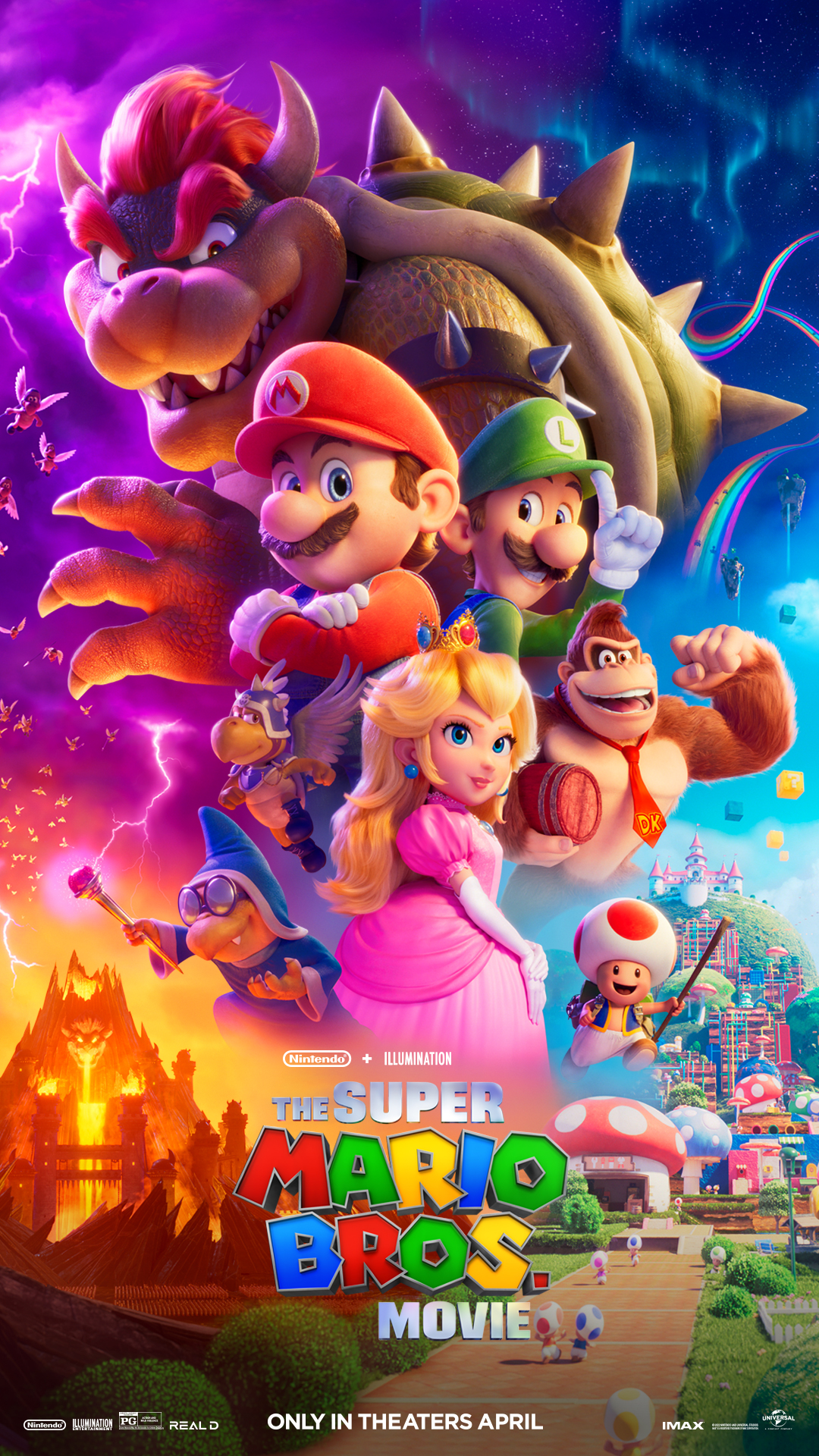
Game Fin. The highly anticipated animated adaptation of the timeless game series is more accurately titled The Super Princess Peach Movie, because you will spend significantly more screen time with the superhero-like Princess Peach than you will the title characters. Mario and Luigi take a backseat (and Luigi, a WAY back seat) to the flawless Princess Peach on an adventure to save the Mushroom Kingdom.

While some have characterized this movie as a love letter to the Mario universe of games, the irony is that the screenwriters were demonstrably more concerned with easter eggs and cameos than they were telling a good, meaningful story with the beloved interactive media characters and worlds.

A feature film adaptation of a video game is on shaky narrative ground when the original video game has greater stakes than the movie version. Never once are you second-guessing Princess Peach’s–uhh, I mean–Mario’s ability to defeat King Kupa and save the legacy Nintendo realm.

Most of the humor is either short-lived or falls flat. While we don’t look to these types of movies to deliver deeply moving character development, movies like this should at least seek to deliver clever plotting to engage the audience beyond a superficial level. There are no twists nor are there any real turns after the movie sets up the story (a term which is giving the movie way too much credit) that is about to unfold.

The best scenes in the movie are the ones with Donkey Kong, because there is better executed setup and delivery in the conflict. Furthermore, Donkey Kong is the only character that has any kind of measurable agency in the movie.

Movies that feature a character(s) that is either exceptional at everything or continually fails in order to make another character(s) look more superior offer very little to be desired, much less craft a movie that is rewatchable. The movie works as a fun nostalgic trip through the legacy of the Mario universe of games, but the one-dimensional characters and vapid plot greatly hold this movie back from the quality it very well could have been.

I’ll give the movie this: I did make me want to download an N64 emulator and buy an N64 bluetooth or USB controller for my computer so I could relive my childhood playing Mario 64. So if it prompts others to get together with friends or their kids to play these timeless games, then the movie does have a positive affect upon the audience.

Ryan teaches Film Studies and Screenwriting at the University of Tampa and is a member of the Critics Association of Central Florida and Indie Film Critics of America. If you like this article, check out the others and FOLLOW this blog! Interested in Ryan making a guest appearance on your podcast or contributing to your website? Send him a DM on Twitter. If you’re ever in Tampa or Orlando, feel free to catch a movie with him.

Follow him on Twitter: RLTerry1 and LetterBoxd: RLTerry
UNCHARTED action-adventure movie review

The Goonies meets Raiders of the Lost Ark in the moderately entertaining movie adaptation of the hit Uncharted video game series. Of course, therein lies a tonal problem: the movie is never quite sure what tone it wants to strike. Tom Holland and Mark Wahlberg star in the Ruben Fleischer helmed high-flying action-adventure movie that hopes you haven’t played or know much about the video game. Fortunately for me, I wouldn’t even know the cover art of the game, let alone anything about it other than the title. And that is probably why I enjoyed it as much as I did–but that isn’t saying much. #FilmTwitter was up in arms about the boyish Holland playing the grizzled Nathan Drake when the casting was announced. And while I cannot comment on his particular interpretation of the main character from the video game, I can comment on an inability to buy him as the character, as written, for the movie. It’s indicative of the trend of endowing teens and young adult actors (and by extension, characters) with the same qualities and experiences that come with age and experience. I’ll give him this, he is a charismatic actor. The slapdash storytelling comes across as a movie that feels more like a curation of cut-scenes from a video game, a problem that plagues most video game movie adaptations.

Nathan Drake and his wisecracking partner Victor “Sully” Sullivan embark on a dangerous quest to find the greatest treasure never found while also tracking clues that may lead to Nate’s long-lost brother.

What ultimately keeps this movie afloat is the witty, quippy dialogue, completely devoid of any subtext, but will elicit periodic laughter throughout the movie. While I know next to nothing about the video game, I did learn from a fan of the video game that there is a major element from the game that is completely absent from the movie. I won’t mention what that is in order to avoid spoilers. Be sure to wait around for the mid and post credit scenes that setup a sequel. If you do plan to see it, you’ll definitely want to watch it in the biggest premium format in your area. Many of the scenes, especially in the third act, deliver immense size and scope that are best appreciated and experiences on the biggest screen possible.

While I am unsure of the plot of the video game, the movie sets up an emotionally-driven subplot of the Nathan’s search for his long-lost (or gone) brother. But, it never feels that is plays any significant role in the main action plot. In fact, you can remove the whole search for his brother and the movie plays out the same. This is a movie that could have been a nice hybrid between The Goonies and Raiders of the Lost Ark, but it tries to be both of them instead of finding its own expression. Perhaps this is yet another example of how most video game adaptations simply don’t translate to the screen well, because the interactive element is missing.

At the end of the day, it’s a decent popcorn flick to experience in IMAX that is a perfectly fine way to pass the time on an afternoon.

Ryan teaches Film Studies and Digital Citizenship at the University of Tampa. If you like this article, check out the others and FOLLOW this blog! Interested in Ryan making a guest appearance on your podcast or contributing to your website? Send him a DM on Twitter or email him at RLTerry1@gmail.com! If you’re ever in Tampa or Orlando, feel free to catch a movie with him.

Follow him on Twitter: RLTerry1

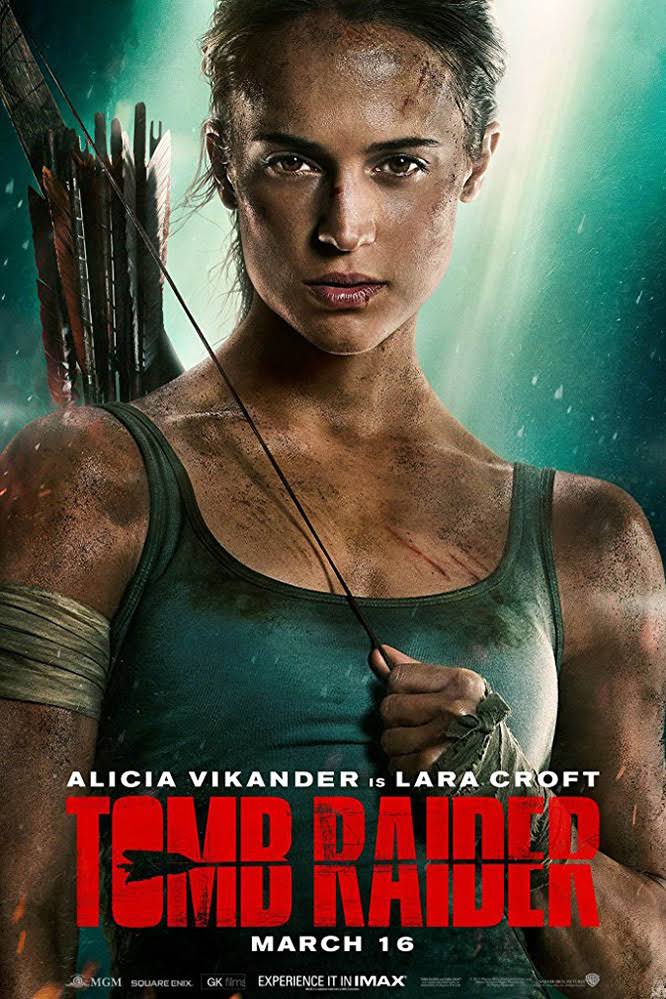
“Tomb Raider” (2018) review PLUS exploring the “video game movie” problem

Strives to put cinematic storytelling first and video game representation second, but still comes across as tropey and borrows heavily from Indiana Jones and the Raiders of the Lost Ark and The Last Crusade. However, in all fairness, it does provide this generation with a moderately good action-adventure film based on a best-selling video game series. Alicia Vikander’s Lara Croft differs from that of Angelina Jolie’s in that she comes across to audiences as someone who’s impulsive, reckless, and experiencing difficulty in managing her life. Furthermore, she does not excel at everything she is trying to do to survive life and make ends meat. Those qualities give this Lara Croft a level of humanity that allows her to connect more with audiences. Moreover, she is a believable character–she feels real. In fact, that is probably the best element that this reboot has going for it–the realness of the adventure. Not that the film is without exaggerations and fantasy elements; but, the story almost feels like an adventure that could take place under the right circumstances and with the right tools. The realness might have been increased by not feeling like, at times, you were sitting there playing the video game version. Although this initial return to the video game turned motion picture adaptation is frocked with predictable plot beats and turning points, it does show promise for a solid franchise if tweaked. Moving forward, the stories need to be stronger, original, and leave room for SUBTEXT.

Lara Croft is the fiercely independent daughter of an eccentric adventurer who vanished years earlier. Hoping to solve the mystery of her father’s disappearance, Croft embarks on a perilous journey to his last-known destination — a fabled tomb on a mythical island that might be somewhere off the coast of Japan. The stakes couldn’t be higher as Lara must rely on her sharp mind, blind faith and stubborn spirit to venture into the unknown. (IMDb)

Video games turned motion pictures aren’t anything new. From Super Mario Bros to Mortal Kombat to Resident Evil to this year’s Tomb Raider, there have been many attempts to adapt interactive media (video games) for scripted/narrative cinematic storytelling. Ultimately, it has proven to be nearly impossible to create a successful motion picture from a video game. In short, Hollywood simply cannot seem to crack the code for a movie adaptation of a video game. There has yet to be a video game to film adaptation that has even encroached upon the fresh threshold of Rotten Tomatoes. But why is that? Often, movie adaptations of video games fail because their is more emphasis placed upon video game brand representation than the art of cinematic storytelling. In its defense, 2018’s Tomb Raider shows an effort to overcome that obstacle. Today’s Tomb Raider made a solid effort to spend time worrying about it’s quality as a film, but still fell victim to being too grounded in its interactive media roots. If studios who either own or license a video game intellectual property (IP) can spend time analyzing the source material for purposes of tapping into what makes the story itself work, then perhaps a successful video game movie can be produced.

Not just limited to interactive media –>film adaptations, but anytime there is a well-established franchise, the writers and director struggle to find where the happy medium is in satisfying the core of the fan base and translating the story between two forms of media. As much as modern interactive media has in common with films (referring to the cut scenes), there is still the human component that cannot be translated for the screen because there is no “choose your own adventure;” it’s this disconnect that often contributes to the poorly written plot for the screen. Much in the same way that movies based on comic books struggled for a long time until Iron Man, with the brilliant exceptions of Tim Burton’s Batman (a Barman movie directed by Burton) and Batman Returns (a Tim Burton movie that happens to have Batman characters), interactive media based movies will eventually find the sweet spot. I feel that this sweet spot will be found when writers and directors take the characters from a video game IP and place them in an original cinematic story that skews more towards the focus being on the cinematic storytelling than adhering to brand recognition and the existing story that can be played, and has been played, on the console or computer. Take Burton’s approach to Batman Returns. Create a story that works for the screen that happens to have the characters from the video game.

Movies aren’t the only adaptations of interactive media; themed entertainment has also spent time adapting a game for an entire attraction. According to Theme Park Tourist (2014), popular seasonally operating Paramount’s Kings Island (purchased by Cedar Fair in 2007 and all Paramount property removed) spent $20MIL on a ride that lasted a mere five years. Based on the hit video game and blockbuster action movie Tomb Raider: The Ride was on par with Disney and Universal in respect to story, setting, and special audio/visual effects; however, after Paramount sold off its theme park investments to Cedar Fair, the ride got rebranded as The Crypt, a generic theme, and all direct associations with the movie and game Tomb Raider were removed following the 2007 operating year. Interestingly, the ride attendance continually dropped following the rebranding, and the ride was eventually moved to Kings Dominion in Virginia in 2012. Although there may be other reasons as to why the ride became less popular and eventually moved to another park, it is conceivable to conclude that there is a special relationship between the characters and story of the game and a themed entertainment attraction. Both the attraction and the game have the advantage of the human component–the ability to truly experience the elements of the game. 

Over all, I found the new Tomb Raider to be a fun watch! Certainly don’t feel that my time or money was wasted. I remember playing Tomb Raider on the original Playstation and Playstation II (it was soon after that, that I lost interest in gaming), and as a mild fan, I feel that this film did the characters and story justice. By the end of the movie, it is obvious that MGM’s intention is to attempt to produce a blockbuster franchise. And to the film’s credit, this first installment had a satisfying ending plus it quickly setup the next movie. If you like action-adventure movies or even a fan of the video game series, I feel that you will enjoy Alicia Vikander as Lara Croft: Tomb Raider!