
ABIGAIL horror movie review

Fangtastic! Universal Pictures’ Abigail is a wildly entertaining, classically-inspired horror movie that you can really sink your teeth into. It delivers old school vampire movie elements with a contemporary sensibility. Ostensibly, it’s the metaphoric child of Dracula (1931) and The Horror of Dracula (1958). From beginning to end, the terror and laughter continually draw you into the story. Tonally, it strikes a great chord. The narrative never takes itself too seriously; however, it never devolves into parody either. It’s an effective blend of the atmosphere and music of an old school Universal monster picture and the increased gore of Hammer studios. Underscoring the blood-curdling outside/action story is an internal story with a redemptive message and even a little heart.

A group of would-be criminals kidnaps the 12-year-old daughter of a powerful underworld figure. Holding her for ransom in an isolated mansion, their plan starts to unravel when they discover their young captive is actually a bloodthirsty vampire.

From the moment the film opens, I was hooked! It opens with a solitary ballerina gracefully dancing on the stage in an empty auditorium; but what makes this scene particularly alluring is the original Dracula score (selections from Tchaikovsky’s Swan Lake) underscoring the entire opening sequence. It’s a deceptively simple scene that draws us into the beauty of the dance and music. Not only does the iconic music play at the beginning, but variations of it serve as a significant part of the movie’s score. This scene could be made greyscale, and edited to look like it was shot on 1930s 35mm film stock, and I’d almost buy that it was shot nearly 100 years ago.

While the movie may start out in the city, it doesn’t take long to venture into the countryside where a foreboding Tudor style estate serves as the main location for the events of the film. Again, Abigail is channeling Universal’s roots in classic horror by placing our relatively small cast in an isolated expansive estate that could’ve very well been used in a Carl Laemmle/James Whale motion picture. All that was missing was the eerie setting being draped in a dense fog rolling off the moors. As the characters wander through the imposing countryside mansion, the movie effectively established the rules by which the film will live by as it delivers its screamtastic narrative.

Without getting into plot specifics, I can tell you that it’s a simple plot with complex characters–so the best kind of cinematic story! Each and every character is sufficient developed, and quickly. The movie wastes no time at any point. It’s a lean, mean script that snaps, crackles, and pops. Not only is the world build, complete with rules, but the logic of the movie follows the rules and boundaries that it setup for itself during the first act. And while the movie does adhere to many classic vampire tropes, it also subverts some expectations. But not too many. There is one, in particular, to which I feel that it should’ve adhered but identified a way around it for dramatic purposes. But otherwise, I like that it pretty much stuck to the vampire playbook that has been used since Bram Stoker penned the seminal novel.

While there is a lot of blood, I wouldn’t say that it is a particularly violent picture. When the violence and gore hit–they hit–but it’s not gratuitous to the point of exhaustion from the visceral gore and projectile blood. I’d say it’s along the lines of Ready or Not levels of violence/gore. It’s never delivered in a manner that feels disturbing or disgusting; like with the tone, there is a consistent tongue-in-cheeky quality in the fighting or kill scenes. There are some fantastic skills and scenes that I hope make their way into the HHN (Halloween Horror Nights) house that this movie is destined to become this year or next.

the comedy is effectively delivered scene after scene. There is a great combination of humorous dialogue and visually-driven humor. Lots of hilarious image juxtapositions and an over-the-top quality to much of what is experienced. The movie is full of exaggerations, twists, and reversals. Whether the punchline is delivered in an argument or a sight gag, it’s done incredibly well by writers and directors that care. There is one scene that I particularly enjoyed, and it’s the vampire dancing with a headless corpse to the Dracula score. It’s just so ridiculous that you will undoubtedly laugh!

Despite the wildly entertaining qualities of this movie, it is not without some heart. One of the characters learns that constantly feeling like the victim of their circumstances is not constructive, and sometimes the best thing to do is move forward, freeing oneself from the prison of victimization. It was a nice touch that didn’t feel forced, but rather earned by the character.

You don’t want to miss seeing Abigail on the big screen, because the experience will not be the same at home. If you’re a fan of both Universal and Hammer horror, then you’ll want to make sure to watch Abigail in cinemas.

Ryan teaches Film Studies and Screenwriting at the University of Tampa and is a member of the Critics Association of Central Florida and Indie Film Critics of America. If you like this article, check out the others and FOLLOW this blog! Interested in Ryan making a guest appearance on your podcast or contributing to your website? Send him a DM on Twitter. If you’re ever in Tampa or Orlando, feel free to catch a movie with him.
Follow him on Twitter: RLTerry1 and LetterBoxd: RLTerry

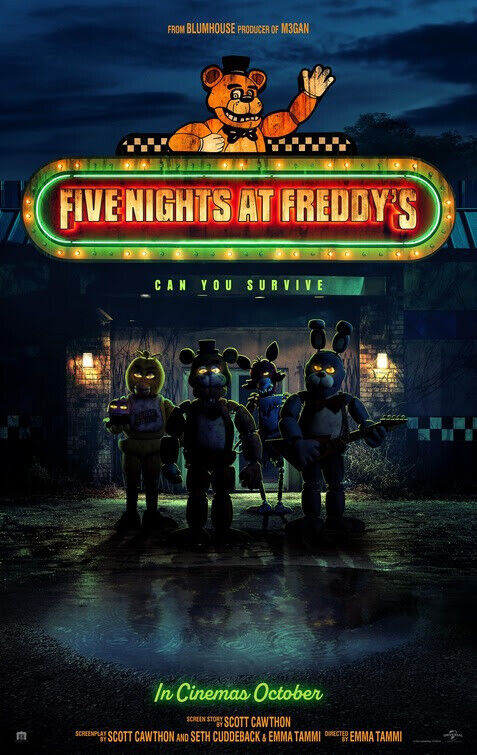
FIVE NIGHTS AT FREDDY’S horror movie review

Fun-filled and creepy! Blumhouse’s Five Nights at Freddy’s is surprisingly good! From the unnerving atmosphere to the practical effects, it’s entertaining and even thoughtful with its exploration of childhood trauma. However, for everything I liked about the movie, I do feel that it should have leaned a little more heavily into Gremlins or Chopping Mall territory because it is a little too serious at times. All in all, the movie is smartly written, with just the right amount of suspension of disbelief. There are even influences of Nightmare on Elm Street and Freddy Krueger’s MO in this movie. If you’re looking for a entertaining time to spend at the cinema on this weekend before Halloween, then you can’t go wrong with Five Nights. After watching the movie, I will now be anticipating Universal Orlando & Hollywood to feature this house at next year’s Halloween Horror Nights.

A troubled security guard begins working at Freddy Fazbear’s Pizzeria. While spending his first night on the job, he realizes the late shift at Freddy’s won’t be so easy to make it through.

I had no idea what to expect since I knew very little about the game. In fact, when I first heard of the game many years ago, I thought it was about the Freddy–Freddy Krueger. Nope. The game is about surviving an abandoned not Chuck-E-Cheese. It’s been probably twenty or more years since I’ve been to a Chuck-E-Cheese–come to think of it–I think the last time I went was when it was known as Showbiz Pizza. When I think of environments and settings that would be naturally creepy whether abandoned or not, Chuck-E-Cheese is one of them. I would imagine that on any given Tuesday night, a Chuck-E-Cheese is unnerving, let alone if it was haunted.

Since I’ve never played the game, I will not be commenting on the translation from interactive media to cinema, but from what I have learned, there is a lot of lore in the game, so I hope that lore is what was brought into the movie version.

Five Nights at Freddy’s benefits from a small cast and few locations. Furthermore, what the movie lacks in the screenwriting department, it makes up for in Emma Tammi’s directing. That’s not to suggest that it is poorly written–quite the contrary–I like how well it was written, given that it’s adapted from a video game and written for (primarily) teens that played the game as kids. Reminds me of a more mature version of Are You Afraid of the Dark? or Goosebumps. As much fun as I had with the movie, I feel that it could’ve used a little more camp in the storytelling–the movie would have benefitted from channeling Gremlins or Chopping Mall to bump up the dark humor and playfulness. The plot is simple and our central character is complex–the recipe for solid cinematic storytelling!

Our central character of Mike (Josh Hutcherson) is relatable, and his behavior feels natural considering the trauma of his younger brother being kidnapped when they were kids. The devastation of the loss of his brother, and later mother and father, has gravely impacted his ability to manage his own life and younger sister (and this is where the movie should’ve made her his daughter because a 20+ year age difference is a little hard to buy). Facing the loss of custody of his little sister to his overbearing, condescending aunt (played by Fried Green Tomatoes‘ Mary Stuart-Masterson), he must survive nights as a security guard at Freddy’s to prove he can care for his little sister. Within the first few minutes of the movie, we have our central character, their external goal, and opposition to the goal. I love when I witness established screenwriting conventions followed–because they work!

While the movie depicts very little on-screen violence and little to no gore, it successfully transfers that fear from the screen into the mind of the audience. That which is suggested in image association or shadow is more terrifying than witnessing it plainly on screen. By keeping most of the violence, death, and gore off-screen, and the adult language to a minimum, this movie works as a gateway horror for older kids and teens that are considering diving into the genre.

The setting is fantastic! I don’t know whether this was an abandoned Showbiz Pizza or Chuck-E-Cheese in real life or not–hope it was–but the setting is ominous and creepy! And because it’s representative of places in real life, it’s easy to imagine ourselves in the same environment. Perhaps it’s not as unnerving as being stalked in your own home like in Halloween or When a Stranger Calls, but there is definitely something naturally scary about being trapped with kids’ toys and animatronic characters at night in a setting haunted by ghosts of its glory days.

I also appreciate the practical effects, puppetry, and character performer costuming in the movie. While I imagine that it’s a combination of CGI and practical, I kept studying the animatronic characters to determine whether it was character performers in costume or of it was exceptionally good CGI–so much so I feel that I could reach out and touch the fur. Had the CGI been overt, then the scares would’ve been far less terrifying as CGI rarely packs the same punch as actors reacting to real props, costuming, and effects.

You’ll not be disappointed if you chose to watch Five Nights at Freddy’s this weekend. Go in with an open mind, and just enjoy a fun horror movie! Don’t overthink it, just be entertained by it!

Ryan teaches Film Studies and Screenwriting at the University of Tampa and is a member of the Critics Association of Central Florida and Indie Film Critics of America. If you like this article, check out the others and FOLLOW this blog! Interested in Ryan making a guest appearance on your podcast or contributing to your website? Send him a DM on Twitter. If you’re ever in Tampa or Orlando, feel free to catch a movie with him.
Follow him on Twitter: RLTerry1 and LetterBoxd: RLTerry

THE EXORCIST: BELIEVER horror movie review

The Exorcist: Caricature. Believer? How’s about unBelievably bonkers. The soulless derivative sequel to the original Friedkin masterpiece manages to be everything and nothing simultaneously. It’s a bastardization of the source material that demonstrates a gross lack of understanding on so many narrative and theological levels. Honestly, this movie could easily be Scary Movie 6.66 because of how unintentionally laughable it is. The characters are flat, the plot is all over the place, the tone is criminally uneven, and it’s disrespectful of the thoughtfulness of the original at every chance it gets. Representation matters. If David Gordon Green did not have plans to respectfully (albeit creatively) represent spiritual warfare and demonic possession, then he should’ve chosen another property to destroy.

When his daughter, Angela, and her friend Katherine, show signs of demonic possession, it unleashes a chain of events that forces single father Victor Fielding to confront the nadir of evil. Terrified and desperate, he seeks out Chris MacNeil, the only person alive who’s witnessed anything like it before.

I saw a comment on Twitter today calling for a petition to keep Green away form the horror genre, and I concur. Other than his surprisingly good Halloween H40, he has proven to be inept when helming a legacy horror project. William Friedkin’s The Exorcist remains the definitive possession film. While Friedkin was critical of the new religious right in the 1970s, he was still respectful of the rite of exorcism; he crafted a cinematic story about loss of innocence, crisis of faith, overcoming fear, the limitations of science, and the obstacles of religious bureaucracy. But at the end of the day, the film was grounded in Christianity wherein we find the rite of exorcism. Similar practices may be observed in other cultures and religions, but if you’re going to depict the rite of exorcism specifically, then the story needs to be respectful of and grounded in Christianity–not become a mockery of.

Ellen Burstyn is completely wasted in this film, and her character is in no way connected to the Chris MacNeil in the original. Last we say her, she underwent a journey of faith, going from someone mostly agnostic to someone that believed in the existence and power of God after the events of the original Exorcist. Now, she has no belief system and is rather laissez fair about faith, exorcism, and the like. She is a character without any conviction, therefore she has no drive and lacks spiritual grounding in any real sense of truth. If what you believe doesn’t matter, then there is no urgency to believe or batter personal demons in order to battle the real demon in the possessed girls. Furthermore, if it really doesn’t matter what one believes than it devalues all belief systems. Just because you don’t believe doesn’t mean it’s any less true. Besides the hodgepodge of MacNeil’s worldview, her character is greatly lacking in any dimension that would even help to hint at some modicum of compelling character.

When a movie tries to be everything to everyone, then it becomes about nothing and is for no one.

The cardboard character profile isn’t limited to Chris MacNeil, all the characters in this movie are lacking in anything that would make them compelling for the audience. I cared not whether any of the characters lived or died. Personally, I would have preferred the demon win and kill all the useless, lifeless characters. Although, that would only interest the nameless demon if the characters (or this film) had a soul. As it stands, the film and characters therein are soulless. Speaking of the demon being nameless, this is in direct conflict with the rite of exorcism. Whether one chooses to believe the demon possession (is incredibly rare but) real, the demon always has to be named, because having the demon’s name gives the exorcist power over the demon. The least Green could have done is give the demon a name. We are led to believe that it may be Pazuzu, because it recognizes MacNeil, but the name is never uttered by any character.

I found the movie unintentionally funny. With a few tweaks, it could have easily been Scary Movie 6.66. The plot and characters are just so unrealistic and ridiculous that the story and experience plays out at comedic proportions. Moments that were supposed to be scary were funny, moments that were supposed to be empowering were ludicrous, and the showdown was something straight out of Avengers: End Game. The Exorcist: Believer is Avengers meets The Rite meets a SyFy Channel original movie. The only meaningful connection this movie has to the original is the name, Ellen Burstyn, and a brief vomit-inducing cameo by Linda Blair. I’ve seen many other possession films that were way more interesting, entertaining, and thoughtful than this one.

Do yourself a favor, and if choose to watch this travesty, you should rewatch the original to cleanse your cinematic spirit of the demon that this movie will force upon you. While I suspected Halloween Horror Nights at Universal Orlando featured the The Exorcist: Believer house as a means to get people interested in the movie, clearly it was a move to compensate for how bad this movie really is. If it wasn’t for the house, I imagine far fewer people would want to see this abysmal use of a legacy intellectual property.

Ryan teaches Film Studies and Screenwriting at the University of Tampa and is a member of the Critics Association of Central Florida and Indie Film Critics of America. If you like this article, check out the others and FOLLOW this blog! Interested in Ryan making a guest appearance on your podcast or contributing to your website? Send him a DM on Twitter. If you’re ever in Tampa or Orlando, feel free to catch a movie with him.
Follow him on Twitter: RLTerry1 and LetterBoxd: RLTerry

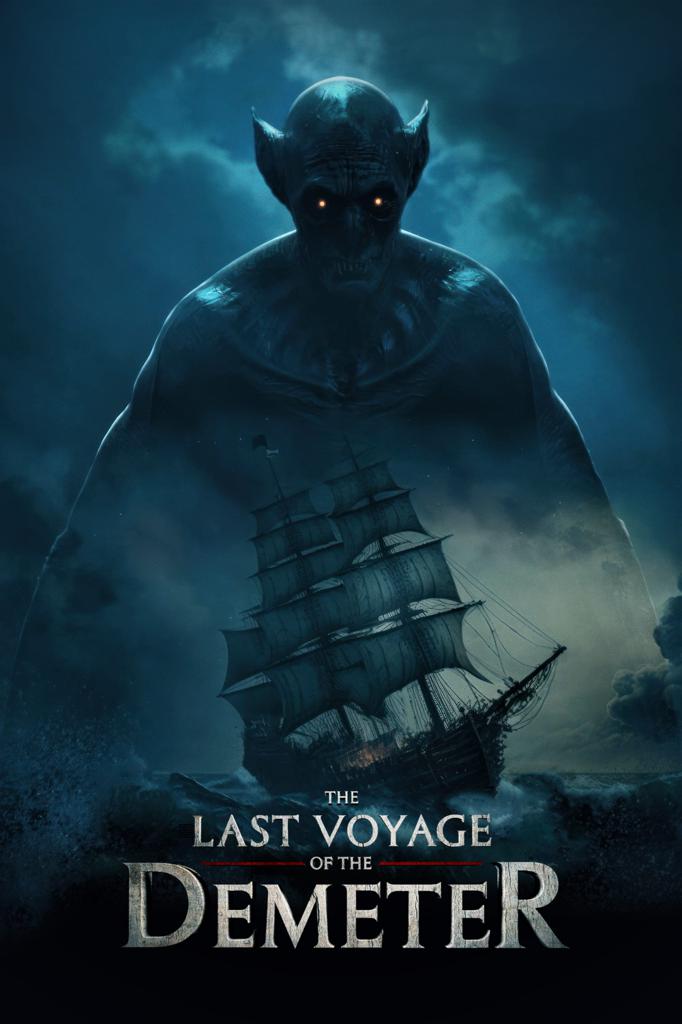
THE LAST VOYAGE OF THE DEMETER horror movie review

Fangtastic! Universal meets Hammer horror in a gothic tale that explores what may have happened on the domed Demeter carrying one thirsty passenger. While seemingly most contemporary horror movies take place in the real world, The Last Voyage of the Demeter transports us back in time to a fantastical world full of sailing vessels, ominous castles, and terrifying folklore. More than a backdrop on which the story unfolds, the atmosphere and sets are characters in and of themselves. If the gothic setting wasn’t enough, the score will certainly wrap you in the nightmare of this movie. If you love classic horror, this is right up your alley as it’s in the same ‘vein’ as such foundational early to mid 20th century horror motions pictures including Nosferatu and Dracula and even late 20th century horror pictures like the original Alien. While it remains to be seen if this is Universal’s second attempt at the defunct Dark Universe, between this movie and the Universal Monsters last at Epic Universe theme park (still under construction), the manner in which this movie ends certainly lends credence to an attempt to revive the dead Dark Universe.

After accepting mysterious cargo from an anonymous customer, the crew of The Demeter experience horrific events aboard the doomed sailing vessel as it makes it way from the harbors beneath the Carpathian Mountains to London.

Neither Bram Stoker, F.W. Murnau, nor Carl Laemmle included much information on the doomed voyage of the Demeter after it left the harbor beneath the Carpathian Mountains. All we know is that mysterious cargo (which we know is the coffin and/or dirt belonging to Count Dracula/Orlak) is dropped off and only the ghost of a ship arrives in London. And that’s the beauty of this movie, the filmmakers only needed to begin and end in the right places. Therefore, everything that unfolds on the ship is pure speculation and imagination. When adapting an existing IP, this is how it should be done. And while this is the best example in recent years of how to find new stories within an existing IP, Disney did something similar with Rogue One, which is my favorite in the Disney Wars movie universe.

We already know The Demeter and crew aboard are doomed, so the charm or terror in this movie isn’t what’s ultimately going to happen–rather–how is it going to happen. And director André Øvredal and writer Bragi Schut Jr. do an excellent job at making the events captivating and even surprising. No one is safe on the sailing cargo vessel, and I do mean no one. Our storytellers craft a narrative that is completely inspired by the past writings and movies yet it takes the story of Dracula to new levels, most of which I appreciate, though there are some elements of the story that I feel are not in line with established vampire lore.

Without getting into spoilers, it’s difficult to discuss what I would like to bring to to the discourse; however, I’d be remiss if I didn’t convey that there is a character we know from nearly all iterations of Dracule or Nosferatu that appears to be setup, but it’s never delivered. Without knowing the direction Universal is going with this movie, I must say that this was a missed opportunity to organically bring this character into what appears to be a relaunch of the Dark Universe.

Both Universal and Hammer horror are being channeled in this newest Dracula movie! You have the gothic stylings of early Universal horror coupled with the amped violence of Hammer horror. Working together, this two distinctly stylistic expressions of horror are used effectively in the crafting of the aesthetic and tone of this movie. Further evidence of the inspiration taken from early Universal and Hammer horror can be witnessed in the haunted house upon the sea concept. I am also reminded of Alien when I think of the setting, the claustrophobia, and the no escape dynamics of this movie. In Alien, it was a Xenomorph in space where “no one can hear you scream,” except we are in a sailing vessel at sea where no one can hear you scream.

As a huge horror fan, especially of the classics, I am eager to see where this movie takes Universal horror. Usually, I am not a fan of starting a franchise (when it is intentionally started), but this movie demonstrates that Universal may have learned its lesson from the failed launch of the last Dark Universe. I definitely see potential in this return to classic Universal monsters, and am along for the ride.

Ryan teaches Film Studies and Screenwriting at the University of Tampa and is a member of the Critics Association of Central Florida and Indie Film Critics of America. If you like this article, check out the others and FOLLOW this blog! Interested in Ryan making a guest appearance on your podcast or contributing to your website? Send him a DM on Twitter. If you’re ever in Tampa or Orlando, feel free to catch a movie with him.
Follow him on Twitter: RLTerry1 and LetterBoxd: RLTerry

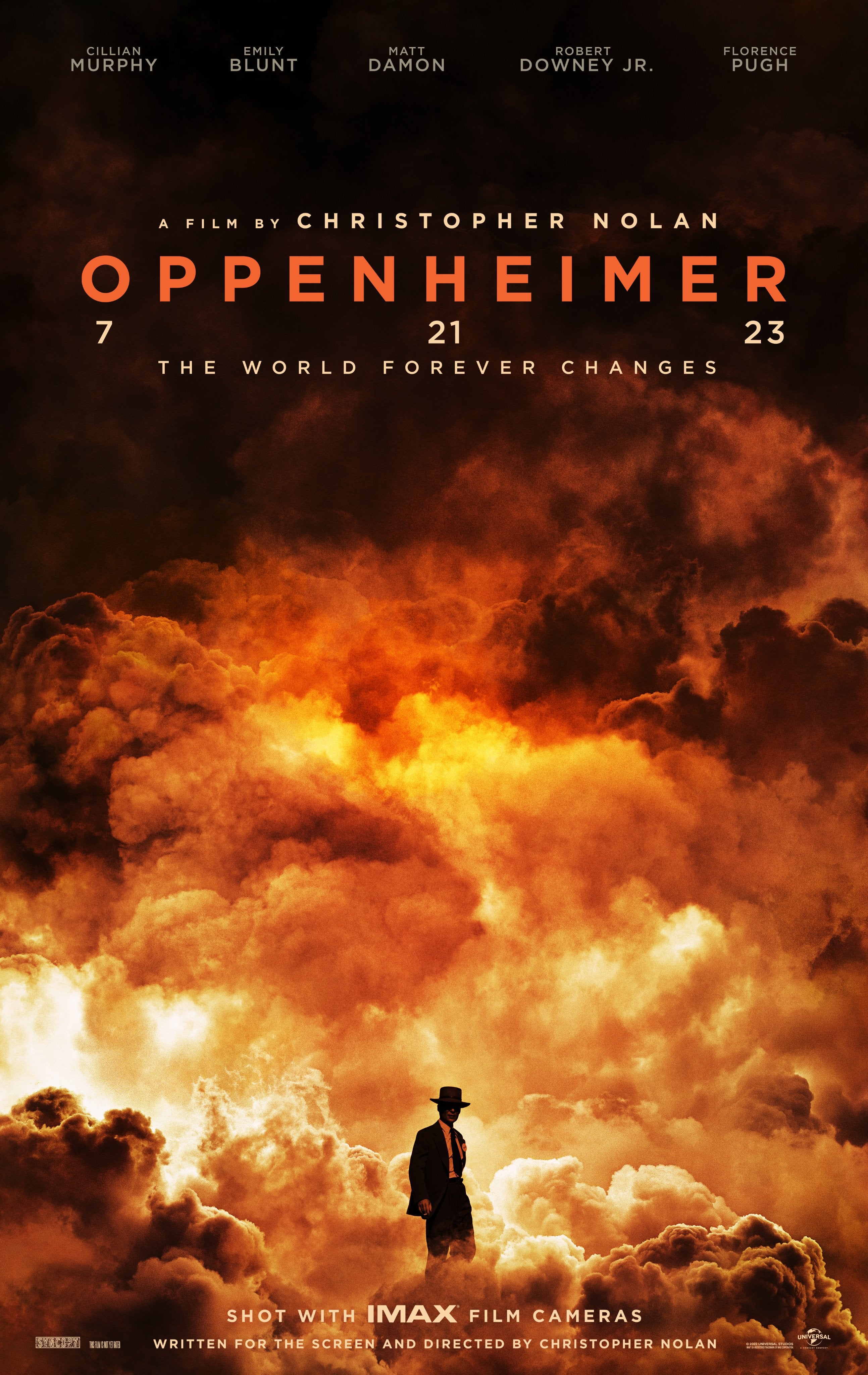
OPPENHEIMER film review

Sensational! Christopher Nolan’s highly anticipated cinematic spectacular Oppenheimer is an extraordinary motion picture that delivers a story as explosive as the subject matter. Not since Nolan’s earlier work on pictures such as Memento and The Prestige have I enjoyed both the form and function of his stylistic brand of filmmaking. Although the film chronicles the development, use of, and subsequent scientific and sociological affects of the A-Bomb, the story it really about the rise and fall of J. Robert Oppenheimer. Moreover, the subtext of the story is one that carries with it such commentary as the true cost of notoriety and serving one’s country and the destructive nature of unsubstantiated witch hunts. It’s a character-driven story more than it is a plot-driven story about the creation of the A-Bomb.

Oppenheimer is the story of American scientist J. Robert Oppenheimer and his role in the development of the atomic bomb. The film explores how one man’s brilliance, hubris, and relentless drive changed the nature of war forever, led to the deaths of hundreds of thousands of people and unleashed mass hysteria, and how, subsequently, the same man’s attempts to end one World War began a Cold War that would last for nearly fifty years.

While I have some reservations in the structural integrity of Nolan’s plotting in this film, which no strangers to my blog should know since that is often where I am hardest on films, his plotting and characterization hasn’t been this strong since Memento and The Prestige.

It should come of no surprise that Nolan’s latest motion picture excels in technical achievement. And I am not mentioning that to in anyway detract from that achievement; but, I mention that because had the film simply been an exercise in pushing the boundaries of filmmaking, then it would be another intentionally avant-garde vanity project. Which, it is not. Oppenheimer excels in both form and function; it shows care for both how the motion picture is montaged and presented and for the function of both plot and character.

With few exceptions, whether the plotting of a film is linear or non-linear, the plot should still follow foundational storytelling conventions to achieve the full impact it desires. Contrary to a postmodernist view of rules of art, just because one breaks the rules does not mean that a work of art or endeavor is somehow more substantive or meaningful in value. Nolan strikes a fantastic balance between form and function in this picture to completely transport audiences to the world of Los Alamos, NM in the mid-20th century.

Not since Dario Argento’s masterpiece Suspiria have I witnessed a motion picture employ the use of lighting, color (or lack thereof), and score to such a fantastical and effective level. These visual and auditory elements combine to immerse audiences in both the narrative and emotive dimensions of Oppenheimer’s story. Never overshadowing the story, but working in tandem with it, the visual and audible elements of the mise-en-scene craft a picture that simultaneously feels part of our world and yet somehow other worldly. Moreover, the story of Oppenheimer is told through both subjective and objective camera placement. In less experienced hands, this could have proven to be disastrous, but Nolan demonstrates his command of the screen in the uncanny combination of both.

One of the most stylistic montage and editing devices used is the black and white (more accurately described as grayscale) imagery for a specific timeline. And it would appear to my observation that it is indeed grayscale stock film–not desaturated in post-production. This observation is in part gleaned by way of the effects of lighting on the film stock. From a story organization perspective, this use of grayscale film stock helps in understanding the part of the non-linear timeline in which we find ourselves.

Where Nolan often struggles is in character authenticity. More times than not, the characters in his films are often lacking in believability, relatability, and vulnerability. Not that his characters are generally flawless, but they have demonstrated a lack in that which makes us most human. Each and every character in this film feels incredibly human–true to life. Whether or not the film is an accurate representation of the real-life counterparts, is not something on which I can comment. But, the characters, as presented, are relatable and feel authentic within their world. On the topic of characters, Nolan also injects humor into this film, which isn’t characteristic of his past films; and that use of humor helps to provide tension relief as an emotional reset between dramatic beats or scenes.

The central theme in the film is the true cost of notoriety and serving one’s country. And this is expressed primarily through Oppenheimer’s relationship with the development of the A-Bomb, but supplemented by his interactions with Albert Einstein, and therein Einstein’s relationship with his Theory of Relativity and success as the greatest scientific mind of all time. Or, as Oppenheimer puts it, “the greatest scientific mind of his day.” The story has to be seen to truly felt, but Oppenheimer spotlights how when one’s usefulness is seen as exhausted or no longer relevant to one’s country, that one is disposable.

We not only witness this in the film, but in real life as well. To this day, there are those that fought for their country that are not treated with the dignity and respect they both earned and deserve. The film paints a rather negative portrait of federal government operations as it relates to international and domestic policies. Suffice it to say, after Oppenheimer delivered the A-Bomb, he was soon thereafter cast aside as his (objectively reasonable) opposition to further development of weapons of mass destruction began to influence policy decisions. And this rise and fall story isn’t relatable to merely the government, but can be said of any company or organization that hails one as a visionary one minute, but after the project is realized, the same company or organization moves on. Fame is fleeting.

While many brilliant scientists were undoubtedly envious of Oppenheimer’s commercial success (except for Einstein, whom was a soothsayer of sorts), perhaps the rise and fall of Oppenheimer serves as a reminder that there are many whom have had notoriety forced upon them, but the oft infamy that follows can create a figurative prison out of which there is no escape.

Another observation I make, into the film’s themes and motifs, is the depiction of communism vs capitalism. Unfortunately, the loudest on social media do not likely have an accurate interpretation of what communism and capitalism are. And without getting into details, suffice it to say, the film does not accurately portray either communism or capitalism. So, I worry that many will watch the movie and begin to make connections and associations that are not accurate. On the topic, I’ll leave you with this: destructive ideologies that devalue individuality, based in universal truth and logic, in exchange for group identity based on emotions and impossible utopias is still an enemy of the people today.

This film is not to be missed on the biggest screen AND on 70mm film. Seeing a picture on film is truly magical. The depth lighting and shadow and richness of the color spectrum will always be expressed the best on celluloid. A chemical reaction beats 0s and 1s any day. Oh, and there is no reported use of CGI in this motion picture.

Ryan teaches Film Studies and Screenwriting at the University of Tampa and is a member of the Critics Association of Central Florida and Indie Film Critics of America. If you like this article, check out the others and FOLLOW this blog! Interested in Ryan making a guest appearance on your podcast or contributing to your website? Send him a DM on Twitter. If you’re ever in Tampa or Orlando, feel free to catch a movie with him.

Follow him on Twitter: RLTerry1 and LetterBoxd: RLTerry