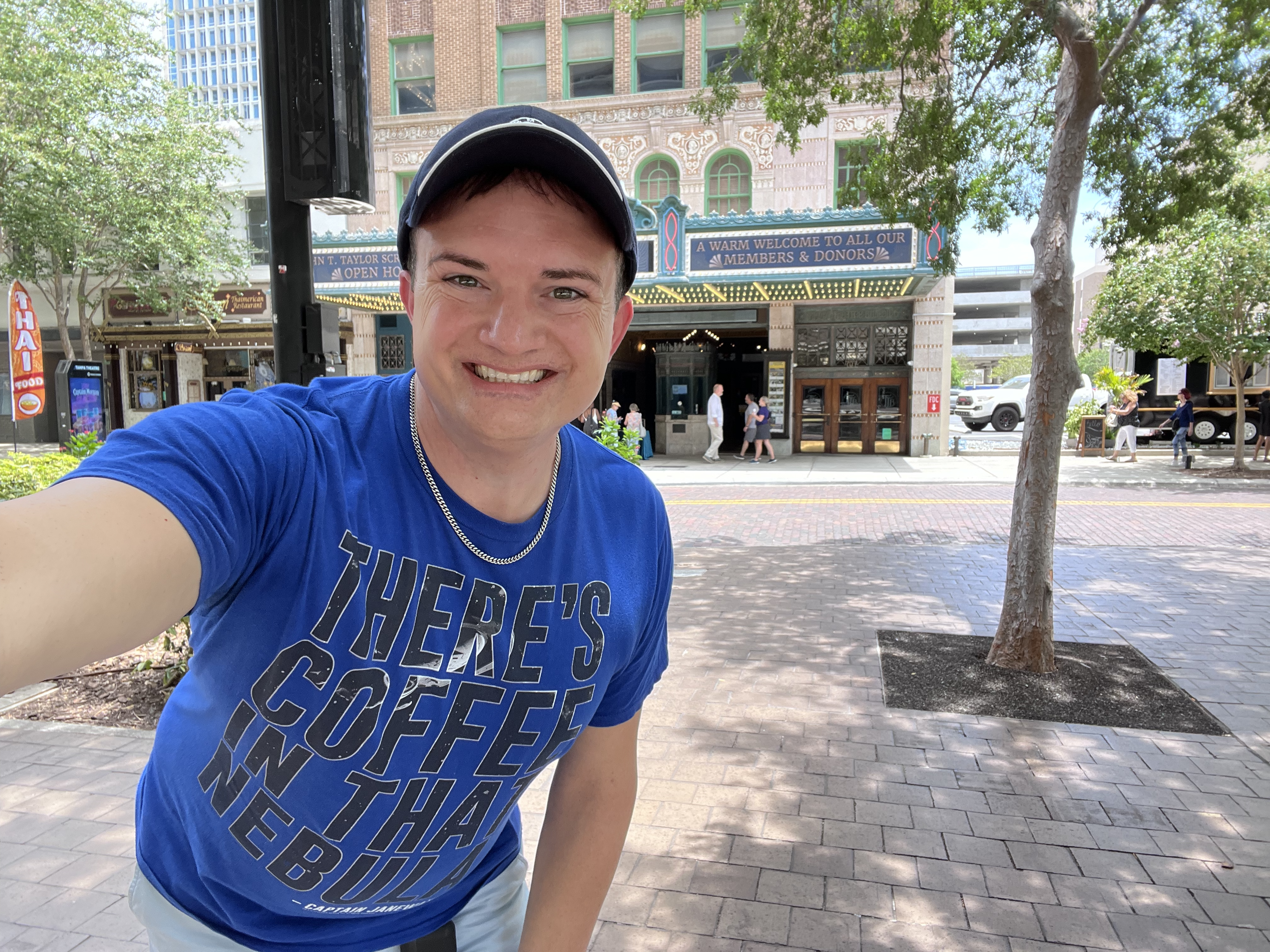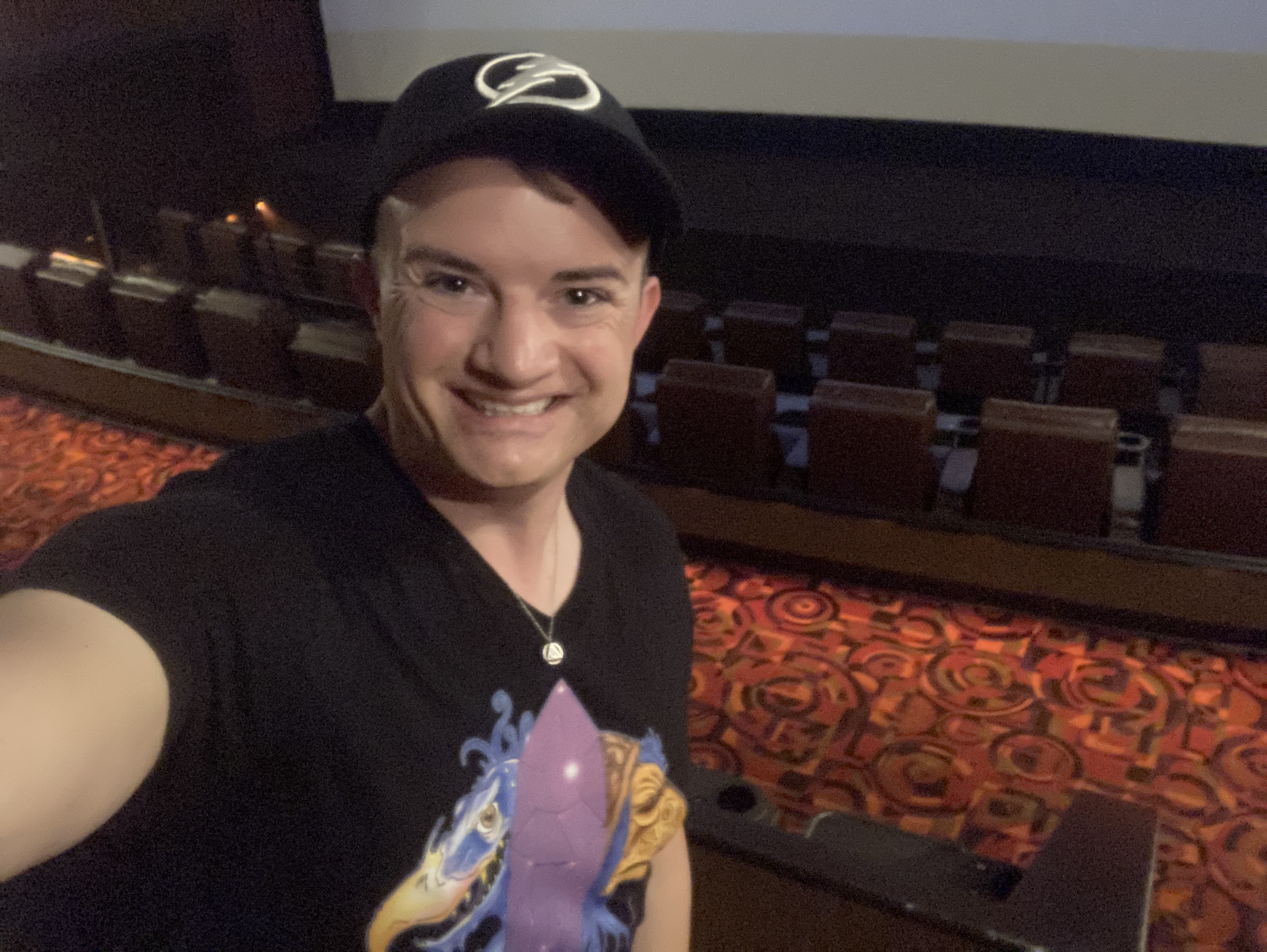
TWISTERS movie review

Plot chasers. Despite the great chemistry between the leads of Daisy Edgar-Jones and Glen Powell, this cinematic storm is lacking the necessary elements in both thoughtful plotting and character development to form a compelling story. And while most of the special effects are excellent, it comes off feeling like one long storm chase. If it wasn’t for Edgar-Jones and Powell, I’d just as soon watch the Weather Channel instead. Twisters tries to be too many different kinds of stories, and isn’t successful at any one of them. There is an attempt at underscoring the outside-action narrative(s) with a heart-felt inside-emotional story, but even that isn’t fully developed. While there are some well-written scenes that will pique your interest, aside from the disaster porn dimension of the movie, there isn’t much here of any great interest.

Haunted by a devastating encounter with a tornado, Kate Cooper (Edgar-Jones) gets lured back to the open plains by her friend, Javi, to test a groundbreaking new tracking system. She soon crosses paths with Tyler Owens (Powell), a charming but reckless social-media superstar who thrives on posting his storm-chasing adventures. As storm season intensifies, Kate, Tyler and their competing teams find themselves in a fight for their lives as multiple systems converge over central Oklahoma.

The lack of a compelling narrative has far less to do with Lee Isaac Chung’s directing than it does Mark L. Smith’s screenwriting. No real surprise there since his other recent screenwriting credit is The Boys in the Boat, which also suffered from poor plotting and character development. While Joseph Koskinki receives a story-by credit, clearly he has demonstrated that he is a much better director (Top Gun: Maverick) than he is a writer. Both Twisters and The Boys in the Boat have a compelling story to tell, but the plotting itself (the map of how you get from beginning to end) lacks meaningful direction or focus. The movie sets up one story of overcoming trauma, then becomes a white collar vs blue collar story, then turns into a story about storm profiteering, which morphs into a melodrama about overcoming fear and guilt, just to finish as a romcom. All the while, the external goal of the story, which is setup successfully in the beginning, doesn’t get revisited and become clear until the third act. There is about as much narrative depth in Twisters as any given episode of Storm Chasers. Where is will give Smith, Kosinski, and Chung credit is that they didn’t choose to make this a “preachy” movie about ecoterrorism or climate change. Sometimes bad storm just happen. And that’s what makes them scary; there is no explanation.

Even though the themes of the movie are not very well developed, I like that Smith was trying to do with the subtext of the movie. Without getting into spoilers, there is an attempt at spotlighting how some people that appear that they are trying to help storm victims are actually more interested in profiting off the disaster. Which, I imagine does happen in real life. The movie also has something to say (and this was actually pretty well developed) about not judging the level of competence or motivation based on face-value or first impressions. The very people that look unprofessional may be even more professional and genuine than the ones that appear like they have it all together.

Other than some badly CG’d dandelion fuzz (which should’ve been done practically, c’mon). the rest of the special effects in the movie are excellent. Okay, so maybe excellent is being a bit generous, but I’m trying to give the film some credit for not putting me to sleep. I screened the film in Dolby Cinema, which is the best way to watch this movie because aside from the chemistry between the leads, the reason to watch this movie is for the storms and disaster porn thereof. Perhaps the story is on SyFy or Weather Channel levels, but the storm effects are executed very well. I was disappointed that we did not get a flying cow as a nod to one of the most memorable moments in the wildly popular original Twister. It’s well-known that the first movie literally built and destroyed houses to achieve the full effect and impact of the tornadoes, and it appears that Twisters used miniatures and models for some of the disaster scenes. Practical beats CGI nearly all the time. Also like the first movie, this one also appeared to integrate real footage of tornadoes and the disaster left in their wake.

The force that keeps this movie from falling completely apart is the chemistry between our leads of Daisy Edgar-Jones and Glen Powell. Playing Kate and Tyler, respectively, there is a throwback style (almost romcom-like) romance between the two in the vein of “will they, won’t they.” Even though Kate is our central character, it’s Tyler that receives more thoughtful development. Kate is largely the same from beginning to end, despite a great setup for overcoming trauma and guilt. Both of these characters (and their respective actor) keep this movie from falling completely flat. The playful chemistry between the two gives the film a human dimension that it is sorely lacking otherwise. Moreover, I like the fact that the budding romance between the two did not become the focus of the movie, but it certainly adds to the film in a constructive way. Both Edgar-Jones and Powell have an old-school charm that feel refreshing to see in contemporary cinema.

Whether or not you have recently rewatched the first movie, you can confidently go into this movie knowing all you need to know. There is little, if any, connection to the original 1996 blockbuster. For those that are super fans of the original, I imagine there are more nods to the first movie than that which I identified. If you’re looking for movie this summer to escape the heat with the whole family, then this is a good pick, but don’t expect much more than a mildly entertaining couple of hours.

Ryan teaches Film Studies and Screenwriting at the University of Tampa and is a member of the Critics Association of Central Florida and Indie Film Critics of America. If you like this article, check out the others and FOLLOW this blog! Interested in Ryan making a guest appearance on your podcast or contributing to your website? Send him a DM on Twitter. If you’re ever in Tampa or Orlando, feel free to catch a movie with him.

Follow him on Twitter: RLTerry1 and LetterBoxd: RLTerry
THE FALL GUY action movie review

Explosive fun! Universal Pictures The Fall Guy is one wild ride that connects with audiences! The thoughtful blend of self-referential humor and over-the-top, if not cheesy, action sequences work in tandem to entertain and thrill audiences. At the heart of this movie is a throwback-style romcom that is destined to warm even the most cynical of hearts. Moreover, this action-picked motion picture serves to spotlight the unsung heroes of many movies, the stunt performers, without whom we would not have the high stakes, death defying action sequences that we have today. And not just today, stunt performers have played a significant role in filmmaking since the beginning. The Fall Guy is a lively movie that whisks you off for the ride of your life that stumbles a little along the way, but sticks the landing.

After leaving the business one year earlier, battle-scarred stuntman Colt Seavers springs back into action when the star of a big studio movie suddenly disappears. As the mystery surrounding the missing actor deepens, Colt soon finds himself ensnared in a sinister plot that pushes him to the edge of a fall more dangerous than any stunt.

Such a crowd-pleasing cinematic spectacle! The summer blockbuster season is off to a strong start with this bombastic movie. Since I rarely watch trailers, I was unsure of what to expect, but I had a delightful time with this movie. The humor is mostly character-driven, but there are slapstick moments and almost camp-levels of action sequences that also serve as fuel for laughter. It’s a fun, popcorn flick that makes you laugh and smile all while being enthralled by the high-octane action. Some action movies that are devoid of humor or a romantic subplot can feel exhausting or shallow. Not the case with this one! This is both due to the strong writing and performative dimension.

More than an action/romcom, it also serves as a backstage movie, because of being set on a film set. And even more specifically, the technical achievement by camera operators, special effects technicians, and stunt performers. The movie spotlights the real danger that stunt performers face on set and the innate risks that come with this under-appreciated line of work. There is a human dimension to stunt work that so often goes overlooked, and The Fall Guy demonstrates the intrinsic value of stunt work and the real people that push their bodies to the limit to achieve action with dimension instead of simulated action in a computer.

The characters and the performances thereof elevate the entertainment value of the movie. Which is an important element because the screenplay does falter here and there from poor pacing. Some scenes are a little longer than they need to be while others are perhaps a little shorter than what they ought to be, which impacts the effectiveness of the exposition. But where the screenplay struggled, the cast makes up for the shortcomings! That’s not to say it’s a poorly written movie; quite the contrary, it’s mostly solidly written, just stumbles here and there. Emily Blunt and Ryan Gosling demonstrate excellent chemistry, and their relationship mountains and valleys feel genuine. They both share fantastic comedic and dramatic timing that crafts characters with dimension.

There is one particular line, that many may interpret as a throwaway or lacking in significant value, that I feel compelled to highlight. A character at a club states something to the effect of “movies try to be real, whilst cartoons know they aren’t real.” And the character prefers cartoons for that reason. This line was smartly written and delivers a important if not self-referential (or meta) message. Very little about The Fall Guy is supposed to feel real; it’s supposed to look like a fantasy set in the real world. What the movie is, is naturalistic. Everything happening in this film feels at home within the world of the movie. And yes, many, if not most, contemporary movies try so hard to not look fake or unbelievable. When movies should feel comfortable to take us to unbelievable heights to thrill us with entertaining, heart-warming, or scary stories. Being realistic is vastly overrated. There is a time and a place for it, but movies like The Fall Guy remind us of the value of a good story, regardless if it feels realistic in the real world.

Ryan teaches Film Studies and Screenwriting at the University of Tampa and is a member of the Critics Association of Central Florida and Indie Film Critics of America. If you like this article, check out the others and FOLLOW this blog! Interested in Ryan making a guest appearance on your podcast or contributing to your website? Send him a DM on Twitter. If you’re ever in Tampa or Orlando, feel free to catch a movie with him.

Follow him on Twitter: RLTerry1 and LetterBoxd: RLTerry
ABIGAIL horror movie review

Fangtastic! Universal Pictures’ Abigail is a wildly entertaining, classically-inspired horror movie that you can really sink your teeth into. It delivers old school vampire movie elements with a contemporary sensibility. Ostensibly, it’s the metaphoric child of Dracula (1931) and The Horror of Dracula (1958). From beginning to end, the terror and laughter continually draw you into the story. Tonally, it strikes a great chord. The narrative never takes itself too seriously; however, it never devolves into parody either. It’s an effective blend of the atmosphere and music of an old school Universal monster picture and the increased gore of Hammer studios. Underscoring the blood-curdling outside/action story is an internal story with a redemptive message and even a little heart.

A group of would-be criminals kidnaps the 12-year-old daughter of a powerful underworld figure. Holding her for ransom in an isolated mansion, their plan starts to unravel when they discover their young captive is actually a bloodthirsty vampire.

From the moment the film opens, I was hooked! It opens with a solitary ballerina gracefully dancing on the stage in an empty auditorium; but what makes this scene particularly alluring is the original Dracula score (selections from Tchaikovsky’s Swan Lake) underscoring the entire opening sequence. It’s a deceptively simple scene that draws us into the beauty of the dance and music. Not only does the iconic music play at the beginning, but variations of it serve as a significant part of the movie’s score. This scene could be made greyscale, and edited to look like it was shot on 1930s 35mm film stock, and I’d almost buy that it was shot nearly 100 years ago.

While the movie may start out in the city, it doesn’t take long to venture into the countryside where a foreboding Tudor style estate serves as the main location for the events of the film. Again, Abigail is channeling Universal’s roots in classic horror by placing our relatively small cast in an isolated expansive estate that could’ve very well been used in a Carl Laemmle/James Whale motion picture. All that was missing was the eerie setting being draped in a dense fog rolling off the moors. As the characters wander through the imposing countryside mansion, the movie effectively established the rules by which the film will live by as it delivers its screamtastic narrative.

Without getting into plot specifics, I can tell you that it’s a simple plot with complex characters–so the best kind of cinematic story! Each and every character is sufficient developed, and quickly. The movie wastes no time at any point. It’s a lean, mean script that snaps, crackles, and pops. Not only is the world build, complete with rules, but the logic of the movie follows the rules and boundaries that it setup for itself during the first act. And while the movie does adhere to many classic vampire tropes, it also subverts some expectations. But not too many. There is one, in particular, to which I feel that it should’ve adhered but identified a way around it for dramatic purposes. But otherwise, I like that it pretty much stuck to the vampire playbook that has been used since Bram Stoker penned the seminal novel.

While there is a lot of blood, I wouldn’t say that it is a particularly violent picture. When the violence and gore hit–they hit–but it’s not gratuitous to the point of exhaustion from the visceral gore and projectile blood. I’d say it’s along the lines of Ready or Not levels of violence/gore. It’s never delivered in a manner that feels disturbing or disgusting; like with the tone, there is a consistent tongue-in-cheeky quality in the fighting or kill scenes. There are some fantastic skills and scenes that I hope make their way into the HHN (Halloween Horror Nights) house that this movie is destined to become this year or next.

the comedy is effectively delivered scene after scene. There is a great combination of humorous dialogue and visually-driven humor. Lots of hilarious image juxtapositions and an over-the-top quality to much of what is experienced. The movie is full of exaggerations, twists, and reversals. Whether the punchline is delivered in an argument or a sight gag, it’s done incredibly well by writers and directors that care. There is one scene that I particularly enjoyed, and it’s the vampire dancing with a headless corpse to the Dracula score. It’s just so ridiculous that you will undoubtedly laugh!

Despite the wildly entertaining qualities of this movie, it is not without some heart. One of the characters learns that constantly feeling like the victim of their circumstances is not constructive, and sometimes the best thing to do is move forward, freeing oneself from the prison of victimization. It was a nice touch that didn’t feel forced, but rather earned by the character.

You don’t want to miss seeing Abigail on the big screen, because the experience will not be the same at home. If you’re a fan of both Universal and Hammer horror, then you’ll want to make sure to watch Abigail in cinemas.

Ryan teaches Film Studies and Screenwriting at the University of Tampa and is a member of the Critics Association of Central Florida and Indie Film Critics of America. If you like this article, check out the others and FOLLOW this blog! Interested in Ryan making a guest appearance on your podcast or contributing to your website? Send him a DM on Twitter. If you’re ever in Tampa or Orlando, feel free to catch a movie with him.

Follow him on Twitter: RLTerry1 and LetterBoxd: RLTerry
ARGYLLE movie review

A perfectly choreographed espionage action movie with a dash of whimsy! Matthew Vaughn delivers a wildly entertaining genre-bending spy movie that simultaneously subverts and satisfies expectations for enigmatic espionage movies. Written by Jason Fuchs, Argylle delivers that metaphoric roller coaster ride that we love in this genre-blend. Bryce Dallas Howard shines opposite the gritty-charm of Sam Rockwell in the lead roles, and they are surrounded by an all-star cast of supporting characters. And that technicolor-spectacular sequence at the end is clearly inspired by the dance scenes from Romy and Michele’s High School Reunion and Dirty Dancing. One part fish-out-of-water and another part reluctant hero, this movie is just the thing to start February off with a blast at the cinema.

Reclusive author Elly Conway (Howard) writes best-selling espionage novels about a secret agent named Argylle who’s on a mission to unravel a global spy syndicate. However, when the plots of her books start to mirror the covert actions of a real-life spy organization, the line between fiction and reality begin to blur.

As entertaining as the movie is, we do not actually know the significance of the content in the secret file(s) nor do we know why our heroes must send the files to the former head of the CIA; however, the movie is so much fun to watch, that it almost doesn’t matter–though, I am a little bothered that I was not informed as to the point of the whole sequence of missions, duplicitous relationships, and endless masquerades. But ultimately, Vaughn uses the power of declaration to state that the object to be retrieved is in fact important. And for what it’s worth, that’s all that really matters in this light-hearted espionage action movie.

Much of the movie exists in that liminal space between reality and fantasy, wherein so many authors find themselves as they create compelling characters and craft enigmatic plots to thrill the reader. A well-written character speaks with their own voice and metaphorically take on a life of their own. I appreciate how we are placed in a subjective point of view throughout the move so we can experience the unfolding story from Elly Conway’s perspective. Moreover, the film also has something substantive to say on art as a reflection of life. Writers of all types often take inspiration from their own lives, and mold it to fit the type of story they want to write. We also see this in subject matter experts as authors of fictional stories based on their real life work or inspired by the nature of their work. Whether or not Vaughn and Fuchs intentionally gave Argylle this depth is neither here nor there, the point is that there are opportunities here to closely read the film as a commentary on an artists relationship with their art.

Without getting into spoilers, it’s difficult to talk about too much (this is a spy movie after all) of the plot. Suffice it to say, this movie has some wild twists and turns, reversals, and reveals, but they all feel grounded in the reality of the world that has been created for us on the screen. I appreciate the movie’s foundation in classical story structure, because it allows for character complexities to be revealed through simple plotting–simple plot, complex characters.

If you enjoyed The Beekeeper, then you will also enjoy Argylle. While the former is the stronger movie, I must say that Argylle‘s whimsical nature makes it equally as entertaining.

Ryan teaches Film Studies and Screenwriting at the University of Tampa and is a member of the Critics Association of Central Florida and Indie Film Critics of America. If you like this article, check out the others and FOLLOW this blog! Interested in Ryan making a guest appearance on your podcast or contributing to your website? Send him a DM on Twitter. If you’re ever in Tampa or Orlando, feel free to catch a movie with him.

Follow him on Twitter: RLTerry1 and LetterBoxd: RLTerry

OPPENHEIMER film review

Sensational! Christopher Nolan’s highly anticipated cinematic spectacular Oppenheimer is an extraordinary motion picture that delivers a story as explosive as the subject matter. Not since Nolan’s earlier work on pictures such as Memento and The Prestige have I enjoyed both the form and function of his stylistic brand of filmmaking. Although the film chronicles the development, use of, and subsequent scientific and sociological affects of the A-Bomb, the story it really about the rise and fall of J. Robert Oppenheimer. Moreover, the subtext of the story is one that carries with it such commentary as the true cost of notoriety and serving one’s country and the destructive nature of unsubstantiated witch hunts. It’s a character-driven story more than it is a plot-driven story about the creation of the A-Bomb.

Oppenheimer is the story of American scientist J. Robert Oppenheimer and his role in the development of the atomic bomb. The film explores how one man’s brilliance, hubris, and relentless drive changed the nature of war forever, led to the deaths of hundreds of thousands of people and unleashed mass hysteria, and how, subsequently, the same man’s attempts to end one World War began a Cold War that would last for nearly fifty years.

While I have some reservations in the structural integrity of Nolan’s plotting in this film, which no strangers to my blog should know since that is often where I am hardest on films, his plotting and characterization hasn’t been this strong since Memento and The Prestige.

It should come of no surprise that Nolan’s latest motion picture excels in technical achievement. And I am not mentioning that to in anyway detract from that achievement; but, I mention that because had the film simply been an exercise in pushing the boundaries of filmmaking, then it would be another intentionally avant-garde vanity project. Which, it is not. Oppenheimer excels in both form and function; it shows care for both how the motion picture is montaged and presented and for the function of both plot and character.

With few exceptions, whether the plotting of a film is linear or non-linear, the plot should still follow foundational storytelling conventions to achieve the full impact it desires. Contrary to a postmodernist view of rules of art, just because one breaks the rules does not mean that a work of art or endeavor is somehow more substantive or meaningful in value. Nolan strikes a fantastic balance between form and function in this picture to completely transport audiences to the world of Los Alamos, NM in the mid-20th century.

Not since Dario Argento’s masterpiece Suspiria have I witnessed a motion picture employ the use of lighting, color (or lack thereof), and score to such a fantastical and effective level. These visual and auditory elements combine to immerse audiences in both the narrative and emotive dimensions of Oppenheimer’s story. Never overshadowing the story, but working in tandem with it, the visual and audible elements of the mise-en-scene craft a picture that simultaneously feels part of our world and yet somehow other worldly. Moreover, the story of Oppenheimer is told through both subjective and objective camera placement. In less experienced hands, this could have proven to be disastrous, but Nolan demonstrates his command of the screen in the uncanny combination of both.

One of the most stylistic montage and editing devices used is the black and white (more accurately described as grayscale) imagery for a specific timeline. And it would appear to my observation that it is indeed grayscale stock film–not desaturated in post-production. This observation is in part gleaned by way of the effects of lighting on the film stock. From a story organization perspective, this use of grayscale film stock helps in understanding the part of the non-linear timeline in which we find ourselves.

Where Nolan often struggles is in character authenticity. More times than not, the characters in his films are often lacking in believability, relatability, and vulnerability. Not that his characters are generally flawless, but they have demonstrated a lack in that which makes us most human. Each and every character in this film feels incredibly human–true to life. Whether or not the film is an accurate representation of the real-life counterparts, is not something on which I can comment. But, the characters, as presented, are relatable and feel authentic within their world. On the topic of characters, Nolan also injects humor into this film, which isn’t characteristic of his past films; and that use of humor helps to provide tension relief as an emotional reset between dramatic beats or scenes.

The central theme in the film is the true cost of notoriety and serving one’s country. And this is expressed primarily through Oppenheimer’s relationship with the development of the A-Bomb, but supplemented by his interactions with Albert Einstein, and therein Einstein’s relationship with his Theory of Relativity and success as the greatest scientific mind of all time. Or, as Oppenheimer puts it, “the greatest scientific mind of his day.” The story has to be seen to truly felt, but Oppenheimer spotlights how when one’s usefulness is seen as exhausted or no longer relevant to one’s country, that one is disposable.

We not only witness this in the film, but in real life as well. To this day, there are those that fought for their country that are not treated with the dignity and respect they both earned and deserve. The film paints a rather negative portrait of federal government operations as it relates to international and domestic policies. Suffice it to say, after Oppenheimer delivered the A-Bomb, he was soon thereafter cast aside as his (objectively reasonable) opposition to further development of weapons of mass destruction began to influence policy decisions. And this rise and fall story isn’t relatable to merely the government, but can be said of any company or organization that hails one as a visionary one minute, but after the project is realized, the same company or organization moves on. Fame is fleeting.

While many brilliant scientists were undoubtedly envious of Oppenheimer’s commercial success (except for Einstein, whom was a soothsayer of sorts), perhaps the rise and fall of Oppenheimer serves as a reminder that there are many whom have had notoriety forced upon them, but the oft infamy that follows can create a figurative prison out of which there is no escape.

Another observation I make, into the film’s themes and motifs, is the depiction of communism vs capitalism. Unfortunately, the loudest on social media do not likely have an accurate interpretation of what communism and capitalism are. And without getting into details, suffice it to say, the film does not accurately portray either communism or capitalism. So, I worry that many will watch the movie and begin to make connections and associations that are not accurate. On the topic, I’ll leave you with this: destructive ideologies that devalue individuality, based in universal truth and logic, in exchange for group identity based on emotions and impossible utopias is still an enemy of the people today.

This film is not to be missed on the biggest screen AND on 70mm film. Seeing a picture on film is truly magical. The depth lighting and shadow and richness of the color spectrum will always be expressed the best on celluloid. A chemical reaction beats 0s and 1s any day. Oh, and there is no reported use of CGI in this motion picture.

Ryan teaches Film Studies and Screenwriting at the University of Tampa and is a member of the Critics Association of Central Florida and Indie Film Critics of America. If you like this article, check out the others and FOLLOW this blog! Interested in Ryan making a guest appearance on your podcast or contributing to your website? Send him a DM on Twitter. If you’re ever in Tampa or Orlando, feel free to catch a movie with him.

Follow him on Twitter: RLTerry1 and LetterBoxd: RLTerry