SUNSET BOULEVARD 75th Anniversary Retrospective

The magic of Sunset Boulevard is still capturing the “eyes of the world” from all those “wonderful people out there in the dark” seventy-five years later.
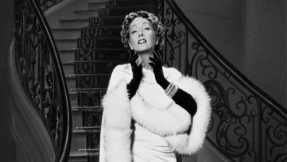
NormaDesmond

There is little question that Billy Wilder’s masterpiece Sunset Boulevard still captures the eyes, hearts, minds, and souls of audiences seventy-five years later. It continues to stare unblinking into the soul of Hollywood—and, perhaps uncomfortably, into the faces of all those people out there in the dark. Billy Wilder’s mordant masterpiece starring Gloria Swanson as Norma Desmond endures not only because of its sharp wit, noir elegance, and unforgettable performances, but because it remains a mirror for an industry—and an audience—forever tempted to trade substance for novelty. Its barbed satire of fading stars, disposable talent, and a studio system eager to discard the past feels eerily prescient in an era when algorithms decide what stories are worth telling and studios recycle intellectual property like celluloid scraps. Watching it now, one realizes the film is not merely a relic of old Hollywood’s cynicism—it is an indictment of the complacency of contemporary audiences and the short-term greed of the modern industry. Sunset Boulevard has not grown old; it’s the world around it that has refused to grow up.

Since its release on 10th of August in 1950, it has been the inspiration to countless films. But what does it mean to you? What makes it special or stand out to you? Perhaps you just see it as an iconic film; or just maybe, you see it as representing something personal to you. From classic noir cinematography to some of the most quoted lines of all time, Norma Desmond’s spirit lives on. So much for Joe Gillis’ line about her “still waving proudly to a parade that has long since passed her by;” she is still as alive today as she ever was. Serving as a mirror to the current state of Hollywood, Billy Wilder’s film shed light on the darker side of celebrity that still haunts to this very day. This timeless movie provoked Hollywood to take a cynical and honest look at itself, and the dangerous price of stardom–especially when the star is fading into obscurity. Poignantly arriving near the end of the Golden Era (or Studio System), this cinematic masterpiece continues to be the epitome of a Hollywood and anti-Hollywood film for all eternity. Beyond what it meant historically or industry-wise, it holds meaning and significance for many who watch it. One of its strengths to withstand the test of time is the fact is its ability to connect with people visuals and emotionally. That, combined with solid technical aspects, makes for a dynamic cinema experience.

Part of what still beckons the “eyes of the world” is the movie’s ability to tell the story within a story. Gloria Swanson’s performance as Norma Desmond is so perfectly calibrated that audiences sometimes forget she was playing a role at all. Billy Wilder and Charles Brackett deliberately wove elements of Gloria Swanson’s real life into Norma’s backstory, yet the parallels are only part of the truth. Swanson was both exactly Norma Desmond and nothing like her—especially when you consider her remarkable adaptability and forward-thinking nature. She saw greatness in the character and the film, and saw this as her triumphant return to the screen in an important picture. In many ways, Gloria took a role that was essentially making a mockery of everything she once stood for. Like Norma Desmond, Swanson was one of Hollywood’s highest paid performers from the teens until the early 1930s. Following the advent of talkies in 1927 and the changes in the studio system thereafter, her career floundered. Yet, she carried herself with poise, theatricality, and unapologetic glamour—qualities that translated naturally into Norma’s imperious, otherworldly presence. If you’re looking for a real life “Norma Desmond,” then look to silent film actress May Murray—she did live in the past after her star faded, and was reported to have been rather eccentric. Gloria, however, proved that those ghosts didn’t have to haunt you if you kept moving forward. Which she did—in radio, television, theatre, fashion, and even technology.
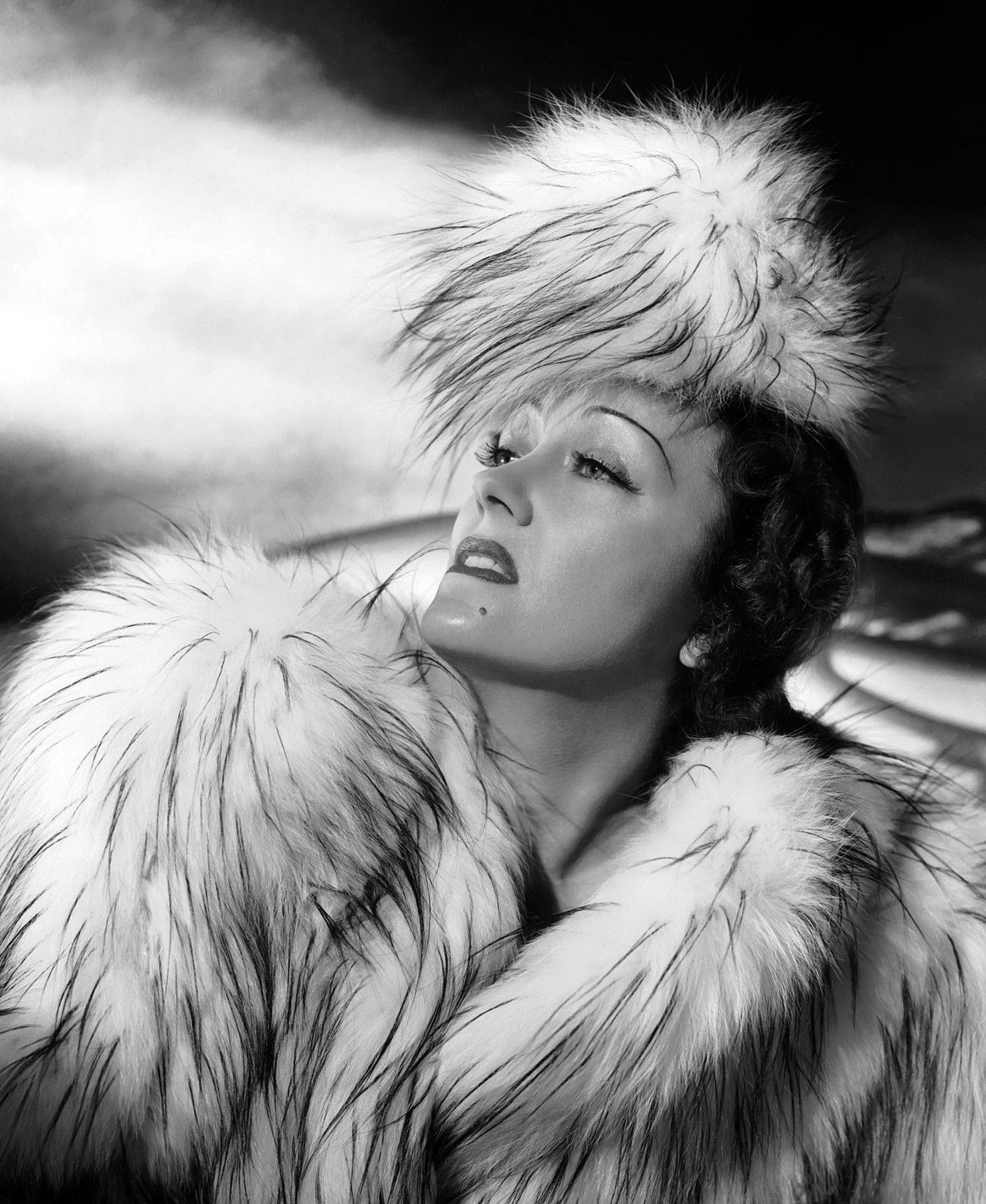
1941: American actress Gloria Swanson (1899 – 1983) plays glamorous film star Leslie Collier in ‘Father Takes a Wife’, directed by Jack Hively. (Photo by Ernest Bachrach)

The role of Norma Desmond was originally offered to Mae West and then Mary Pickford, but both turned it down. Pickford recommended Gloria. Suffice to say, the role cannot be imagined to have been brought to life by anyone else. No one could capture the character of Norma Desmond like Gloria Swanson. Throughout the movie, we witness the psychological breakdown of a woman who is already seriously afflicted with chronic depression and even agoraphobia. I feel as though many actors, and even some industry professionals who are not performers, can truly understand what must have been going through the mind of Norma Desmond. Actually, even for those who are not involved in entertainment or media can still see someone who felt betrayed and left alone to drift away. We’ve all been there. Feeling like we have so much to give the world, our community, or to the arts, and no one to take or acknowledge it. Norma isn’t going through anything that we have not been through. Essentially, Norma’s significant other, or partner, was her celluloid self, the studio, the industry. And when her partner left her, never to return, she developed serious psychological and cognitive disorders. Each person who chooses to watch her downward spiral into insanity, should be able to identify with her on some level regarding something in their life. For Norma, it was being back on screen again. For you, it may be something else.

Paramount-Gate-287x162

Fascinating elements of this story include the bewildering world of what lies between the glory and the fall of a celebrity who feels as though she built Hollywood, more specifically Paramount Studios. Never before had there been a movie that was developed around the idea of what happens to a star after they are rejected by the very business that created them. Serving as the inspiration to the opening scene of American Beauty nearly 50 years prior, Wilder set the standard in the dead body of the protagonist narrating the film. Like the fog over London, Gillis’ spirit hovers over the entire movie, narrating the course of events that lead to his demise. Joe gets to do what any of us would enjoy doing–getting to observe what happens after we die and how everyone reacts. Just like having a soundtrack to your life would be amazing, getting to narrate your story after you die would be equally, if not more so, enamoring.

William (Bill) Holden’s character of Joe Gillis is the prime representation of a starving artist. He lives in a tiny apartment, has a few credits to his name and is in danger of having his car repossessed. That describes many artists today, thus allowing other aspiring screenwriters and filmmakers to identify with his frustrations. Like a true film noir, the ending is tragic for the protagonist. Part of the suspense is wondering just when will he meet his end and why. For those who are trying to make it in the industry as a screenwriter, the grief and depression Joe must been feeling is something with which aspiring screenwriters can empathize.

Sunset Boulevard contains something for everyone: elements of mystery, action, romance, and deceit are woven meticulously throughout the film. This allows for the story to transcend decades of movie evolution and maintain such a high regard in the minds of all the “people out there in the dark.” And, even land a spot on the Great White Way in Andrew Lloyd Webber’s Sunset Boulevard Broadway musical. It’s been rumored that Paramount plans to make a movie version of the Broadway show, but that rumor has been floating around Hollywood for years. As much as the the musical is a tribute to the original, the movie will always be more impactful because the stage simply cannot bring you as close to eyes of the actor as the screen can. And, Norma “can say anything with [her] eyes.” But, thanks to Barbra Streisand keeping the songs alive, “With One look” and “As if We Never Said Goodbye” are brilliantly written to capture the feelings and state of mind of Norma.
GillisWriting

Regarding the screenplay itself, it is not a matter of what’s going to happen as much as it is how’s it going to happen. This pioneering non-linear structure served as yet inspiration for another film that would not be produced for nearly 60 years. Along with All About Eve and Citizen KaneSunset Boulevard played an instrumental role in the development of the 1994 blockbuster Pulp Fiction. A lesser known 2001 movie borrows many plot points from Sunset Boulevard including the movie title being a street name, entitled Muholland Drive starring Naomi Watts, Justin Theroux, and Laura Harring. Sort of a neo-noir, this is a more modern twist on the foundation Wilder laid with his masterpiece. On that note, now-a-days, non-linear films aren’t necessarily anything special, but at the time, Sunset Boulevard broke ground that would be the standard in abandoning traditional story structure. To me, the screenplay was written in such a way that many people can find his or her own story in the screenplay. Perhaps, someone feels like they are Norma–all but forgotten. Perhaps, there is a starving artist out there who can understand the predicament Joe Gillis was in–just trying to get ahead. To a lesser extent, there may be Betty Schaefer’s watching the movie who feel they have a lot of talent, but very little is recognized and want to find a creative outlet.

Unlike previous films, this movie was also ahead of its time in terms of including dark sarcasm and humor as chief elements in the film. Other aspects that capture the ears of the world, to Miss Desmond’s disapproval, are the famous lines from the movie. Ironically, Desmond despised dialog; however, her movie possesses the coveted numbers 7 and 24 spots on AFI’s Top Movie Quotes list. At number 24, “…I am big! It’s the pictures that got small;” and at number 7, ranking above “Louis, I think this is the beginning of a beautiful friendship” and “what we have here, is a failure to communicate” is the often misquoted “Alright Mr. DeMille, I’m ready for my closeup.” There are many other more obscure, yet brilliant lines of dialog and exchanges between characters, landing the screenplay in the WGA’s Best Screenplays of All Time list at number 7! It’s important to now only appreciate the movie as a movie, but to appreciate the story itself. Let us never forget that “someone sits down to write a picture” and fool ourselves into thinking that most of the time the “actors make it up as they go along.” Part of what makes this a timeless classic, and even a sort of Bible if you will, is the brilliant writing.

“[Cinema] is BIG. It’s the [movies} that got small.” In Sunset Boulevard, Norma Desmond’s defiant declaration—“I am big. It’s the pictures that got small”—was meant as a lament for the silent era’s fall to talkies; but in 2025, it resonates as a prophecy for cinema in the age of streaming. Norma wasn’t just talking about herself; she was articulating a truth about the grandeur, spectacle, and communal magic of the movies—an art form designed for towering screens and shared gasps in the dark. Today, as streaming platforms flood audiences with bite-sized content, algorithm-churned thrillers, and disposable franchise spin-offs, the scope of cinema has been compressed to fit living rooms and phone screens. Norma was right: cinema is big, but it’s the movies that have been miniaturized—scaled down in ambition, craft, and cultural weight—until they often feel like little more than moving thumbnails. The tragedy isn’t Norma’s inability to adapt, but that the industry has stopped aspiring to be as big as she was.

One of the elements that stands out in the movie is the meticulous placement of lighting. Film Noirs are one of the best examples of how effective lighting can be in playing an intricate part of the storytelling process. Lighting can show us whether or not someone may have two personalities, whether someone is dark and sinister. Since films did not have access to color, in the same way we do today, lighting in a grayscale movie was very important. Since colors could not be distinguished, lighting played that role. In many ways, the lighting in a film noir is like the Norma of the movie itself. Color has caused lighting to be used in a different way. For more practical reasons that aren’t always artistic in nature. Furthermore, another element that makes a film noir a film noir is the cinematography. After all, the term noir is French for dark. So, essentially film noir simply means dark film. It holds up to the definition due to the physically dark scenes; and furthermore, the state of being psychologically dark. The 9-time Academy Award nominated cinematographer John F. Seitz is responsible for creating the haunting visuals and shadows that dominate most of the movie.
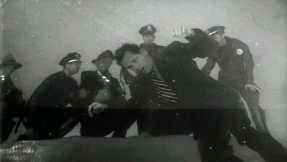
GIllisPool

One of the shots that is the most puzzling is how Wilder was able to shoot Joe Gillis’ floating body in the pool. Now-a-days, that is simple enough–even YouTubers do it–but in 1950, how does one accomplish such a special effect? The use of mirrors in the film went beyond macabre and haunting set pieces; a mirror was also used to shoot this scene. Seitz placed a mirror at the bottom of the pool and shot facing down towards the mirror while Holden floated in the water with the police officers around the deck. This gave the illusion the camera was in the water facing up.Thanks to the iconic cinematography, the mansion “stricken with a creeping paralysis” appeared lonely and massive. There is no better example of this than when Gillis descends the grand staircase to a party where he and Desmond are the only guests on an expansive tile dance floor recommended by Rudolph Valentino.

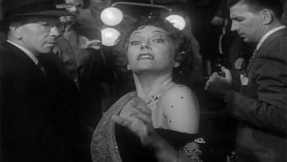
“Alright, Mr. DeMille, I’m ready for my closeup.”

Some of the most memorable cinematography comes at the end of the movie. Wilder and Seitz chose to shoot parts of the finale in slow motion to create an uneasy feeling in the minds of the audience. As Norma begins to descend the grand staircase one final time, she is shot in slow motion, as if it were Norma’s dream coming to life–her big come-back. Pardon, she never left; the pictures left her. In her mind, she is playing princess Salome entering the palace; when in all reality, it’s not movie cameras, but news cameras documenting her psychological decline into insanity. With her famous line “I’m ready for my closeup,” she encroaches upon the camera operator determined to get the closeup she wants, even though it is fixed at a medium shot. The audience, she is so desperate to connect with again, is tragically out of her reach.
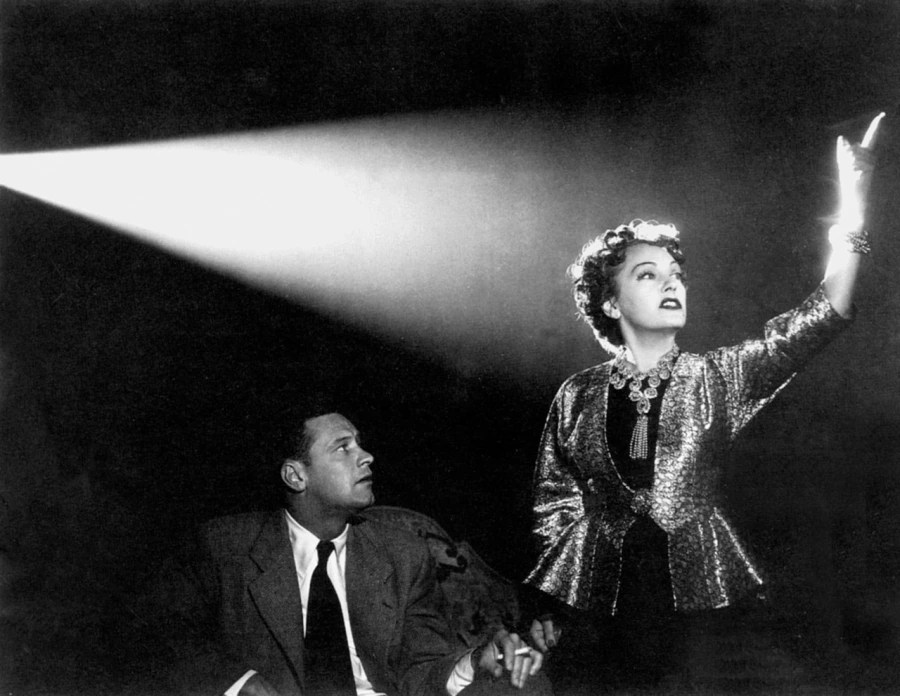
Sunset Boulevard serves as a haunting reminder that cinema’s survival depends on more than novelty—it thrives on depth, craft, and stories that demand to be remembered. Wilder’s film shows us a Hollywood already willing to discard its own history for the next marketable thing, a cycle that feels alarmingly familiar in an age of streaming debuts and algorithm-curated “originals” designed for convenience over impact. Norma Desmond’s tragic insistence that she is still “big” speaks not just to her own faded glory, but to the enduring power of cinema when it aspires to grandeur rather than pandering to trends. The film urges today’s audiences to resist the allure of quick, disposable entertainment and to champion works that challenge, inspire, entertain, and linger in the mind. If we let convenience replace artistry, aesthetics to replace great storytelling, we risk playing our own part in the slow fade-out of the movies we claim to love.

Sunset Boulevard means a lot of things to a lot of people. And, each person may have their own respective reasons as to why this film holds a special place in the minds and heart of those who love cinematic art. This movie truly embodies the latin inscription around Leo the Lion in MGM’s logo “Ars Gratia Artis.” Art for Art’s Sake. To me, it is one of the purest examples of artistic cinema. It also served as a mirror, to the dismay of the big producers of its day, highlighting the state of the industry at that time. People still remain mesmerized at this timeless feature because of all it has to offer. This is partly due to the fact that it as relevant today as it was in 1950. It’s entirely possible that there are Norma Desmonds today in their decaying estates watching their movies on TCM or AMC under the delusion that they remain stars that command the attention of the world.

Regardless if you are a filmmaker or a connoisseur of movies, Sunset Boulevard captures the eyes of the world today. And, it will continue to be a source of inspiration and entertainment for decades to come.
Ryan is the general manager for 90.7 WKGC Public Media in Panama City and host of the public radio show ReelTalk “where you can join the cinematic conversations frame by frame each week.” Additionally, he is the author of the upcoming film studies book titled Monsters, Madness, and Mayhem: Why People Love Horror. After teaching film studies for over eight years at the University of Tampa, he transitioned from the classroom to public media. He is a member of the Critics Association of Central Florida and Indie Film Critics of America. If you like this article, check out the others and FOLLOW this blog! Follow him on Twitter: RLTerry1 and LetterBoxd: RLTerry
Post-Modern Studio System? What Overturning the Paramount Decision Means for Film Business

While the official announcement was unaccompanied with fanfare, the overturning of the landmark ruling in “U.S. v Paramount Pictures, Inc., et al” (1948) on Friday, August 7, 2020 marks a turning point in the business of modern cinema. Also known as The Paramount Decision and The Hollywood Antitrust Case, this ruling marked the end of Hollywood’s Golden Age and the decline of the Studio System that upheld it. What exactly does this mean for the business moving forward? Short answer: nobody knows, and anyone claiming to know what IS going to happen is incredibly presumptuous. However, by looking at the history of the 1948 ruling and the current events surrounding the August 7th ruling, we can explore this watershed moment in the film business, both past and present. Furthermore, we can extrapolate from past precedent what may happen or even could happen today. One thing is certain, we are in rapidly ranging and even uncertain times due to the direct and indirect impacts of the response to COVID-19. Although the federal court began reevaluating this case in late 2019, it is undeniable that the impact of the response to the effects of the virus may have played a latent role in the final decision. From a massive increase in streaming content options to premium paid video-on-demand (PVOD) to continued (at the time of this writing) delays in returning “big ticket” first-run movies to theatrical exhibition, there are many factors at play here. Not to mention questions such as “if I am an indie filmmaker, will I be able to get my movies in theatrical chains,” “does this mean that Amazon or Apple will buy up struggling chains like AMC,” or “if I am a screenwriter, will I still be able to submit my screenplays to studios if they are completely vertically integrated?” Perhaps this exploration of the past, present, and future of the film business in light of the overturn of the Paramount Decision won’t be able to provide definitive answers, but it will provide historical, empirical, and observational evidences to suggest what may or could happen moving forward. 

In short, the Paramount Decision (1948) was a landmark case in which the US Government forced the eight major/minor studio players to end the practice of block booking, divest themselves of their respective theatre chains (sell them off), and modify the practice of long-term employee contracts (although, this practice would continue until the 1960s). This marked the beginning of the end of the Studio System, AKA Hollywood’s decentralization. But before we can even begin to understand the significance of the August 7, 2020 decision that overturned the landmark ruling, we have to jump in the wayback machine and head to Hollywood’s Golden Age (recently seen on Ryan Murphy’s Hollywood, a 2020 limited-run series on Netflix). 

What was the studio system anyway? It was the arrangement of film production and distribution dominated by a small number of studios in Hollywood. Historically, the term refers to the practice of large motion picture studios, between the 1920s-60s, of producing movies primarily on their own backlots with creative personnel often under long-term contracts, and which dominated exhibition through the vertical integration of company-owned movie theatres. Block booking was also a common practice at this time. This process forced theatres to accept a block of movies from a studio. If an independent theatre wanted to show Movie A, then the studio would require the theatre to also accept and show Movies B, C, D, and E too.

Years before the U.S. Supreme Court ruled against the once powerful Paramount Pictures, the biggest studio in Hollywood at the time, there were constant legal and ethical issues plaguing the storied studio system that produced some of the most foundational films in cinema history. Back during the height of the studio system, there were eight principle players: the Big Five and the Little Three. The Big Five was comprised of: Paramount, MGM, Warner Bros., 20th Century Fox, and RKO; the Little Three included Universal, Columbia, and United Artists. You may (1) recognize some of those names today and (2) notice that there is a famous studio conspicuously missing. The latter is due to Walt Disney Studios being in its infancy during this time. Ironically, it would become nearly completely vertically integrated in the 20th and 21st centuries, minus owning a chain of movie theatres. In a manner of speaking the Walt Disney Company operates in a very similar fashion to that of its older brothers and sisters.

When I took a tour of Paramount Pictures back in 2015, I asked how many full-time staff worked on the lot. And the tour guide responded with 30-40 people. That’s right, only 30-40 people at the time. While that number may have fluctuated in the last five years, it leads me into one of the practices that came to a close when the Studio System fell. Prior to the Paramount Decision and the development of professional unions, studios held movie stars, directors, writers, and others to longterm contracts (with few, if any, options). Contracts were so tightly managed, that studios would loan stars to other studios, for example Paramount may choose to loan out Mae West to M-G-M in exchange for Judy Garland. The on screen talent wasn’t the only area treated as a commodity, virtually every role in front or or behind the camera was under contract to a studio, including directors and writers. 

While this looks like an infringement upon civil liberties through our 2020 eyes, and there are many reasons it should, there was something positive regarding employment during the Studio System: job security. When you worked for the studio, you worked for the studio and made all its pictures. Meaning, you knew you had regular employment until your contract was satisfied, you quit, or were fired. Employees didn’t have to worry about when and where the next gig was; employees went to work, Monday through Friday if you will, just like other working professionals. Furthermore, this centralized human resources system also made it possible to apply for vacant positions as a director, writer, craftsman, or any other position. There were also a great number of formal apprenticeships for those who were trying to break into the system. Sounds great, right? Well, yes and no. Yes, for reasons of streamlining the hiring process and providing stable employment in the field; and no, because the studio (that also likely controlled movie theatres) would not produce or distribute your picture unless you worked for the studio. It was a closed corporate system, so independents were largely kept out of it. From submitting screenplays to theatrical distribution, aspiring filmmakers either had to join the corporate ranks of the studio system or exhibit their pictures in small independent movie houses, IF they could even get the film developed and edited. 

Even before the 1948 decision, the studio system and studio-theatre relationships were under attack, but the studios were able to find loop-holes and political alliances in order to avoid the breakup of the vertical integration that was expensive to maintain but highly lucrative. As the movie studios regrouped for continued legal battles in the court system and Justice Department, media mogul Howard Hughes of storied RKO Pictures made the decision to sell off his movie theatres. When The Justice Department made it clear that there were to be no more deals between the government and the movie studios, Paramount sold its movies theaters in an attempt to buy into television. However, after the legacy studio’s continued involvement in all the antitrust cases leading to the final decision in 1948, the government did not permit Paramount to maintain any semblance of a monopoly in the frontier of television.The battle to keep the studio system was finally over. In the end, the Paramount case influenced the growth of television because, among other reasons, RKO and other studios sold their film libraries to television stations to offset the losses from the Paramount Decision. The studios also released actors from those longterm contracts, and many became television stars.

Although there are many side-effects and tangential reasons why the studio system (1) was lucrative and (2) hard to dismantle, there is one root reason from which everything else radiated: control. Everything gets back to control. Control of movie stars, control of writers and directors, control of the distribution and exhibition process. With all this control, the Studio System was able to craft its own narrative and success story. While the system was lucrative, it also racked up a lot of debt. Debt that came from borrowing from banks, exorbitant movie star salaries, and fighting legal battles. Even though the system had a lot of problems, it still gave us some of the best movies of all time, motion pictures that are larger than life, and those that typified the Golden Age of Hollywood. However, this system also protected its own when scrutiny or accusations arose, which is reprehensible. The Hollywood Studio System was truly its own self-contained world that outsiders were only let into through the movies and publicity. 

The film business landscape looks much different than it was during and just after the Golden Age of Hollywood. But over time, we have seen a migration back towards the ol’ system of doing things. The most recent examples of borderline antitrust infringement are Disney’s acquisition of 20th Century Fox, AT&T’s acquisition of Warner Bros. Pictures, and Comcast’s acquisition of NBC-Universal. What makes the latter two particularly interesting cases is the simple fact that both AT&T and Comcast own and operate the literal hardware in the ground and air that brings you your connection to the internet. One could read this as a form of distribution. The Disney example is more or less one of reducing the ability to equitably compete for audience dollars and the ability to create jobs. You can read more on the Disney-Fox deal in my article Out-Foxed. While block booking and price-fixing are still illegal, the overturn of the Paramount Decision does create a greater pathway to acquiring movie theatres and the ability to be more greatly vertically integrated than was possible since 1948. Interestingly, movie studios have been legally able to buy movie theatres since 1948, but because of the scrutiny and bureaucratic red tape that would come with it, it was not a practice except in the case of Disney purchasing the historic El Capitan theatre and Netflix purchasing the iconic Grauman’s Egyptian Theatre (sister theatre to the world-famous Grauman’s Chinese Theatre). Disney uses the El Capitan for most of its own premieres, but the movie theatre also shows a variety of other programming. But with this overturning, Disney could choose to only show its movies in the El Capitan, likewise with Netflix and the Egyptian Theatre. 

But, so what if Netflix and Disney want to exclusively exhibit their own films in their movie palaces? And you’re right, those two locations do not significantly make a difference in the grand scheme of things; but, what this represents is a microcosm of what could happen more nationally. And that’s why many of us are fascinated by this ruling; we are both anxious and eager to see what happens in this new frontier. Maybe nothing, maybe something. But film academics have a duty to analyze the situation to inform the public of the possible outcomes.

At the time of writing this article, Disney has made no claim regarding any real interest in purchasing the struggling AMC movie theatre chain nor Regal (owned by CineWorld). That said, there is more to explore that isn’t quite as in the face of the public as purchasing theatre chains. While control is the root cause for the machine that was the studio system, the reason the government went after the big studios was in-part because the studios made it nearly impossible for independent filmmakers to get their films into theatres or land distribution deals. If the studio did not produce your film, then it would not distribute it. The inequitable competition field led the US Government to bring about the landmark antitrust case. Lack of competition or lack of an opportunity to compete is what many independent producers, directors, and other creative and technical personnel fear most moving forward. It is highly unlikely that anything major is going to happen overnight; however, the studios now have the latitude, or horizontal if you will, to test the boundaries of their vertical integration and ability to strong-arm the marketplace. Suffice it to say, the studios will be “testing the fences for weaknesses, systematically…they remember” (Robert Muldoon, Jurassic Park). 

While Disney may not be presently interested in purchasing a movie theatre chain (according to the August earnings call), the three companies to watch out for are: AT&T, Amazon, and Apple. The AAA threat. Interestingly, AT&T is no stranger to monopolies or even oligopolies (like a monopoly, but when a market is controlled by a few big companies instead of one). Without going into too much detail on the U.S. v American Telephone and Telegraph (AT&T) case, the antitrust case was brought against the telecom giant, owner and operator of Bell Systems. Bell Systems held a monopoly over American and Canadian phone systems, a monopoly that was held since the dawn of the telephone. The end result of the 1982 ruling brought about the breakup of the Bell Systems company into seven regional “Bell” markets. From this breakup we got seven telecom companies, each operating a particular geographic region. Interestingly, four out of the seven companies are now back under the control of AT&T. The remaining three former Bell markets are owned by Verizon and CenturyLink.

If we use the AT&T case study as a parallel model for understanding studios and the film business, we can posit ideas of what may happen in light of the recent overturn. The AT&T model bares many similarities to the Studio System model. We have a monopoly (or oligopoly) that was broken up by the US Government. Then there was a time of division; but slowly those once divested companies were bought up by the big company again, and in AT&T’s case, the original company. Full circle. What’s funny is that this parallel case study involves one of the likely players in this post-Paramount Decision world. By using the AT&T model, reason stands that a big company or two (maybe three) can and will buy up smaller companies to have a larger footprint, thus reducing competition. It happened the telephone world, it can happen in the film world. After being broken up, AT&T made many smart, seemingly benign moves in order to essentially become a phoenix that is greater than it was before its empire was broken up. 

What does this mean for studios and movie theatres? It simply means that it is very likely that a major company with deep pockets will purchase movie theatre chains. Simple as that. We have seen this before in the AT&T case study. But it won’t be Disney, Universal, or even Netflix buying the theatres, it will be AT&T, Amazon, Apple, or and/or Sony. Inarguably, the first three are some of the largest, wealthiest, and most influential companies in the world, with the latter having an incredibly diversified portfolio that includes technology and more; what better way to showcase your audiovisual technology than in movie theatres??? Each of these companies has the assets necessary to acquire AMC, CineWorld (Regal), Cobb, and even Cinemark. Interestingly, AT&T, Amazon, Apple, and Sony all have investments in film and tv production. AT&T owns WarnerMedia et al., Amazon operates Amazon Studios, Apple creates original content for Apple TV+, and Sony operates Sony Entertainment et al. It is unlikely that the US Government would permit any of these companies to buy up more than one of the major movie theatre chains, but we could easily see each of the four major movie theatre players getting bought up by corporate conglomerates. While there isn’t evidence to suggest that these four corporate giants would force audiences to go to one of their theatres to see one of their movies, it is entirely possible that those corporate giants would offer additional programming (maybe certain movies primarily released on streaming services) at their company owned movie theatres. Between original and licensed/distributed content, these movie theates, tied to media conglomerates that have major studio investments, may pack the theatres with so many movies that independent filmmakers will have to see alternate means of securing distribution, be that through streaming services, independent movie theatres, or or smaller specialized chains like Studio Movie Grill and Alamo Draft House, both of which are known for catering to cinephiles, including horror fans.

In a manner of speaking, what we are looking at here is a post-modern Studio System. You’d once again have the BIG FIVE (AT&T, Apple, Amazon, Disney, and Comcast) and the LITTLE THREE (Sony, Viacom/Paramount, and Netflix). These eight companies would control the media landscape. And there will be just enough competition that it avoids any antitrust lawsuits (until it doesn’t; that’s how this goes, if you haven’t figured it out), until history repeats itself again. This new studio system will flourish for decades, but then something will happen and the government will step in and break up the companies again, most likely resulting in selling of movie theatre chains or even more sobering, movie theatres become a shadow of their former selves. It is unlikely that movie theatres will completely go away, but their purpose and role in show business may be relegated to little more than a novelty. These studios may reimagine the movie star star system, film/tv/production related unions could lose their power because of the increasing number of employees (not contractors) at movie studios, and/or there could even be more theme parks as a means to generate quick revenue to funnel back into the studio model, much like Disney and Universal Parks and Resorts do for their parent companies. Lots of job creation may happen, but these will lack in the creative latitude that many filmmakers crave.

For many independent filmmakers, the fear of the fallout from the overturn of the Paramount Decision is reduced opportunities to secure distribution deals. But it’s not only the production talent that is concerned. Writers could be greatly impacted; because, in a more heavily vertically integrated system, writers will have far fewer outlets for purchasing or licensure of their screenplays. Disney is a good example of this. Disney rarely purchases screenplays from screenwriters; their common practice is to use in-house screenwriters or commission a writer to pen a screenplay. So, if you are not IN the Disney studio system, then your chances of selling or optioning your screenplay are minimal. Since Disney owns 20th Century Fox, then this same practice carries over into that branch as well. That said, Searchlight Pictures is still a production and distribution company to which independent filmmakers and screenwriters can submit work for purchase, licensing, etc. While Disney is the easy example here, this same practice could be said of any major studio. 

More vertical integration means larger companies in a world that is shrinking. This shrinking world could mean trouble for the aspiring filmmaker or screenwriter because of the lack of opportunities to make the transition from page to set to distribution. While this new world may make it more difficult for a screenwriter to sell a screenplay to a studio that is vertically integrated, the director will also face new challenges. Independent filmmakers will have to get their films bought or licensed by a major company in order to get the exposure needed to be able to develop a substantive career. Netflix has a history of being friendly to independent filmmakers (although it has more and more original programming), so an advantage to getting Netflix to buy or option your movie is that you may just be able to screen it at the Egyptian Theatre, which would greatly aid in qualifying for the Oscars or Golden Globes. 

While independent filmmakers may face increasing odds against them for theatrical distribution, this post-modern Studio System could create thousands of jobs in the industry. But you will create what the studio wants you to create, which may not necessarily be the stories that you want to tell. And amidst this possible creation of jobs may be a world with far less opportunity for equitable competition for that golden statue and audience eyes.

Ryan teaches film studies and screenwriting at the University of Tampa. If you like this article, check out the others and FOLLOW this blog! Interested in Ryan making a guest appearance on your podcast or contributing to your website? Send him a DM on Twitter or email him at RLTerry1@gmail.com! If you’re ever in Tampa or Orlando, feel free to catch a movie with or meet him in the theme parks!

Follow him on Twitter: RLTerry1

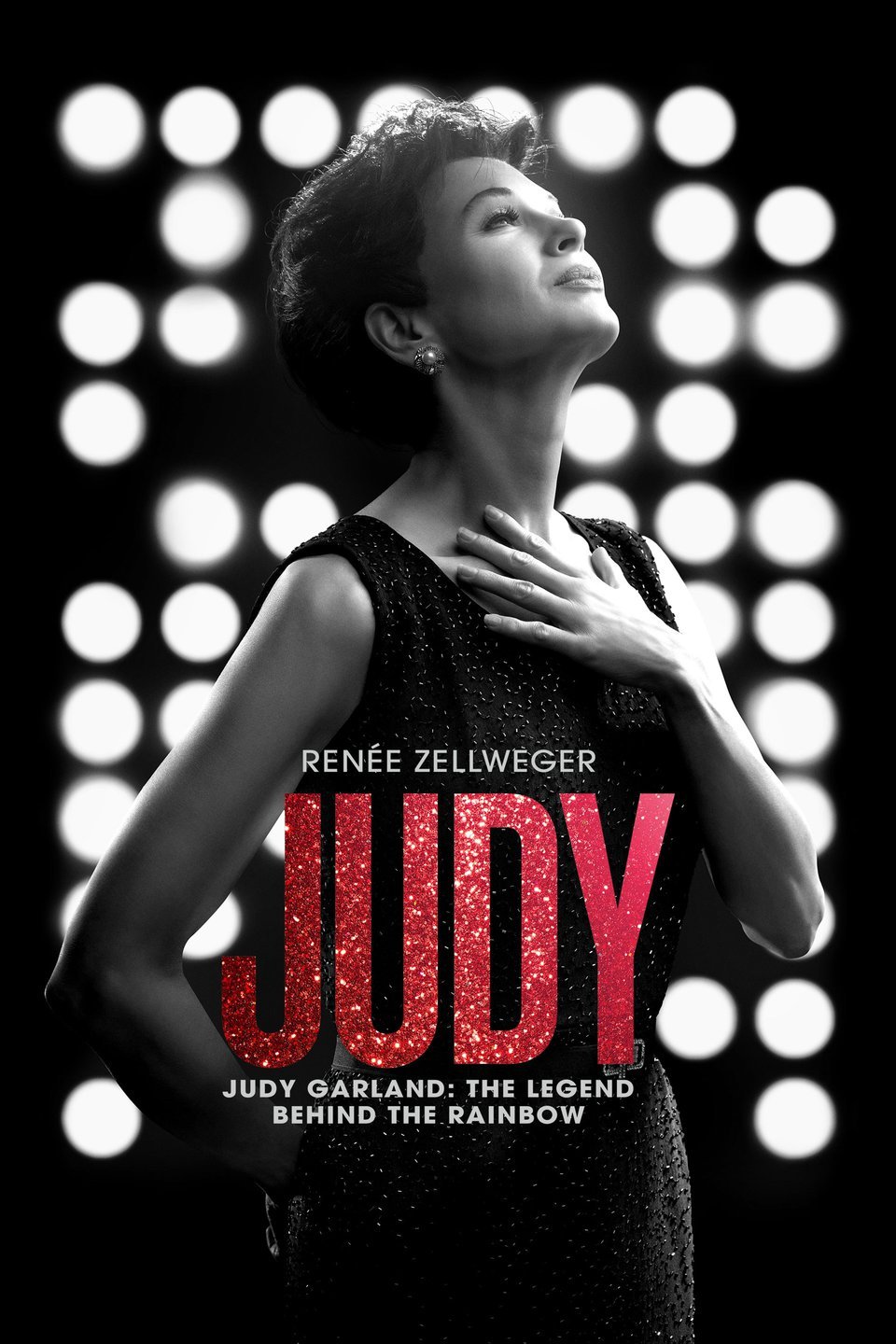
“JUDY” Biopic Film Review

A truly gripping motion picture that will bring you to tears during this somewhere over the rainbow redemption story. Bring tissues. Renee Zellweger is captivating as Judy Garland, and you’ll swear that you’re watching Garland on the big screen. Although we may be familiar with the broad strokes career of the legendary entertainer, this film goes beyond the headlines and tabloids to deliver a true life story that could ironically be titled A Star is Born, or perhaps reborn. Ironic in that this film shows the life of a movie star after the lights have faded and the offers stop coming in, much like the movie she starred in. It’s a rise and fall story, of sorts, but is more precisely a fall and rise story as the movie focusses in on the last year of Judy Garland’s life. If you are worried that the film ends on her death, you can be relived that the film chooses to stop the story prior to the end of the iconic star’s life. And it works so incredibly well! While there are many movies (not unlike A Star is Born) that focus on the rise and fall of a talent in showbusiness, this movie skips all the glitz and glamor to paint a realistic portrait of what it is like for those whom grow up in front of the camera, controlled by those around them, just to wind up in front of booing crowds, empty bank accounts, homelessness, and a tumultuous custody battle. Not to mention her addiction to pills that was caused by abusive treatment at the hands of the old studio system because of being force fed pills from an early age. Whether you are a fan of the iconic diva or not, if you love command performances, then you do not want to miss the uncanny performance of Zellweger as Judy. All the way down to the mannerisms, vocal inflections, and over all behavior, she IS Judy. Although we all know of the tragic ending, no mistaking it, this film is an inspirational story of redemption.

The money is gone, career on the rocks, and risking the loss of custody of her two youngest children, that is the last year’s of Judy Garland’s life. Unfortunately the other side of the rainbow for Judy was anything but magical. Three decades after starring in one of the greatest film musicals of all time The Wizard of Oz, the beloved actress and singer is in dire straights. She is left with virtually nothing except her name and what remains of her timeless voice that charmed millions throughout her early illustrious career. In order to prove that she can provide for her two youngest children, she accepts a gig in London playing to sold-out shows at the Talk of the Town night club. While there, she reminisces with friends and fans, fights her depression and anxiety over performing, and begins a whirlwind romance with her soon-to-be fifth husband.

“For one hour, I am Judy Garland, and the rest of the time I am just like everyone else…I want what everyone wants, I just seem to have a harder time getting it” is a paraphrased quote from the movie, but it illustrates how the actress and singer felt about her relationship with the world. The movie chronicles her inability to stay afloat financially in Los Angeles and must accept a gig in London where her personal troubles continue to follow and haunt her. Her character is so incredibly relatable because many of us have found ourselves in traps that we have stepped in and are at a loss as to how to get out. If you thought this was going to be another cliche musical biopic, then you would be mistaken. No pretense about it, this is an unapologetic look at the dark side of Hollywood in perhaps one of the greatest stories that is right up there with Norma Desmond. Now, I am not equating Judy with what is, in my opinion, the greatest film of all time Sunset Boulevard, but her story is not unlike the one experienced by Norma. The movie also comments on the far reaching effects of childhood trauma on the adult psyche. No one understood the extent that she was abused by the studio system except for Judy herself. If her present-day handlers knew what she went through during the years that American fell in love with The Wizard of OzMeet Me in St. Louis, and more, then they would not-so-casually write her off as a wrecked hasbeen who mismanaged her money and relationships. The film deals with perception versus reality. Strategically placed in the film are flashbacks to her childhood at MGM that provide context for moving the present story forward as each moment reveals a new layer to the legendary entertainer.

Zellweger delivers a performance for the ages in this film. More than a spot-on impression, she transforms into Judy Garland to the extent that you will almost believe that you are watching the iconic actress and singer on the big screen. It is clear that Zellweger studied Judy Garland for months in order to get into character. Her movement, speech pattern, posture, and other behaviors completely sell the audience on this audacious portrayal of such an icon. Never once does she break character and allow the actor to shine through, she remains committed to this phenomenally genuine portrayal of Judy Garland. We all know Zellweger can sing, after all, she wow’d us in Chicago (a rare example of when the movie adaptation IS better than the live show); but nothing will prepare you for the power of her singing in this movie. Other than Have Yourself a Merry Little Christmas, you will hear Zellweger sing other famous songs by Garland such as Get HappyThe Trolly SongCome Rain or Come Shine, and of course the encore of Over the Rainbow during the movie’s climactic, emotionally charged, showdown. Even when singing, Zellweger is determined to deliver the songs just as a late-40s Garland did, complete with all the stubbornness, anxiety, and even anger. I truly hope that Zellweger is nominated for this role.

Perhaps the reason why Liza Minelli was quite objectionably vocal about her mother’s portrayal in this movie is because there are creative liberties taken by the writers in order to further dramatize Judy’s story. As I’ve told my screenwriting class, dramatize don’t tell. If a “based on a true story” or biographical film was simply concerned with the timeline of events, the cold hard facts, and cause and effect, then it might feel more like a police procedural or college lecture. Hence why it is imperative that writers DO get a little creative in the dramatization of events for cinematic purposes. For instance, the facts are largely correct in this story as I have compared them to Wikipedia and other newspaper articles, but where I can see the difference is Judy’s reaction to the timeline of events. Articles and tabloids may be able to show what happened, but it is up to the screenwriters to dramatize the reaction to the conflict. So perhaps that is what Liza is upset with, she doesn’t agree with the story details between what we know from Hollywood history. One of the tangential components in the movie is Judy meeting up with “Friends of Judy” at the end of one of her shows. Judy joins them, rather than be by herself for a night of poorly made omelets and casual singing around a piano. It’s an emotionally moving tribute to all the gays who’ve loved her over the years. In all likelihood, this was written for the movie as there is no way of verifying if this night ever happened. This is the scene where I feel that she should’ve sang Have Yourself a Merry Little Christmas because tonally it was similar to that scene in Meet Me in St. Louis. Instead, she sings Get Happy.

Maybe this is an unconventional redemption story, but that quality is clearly communicated through the film. Rising up against the internal and external monsters in your life that have dragged you down so far that there is no end in sight. Whereas Judy may not have changed as dramatically as Scrooge did in  A Christmas Carol, she does change during the climax of the movie. If you want to know just how, then you need to go out and watch it!

Ryan teaches screenwriting at the University of Tampa. If you like this article, check out the others and FOLLOW this blog! Interested in Ryan making a guest appearance on your podcast or contributing to your website? Send him a DM on Twitter or email him at RLTerry1@gmail.com!

Follow him!

Twitter: RLTerry1

Instagram: RL_Terry

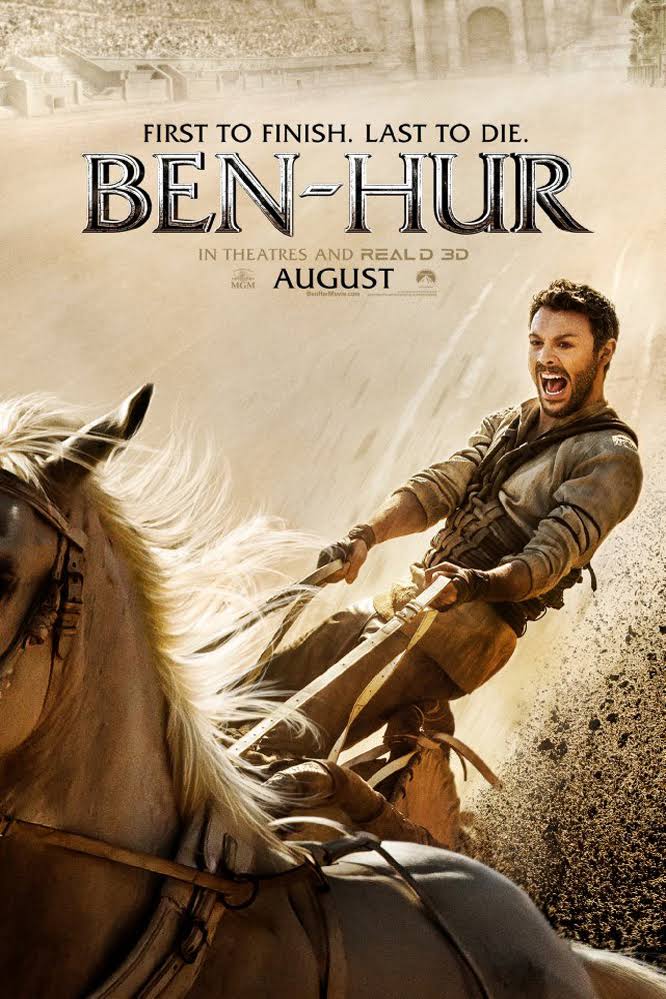
“Ben-Hur” (2016) movie review

BenHurJust as epic a story today as it was during Hollywood’s golden age! Paramount Pictures and MGM Studios present the reimagined classic historical drama of Ben-Hur. Appropriately released by two of the most recognized names in the industry harkening back to the early days of cinema, Ben-Hur plays out almost as well as it did decades ago. Sitting in the auditorium last night, I wondered what it was like to see a larger-than-life nail-biting story on the silver screen when the original was released in 1959, just before the final decline of the former powerhouse of motion picture production, the studio system. The grand experience of this film is only overshadowed by the unusual pacing. Typically epic stories require a minimum of two hours, and often come close to 3-hour runtimes in order to do the story justice and tell it visually and emotionally in the most impactful way possible; however, this film is just over two hours. This moderately quick pacing hinders one’s ability to really appreciate the foreground and background stories. The grandeur of the Roman Empire fails to show as prominently as it should have in this film that bares a striking resemblance to Ridley Scott’s Gladiator in many respects. There are many sweeping shots of the Circus (chariot racing arena) that are disappointingly mostly CGI’d. Still, there is something remarkable about this story. Whether you are approaching this film from a historic standpoint (historic in an appreciation for classic Hollywood stories), religious perspective (forgiveness and sacrifice), or simply for the bad ass racing of chariots in a grand arena, you will likely find something to enjoy about this movie.

On the backdrop of the final years of the messiah, Ben-Hur is about a Jewish prince named Judah Beh-Hur (Huston) who is falsely accused and betrayed by his adopted Roman brother Messala Severus (Kebbell). Sentenced to a life of perpetual rowing of Roman galleons in battle, Ben-Hur endears harsh treatment and near-death experiences in order to one day seek his vengeance. Meanwhile, Messala becomes a war hero and favorite of the people and the Roman prefect Pontius Pilate. When the destruction of his ship opens the door for escape, Ben-Hur finds himself washed upon the shore to be picked up by a wealthy African (Freeman) who races chariots–or pays for young men to race chariots. Striking a deal between them, the wealthy African and Ben-Hur work together to train for Ben-Hur to defeat Massala in the circus in order to reclaim his name and truly hit the Romans where it hurts–losing at their own game.

One of the most unique aspects to this film is the parallel plot between the background and foreground, the plot and subplot. At the end of the day, the message of Ben-Hur is one of forgiveness. The forgiveness between brothers and the forgiveness of Christ. Although this is not a film based upon the story of the messiah (or passion), the character of Jesus is an important element in the journey from vengeance to forgiveness. On three occasions, Ben-Hur encounters Jesus, not knowing who he is. Each of these chance meetings can be read as symbolic of the different acts (or stages) in the film itself. As the story of the passion of the Christ is one that many recognize (even those who are not Christians), it helps to get an idea of what is going on in the background at the same time at the story at the forefront of the film.

Cinematically, the film was a little disappointing. It feels like a lot of potential and opportunity for incredible cinematography and production design was wasted. Although there are many wide or establishing shots, the majority of the film consists of American medium shots. It would have been exciting to see more of the physical world of Jerusalem and the Roman Empire but instead we spend a lot of time indoors or in close proximity to our cast. Likewise, I would have liked to have seen more in the way of physical production design. The world on screen should have been one that I could have almost felt. Furthermore, I find that the pacing of the film was not adequate enough to actually tell the story in the manner in which it should have. It’s mostly like there was a 2.5-3hr movie condensed into a typical 2hr runtime. Sometimes epic films are guilty of way too much exposition, but Ben-Hur definitely could’ve benefited from additional development and exposition. Everything just happens too quickly and with minimal challenge.

Chariot racing. That is synonymous with Ben-Hur. And you will get plenty of horses, chariots, and crashes. Not unlike NASCAR of today, chariot racing was all about the violence and crashes. Thousands of spectators gathered to watch heroes battle it out on the ground of the circus (or race track) to see who will be the “first to finish…last to die.” Many early films were more concerned about the spectacle of cinema more so than the story or message. After all, MGM’s famous logo states Ars Gratia Artis (latin for “art for art’s sake”), meaning the goal of cinema was to contribute to the world of the visual and performing arts. Not necessarily to entertain, although that is certainly part of it, but to create beauty, intrigue, and push the boundaries of the mind and eye. One of the most mesmerizing elements of the original Ben-Hur was the chariot racing. Likewise, the most exciting parts of this new incarnation are the sights, sounds, and spectacle of the chariot races.

Although there are certainly areas of the film that disappointed me, as I have mentioned, I highly recommend for anyone who appreciates historic dramas that wax nostalgic the days of the golden age of Hollywood. And who doesn’t love a great chariot race???

On Cinema and Theme Parks (part 2)

My Book

(Continued from Part 1)

Understanding the synergy or convergence that exists between the cinema and theme parks requires looking to the history of the relationship between the two entertainment giants. Before Disney’s Hollywood Studios (formerly Disney-MGM Studios), Universal Studios Florida, and more than 40 years before Disneyland was opened, the founder of Universal Studios (studio) German immigrant Carl Laemmle, opened his 250-acre-movie-making ranch, just north of Los Angeles, to the public for a mere $0.25 (Murdy, 2002). More than side income for the trailblazing studio, most well-known for its pioneering of the horror film, the original studio tour began on the outdoor backlot in March 1915. Laemmle desired to immerse the “people out there in the dark,” as famously referred to by Norma Desmond in the timeless classic Sunset Boulevard, into the magic behind the screen (Sunset Blvd, 1950).

Interestingly, according to famed psychiatrist Sigmund Freud, horror is often concerned with revealing “other” scenes to the audience (Freud, 1919). And, keeping with this theoretical approach to horror cinema, Laemmle opened this “other” scene to the guests of Universal Studios Hollywood.  But more than horror, Laemmle also brought the studio guests face-to-face with western action/drama (Murdy, 2002). From early in the 20th century, the concept of cinema and theme park convergence was born. The happy marriage, however, was not to last very long. Upon the introduction of cinema sound, Laemmle was forced to close the studio “park” to the not-so-quiet guests in order to facilitate appropriate recording sound for the motion pictures (Murdy, 2002). The Universal Studios tour would remain closed to the general public for over 30 years. But, in 1961, the studio would once again open its gates to a new generation of movie lovers (Murdy, 2002). Between 1961 and 1964, Universal outsourced the famed tram tour to the Gray Line bus company.  Following a feasibility study, conducted by researcher Buzz Price, the same man who helped determine the locations for Disneyland and Walt Disney World, Universal decided to start its own tram tour of its facilities, and Universal Studios Hollywood opened in July 1964 (Murdy, 2002).

Following the ending of the Studio System, the now bankrupt motion picture studios had been purchased by various conglomerates looking for new sources of income (Riley, 1998). One of the sources of income that studios began investing into was the concept of movie-based theme parks. With the opening of Walter Elias Disney’s Disneyland in 1955, Universal Studios made the decision to incorporate stand-alone attractions into its newly reopened studio tour (Davis, 1996). Both Disneyland and the future Universal Studios used their intellectual property (IP) as the basis for creating theme park rides, shows, and attractions. Although movie studios as a “park” began with Laemmle, in its current incarnation, the convergence of cinema and theme park began with Disneyland, and later was perfected by Walt Disney World and Universal Studios Florida. Since the movie studios already had dedicated movie-going audiences, it made sense to capitalize on the idea of incorporating the concepts from the movies into attractions that the general public could enjoy and be immersed in (Davis, 1996). This action both acts as advertising for the respective studios and generates income for the movies and park improvements.

In today’s entertainment marketplace, media conglomerates are restructuring themselves to be as large a player in entertainment and media as possible with the ability to integrate various products and services into multiple areas of exhibition (Taubman, 1970).  This is easily witnessed in how the Walt Disney Company, Sony, and Comcast companies are setup. Walt Disney Company has significant investments in: motion pictures (i.e. Disney, Buena Vista, Touchstone), theme parks, TV (i.e. ABC, Disney Channel), leisure/tourism, radio, video games, stores, and record labels). Sony has investments in consumer/commercial electronics, computers, video game systems, motion pictures (i.e. Sony, Columbia, Tristar), television (CBS), record label, recording studios, radio, and stores. And, much in the same way, Comcast has investments in motion pictures (i.e. Universal Pictures, DreamWorks-SKG), theme parks, resorts, television (i.e. NBC, Golf, SyFy), video games, radio, record labels, and recording studios.

Whereas the fall of the original studio system set the precedent for media companies not to own or operate all the elements of media creation from conception to employment to production to the distribution, also known as vertical integration, companies are now embracing the idea of horizontal integration. Horizontal integration allows a media company to push or market its products or services through various media channels. And, this is a perfect example of why media conglomerates own and operate theme parks. This is a common practice by Disney and Universal in their respective parks and resorts. Disney can release a movie, base an attraction off that movie, use that movie as the basis for a video game, and even include costume characters in the parks and on the cruise ships. In the same vein, Universal can take one of its movie properties and integrate the characters and story into a theme park experience, use the concept for a video game, and maybe even develop a TV series as a spinoff of the movie. This type of integration allows the companies to effectively customize glorified marketing campaigns for their brand. Having a given branding on various commercial outlets allows a company to maximize its exposure to general audiences/customers (Taubman, 1970). As companies acquire more intellectual properties, media outlets, and commercial infrastructure, they are able to actively change entertainment offerings over the years; and this is definitely the case with the theme parks owned by media conglomerates that also have movie studio interests.

Continue to Part 3