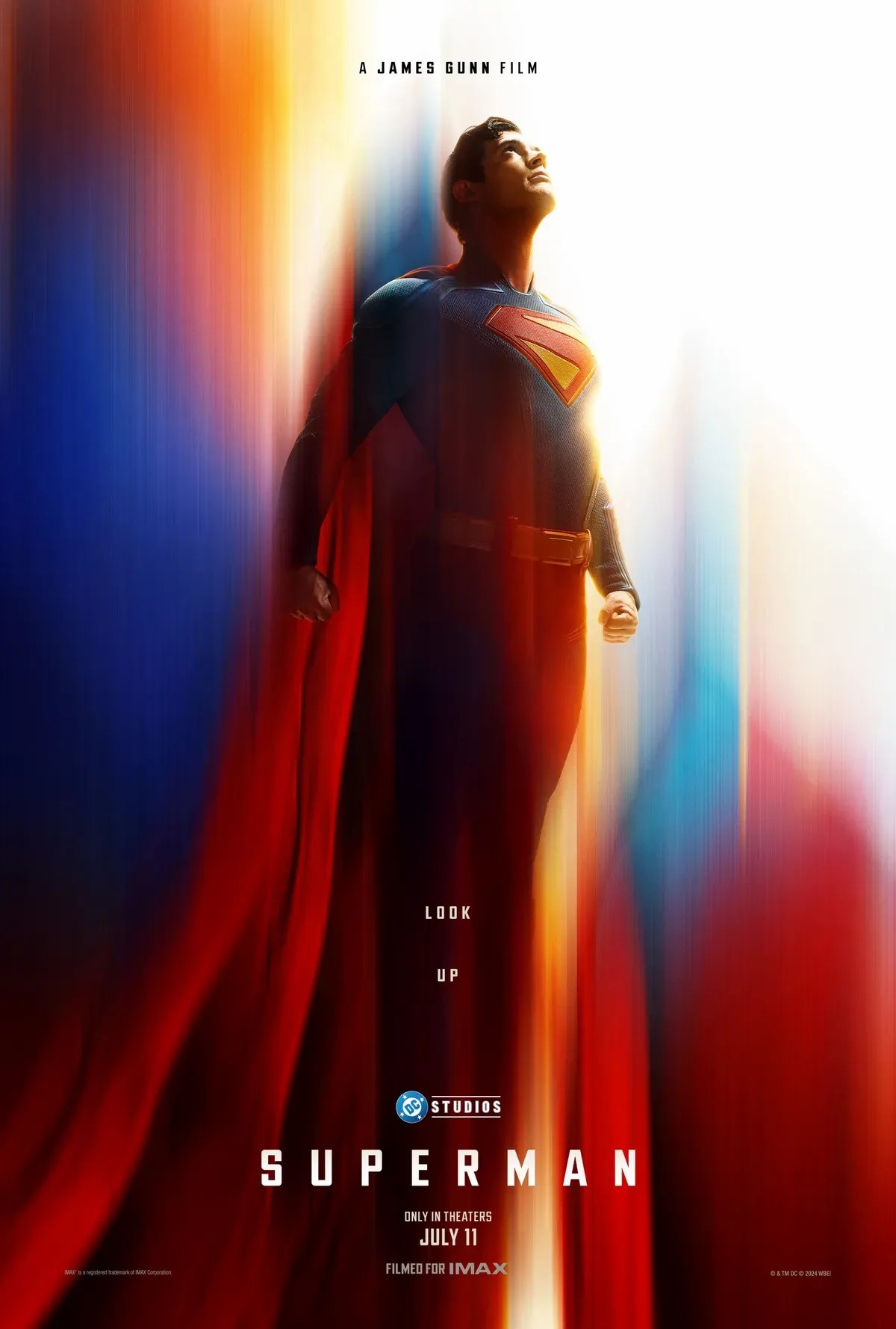
SUPERMAN (2025) movie review

SuperFULL. James Gunn’s Superman is bursting at the seams with plots and characters, resulting in an overwhelming experience. But, the lead characters and hero’s journey are truly super. While weak on narrative, Gunn’s take on the man of steel sticks the landing on the lead characters. And it’s the characters that will keep you sufficiently enough vested in the movie.

When Superman gets drawn into conflicts at home and abroad, his actions are questioned, giving tech billionaire Lex Luthor the opportunity to get the Man of Steel out of the way for good. Will intrepid reporter Lois Lane and Superman’s four-legged companion, Krypto, be able to help him before it’s too late?

While the plotting and many characters lack fine-tuning, David Corenswet’s Clark/Superman and Nicholas Hoult’s Lex Luthor feel like extensions of their comic book origins–in all the best ways possible. Corenswet delivers a Superman that displays the strength and powers that are synonymous with the character, but Gunn adds in a discernible human dimension that has long-since been missing in Superman to make him more human, more relatable. Hoult’s Lex Luthor is nightmarishly deplorable and demonstrates the power of greed. Rachel Brosnahan’s Lois Lane strikes a fantastic balance between hard-hitting journalist and romantic; the chemistry between Corenswet and Brosnahan land on an ideal formula for character development and an old-fashioned romance.

Gunn underscores the movie with some thoughtful social commentary on the fickleness of society, terrifying power of social media, and fickle nature of broadcast media. He cleverly embeds this timely commentary beneath the movie’s spectacle, offering a pointed critique of our shallow, performative culture. Through Clark’s interactions with a world obsessed with optics and outrage, the film holds a mirror to the hollow validation of social media, where sincerity is traded for virality and truth becomes secondary to trend. Gunn also confronts the fickle nature of society itself — how easily the public elevates heroes only to tear them down at the slightest misstep, revealing more about our own insecurities than the hero’s flaws. Even broadcast media doesn’t escape unscathed; the film paints it as a machine of half-truths and spectacle, perpetuating narratives that distort rather than illuminate. In these ways, Superman emerges not just as a story of a man learning to save the world, but as a subtle indictment of a world that seems increasingly uninterested in being saved — at least, not sincerely.

James Gunn’s choice to craft a more human, more relatable Superman is not just a bold creative pivot — it’s an overdue course correction for a character who, for decades, has too often felt like a distant monument rather than a man. Traditionally, Superman has been written and portrayed as a flawless demigod: morally unassailable, physically unstoppable, and emotionally impenetrable — admirable, yes, but also alienating and, frankly, boring. Gunn understands that audiences connect most deeply not with perfection but with struggle, doubt, and vulnerability. By leaning into Clark Kent’s humanity — his insecurities, his quiet kindness, his yearning to belong — Gunn breathes new life into a character long encased in marble. In doing so, he not only makes Superman interesting again but also reminds us that heroism is not about being invincible; it’s about being profoundly, recognizably human.

For all its noble intentions and flashes of brilliance, Gunn’s Superman suffers from a narrative that simply has far too much going on — and not in a way that feels rich or layered, but cluttered and exhausting. In trying to weave together a pantheon of ancillary characters, subplots, and Easter eggs, the film forgets that its emotional core should be Clark Kent’s journey, not a checklist of cameos and teases for future installments. The supporting players, while individually intriguing on paper, pile up to such an extent that they suffocate the story rather than enrich it, leaving audiences with a nagging sense of being overwhelmed rather than immersed. Instead of honing in on what makes Superman compelling, the movie disperses its energy in too many directions, diluting its impact and leaving the viewer wishing it had trusted more in simplicity — and in its titular hero.

Definitely not your dad or grandfather’s Superman; however, this is a Superman that remains super yet connects with audiences through the human dimension.
Ryan is the general manager for 90.7 WKGC Public Media in Panama City and host of the public radio show ReelTalk “where you can join the cinematic conversations frame by frame each week.” Additionally, he is the author of the upcoming film studies book titled Monsters, Madness, and Mayhem: Why People Love Horror. After teaching film studies for over eight years at the University of Tampa, he transitioned from the classroom to public media. He is a member of the Critics Association of Central Florida and Indie Film Critics of America. If you like this article, check out the others and FOLLOW this blog! Follow him on Twitter: RLTerry1 and LetterBoxd: RLTerry
NOSFERATU (2024) horror film review

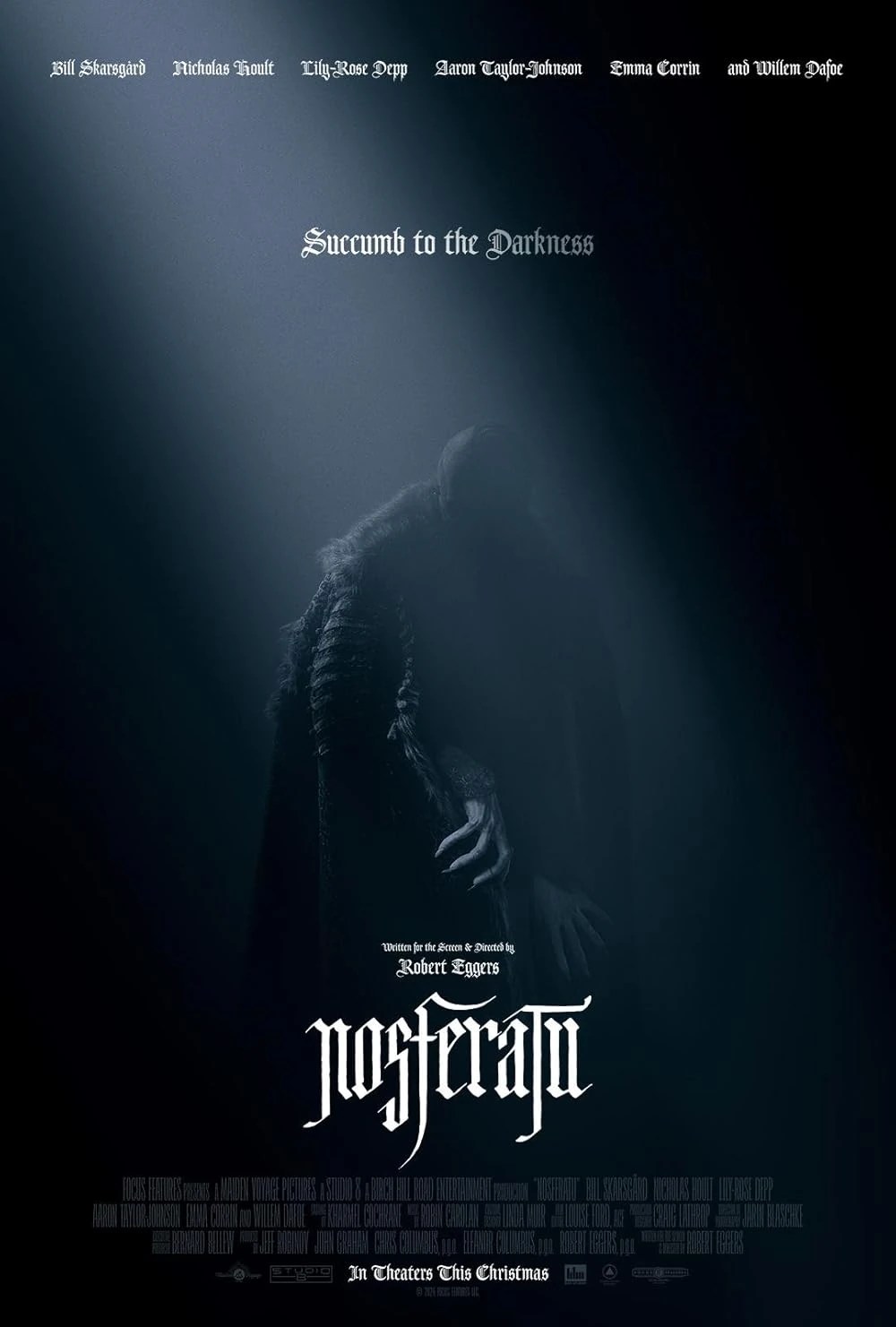
Gothic horror is truly timeless. Universal is going back to its roots in horror with its latest motion picture. More than a century after F.W. Murnau gifted us with the original Nosferatu (1922), director Robert Eggers delivers audiences his take on Murnau’s unauthorized Dracula adaptation; however, Eggers’ vision for his expression of Nosferatu is more closely aligned with Warner Herzog’s Nosfertatu the Vampyre (1979) than with Murnau’s original film. Ostensibly, Eggers’ adaptation sets out to bridge elements of both the 1922 and 1979 versions, whilst incorporating the postmodern ideologies that he has integrated in his past works. This expression of Nosferatu combines the atmosphere, mood, and settings from the 1922 version with the characters and erotic tone of Herzog’s version. Each iteration of Nosferatu reflects its director’s vision and the cinematic sensibilities of its time. For it was Oscar Wilde whom reminded us that all art is self-portraiture, “Every portrait that is painted with feeling is a portrait of the artist, not of the sitter.” As cinema is art, and the director is often considered the author thereof, then each of these versions expressed something to us about his beliefs, fears, anxieties, or worldview. Eggers took the expressive techniques and vampire lore of Murnau, the existentialism and romanticism of Herzog, and combined those with his applied postmodernist worldview to create 2024’s Nosferatu.

In the 1830s, estate agent Thomas Hutter travels to Transylvania for a fateful meeting with Count Orlok, a prospective client. In his absence, Hutter’s new bride, Ellen, is left under the care of their friends, Friedrich and Anna Harding. Plagued by horrific visions and an increasing sense of dread, Ellen soon encounters an evil force that’s far beyond her control.

Egger’s expression of Nosferatu demonstrates a desire to explore themes of mortality, isolation, corruption, and desire all while underscoring each theme with a sense existential dread. The primal fear of death is perhaps the most overt theme, because Orlok represents the lengths people will go in order to escape that which is inevitable. While monstrously depicted in the film, there is a parallel here between that and the obsession people can have in the real world over youth, vitality, and longevity. We can even draw further parallels between the desire vampires have for human blood with the desire humans have for medications and medical procedures that claim to prolong life and youthfulness. 

A recurring there of vampiric imagery is obsession, not only with youth and life, but obsession in connection with desire—specifically primal desires for that which appears or feels forbidden. Long since has the vampire been used as a personification of forbidden desires. While this was particularly true in the Victorian era—what with its many romantic and sexual mores—it can also be seen today by some as the informal boundaries that Western culture places upon depictions of romance and sexuality. In the postmodern era, many feel that the Eastern ways of life are more liberating, and that is represented in the fact that Orlok hails from Eastern Europe (presumably in the area of Transylvania).

Our central character of Ellen (which is a switch from the typical male central character in variations of the Dracula story), represents the idea that some women feel confined by the boundaries placed upon them by a patriarchal society. By Eggers’ endowing the character of Ellen with a greater sense of agency, he is able to convey more focus on the confines of the Western and/or patriarchal world upon the primal desires of Ellen, and how she must overcome the ties that bind her to both written and unwritten societal expectations. In turn, Orlok can be read as the means to free oneself from all societal inhibitions, but that liberation comes at a great cost. Ellen’s desire for Orlok is both attractive and repulsive—she wants what he represents but doesn’t want the monster himself. In the end, the only way to save her town of Wisborg (and world) is by giving into her primal desires as a means of sacrifice. 

One of the biggest differences in both previous versions and Eggers’ is the imagery of Count Orlok himself. In both previous iterations, there was something sympathetic, darkly whimsical, and even suave about the Count; but in this version, Count Orlok is exponentially more monstrous looking, which offers a stark contrast to that of the alluring appeal of the vampire. Interestingly, Eggers’ interpretation of a vampire is much more closely aligned with traditional eastern European folklore than the words and descriptions of Bram Stoker. Reaching beyond the Dracula novel and both previous versions of Nosferatu, Eggers set out to create an interpretation that demonstrated concern for historical detail and traditional folklore to give his version a sense of realism. Unfortunately, this realism is somewhat hampered from beginning to end, given the film takes place in Germany but none of the characters speak with a German accent, much less in Deutsch. But I digress.

Another difference between this Nosferatu and past versions of both Nosferatu and Dracula is the absence of consistent religious iconography or ritual. Even our esteemed Dr. Albin Eberhart (played by Willem DaFoe) incorporates Western medicine, Eastern medicine, and religions from around the world in his cocktail of methods for healing Ellen and vanquishing Count Orlok. This can be read as Egger’s commentary on how all religions are variations of the same thing, and that the best parts of each can be used in dealing with the obstacles of life. In many ways, this is a reflection of the views many have of religion and tradition in a postmodern world—the strength of a religious practice is in the belief itself and not in the person or object at the center of it. Interestingly, however, in contrast to the views many have of evil in a postmodern world, the movie posits the idea that there is evil in the world, and it isn’t a matter of perception or opinion—that there is evil out to devour all good and innocent in the world. What I appreciate about the character of Dr. Eberhart is his views that science and religion are not mutually exclusive; his character demonstrates that both science and religion are two sides of the same coin, and we need both in our lives.

Like with Eggers’ past work, this one too suffers from the same lack of thoughtful plotting that plagues his other films. Whether we are talking The Witch, The Lighthouse, or The Northman, Eggers demonstrably places far more emphasis on atmosphere, production design, and cinematography than he does plotting or character development. In fact, the original Nosferatu demonstrates stronger plotting despite the lack of spoken dialogue and title cards. This remake is yet another example of the shortcomings of prestige horror—focusing on how everything looks versus how it is written and plotted. Moreover, this continues to be a problem I have with many (if not most) writer-directors—the lack of strategic checks and balances. When the writer is also the director, then there isn’t usually someone that is part of the preproduction of a film that is in a position to state that something works on paper that doesn’t work on screen, or something that looks great an screen doesn’t make sense for reasons of storytelling mechanics. While I have many reservations for the demonstrable trends in postmodern horror, I will say that prestige horror works more effectively as the equivalent of the type of art that hangs in a museum beckoning for guests to sit in front of it for hours, contemplating that which is being conveyed by the collection of images.

Ryan is the general manager for 90.7 WKGC Public Media in Panama City and host of the public radio show ReelTalk about all things cinema. Additionally, he is the author of the upcoming film studies book titled Monsters, Madness, and Mayhem: Why People Love Horror. After teaching film studies for over eight years at the University of Tampa, he transitioned from the classroom to public media. He is a member of the Critics Association of Central Florida and Indie Film Critics of America. If you like this article, check out the others and FOLLOW this blog! Follow him on Twitter: RLTerry1 and LetterBoxd: RLTerry
RENFIELD horror comedy review

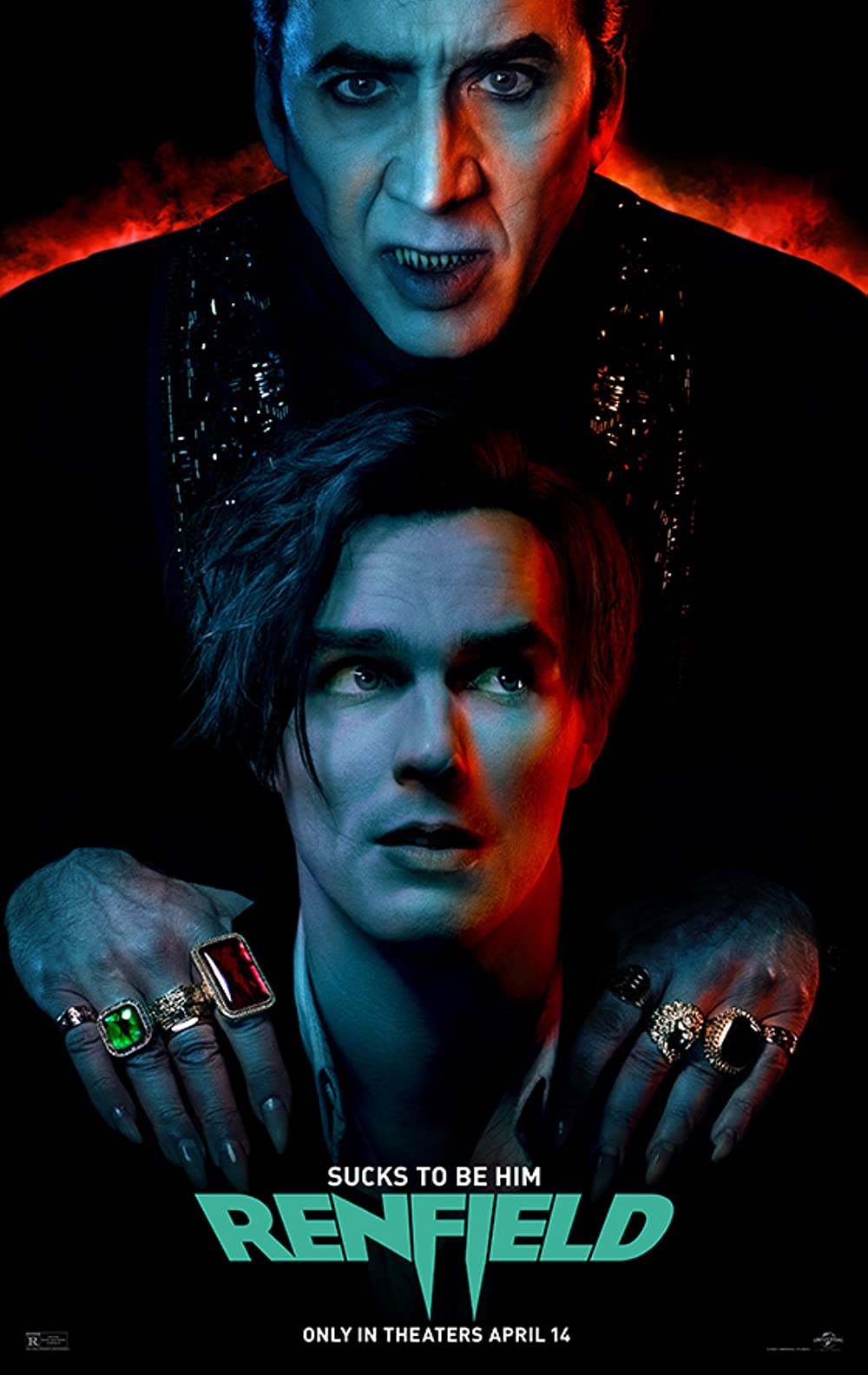
Fangtastic! John Wick meets Van Helsing meets Warm Bodies in this imaginary adaptation of the Dracula mythos inspired by the original Universal Monster classic. While that may sound like the most unusual combination of movies, it works surprisingly well in Renfield from the birthplace of the American horror film.

Renfield, the tortured aide to his narcissistic boss, Dracula, is forced to procure his master’s prey and do his every bidding. However, after centuries of servitude, he’s ready to see if there’s a life outside the shadow of the Prince of Darkness.

Just like Dracula and Renfield, in the original Dracula, metaphorically exist in two realms simultaneously, this movie also exists in two realms: horror and comedy. And these two genres are both satisfied in the characterization and conflicts of this highly entertaining movie. Suffice it to say, it’s a really good movie–shocking–I know.

After the questionable trailers (which I try to avoid as much as possible; a practice of mine since marketing companies don’t usually know when to hold the cards back), I went into this movie with tempered expectations at best. Moreover, I honestly went in with low expectations for what I thought was going to be a ‘we set out to make a movie that is so bad that it’s good.’ The problem with that is that a filmmaker cannot intentionally create a so bad it’s good movie. It’s lightning in a bottle when it happens because the intention was to create a good movie, that just happened to turn out (to usually be) campy.

Spiritual sequels often struggle to find that place wherein the legacy film and new, reimagined approach intersect in ways that don’t rewrite or retcon the past yet provide a new experience. There have been countless official and unofficial adaptations of Bram Stoker’s Dracula, not to mention, hundreds of vampire movies that are directly inspired by the Dracula mythos. Therein lies the challenge: how to craft something new from that which is proliferated. Renfield works because the writers selected a character that factors significantly into the original material, yet has never been truly explored as a character following the events of Dracula.

Oh yeah, the recreations of the original Dracula, complete with (what looks to be) non-CGI gothic sets and lighting, made for a fantastic way to open the film.

Nicolas Cage, Nicholas Hoult, and Awkwafina were excellent casting choices, especially Cage’s Dracula, whom resembles Bela Lugosi even more than Walter Matthou’s in Ed Wood. Cage and Hoult demonstrate fantastic chemistry, and they scenes are among the best in the film. Hoult and Awkwafina may not have the chemistry that he has with Cage, but they still manage to play off one another well enough. Hoult not only looks like our original Renfield, but he finds an exemplary balance between tragedy and comedy. This film certainly provides him with a vessel to showcase his outstanding acting chops. Awkwafina brings a subdued version of her comedic brand, and it works great! Often times, her characters have annoyed me because they are often obnoxious, but not this time.

The violence is amped up to the nth degree! And it is wildly campy! I was reminded of the level of laughable violence and gore in Tucker and Dale vs Evil! While it could have been so easy for the violence and gore to be tasteless and gratuitous, it never crosses that line. Why? Because it is on a comic levels that is designed to elicit laugher instead of wincing, visceral, uncomfortable pain. Every sequence with kills is going for a laugh and not a scare or provocation. And the kills are wonderfully creative and on-brand for the tone of the film.

Renfield successfully connects the original film to this new adaptation in ways that pay respectful homage to the original but craft new expressions that are sure to please audiences. Perhaps the original isn’t a prerequisite for this one, BUT you will have far greater appreciation for the flashbacks and references to the original. If you’re a horror fan, particularly of the original Universal Monsters, then you definitely don’t want to miss Renfield!

Ryan teaches Film Studies and Screenwriting at the University of Tampa and is a member of the Critics Association of Central Florida and Indie Film Critics of America. If you like this article, check out the others and FOLLOW this blog! Interested in Ryan making a guest appearance on your podcast or contributing to your website? Send him a DM on Twitter. If you’re ever in Tampa or Orlando, feel free to catch a movie with him.

Follow him on Twitter: RLTerry1 and LetterBoxd: RLTerry
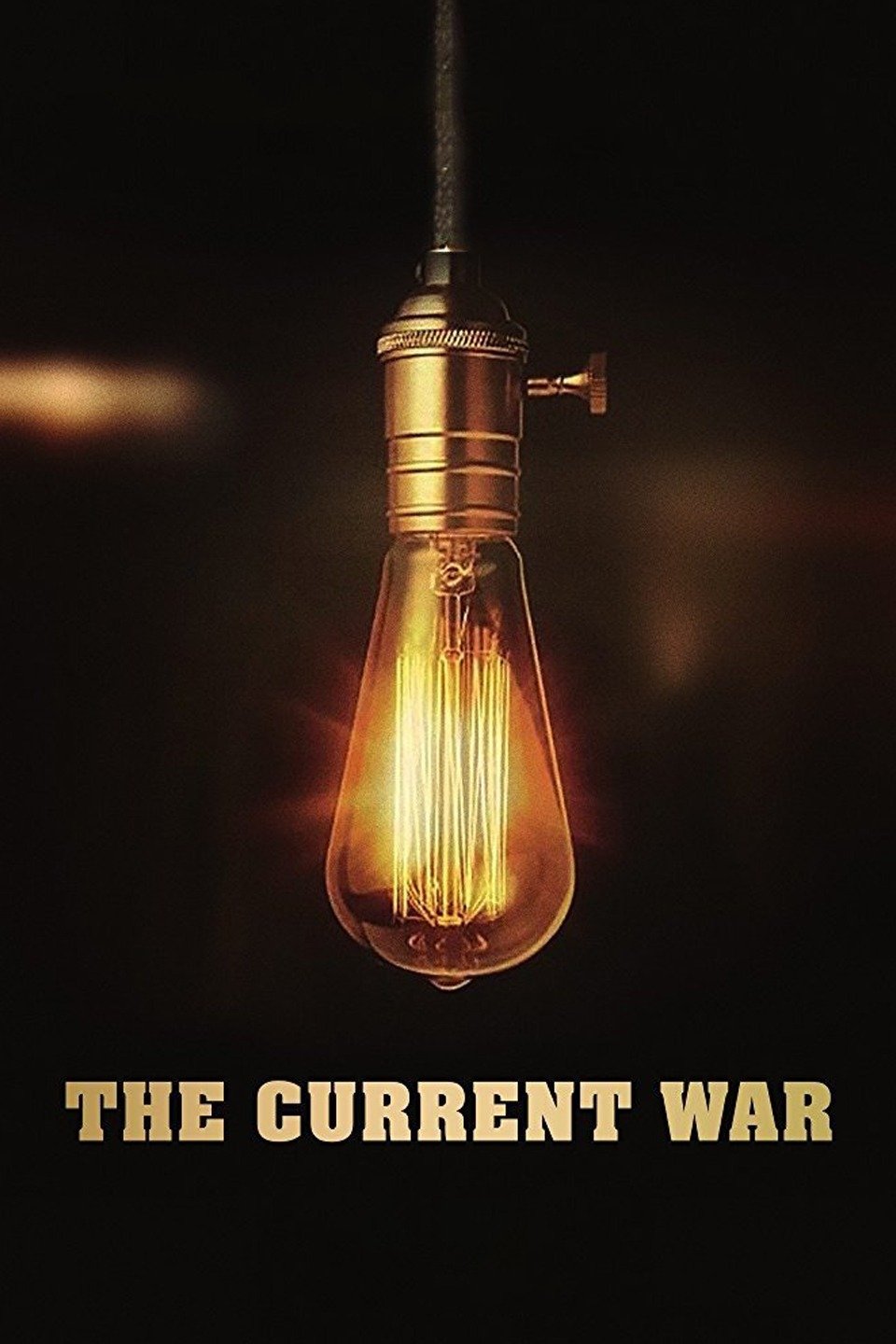
“The Current War” historical movie review

When the History Channel comes to cinemas. Despite what the title and tagline suggests, this movie is not electrifying and unfortunately plays off as forgettable Oscar bait. The only difference between this movie and one that you may catch on The History or Discovery Channels is the A-list cast. For students of history or those whom normally seek out and enjoy historical movies, you will most likely find this story interesting if not fascinating. Perhaps nearly as interesting as the historical background of this movie is the story of this movie’s journey from concept to screen. After the collapse of The Weinstein Company, this movie’s fate to never see the distribution was all but sealed. Enter from stage left Executive Producer Martin Scorsese to save this movie. With the backing of Scorsese, director Alfonso Gomez-Rejon recut the film to that which he originally intended before Harvey has his way with it (and others in Hollywood). While the details of the plot lack anything truly memorable, and the characters are one-dimensional, where this film shines is in the cinematography and editing. All throughout the movie, the camera becomes a character in and of itself, providing audiences with carefully crafted angles and beautiful tracking shots that attempt to draw us into the story on an intimate level with this cast of legendary inventors and businessmen. Perhaps we would be talking cast too had they been given anything to work with. Ultimately, the screenplay is to blame for this steady but low wattage story of one of the greatest chapters in US history.

Thomas Edison (Benedict Cumberbatch) and George Westinghouse (Michael Shannon)– the greatest inventors of the industrial age — engage in a battle of technology and ideas that will determine whose electrical system will power the new century. Backed by J.P. Morgan, Edison dazzles the world by lighting Manhattan. But Westinghouse, aided by Nikola Tesla (Nicholas Hoult), sees fatal flaws in Edison’s direct current design. Westinghouse and Tesla bet everything on risky and dangerous alternating current. (IMDb)

Upon watching this movie, it is clear that screenwriter Michael Mitnick forgot the cardinal rule of composing a well-developed screenplay with visual dimension: dramatize don’t tell (or simply show). Everything needed for a great screenplay is here: two central characters that equally function as the character(s) of opposition, a well-defined external goal (providing the electricity for the Chicago World’s Fair), motivated by an internal need (to prove that he is the best). It’s a relatively simple plot with complex characters–well characters that should have been more complex than they were written to be. Unfortunately, the plot was made complicated by too much technical jargon and felt too “telly” because of the perpetual exposition dumps. Further evidence of the weak screenwriting is witnessed in the lack of character development. What we are left with is a simple (yet dull) plot and simple characters. This would explain why all the elements for a great historical movie are there, but it still feels kind of weird.

As fantastic as the cinematography is, it certainly needed something to work with in order to deliver the luscious imagery we get in this movie. Fortunately, the cinematographer was given gorgeous sets, outstanding costumes, and locations that function as de facto characters. Good thing too, because the cinematographer was not given a script or characters to highlight. The stylistic cinematography provided by Chung-Hoon illuminates the dark with visually stunning choices that exude a strong commitment to visual storytelling. Had Chung been given a visually-driven screenplay, then perhaps we might be talking Oscar noms next year. Performing as strongly as the cinematography is the editing. If you like the way Broadway movies are edited, then you will enjoy the editing techniques employed to cut together this story. Just as this is a movie about inventors (of either inventions or clever ways of acquiring patents), the editing feels highly inventive for this style of movie. Whereas the screenplay feels very History Channel, the editing is fresh, sharp, and never feels dull (unlike the story itself).

Personally, what I found most interesting was the Edison story. Not because he was my favorite character, quite the contrary. After all, Edison comes off as the Ray Kroc of electricity. Why I was particularly interested in his story is because I’ve had the opportunity to visit the Ford and Edison Winter Estates in Fort Myers, Florida. For example, I’ve seen that same lightbulb map at the museum as well as one of his laboratories. Having visited his winter nome (which functioned as his supplementary research lab), I could literally place myself in his world. One of the labs that used to exist on the property has since been relocated to Henry Ford’s Greenfield Village, which is home to many historical houses and buildings that have been relocated from their original standing place to the living museum. After the movie has provided me with the inside story on Edison, next time I visit his Winter Estate, I will view it with new eyes. If you have the opportunity to visit Greenfield Village or the Ford and Edison Winter Estates, I highly encourage you to take your time to walk through the history of two of the greatest minds that transitioned us into the modern era though ingenuity and determination.

Ryan teaches screenwriting at the University of Tampa. If you like this article, check out the others and FOLLOW this blog! Interested in Ryan making a guest appearance on your podcast or contributing to your website? Send him a DM on Twitter or email him at RLTerry1@gmail.com! You can catch Ryan most weeks at Studio Movie Grill Tampa, so if you’re in the area, feel free to catch a movie with him!

Follow him!

Twitter: RLTerry1

Instagram: RL_Terry

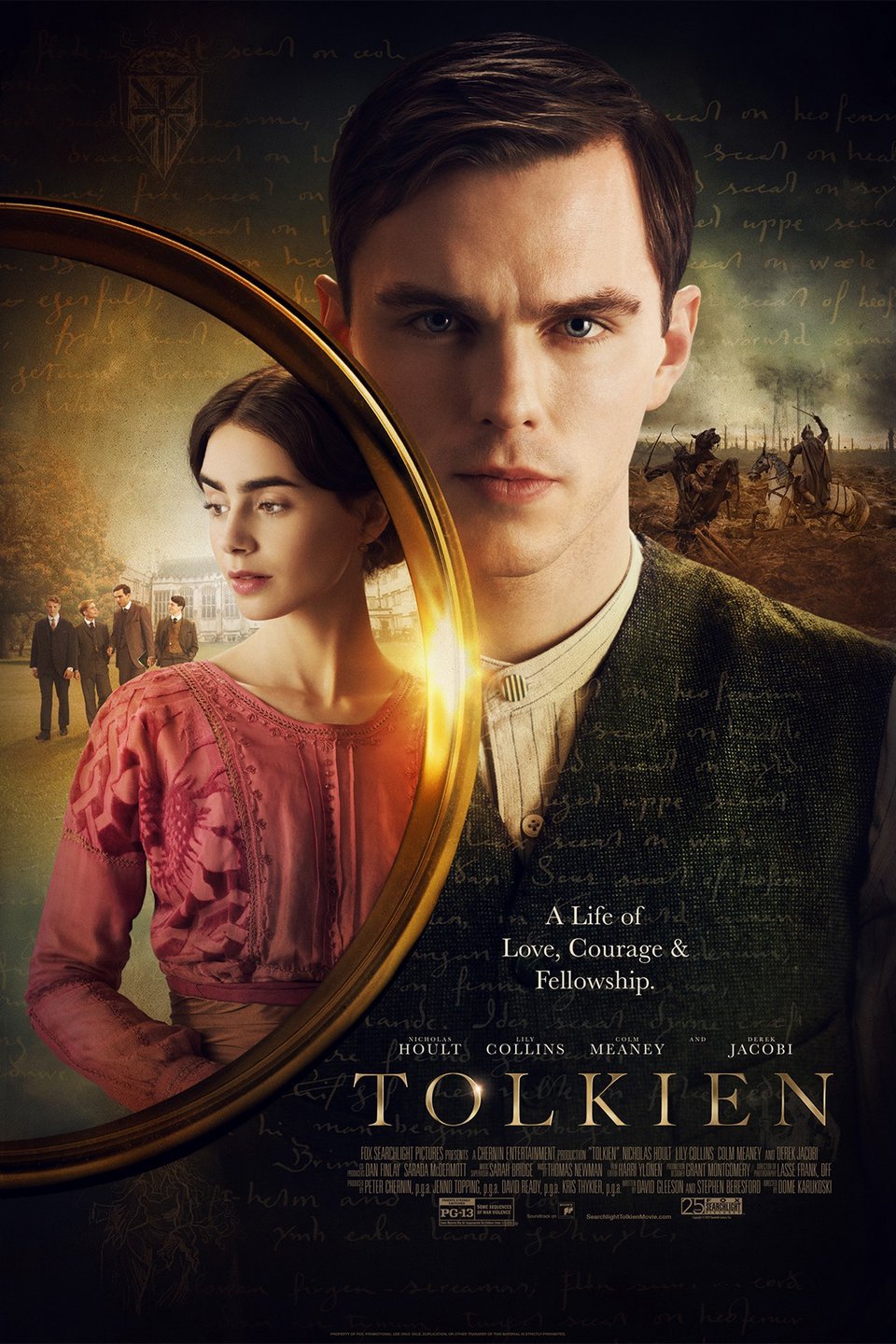
“Tolkien” BioPic Movie Review

One of the world’s most engaging authors in one of the world’s most un-engaging biopics. Go behind the prolific fantasy writing, linguistics, and mythology to discover the origins of author J.R.R. Tolkien. From his early childhood as an orphan to his studies and teaching at Oxford, follow the famed author on his own unexpected journey to eventually pen those iconic words “In a hole in the ground there lived a hobbit.” Biopics are often challenged with balancing what the audience wants to see with the reality of what was, both the attractive, inspiring moments and, if applicable, the gruesome or repulsive. And over all, Tolkien does an adequate job of highlighting the personal history of Tolkien (tol-Keen); however, where the biopic does not deliver is evoking a significant emotional response from the audience. If you’ve read that it comes off as a glorified Wikipedia article, then don’t worry, that is not true. But, it isn’t an I, TonyaTheory of Everything, or Amadeus either. As biopics go, it is pretty much middle of the road. Though the story may not be as fascinating or gripping as audiences want, it does deliver command performances by Hoult, Collins, and JRR’s three best friends. In addition to the impeccable casting, the production design is gorgeous and the score is compelling. Sometimes biopics make the mistake of treating the subject with too much reverence, thus overlooking or glossing over low points or decisions that place the subject in a less than favorable light. And, without knowing a detailed history of his life, I am left with the real possibility that this biopic did just that. Perhaps it’s the oversimplification of Tolkien’s quasi-privileged life that predisposes the screenplay to falling short of evoking strong emotion from the audience. If there is one message that is clear from this biopic, it’s that imagination served as an escape from the obstacles and trials of life, especially during WWI.

Years before he would write The Fellowship of the Ring, J.R.R. Tolkien found himself in a childhood fellowship with three other outcasts at King Edward’s School in Birmingham, England after his mom, who would regale him of stories of dragons and knights, unexpectedly passed away. This close friendship would follow him all the way through to college and even into WWI. These four friends would draw upon one another for courage and artistic expression. Taking inspiration from his own fellowship including the personal/interpersonal challenges Tolkien faced as he and his friends challenged one another and his affections for Edith Bratt, Tolkien reflected on these experiences to write The Hobbit and The Lord of the Rings.

Although the scenes from WWI serve as a framing device for this biopic, it is the formidable years spent at King Edward’s School and Oxford that truly defined Tolkien and set him up for his timeless masterpieces. Had the movie taken a more linear approach, the story may have been much more impactful. As it stands, there is so much oscillation between the “present day” moments and the flash forwards/backwards (yes, there are both in this movie) that it was difficult to focus. The majority of the movie takes place at Oxford, but the number of flashbacks and flashforwards took me out of the story periodically. Flashbacks can be a useful storytelling tool, to provide visual exposition, but they are often misused. Had this movie followed the approach that Fried Green Tomatoes took with the use of present-day and flashbacks, then I think it would have delivered more powerful story. Although as a screenwriting lecturer I recommend that my students not use flashbacks because of how tricky it can be to integrate them in such a way that they advance the plot, if a screenwriter chooses to use flashbacks, then the writer has to make sure that the flashback or flashforward works to move the plot forward–add something of value to the story. With Tolkien, the flashbacks do little more than frame the story. Other than some impressive visuals and opening a window into the world that inspired and shaped Tolkien, these moments do not significantly advance the plot in meaningful ways.

With Tolkien’s infatuation with (future wife) Edith Bratt, there was certainly opportunity to turn this into a romance, shifting focus away from the fellowship Tolkien had with his three close male friends. Thankfully, the romance between Tolkien and Edith was a nice B story to our A story. I say B story instead of subplot because it is a counterpart to the main outside action plot (story A). Furthermore, the romance between the two does heavily influence the and even inspire the romance between future characters Aragorn and Arwen in The Lord of the Rings. From romantic to close platonic relationships, that is truly what the plot of the biopic is about. Throughout the movie, you will encounter various relationships that Tolkien experienced during his life. Although we don’t spend much time with him and his younger brother, it is well-established that he has a moderately strong relationship with his brother. Furthermore, we see that Tolkien had a strong relationship with his mother, whom helped to shape his imagination in his younger years. It is widely known that Tolkien was a Catholic, but that is not highlighted in the movie (and it isn’t missed) but it’s that element that explains why the family priest is his legal guardian. Tolkien and the priest have a contentious relationship, but it is clear that the priest wants Tolkien to succeed in life. We don’t get to spend much time with his foster mom, but she seems to understand Tolkien and Edith’s relationship. Before getting to focal relationships, Tolkien has a strong relationship with his mentor and professor whom is chiefly responsible for Tolkien pursuing his scholarly studies at Oxford.

The central relationship(s) in the movie is between Tolkien and colleagues Christopher, Geoffrey, and Robert. For most of the movie, they are shown to be as close as brothers, but I appreciate the movie spending some time on the development of the relationships. What starts out as heavy conflict (that even devolves into physical altercations), soon evolves into the kind of friendships that you and I hope to have with close friends that ostensibly become our family. Despite Tolkien not coming from wealthy families like his friends, they share one very important thing in common: a desire to change the world through art. Each of the boys has a different interest, but they each inspire one another to stand up to the obstacles of life and achieve what each deeply desires. Of all his friends, Tolkien was closest to Geoffrey, whom was tragically killed during WWI along with Robert. Christopher is the only survivor out of Tolkien’s three friends. While Christopher’s scares (we are led to believe they are more emotional/psychological than physical) impacted his ability to compose music, Tolkien harnessed the atrocities of war to inspire The Hobbit and The Lord of the Rings. I absolutely love the depiction of close friendship between these young men because we seem to have very few examples of this level of male companionship in cinema, by in large. Many of the closest friendships are often shown between women. The structure of the plot keeps the movie from being as inspirational as it could have been, but there is still a lot to like here.

As biopics go, this one is middle of the road. It is not outstanding nor is it a bore. For fans of the author, I feel that you will get quite a lot out of the movie. The impeccable casting is the strength of this story. Each actor/actress delivers solid performances. Whether you are more familiar with the books or movies, you will find surrogates for notable characters throughout Tolkien’s most famous writing. Interestingly, the late author’s estate released a statement saying that Tolkien’s family members “do not endorse it or its content in any way.” In fact, the estate has yet to see the movie. Perhaps its the exclusion of nuances that the family is aware of in the author’s life, but I am unable to see why any parts of this biopic are controversial in any way. If you enjoy reading his books or watching the movies that were inspired by them, then you should see this biopic. Not because it is an outstanding motion picture, but because it does give you insight into the real world of Tolkien.

You can catch Ryan most weeks at Studio Movie Grill Tampa, so if you’re in the area, let him know and you can join him at the cinema.

Ryan teaches screenwriting at the University of Tampa. If you like this article, check out the others and FOLLOW this blog! Interested in Ryan making a guest appearance on your podcast or contributing to your website? Send him a DM on Twitter!

Follow him!

Twitter: RLTerry1

Instagram: RL_Terry