“La La Land” movie review

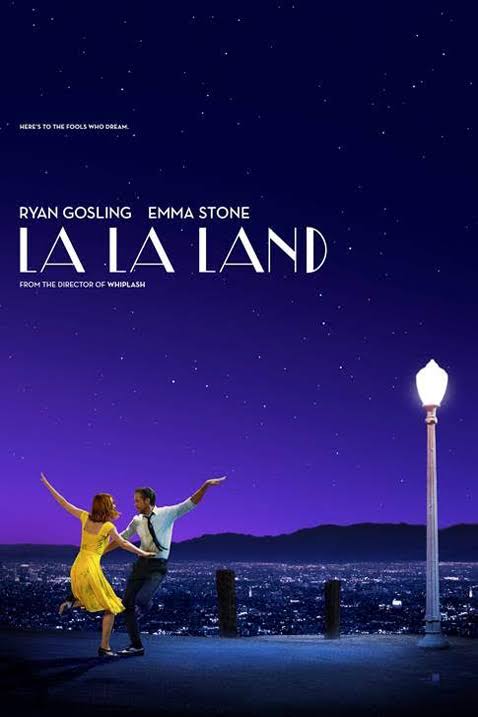
lalalandSimply dazzling! A beautifully produced motion picture musical that is sure to delight audiences around the world. Ryan Gosling (Sebastian) and Emma Stone (Mia) shine brightly in this self-reflexive modern romantic film set on the backdrop of a classically composed movie musical echoing the song and dance numbers that Busby Berkeley brought to the silver screen through Hollywood studio system powerhouse Warner Bros. Summit Entertainment’s La La Land will have you laughing one moment and crying the next in this roller coaster of emotions. Every aspiring professional who has the dream of a substantive career as an artist in the visual and performing arts–or just an artist in general–needs to watch this film. If you have ever been discouraged on your career path, or lack thereof, this film will aid in reigniting the flame that fuels your dreams of writing, acting, playing, or whatever your passion happens to be. Whereas many films similar to this one would have shot it as a period OR modern piece, this film is nothing short of a masterpiece that harnesses the nostalgic appeal of the classic musical with the power of modern cinematic storytelling.

Stories of struggling to reach your dreams are nothing new, but there is so much more to the story of Mia (Stone) and Sebastian’s (Gosling) respective goals of successful careers in the city of angels. Following a chance meeting at a night club in LA where Sebastian was playing a set list of traditional Christmas carols, Mia and Sebastian continue to bump into each other at parties and in the work place. The focus of this musical is on the everyday life of two struggling artists trying to make it in a city notorious for shattering dreams and breaking hearts. Mia and Sebastian must learn what is more important: chasing dreams of being in the spotlight or a once-in-a-lifetime opportunity for a beautiful love unmatched by any other.

Best part about Damien Chazelle’s La La Land? The old-school movie musical feel from the moment the film opens. From set pieces to matte paintings to the manner in which the cameras capture the story as the drama unfolds, this is both a modern story of romance and conflict and classic Hollywood musical. While some may find the cinematography, lighting, and editing to be nothing remarkable, the fact of the matter is that it required great skill and hundreds of hours of effort to capture the essence of an old Hollywood musical. To recreate a nearly extinct film genre, is an outstanding achievement in cinematic storytelling and deserves all the 9s and 10s this film is receiving from critics and fans alike. La La Land takes pages right out of the books of Busby Berkeley (Footlight Parade) and Gene Kelly (Singin’ in the Rain). Such a gorgeous combination of a classically structured and choreographed musical within a modern Hollywood. And the film could have easily rested its laurels on the technical and artistic achievements alone, but the film also possesses an incredibly beautiful love story between two aspiring artists.

In a modern studio system who appears all too often to be more concerned with franchise building, merchandising, theme park integration, and rebooting, this film is fresh, real, gritty, and endearing. In a climate so predisposed to the Star WarsesHarry PottersJurassic Parks, and Avengerses, this film brings with is a breath of fresh air that is nearly unmatched by any other film this year. While many are concerned with the lack of original stories coming out of Hollywood, may this film be a testament that masterpieces can still make their way into cinemas nationwide and not simply the art house theatre of the US’ largest metro areas. Although film is a visual medium and should not rely upon the score or songs to carry the bulk of the film (i.e. Frozen), this film is very much about the music. However, unlike films that integrate music in order to cover up poorly structured and developed writing, La La Land embraces the music as much a part of the story as the writing itself. In many ways, the film plays out like music and flows like a musical score. The way the cameras moves, the editor cut, and the blocking of the characters is very much like a musical staff, like the way music is composed and performed. But at the same time, the movie is not simply about the music but about the relationship between Mia and Sebastian; and furthermore, about their aspirations for the spotlight. Solid writing and a solid score.

The casting of La La Land could not have been more brilliant! Both Stone and Gosling successfully bring about that 1940s feel in a modern story. That could be due to the successes of both in 1940s era films prior. Stone in Magic in the Moonlight and Gosling in The Notebook. While both can successfully carry a period piece on their own respectively, together they are a powerhouse couple like Fred Astaire and Ginger Rogers. Their performances in this film were so incredibly natural, so real, and believable. At the same time, the actors are also very much contemporary–just like the film: classic yet contemporary. Even though the audience is well aware that Stone and Gosling are anything but struggling artists, they play their respective parts so convincingly that you’d swear that we were actually watching a pair of struggling artists who do desperately want a substantive piece of that Hollywood pie. A great screenplay possesses protagonists that the audience will love or love to hate, and the characters in La La Land connect so incredibly well with classic and contemporary audiences.

Inspirational. This film will help to inspire those who have a talent for storytelling, music, or writing to continue to work hard and remain dedicated to one’s craft because that is the only way that a career can pay off. The moment you stop trying is the moment that the dream dies along with settling for less. Not that day-jobs aren’t important. Certainly the importance of a day job is shown in the film, but it’s imperative that the day job never cause an artist to sell out or give up on the dream. Day jobs should fund imaginative dreams not eclipse them. There is much to love about this film; so much so that you will likely find yourself with a desire to watch it again. This IS definitely my pick for Best Picture as we head into award season with the holidays coming to a close.

“Allied” movie review

alliedQuite the duplicitous plot! Robert Zemeckis’ Allied released by Paramount Pictures is a thrilling tale of espionage and love. We have certainly seen a few different “spy” movies over the last couple of years; some more about espionage and others more about the drama that ensues afterwards. Fortunately, Allied feels like a genuine spy movie that actually contains espionage. The production design and costumes are a beautiful throwback to the fabulous 40s. You’ll find yourself reaching for a glass of champagne and swing dancing to Benny Goodman’s timeless big band jazz hit Sing, Sing, Sing. There is one city synonymous with WWII, espionage, and romance and you will appropriately return to that iconic city of Casablanca in Allied. This is definitely not a reimagined Casablanca but there are indirect references to that movie sprinkled throughout this new story. Films like this one require top notch talent, and both Brad Pitt and Marion Cotillard deliver outstanding performances to accompany this staple in film genres. Not limited to the love story between Pitt’s and Cotillard’s respective characters, the movie also includes some deadly shootout scenes and dangerously close encounters with the Nazis behind enemy lines.

Commander and intelligence officer Max Vatan (Pitt) is stationed in the famous city of Casablanca in French Morocco where he teams up with French resistance movement leader Marianne Beausejour (Cotillard). Impressed by her ability to so effectively blend in and create her authentic cover, Vatan soon finds himself falling in love with his partner. Following the assassination of a Nazi ambassador, Beausejour and Vatan flee to London to start their life together. Everything is going beautifully for the happy couple in their second year of marriage with a child when Vatan’s superiors confront him with the suspicion that Marianne is in fact a Nazi spy. Refusing to believe it to be true, Max must now conduct his own investigation into his wife’s history to protect the ones he loves so dearly.

I absolutely adored the look and feel of the film as it echoes the era of the Golden Age of Hollywood. Although this movie plays off a tad listless as a result of failing to elicit a strong emotional response from the audience, it is not without it outstanding elements. It benefits from solid acting and beautiful cinematography as well as some fantastic symbolism. Robert Zemeckis’ talent for visual storytelling is clearly visible in this period film. The weakness in the ability to successfully leave a lasting emotional impact on the audience is in the writing and executive producership of Steven Knight (Eastern Promises). For films that are not as much about the spectacle as they are the drama between characters and the challenges faced therein, it is vitally important that the personal/interpersonal relationships transcend the screen and directly impact the audience. All the makings were there for a deeply moving cinematic story, but it just doesn’t quite make that transition from the mostly superficial and distant.

Mirror, mirror, on the wall…(interesting fun fact: this misquoted line from Snow White is actually “magic mirror on the wall”). But, I digress. The strategic use of mirrors is an  incredible use of visual storytelling and symbolism. For those who have studied film or literary rhetoric, the mirror is a classic means of conveying duplicity (two sides, faces, etc of a character). Even without knowing that this was a spy movie, I would have been able to infer that from how the mirrors are shot and placed within the composition of the 24 frames a second. When using powerful symbolism as part of the visual story, it conveys so much more meaning in a scene than words could actually describe. Mirrors have long sense been a powerful metaphor even before moving pictures. But motion pictures allow for a greater use of the importance it plays in a cinematic story. Not limited to duplicity, mirrors can also be used as a metaphor for self-reflection. Whether talking duplicity or reflection, the mirror aids in conveying so much to the audience in this movie.

Ordinarily, I am not a fan of classic films getting remakes; however, there are always exceptions when the core or essence of the film is held in tact but the production design, direction, and cinematography are brought up to speed with contemporary cinema. If you’re a fan of WWII era films or the timelsss spy movie, then you will definitely enjoy Allied. After witnessing the significance of Casablanca in this movie, I am actually looking forward to a remake if there ever is one. Provided. That the overall look and feel of the movie is in line with classical motion picture storytelling. I could definitely see Robert Zemeckis directing a remake of Casablanca. Occasionally there are directors who can strike the balance between a classic tale told through contemporary technology, and Zemeckis definitely struck that balance in Allied.

Don’t allow the weak writing to dissuade you from watching it; there is actually a lot to enjoy in this film. After the slow burn during the first act, acts II and III are full of intrigue and suspense.

“Doctor Strange” movie review

drstrangeA perfect blend of stunning visual effects, character development, and even a hint of the avant-garde in this strange superhero film of East-meets-West. Unpredictable. That is definitely not a word typically associated with superhero genre movies. Not that the plot was entirely unpredictable, but Benedict Cumberbatch delivers a very Patrick Stewart-esque performance as the neurosurgeon turned mystic Dr. Strange in the film that bares his name. This is a superhero film that strikes a strategic balance between traditional superhero storytelling and social commentary. Not without the trademark explosions and dynamic action sequences, Doctor Strange is clearly concerned with and focusses on the character development of Dr. Strange. In a film that could have so easily rested its laurels upon the innovative, intriguing, and exquisite visual effects, it chose to place more emphasis on the drama between characters. Ordinarily, if you follow my blog, you know that I do not typically write positively about superhero films, with some exceptions such as: Batman ReturnsDeadpoolX-Men: Days of Future Past, or Guardians of the Galaxy; however, Marvel/Disney’s Doctor Strange was incredibly enjoyable as both a movie AND film (and yes, there is a difference). For those in the audience who perhaps struggle with being self-centered, the plot and character development in Doctor Strange will likely ring true and act as a mirror of how you may actually come across to people; and furthermore, how to break the cycle. Although this is clearly a typical blockbuster movie, there are trace-amounts of many elements often found in art house films in the stylistic way some of the sequences are shot. Doctor Strange, a truly multidimensional experience.

From Italian sports cars, European watches, and Armani suits to a rundown far eastern temple, famous neurosurgeon Dr. Stephen Strange’s life radically changes after a severe car accident leaves him without full use of his hands. As an expert in the field of bio-medical science, Dr. Strange seeks assistance from traditional western medicine. Convinced that no one except he alone can repair the nerve damage in his hands, Dr. Strange turns to eastern medicine following an encounter with someone who now walks who was paralyzed. Learning that the mysterious enclave of monk-like mystics is a front to a battle beyond the plains of normal existence, Dr. Strange is faced with the decision to use his newly acquired abilities to help fight against the evil seeking to rip the fabric-work of the earth from beneath the feet of millions of innocent citizens or use his powers to regain full use of his hands. With such a deep desire to go back to his successful life in western medicine and to repair a relationship he squandered (Rachel McAdams), he is faced with a monumental decision.

No slow wind up here. Doctor Strange‘s prologue is a breathtaking array of choreography and a dizzying spectacle of Inception-like folding of matter and energy visual effects. Instead of wondering why or who, the audience will be in sheer amazement at the beauty of it all. Opening with a prologue like this was critically important for this comic book icon that many had not heard of prior to the announcement of the movie (‘many’ as in those who are unfamiliar with the comics). Director Scott Derrickson (Exorcism of Emily Rose and Sinister) has clearly approached the Marvel universe from a different direction that most others, and it shows just how perfect a decision it was of Marvel/Disney to select him for the job. Although I was greatly impressed with the visual effects and fight choreography, I was worried that I was going to need to take a dramamine to make it through the majority of the movie. But then, it happened. A veritable bait-and-switch. From an action-packed Matrix-y sequence through a view of Manhattan as seen through a kaleidoscope of shapes and distortions to an operating table, I did not know the direction this film was going. Perfect. So often superhero movies are basic–fun–but basic. I also appreciated the humorous juxtaposition between the seriousness of surgery against the backdrop of late 1970’s rock music. Just within the first few minutes of this film, I was convince that this movie was going to be unconventional but strangely enjoyable.

Such a great cast! Part of the success of any movie is the cast and the respective roles they deliver. Not merely selected for their respective appearances, the main cast of Doctor Strange each brings a unique blend of talent into the mix. Cumberbatch plays an eccentric ego-maniacal self-centered high on himself doctor extremely well. So well that his development was quite convincing on his journey from selfishness to selflessness. Playing opposite him most of the movie is Tilda Swinton (Wes Anderson veteran actress seen in movies such as The Grand Budapest HotelMoonrise Kingdom, and more recently in the Cohen brothers’ Hail, Caesar!) as the Ancient One. She provides the ideal counterbalance to Strange’s over-inflated ego. Difficult to read, I was never quite sure which team she was on, and you’ll have to watch the movie to find out. Her performance was dynamic and convincing. Cast in the role of spurned lover Dr. Christine Palmer, Rachel McAdams does her McAdams thing so incredibly well. I also greatly appreciate how even when dressed in hospital scrubs she still graces the screen with her beauty. She may have bet spurned by Strange, but she gives it right back to him. Each and every member of the principle and supporting cast truly contributed to the success of the storytelling in this film.

At the core of this film is solid writing. The characters are multidimensional and the writing contains a bountiful buffet of bright, brisk entertainment that typically seems to do justice to the feel of the comics. Not saying the all the Marvel Movies (whether Disney or Fox) are better comic book adaptations than D.C. (Warner Bros), but they operate on a tried and true method of delivering a visually driven story that appeals to general audiences. Due to the fact that Doctor Strange and other Marvel movies DO rely upon tried and true methods of cinematic storytelling, there is little to no risk for the production and distribution companies. On that note, the D.C. movies are typically more edgy and riskier. Despite the rather dark plot of Doctor Strange, there is sufficient humor here and there to keep the audience from entering into a stagnate emotional state.

Whether you are familiar with the comic book series Doctor Strange or not, this is definitely a movie and film worth watching. Even if you have not seen the other Marvel movies (which is doubtful but possible), you can watch this one and not feel lost at all. That is likely due to the fact that Disney/Marvel knew that most people were unfamiliar with this character and needed to be introduced to him and his universe. If you’re into innovative visual effects, then you will be in awe at the effects and editing of Doctor Strange as well.

“Inferno” movie review

infernoFamed symbologist Robert Langdon is back in a fiery installment in the franchise that bears his name. Sony Pictures and Imagine Entertainment’s Inferno is a non-stop rollercoaster of an adventure film that combines art, history, literature, bio-medical science, and weapons of mass destruction in a heart-pounding thriller that makes academia and public health look sexy. As expected, Tom Hanks delivers an outstanding performance as the Indiana Jones of symbols and puzzles and the visual storytelling is excellent. From the moment the film opens with incoherent subjective flashes through the eyes of Langdon suffering from amnesia, shaky camera movements, and glimpses of disturbing apocalyptic imagery to the final showdown beneath Instanbul’s Hagia Sophia, Inferno will command your attention for the two-hour runtime. Unlike the two previous installments in the Langdon franchise, there is a conspicuous lack of commentary on organized religion by deciphering puzzles and revealing coverups and more of a focus on art history and rhetoric. This focus provides a far more believable plot than found in The Da Vinci Code and lesser so in Angels and Demons. With bio-medical warfare being at the center of this film, the movie paints a realistic portrait of how a Dante-spouting sociopath might try to fix the world’s problems by wiping out half the population with a destructive plague.

Waking up in a state of incoherency and amnesia in an Italian hospital in Florence, Robert Langdon (Hanks) is thrust into running–or hobbling, rather–for his life. Under the guidance and protection of a beautiful ER doctor (Felicity Jones), Langdon barely escapes with his life. Dazed and confused, Langdon must concentrate on piecing together a puzzle–no surprise there–but this time, the puzzle begins with how he got to Italy and why he is carrying a bio-medical tube. From puzzle to mystery, Langdon and Dr. Brooks (Jones) are forced into an adventure that blind-sided them. After discovering a connection between a dead sociopathic billionaire madman and the Italian poet Dante (The Divine Comedy), Langdon and Brooks race across Europe to stop a devastating plague from killing off more than half of the world’s population. Between stopping the plague and constantly under siege by the WHO (World Health Organization) and a private security firm, Langdon is truly racing against the clock to piece together his own life while making the connections in the puzzle left by the deceased sociopath to save the world.

Although in previous installments in the Langdon franchise have the symbologist traversing across Europe and even the world, this film’s plot is mostly concentrated in Florence. Home to some of the most notable works of art in the world, Inferno might work as an unconventional travel guide for the tourism industry in Italy. Far less cerebral than The Da Vinci Code and to a lesser extent Angels and DemonsInferno is far more visceral, exciting, and thrilling. The lack of religious/historic irony will definitely stick out to those who either read the books and/or watch the movies (I am the latte); however, that does not hinder the film’s delivery of an action-adventure taking place within the worlds of the arts and medical science. With the previous installment Angels and Demons being released in 2009, the high-impact feeling of Inferno is incredibly important because there has been such a long gap between the films. Still, the plot of Inferno does not have the finesse that both previous films have. Although this installment is incredibly enjoyable and entertaining, it lacks the opportunity to question, think, and analyze the mystery at hand.

Another contrast between this present installment and the previous two is the character-heavy plot. Occasionally, the film felt overrun with characters. Albeit, most of the characters are interesting and also possess brilliant minds, at times the plot is overcrowded. Perhaps that was intentional since the billionaire madman claims that the population should be reduced because of overcrowding the earth; however, it’s more likely that writer David Koepp and director Ron Howard were attempting to get as much of the novel on screen as possible. Not having read the novel, I am unable to comment on the translation from page to screen beyond inference. Despite the character-heavy plot, the film is not without the trademark art, history, literature, and enigmas that are synonymous with the Langdon series of books/films. Beginning with a reimagined map of Hell based on the one described by Dante in The Divine Comedy and illustrated by Botticelli, the film’s plot does come back to the puzzles but most of the time is spent being chased by nearly everyone.

The best part about this film is just how exciting it is. If you are even remotely interested in it, you won’t be disappointed. As this is a franchise, and franchises tend to have intentional or unintentional patterns of behavior within the cast of characters or similarly functioning plot devices, there are definitely elements in this installment that are found in the previous two. There is one plot twist that bares a striking resemblance to one in The Da Vinci Code. The non-stop action will likely kindle an interest in pursuing a career as an academic or official with the WHO. Perhaps, the study of symbols, numbers, and taxonomy, will be of greater interest to current students. There are just enough loose ends and unanswered questions that keep the film from being too predictable.

Looking for an exciting cinematic adventure for the weekend? That is, when you are not either at or recovering from a Halloween party. Check out Inferno! Not Halloween-themed at all, but it is a fun adventure full of excitement and you’ll learn a thing or two about art, history, and literature.

“Don’t Breathe” movie review

DontBreatheDon’t visit Detroit. Don’t Breathe is a brilliant horror film that will keep your adrenaline pumping and keep you guessing from the beginning of Act II to the final cut to black. Crossing into different sub-genres of horror, this movie will capture your attention every moment and catch you off guard every chance it gets. Although there is no scientific evidence for the collective belief that when one sense is removed that the others take over, it does make for a fantastic plot device that will greatly heighten your own senses while watching this efficiently ruthless movie. This is definitely a horror film to experience on the big screen–don’t wait for Prime, Play, RedBox, or HBONow. The most terrifying element of this movie is the feeling of being trapped in the dark. Just as the characters are experiencing the labyrinth that is the home of the intended robbery victim, you will also feel helpless as the terror unfolds in front of your eyes and you have nowhere to hide. Going into this film, you may think it simply a new twist on the home invasion sub-genre of horror, but you will soon find out that there is so much more to this movie than meets the eye. While some films–horror or not–are often guilty of wasting time, especially in the first acts respectively, Sony-Screen Gems’ Don’t Breath is a cinematic claustrophobic rollercoaster that includes one terrifying turn after another. In other news, if you’re looking to buy a house, this film includes some great shots of your next neighborhood in Detroit.

With all their friends gone, three young people are desperately trying to leave the city they once called home. Turning to petty theft and larceny, Money (Daniel Zovatto), Rocky (Jane Levy), and Alex (Dylan Minnette) receive a tip from a local crime boss that there is a house with enough money to get them all out the city. After learning that the home is inhabited by a blind old man (Stephen Lang), the small band of thieves conclude that this will be an easy gig. With the aid of security codes and keys from Alex’s father’s security business, who manages the few inhabited homes in Detroit, Alex, Money, and Rocky plan the heist. After the robbery goes 180 degrees in the opposite direction, this supposedly easy target now has them trapped. And a terrifying realization will have them holding their breath as to not get caught or worse. Two parts home invasion, one part heist, and three parts horror, this terrifying movie will have you on the edge of your seat.

For the sake of not giving anything away in the movie, I am going to keep this review on the shorter side. Sometimes the best horror movies are those that have a very simple premise. And this is definitely one of those. The heist genre is one of the oldest in the cinematic handbook. After all The Great Train Robbery (1903) was the first American film to pioneer composite editing, on-location shooting, and dynamic camera movement. Although not the very first motion picture, it is among the first and considered by many to be the first commercially successful motion picture. Early on in the dawn of commercial cinema, horror was quite prominent, thanks to Carl Laemmle who founded Universal Pictures. Don’t Breathe includes elements from many different films in the official sub-genres of horror; but to explore each of those would give away some terrifyingly morbid plot twists in the movie. The point is, this film borrows from both horror and non-horror films that helped to forge the foundation of commercially successful cinema. It’s of no surprise, after watching it, that is will likely do very well this weekend. Given that it has an August release date, I was concerned that–as good as it looked in the trailers–that it would not play out very well because the best horror films, this time of year, are released in latter September and October to make way for Halloween! But, I was totally wrong; I thoroughly enjoyed the experience. Speaking of Halloween, this movie would make an absolutely perfect addition to Universal’s Halloween Horror Nights next year if they can secure the rights from Sony Pictures.

Regarding the location of the film, this is just the latest in horror films (as well as other genres) to use the motor city as the backdrop for a violent story. As a producer, myself, I realize that part of the draw to that location is the simple fact that it is incredibly cheap to shoot there. The other part is that it effortlessly sets up a feeling of uneasiness from an aerial shot of the city or suburbs. Not entirely sure that having horror films and other violent movies set in your city, now in ruins, will do much for inspiring entrepreneurs or other professionals to relocate; but it does showcase the city as a welcoming place for filmmakers who seek to pursue their respective dreams of success at visual storytelling. Ghost towns have often been used in westerns, horror, and treasure hunt movies; and without having to go to a foreign country, there really is a perfect modern ghost town right here in the US. Whether it needs to serve as a location that symbolizes greatness in ruins or to instantly prompt apprehension or unbalance, it is a diverse landscape upon which to build a story.

Just when you think the film is over, it will throw you for a loop! Looking for a fantastic film to watch on a date or with your friends this weekend, then I highly recommend Don’t Breathe. It’s the perfect film to usher in this most macabre time of year. Not defaulting to gore and jump scares, this movie is a beautifully and meticulously crafted work of cinema that will genuinely cause your blood to race and keep your senses on edge.