“Inferno” movie review

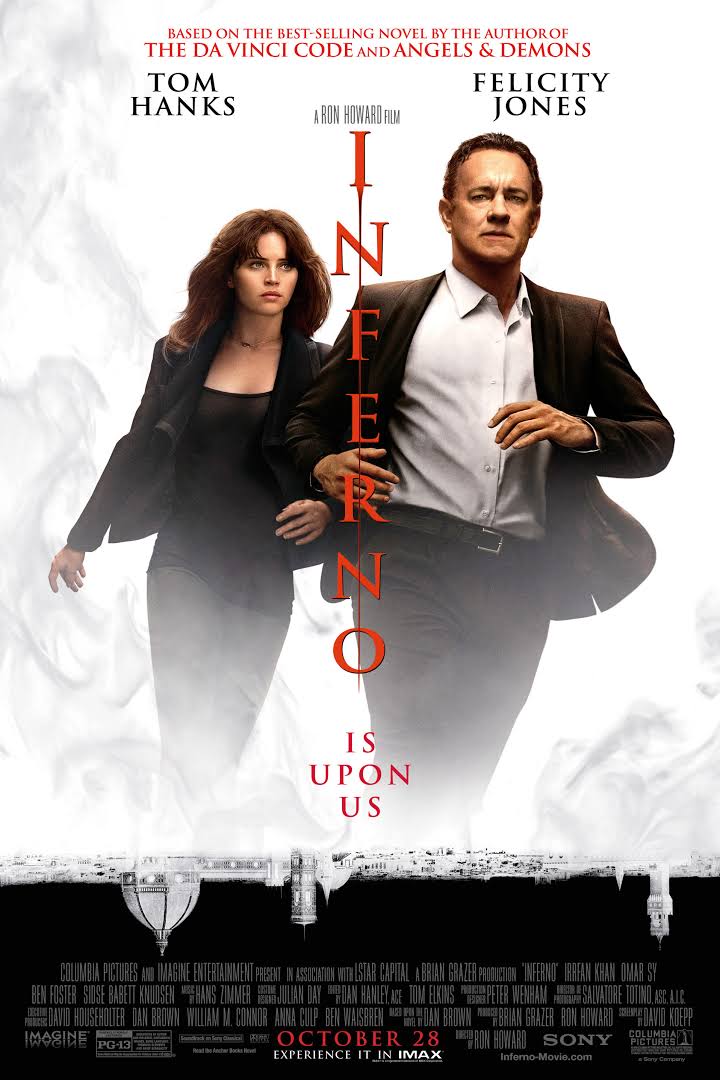
infernoFamed symbologist Robert Langdon is back in a fiery installment in the franchise that bears his name. Sony Pictures and Imagine Entertainment’s Inferno is a non-stop rollercoaster of an adventure film that combines art, history, literature, bio-medical science, and weapons of mass destruction in a heart-pounding thriller that makes academia and public health look sexy. As expected, Tom Hanks delivers an outstanding performance as the Indiana Jones of symbols and puzzles and the visual storytelling is excellent. From the moment the film opens with incoherent subjective flashes through the eyes of Langdon suffering from amnesia, shaky camera movements, and glimpses of disturbing apocalyptic imagery to the final showdown beneath Instanbul’s Hagia Sophia, Inferno will command your attention for the two-hour runtime. Unlike the two previous installments in the Langdon franchise, there is a conspicuous lack of commentary on organized religion by deciphering puzzles and revealing coverups and more of a focus on art history and rhetoric. This focus provides a far more believable plot than found in The Da Vinci Code and lesser so in Angels and Demons. With bio-medical warfare being at the center of this film, the movie paints a realistic portrait of how a Dante-spouting sociopath might try to fix the world’s problems by wiping out half the population with a destructive plague.

Waking up in a state of incoherency and amnesia in an Italian hospital in Florence, Robert Langdon (Hanks) is thrust into running–or hobbling, rather–for his life. Under the guidance and protection of a beautiful ER doctor (Felicity Jones), Langdon barely escapes with his life. Dazed and confused, Langdon must concentrate on piecing together a puzzle–no surprise there–but this time, the puzzle begins with how he got to Italy and why he is carrying a bio-medical tube. From puzzle to mystery, Langdon and Dr. Brooks (Jones) are forced into an adventure that blind-sided them. After discovering a connection between a dead sociopathic billionaire madman and the Italian poet Dante (The Divine Comedy), Langdon and Brooks race across Europe to stop a devastating plague from killing off more than half of the world’s population. Between stopping the plague and constantly under siege by the WHO (World Health Organization) and a private security firm, Langdon is truly racing against the clock to piece together his own life while making the connections in the puzzle left by the deceased sociopath to save the world.

Although in previous installments in the Langdon franchise have the symbologist traversing across Europe and even the world, this film’s plot is mostly concentrated in Florence. Home to some of the most notable works of art in the world, Inferno might work as an unconventional travel guide for the tourism industry in Italy. Far less cerebral than The Da Vinci Code and to a lesser extent Angels and DemonsInferno is far more visceral, exciting, and thrilling. The lack of religious/historic irony will definitely stick out to those who either read the books and/or watch the movies (I am the latte); however, that does not hinder the film’s delivery of an action-adventure taking place within the worlds of the arts and medical science. With the previous installment Angels and Demons being released in 2009, the high-impact feeling of Inferno is incredibly important because there has been such a long gap between the films. Still, the plot of Inferno does not have the finesse that both previous films have. Although this installment is incredibly enjoyable and entertaining, it lacks the opportunity to question, think, and analyze the mystery at hand.

Another contrast between this present installment and the previous two is the character-heavy plot. Occasionally, the film felt overrun with characters. Albeit, most of the characters are interesting and also possess brilliant minds, at times the plot is overcrowded. Perhaps that was intentional since the billionaire madman claims that the population should be reduced because of overcrowding the earth; however, it’s more likely that writer David Koepp and director Ron Howard were attempting to get as much of the novel on screen as possible. Not having read the novel, I am unable to comment on the translation from page to screen beyond inference. Despite the character-heavy plot, the film is not without the trademark art, history, literature, and enigmas that are synonymous with the Langdon series of books/films. Beginning with a reimagined map of Hell based on the one described by Dante in The Divine Comedy and illustrated by Botticelli, the film’s plot does come back to the puzzles but most of the time is spent being chased by nearly everyone.

The best part about this film is just how exciting it is. If you are even remotely interested in it, you won’t be disappointed. As this is a franchise, and franchises tend to have intentional or unintentional patterns of behavior within the cast of characters or similarly functioning plot devices, there are definitely elements in this installment that are found in the previous two. There is one plot twist that bares a striking resemblance to one in The Da Vinci Code. The non-stop action will likely kindle an interest in pursuing a career as an academic or official with the WHO. Perhaps, the study of symbols, numbers, and taxonomy, will be of greater interest to current students. There are just enough loose ends and unanswered questions that keep the film from being too predictable.

Looking for an exciting cinematic adventure for the weekend? That is, when you are not either at or recovering from a Halloween party. Check out Inferno! Not Halloween-themed at all, but it is a fun adventure full of excitement and you’ll learn a thing or two about art, history, and literature.

“Don’t Breathe” movie review

DontBreatheDon’t visit Detroit. Don’t Breathe is a brilliant horror film that will keep your adrenaline pumping and keep you guessing from the beginning of Act II to the final cut to black. Crossing into different sub-genres of horror, this movie will capture your attention every moment and catch you off guard every chance it gets. Although there is no scientific evidence for the collective belief that when one sense is removed that the others take over, it does make for a fantastic plot device that will greatly heighten your own senses while watching this efficiently ruthless movie. This is definitely a horror film to experience on the big screen–don’t wait for Prime, Play, RedBox, or HBONow. The most terrifying element of this movie is the feeling of being trapped in the dark. Just as the characters are experiencing the labyrinth that is the home of the intended robbery victim, you will also feel helpless as the terror unfolds in front of your eyes and you have nowhere to hide. Going into this film, you may think it simply a new twist on the home invasion sub-genre of horror, but you will soon find out that there is so much more to this movie than meets the eye. While some films–horror or not–are often guilty of wasting time, especially in the first acts respectively, Sony-Screen Gems’ Don’t Breath is a cinematic claustrophobic rollercoaster that includes one terrifying turn after another. In other news, if you’re looking to buy a house, this film includes some great shots of your next neighborhood in Detroit.

With all their friends gone, three young people are desperately trying to leave the city they once called home. Turning to petty theft and larceny, Money (Daniel Zovatto), Rocky (Jane Levy), and Alex (Dylan Minnette) receive a tip from a local crime boss that there is a house with enough money to get them all out the city. After learning that the home is inhabited by a blind old man (Stephen Lang), the small band of thieves conclude that this will be an easy gig. With the aid of security codes and keys from Alex’s father’s security business, who manages the few inhabited homes in Detroit, Alex, Money, and Rocky plan the heist. After the robbery goes 180 degrees in the opposite direction, this supposedly easy target now has them trapped. And a terrifying realization will have them holding their breath as to not get caught or worse. Two parts home invasion, one part heist, and three parts horror, this terrifying movie will have you on the edge of your seat.

For the sake of not giving anything away in the movie, I am going to keep this review on the shorter side. Sometimes the best horror movies are those that have a very simple premise. And this is definitely one of those. The heist genre is one of the oldest in the cinematic handbook. After all The Great Train Robbery (1903) was the first American film to pioneer composite editing, on-location shooting, and dynamic camera movement. Although not the very first motion picture, it is among the first and considered by many to be the first commercially successful motion picture. Early on in the dawn of commercial cinema, horror was quite prominent, thanks to Carl Laemmle who founded Universal Pictures. Don’t Breathe includes elements from many different films in the official sub-genres of horror; but to explore each of those would give away some terrifyingly morbid plot twists in the movie. The point is, this film borrows from both horror and non-horror films that helped to forge the foundation of commercially successful cinema. It’s of no surprise, after watching it, that is will likely do very well this weekend. Given that it has an August release date, I was concerned that–as good as it looked in the trailers–that it would not play out very well because the best horror films, this time of year, are released in latter September and October to make way for Halloween! But, I was totally wrong; I thoroughly enjoyed the experience. Speaking of Halloween, this movie would make an absolutely perfect addition to Universal’s Halloween Horror Nights next year if they can secure the rights from Sony Pictures.

Regarding the location of the film, this is just the latest in horror films (as well as other genres) to use the motor city as the backdrop for a violent story. As a producer, myself, I realize that part of the draw to that location is the simple fact that it is incredibly cheap to shoot there. The other part is that it effortlessly sets up a feeling of uneasiness from an aerial shot of the city or suburbs. Not entirely sure that having horror films and other violent movies set in your city, now in ruins, will do much for inspiring entrepreneurs or other professionals to relocate; but it does showcase the city as a welcoming place for filmmakers who seek to pursue their respective dreams of success at visual storytelling. Ghost towns have often been used in westerns, horror, and treasure hunt movies; and without having to go to a foreign country, there really is a perfect modern ghost town right here in the US. Whether it needs to serve as a location that symbolizes greatness in ruins or to instantly prompt apprehension or unbalance, it is a diverse landscape upon which to build a story.

Just when you think the film is over, it will throw you for a loop! Looking for a fantastic film to watch on a date or with your friends this weekend, then I highly recommend Don’t Breathe. It’s the perfect film to usher in this most macabre time of year. Not defaulting to gore and jump scares, this movie is a beautifully and meticulously crafted work of cinema that will genuinely cause your blood to race and keep your senses on edge.

“Florence Foster Jenkins” movie review

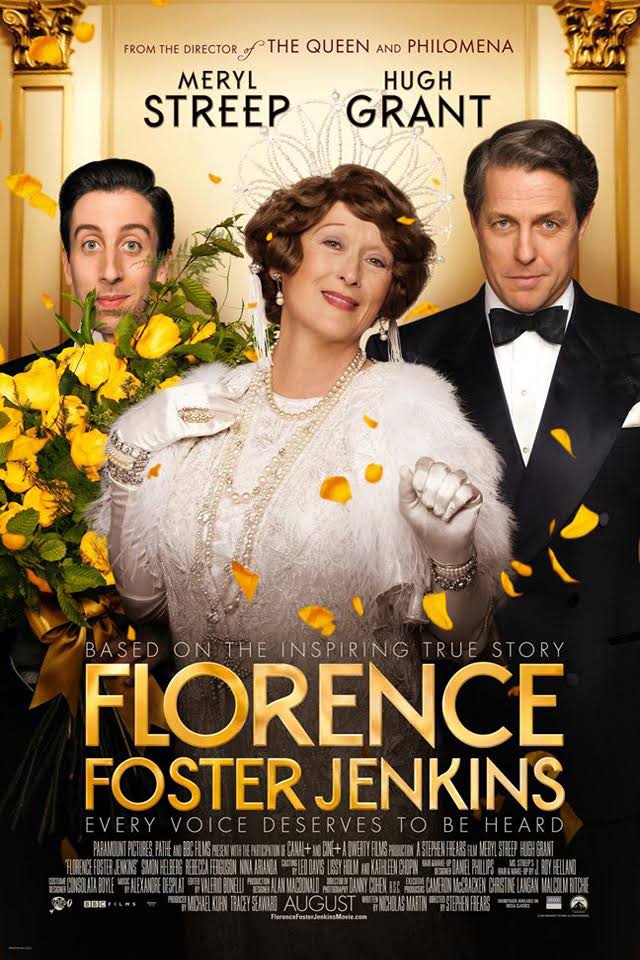
FlorenceFosterJenkinsBrilliant! Absolutely delightful. Paramount Pictures and BBC Films proudly present a magical film about one of the most legendary musical talents Madame Florence Foster Jenkins. This is the perfect film for the times that we live in. Just when so often we hear news about the worst in people, this film is about the best that people can be. Whether you are a musician or vocal artist yourself or simply appreciate the beauty of music, you will undoubtedly find this film fascinating and endearing. Meryl Streep provides audiences with a command performance as Jenkins, and will have you rolling around in your seat. Like classical music? This film has it. Prefer big band or jazz? This film has it. What about opera? It has that too. I doubt that there are many people as committed to the art of music as Jenkins was. One part musical and one part dramedy, Florence Foster Jenkins is a crowd-pleasing work of cinematic excellence. From brilliant writing to phenomenal acting, this film is a must-see for music lovers. Who would have known that someone with such a unique voice would have sung herself into the heart of millions. This film has a little something for everyone, especially those who are in the creative fields. May this film be an inspiration to all those who have drive, passion, a love for, and are dedicated to the pursuit of the arts, and open up that world to those who may not otherwise be able to experience it. Not sure what’s bigger…Jenkins’ heart or her stage presence. Whatever the case, this film is definitely one to catch on the big screen!

Return to New York City in 1944. Amidst the glitz, glamour, and sound of the very heart of the performing arts is a story of laughter and tears, but most importantly about a true unconditional love for both music and our friends and neighbors. Meet Florence Foster Jenkins (Streep). She is a well-known New York socialite who is a dedicated patron of the  arts, specifically music. She has transferred her love of music to a love of bringing people into her world. With ambitions dreams of becoming the next great opera singer, she records albums and books Carnegie Hall. There’s only one small problem; unfortunately her ambition is only succeed by her lack of an ability to carry a tune. In her head, she is an absolutely incredible talent. However, to everyone else, she sounds laughable. It matters not! She is determined to showcase her love of music to the world. Giving away 1000 tickets to military service members, she plans to fill the hallowed halls of Carnegie with the sounds of music and love. Her husband/manager St. Clair Bayfield (Hugh Grant) and accompanist Cosme McMoon (Simon Helberg) both stick by her as she plans to take Carnegie Hall by storm! Together they embark on a legendary journey that is still talked about and listened to today.

It’s so hard to know where to begin. There is quite possibly no film that truly captures the love of music and our fellow man nearly as remarkably as this film. Truly inspirational. From the writing, to the acting, to the sound track, it is a flawless story that is definitely best experienced on the big screen for Jenkins was truly a larger than life talent herself. You’ll laugh, laugh some more, and even cry a little. In many ways, this film fits the drawing room comedy subgenre of films. There are very few set changes, it is mostly dialog driven, and features various forms of comedy all working together to support a light-hearted film about the love of music. Instead of taking place in the drawing room of a home with a dynamic set of manners and social criticisms, this film takes place mostly in the homes of Jenkins, Bayfield, with a visit to the humble abode of McMoon. There is one common thread between all of them, there is either a piano or other device playing music that greatly affects the narrative. Paralleling real life, you have the grand piano in a magnificent Manhattan apartment belonging to someone who cannot play or sing very well–anymore, anyway. There is the basic, beat up upright piano in the home of a wonderfully talented pianist. And finally the home of the one without much talent at all who makes a better manager, there is a radio. Three different characters who seem to come together in the most brilliant of fashion. Each with a different part to play in the grand scheme of things. I greatly appreciate the film for keeping the focus on the love of music and not on the comedic flat, sharp, and howling notes of Jenkins’ voice.

As we are on the cusp of Oscar season (typically beginning in October), Streep’s portrayal of the, say, Ed Wood of opera singers could very well give her an Oscar nom. Making it her 20th! I don’t think there is anyone who could have played the roll as well as Streep. Yes, Strep is–no surprise–excellent at everything she does; still, there are roles that even surprise us. This is definitely one of the latter. When exploring the eccentric character of Jenkins, I am reminded of a character that is essentially a Norma Desmond of sorts. A faded star who refuses to admit her years and has extreme determination to return to the silver screen, or in this case, the stage at Carnegie Hall. Other than the inspirational message and creative storytelling based on actual events, I greatly appreciate the characters of the movie. Seems as though that Jenkins, Bayfield, and McMoon were made for each other. All unique in some form or fashion, depend on one another to achieve goals, and are more talented in their respective heads than in real life. Except. You cannot really say that about McMoon. He is definitely aware of his talent, but is so incredibly timid, shy, lacking confidence that he has extreme difficulty in allowing his talent to flourish. Much like Jenkins, Bayfield is a dedicated actor. Unfortunately, he too is much more talented in his mind than on the stage. Comedy is born out of conflict, and this beautiful film has plenty of conflict with which the characters to engage one another.

This film also highlights how incredibly devastating one critic’s review of a performance can be. Whether we are exploring film, theatre, music, or literature, a critic for a high profile outlet can make or break dreams. There are two kinds of critics, speaking as one myself. There is the critic who is so fixated on the technical components or surface level performance that he or she misses the soul of the performance or movie. Not that having a beautiful message overshadows poor production quality. However, there is a delicate balance that is important to strike to truly review or analyze a creative work. Did Florence Foster Jenkins’ performance accomplish what it set out to do? Indeed it did. Was it effective for injecting laughter into the lives of the soldiers and Manhattan music patronage community? Absolutely. She was and is truly a legend of incredible talent. Maybe not in the conventional sense, but she left a lasting impression  that has captured the imagination and attention of the world for decades. Director Stephen Frears successfully applies his vision of the story of Jenkins and translates it to the screen in a way that will inspire you to perhaps continue to pursue your own dreams no matter how much talent, or lack thereof, you have.

Don’t allow this movie to quietly slip by. Definitely catch it in theaters because Simon Helberg introduces the film and there is a behind-the-scenes/Q&A with Streep, Grant, and Helberg following the old-school credits.

“The Kings of Summer” movie review

KOS-PosterA unique coming-of-age story in the vein of Stand By Me. However, unlike the more conventional coming of age stories, the subtext and themes of then first-time feature director Jordan Vogt-Roberts’ film, written by Chris Valletta, are merely touched upon but seldom followed through in any meaningful way. The deadpan comedy and one-liners are simply tossed around instead of providing deeper meaning or introspect that may have increased the emotions felt throughout the movie. It’s a very surface level movie that fails to substantially deliver the dynamic quality narrative that is typically expected of these films. That isn’t to say that it is without merit; quite the contrary, it is enjoyable and is successful in taking you back to that time when you felt that no one understood you and you wanted to be treated like an adult, but still clung to the reckless freedom of hormonal youth. Understanding the consequences of one’s behavior is a regularly visited theme in the movie. With gorgeous outdoor cinematography and relatable characters, The Kings of Summer contains a little something for everyone who has ever thought of running away and building a cabin in the woods for you and your buds.

The Kings of Summer is about three teenagers Joe (Nick Robinson), Patrick (Gabriel Basso), and Biaggio (Moises Arias) who run away from their respective dysfunctional families and make a life for themselves out in the woods by building a house and living off the land. Ever since Joe’s mother died, he just does not get along with his father Frank (Parks and Rec‘s Nick Offerman). In turn, his father has anger and resentment issues he too is working through with the untimely passing of his wife. Unfortunately, Frank takes out his anger on Joe and both have nearly become alienated from one another. Making valid points about Joe’s behavior but not delivering those points with understanding, Frank and Joe just do not get along. With Patrick also not getting along with his helicopter parents (Megan Mullally and Marc Even Jackson), Joe convinces him to join with their new friend Biaggio and rule their own lives and answer to no one except each other. Forming a friendship pact, the three seem inseparable. However, even this three-fold cord has struggles and disagreements, jealously and rage. The young men are forced to work through life’s problems while dealing with the chemical and psychological changes of growing up.

Have you ever just wanted to escape life? Just quit and run away to a tropical island or mountain valley? That is just what you will encounter in The Kings of Summer. Coming-of-age stories are usually some of the films that find their way onto favorite lists or those to which so many people can relate because they deal with issues many of us face while in that transitional time from teenager to adult. From lakeside high school parties to hormones and independence, this film includes some of the various turning points and learning opportunities one likely encounters while discovering who he or she is. Ordinarily, films such as this, deliver the content in such a way that it offers deeper meaning or emotional connections in the narrative. And although there are some themes and moderate introspect, the film does not go far enough in connecting the audience with the teenagers or adults in the movie. There were several lines of dialog that alluded to potential conflicts and personal struggles that could have been revisited to offer more substance in the film. That being said, the writer and director do provide relatable characters who are each very different from the other in an effort to provide audiences with a character to whom they can identify. It is important for coming-of-age movies to not only contain relatable characters but relatable situations as well. And this movie does that, just not to the extent it had the capacity to do.

One of the interesting themes that can be read in The Kings of Summer is questioning one’s sexual orientation. Much like in Wes Craven’s A Nightmare on Elm Street 2, in which the protagonist’s sexual orientation is questionable, you can find similar themes in this film. Throughout the movie, Joe is regularly making speeches on and offering up pithy comments about masculinity. Quite regularly, Joe lectures Patrick and Biaggio about what it means to me a man. At times, Joe even becomes defensive when his masculine ways are questioned. As Shakespeare penned, “…thou doth protest too loudly…” It is entirely possible that Joe is struggling to come to terms with his sexual preferences. This could explain why he would go to such drastic measures to escape his rigid father in order to discover who he is when he has to provide for himself. Other supporting evidence of this theme is simply the fact that he doesn’t get the girl even though he tried much more than Patrick. When Patrick winds up with the girl, Joe is outraged and never quite gets over it. There are also the frequent trips to Boston Market instead of truly “being a man” and hunting for food. Maybe he’s simply trying too hard to deny who he is developing to be? Perhaps. But, there are additionally also other themes that can be read in this unique coming-of-age story.

Although this film did not receive the national attention in 2013 that it really should have, it is definitely one that is worth a watch if you enjoy this sub-genre of Drama. Ordinarily, ensemble casts can hinder effective character development and excellent storytelling, but the cast in this film is handled moderately well. If there had been more focus on the personal struggles or if the film included an external goal, then it would have definitely been better and perhaps more popular. Stories in general–especially visual stories–require the principle characters to not only have internal goals, but a clearly defined external goal as well. Often the external goal can echo the internal one, but it is important to show a tangible goal. Unfortunately, the latter is lacking in the diegesis of The Kings of Summer. This movie won’t likely ever have the nostalgia or cache of Stand By Me, but it does offer up a fun story with an excellent cast and some personal growth that will keep you entertained for the hour and a half runtime.

You can catch Ryan most weeks at Studio Movie Grill Tampa, so if you’re in the area, let him know and you can join him at the cinema.

Ryan teaches screenwriting at the University of Tampa. If you like this article, check out the others and FOLLOW this blog! Interested in Ryan making a guest appearance on your podcast or contributing to your website? Send him a DM on Twitter!

Follow him!

Twitter: RLTerry1

Instagram: RL_Terry

“Rebirth” web series review

RebirthGritty and visceral. NonHuman Films’ Rebirth is a new web series that will beg for your attention. Pulling out all the cliche stops, and whatever else comes with AfterEffects templates, the prologue and episode I attempt to draw you in; and they are quite successful. The problem is that it is such a train wreck that you cannot look away. Complete with a highly ambiguous plot, choppy editing, and color temps and audio all over the spectrum, Rebirth needs to die and try to come back again another day. Adapted from the original series JacobRebirth is inspired by CreepyPasta and other urban myths. Mostly shot in the POV style, the majority of the cinematography is stylistic. However, not every style needs to leave the think tank at the fashion studio. YouTube and Vimeo present fantastic opportunities for aspiring professional visual storytellers to get films in front of people without having to rely on a distribution company; but because of this wide open door, there is a lot more mediocre content to sort through while searching for that movie with which to fill your weekday evening.

Structurally, the video suffers greatly. A traditional web series should be divided up into short segments that all tie together in an over-arching story. It should not come across as a short film that has been divided up simply by cutting the segments out of the main timeline. Unfortunately, the Prologue and Episode I come across as the latter. It is important for each web series video to follow the three-act structure while the whole series also follows the same. The dialog lacks development much in the same way the characters do. As videos (or film) are a visual medium, it is important for writers to “show, don’t tell;” and the perpetual narration serves as a distraction and occasionally comes across as redundant. For a sloppily produced web series, I’ll give it this: the editing stye is creative. I’m not claiming that it’s edited well by any means; but I can definitely infer the direction the editor was going. It’s sloppy and crude, but there is definitely potential there for horror film editing.

It is not unusual for a series to have a weak opening, although it is perhaps the episode that is the most important to hook the audience, as many will not progress past the first episode. That was certainly the case for me when I watched the then-anticipated Scream Queens on Fox. After the first episode was so painful to watch, I never gave it a second chance. Since web series don’t have near the money or publicity behind them, they more often than not have a difficult time hooking an audience. So, when I was invited as a member of the blogosphere to an early screening of Episode I part II, I went in with an open mind because perhaps it was walking out of the starting gate instead of sprinting. Unfortunately, I am left wondering what happened even after watching it twice. Due to the POV style of shooting and the disorienting music, I had great difficulty in following the story. However, it is certainly macabre and creepy. In many ways, it kind of reminds me of the previews for the Green Room horror movie featuring the accomplished Patrick Stewart, of all people. I cannot help but conclude that NonHuman Films does, albeit a moderately long shot, have a future in horror filmmaking. Just because a series is crudely produced, doesn’t mean that it is devoid of potential. I see the potential, but the company needs to spend more time developing the narrative and polishing the post-production elements.

Perhaps this cult series will find an audience, as so many online video do; but, it will not likely become material picked up by YouTube Red or other outlets for professional online distribution–not in its present form. This is one of those series that clearly has some budding talent behind it; but the leadership of the film series needs to regroup and identify methods to correct the presentation and storytelling.