Alfred Hitchcock: the First Director to Brand Himself (Part 1)

More than an instantly recognizable silhouette. Before the idea of a director branding him or herself became as common a goal as it is today, Alfred Hitchcock pioneered the very concept of a director developing a brand that would instantly be recognizable by millions. Not only was Hitch the Master of Suspense, and still is, but he was also a master of marketing. Unknown to many, Hitchcock worked in sales and marketing before he became one of, if not the, most recognizable name in cinematic history. Between his experience in marketing and with silent filmmaking, he was a master of captivating visual storytelling way before his most well known works of cinema. I teach media and screenwriting at the University of Tampa, and I’ve often told my students that writing a compelling, memorable, effective thirty-second commercial can be more difficult than writing a two-hour film. I realize that illustration overly simplifies the respective concepts; however, the idea is that if you can proficiently tell an intriguing or impactful story in thirty-seconds, then you can proficiently write a two-hour movie. Taking what worked well in advertising and marketing, and adapting it to a cinematic diegetic structure, Hitchcock was able to capitalize on his penchant for visual storytelling and ability to prompt desired physiological and emotional responses from the audience. The American Marketing Association defines a brand as “a name, term, design, symbol, or any other feature that identifies one seller’s good or service as distinct from those of other sellers.” The fact that Hitch’s name and silhouette have instant meaning, definition attached to them, is evidence enough that he was a master of branding.

Prior to understanding just how Hitchcock became the first director to brand himself, it is paramount to understand how a brand–more specifically brand recognition–comes to exist in the first place. A simplistic method of understanding what defines a brand takes the form of a relationship between an image (or idea) and the individual. Relationship is key. There is an emotion attached to the relationship between the image and the products or services that it represents; moreover, this relationship is not without a practical component such as cozy fur-lined boots or an automobile with consistent impeccable quality. By extension, the relationship between an individual and a brand can create a sense of importance, safety, or class. Once a relationship is formed, then the individual experiences both physiological and emotional reactions to the sight or sound of the image or idea. Think of that feeling you get when you see the Disney castle or hear “Wish Upon a Star.” Or perhaps, imagine how you feel or react when you see a BMW or wear a Rolex. These are iconic brands that mean something to many individuals. The mere exposure to the sight, sound, or message will prompt a comprehensive response within the mind and body. As the maxim goes, “imitation is the highest form of flattery;” therefore a quality, successful product or service will be copied but never fully replicated because there is always a secret ingredient that makes the original unique. In addition to the aforementioned, when an image or idea becomes a recognizable brand, then there is a power endowed upon that image that gives that company (that owns the image, product, or service) a kind of soft power that cannot easily be quantified but it’s quite real and figuratively measurable.

Not unlike Rolex, BMW, and Disney, Alfred Hitchcock was and is also a brand–and a powerful one at that. He was the first director to become a brand; and since then, others have tried to brand themselves as well. Some with success and others with defeat. One of the keys to Hitchcock’s ability to combine the words of marketing and filmmaking in order to not only develop a reputation but become a brand, Hitchcock recognized early in his career (especially after coming to the United States) the importance of promoting himself–his actual image–in conjunction with the promotion of a particular film. He demonstrated a clearly intentional desire to ensure that his name was at the forefront of the conscious of the American public. When a particular director, who consistently delivers quality or groundbreaking films, links the outstanding performance of the films with his or her image, then the mere sight of or name of that director carries priceless value. Following the breakup of the studio system over the late 1940s through the 50s, there arose an increased opportunity for to claim authorship of a motion picture. Prior to the decentralization of Hollywood, most movies were completely packaged by the Studio/distribution company, with the director playing a minor role. With the new opportunities to connect a motion picture to the director during marketing, it paved the way for directors to advance their own careers as well as the success of the movie. As studio authorship decreased, individual (director or producer) authorship increased!

According to Janet Staiger in her essay Creating the Brand: the Hitchcock Touch, she outlines four significant criterion that apply to image or brand as it relates to showbusiness. (1) the character persona that is created by selection of performances in film, tv, web media, etc (2) the performer (acting ability) in those mediums (3) the worker/laborer that develops from what is learned about the individual’s professional life in respect to business dealings and (4) the private persona that derives from the individual’s off-camera personal life. Whereas these criteria are more aligned with an actor or actress, these elements can be applied, by extension, to understanding Hitchcock as a brand. Hitchcock’s character can be seen through his genre selection–the types of films that a director authors. Think of his genre selection as the equivalent of the types of characters an actor or actress chooses to play. We recognize the performer element in Hitchcock’s consistent ability to direct the motion pictures with incredible precision and innovate programming for then-new mediums like television. Hitch’s worker/laborer attribute is found in what we know about his behind-the-scenes work on set and in the business offices. Most famously is his near-departure from Paramount when he went to make Psycho, for which they earmarked zero funding. He self-financed the iconic film and used his Alfred Hitchcock Presents crew. Passion, determination, and commitment witnessed. In terms of his private persona, Hitch was famously a practical joker and a family man. In fact, his daughter appeared in multiple episodes of Presents. All these elements together combine to create Hitchcock’s image.

But there is more to branding oneself than crafting an figurative or metaphysical image. There is the physical image that is recognized by the naked eye. After injecting himself into film social circles comprised of well-established directors, screenwriters, and even critics and journalists, he had a well-known name. And even though a name can carry power, it needs a tangible representation. Although one may assess that Hitchcock came up with that trademark minimalistic nine stroke silhouette, the inspiration came from a series of director sketches that appeared in The Motion Picture Studio journal in 1923. There, we have a group of then and now famous directors with Hitch appearing sideways with his famous belly out and hands in his pockets. By the 1930, Hitchcock was being heralded as a master of suspense. And that description of Hitch’s work continued until the moniker stuck in perpetuity.

In addition to the soon-to-be-moniker, film magazines took notice of his notable weight. By the late 1930s, it is said that Hitch already weighed in excess of 300lbs. As the maxim goes, “there is no bad publicity,” and that can definitely be witnessed in how Hitch’s brand continued to develop during his early days in America. The constant articles about his weight, the unprecedented success of his films, his cameos in those films, and sketched of Hitch, all those elements together created Hitch’s image. You can very much liken the evolution of the Hitchcock figurative image and physical logo to the evolution of Walt Disney’s image and either the Mickey ears or castle logo. Whereas the content of the motion pictures that both produced/directed respectively are quite different, they share one important element in common. They both injected themselves into the production and marketing of their work as much as possible. Although Walt Disney made himself into a brand (most solidly after Snow White), it was Hitchcock who was the pioneer in the very idea of a director creating his (or her) recognizable brand. In many ways, Walt follow Hitch’s direction to make his brand. But where did the famous nine stroke sketch come from? Well, according to author Robert Kapsis in his book Hitchcock: the Making of a Reputation, he drew the sketch himself in 1927 for the purpose of making it into a gift for his friends and colleagues. He created a wooden jigsaw puzzle with the iconic image an placed it in a small linen bag. I cannot think of anything more Hitchcock. This parallels how Hitch injected himself into his cinematic work both in the story itself, as a cameo, and in the marketing of his films.

Hitchcock knew that to create a brand–as everything he has accomplished for this result has been completely intentional–he needed to make a connection between his films and himself, and then himself to his name, and his name to the abstract profile. Then when someone sees the logo, they are immediately predisposed to feeling a certain way about Hitch and his films. It’s a bi-directional highway, so to speak.

Part 2

Ryan is a screenwriting professor at the University of Tampa. If you like this article, check out the others and FOLLOW this blog!

Follow him!

Twitter: RLTerry1

Instagram: RL_Terry

Thrillz (theme parks): Thrillz.co

Jurassic Park at Universal Parks: A Retrospective

It’s been 25 years since Dr. John Hammond so confidently and proudly stated “Welcome to Jurassic Park.” And in 1996 in California and 1999 in Florida, Universal Studios welcomed the world to visit John Hammond’s resort destination park. With the 25th anniversary of Jurassic Park today, I thought it would be fun to take a look at the real Jurassic Park that you can visit as part of your epic adventure at Universal Studios Hollywood (USH) and Islands of Adventure (IoA) in Orlando. As you have heard, the original Jurassic Park the Ride is closing in September in Hollywood to make way for a Jurassic World themed attraction and the one in Orlando will likely be rethemed as well (but we don’t have a date for that closure yet). Although there have been changes to Jurassic Park at IoA over the years, it has largely remained the same as is the case with the location in Hollywood. I was fortunate enough to get to preview IoA before it opened in the Spring of 1999, so I’ve been able to watch as it’s evolved over the years. And I was able to visit the USH location for the first time in 2012. Hoping to make it back before JP the Ride closes in Sept.

I can distinctly remember making my way through the IoA Port of Entry down to the lagoon. And there it was. The Jurassic Park Visitors Center across the water proudly standing to welcome you to an island “65 million years in the making.” After spending time with the whimsical characters of the world of Dr. Seuss and exploring the ruins of left behind on the Lost Continent including an AOL Internet Kiosk (no, really, that was a thing), we approached the trademark gateway to Jurassic Park complete with fire and that timeless trumpet fanfare from the Jurassic Park Main Theme written by John Williams. You felt instantly transported to that island off the coast of Costa Rica that Hammond “leased from the government to set up a kind of biological preserve–really spectacular–spared no expense.” And the attractions really did and still do “drive kids out of their minds.” My parents, sister, and I were completely awestruck at just how real everything felt. It was one of our favorite movies, as a family, and to experience the real thing (figuratively anyway), was an incredible feeling. The most noticeable difference between Jurassic Park at USH and IoA is size. Although the Jurassic Park area at USH was the original, it is mostly the ride itself and new Raptor Encounter whereas Jurassic Park is an entire land at IoA boasting more offerings. But there is a magic at USH that doesn’t exist at IoA. When at USH, you feel more of a connection to the film itself because you are mere steps from the sound stages where it came to life.

Before the photo stops were automated, there were Jurassic Park photogs to take your pictures at vignettes from Jurassic Park and The Lost World. So many park vehicles along the park’s pathways. You had the original Jungle Explorer, gas Jeep Wrangler, and customized Mercedes-Benz M320. A side note: I’m such a fan of the franchise that I owned a Ford Explorer and ML320. We never really spend anytime in the park aside from the basic tour, but I imagine the park must’ve looked similar to what we experiences walking through the jungle. Just like in the movie, our first stop was the Visitors Center (“Discovery” Center). So incredibly similar to the one from the film! It was nearly uncanny. Instead of walking into it from the main pathway, my family and I walked down to the lagoon so we could enter in from the front just like in the film. Ascending the stairs, the imposing structure was soon directly in front of us, with only a door left to be opened. Even the entry doors were nearly identical to the ones in the film. Since my parents knew how much I loved the movie, they opened the doors and I walked in!

Everything was there, the murals, giant T-Rex and Brachiosaurus skeletons, staircase, and more. So many educational exhibits around the perimeter of the main gallery. You could watch baby dinosaurs hatch, build your own dino with DNA, climb inside a dinosaur to look out of its eyes, and so much more. Even Mr. DNA was featured at one of the exhibits. The interior reminded me a little of Innoventions at Epcot, in that there were educational exhibits based on various parts of the movie. Not on this trip, but later after I moved to the area and became a passholder. I had the opportunity to adopt a baby raptor from the Visitors Center and I named it Barbra as I’m a fan of Streisand! Back to my first experience. It was lunchtime so we walked up the staircase rounding the trademark skeletons in the center of the gallery and dined at Burger Digs (at lease I think it was called Burger Digs back then–that is a little foggy at this point). On the upper level, I love coming across nods to the film in the paintings, wall art, and murals. Wish the dining room resembled the one from the movie a little more, bur I can understand how that could be problematic logistically with it being a quick service restaurant. Fortunately, there are lots of tables inside and out! Personally, I enjoy dining al fresco.

After we finished our dino-sized burgers at the restaurant, we exited and continued to stroll around the park. To our left was a big fossil of a triceratops at the entrance to the (former) Triceratops Encounter! Located where the Raptor Encounter is today, was an attraction that left a talking impression on me and my family. Unfortunately, the attraction did not last long but the memories are still there. I can still remember meandering the long pathway along the electric fence through the jungle. Through open gates and past open of the gas Jeeps. At the end of the pathway was an unassuming shed. But the magic happened on the inside! On the inside of that shed was a life-sized triceratops who was going into labor. For real! Or for all intents and purposes, real. Remember that scene from the movie where the park gusts stumble upon the sick Tric? That same feeling you got when you saw that majestic creature on screen? You got that same feeling at this attraction. It was so incredibly real–even to the touch. You even got to see the baby! The technology reminded me of how the dinosaur must’ve been built for the movie. I imagine the complex technology is what lead to the closure of the attraction. Once it broke, perhaps it was just not cost effective to repair (i.e. Disco Yeti at Expedition Everest at Animal Kingdom).

From a triceratops encounter to a river adventure, we made our way to the flagship attraction. The Jurassic Park River Adventure. Based on the Jurassic Park the Ride at USH, this attraction began with inspiration from the novel more so than the film. In the novel (and in the Jurassic Park video game in the 90s), there was an entire sequence of events and on the river. So instead of a replica of the basic tour, Spielberg desired to immerse the park guests into the river adventure from the novel because it’s something he wanted in the movie, but just didn’t work out that way. The queue for the attraction takes you through a series of switchbacks with models of the island and other information along the way. Overhead are park broadcasters who inform you about dinosaurs you will see. Just as if you are in THE Jurassic Park about to take a tour. It feels as if you are actually there. Even the park employees are in Jurassic Park uniforms. Eventually you make your way down to the river and board your raft boat.

For the most part, the attractions at USH and IoA are largely the same. There is a notable exception though. The original attraction in USH includes the wrecked Jungle Explorer falling over the retaining wall and crashing below–a crash with a big splash! Otherwise, the ride path is the same. Other minor differences exist as in the placement of dinosaurs in the lagoon and in the command center. Just like in the movie, your river tour is narrated! I remember floating along the river in the boat for the very first time. Amazed at everything! One of the most memorable parts is the beginning as the narrator welcomes you to Jurassic Park as the big gates open to reveal all the dinosaurs in the lagoon! With the growing trend of simulated reality, this attraction is still a testament to physical movement through an attraction that you can “see, feel, and touch.” You cannot replace the way real light bounces off real objects and into the human eye. Same can be said the filmmaking. That’s one of the things that I still love about the attraction–is the commitment to truly immersing you into the world of Jurassic Park without use of screens, glasses, or some other type of VR. As a kid, I almost thought the dinosaurs were real–like I was a guest at Jurassic Park taking the tour.

Everything seems to be going according to John Hammond’s plan until the raft is knocked off course–heading for the Raptor containment unit and command center/genetics lab. Something is definitely not right, as evident from the crashed watercraft and compys fighting over a JP uniform with the nametag Mickey on it. Love that touch! The first time we went underneath the raptor transport contained I remember screaming as it came crashing overhead. Nothing beats the first time on Jurassic Park River Adventure or Ride! I wish there was a little more to the command center/genetics lab than there is, but it’s still a lot of fun to go through. The first time has surprises around every corner. As soon as you go inside, you know that you’re about to be in trouble. As a kid, this moment was so incredibly tense. Especially coming face to face with velociraptors and dilophosaurus attacking your raft as it ascends to the top of the lab. I remember heading the iconic stomps of T-Rex and the tears through the walls. One of the scariest moments going up the ramp was the electric fence with the raptor lunging out of it. And just when you think it’s all over, you encounter a fog, and in that thick fog is THE dino herself T-Rex. Before the park operations eased up on the movement and fog, I distinctly recall the mouth of T-Rex coming into close proximity with the raft just before the steep plunge into the watery depths below. What a fall! Definitely steeper than Splash Mountain and Dudly Do Right Falls. Just as the characters in the movie narrowly evade being eaten by the dinosaurs, we too narrowly escape the jaws of T-Rex. When we exited through the gift shop, I recall looking at all the merchandise that you can actually find in the film. During the scene when Hammond and Ellie are debating about control and illusion. Some of that merchandise can still be found today in the shop, but most of it has sense been replaced by Jurassic World merch.

What wonderful memories have been had at Jurassic Park at Universal Parks! I am glad that I have been able to experience both parks but most of my memories are at the IoA location. Although parts of me will be sad to see the Jurassic Park branding and attractions change to Jurassic World, it’s all part of the evolutionary process a theme park goes through. I have hope that there will always be some uniquely Jurassic Park moments or locations because “life cannot be contained…does not adhere to park schedules…life finds a way.”

Checkout the linked videos to both the attractions at USH and IoA

“I hate that word [comeback]. It’s a return! …”

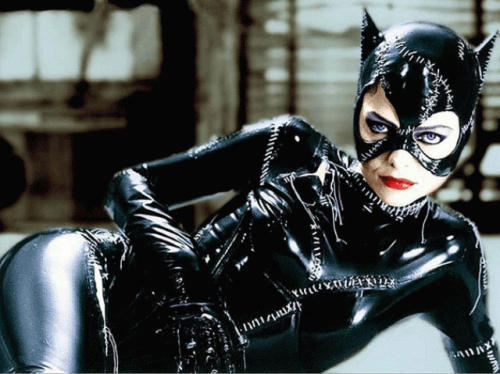
“…a return to the millions of people who have never forgiven me for deserting the screen.” A powerful line from the iconic Norma Desmond in Sunset Boulevard–but–this also rings true for Michelle Pfeiffer, who is returning to the big screen following a self-imposed exile from Hollywood. After a long “famine” (the term Darren Aronofsky attributes to the Oscar-nominated actress’s absence), Pfeiffer is making a triumphant return to the big screen, and in BIG ways. Whether your favorite Pfeiffer performance is her universally critically acclaimed interpretation of Selina Kyle/Catwoman in Tim Burton’s Batman Returns or as Elvira Hancock in Scarface, cinephiles and fans alike can agree that the big screen has missed Pfeiffer’s bold screen presence and incredible beauty. What makes Pfeiffer unique in the world of cinema, is her ability to be incredibly ballsy and completely vulnerable all at the same time. Few actresses possess the ability to be a tomboy one minute and the portrait of sensuality the next. Why would one of the brightest stars in Hollywood in the 1980s and 90s slip away from the silver screen so conspicuously? The long and short of it is she desired to make time to raise her children. In a rare interview with Vanity Fair, Pfeiffer stated that she required so many schedule and location accommodations for her to continue to be a working-mother that she became “unhireable.” Now that her children are grown and out of the house, she is ready to get back to work!

While many may be focussing on Pfeiffer’s return to the big screen–to movies that are a match for her talent–the larger picture here could be lost. Approaching 60, Pfeiffer is at the age when many actresses are either not hired as often and/or are placed in grandmother roles; however, she is busier than ever! And in high profile roles in highly anticipated films. For the fans of her brilliant performance as the definitive Catwoman, she is returning to the superhero genre in the new Ant-Man and more recently she commanded the screen in Murder on the Orient Express. Pfeiffer also told Variety that should would very much like to reprise her role as Catwoman in a future film but not go to the lengths she had to before (citing placing the real bird in her mouth and the iconic sexy, but uncomfortable costume). Pfeiffer’s return to the screen is a testament that Hollywood is beginning to show that older established actresses are still bankable.

Pfeiffer comments that being an empty-nester has provided her with the push to get back out there. She wasn’t even sure that she would be able to step right back into acting because she often remarks that she sometimes feels like a fraud because she never received any formal training. Her rise from grocery store clerk to household name happened nearly overnight. Just goes to show that even though formal training and education are valuable tools in a show business professional’s tool belt, formal education itself does not an acclaimed actor make. Part of preparing to return to the superhero genre in Ant-Man and Wasp has her pouring over old comic books to prepare for her highest profile role in more than a decade. It is clear from the few interviews Pfeiffer grants (she is self-admittingly scared of interviews) that her favorite role in her career IS her role as Selina Kyle/Catwoman. Even today, she says that she is met by fans, young and old, of her work in that role. She quickly gives credit to Tim Burton who was highly instrumental in providing exceptional direction and a creative genius in the, what many critics call the, Batman movie that typifies the franchise. So, her return to the superhero movie genre is one that is highly anticipated.

While she is excited to get back out there, she still admits that she will continue to be choosy in her roles. She is an actress that has to feel a connection to a character in order to bring it to life. Whereas before she turned down roles in Silence of the Lambs and Thelma and Louise because of making sure she had time to be a mom, first and foremost, she will continue to exhibit her desire to not simply get out there and act again, but thoroughly enjoy the characters she plays. Part of Pfeiffer’s timeless charm is her ability to be 100% sexy feminine and 100% humorous tomboy at the same time. It’s this dichotomy that gives Pfeiffer her unique blend of charisma and screen presence that commands your attention and makes her memorable. Of all the qualities that aid in creating the standout actress that many of us love, she is equally humble and still learns from those actresses like Judi Dench and others that she continues to admire.

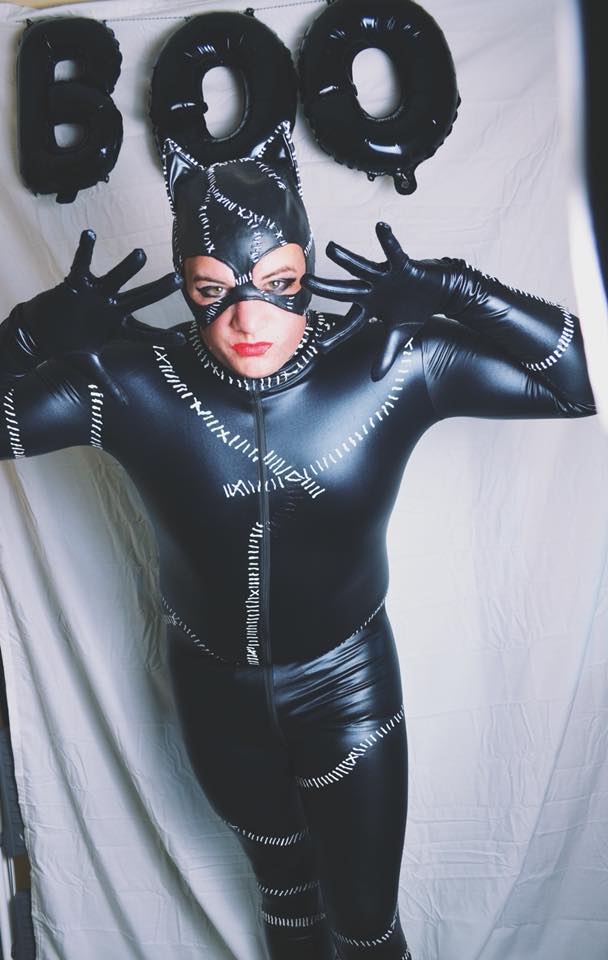
This past Halloween, I did my best to emulate her iconic Catwoman costume!


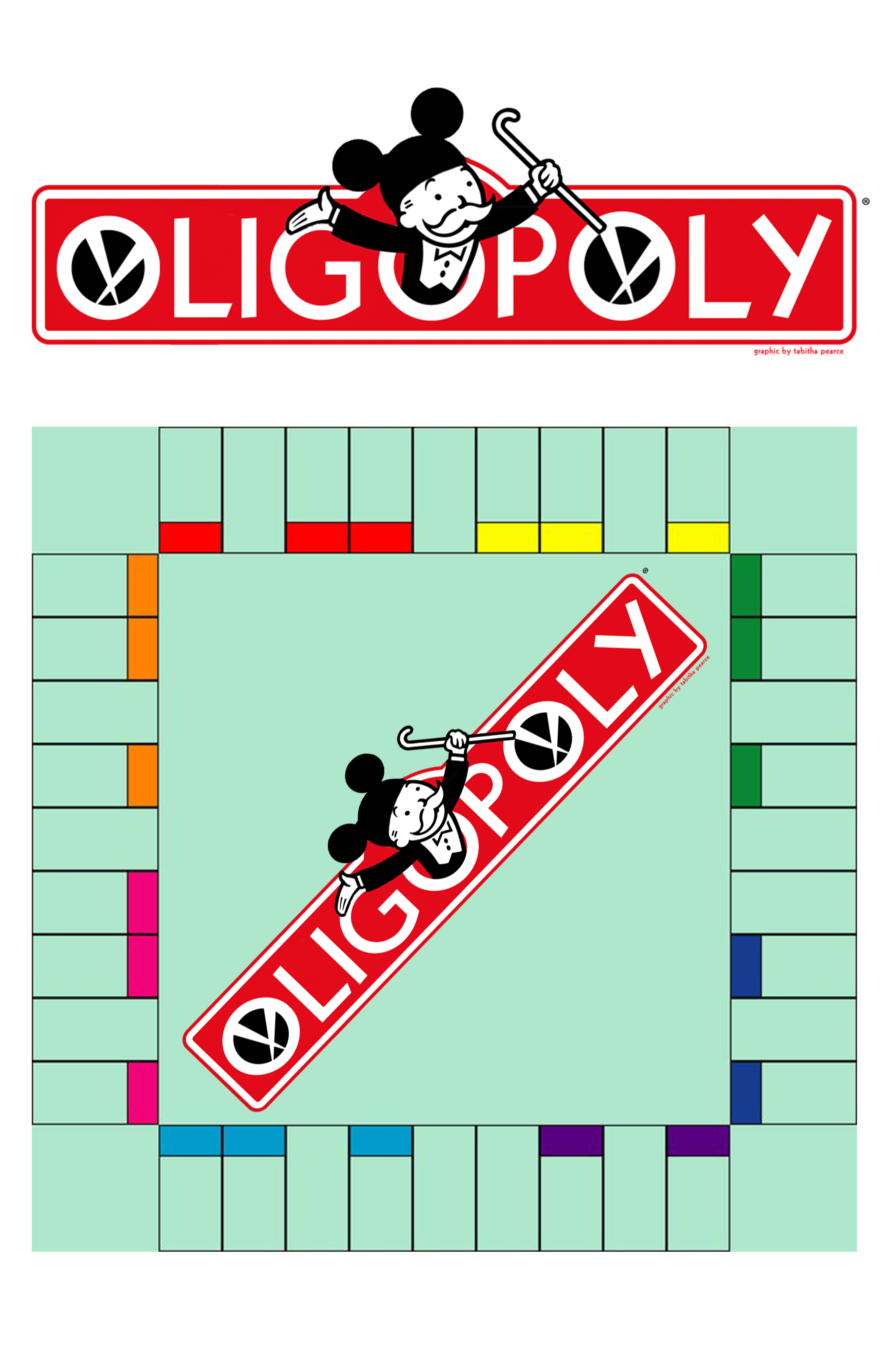
Don’t Pass GO, Don’t Collect Your Oscar

Corporate monopoly is the enemy of creativity and variety. The biggest news in entertainment this week was the talks between Disney and Fox to sell most of 21st Century Fox to The Walt Disney Company. Whether the talks are still going on behind closed doors or not presents a fascinating topic to discuss! This deal, which would be the biggest film/media deal ever, has far reaching effects upon the industry. Some may even argue that it has danger written all over it. If there wasn’t already a rigid oligopoly amongst the studio/distribution companies, there will be if this goes through. Should this go through without the government swooping in to save the day with monopoly claims in the vein of the historic Paramount Decision, the lion’s share of the cinematic marketplace would be controlled by Disney, TimeWarner (Warner Bros.), and Comcast (Universal), with Sony (Columbia) and Viacom (Paramount) bringing up the rear. Five. That’s right. Five companies would essentially determine the future of the industry, and control the majority of the motion pictures released in theaters and the content on cable television (and the streaming services that access it). It’s a mirror image of the 1940s. Instead of The Big Five and The Little Three, we have The BIG Three and the Little Two.

From the big screen to the small screen, you will notice the effects in the programs you watch. When one company controls the majority of any marketplace, it usually spells disaster for the consumer; furthermore, it means that there will be a primary gatekeeper in future artists getting his or her work out there. Not to mention that the programming on FX and other Fox (non-broadcast) subsidiaries could begin to gradually feel and look more like ABC programming. Could this put shows like The Simpsons and Family Guy on an endangered species list of sorts? Not right now. The deal, in off-and-on talks, would sell off 21st Century Fox (movie studios) and not Fox or Fox Sports (an acquisition of that sort would not be permitted because it WOULD be illegal). So, even if this buyout were to happen, The Walt Disney Company would still continue to be the brunt of many jokes on The Simpsons and Family Guy. A buyout could mean, however, that program options will seem less varied and just more of the same ABC-schlock that already pervades the bandwidth. The two companies that have the most TV programming are Fox and Disney, with Sony (CBS), Viacom (non-broadcast Nickelodeon), Comcast (NBC), and TimeWarner (CW) trailing in original programming. That being said, TimeWarner has done very well with The CW, and I hope it continues to churn out programs such as Vampire Diaries, Supernatural, Riverdale, etc.

Beyond the negative impacts on content, which, in all honestly, can be quite subjective in nature, are there legal or ethical implications here? Is there perhaps a past precedent that could be used in the courts to stop such a buyout (or sellout rather–Fox)? Let’s look at the most famous suit brought against the major motion picture studios: The Paramount Decision [(U.S. V. PARAMOUNT PICTURES, INC., 334 U.S. 131 (1948)]. Prior to the Paramount Decision, the motion picture industry was controlled by a few companies that were heavily vertically integrated. The Studio owned the facilities, production companies, staff (under long-term contracts), the films themselves, distribution channels, and the movie theaters. When the studios were growing so large that they began infringing upon the free marketplace, the US Government forced the (then) eight major/minor studio players to end the practice of block booking (meaning, films would now be sold on an individual basis), divest themselves of their respective theatre chains (sell them off), and modify the practice of long-term employee contracts (though, this would continue until the 1960s). This marked the beginning of the end of the Studio System, AKA Hollywood’s decentralization. There are many similarities between the situation in the late 1940s and today. In fact, it’s a little worse today because the industry is mostly controlled by five (instead of eight) companies, and these companies have heavy investments in streaming and television programming.

The problem with the current state of capitalism in the Unites States isn’t worries of monopolies but oligopolies (monopolistic practices between a few firms that essentially control a market). Certainly the state of the film industry already lends itself to an oligopoly because of the few companies; but the buyout of 21st Century Fox by The Disney Company would greatly increase this issue of a blatant oligopoly. If a monopolist (in many other industries) did what Disney is doing, neither the public nor the government would stand for it; but because it’s Disney, and because it’s the film industry, most of the general public is unaware of the negative consequences of such a buyout. Technically speaking, oligopolies are not illegal nor is monopolistic competition; however, this can be a slippery slope towards stifling creativity or making is increasingly difficult to break into any given industry as a newly emerging competitor. Incidentally, monopolistic competition causes the variety or level of differentiation of similar products (i.e. moves and TV shows) to become less heterogeneous and nearly come across as homogenous. For many, it will feel like there are only two primary companies controlling the majority of programming on TV and a few companies controlling a large portion of the movies that get released in movie theaters.

When a strong oligopoly exists within a specialized industry (for our purposes, media & entertainment), one of the side effects is a concept known as parallel exclusion. This concept can be described as the collective efforts of the few industry leaders who essentially act as the main gatekeepers to prevent or make it difficult for would-be newcomers to enter the arena. Parallel exclusion is nothing new, and has been in the news as recently as the last 2-3 decades within the airline and credit card industries. Throughout the eighties and nineties, Visa and MasterCard essentially blacklisted any bank that set out to do business with AmEx. Thankfully, the U.S. Justice Department stepped in when the manner in which the exclusionary rules were written crossed legal, fair trade boundaries. There were similar issues within the airline industry as well. When a few companies control the content or services in the marketplace, antitrust issues are raised.

Although we are not facing a technical monopoly with the possible acquisition of Fox by Disney, we are looking at an abuse of power that leads to anticompetitive conduct. If nothing else, the consumer should be worried about having fewer options for programming. Not that the number of programs or movies will shrink, but there will be little difference between what is released under the Disney banner and the Fox name (if it’s still even called that). In a deal like this, it’s the consumer who gets the short end of the stick. The consumer would be wise not to give Disney a pass just because there are a small group of big film studios instead of just one. While Marvel fans may be excited that the X-Men can join the MCU (Marvel Cinematic Universe), there is the possibility of a lack of competition between brands thus mitigating innovation and ingenuity. Competition is the mother of innovation just as necessity is the mother of invention.

Because the Walt Disney Company is primarily focussed on producing the biggest movies possible (after all, they made five of the 10 most successful films last year), the mid-budget dramas and comedies that used to thrive in Hollywood–you know, the ones that cause you to cry and laugh–would dwindle in number–there would be little room for them to make their respective ways into theaters in a predominantly Disney controlled industry. What we are essentially talking about here is a corporate cinematic monolith, the likes of which, has never been seen before.

Written by R.L. Terry

Graphic by Tabitha Pearce

“La La Land” movie review

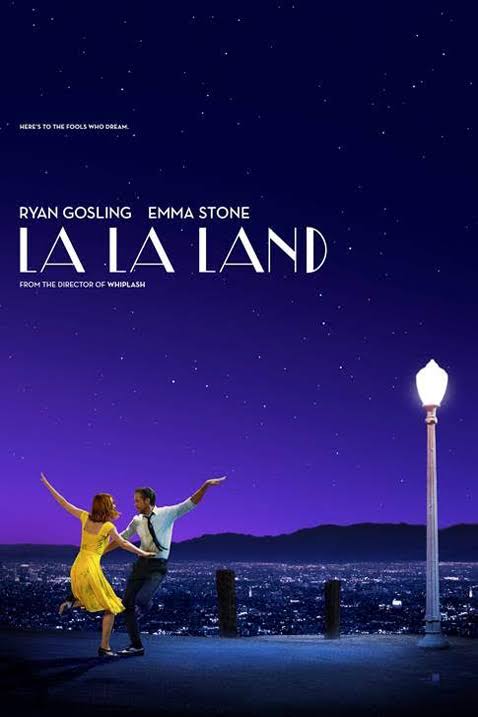
lalalandSimply dazzling! A beautifully produced motion picture musical that is sure to delight audiences around the world. Ryan Gosling (Sebastian) and Emma Stone (Mia) shine brightly in this self-reflexive modern romantic film set on the backdrop of a classically composed movie musical echoing the song and dance numbers that Busby Berkeley brought to the silver screen through Hollywood studio system powerhouse Warner Bros. Summit Entertainment’s La La Land will have you laughing one moment and crying the next in this roller coaster of emotions. Every aspiring professional who has the dream of a substantive career as an artist in the visual and performing arts–or just an artist in general–needs to watch this film. If you have ever been discouraged on your career path, or lack thereof, this film will aid in reigniting the flame that fuels your dreams of writing, acting, playing, or whatever your passion happens to be. Whereas many films similar to this one would have shot it as a period OR modern piece, this film is nothing short of a masterpiece that harnesses the nostalgic appeal of the classic musical with the power of modern cinematic storytelling.

Stories of struggling to reach your dreams are nothing new, but there is so much more to the story of Mia (Stone) and Sebastian’s (Gosling) respective goals of successful careers in the city of angels. Following a chance meeting at a night club in LA where Sebastian was playing a set list of traditional Christmas carols, Mia and Sebastian continue to bump into each other at parties and in the work place. The focus of this musical is on the everyday life of two struggling artists trying to make it in a city notorious for shattering dreams and breaking hearts. Mia and Sebastian must learn what is more important: chasing dreams of being in the spotlight or a once-in-a-lifetime opportunity for a beautiful love unmatched by any other.

Best part about Damien Chazelle’s La La Land? The old-school movie musical feel from the moment the film opens. From set pieces to matte paintings to the manner in which the cameras capture the story as the drama unfolds, this is both a modern story of romance and conflict and classic Hollywood musical. While some may find the cinematography, lighting, and editing to be nothing remarkable, the fact of the matter is that it required great skill and hundreds of hours of effort to capture the essence of an old Hollywood musical. To recreate a nearly extinct film genre, is an outstanding achievement in cinematic storytelling and deserves all the 9s and 10s this film is receiving from critics and fans alike. La La Land takes pages right out of the books of Busby Berkeley (Footlight Parade) and Gene Kelly (Singin’ in the Rain). Such a gorgeous combination of a classically structured and choreographed musical within a modern Hollywood. And the film could have easily rested its laurels on the technical and artistic achievements alone, but the film also possesses an incredibly beautiful love story between two aspiring artists.

In a modern studio system who appears all too often to be more concerned with franchise building, merchandising, theme park integration, and rebooting, this film is fresh, real, gritty, and endearing. In a climate so predisposed to the Star Warses, Harry Potters, Jurassic Parks, and Avengerses, this film brings with is a breath of fresh air that is nearly unmatched by any other film this year. While many are concerned with the lack of original stories coming out of Hollywood, may this film be a testament that masterpieces can still make their way into cinemas nationwide and not simply the art house theatre of the US’ largest metro areas. Although film is a visual medium and should not rely upon the score or songs to carry the bulk of the film (i.e. Frozen), this film is very much about the music. However, unlike films that integrate music in order to cover up poorly structured and developed writing, La La Land embraces the music as much a part of the story as the writing itself. In many ways, the film plays out like music and flows like a musical score. The way the cameras moves, the editor cut, and the blocking of the characters is very much like a musical staff, like the way music is composed and performed. But at the same time, the movie is not simply about the music but about the relationship between Mia and Sebastian; and furthermore, about their aspirations for the spotlight. Solid writing and a solid score.

The casting of La La Land could not have been more brilliant! Both Stone and Gosling successfully bring about that 1940s feel in a modern story. That could be due to the successes of both in 1940s era films prior. Stone in Magic in the Moonlight and Gosling in The Notebook. While both can successfully carry a period piece on their own respectively, together they are a powerhouse couple like Fred Astaire and Ginger Rogers. Their performances in this film were so incredibly natural, so real, and believable. At the same time, the actors are also very much contemporary–just like the film: classic yet contemporary. Even though the audience is well aware that Stone and Gosling are anything but struggling artists, they play their respective parts so convincingly that you’d swear that we were actually watching a pair of struggling artists who do desperately want a substantive piece of that Hollywood pie. A great screenplay possesses protagonists that the audience will love or love to hate, and the characters in La La Land connect so incredibly well with classic and contemporary audiences.

Inspirational. This film will help to inspire those who have a talent for storytelling, music, or writing to continue to work hard and remain dedicated to one’s craft because that is the only way that a career can pay off. The moment you stop trying is the moment that the dream dies along with settling for less. Not that day-jobs aren’t important. Certainly the importance of a day job is shown in the film, but it’s imperative that the day job never cause an artist to sell out or give up on the dream. Day jobs should fund imaginative dreams not eclipse them. There is much to love about this film; so much so that you will likely find yourself with a desire to watch it again. This IS definitely my pick for Best Picture as we head into award season with the holidays coming to a close.