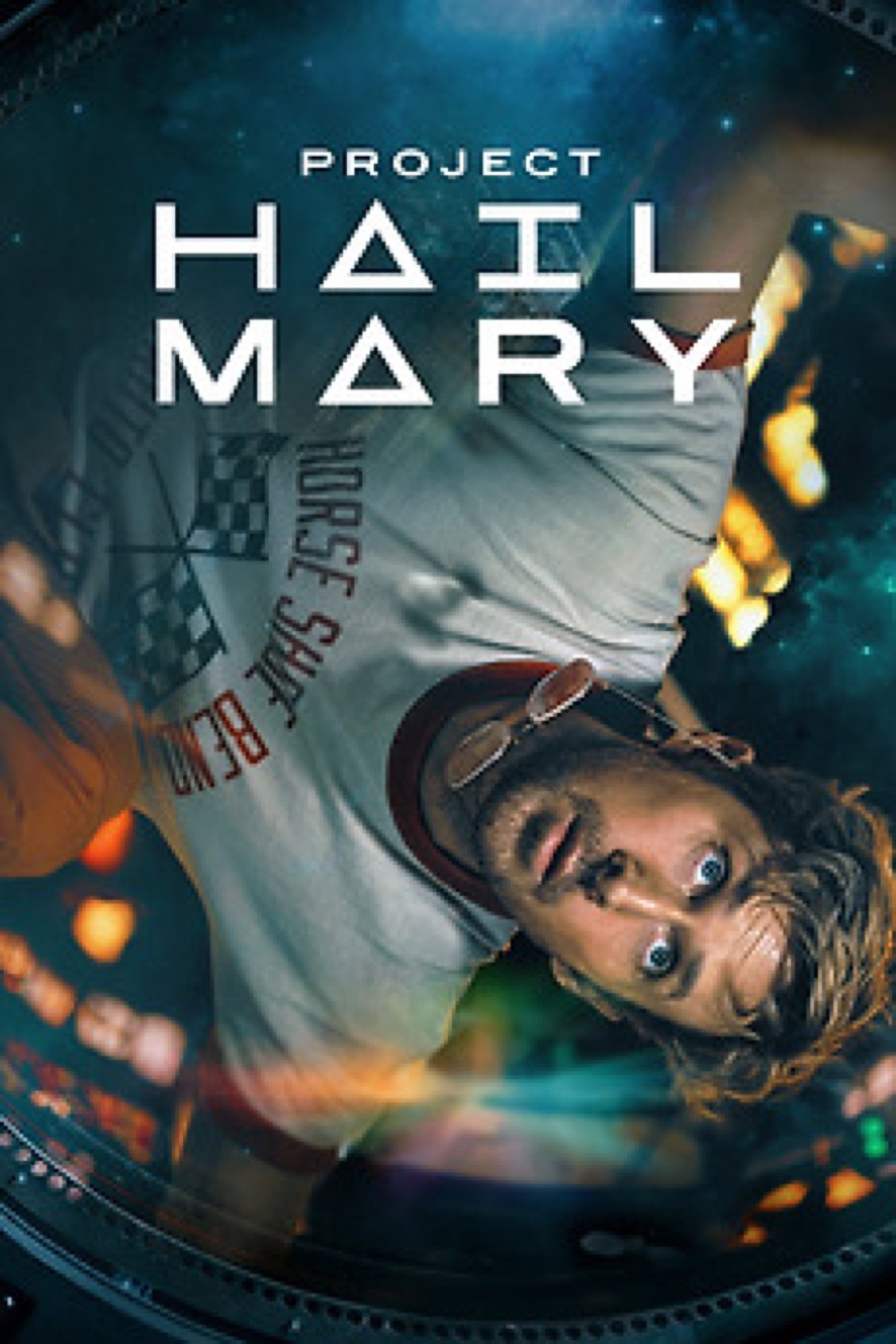
A triumphant return to classical Hollywood storytelling.
There is something refreshingly old-fashioned about Project Hail Mary. Not old in the sense of dated, but old in the sense of dependable—like a well-built machine designed to do exactly what it promises. It embraces the kind of classical Hollywood storytelling that has quietly fallen out of favor in an era increasingly defined by irony, cynicism, and ideological sorting. This is a film that wants to entertain first, inspire second, and lecture not at all. And in today’s cinematic climate, that alone feels almost radical.
Based on the Andy Weir novel, science teacher Dr. Ryland Grace (Ryan Gosling) wakes up on a spaceship with no recollection of who he is or how he got there. As his memory slowly returns, he soon discovers he must solve the riddle behind a mysterious substance that’s causing the sun to die out. As details of the mission unravel, he calls on his scientific training and sheer ingenuity–but he may not have to do it alone.
Project Hail Mary functions simultaneously as a robust science-fiction adventure and a genuinely compelling motion picture about responsibility, sacrifice, and cooperation. It understands that spectacle is most meaningful when tethered to character, and that the audience’s emotional investment—not the complexity of the plot—is what ultimately determines whether a story lands.
And while I am quite high on this film, it isn’t without its shortcomings–particularly when it comes to plotting and pacing. But, in its defense, where plot mechanics falter, the emotive and performative dimensions cary the load. To be sure, the screenplay is not airtight. There are moments where the finer points of the science become a little vague, and occasional plot turns feel more convenient than convincing. The narrative relies on a few leaps of logic that may cause scientifically minded viewers to raise an eyebrow. And structurally, the pacing occasionally sags—particularly in the flashback sequences, which linger longer than necessary and could easily have been trimmed by twenty minutes without sacrificing clarity.
But here is the crucial distinction:
The film earns its emotional beats. And when a movie earns those beats, audiences are willing to forgive a surprising number of narrative imperfections.
At the center of Project Hail Mary lies one of the most unexpectedly affecting friendships in recent science fiction: the bond between Dr. Ryland Grace and the alien known as Rocky. What begins as a pragmatic partnership evolves into something deeper—something recognizably human, despite the interspecies divide. Their relationship is built not on ideology, identity, or tribal affiliation, but on mutual trust and shared purpose. That simplicity is precisely what gives it power. Their friendship resonates because it taps into a fundamental truth about storytelling. Ultimately, it underscores that meaningful connection is more compelling than conflict.
As I survey contemporary movies, in a cinematic landscape that often frames difference as division, Project Hail Mary instead frames difference as collaboration. It suggests that survival, both literal and cultural, depends less on asserting dominance and more on extending cooperation. And that message lands without a trace of sanctimony.
Perhaps the film’s most striking quality is its tone.
At a time when many contemporary movies lean into cynicism—often dividing characters into moral camps or ideological tribes—Project Hail Mary takes a different path. It offers a story built on cooperation, empathy, and shared responsibility. It reminds us that our actions ripple outward. That survival is collective. That progress requires partnership. And that, sometimes the most heroic act is simply choosing to help someone else. In an industry increasingly drawn to provocation and polarization, this film dares to be earnest. And that sincerity is its greatest strength.
Ryan Gosling’s Dr. Grace embodies one of Hollywood’s most enduring archetypes: the reluctant hero. He is not fearless. He is not morally pristine. He is not even particularly eager to save the world. He’s simply a man confronted with responsibility—and forced to rise to meet it. That arc feels deeply relatable because it reflects the way real courage often works. Heroism is rarely the absence of fear; it is the decision to act despite it. The film understands this intuitively, allowing Grace’s transformation to unfold gradually rather than through grand speeches or sudden epiphanies. In doing so, it restores dignity to the idea of ordinary people doing extraordinary things.
On a purely technical level, Project Hail Mary is an impressive achievement. The visual effects are sophisticated without becoming overwhelming. The production design conveys scale without sacrificing intimacy. The sound design—particularly in the depiction of Rocky’s communication—demonstrates a level of creativity that enhances rather than distracts from the narrative. Most importantly, the film uses technology in service of storytelling rather than spectacle for its own sake. That discipline is increasingly rare.
For my fellow Star Trek fans out there, this film reminded me of one of the best episodes of The Next Generation, and that is the Darmok episode where in we get the overcoming of language barriers to form collaboration between Captain Picard and an alien creature (a Tamarian) that only communicates in metaphor. It’s a powerful episode (watch it). And of course we get the memorable quote (and one for which I have a t-shirt) “Darmok and Jalad at Tanagra.” Perhaps we could say, for this movie, “Darmok and Grace at Tau Ceti.”
Project Hail Mary may stumble occasionally in its plotting and pacing, but its emotional core remains remarkably strong. It is a film that trusts audiences to care about characters, to invest in relationships, and to believe—however briefly—that cooperation is still possible. It is not a perfect movie; but it is a deeply satisfying one.
And in a world of cynical storytelling, that feels like a small miracle–a Hail Mary.
Ryan is the general manager for 90.7 WKGC Public Media and host of the show ReelTalk “where you can join the cinematic conversations frame by frame each week.” Additionally, he is the author of the upcoming film studies book titled Monsters, Madness, and Mayhem: Why People Love Horror. After teaching film studies for over eight years at the University of Tampa, he transitioned from the classroom to public media. He is a member of the Critics Association of Central Florida and Indie Film Critics of America. If you like this article, check out the others and FOLLOW this blog! Follow him on Twitter: RLTerry1 and LetterBoxd: RLTerry
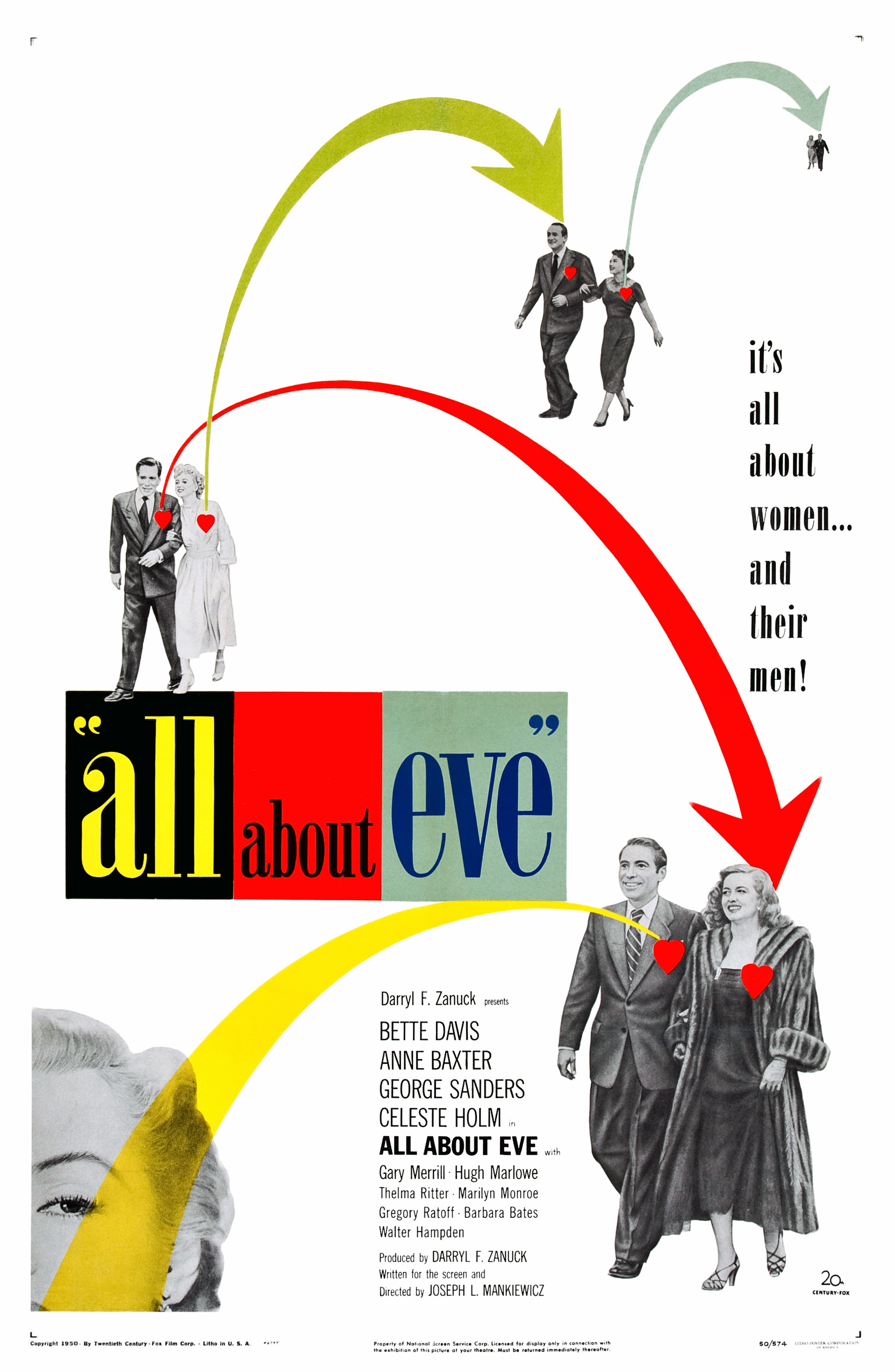
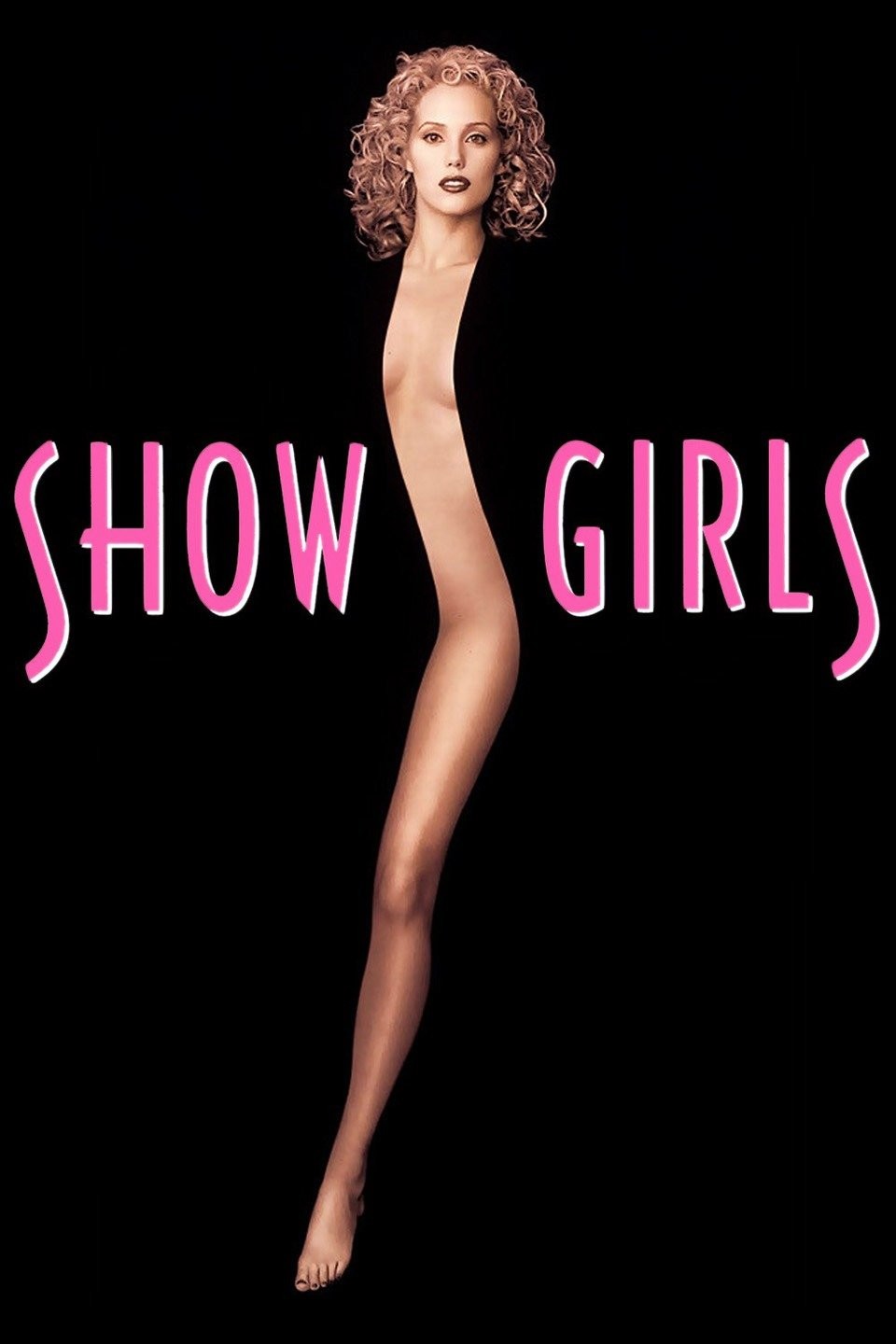
Celebrating the 75th anniversary of All About Eve and the 30th anniversary of its descendent Showgirls.
“Fasten your seatbelts, it’s going to be a [gripping read].” All About Eve is celebrating 75 years of cinematic excellence, and its audacious descendant Showgirls is marking 30 years of—well—let’s call it a complicated legacy (but I like to think of it as a misunderstood masterpiece). Whether you’re among those who believe Showgirls was simply ahead of its time or still see it as a camp disaster, one thing is undeniable: without All About Eve, it likely wouldn’t exist at all. For 75 years, All About Eve endures as both a pinnacle of Hollywood storytelling and a cautionary tale about the intoxicating—and corrosive—nature of ambition. Its exploration of fame, manipulation, and the cyclical hunger of show business feels as sharp and relevant today as it did in 1950, resonating in an era where social media stardom and viral fame echo the same relentless pursuit of the spotlight.
Joseph L. Mankiewicz’s Oscar-winning classic, based on Mary Orr’s short story The Wisdom of Eve, has captivated audiences for 75 years with its seamless blend of timeless entertainment and biting critique. More than just a backstage melodrama, All About Eve dissects the intoxicating allure—and devastating cost—of stardom and ambition with wit as sharp as a perfectly aimed dagger. Its dialogue remains some of the most quotable in film history, its characters as vivid today as they were in 1950, and its observations about the ruthlessness of fame feel eerily prescient in our age of viral sensations and manufactured celebrity.
Since its release, All About Eve has inspired countless films and remains a cornerstone of Hollywood storytelling. But what does it mean to you? What makes it special or stand out after all these years? Perhaps you regard it simply as an iconic classic; or perhaps you find in it something more personal—an echo of ambition, vulnerability, or the razor’s edge of success. From its sparkling, acidic dialogue to some of the most quoted lines in cinema including the immortal “Fasten your seatbelts. It’s going to be a bumpy night,” Margo Channing’s spirit lives on. So much for her fear of being replaced by “the next bright young thing;” she is as alive today as she ever was. Serving as both a love letter to and critique of the theater and the entertainment industry, Mankiewicz’s film exposed the timeless cost of ambition and the ruthless cycles of celebrity—lessons that still resonate in an era obsessed with youth and virality. Arriving at the twilight of Hollywood’s Golden Age, this masterpiece continues to epitomize the glamorous yet perilous dance between artistry and stardom. Beyond its historical and industrial significance, it endures because it connects—visually, emotionally, and thematically—with anyone who has ever feared obsolescence or dared to reach too high.
Part of what still fascinates audiences is the film’s layered structure and the magnetic performances at its heart. Bette Davis’ Margo Channing is so perfectly pitched that viewers often forget they are watching a performance at all–there is a lot of Davis in Channing much in the same way there was a lot of Gloria Swanson in Norma. Neither legendary actress was their respective screen personas, but there were parallels that empowered genuine, sincere deliveries. Mankiewicz wove aspects of Davis’ own persona—her wit, her commanding presence, her refusal to fade quietly—into Margo’s characterization, yet Davis was both exactly Margo and not her at all. Much in the same way Gloria was both Norma and not at all–at the same time, as both iconic films were released in 1950. Davis seized the role as a triumphant reinvention, turning what could have been a caricature of the “aging diva” into a fully realized, vulnerable, and dangerously sharp woman. Like Margo, Davis had weathered the changing tides of the industry. But in true Bette Davis fashion, rather than retreat into the past, Davis embraced this role as an opportunity to reassert her dominance in the art form she loved.
If you’re looking for a real-life “Margo Channing,” aside from the real-life individuals on which Mary Orr based her original short story published in Cosmopolitan magazine, you’ll find shades of her in many stars of the era who feared being replaced by someone younger and hungrier, yet few carried that fear with the same poise and theatricality as Davis. Her performance reminds us that the ghosts of obsolescence do not have to haunt you if you learn to wield them as power instead of surrendering to them. Davis did exactly that, continuing to reinvent herself on stage, screen, and television for decades to come. All About Eve endures not because it is frozen in the amber of classic cinema, but because it still speaks—cuttingly, wittily, and poignantly—to the ever-revolving stage of fame and the cost of staying in the spotlight.
Who, then, were the real-life figures that inspired Mary Orr’s original story? While Orr never definitively identified the proud theatrical star and the manipulative upstart who became the templates for Margo (originally “Margola”) and Eve, her own comments—and those of her contemporaries—point to a blend of influences. Viennese actress Elisabeth Bergner and Broadway legend Tallulah Bankhead are often cited as inspirations for Margo, while actress Irene Worth and a “terrible woman” (Bergner’s own words) named Ruth Maxine Hirsch—who performed under the stage name Martina Lawrence—are believed to have shaped the character of Eve: the fan-turned-assistant-turned-understudy-turned-star. Though no single pair of women can be pinpointed as the Margo and Eve, the fact that these characters emerged from a patchwork of real events and personalities only deepens the story’s enduring intrigue.
All About Eve endures as timeless because at its core, it is less about a particular moment in Broadway’s Golden Age and more about ambition, ego, and the ruthless pursuit of relevance—dynamics that still fuel the entertainment industry today. Strip away the mink coats, rotary phones, and cigarette smoke, and the story of a hungry ingénue inserting herself into the life of an aging star could just as easily unfold in the Instagram era, where image management and backstage maneuvering are just as cutthroat. The barbed wit of Mankiewicz’s script remains startlingly fresh. Its sass, frankness, and playful cruelty dance along the liminal space between youth and experience, sincerity and manipulation, still lands with a sting. With only a few cosmetic updates, All About Eve could be set in present-day Hollywood, Broadway, or even influencer culture, and it would be no less thoughtful, provocative, or entertaining.
The themes of All About Eve find a striking mirror in today’s social media and influencer culture, where the pursuit of fame and relevance plays out in real time before millions. Just as Eve Harrington ingratiates herself into Margo Channing’s circle to climb the theatrical ladder, influencers often build careers by aligning with established figures—sometimes with genuine admiration, other times with calculated opportunism. The tension between youth and experience, central to the film, is equally present online, where younger creators often supplant veterans by capturing fleeting trends, while older figures wrestle with maintaining relevance in an environment that prizes novelty.
Whether set in the past, present, or in projections of the future, explorations of image versus reality resonate powerfully, including in today’s digital landscape wherein curated personas can mask ambition, manipulation, and insecurity. Even the razor-sharp verbal sparring of All About Eve has its equivalent in the witty clapbacks, subtweets, and public callouts that fuel today’s digital drama. In both cases, the stage—whether Broadway or Instagram—is a battleground where applause, followers, and validation dictate survival.
This enduring clash between performance and reality underscores how stories of ambition and rivalry are continually reimagined across eras and mediums. From the lights of Broadway to the doom scrolling of Instagram, the hunger for validation and the willingness to deceive—or be deceived—remains constant. It’s no surprise, then, that later films would tap into similar veins of that which run through All About Eve, though with radically different tones and settings.
Over the decades, Paul Verhoeven’s notorious Vegas fever dream Showgirls has been labeled everything from a misunderstood masterpiece to one of the worst movies ever made. What was initially dismissed by critics as vulgar excess has since been reappraised by some as a biting, if over-the-top, satire of the entertainment industry’s exploitation of women, ambition, and sexuality. Its brash depiction of the climb from obscurity to stardom mirrors that of All About Eve, though filtered through neon lights, gratuitous spectacle, and camp sensibilities. That tension—between tawdry sensationalism and incisive critique—is precisely what keeps Showgirls alive in the cultural imagination, ensuring its legacy as both a cautionary tale and a cult phenomenon.
Showgirls operates as a satire of entertainment culture and the performers who are both consumed by and complicit in its machinery. Where Eve Harrington’s quiet scheming exposes the ruthless politics of the theater, Nomi Malone’s raw ambition lays bare the transactional underbelly of Las Vegas spectacle. Both films hinge on the same unsettling truth: in an industry where visibility is power, identity itself becomes a performance. What distinguishes Showgirls is how it weaponizes vulgarity and excess as a form of critique. Its glitter, nudity, and violence were long dismissed as gratuitous, yet in hindsight these elements function as deliberate provocations; it can be read as an aesthetic that is designed to mirror the gaudiness and cruelty of the world it depicts. Seen today, the film feels strangely ahead of its time, anticipating the rise of influencer and social media culture where personas are manufactured, scandals are commodified, and fame can be won or lost overnight. Reconsidered in this light, Verhoeven’s so-called disaster reveals itself as a smart, if abrasive, cultural text: one that understands spectacle not as decoration, but as the very language of modern celebrity.
At its core, Showgirls dramatizes the hollow cost of chasing celebrity. Nomi’s relentless climb through Las Vegas’s entertainment machine is marked by betrayal, objectification, and the constant demand to reinvent herself in service of spectacle. Each rung of success—dancing at the Stardust, becoming the star attraction—promises fulfillment, yet delivers only greater alienation. Verhoeven underscores how ambition, when tethered exclusively to validation and visibility, erodes one’s sense of self until little remains beyond the performance itself. By the film’s conclusion, Nomi is left with the trappings of stardom but no genuine connection, no lasting satisfaction, no identity untouched by the corrosive gaze of the industry.
In this way, Showgirls finds an unlikely kinship with All About Eve. Where Margo Channing wrestles with the costs of aging in an industry that worships youth, Nomi embodies the illusion that ascension itself will satisfy the hunger for recognition. Both films reveal the same truth: the spotlight is never enough. Whether in the refined milieu of Broadway or the gaudy spectacle of Vegas, ambition without grounding in humanity becomes corrosive, leaving its pursuers hollow even in triumph. It’s that shared cynicism—and tragic insight—that makes Showgirls more than the vulgar provocation it was dismissed as, and positions it as a worthy, if wildly flamboyant, descendant of Mankiewicz’s classic.
Seventy-five years after its release, All About Eve still cuts to the heart of what it means to seek validation under the bright lights, and thirty years on, Showgirls shows us that the hunger has only grown more voracious, more theatrical, and perhaps more desperate. Both films, in their vastly different registers, remind us that the pursuit of fame is never simply about talent or opportunity—it is about the sacrifices made along the way, and the hollow victories waiting at the top. If All About Eve gave us the blueprint for understanding the price of ambition, Showgirls showed us what happens when that price is paid in full. And as long as there are stages to stand on—whether Broadway, Las Vegas, Hollywood, or TikTok—the lessons of both films will remain hauntingly, and uncomfortably, relevant.
For the companion radio/podcast episode to this article, check out my show ReelTalk on WKGC Public Media. You can listen through Apple, Spotify, or wherever you get your podcasts. Links provided below or, in your podcast service, search WKGC Public Media.
Ryan is the general manager for 90.7 WKGC Public Media in Panama City and host of the public radio show ReelTalk “where you can join the cinematic conversations frame by frame each week.” Additionally, he is the author of the upcoming film studies book titled Monsters, Madness, and Mayhem: Why People Love Horror. After teaching film studies for over eight years at the University of Tampa, he transitioned from the classroom to public media. He is a member of the Critics Association of Central Florida and Indie Film Critics of America. If you like this article, check out the others and FOLLOW this blog! Follow him on Twitter: RLTerry1 and LetterBoxd: RLTerry
Whoa, that’s a lot of movie. Damien Chazelle’s decadent film of bombastic proportions is simultaneously mesmerizing and repulsive, coherent and incoherent, thoughtful and thoughtless. Suffice it to say, it’s interesting to behold. This overstuffed fever dream collage of 1920s and 1930s Hollywood is trying to tell so many stories, that it winds up not telling any of them effectively enough. There are competing A-stories (outside/action plots), each vying for to be the story about which the audience empathizes with the most. To dramatize these ideas, Chazelle assembles a mise-en-scene that’s ostensibly a combination of Singin’ in the Rain, Boogie Nights, Sunset Boulevard, and Once Upon a Time in Hollywood, with a little Caligula and Wolf of Wall Street thrown in to provocative proportions. Ultimately, what we have here is more of an exercise in montage–the assembly of a motion picture–more so than we have a clearly defined narrative. Undoubtedly, this will become a film that is shown in film studies classes in the future, and will be used for close reading discussions, much like I show Boogie Nights in my American Cinema class. There is a prolific amount of imagery to analyze, as the film follows four different Hollywood stories that all intersect one another. Just for whom was the film created? Certainly not general audiences. It is likely going to be most appreciated by Chazelle himself and with some critics and scholars (tho, not this scholar nor the majority of the critics with whom I screened this film).
Decadence, depravity, and outrageous excess lead to the rise and fall of several ambitious dreamers in 1920s Hollywood.
One thing is clear, Chazelle’s intention was to craft a boisterous love letter to the allure and power of cinema whilst negatively critiquing the Hollywood system that creates and destroys careers on a whim. Furthermore, the film seeks to provide thoughtful commentary (just how thoughtful? that is for you to decide) on the superficial, fleeting nature of fame and celebrity. Where the film excels is in the both the performative dimension and Chazelle’s direction. Unfortunately, Chazelle’s screenplay is all over the place.
While audiences may not remember the four individual story threads that make up the outside/action plot, audiences will definitely remember the prologue and final scene. Chazelle certainly captures the unbridled decadence that is probably not unlike the level of debauchery that ran rampant after the great movie people migration from Europe (mostly Germany and France) and eastern U.S. (avoiding Edison’s motion picture patent policing) after the first World War. It was certainly the wild west with a seemingly unending source of money (coupled with massive debt). To borrow from Outback’s former slogan no rules, just right, that describes the atmosphere of the greater Los Angeles area. No order, only chaos. Which is not unlike this film–lots of chaotic images and plot points.
The prologue to Babylon is truly a spectacle that words simply cannot capture accurately. That’s not to say that all of the creative decisions were plot or character-driven–I’ve said it before–that even provocative imagery can be used to further the plot or character; and therefore, that which would otherwise be evaluated as gratuitous, is actually purposeful. However, much of what goes on in the opening scenes is simply gratuitous for the sake of shocking the audience–for an extended period of runtime. I am reminded of the opening to Boogie Nights, and how at first glance it may seem gratuitous, but actually the opening scene is needed for plot and character development. It’s not so much shocking as it is crafted for a strategic purpose.
While elements of the prologue are justifiable, in the relationship to plot and character, there are many moments that are no more than prolific debauchery simply because Chazelle could. Now, what I did find most interesting–and to the point that I greatly appreciate the prologue–is that much of the deplorable chaos is underscored by the score from Fritz Lang’s masterpiece Metropolis in the Babylon scene with MechaMaria. Something Chazelle wove into the scene for the film scholars in the crowd.
Jumping to the end of the film, there is a–what amounts to a–clip show featuring iconic films from the 100+ years of cinema history we have. I get it, Chazelle is communicating to audiences that being part of filmmaking means that you’re part of something bigger than yourself, something that will live on decades and (by extension) centuries after you pass away. It’s this artform that will continually be rediscovered and influence people and cultures (good, bad, or indifferent). While it’s clearly designed to be an emotionally moving moment in the film, as indicated by the tears in the character in that scene, it comes off as lazy, derivative montage that does little more than remind the audience of better films for the rather long sequence of imagery. Instead of being a deeply, moving scene, it’s rather vapid.
The four competing A-stories depict four different (but not too dissimilar in substance) Hollywood stories. (1) an A-list star that feels the pain as he watches his star fade with changing times (2) An up and comer that is thrust into the spotlight for a brief time, just to continue to fall due to tragic flaws and a talent that simply didn’t transition to talkies (3) an immensely talented individual subject to the prejudices of the general public and Hollywood executives and (4) and an animal wrangler turned studio executive by being in the right place at the right time, but even that level of fame and success is not invincible to human error and poor judgment. Any one of these stories would have made for a great A-story, with others falling in line thereafter. But each one of them feels like it’s vying for the main outside/action story. This is where Chazelle should have worked with a screenwriter that could have taken his concepts and ideas, and fashioned them into a much better structured and plotted narrative.
Perhaps it’s a film ahead of its time, or perhaps, it truly is the Heavens Gate of 2022. Maybe it will see success on down the road like Boogie Nights and Showgirls has, but only time will tell. Presently, it’s a wild, bloated film that lacks basic storytelling.
Ryan teaches Film Studies and Screenwriting at the University of Tampa and is a member of the Critics Association of Central Florida. If you like this article, check out the others and FOLLOW this blog! Interested in Ryan making a guest appearance on your podcast or contributing to your website? Send him a DM on Twitter. If you’re ever in Tampa or Orlando, feel free to catch a movie with him.
An intimate portrait of an ultimately underwhelming quasi autobiographical story. Steven Spielberg’s The Fabelmans looks gorgeous and delivers a performative dimension with heart, but the story, largely inspired by his own life, struggles to capture the magic in which it so eagerly wants to wrap audiences. Tony Kushner’s screenplay, with story by Spielberg, starts and finishes well; however, the middle (or development stage) lacks focus and stakes, and even ventures into needless satire. If audiences are seeking a film about the transformative power of filmmaking and following one’s passion–despite the odds–then they will be better off with the Italian cinematic masterpiece Cinema Paradiso. This film is best experienced on the big screen because of the beautifully crafted cinematography, so if you plan to see it, do not wait for it to hit Peacock or Amazon Prime to view at home. Clearly this is the most personal motion picture from the king of the box office form the late mid 1970s to mid 1990s, but hopefully now that he has made his fictionalized autobiographical picture, he will get back to thrilling and entertaining audiences with pictures that are talked about decades later.
Young Sammy Fabelman (Gabriel LaBelle) falls in love with movies after his parents take him to see The Greatest Show on Earth. Armed with a camera, Sammy starts to make his own films at home, much to the delight of his supportive mother. But a dark family secret threatens his idyllic family.
While The Fabelmans attempts to inspire audiences through its central character of Sammy’s journey, audiences may find it difficult to connect with a central character from an upper middle, if not, upper class family that experiences fewer obstacles to the pursuance of art than does a typical working class individual. Why is this important? Because the film focuses on Sammy’s struggles (primarily during his teenage years). While Sammy certainly experiences emotional and psychological struggles, it’s difficult for audiences to connect with a central character that has far fewer financial and time obstacles than most people experience when pursuing passions. It’s far easier to pursue art as a career when sufficient financial backing is present. It’s characters that have to scrimp, save, and balance making a living while pursuing art (or other less conventional passions) that impact audiences most.
Michelle Williams (Mitzy, Sammy’s mom) delivers an outstanding performance! Moreover, Gabrielle LaBelle (Sammy), and the rest of the cast all display exceptional chemistry and dimension. There is a surprising cameo at the end of the film that is the icing on the cake of this exemplary cast. From the cast to the characters themselves, audiences will be impressed by the authenticity of the Fabelman family. Unfortunately, that same authenticity is not reflected in all the ancillary characters. Even in Spielberg’s big blockbuster films like Jaws, ET, and Jurassic Park, the cast is always excellent! That’s likely because each of the characters feels like an everyman, someone that could be you or someone in your life.
A closer look at the plot reveals a lack of a substantive goal(s) for Sammy. Fortunately, his mother Mitzy has a goal, but I won’t get into spoilers. Kushner’s screenplay neglects to provide Sammy’s outside/action story with high stakes. He’s never at risk of losing anything–personally–anyway. Therefore, he’s always in a safe position. One may be able to attempt an argument on losing his family, but that is more relational than an actual goal to achieve or fail to achieve. Dealing with life or a day in the life of are NOT plots nor goals. Aside from remaining alive, there is nothing measurable to gain or lose. For example, his goal could be to complete a particular picture or to land a job with a studio, but neither are that to which all the scenes point. Much like with many other movies and films as of late, this one isn’t written well. Lots of ideas, some of which are refreshing, but not woven together in a compelling narrative.
In terms of the relationship between Sammy and his camera, and Sammy and his family, I appreciate the film’s commentary on how a true artist experiences great pressure from family and friends as they work on their art. It can mean, making self-centered decisions that support the creation of art versus being emotionally or physically available to family and friends. Furthermore, the film teaches us that the camera itself never lies–it captures that which is placed in front of it–but it’s the editing (or montage) process that can selectively tell a particular story from the collection of raw footage. Sometimes the camera shows us things that we are afraid to confront otherwise.
Undoubtedly, there will be critics and general audiences that praise the film for being Spielberg’s most personal. And it is–but–therein lies part of the problem with the storytelling. A filmmaker directing a film that is ostensibly about their life demonstrates a huge ego trip. It also means everything that is dramatized is highly subjective, giving way to feelings weighing greater than facts. When a motion picture is biographical in nature (even when it’s a fictionalized account), audiences want to know how it really happened.
The middle of the film, specifically when Sammy’s Jewish family is relocated from their beloved Arizona to northern California, is plagued with caricatures of both school bullies and Christians. Due to the subjective nature of this narrative, one cannot help but wonder if the bullies were exaggerated and if the ridiculous level of cult-like fanaticism of his Christian girlfriend were misrepresented and mischaracterized for dramatic purposes. If Spielberg and Kushner were making fun of any other faith group, it would be seen as disrespectful. But they will get a pass because in Hollywood, it’s perfectly acceptable to make fun of members of the Christian community–but–completely unacceptable to stereotype or satire any other faith group or subset of the general population. If it’s evaluated as in poor taste to treat other groups with disrespect, then it should be viewed the same way here. Spielberg and Kushner could have found more tasteful ways to highlight the religious conflict in Sammy and his girlfriend’s relationship, and methods that were good-natured teasing or fun, but it was clearly more of an importance to show the girlfriend as a fanatic.
The opening sequences and scenes paired with the final scene of the film are thoughtfully crafted to transport audiences to a world of awe and wonder, and for those scenes, I applaud the film. Unfortunately, the film gets bogged down with a convoluted mess of ideas in the middle that do not add to the experience of the film, or send constructive messages to the audience.
Ryan teaches Film Studies and Screenwriting at the University of Tampa and is a member of the Critics Association of Central Florida. If you like this article, check out the others and FOLLOW this blog! Interested in Ryan making a guest appearance on your podcast or contributing to your website? Send him a DM on Twitter. If you’re ever in Tampa or Orlando, feel free to catch a movie with him.
While the official announcement was unaccompanied with fanfare, the overturning of the landmark ruling in “U.S. v Paramount Pictures, Inc., et al” (1948) on Friday, August 7, 2020 marks a turning point in the business of modern cinema. Also known as The Paramount Decision and The Hollywood Antitrust Case, this ruling marked the end of Hollywood’s Golden Age and the decline of the Studio System that upheld it. What exactly does this mean for the business moving forward? Short answer: nobody knows, and anyone claiming to know what IS going to happen is incredibly presumptuous. However, by looking at the history of the 1948 ruling and the current events surrounding the August 7th ruling, we can explore this watershed moment in the film business, both past and present. Furthermore, we can extrapolate from past precedent what may happen or even could happen today. One thing is certain, we are in rapidly ranging and even uncertain times due to the direct and indirect impacts of the response to COVID-19. Although the federal court began reevaluating this case in late 2019, it is undeniable that the impact of the response to the effects of the virus may have played a latent role in the final decision. From a massive increase in streaming content options to premium paid video-on-demand (PVOD) to continued (at the time of this writing) delays in returning “big ticket” first-run movies to theatrical exhibition, there are many factors at play here. Not to mention questions such as “if I am an indie filmmaker, will I be able to get my movies in theatrical chains,” “does this mean that Amazon or Apple will buy up struggling chains like AMC,” or “if I am a screenwriter, will I still be able to submit my screenplays to studios if they are completely vertically integrated?” Perhaps this exploration of the past, present, and future of the film business in light of the overturn of the Paramount Decision won’t be able to provide definitive answers, but it will provide historical, empirical, and observational evidences to suggest what may or could happen moving forward.
In short, the Paramount Decision (1948) was a landmark case in which the US Government forced the eight major/minor studio players to end the practice of block booking, divest themselves of their respective theatre chains (sell them off), and modify the practice of long-term employee contracts (although, this practice would continue until the 1960s). This marked the beginning of the end of the Studio System, AKA Hollywood’s decentralization. But before we can even begin to understand the significance of the August 7, 2020 decision that overturned the landmark ruling, we have to jump in the wayback machine and head to Hollywood’s Golden Age (recently seen on Ryan Murphy’s Hollywood, a 2020 limited-run series on Netflix).
What was the studio system anyway? It was the arrangement of film production and distribution dominated by a small number of studios in Hollywood. Historically, the term refers to the practice of large motion picture studios, between the 1920s-60s, of producing movies primarily on their own backlots with creative personnel often under long-term contracts, and which dominated exhibition through the vertical integration of company-owned movie theatres. Block booking was also a common practice at this time. This process forced theatres to accept a block of movies from a studio. If an independent theatre wanted to show Movie A, then the studio would require the theatre to also accept and show Movies B, C, D, and E too.
Years before the U.S. Supreme Court ruled against the once powerful Paramount Pictures, the biggest studio in Hollywood at the time, there were constant legal and ethical issues plaguing the storied studio system that produced some of the most foundational films in cinema history. Back during the height of the studio system, there were eight principle players: the Big Five and the Little Three. The Big Five was comprised of: Paramount, MGM, Warner Bros., 20th Century Fox, and RKO; the Little Three included Universal, Columbia, and United Artists. You may (1) recognize some of those names today and (2) notice that there is a famous studio conspicuously missing. The latter is due to Walt Disney Studios being in its infancy during this time. Ironically, it would become nearly completely vertically integrated in the 20th and 21st centuries, minus owning a chain of movie theatres. In a manner of speaking the Walt Disney Company operates in a very similar fashion to that of its older brothers and sisters.
When I took a tour of Paramount Pictures back in 2015, I asked how many full-time staff worked on the lot. And the tour guide responded with 30-40 people. That’s right, only 30-40 people at the time. While that number may have fluctuated in the last five years, it leads me into one of the practices that came to a close when the Studio System fell. Prior to the Paramount Decision and the development of professional unions, studios held movie stars, directors, writers, and others to longterm contracts (with few, if any, options). Contracts were so tightly managed, that studios would loan stars to other studios, for example Paramount may choose to loan out Mae West to M-G-M in exchange for Judy Garland. The on screen talent wasn’t the only area treated as a commodity, virtually every role in front or or behind the camera was under contract to a studio, including directors and writers.
While this looks like an infringement upon civil liberties through our 2020 eyes, and there are many reasons it should, there was something positive regarding employment during the Studio System: job security. When you worked for the studio, you worked for the studio and made all its pictures. Meaning, you knew you had regular employment until your contract was satisfied, you quit, or were fired. Employees didn’t have to worry about when and where the next gig was; employees went to work, Monday through Friday if you will, just like other working professionals. Furthermore, this centralized human resources system also made it possible to apply for vacant positions as a director, writer, craftsman, or any other position. There were also a great number of formal apprenticeships for those who were trying to break into the system. Sounds great, right? Well, yes and no. Yes, for reasons of streamlining the hiring process and providing stable employment in the field; and no, because the studio (that also likely controlled movie theatres) would not produce or distribute your picture unless you worked for the studio. It was a closed corporate system, so independents were largely kept out of it. From submitting screenplays to theatrical distribution, aspiring filmmakers either had to join the corporate ranks of the studio system or exhibit their pictures in small independent movie houses, IF they could even get the film developed and edited.
Even before the 1948 decision, the studio system and studio-theatre relationships were under attack, but the studios were able to find loop-holes and political alliances in order to avoid the breakup of the vertical integration that was expensive to maintain but highly lucrative. As the movie studios regrouped for continued legal battles in the court system and Justice Department, media mogul Howard Hughes of storied RKO Pictures made the decision to sell off his movie theatres. When The Justice Department made it clear that there were to be no more deals between the government and the movie studios, Paramount sold its movies theaters in an attempt to buy into television. However, after the legacy studio’s continued involvement in all the antitrust cases leading to the final decision in 1948, the government did not permit Paramount to maintain any semblance of a monopoly in the frontier of television.The battle to keep the studio system was finally over. In the end, the Paramount case influenced the growth of television because, among other reasons, RKO and other studios sold their film libraries to television stations to offset the losses from the Paramount Decision. The studios also released actors from those longterm contracts, and many became television stars.
Although there are many side-effects and tangential reasons why the studio system (1) was lucrative and (2) hard to dismantle, there is one root reason from which everything else radiated: control. Everything gets back to control. Control of movie stars, control of writers and directors, control of the distribution and exhibition process. With all this control, the Studio System was able to craft its own narrative and success story. While the system was lucrative, it also racked up a lot of debt. Debt that came from borrowing from banks, exorbitant movie star salaries, and fighting legal battles. Even though the system had a lot of problems, it still gave us some of the best movies of all time, motion pictures that are larger than life, and those that typified the Golden Age of Hollywood. However, this system also protected its own when scrutiny or accusations arose, which is reprehensible. The Hollywood Studio System was truly its own self-contained world that outsiders were only let into through the movies and publicity.
The film business landscape looks much different than it was during and just after the Golden Age of Hollywood. But over time, we have seen a migration back towards the ol’ system of doing things. The most recent examples of borderline antitrust infringement are Disney’s acquisition of 20th Century Fox, AT&T’s acquisition of Warner Bros. Pictures, and Comcast’s acquisition of NBC-Universal. What makes the latter two particularly interesting cases is the simple fact that both AT&T and Comcast own and operate the literal hardware in the ground and air that brings you your connection to the internet. One could read this as a form of distribution. The Disney example is more or less one of reducing the ability to equitably compete for audience dollars and the ability to create jobs. You can read more on the Disney-Fox deal in my article Out-Foxed. While block booking and price-fixing are still illegal, the overturn of the Paramount Decision does create a greater pathway to acquiring movie theatres and the ability to be more greatly vertically integrated than was possible since 1948. Interestingly, movie studios have been legally able to buy movie theatres since 1948, but because of the scrutiny and bureaucratic red tape that would come with it, it was not a practice except in the case of Disney purchasing the historic El Capitan theatre and Netflix purchasing the iconic Grauman’s Egyptian Theatre (sister theatre to the world-famous Grauman’s Chinese Theatre). Disney uses the El Capitan for most of its own premieres, but the movie theatre also shows a variety of other programming. But with this overturning, Disney could choose to only show its movies in the El Capitan, likewise with Netflix and the Egyptian Theatre.
But, so what if Netflix and Disney want to exclusively exhibit their own films in their movie palaces? And you’re right, those two locations do not significantly make a difference in the grand scheme of things; but, what this represents is a microcosm of what could happen more nationally. And that’s why many of us are fascinated by this ruling; we are both anxious and eager to see what happens in this new frontier. Maybe nothing, maybe something. But film academics have a duty to analyze the situation to inform the public of the possible outcomes.
At the time of writing this article, Disney has made no claim regarding any real interest in purchasing the struggling AMC movie theatre chain nor Regal (owned by CineWorld). That said, there is more to explore that isn’t quite as in the face of the public as purchasing theatre chains. While control is the root cause for the machine that was the studio system, the reason the government went after the big studios was in-part because the studios made it nearly impossible for independent filmmakers to get their films into theatres or land distribution deals. If the studio did not produce your film, then it would not distribute it. The inequitable competition field led the US Government to bring about the landmark antitrust case. Lack of competition or lack of an opportunity to compete is what many independent producers, directors, and other creative and technical personnel fear most moving forward. It is highly unlikely that anything major is going to happen overnight; however, the studios now have the latitude, or horizontal if you will, to test the boundaries of their vertical integration and ability to strong-arm the marketplace. Suffice it to say, the studios will be “testing the fences for weaknesses, systematically…they remember” (Robert Muldoon, Jurassic Park).
While Disney may not be presently interested in purchasing a movie theatre chain (according to the August earnings call), the three companies to watch out for are: AT&T, Amazon, and Apple. The AAA threat. Interestingly, AT&T is no stranger to monopolies or even oligopolies (like a monopoly, but when a market is controlled by a few big companies instead of one). Without going into too much detail on the U.S. v American Telephone and Telegraph (AT&T) case, the antitrust case was brought against the telecom giant, owner and operator of Bell Systems. Bell Systems held a monopoly over American and Canadian phone systems, a monopoly that was held since the dawn of the telephone. The end result of the 1982 ruling brought about the breakup of the Bell Systems company into seven regional “Bell” markets. From this breakup we got seven telecom companies, each operating a particular geographic region. Interestingly, four out of the seven companies are now back under the control of AT&T. The remaining three former Bell markets are owned by Verizon and CenturyLink.
If we use the AT&T case study as a parallel model for understanding studios and the film business, we can posit ideas of what may happen in light of the recent overturn. The AT&T model bares many similarities to the Studio System model. We have a monopoly (or oligopoly) that was broken up by the US Government. Then there was a time of division; but slowly those once divested companies were bought up by the big company again, and in AT&T’s case, the original company. Full circle. What’s funny is that this parallel case study involves one of the likely players in this post-Paramount Decision world. By using the AT&T model, reason stands that a big company or two (maybe three) can and will buy up smaller companies to have a larger footprint, thus reducing competition. It happened the telephone world, it can happen in the film world. After being broken up, AT&T made many smart, seemingly benign moves in order to essentially become a phoenix that is greater than it was before its empire was broken up.
What does this mean for studios and movie theatres? It simply means that it is very likely that a major company with deep pockets will purchase movie theatre chains. Simple as that. We have seen this before in the AT&T case study. But it won’t be Disney, Universal, or even Netflix buying the theatres, it will be AT&T, Amazon, Apple, or and/or Sony. Inarguably, the first three are some of the largest, wealthiest, and most influential companies in the world, with the latter having an incredibly diversified portfolio that includes technology and more; what better way to showcase your audiovisual technology than in movie theatres??? Each of these companies has the assets necessary to acquire AMC, CineWorld (Regal), Cobb, and even Cinemark. Interestingly, AT&T, Amazon, Apple, and Sony all have investments in film and tv production. AT&T owns WarnerMedia et al., Amazon operates Amazon Studios, Apple creates original content for Apple TV+, and Sony operates Sony Entertainment et al. It is unlikely that the US Government would permit any of these companies to buy up more than one of the major movie theatre chains, but we could easily see each of the four major movie theatre players getting bought up by corporate conglomerates. While there isn’t evidence to suggest that these four corporate giants would force audiences to go to one of their theatres to see one of their movies, it is entirely possible that those corporate giants would offer additional programming (maybe certain movies primarily released on streaming services) at their company owned movie theatres. Between original and licensed/distributed content, these movie theates, tied to media conglomerates that have major studio investments, may pack the theatres with so many movies that independent filmmakers will have to see alternate means of securing distribution, be that through streaming services, independent movie theatres, or or smaller specialized chains like Studio Movie Grill and Alamo Draft House, both of which are known for catering to cinephiles, including horror fans.
In a manner of speaking, what we are looking at here is a post-modern Studio System. You’d once again have the BIG FIVE (AT&T, Apple, Amazon, Disney, and Comcast) and the LITTLE THREE (Sony, Viacom/Paramount, and Netflix). These eight companies would control the media landscape. And there will be just enough competition that it avoids any antitrust lawsuits (until it doesn’t; that’s how this goes, if you haven’t figured it out), until history repeats itself again. This new studio system will flourish for decades, but then something will happen and the government will step in and break up the companies again, most likely resulting in selling of movie theatre chains or even more sobering, movie theatres become a shadow of their former selves. It is unlikely that movie theatres will completely go away, but their purpose and role in show business may be relegated to little more than a novelty. These studios may reimagine the movie star star system, film/tv/production related unions could lose their power because of the increasing number of employees (not contractors) at movie studios, and/or there could even be more theme parks as a means to generate quick revenue to funnel back into the studio model, much like Disney and Universal Parks and Resorts do for their parent companies. Lots of job creation may happen, but these will lack in the creative latitude that many filmmakers crave.
For many independent filmmakers, the fear of the fallout from the overturn of the Paramount Decision is reduced opportunities to secure distribution deals. But it’s not only the production talent that is concerned. Writers could be greatly impacted; because, in a more heavily vertically integrated system, writers will have far fewer outlets for purchasing or licensure of their screenplays. Disney is a good example of this. Disney rarely purchases screenplays from screenwriters; their common practice is to use in-house screenwriters or commission a writer to pen a screenplay. So, if you are not IN the Disney studio system, then your chances of selling or optioning your screenplay are minimal. Since Disney owns 20th Century Fox, then this same practice carries over into that branch as well. That said, Searchlight Pictures is still a production and distribution company to which independent filmmakers and screenwriters can submit work for purchase, licensing, etc. While Disney is the easy example here, this same practice could be said of any major studio.
More vertical integration means larger companies in a world that is shrinking. This shrinking world could mean trouble for the aspiring filmmaker or screenwriter because of the lack of opportunities to make the transition from page to set to distribution. While this new world may make it more difficult for a screenwriter to sell a screenplay to a studio that is vertically integrated, the director will also face new challenges. Independent filmmakers will have to get their films bought or licensed by a major company in order to get the exposure needed to be able to develop a substantive career. Netflix has a history of being friendly to independent filmmakers (although it has more and more original programming), so an advantage to getting Netflix to buy or option your movie is that you may just be able to screen it at the Egyptian Theatre, which would greatly aid in qualifying for the Oscars or Golden Globes.
While independent filmmakers may face increasing odds against them for theatrical distribution, this post-modern Studio System could create thousands of jobs in the industry. But you will create what the studio wants you to create, which may not necessarily be the stories that you want to tell. And amidst this possible creation of jobs may be a world with far less opportunity for equitable competition for that golden statue and audience eyes.
Ryan teaches film studies and screenwriting at the University of Tampa. If you like this article, check out the others and FOLLOW this blog! Interested in Ryan making a guest appearance on your podcast or contributing to your website? Send him a DM on Twitter or email him at RLTerry1@gmail.com! If you’re ever in Tampa or Orlando, feel free to catch a movie with or meet him in the theme parks!





 R.L. Terry ReelView