
OPPENHEIMER film review

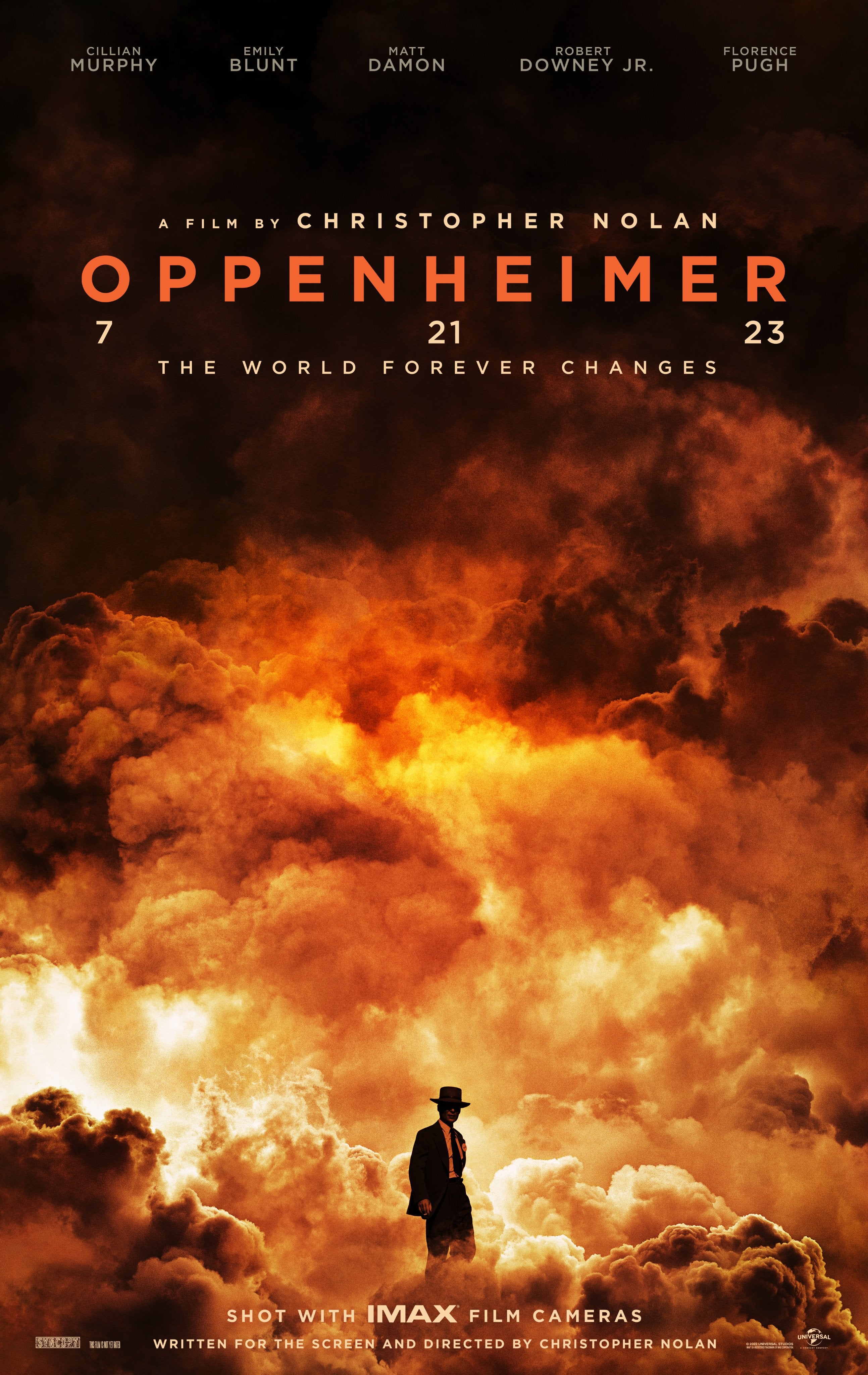
Sensational! Christopher Nolan’s highly anticipated cinematic spectacular Oppenheimer is an extraordinary motion picture that delivers a story as explosive as the subject matter. Not since Nolan’s earlier work on pictures such as Memento and The Prestige have I enjoyed both the form and function of his stylistic brand of filmmaking. Although the film chronicles the development, use of, and subsequent scientific and sociological affects of the A-Bomb, the story it really about the rise and fall of J. Robert Oppenheimer. Moreover, the subtext of the story is one that carries with it such commentary as the true cost of notoriety and serving one’s country and the destructive nature of unsubstantiated witch hunts. It’s a character-driven story more than it is a plot-driven story about the creation of the A-Bomb.

Oppenheimer is the story of American scientist J. Robert Oppenheimer and his role in the development of the atomic bomb. The film explores how one man’s brilliance, hubris, and relentless drive changed the nature of war forever, led to the deaths of hundreds of thousands of people and unleashed mass hysteria, and how, subsequently, the same man’s attempts to end one World War began a Cold War that would last for nearly fifty years.

While I have some reservations in the structural integrity of Nolan’s plotting in this film, which no strangers to my blog should know since that is often where I am hardest on films, his plotting and characterization hasn’t been this strong since Memento and The Prestige.

It should come of no surprise that Nolan’s latest motion picture excels in technical achievement. And I am not mentioning that to in anyway detract from that achievement; but, I mention that because had the film simply been an exercise in pushing the boundaries of filmmaking, then it would be another intentionally avant-garde vanity project. Which, it is not. Oppenheimer excels in both form and function; it shows care for both how the motion picture is montaged and presented and for the function of both plot and character.

With few exceptions, whether the plotting of a film is linear or non-linear, the plot should still follow foundational storytelling conventions to achieve the full impact it desires. Contrary to a postmodernist view of rules of art, just because one breaks the rules does not mean that a work of art or endeavor is somehow more substantive or meaningful in value. Nolan strikes a fantastic balance between form and function in this picture to completely transport audiences to the world of Los Alamos, NM in the mid-20th century.

Not since Dario Argento’s masterpiece Suspiria have I witnessed a motion picture employ the use of lighting, color (or lack thereof), and score to such a fantastical and effective level. These visual and auditory elements combine to immerse audiences in both the narrative and emotive dimensions of Oppenheimer’s story. Never overshadowing the story, but working in tandem with it, the visual and audible elements of the mise-en-scene craft a picture that simultaneously feels part of our world and yet somehow other worldly. Moreover, the story of Oppenheimer is told through both subjective and objective camera placement. In less experienced hands, this could have proven to be disastrous, but Nolan demonstrates his command of the screen in the uncanny combination of both.

One of the most stylistic montage and editing devices used is the black and white (more accurately described as grayscale) imagery for a specific timeline. And it would appear to my observation that it is indeed grayscale stock film–not desaturated in post-production. This observation is in part gleaned by way of the effects of lighting on the film stock. From a story organization perspective, this use of grayscale film stock helps in understanding the part of the non-linear timeline in which we find ourselves.

Where Nolan often struggles is in character authenticity. More times than not, the characters in his films are often lacking in believability, relatability, and vulnerability. Not that his characters are generally flawless, but they have demonstrated a lack in that which makes us most human. Each and every character in this film feels incredibly human–true to life. Whether or not the film is an accurate representation of the real-life counterparts, is not something on which I can comment. But, the characters, as presented, are relatable and feel authentic within their world. On the topic of characters, Nolan also injects humor into this film, which isn’t characteristic of his past films; and that use of humor helps to provide tension relief as an emotional reset between dramatic beats or scenes.

The central theme in the film is the true cost of notoriety and serving one’s country. And this is expressed primarily through Oppenheimer’s relationship with the development of the A-Bomb, but supplemented by his interactions with Albert Einstein, and therein Einstein’s relationship with his Theory of Relativity and success as the greatest scientific mind of all time. Or, as Oppenheimer puts it, “the greatest scientific mind of his day.” The story has to be seen to truly felt, but Oppenheimer spotlights how when one’s usefulness is seen as exhausted or no longer relevant to one’s country, that one is disposable.

We not only witness this in the film, but in real life as well. To this day, there are those that fought for their country that are not treated with the dignity and respect they both earned and deserve. The film paints a rather negative portrait of federal government operations as it relates to international and domestic policies. Suffice it to say, after Oppenheimer delivered the A-Bomb, he was soon thereafter cast aside as his (objectively reasonable) opposition to further development of weapons of mass destruction began to influence policy decisions. And this rise and fall story isn’t relatable to merely the government, but can be said of any company or organization that hails one as a visionary one minute, but after the project is realized, the same company or organization moves on. Fame is fleeting.

While many brilliant scientists were undoubtedly envious of Oppenheimer’s commercial success (except for Einstein, whom was a soothsayer of sorts), perhaps the rise and fall of Oppenheimer serves as a reminder that there are many whom have had notoriety forced upon them, but the oft infamy that follows can create a figurative prison out of which there is no escape.

Another observation I make, into the film’s themes and motifs, is the depiction of communism vs capitalism. Unfortunately, the loudest on social media do not likely have an accurate interpretation of what communism and capitalism are. And without getting into details, suffice it to say, the film does not accurately portray either communism or capitalism. So, I worry that many will watch the movie and begin to make connections and associations that are not accurate. On the topic, I’ll leave you with this: destructive ideologies that devalue individuality, based in universal truth and logic, in exchange for group identity based on emotions and impossible utopias is still an enemy of the people today.

This film is not to be missed on the biggest screen AND on 70mm film. Seeing a picture on film is truly magical. The depth lighting and shadow and richness of the color spectrum will always be expressed the best on celluloid. A chemical reaction beats 0s and 1s any day. Oh, and there is no reported use of CGI in this motion picture.
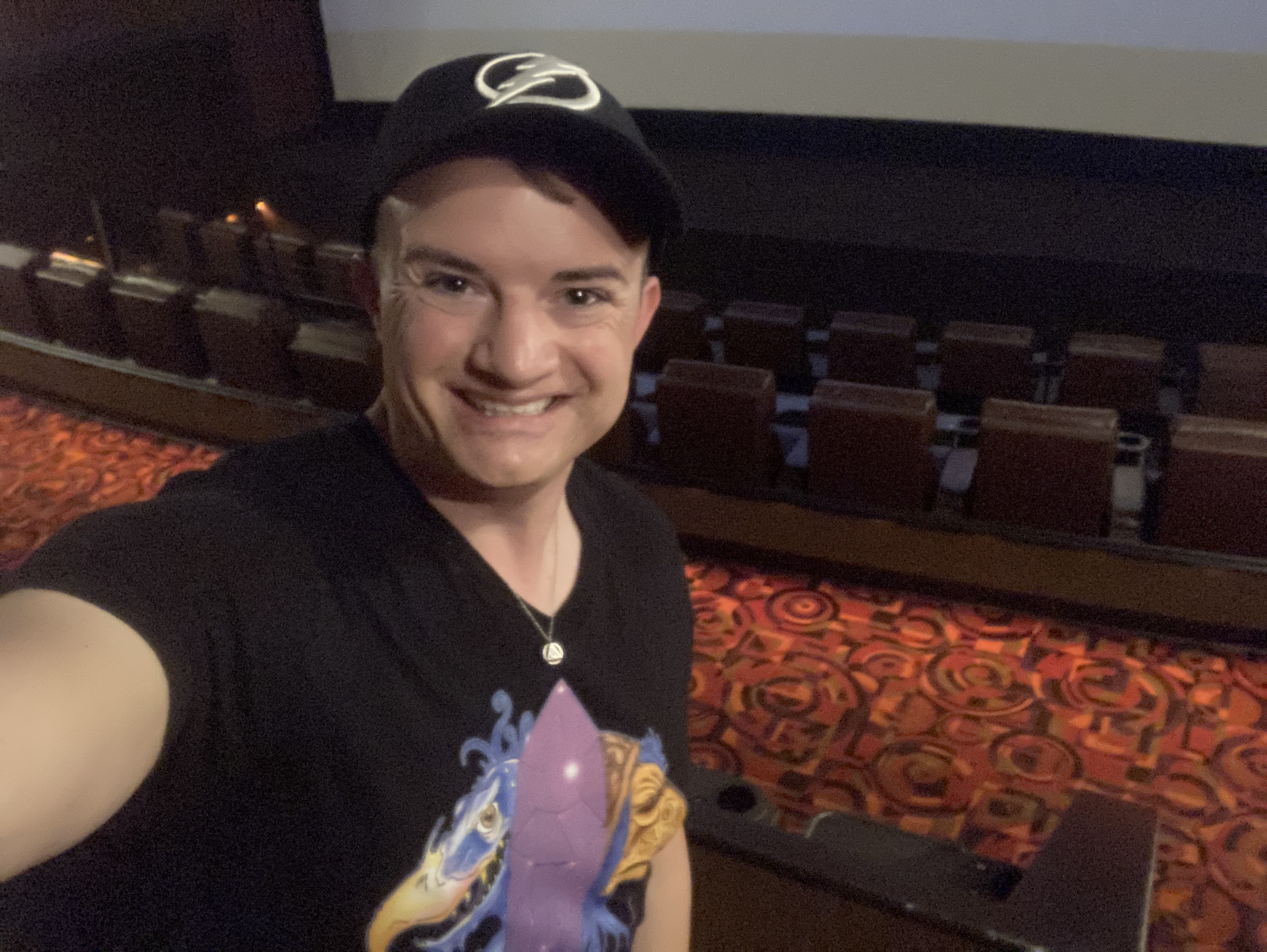
Ryan teaches Film Studies and Screenwriting at the University of Tampa and is a member of the Critics Association of Central Florida and Indie Film Critics of America. If you like this article, check out the others and FOLLOW this blog! Interested in Ryan making a guest appearance on your podcast or contributing to your website? Send him a DM on Twitter. If you’re ever in Tampa or Orlando, feel free to catch a movie with him.
Follow him on Twitter: RLTerry1 and LetterBoxd: RLTerry

JESUS REVOLUTION movie review

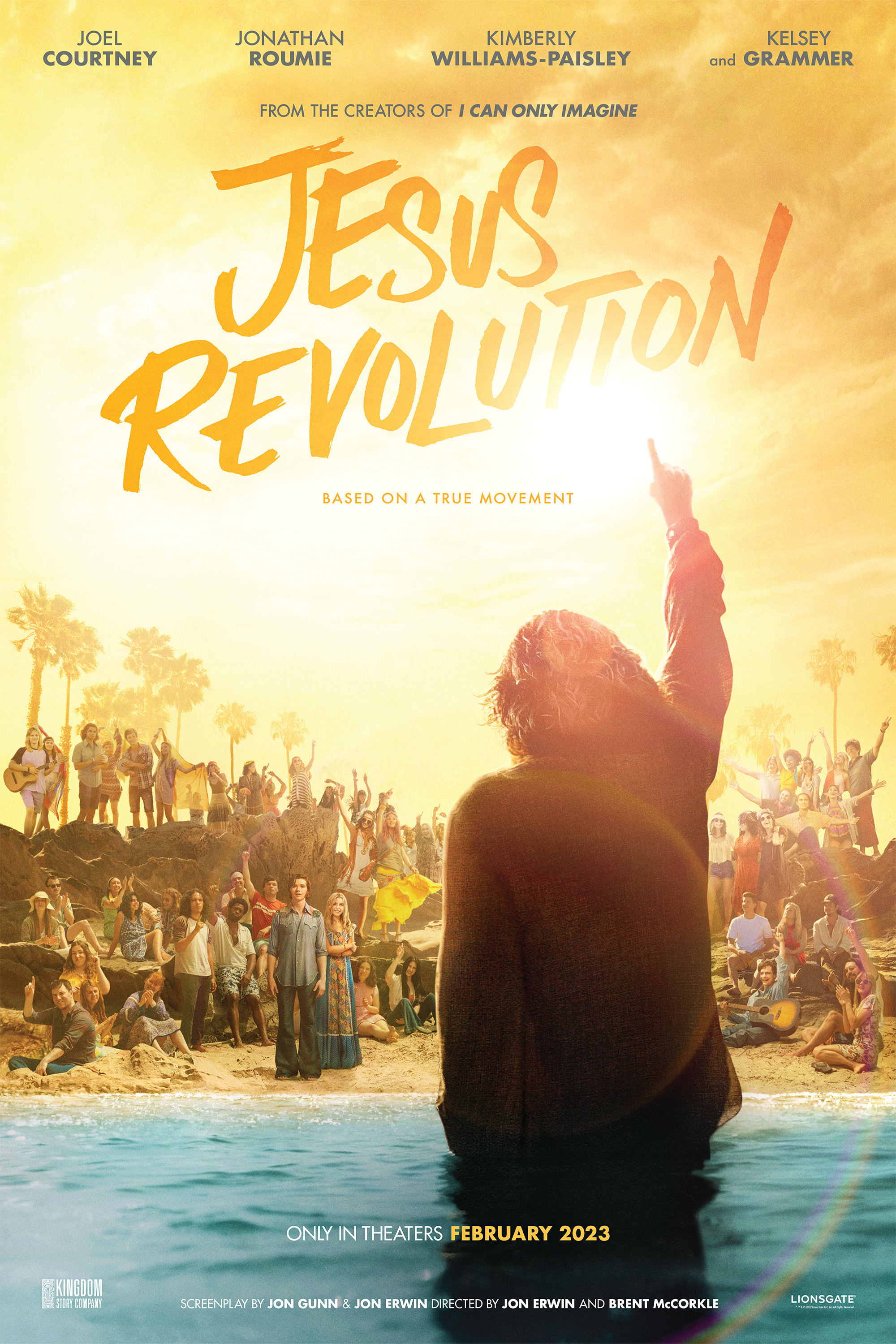
Healing and uplifting. Jesus Revolution is a biographical drama that simultaneously depicts the past whilst critiquing the present. Based on a true story about the radical search for truth, comes a motion picture that is simultaneously concerned with critiquing our present world as much as it is depicting historical events. Through exploring the past, the journey’s true value is not merely a better understanding of the past, but the impact on our present world. The real power of this motion picture is the ability for it to use a story from the past as a provocative lens through which to understand the current state of affairs in both popular culture and the Church.

In the late 1960s and early 1970s, Greg Laurie and a sea of young people descend on sunny Southern California to redefine truth through all means of liberation. Inadvertently, Laurie meets a charismatic street preacher and a pastor who open the doors to a church to a stream of wandering youth. What unfolds is a counterculture movement that becomes the greatest spiritual awakening in American history.

Directors Jon Erwin and Brent McCorkle demonstrate that they are just as concerned about the story itself as they are the methodology of crafting a film. Moreover, Jesus Revolution is the first faith-based film (that isn’t a sword and sandal epic) to take itself seriously as a motion picture. Believe me, I was as shocked as critic to find that the cinematography and editing are quite good! Not to mention the excellent lead cast. Cowriting the screenplay with Erwin is the central figure in the film Greg Laurie. Which does give me pause, because individuals writing a biographical drama based on them or major events in which they were a central figure often leads to a lack of authenticity. However, the screenplay is helped by Erwin and Jon Gunn, which is probably why the film feels as honest as it does.

The variety of characters portrayed in the film gives audiences someone with whom to connect. Which isn’t to say that the character with whom you connect is always a positive reaction; perhaps the character with whom you connect is one that is more concerned with ritual, image, and piety than with people and relationships. At the end of the day, this is a film about radical love, and how we need to concern ourselves with not what divides us but with what brings us together.

The biggest draw in the cast is Frasier himself! Kelsey Grammer plays Chuck Smith, the pastor of a dying church, whom is confronted with his own prejudgments about young people and hippie culture. It takes the radical street preacher Lonnie Frisbee and his skeptical-of-Christianity daughter to transform his world view. While Grammer is not the central character in Jesus Revolution, he is the one that you may be coming to see, especially with the highly anticipated revival of his smash hit Frasier. Suffice it to say, Grammer is the best actor in the movie, but he is surrounded by a solid lead cast that shows that faith-based films can deliver quality performances. Through candid arguments and authentic portrayals of raw conflict and reactions, this character-driven motion picture will hold up a mirror to your face and ask you which of these characters you are.

Both the cinematography and editing are on point. There are some absolutely gorgeous shot sequences and even some stylistic editing choices that exponentially increase the quality of this picture compared to most other faith-based films. Where most faith-based films fail is in the ART and SCIENCE of what it takes to craft a compelling picture. More than an objective eye to capture the outside-action plot, the camera is used in the same way an author uses a pen to write a novel. In cinematic terms we call this the camera stylo. There is certainly an auteur quality to this film that is just as concerned with how the story is being presented, and not just what is being presented to audiences.

What I appreciate more than the technical achievement of the film is the fact it doesn’t shy away from how awful christians can be to one another and to outsiders. One thing this faith-based film is not, is an echo chamber for those that already believe. The film is sure to make some people feel uncomfortable; and you know what, it’s not non-believers that this film seeks to make the most uncomfortable (although there is certainly a proselytizing message in the film), the those that are made the most uncomfortable with themselves are judgey christians that care way more about their club than for a hurting world in search for truth and in need of the kind of radical love that Jesus was all about.

Ryan teaches Film Studies and Screenwriting at the University of Tampa and is a member of the Critics Association of Central Florida and Indie Film Critics of America. If you like this article, check out the others and FOLLOW this blog! Interested in Ryan making a guest appearance on your podcast or contributing to your website? Send him a DM on Twitter. If you’re ever in Tampa or Orlando, feel free to catch a movie with him.

Follow him on Twitter: RLTerry1 and LetterBoxd: RLTerry

BABYLON (2022) film review

Whoa, that’s a lot of movie. Damien Chazelle’s decadent film of bombastic proportions is simultaneously mesmerizing and repulsive, coherent and incoherent, thoughtful and thoughtless. Suffice it to say, it’s interesting to behold. This overstuffed fever dream collage of 1920s and 1930s Hollywood is trying to tell so many stories, that it winds up not telling any of them effectively enough. There are competing A-stories (outside/action plots), each vying for to be the story about which the audience empathizes with the most. To dramatize these ideas, Chazelle assembles a mise-en-scene that’s ostensibly a combination of Singin’ in the Rain, Boogie Nights, Sunset Boulevard, and Once Upon a Time in Hollywood, with a little Caligula and Wolf of Wall Street thrown in to provocative proportions. Ultimately, what we have here is more of an exercise in montage–the assembly of a motion picture–more so than we have a clearly defined narrative. Undoubtedly, this will become a film that is shown in film studies classes in the future, and will be used for close reading discussions, much like I show Boogie Nights in my American Cinema class. There is a prolific amount of imagery to analyze, as the film follows four different Hollywood stories that all intersect one another. Just for whom was the film created? Certainly not general audiences. It is likely going to be most appreciated by Chazelle himself and with some critics and scholars (tho, not this scholar nor the majority of the critics with whom I screened this film).

Decadence, depravity, and outrageous excess lead to the rise and fall of several ambitious dreamers in 1920s Hollywood.

One thing is clear, Chazelle’s intention was to craft a boisterous love letter to the allure and power of cinema whilst negatively critiquing the Hollywood system that creates and destroys careers on a whim. Furthermore, the film seeks to provide thoughtful commentary (just how thoughtful? that is for you to decide) on the superficial, fleeting nature of fame and celebrity. Where the film excels is in the both the performative dimension and Chazelle’s direction. Unfortunately, Chazelle’s screenplay is all over the place.

While audiences may not remember the four individual story threads that make up the outside/action plot, audiences will definitely remember the prologue and final scene. Chazelle certainly captures the unbridled decadence that is probably not unlike the level of debauchery that ran rampant after the great movie people migration from Europe (mostly Germany and France) and eastern U.S. (avoiding Edison’s motion picture patent policing) after the first World War. It was certainly the wild west with a seemingly unending source of money (coupled with massive debt). To borrow from Outback’s former slogan no rules, just right, that describes the atmosphere of the greater Los Angeles area. No order, only chaos. Which is not unlike this film–lots of chaotic images and plot points.

The prologue to Babylon is truly a spectacle that words simply cannot capture accurately. That’s not to say that all of the creative decisions were plot or character-driven–I’ve said it before–that even provocative imagery can be used to further the plot or character; and therefore, that which would otherwise be evaluated as gratuitous, is actually purposeful. However, much of what goes on in the opening scenes is simply gratuitous for the sake of shocking the audience–for an extended period of runtime. I am reminded of the opening to Boogie Nights, and how at first glance it may seem gratuitous, but actually the opening scene is needed for plot and character development. It’s not so much shocking as it is crafted for a strategic purpose.

While elements of the prologue are justifiable, in the relationship to plot and character, there are many moments that are no more than prolific debauchery simply because Chazelle could. Now, what I did find most interesting–and to the point that I greatly appreciate the prologue–is that much of the deplorable chaos is underscored by the score from Fritz Lang’s masterpiece Metropolis in the Babylon scene with MechaMaria. Something Chazelle wove into the scene for the film scholars in the crowd.

Jumping to the end of the film, there is a–what amounts to a–clip show featuring iconic films from the 100+ years of cinema history we have. I get it, Chazelle is communicating to audiences that being part of filmmaking means that you’re part of something bigger than yourself, something that will live on decades and (by extension) centuries after you pass away. It’s this artform that will continually be rediscovered and influence people and cultures (good, bad, or indifferent). While it’s clearly designed to be an emotionally moving moment in the film, as indicated by the tears in the character in that scene, it comes off as lazy, derivative montage that does little more than remind the audience of better films for the rather long sequence of imagery. Instead of being a deeply, moving scene, it’s rather vapid.

The four competing A-stories depict four different (but not too dissimilar in substance) Hollywood stories. (1) an A-list star that feels the pain as he watches his star fade with changing times (2) An up and comer that is thrust into the spotlight for a brief time, just to continue to fall due to tragic flaws and a talent that simply didn’t transition to talkies (3) an immensely talented individual subject to the prejudices of the general public and Hollywood executives and (4) and an animal wrangler turned studio executive by being in the right place at the right time, but even that level of fame and success is not invincible to human error and poor judgment. Any one of these stories would have made for a great A-story, with others falling in line thereafter. But each one of them feels like it’s vying for the main outside/action story. This is where Chazelle should have worked with a screenwriter that could have taken his concepts and ideas, and fashioned them into a much better structured and plotted narrative.

Perhaps it’s a film ahead of its time, or perhaps, it truly is the Heavens Gate of 2022. Maybe it will see success on down the road like Boogie Nights and Showgirls has, but only time will tell. Presently, it’s a wild, bloated film that lacks basic storytelling.

Ryan teaches Film Studies and Screenwriting at the University of Tampa and is a member of the Critics Association of Central Florida. If you like this article, check out the others and FOLLOW this blog! Interested in Ryan making a guest appearance on your podcast or contributing to your website? Send him a DM on Twitter. If you’re ever in Tampa or Orlando, feel free to catch a movie with him.

Follow him on Twitter: RLTerry1

DEVOTION film review

DEVOTION delivers an endearing story with heart, but the unevenly paced screenplay lacks the gravitas to be truly impactful or memorable. Unfortunately, this Naval Air Force biographical drama arrives on the tailwinds of Top Gun: Maverick, to which it will undoubtedly get compared (though they are different). It’s a decent film with an important, historical story to tell, but the film is held back by the lack of strategic focus and the competing story threads.

Elite fighter pilots Jesse Brown (Jonathan Majors) and Tom Hudner (Glen Powell) become the U.S. Navy’s most celebrated wingmen during the Korean War.

We cannot discuss this film without addressing the white elephant in the room, the wildly popular, critical and box office smash hit Top Gun: Maverick. Both films feature character-driven stories in the Air Force, one fictional, while the other is biographical. Funnily, both feature Glen Powell in a central role. Speaking of casting, Devotion has a solid cast, but often times, neither the lead nor supporting characters are given much to do.

Even though I was unfamiliar with this true story prior to watching the film, it certainly seems to have hit all the factual points (which–don’t get me wrong–is important in a biographical drama), but the facts of the account never fully manifest into a cinematic story. Furthermore, there are three competing story threads, each vying to be the main outside/action story (1) the Korean War mission (2) the friendship between Tom and Jesse and (3) the relationship between Jesse and his family. Underscoring each of these is the inside/emotional story of Jesse’s professional and psychological struggles being the first person of color in the Naval Air Force.

The screenplay lacks focus, lacks direction. None of the outside/actions stories ever emerges as the main (or A-story). In an effort to dramatize everything that was going on in Jesse’s life professionally and personally, the screenplay never completely landed on any one of them. Because of this lack of focus, audiences will likely experience difficulty in connecting with any one of the characters; empathize? Yes. Truly connect? Therein lies the struggle.

Compared to the cinematography and editing of Maverick, Devotion noticeably struggles. Regrettably, this struggle would have been less noticeable had both films not been released in the same year (and yes I am aware Maverick experienced delays due to shuttered theatres and mitigated operations from 2020–2021). As much as I tried to separate the two films, Maverick was such an incredible film that it’s nearly impossible to evaluate them independent of one another.

Devotion is a middle of the road film, from technical achievement and screenwriting perspectives. It’s neither bad nor great; because it has an important story to tell, and it’s clear that everyone’s hearts were in the right place, it does make for a good film, but one that won’t likely stick with you as long as Maverick did.

Ryan teaches Film Studies and Screenwriting at the University of Tampa and is a member of the Critics Association of Central Florida. If you like this article, check out the others and FOLLOW this blog! Interested in Ryan making a guest appearance on your podcast or contributing to your website? Send him a DM on Twitter. If you’re ever in Tampa or Orlando, feel free to catch a movie with him.
Follow him on Twitter: RLTerry1

AMSTERDAM movie mini-review

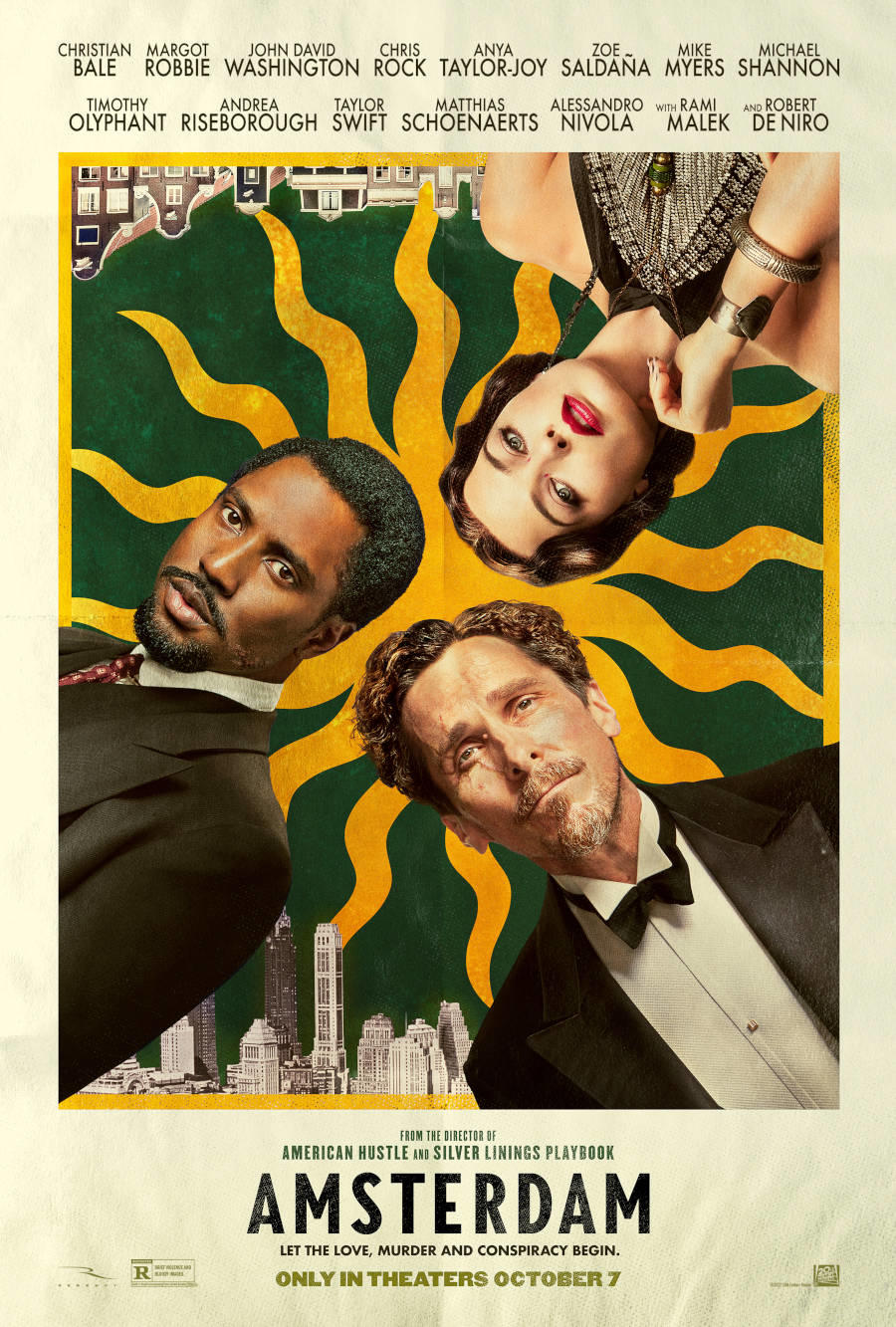
There is a fascinating true story and great movie…in there…somewhere. David O. Russell’s star-studded Amsterdam is a bloated, poorly paced movie that places far more emphasis on repetitive, pedantic social commentary than it does on lean storytelling and strategic plotting. If not for the powerhouse cast, the movie would be nearly unwatchable. A litmus test I give a movie is (1) if I look at my watch and (2) if so, how often. If I am looking at the time, then I am not engrossed in the story. And I looked at my watch many times during this lengthy quasi-historical drama. Amsterdam demonstrably has little idea or security in what it wants to be. Is it a dark comedy? Is it a drama? Is it satire? All valid questions for which there is no clear answer, because it struggles to find the proper tone that best expresses its story. Although the social commentary on race relations quickly becomes redundant, it does highlight some areas of wartime history of which many, including myself, are likely unaware. Such as soldiers of color being forced to wear French uniforms–had no idea! So I am glad that this disrespectful chapter in history was highlighted for modern audiences. Clearly this movie should have been an Oscar vehicle for Russell, his cast, and crew, From beginning to end, it’s easy to read this film as a desperate attempt to win over general audiences and critics by convincing them that there is something to see here; unfortunately, what should have been an incredibly interesting mystery and untold true story suffocates under the poorly written and structured screenplay.

Ryan teaches Film Studies and Screenwriting at the University of Tampa and is a member of the Critics Association of Central Florida. If you like this article, check out the others and FOLLOW this blog! Interested in Ryan making a guest appearance on your podcast or contributing to your website? Send him a DM on Twitter. If you’re ever in Tampa or Orlando, feel free to catch a movie with him.

Follow him on Twitter: RLTerry1