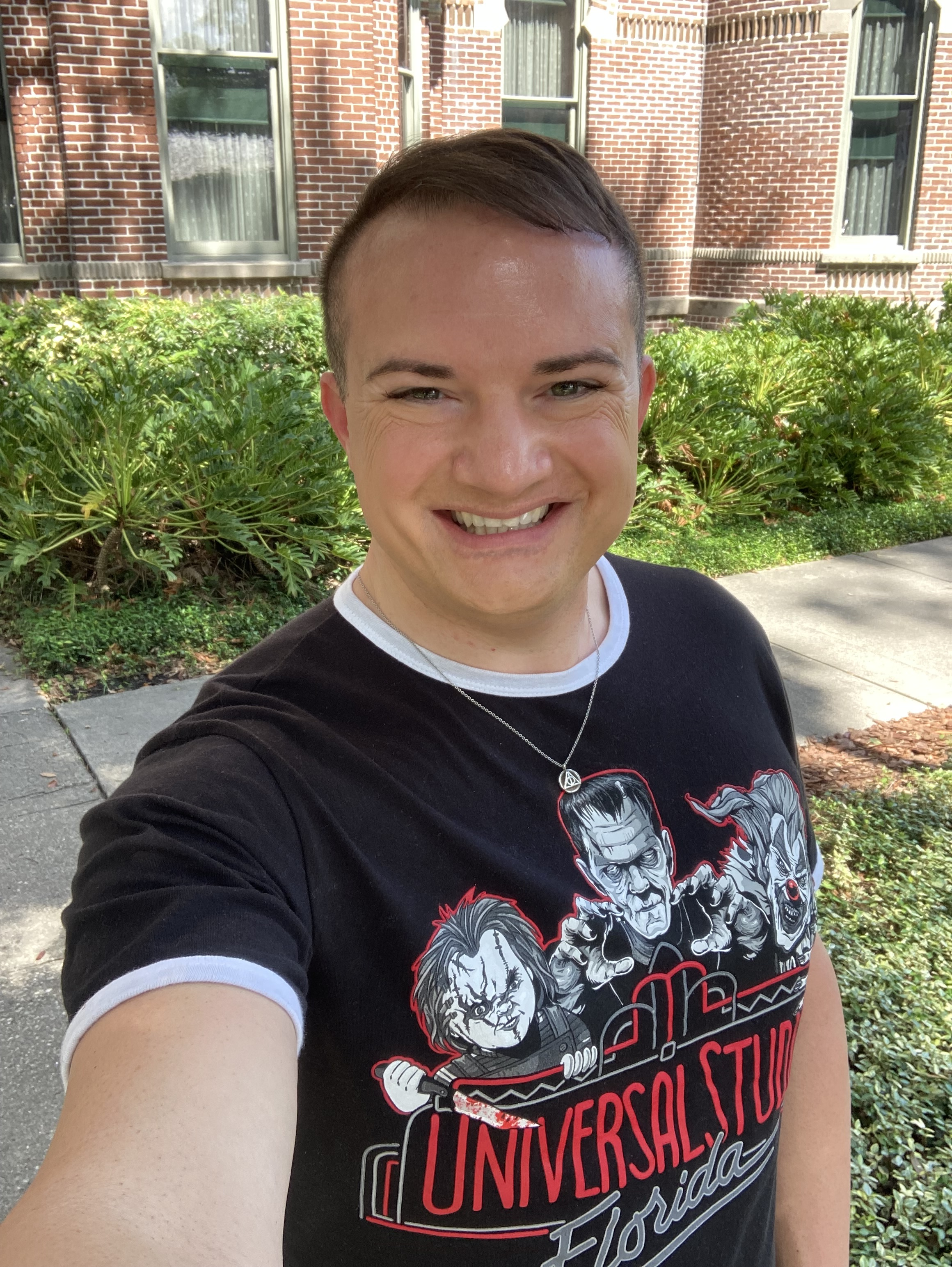
WHY HORROR? (Preface)

My book exploring why we love horror so much is taking longer than I originally projected, but I thought I would share the preface with you. If you like the preface, then you’ll want to purchase the book when it releases! At the time of this posting, I am on Chapter 12.

PREFACE

“What’s your favorite scary movie?” (Ghost Face, Scream). There is something to be said about the measurable energy of an auditorium at the cinema when a crowd is energized for opening night of the latest horror film. Moreover, the same can be said about your own living rooms when gathered with friends to watch a horror movie on-demand or through a streaming service. We turn into quasi participants because of the strong physiological and emotional responses to the stimuli on screen. Best enjoyed in a group setting, these movies are the stuff of nightmares and fond memories!

The American horror film brings so many people of all ages together from a bevy of ethnic, cultural, religious, and socio-economic backgrounds unlike any other single film genre. Spawning conventions, theme park events, inspiring indie and pop artists, the fandom of horror is incredibly diverse and stratified. While the science-fiction/fantasy fandom is large and vocal, it does not often display the level and degree of diversity that horror does both presently, in our culture, and has for more than a century. From the dawn of cinema, horror has been a staple for big studios and small production companies alike.

By analyzing horror films, we can learn a lot about our past, our present, and even our future. While film is largely a reflection of life, horror is the best cinematic mirror of all because it forces us to face our fears. The monster in a horror film, may just be the manifestation of a force or idea in the real world delivered to us through a terrifying cautionary tale.

Even when a bad horror movie gets released in theatres, the auditoriums are usually full on opening night–even through the weekend–before the numbers fall off, and that title is available on-demand in a few weeks. The influence of horror on our society is witnessed throughout the decades. A great example of this is seeing fans from across four decades all gathering in one place to watch 2018’s Halloween.

Unlike other critical and box office successes in recent years, this particular franchise boasted a 40 year old legacy that brought fans and spectators of all ages together. I remember sitting there in my seat, simply in awe at the sea of people and feeling a kinetic energy surge through my mind and body, especially when the Halloween theme music began to play. What other genre generates this?!?

In order to best explore why horror brings so many people together, we need to first look what the formula is for the American horror film and then at why we are attracted to it. From there, we can travel through the decades to learn how and why the horror film developed in the manner that it did.

Understanding what comprises the American horror film will support our exploration because it will create a theoretical framework through which we can analyze the popularity and fandom of horror. When I lecture on horror to my film studies and screenwriting students at the University of Tampa, where I’ve taught since 2016, I describe the makeup of the American horror film this way:

(Art movements of) German Expressionism + French Surrealism = horror’s aesthetic

(Writings of) Sigmund Freud + Edgar Allan Poe = horror’s content

At its root, all genre horror films can be traced back to these aforementioned elements and formulas. This chapter will focus on horror’s aesthetic, while the next chapter will focus on its content. 

Ask anyone, and the single most famous scene in all of cinema is the famous shower scene from Hitchcock’s Psycho, widely regarded as the most pivotal horror film in all cinema history. The aforementioned scene gains a greater eerie feel upon the close of the movie when the audience realizes that Norman has little to no control over his mind and actions.

The studio responsible for solidifying the horror film as a popular genre, and you could say is the parent of the American horror film is Universal Pictures. Not only is horror the most bankable genre of film, generally speaking, it is also one of the most fascinating to analyze because many horror films written in the classical sense are social metaphors.

Throughout this book, you’ll learn about the current events that preceded a particular movement in horror, and how those fears and anxieties were explored through characters and plots. For example, it was the space race of the mid 20th century that inspired many of the alien movies of the 1950s. And with the space race, came a fear of what lies beyond our atmosphere.

Although the “modern” horror film began with Psycho, horror was an influential genre and box office draw from the dawn of cinema. In fact, many of the characters you enjoy watching today in horror films has their first appearance in the early 1900s.

“Oh no, don’t go into that house!” “Watch out! He’s right behind you.” Some of the most memorable movies of all time are the horror films. They draw our eye’s attention to that which would otherwise repulse us in real life. At the same time, our own eyes are being threatened with disturbing or bizarre imagery.

But why does that which would repulse us in real life and that which is terrifying to behold, bring us together? That is what we are here to explore together! So join me as I lead you on a journey to dive deep into why horror brings us together.

From Nosferatu to (my favorite icon) Freddy Krueger and beyond, the American horror film continues to leave a huge footprint in our collective zeitgeist.

Ryan teaches Film Studies and Screenwriting at the University of Tampa. If you like this article, check out the others and FOLLOW this blog! Interested in Ryan making a guest appearance on your podcast or contributing to your website? Send him a DM on Twitter or email him at RLTerry1@gmail.com! If you’re ever in Tampa or Orlando, feel free to catch a movie with him.

Follow him on Twitter: RLTerry1

UNCHARTED action-adventure movie review

The Goonies meets Raiders of the Lost Ark in the moderately entertaining movie adaptation of the hit Uncharted video game series. Of course, therein lies a tonal problem: the movie is never quite sure what tone it wants to strike. Tom Holland and Mark Wahlberg star in the Ruben Fleischer helmed high-flying action-adventure movie that hopes you haven’t played or know much about the video game. Fortunately for me, I wouldn’t even know the cover art of the game, let alone anything about it other than the title. And that is probably why I enjoyed it as much as I did–but that isn’t saying much. #FilmTwitter was up in arms about the boyish Holland playing the grizzled Nathan Drake when the casting was announced. And while I cannot comment on his particular interpretation of the main character from the video game, I can comment on an inability to buy him as the character, as written, for the movie. It’s indicative of the trend of endowing teens and young adult actors (and by extension, characters) with the same qualities and experiences that come with age and experience. I’ll give him this, he is a charismatic actor. The slapdash storytelling comes across as a movie that feels more like a curation of cut-scenes from a video game, a problem that plagues most video game movie adaptations.

Nathan Drake and his wisecracking partner Victor “Sully” Sullivan embark on a dangerous quest to find the greatest treasure never found while also tracking clues that may lead to Nate’s long-lost brother.

What ultimately keeps this movie afloat is the witty, quippy dialogue, completely devoid of any subtext, but will elicit periodic laughter throughout the movie. While I know next to nothing about the video game, I did learn from a fan of the video game that there is a major element from the game that is completely absent from the movie. I won’t mention what that is in order to avoid spoilers. Be sure to wait around for the mid and post credit scenes that setup a sequel. If you do plan to see it, you’ll definitely want to watch it in the biggest premium format in your area. Many of the scenes, especially in the third act, deliver immense size and scope that are best appreciated and experiences on the biggest screen possible.

While I am unsure of the plot of the video game, the movie sets up an emotionally-driven subplot of the Nathan’s search for his long-lost (or gone) brother. But, it never feels that is plays any significant role in the main action plot. In fact, you can remove the whole search for his brother and the movie plays out the same. This is a movie that could have been a nice hybrid between The Goonies and Raiders of the Lost Ark, but it tries to be both of them instead of finding its own expression. Perhaps this is yet another example of how most video game adaptations simply don’t translate to the screen well, because the interactive element is missing.

At the end of the day, it’s a decent popcorn flick to experience in IMAX that is a perfectly fine way to pass the time on an afternoon.

Ryan teaches Film Studies and Digital Citizenship at the University of Tampa. If you like this article, check out the others and FOLLOW this blog! Interested in Ryan making a guest appearance on your podcast or contributing to your website? Send him a DM on Twitter or email him at RLTerry1@gmail.com! If you’re ever in Tampa or Orlando, feel free to catch a movie with him.

Follow him on Twitter: RLTerry1
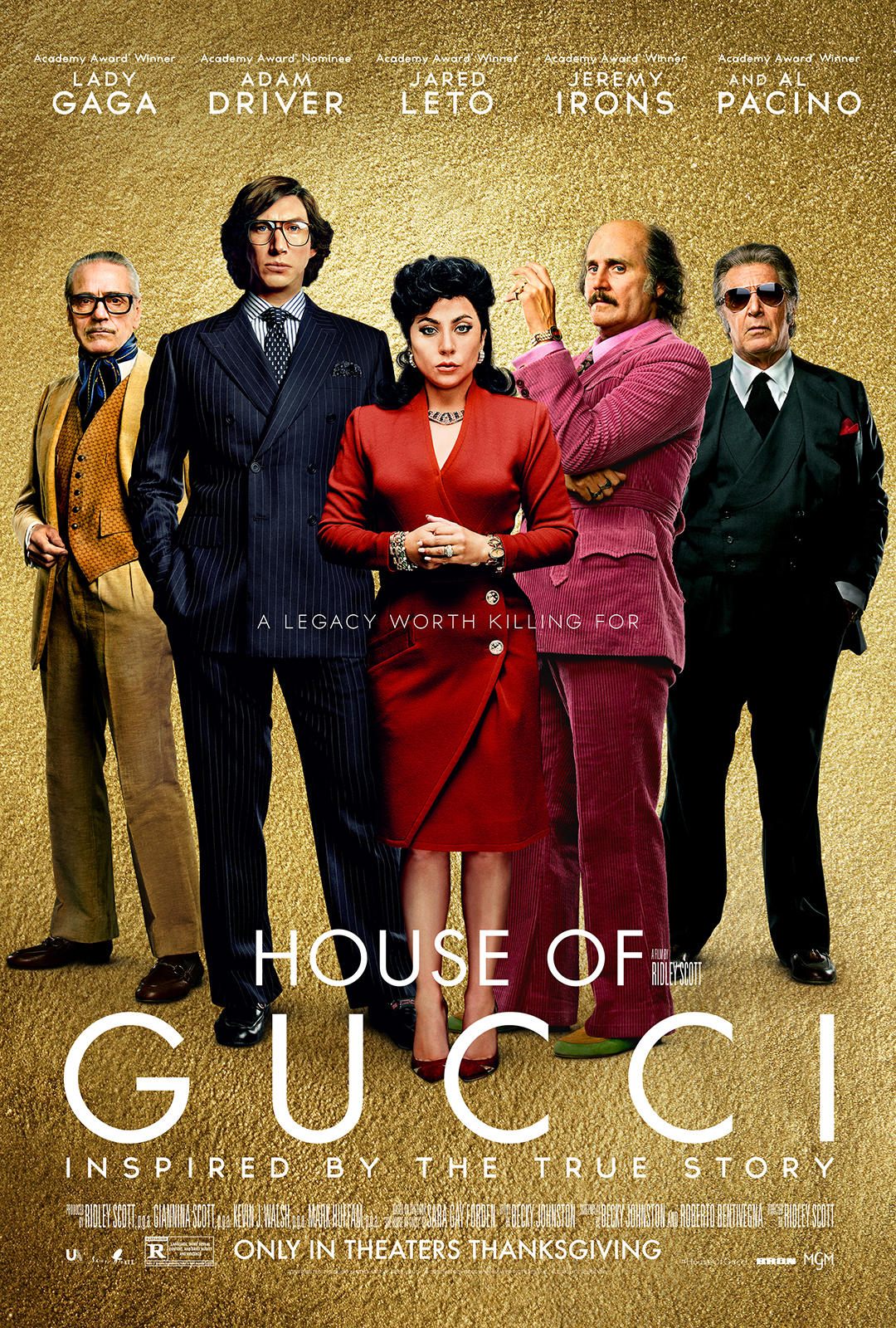
House of Gucci mini review

“A triumph in mediocrity.” From the brilliance of The Last Duel to the dullness of House of Gucci, director Ridley Scott is all over the cinemascape this year. Rodolfo Gucci, in his deconstruction of Aldo Gucci’s talent for design encapsulates the experience of this film by the summation that it merely exists without having any lasting impact of the soul of design. Phenomenal cast, intriguing historic story, fascinating look into one of the most storied companies of all time, but it’s ultimately all held back by a director phoning in his vision and a screenplay that is about as one-dimensional as the conglomerate that would eventually oust the Gucci family from their own fashion house. Individually, all the actors in the lead and secondary ensemble cast are outstanding. Unfortunately, the screenplay (and director) give them nothing substantive to do. So, there are many scenes in which each is clearly going for their respective Oscar or Golden Globe nomination.

What a disservice to the sensational true story, because there is a great story in this lackluster mess somewhere. Structurally, the first two acts drag on and on and on in a meandering direction that is suppose to point to and setup the third act, which consequently is the best part of the film. Regrettably, the third act is incredibly rushed (plot, murder, conviction, family ousted, all within 10mins it seems). I mean, those are some of the most interesting plot points of the whole story about (to quote the subtitle of the novel on which this is based) “…the sensational story of murder, madness, glamour, and greed.” One screenwriting convention is referred to as saving the best for last, but I don’t think the practice is meant to be taken that literally (it’s actually more or less directed at dialogue ending on a strong note). Perhaps the most intriguing dimension in this film is how it will likely prompt you to read up on the family and company after you get home. Just in terms of reading the Wikipedia entry, there was more intrigue than in the whole of House of Gucci. Which is saying a lot, since this film was pretty much a Wikipedia article.

If you’re a student of history or fashion, then you will likely find the background of interest. While this film is certainly not a runway film, there is commentary on art of versus the commercialization of fashion that exists within the mediocre narrative. Is is bad? No, not inordinately so. Is it good? Not particularly. Unless you want to see the fantastic performances on the big screen, I suggest at-home viewing of this film is sufficient.

Ryan teaches American and World Cinema at the University of Tampa. If you like this article, check out the others and FOLLOW this blog! Interested in Ryan making a guest appearance on your podcast or contributing to your website? Send him a DM on Twitter or email him at RLTerry1@gmail.com! If you’re ever in Tampa or Orlando, feel free to catch a movie with him.

Follow him on Twitter: RLTerry1

The Last Duel review

Captivating! Game of Thrones meets legal drama in a thought-provoking exploration of truth, perception, and inequality told through a Rashomon-like nonlinear story that is punctuated with dark comedy to provide emotional resets and strategic tonal shifts. Easily one of my fave films of the year! I was cautious going into this film because Ridley Scott has simply not lately been delivering what we came to expect from and love him for in Alien, Blade Runner, and Gladiator. So after many swings and misses, I was cautiously optimistic at best (and that’s being generous). Boy, was I wrong! The Last Duel is an outstanding film, full of thoughtful content, laugh out loud moments, and relevancy to contemporary topics. Perhaps the story takes place in the 1300s, but the characters are all archetypes we see today on screen and in real life. While the Rashomon-like approach to the central story is not new, it is an approach that isn’t used often, and can easily be abused, misused, or simply not dramatically justifiable. From the hilarious to intimate performances, the cast will keep your eyes glued to the screen. You’ve never seen a medieval period drama like this one before!

Jean de Carrouges (Matt Damon) is a respected knight known for his bravery and skill on the battlefield. Jacques Le Gris (Adam Driver) is a squire whose intelligence and eloquence makes him one of the most admired nobles in court. When Le Gris viciously assaults Carrouges’ wife Marguerite (Jodie Comer), she steps forward to accuse her attacker, an act of bravery and defiance that puts her life in jeopardy. The ensuing trial by combat, a grueling duel to the death, places the fate of all three in God’s hands.

The central focus of the plot is explored from three different perspectives, each depicting its own version of the truth. And never once did it feel repetitive; each time we revisit the incident, inclusive of the events leading up to, we learn something new. Furthermore, we learn what each version of the truth shares in common, thus affording the audience the opportunity to make the decision of what happened and how for themselves. This non-linear approach keeps the story incredibly engaging, by beckoning the audience to be completely intrigued by the events as they unfold. Even when observing a moment that we have already seen, but from a different perspective, there are brilliant nuances that separate the versions of the truth. Sometimes it’s how something was said or the expressed emotion when it was said; other times, it’s how something was done, and the attitude with which it was conducted.

While this story could have been incredibly dark from beginning to end, there is a healthy helping of levity to break up the dismal atmosphere and heavy subject matter. And it’s not limited to cleverly written humorous dialogue, there is a substantive amount of physical comedy as well. While Matt Damon and Jodie Comer play their characters fairly direct, without much in the way of humor, the characters played by Adam Driver, Ben Affleck, and Alex Lawther provide expertly timed and perfectly punctuated comedic relief. And of all those actors, it’s Affleck that get’s the lions share of the comedic bits. Some of it is slapstick, some high brow, and other parts are executed through dark comedy. Honestly, this is probably my favorite Affleck performance in a long time! He is so funny! Every time Affleck’s Count Pierre d’Alençon is on screen, he has some hilarious commentary or remark on the current state of affairs. While Alex Lawther’s King Charles doesn’t say much, his physical reactions are all that you need! Clearly the king simply wants to watch the world burn for fun, by allowing pretty much anything that is pitched to him, as long as he seen the entertaining value in it. Lastly, Driver’s Jacques Le Gris even has some moments that will make you laugh, including laughing at the most inappropriate moment; but there is simple something in his delivery of the lines and his physical acting that prompt you to chuckles and even laughter. For all the laugher that you will exhibit when watching this film, none of it is ever in poor taste or shows irreverence for a tough subject to cover.

Matt Damon and Jodie Comer’s performances as our two central characters will astound you! Damon delivers a stellar performance and Comer may have just secured herself a place on the best actress category in the award shows next year. Despite having seen Damon in plenty of serious roles, this is my favorite of his in a long time. I love when I get to see an actor surprise me! And he delivers plenty of surprising moments that convey a multitude of layers to his character, who will elicit sympathy from you even though you will disagree at his initial reaction to his wife’s report that is the catalyst for the duel. Jodie Comer shatters any expectations you go in with regarding how the central character’s wife typically acts. Her performance is one of those that you just know that she is channeling her heart and soul into every moment. You will feel her plight to be respected and believed for what she reports happened to her. Even though we do not spend an inordinate amount of time with her until her chapter, when her chapter begins, it is clear that she is the real star of the film!

While this may not look like a classic Ridley Scott film in the vein of ALIEN or Blade Runner, it does bear similarities in stylistic approaches to Gladiator. The sweeping landscapes, the intimate character moments, the visceral atmosphere sucking you into the setting of the story, it’s all here! While adhering to what we have come to expect from a medieval period drama, Scott checks off those boxes in a rubric-like fashion, but then crafts a modern story around the classic bones. That’s precisely what The Last Duel is, it’s a relevant story on the backdrop of a dark period in history. Scott’s adaptation of the actual events is delivered with raw gusto! Very few filmmakers could rise to the challenge to adapt such a heavy story, whilst keeping it entertaining–it is a motion picture after all–but he does all that and more! More than the reenactment of an actual event, this cinematic story has life, like we haven’t seen from Scott in nearly two decades (2005’s Kingdom of Heaven is the most recent motion picture if his that is truly excellent). The images aren’t simply beautiful frames flipping past the lens at 24fps, this film leaps off the screen with prolific energy.

This image has an empty alt attribute; its file name is profile_pic.jpg

Ryan teaches American and World Cinema at the University of Tampa. If you like this article, check out the others and FOLLOW this blog! Interested in Ryan making a guest appearance on your podcast or contributing to your website? Send him a DM on Twitter or email him at RLTerry1@gmail.com! If you’re ever in Tampa or Orlando, feel free to catch a movie with him.

Follow him on Twitter: RLTerry1

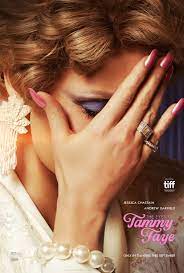
“The Eyes of Tammy Faye” Film Review

The Eyes of Tammy Faye will penetrate to your soul. You may think you know Tammy Faye’s story, but go beyond the tabloids in Michael Showalter’s (The Big Sick) heartfelt, hilarious, honest film that paints a humanizing portrait of the ridiculed and often parodied Tammy Faye Bakker. You will undoubtedly be blown away by Jessica Chastain’s jaw-dropping performance as the “Queen of Eyelashes” in this powerful rise, fall, and redemption story. Tammy’s eyelashes may be fake, but there is nothing fake about this candid portrait of the late television icon. Playing the mastermind of the PTL Network scandal is Andrew Garfield in a showcase performance that will have you despising Jim, but praising the uncanny portrayal. The film highlights Tammy Faye’s genuine love for God and her love for people–everyone! Even in the 1980s, when the LGBT community had little to no voice, especially amongst fundamental evangelicals, she was a loving voice for them. While it would have been so easy for the film to have been devoid of genuine levity, audiences will find there are some hilarious scenes that work as fantastic humanizing elements, especially early on when Jim and Tammy Faye engage their lustful adolescent interests as hormonally charged young adults and newlyweds. Showalter, Chastain, and Garfield deliver a fresh perspective on Jim and Tammy Faye Bakker that depicts human beings, not one-dimensional caricatures of televangelism.

In the 1970s, Tammy Faye Bakker and her husband, Jim, rise from humble beginnings to create the world’s largest religious broadcasting network and theme park. Tammy Faye becomes legendary for her indelible eyelashes, her idiosyncratic singing, and her eagerness to embrace people from all walks of life. However, financial improprieties, scheming rivals and a scandal soon threaten to topple their carefully constructed empire.

I already want to see it again! And it’s definitely becoming an addition to my physical media collection. This narrative film is based on the award-winning documentary by the same name, directed by Fenton Bailey and Randy Barbato, and I suggest watching it as a companion piece. In many respects, the storytelling structure of The Eyes of Tammy Faye parallels the approach Craig Gillespie took in I, Tonya. In addition to the awards-talk around the performances, I would look to see this film in other conversations such as makeup, screenplay, and perhaps directing and picture. Showalter’s film explores the world of Tammy Faye, as seen through her unmistakable eyes; furthermore, he treats the character (the person) of Tammy Faye with respect as a flawed but loving woman rather than the heavy-makeup-wearing satirical and parodied caricature that many remember from the tabloids. Perhaps the thousands of times she said “God loves you” may have came across as insincere; but the truth is, she wanted the world to know that God and Tammy both love them.

Showalter’s candid picture gives Tammy Faye and Jim the full treatment as he takes audiences on a journey through their story, including the scandal that rocked a nation, whilst treating them with dignity and respect as they are–as we all are–flawed humans. This biographic drama seeks to understand (mostly Tammy Faye, but a little of Jim too) the Bakkers, not mock them or their work. Tammy Faye is a breath of fresh air in an environment polluted by stale, lifeless, and downright rotten individuals. From the beginning of the film, you learn that her faith in God and love of Jesus was not going to be defined by her circumstances or what people thought of her. If you told her she couldn’t, she would prove to you that she could. That is a trait that she could continue through her entire life, even after her scandalous fall from grace. You also learn that while she lived an opulent lifestyle, she was never defined by her material possessions. Oh don’t get me wrong, she loved her signature clothing style and trademark makeup and hair, but those things did not define her or her faith. Well, except for her eyes. She said “if you remove my [fake] eyelashes, I wouldn’t be me.”

While her husband was pulling the strings, she was doing everything she could to reach people for Christ; however, it was also clear that she loved the performance, the camera, and the microphone. If she hadn’t gone into televangelism, she very well could have been a Broadway star with her larger than life showmanship and personality. We also learn that Tammy Faye was likely unaware of the dishonest and illegal dealings of her husband, even though she at times suspected he wasn’t being honest. Chalk it up to extreme naivety. Despite no reports of Jim being physically abusive to Tammy Faye or their two kids, he was shown to be psychologically and emotionally abusive to Tammy Faye. Even to the extent that he used Tammy’s minor indiscretion with a Nashville music producer against her, to humiliate her on international television in an effort to raise more money because of her testimony. Tammy’s flirtation with the an elicit affair goes to show that we are all flawed individuals that toy with or fall victim to the same temptations, in whatever form they take. But we understand how and why Tammy Faye was tempted to search for love elsewhere; she was not appreciated as a person by Jim, but only as a tool to get more money out of PTL’s “partners.” Even when the reality of Jim would peak through, she never let that detour her from spreading the love of God to everyone in her signature style.

While we ostensibly watch the events of the rise and fall of the Bakkers through Tammy Faye’s eyes, in a similar fashion we did in I, Tonya, we also get glimpses of the story through Jim’s perspective when it serves to advance the emotional journey of the characters, especially when it comes to his complicated relationship with the then and now unlikable Pat Robertson and Jerry Falwell. For example, I did not know that it was Jim and Tammy Faye that started the 700 Club. But when the innovative Christian talk show became a popular program on the fledgling CBN Network, Pat Robertson placed them on a maternity/paternity sabbatical, but was actually steeling their show in a jealous power-grab. The Bakkers then started what would become the TBN Network, but were ran off from there too. Finally, they began the PTL Club (later massive, worldwide PTL Satellite Network), and the success of that venture would eventually spawn a 24-hour network, neighborhoods, and a theme park that would become the third most visited in the country after Disneyland and Disney World.

While PTL was growing by leaps and bounds, Robertson and Falwell were seething with jealously at the success of Jim and Tammy Faye, a motive that comes into play when they discover the payment of PTL funds for the hush-money regarding Jim’s affair. Little did Tammy Faye know that Jim surrounded himself with a conniving mafia-like group of “Christians” that sought to take down the power couple after they departed from the Robertson-Falwell fundamentalist agenda. This mafia-like mentality is most apparent when Tammy Faye televises the emotional interview with a gay AIDS patient, also a Christian pastor, on her show. She ends the interview with reminding the viewers that Christians are called to love as Jesus loved. It was shortly after that, that Robertson and Falwell actively looked for ways to dethrone the king and queen of televangelism. Of all the examples of Christians in the film, amongst the lead and supporting characters, Tammy Faye is the best example of how a Christian should love and act.

Chastain has instantly shot to the front of the Best Actress in a Leading Role category, and Garfield may find himself in the Best Actor conversations as well. Chastain disappears behind the trademark Tammy Faye makeup and delivers a larger than life performance! And since Tammy Faye, herself, was the definition of camp and larger than life, it’s an incredibly authentic, sincere performance. It’s easy to see how the LBGTQ community was drawn to the person of Tammy Faye then and now, because the LGBTQ community often greatly admires women who remain strong in the face of adversity. But Chastain’s performance of the person of Tammy Faye will undoubtedly inspire and win the admiration of all kinds of people from all walks of life. While Chastain is brilliantly portraying the character of Tammy Faye, we learn in the film (and in the documentary, the interviews, and PLT flips that many will undoubtedly pour through after leaving the film) that Tammy Faye wasn’t a character at all but one of the most genuine, sincere loving people that ever walked the planet. Chastain captures every nuance of Tammy Faye with uncanny precision.

Even the indelible Cherry Jones as Tammy Faye’s love-to-hate mother that was so often Tammy Faye’s harshest critic may be in the supporting actress conversations. She’s a scene steeler herself, much like Allison Janney was as LaVona Harding in I, Tonya. All the lead and supporting performances are perfectly executed, and the hair/makeup on everyone leaves an uncanny resemblance between the actors and the real-life people that are being portrayed. If Tammy Faye was still alive, I feel strongly that she would appreciate the film. Her son Jay appears to like the film from what I’ve read of his comments.

I’d be remiss not to mention, what is perhaps the most telling scene of who Tammy Faye was. Months or perhaps years after the collapse of the PTL Empire and all her fine things were sold (and house actually burned to the ground), and she’s driving a crappy Honda Accord and living in a rundown apartment, she pulls into her parking spot one day. And she gets out, she hears a few of the neighborhood punk teens making fun or her. She walks over to them, and graciously says, “if you’re going to talk about me, since I am your neighbor, you should at least shake my hand and meet me first; hi, I’m Tammy Faye” (or something to this effect).

What we have here is a brilliantly produced biographical drama that works as trifecta comprised of a cautionary tale, a redemption story, and film that provides social commentary on topics such as politics, religion, and patriotism as our country is becoming increasingly polarized on these subjects.

This image has an empty alt attribute; its file name is profile_pic.jpg

Ryan teaches American and World Cinema at the University of Tampa. If you like this article, check out the others and FOLLOW this blog! Interested in Ryan making a guest appearance on your podcast or contributing to your website? Send him a DM on Twitter or email him at RLTerry1@gmail.com! If you’re ever in Tampa or Orlando, feel free to catch a movie with or meet him in the theme parks!

Follow him on Twitter: RLTerry1