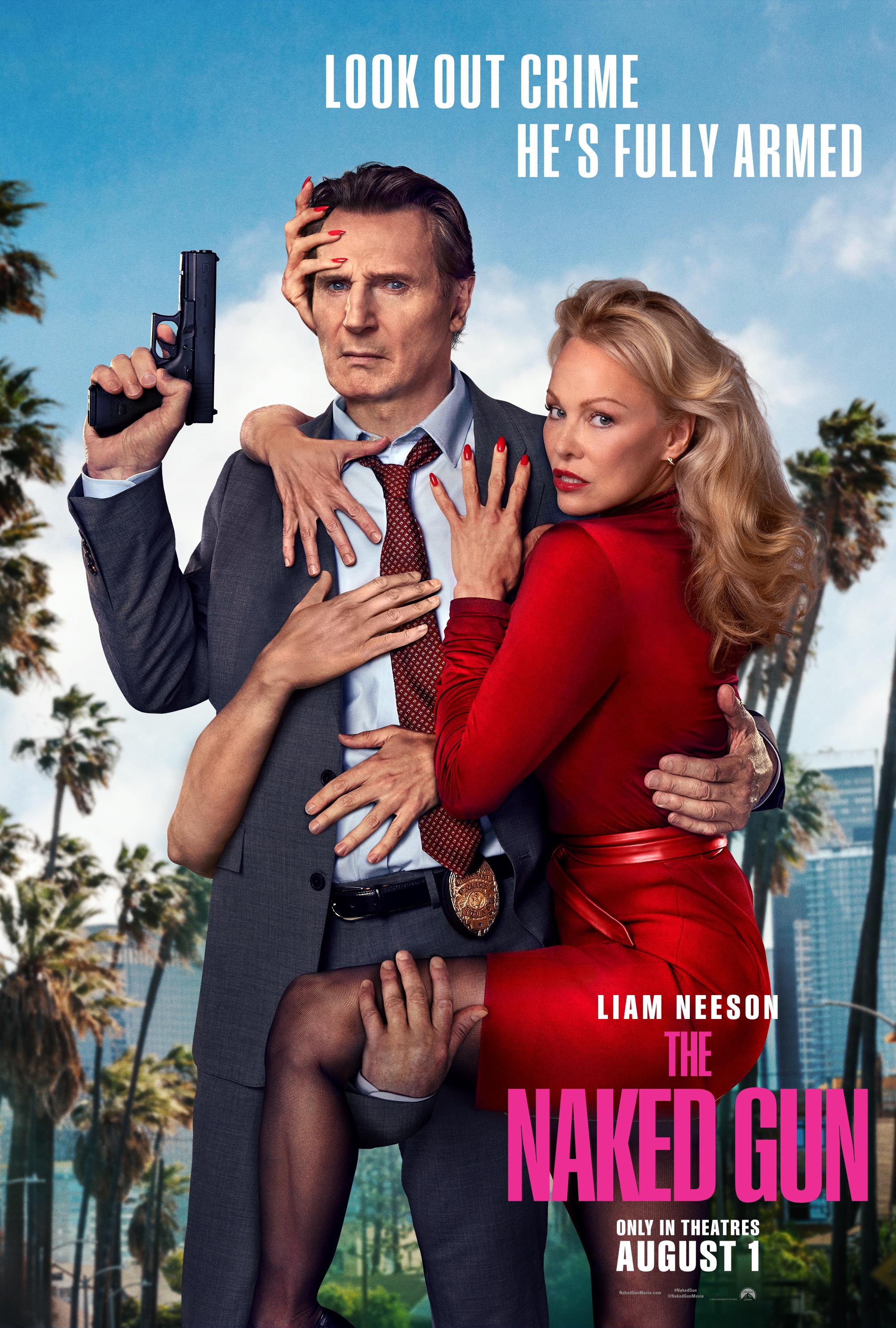
THE NAKED GUN (2025) movie mini review

Best comedy since SPY! The Naked Gun (2025) is a spectacular noir/detective-comedy that has it all: smart screenplay, sensational cast, and it clocks-in at just under 1.5hrs. This reboot/reimagining of the beloved classic tiptoes along a treacherous tightrope: how to honor a slapstick legacy while avoiding the hollow echo chamber of recycled gags. Remarkably, thanks to a razor-sharp script, a fully committed cast, and a surprisingly fresh narrative, it pulls it off with chutzpah and precision. Directed by Akiva Schaffer, The Naked Gun is a masterclass in tonal balance, threading the needle between absurdity and plot progression, all while leaving room for character beats that land harder than a collapsing filing cabinet. Every setup pays off, every non sequitur doubles as a stealth punchline, and, most critically, the story and characters matter.

At the center of the madness is Liam Neeson, weaponizing his deadpan gravitas in a way that would make Leslie Nielsen nod in approval from the great beyond. As Frank Drebin Jr., he’s not playing his father’s shadow—he’s illuminating a new one. His comedic chops are precision-engineered. Neeson doesn’t mug for the camera or chase punchlines; he commits, deadpanning his way through verbal landmines, visual gags, and escalating mayhem with the kind of straight-faced sincerity that made Leslie Nielsen legendary. The secret ingredient to his delivery? His restraint. Marrying glamour and goofiness is Pamela Anderson, fresh off her outstanding performance in The Last Showgirl. Her tone, cool gaze, and knowing glances lend a classic noir energy to the role, but it’s her self-awareness and comic precision that elevate the performance. She glides through scenes with old-Hollywood poise in the vein of Lauren Macall, only to puncture the atmosphere with a well-timed double entendre or whip-smart aside.

In a cinematic landscape where many reboots are content to wink at the audience and roll credits, The Naked Gun dares to be funny—consistently, inventively, and unapologetically so. It doesn’t just recapture the soul of the original; it gives it a new pair of shoes and sends it running headfirst into traffic. And you’ll be laughing all the way.

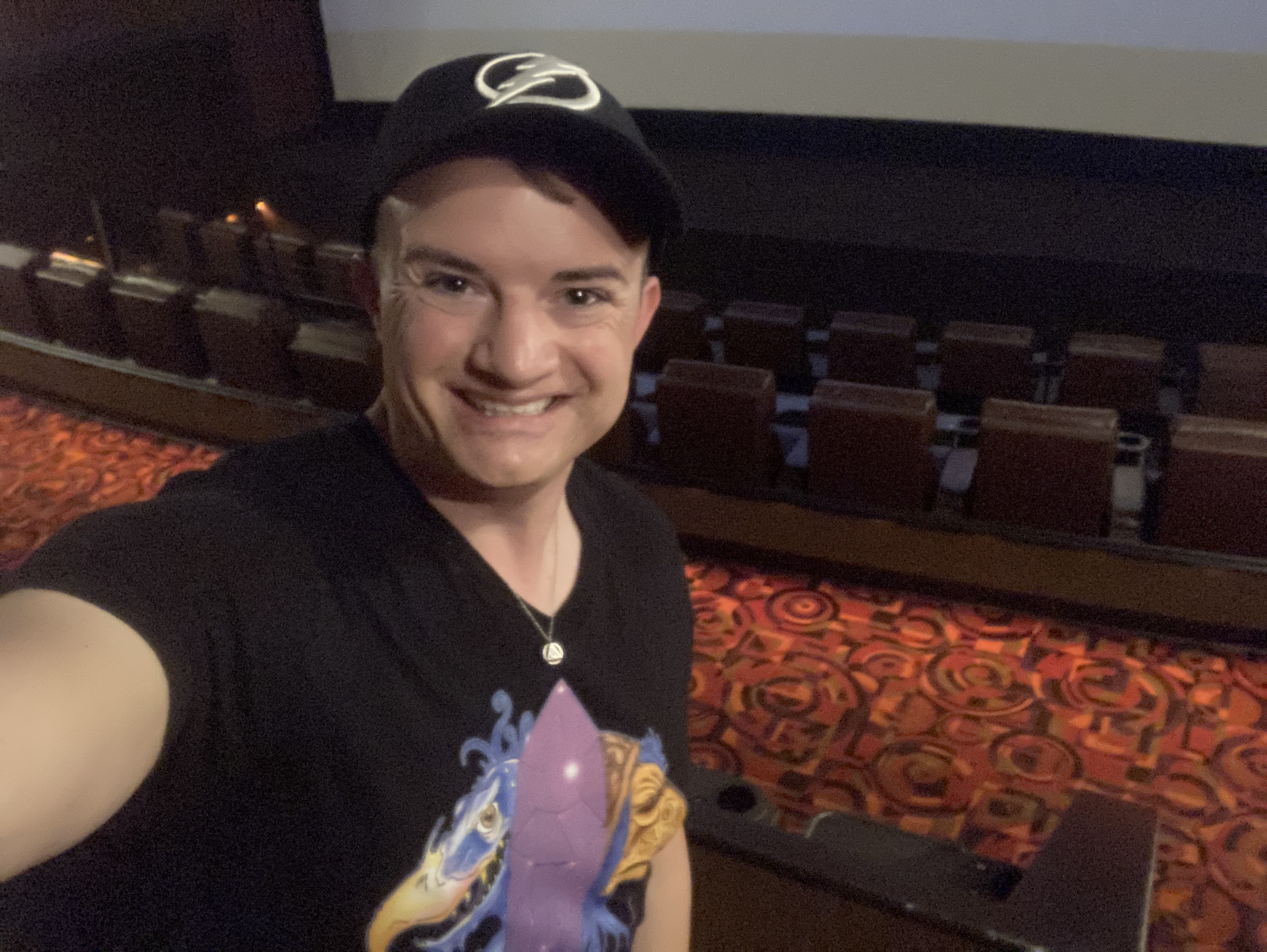
Ryan is the general manager for 90.7 WKGC Public Media in Panama City and host of the public radio show ReelTalk “where you can join the cinematic conversations frame by frame each week.” Additionally, he is the author of the upcoming film studies book titled Monsters, Madness, and Mayhem: Why People Love Horror. After teaching film studies for over eight years at the University of Tampa, he transitioned from the classroom to public media. He is a member of the Critics Association of Central Florida and Indie Film Critics of America. If you like this article, check out the others and FOLLOW this blog! Follow him on Twitter: RLTerry1 and LetterBoxd: RLTerry

BASIC INSTINCT (1992) a Throwback Thursday review

Still suspenseful and seductive! The Paul Verhoeven hypnotic neo-noir thriller continues to entertain and fascinate us more than three decades later. Exemplary direction, writing, and acting. Every storytelling element works flawlessly together to craft a film that was a cultural phenomenon and made Sharon Stone a household name. The heavily Hitchcockian-inspired film also contains characteristics of giallo that assault the senses and add a cloak and dagger quality to the string of mysterious, gruesome crimes. The effective use of red herrings and misdirection adds to the tension, keeping audiences guessing until the final reveal. Recently, I used this film in class, and my students, none of whom had seen it before, found it to be captivating, thoughtful, and provocative.

The mysterious Catherine Tramell (Sharon Stone), a beautiful crime novelist, becomes a suspect when she is linked to the brutal death of a rock star. Investigated by homicide detective Nick Curran (Michael Douglas), Catherine seduces him into an intense relationship. Meanwhile, the murder case becomes increasingly complicated when more seemingly connected deaths occur and Nick’s psychologist and lover, Beth Garner (Jeanne Tripplehorn), appears to be another suspect.

Basic Instinct both pays homage to and yet subverts expectations and tropes we have of film noir. This psychosexual suspense thriller draws inspiration from the works of Alfred Hitchcock and Dario Argento, particularly Vertigo, Psycho, and Suspiria in its exploration of manipulation, sexuality, and obsession. The use of shadowy lighting, ominous music, and morally ambiguous characters all contribute to the film’s rich noir aesthetic. That, coupled with unraveling the alluring mystery of the ice pic wielding killer, makes this a gripping sensory explosion motion picture tour de force.

Jerry Goldsmith’s phenomenal score plays a vital role in shaping the film’s atmosphere, mood, and emotional impact. Through its seductive melodies, tense rhythms, and character motifs, the music enhances the storytelling and helps to create a compelling and immersive cinematic experience. Whether accompanying intimate moments or intense suspense and violence, the music enhances the audience’s experience and adds an immersion to the storytelling. Goldsmith is an underrated composer because, not only did he deliver this seductive score, but he also wrote themes and music for Gremlins, Alien, Star Trek: the Next Generation, The Omen, and more. In addition to a prolific library of work in cinema and television, his compositions also demonstrate a wide rage of styles, unlike most other composers. When discussing great composers of the music of cinema, he should definitely be in the conversation.

At its core, this seductive film explores themes of obsession, desire, power, and manipulation. The film delves into the darker aspects of human psychology, particularly the blurred lines between love, lust, and violence. It also examines the idea of control, both in personal relationships and within the criminal justice system. In an analysis of the film, one of my students described it as a chess game, with Tramell being the white pieces and Nick being black. After all these years, I never thought to read the film as a chess match, each character attempting to out maneuver the other. While the film has long sense been thought of as an elaborate cat and mouse game, I feel my student offers a much more precise reading of the film as a chess game.

Sharon Stone’s iconic career-defining role as Catherine Tramell is characterized by her magnetic presence and undeniable charisma. From the moment we meet her lounging at her beach house by the waterside, she exudes confidence and allure, drawing others into her orbit with ease. Her character subverts stereotypes, presenting a complex and empowered female character of opposition whom is both alluring and dangerous. In every scene in which she appears, she delivers her performance with incredible gravitas. And it’s this performance by which the film owes so much of its enduring legacy. That interrogation scene alone, wherein she is simultaneously in complete control of the interview whilst embracing her sexuality is still one of the best single scenes of all time, especially when exploring feminist cinema.

She isn’t a strong female character because the men around her are weak or incompetent at their jobs, she is a strong character–period–because those that surround her are smart and driven. Yet, Catherine Tramell continually proves herself throughout the film to be cunning, calm, confident, and in control of any situation in which she finds herself. Suffice it to say, Stone’s Tramell is a complex and enigmatic character who embodies the archetype of the femme fatale, a seductive and dangerous woman who manipulates those around her for her own gain. The femme fatale represents a beautiful symphony of duality that continually draws us into the story.

Tramell’s sexuality is a central aspect of her character, and Stone portrays her with a sense of agency and empowerment. She is unabashedly sexual, embracing her desires without apology or shame. Stone’s performance balances Tramell’s overt sexuality with a sense of control and autonomy, challenging traditional gender norms and expectations. Tramell is a complex character that defies social norms and mores, wielding her sexuality as a means of empowerment in a male-dominated world.

In the film’s exploration of the darker aspects of the human psyche, both Nick and Catherine become completely consumed by their mutual attraction and psychological gamesmanship, blurring the lines between lust and danger. In many ways, they are mirror images of one another, which may explain the instant fascination each has with the other. The film explores the consequences of unchecked desire and the destructive nature of obsession. Moreover, the film explores heteronormative gender norms and that liminal space between personal and professional boundaries.

Tramell’s overt sexuality challenges Nick’s masculinity and authority, leading to a complex dynamic characterized by dominance and submission. This exploration of heteronormative gender dynamics adds dimension to their relationship and underscores the film’s themes of control and manipulation. One can even take this further to read the ice pic itself as a phallic weapon that Tramell has commandeered. She exerts control over the penetrative ice pic just as she has exerted control over Nick, or at least Nick’s perception of her. Concerning the manipulation of perception, this aspect to the plot and characters is a fantastic homage to Vertigo.

Michael Douglas’ performance of the deeply flawed detective Nick Curran may not get the attention that Stone’s Catherine Tramell does, but he delivers an incredibly strong performance of the recovering alcoholic and struggling sex-addict. Nick, a man whose moral and ethical compass is constantly being tested, struggles with his past and his predisposition to impulsive behavior. His vulnerabilities and inner demons make him a compelling character, as he navigates a dangerous world while battling his personal demons.

His attraction to Tramell blurs the lines between his personal desires and professional duties, compromising his judgment and objectivity. This vulnerability adds depth to his character, showcasing his susceptibility to manipulation. Throughout the film, Nick seeks redemption for his past mistakes, making his character journey one of self-discovery and catharsis. Nick’s experiences in the roller-coaster of an investigation provide him with the tools to confront his inner turmoil and ultimately finds closure. This character arc adds emotional depth to the narrative and allows the audience to empathize with his struggles.

Basic Instinct simultaneously checks all the boxes for neo-noir, and still manages to break ground! It’s a mind-bending, mesmerizing thrill ride from start to finish that continues to age beautifully like a fine wine. It’s a bold and controversial thriller that continues to captivate audiences with its exploration of sexuality, heteronormative roles, power, and psychological intrigue.

Ryan teaches Film Studies and Screenwriting at the University of Tampa and is a member of the Critics Association of Central Florida and Indie Film Critics of America. If you like this article, check out the others and FOLLOW this blog! Interested in Ryan making a guest appearance on your podcast or contributing to your website? Send him a DM on Twitter. If you’re ever in Tampa or Orlando, feel free to catch a movie with him.

Follow him on Twitter: RLTerry1 and LetterBoxd: RLTerry

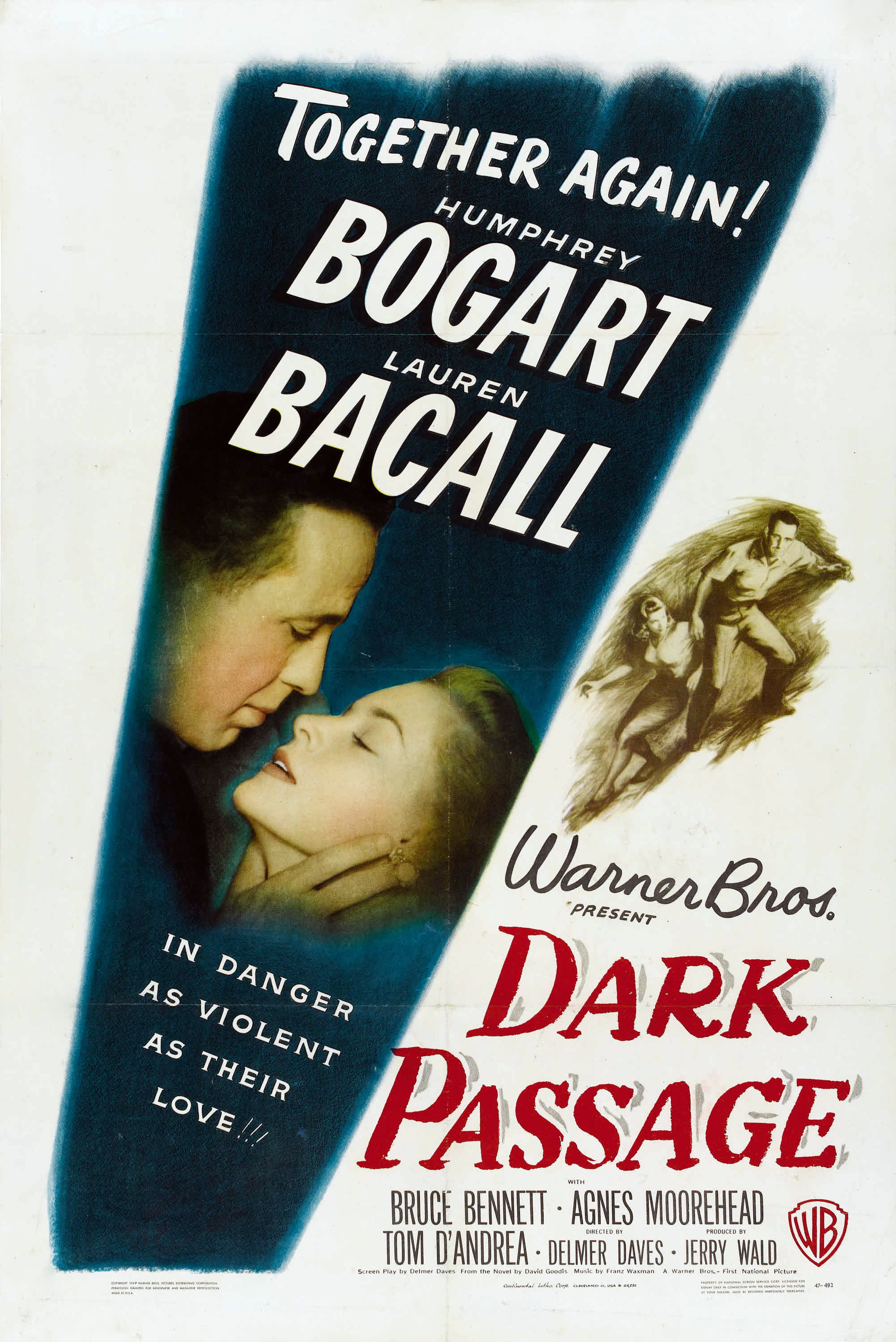
DARK PASSAGE (1947) throwback Thursday review

Spectacular and immersive! Dark Passage is the outstanding Bogie-Bacall film noir that you’ve likely never seen or even heard of, but you’ll want to change that. From beginning to end, this motion picture never ceases to draw you into its mysterious, seductive atmosphere. Bogie delivers a noteworthy performance through his dynamic facial expressions and body language, but it’s Bacall that steals the show through her sultry, smart, and sensational screen presence and performance. Dark Passage simultaneously checks all the film noir boxes whilst delivering something fresh and exciting.

Vincent Parry (Bogart) has just escaped from prison after being locked up for a crime he did not commit–murdering his wife. Vincent finds that his face is betraying him, literally, so he finds a plastic surgeon to give him new features. After getting a ride out of town from a stranger, Vincent crosses paths with Irene Jansen (Lauren Bacall), who believes in his innocence and helps him unravel the mystery surrounding his wife’s murder.

The most striking production element of Dark Passage is its innovative use of motivated camera framing and movement, which provides a unique and immersive perspective for the audience. By presenting the action from Vincent’s point of view (POV), the audience is drawn into his experiences and emotions, creating a sense of empathy and connection with the character. This technique adds a layer of suspense and tension to the film, as the audience is kept in the dark about Vincent’s true identity until later in the story. While POV camera is commonplace today, in the 1940s it was almost unheard of, which may have contributed to the reception of the film. But, if you’re searching for an excellent example of emotive POV camera, then definitely add this movie to your watch list.

Thematically, the film concerns itself with exploring concepts such as identity, justice, and redemption. Vincent’s transformation through plastic surgery raises questions about the nature of identity and whether changing one’s appearance can truly alter who they are on psychological, physiological, and emotional levels. As Vincent searches for his late wife’s real killer in order to clear his name, he grapples with issues of morality and the quest for justice in a corrupt world.

Underscoring the aforementioned themes is the compelling and complex relationship between Vincent and Irene. Irene’s unwavering belief in Vincent’s innocence provides him with hope and motivation to continue his search for the truth. Their growing bond adds depth to the story and serves as a contrast to the darker elements of the plot, because of the humor generated by their conflicting personalities. Film noir isn’t characterized merely by grayscale images (commonly referred to as black and white), but specifically the high contrast between light and dark. The high contrast isn’t only communicated visually, but is communicated thematically as well. In Dark Passage, the humor in Vincent and Irene’s relationship is the light to the film’s dark elements. 

Lauren Bacall delivers a captivating performance as the determined Irene Jansen, Bacall’s portrayal of Irene is both alluring and sympathetic, adding depth to the character and serving as a crucial counterpart to Humphrey Bogart’s Vincent. Bacall’s performance exudes confidence and intelligence, traits that are essential for Irene as she navigates the morally ambiguous world of the film noir genre.

Perhaps the very definition and embodiment of femme fatale, Bacall communicates strength and cunning whilst never at the expense of sensuality and seduction. Moreover, she simultaneously conveys both fortitude and vulnerability beneath her character’s poised exterior. Bacall authentically portrays a relatable human dimension, allowing the audience to empathize with Irene’s plight and unwavering support for Vincent.

Furthermore, Bacall brings a sense of sophistication and glamour to the role, seamlessly fitting into the noir aesthetic. Her distinctive voice and sultry demeanor add to Irene’s allure, making her a memorable presence in every scene in which she appears. Humphrey Bogart delivers a compelling and nuanced performance in the film, even when we do not see him. Even his voice work is outstanding. His portrayal of Vincent is a masterclass in film noir acting, showcasing his ability to convey complex emotions and inner conflict.

Bogart’s performance is particularly noteworthy for his use of facial expressions and body language to convey Vincent’s emotions. Even when his face is hidden from view during the first part of the film, Bogart manages to convey a wide range of emotions through his voice and physical presence alone. His expressive eyes, in particular, become a focal point for conveying Vincent’s inner turmoil and determination.

Bogie’s performance is a truly an underrated performance in his illustrious career. With his skillful portrayal of Vincent Parry, Bogart elevates the film beyond its genre trappings, creating a compelling and unforgettable character that lingers in the minds of audiences long after the credits roll.

On an aesthetic level, one of film noir’s most striking elements is the high contrast grayscale imagery. The moody grayscale cinematography brilliantly captures the shadowy streets of San Francisco, thus crafting an atmosphere of dread. Beyond mere aesthetics, however, the lighting and camera movement communicate a sense of unease and mystery, mirroring Vincent’s (and by extension film noir’s) emotional journey through this murky world of crime and deception.

Why isn’t this brilliant picture more well-known? Most likely the reasons are three fold (1) competition from other better-known Bogie-Bacall collaborations like The Big Sleep (2) overt subjective camera framing and movement and (3) availability on broadcast/cable TV and home video.

Points one and three are somewhat interlinked because other Bogie-Bacall pictures like A Gentleman’s Agreement and The Big Sleep are much better known because they received higher praise from critics and audiences (even though Dark Passage received mostly positive reviews at the time of its release). And because of this, other Bogie-Bacall pictures received more airtime on broadcast and cable TV and were more widely available to own on home video and DVD. The second point, which may have led to the mixed-positive reception, concerns the (what would’ve been interpreted at the time as experimental) subjective camera techniques. In retrospect, the POV shots are an outstanding use of motivated camera movement that simultaneously conveys the film’s theme of identity and advances the plot. 

While not as well-known as it should be, Dark Passage holds significance within the film noir genre and remains appreciated by cinephiles for its innovative cinematography, compelling performances from Bogie and Bacall, and atmospheric storytelling. And underscoring the technical and performative achievement is the film’s exploration of identity and injustice. It remains a captivating and influential motion picture.

Ryan teaches Film Studies and Screenwriting at the University of Tampa and is a member of the Critics Association of Central Florida and Indie Film Critics of America. If you like this article, check out the others and FOLLOW this blog! Interested in Ryan making a guest appearance on your podcast or contributing to your website? Send him a DM on Twitter. If you’re ever in Tampa or Orlando, feel free to catch a movie with him.

Follow him on Twitter: RLTerry1 and LetterBoxd: RLTerry
“Dark City” (1998) Throwback Thursday Film Review

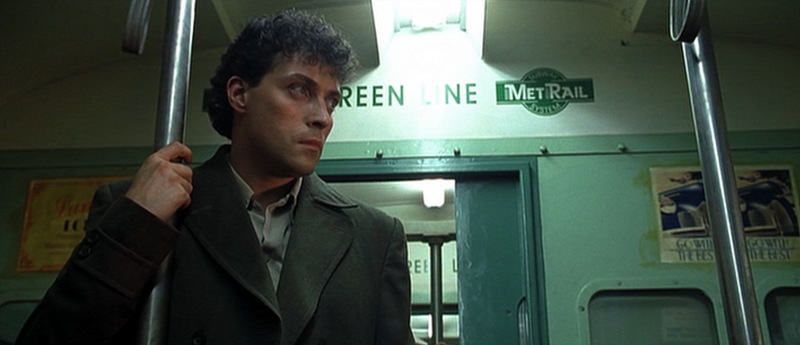
The “thinking man’s Matrix.” That is how fellow critic and senior producer of One Movie Punch Joseph Dobzynski describes this underrated neo-noir science-fiction film that predates The Matrix. For the weekly film screening with my cinephile friend Leon in Germany, he selected Dark City. Truly visionary and incredibly rewatchable! I don’t know about you, but I had never even heard of it before. Perhaps that’s because I was so young when it came out. But I am glad that we watched it. It’s now among my favorite neo-noir films.  Never before have I seen a film take the stylistic techniques of film noir and extended them into the realm of fantasy, delivering a motion picture that is highly artistic and cerebral. Perhaps the film was ahead of its time, and that’s why it does not receive the fanfare that The Matrix gets. Between the two, objectively this one is more thought-provoking and artistic. Directed by Alex Proyas, this Fincher meets Scott neo-noir successfully fuses a classical film noir/detective mystery approach with futuristic fantastical allegory. One of the elements of early horror and film-noir that I feel gets lost today is the extension of the plot into the setting itself to the degree that the setting becomes a defacto character. Just as a human is more than the sum of his or her parts, so a setting can be more than the sum of its physical dimensions and time. I would have loved to have experienced watching this one on the big screen to get the full surrealist effect of being completely immersed in this volatile world. Hey Fathom Events, put this one on your list!

John Murdoch wakes up in a bathtub in an unfamiliar hotel just to find out that he is wanted for a bizarre string of murders in a cult or serial killer fashion. One problem, he has no memory of committing the murders, nor much of a memory of anything save a place called Shell Beach. Thinking that he may have completely lost his mind, Murdoch begins to connect the pieces together in order to solve the twisted riddle of his identity. After a bizarre run-in with someone claiming to be his wife and a persistent detective, Murdoch continues to unravel the mystery surrounding the entire unnamed city. Never could he have imagined that his investigation would lead him to uncovering the presence of ominous group of aliens that have taken over the city. The truth that he uncovers will blow your mind.

Next to horror, film-noir is my favorite genre. And yes, we could all too easily debate film-noir‘s status as a genre as it only existed for a moment in cinematic history; and anything more modern is considered neo-noir, but for the sake of argument, let’s accept film-noir as a genre. There is a beauty to this film that does not exist in The Matrix. And that beauty runs incredibly fluidly from page to screen as is made evident from the brilliantly crafted setting, characters and conflict. There is a Metropolis-like quality to the setting and characters in Dark City. Even before Inception blew our minds with its ability to completely immerse us in the world of reality manipulated by the boundless imagination, Dark City transformed the landscape of this city in perpetual darkness. Some of the cinematic characteristics of film noir are found in the lowkey lighting, architecture inspired from German expressionism, and often a character playing the role of a detective. Whereas detective/mystery is a separate genre, there are several films with overlap between noir and detective. If you pay close attention to the production design, you will notice that the buildings grow more elongated and twisted the closer Murdoch gets to solving the mystery; furthermore, the buildings grow more slanted as Murdoch reaches the edges of the city. On a meta level, the setting is an extension of the mind of Murdoch and reflects his memories or lack thereof, more precisely the unreliability of memories. Just as his [Murodoch’s] memory is unreliable, so is the cityscape in which he resides. Characters and settings change and display broken collective memories, even when remembering how to get to Shell Beach. The design of the setting demonstrates Proyas’ attention to the stylized visual components of building this hybrid noir/sci-fi.

Whereas the neo-noir characters and world, in which they live, are very much a product of a reimagination of the film-noir genre, the conflict and plot (after the very much noir first act) are a deconstruction of the noir genre through a science-fiction plot. One of the dangers the many science-fiction screenwriters encounter is that he or she spends way too much time on constructing the science-fiction world and technology and quickly writes characters for the world. The error: starting with the world instead of with the characters or plot. Proyas demonstrates a strong commitment to his characters and plot, followed by the world. He was able to masterfully craft both because he used the world from one and the plot from another. Think of this combination of noir and sci-fi elements as Walt Disney’s patented multi-plane camera (last used on The Black Cauldron). Instead of elements mixed together, they were layered on top of one another in order to increase the depth of story. The plot remains simple; but the conflict, characters and world built on top of it gives the illusion of a complex plot. The screenplay stays true to a simple plot and complex characters. Through this visionary approach of fusing a film-noir setting to a science-fiction plot, Proyas provides the characters (and by extension, audience) a thought-provoking means of exploring reality in a most cinematic fashion.

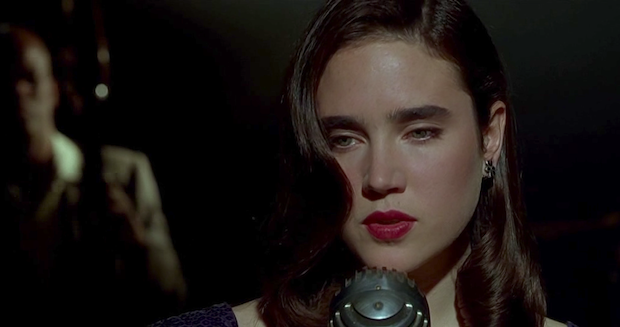
There are considerable similarities between Blade Runner and Dark City in terms of the setting, score, and cinematography. And this is to be expected from a director who has demonstrated an admiration of Ridley Scott’s brilliant film. In retrospect, there are prominent earmarks of Muholland Drive by David Lynch as well. The meta nature of this film can be observed in the city itself. As the plot unfolds, we learn that the city is glorified set–not so different from a film set which changes throughout production in order to capture each and every scene. Just as a mood ring supposedly visualizes the emotion of the wearer, the set serves as an extension of the paranoia of its inhabitants. Capturing the madness experienced by the characters, specifically Murdoch, in the setting and cinematography adds to the experience of watching this film by creating an immersive environment as much for us as it is the characters. As this film is a means to deconstruct a film-noir through a science-fiction plot, we have the trademark characters such as a love interest and private eye; but instead of a central character who is experiencing a type of psychosis, the central character of Murdoch is the only character who has complete control of his mind and thus sees the cracks in the world created for him by The Strangers. This inverse of the central character injects this story with innovative ingenuity.

I would be remiss to not analyze the characters of opposition led by Mr. Book (Ian Richardson), with a notable chief of his version of the KGB, Mr. Hand played by the legendary Richard O’Brien (the writer/director of Rocky Horror Picture Show). While Mr. Book is the leader of The Strangers, the alien species whom have kidnapped these citizens of earth to place them in this futuristic experiment to analyze what constitutes the human soul, we spend most of our time with Mr. Hand. To borrow from Game of Thrones, Mr. Hand is the hand of the king. While these aliens resemble humanoid lifeforms, they are in actuality a jellyfish like species that uses human bodies as hosts in order to interact with humans. For all the power that their telekinetic abilities give them, water and sun is their greatest enemy, hence why Shell Beach is nowhere to be found and the city is perpetually in darkness. Just like Murdoch is an inverted noir central character, The Strangers are inverted humans as they have a great fear of water and sunlight, whereas humans require water and sunlight to remain healthy. I cannot help but wonder that Star Trek TNG and Voyager’s The Borg was influential in the development of The Strangers, as they both share the hive-like mind and pale skin. Of course, a chief difference is The Strangers’ ability to adopt some unique traits to blend in with the humans.

In retrospect, this is a much stronger film than The Matrix. Both share a similar premise, but the original expression of the shared premise in Dark City is far more timeless than the more famous of the two. And I am not merely talking about the visual effects, of which they hold up better in Dark City than The Matrix; I am talking about the comprehensive execution of the two films. Had James Cameron’s Titanic not dwarfed Dark City, then it may have been seen as the superior film to The Matrix by wider audiences than the strong cult following it currently has. But why do I feel that Dark City is superior to The Matrix? Simply stated, it comes down to the writing and direction. There are so many more layers to the writing and direction that makes it a cerebral film. I would not characterize The Matrix as a thinking man’s film, but I would Dark City. You can liken the two to Star Wars vs Star Trek (TV series). Star Wars is action-driven whereas Star Trek is largely character-driven. One may even go so far as to call The Matrix high concept and Dark City low concept. On the topic of visual effects, virtually all the effects in The Matrix are CGI; conversely, Dark City contains a beautiful fusion of practical effects (including miniatures) supplemented with digital effects. Dark City feels so much more real, tangible. It’s that authenticity that makes it the stronger of the two and warrants far more rewatches.

Ryan teaches screenwriting at the University of Tampa. If you like this article, check out the others and FOLLOW this blog! Interested in Ryan making a guest appearance on your podcast or contributing to your website? Send him a DM on Twitter!

Follow him!

Twitter: RLTerry1

Instagram: RL_Terry

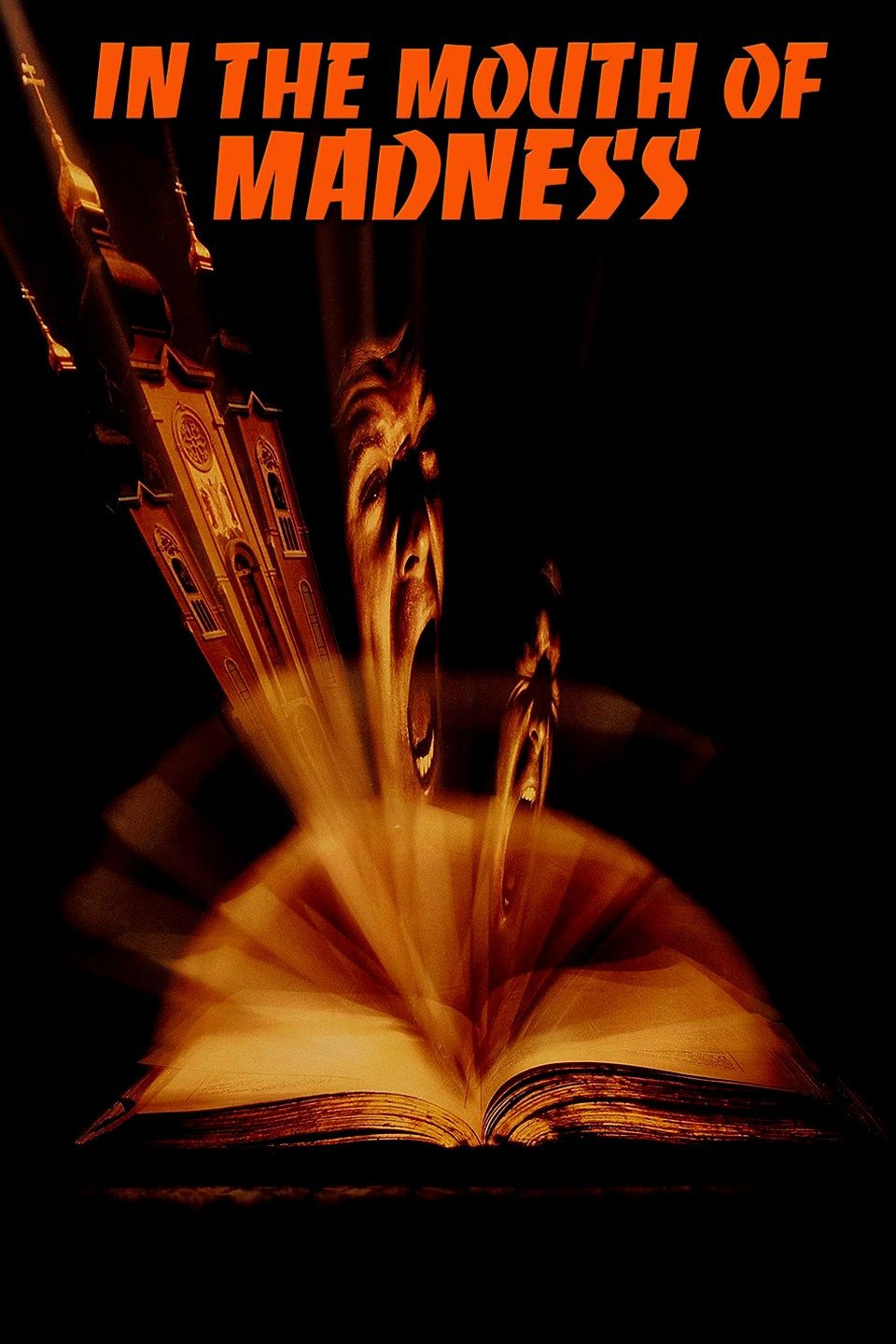
John Carpenter’s “In the Mouth of Madness” full review

Stephen King meets The Twilight Zone in this underrated Carpenter film! It isn’t often that I am introduced to a, what should be a well-known, horror film that is completely unknown by me. There are certainly many indie and obscure horror films that I am unfamiliar with; but because this is a Carpenter film in my lifetime, I should have known about it! Thankfully my penpal, fellow cinephile, and friend Leon in Germany selected this gem for our weekly film screening. Each week we take turns selecting a different film for us to watch. Sometimes it’s a movie that one of us likes and wants to share, other time, it’s a film that neither of us have seen but want to. This was the former. When Leon asked if I’ve seen In the Mouth of Madness, I replied with I haven’t even heard of it. When he told me it was John Carpenter in 1994, I was shocked! And is stars Dr. Alan Grant and Damian himself, Sam Neil! You may be wondering why you have not heard of this film, and that is most likely because it performed poorly at the box office and was panned by critics. Fortunately, a small cult following has developed over the years, but it’s largely still an obscure mid-90s horror film. The reason for this is likely because the film has been accused of difficult to follow, but I do not believe that to be true. It’s true if you need to be held by the hand through the plot, but this film is one of those that has so much depth that you will want to be fully engaged in every minute, every frame. In the Mouth of Madness contains many Stephen King, and Twilight Zone elements that truly make this incredibly rewatchable. The cinematography and score are beautiful, and I find the screenwriting fascinating! I’d even venture to conclude that this is Carpenter’s final masterpiece. Carpenter’s vision of John Trent’s (Neil) descent into madness is terrifyingly spine-chilling.

Summary: When horror novelist Sutter Kane (Jürgen Prochnow) goes missing, insurance investigator John Trent (Sam Neill) scrutinizes the claim made by his publisher, Jackson Harglow (Charlton Heston), and endeavors to retrieve a yet-to-be-released manuscript and ascertain the writer’s whereabouts. Accompanied by the novelist’s editor, Linda Styles (Julie Carmen), and disturbed by nightmares from reading Kane’s other novels, Trent makes an eerie nighttime trek to a supernatural town in New Hampshire. (IMDb)

Go into this movie with an open mind. I highly recommend this because I still do not fully understand everything. But. That is the beauty of this film. There are so many layers that you can peel back and do a close reading. Perhaps this film was ahead of its time in that there is a meta nature to the experience of watching this film. The central character of Trent must discern what is fantasy and what is reality; and by extension, we are challenged, as the audience, to very much the same task. We must decide if the imagery before our eyes is reality or fantasy, to be taken literally or figuratively. While meta films are much more popular now, it was highly experimental back in 1994/95. The beauty of horror is its ability to force us into uncomfortable places in which we come face to face with that which terrifies us–sometimes to our very core. And what is more terrifying than the possibility you may be crazy or a hoax is attempting to gaslight you? When our very psyche feels under attack, it’s fight or flight.

We are drawn into the story because we are naturally drawn to the repulsive, because there is a subconscious masochistic desire to experience a pleasurable unpleasure. Much like in Sunset Boulevard where we are not concerned or preoccupied with what happens to Joe Gillis (since we know he’s dead from the opening scene), we are profoundly curious about HOW he winds up floating facedown in a swimming pool. We can liken that to In the Mouth of Madness because we know Trent, whether sane or insane (though, that is a legal term), is institutionalized and placed in the padded room. Once we flash back to a few weeks earlier, we are morbidly curious as to how this otherwise intelligent, rational man winds up a prisoner of his own mind.

Another question that the film confronts us with is the power of literature. Is it possible for a writer to be so incredibly popular, and enough people become engrossed in the words that the line between fantasy and reality becomes blurred to the point that people begin to believe that the “fictional” characters and setting are a real place? That is certainly a powerful concept to tackle in a low-budget horror film. But Carpenter was never one to shy away from a bold concept or statement. It’s clear that the film is a commentary on the prolific writing and power of the words of authors like King or Lovecraft. Furthermore, the film suggests that there is a transcending power of the text to nest in the subconscious to tap into primal fears and carnal actions. Trent slowly comes to realize that the readers of Kane’s works have been placed under a spell, of sorts, that predisposes them to taking on the characteristics of the literary characters and giving themselves over to behaving like the monsters that are written about in Kane’s novels.

Kane likens his books to the Bible in a sacrilegious attempt to prove that if you convince enough people to read your books that you can control them, and ostensibly become a god. Kane certainly displays signs of a god-complex; he seeks to be in control over not only his fictional Hobbs End but the whole world. And instead of taking over the world by physical force, he seeks to take over the world through the power of the written word. It’s a fascinating concept to think about, and perhaps you can think of books that have greatly influenced society to the point that behavior changed. Can a book truly spark widespread delusions and paranoia? Trent certainly believes so. I love how this feels like an episode of the Twilight Zone on crack. The power and success of The Twilight Zone is due in large part to the show’s ability to comment on societal behavior through the use of bizarre or shocking imagery. Pose a big question grounded in reality, then use science-fiction, fantasy, or horror as a vehicle to explore various perspectives and possible outcomes.

John Carpenter provide us with a fantastic score that will penetrate you all the way down to the bone. It’s both shocking and beautiful all at the same time. Originally Carpenter desired to have Metalica score the film, but the combination of not fitting into the budget and an unwillingness to license the rights left John to compose his own score that mimicked what he wanted from Metalica. The score of In the Mouth of Madness was not intended to be spooky but to keep the audience ever so slightly off-balance. The cinematography is also an element to take note of when analyzing this film. The lighting, camera movement, and shot selections convey a neo-noir tone. Similar tones can be found in Mulholland Drive and Pulp Fiction. Although there are many horror elements in this movie, it bares a lot of similarities to neo-noir in how it handles the central character and the conflict he’s been thrown into that leaves him in over his head. And of course, it ends badly for Trent.

I am surprised that not more horror fans know of, much less, like this movie. It really seems to have two camps: one that loves this film and the other that hates it. Honestly, it appears to be one of the more polarizing films within the horror library. It’s one that I will certainly rewatch because of the highly intellectual component. There is tremendous depth to the narrative and it strikes me as the type of film that will give the viewer something different to think about every watch. It’s visually stunning and the imagery is macabre. Definitely one that I will recommend to fellow horror fiends like me.

Ryan teaches screenwriting at the University of Tampa. If you like this article, check out the others and FOLLOW this blog! Interested in Ryan making a guest appearance on your podcast or contributing to your website? Send him a DM on Twitter or email him at RLTerry1@gmail.com! If you’re ever in the Tampa area, feel free to catch a movie with him!

Follow him!

Twitter: RLTerry1

Instagram: RL_Terry