PREDATOR: BADLANDS movie review

Predator: Let’s Play. When streaming content hits the big screen.
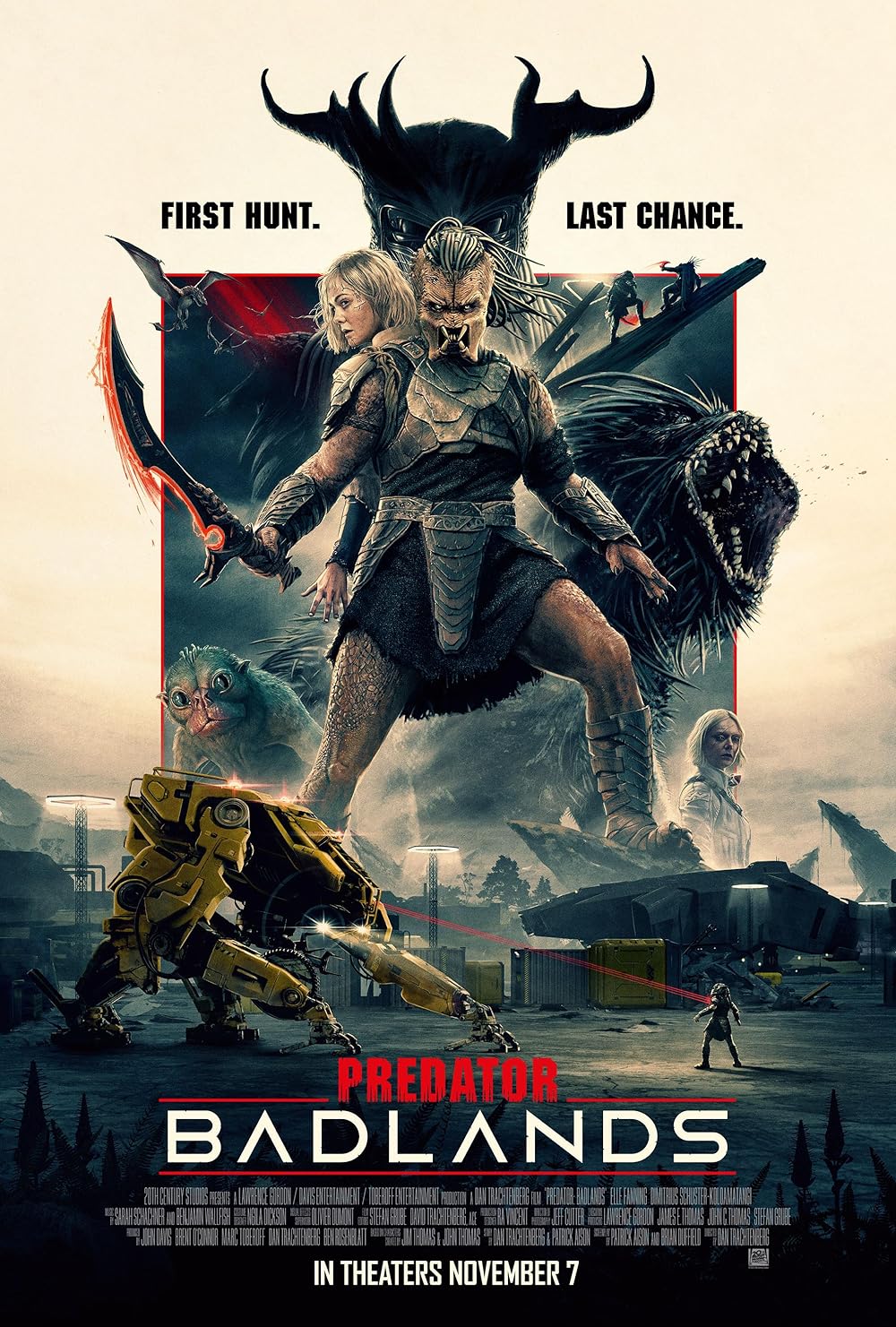
Predator: Badlands is the equivalent of a “Let’s Play,” but with bigger explosions. The nonstop action, constant motion offer little to no substantive emotional investment. You’re an observer, not a participant—which might be fine for streaming, but it’s a strange fit for cinema. The latest in the Predator franchise plays like a two-hour sizzle reel with delusions of grandeur. It’s a glossy barrage of explosions, digital dust, and quippy one-liners that evaporate before they even hit the floor. By the time the credits roll–that’s if you haven’t fallen asleep—you’ve seen everything and felt nothing. It’s not that the film is aggressively bad—it’s that it’s aggressively empty–little more than content to pander to short attention spans with shiny movement instead of meaningful momentum.

Cast out from its clan, a Predator and an unlikely synthetic ally embark on a treacherous journey in search of the ultimate adversary.

The screenplay feels like it was written by an algorithm trained on reaction videos and Reddit threads. Every line of dialogue sounds like a placeholder; it’s as if someone said, “We’ll fix it later” or “funny line here,” and neglected to return to the page in order to fix it–before principle photography. There’s no sense of escalation, tension, or rhythm; it’s a series of flashy moments loosely stitched together, like a highlight reel of a game you didn’t play. Even the humor feels synthetic–much like the characters– punching at air instead of connecting with character or tone.

As for the characters, they exist mostly as camera targets. They are little more than digital avatars running, shooting, and shouting for reasons that never feel personal or compelling. The lead could be replaced by a different actor mid-film and you might not notice. This critic isn’t even convinced that Dek (our central Predator character) wasn’t entirely CGI, though it may have only been the facial area. “What’s my motivation?” Difficult to say–there wasn’t much upon which to build. Motivations are paper-thin, arcs nonexistent. The Predator itself, once a symbol of primal fear and unseen menace, now feels like a boss-level NPC waiting to be triggered by the next quick-time event.

Visually, Badlands has all the spectacle money can buy; but its spectacle is divorced from any meaningful purpose. The explosions are massive, the sound mix thunderous, and yet it’s as emotionally engaging as watching someone else play Call of Duty. Every frame screams “look at me!” without ever inviting you to feel something. The editing, too, is manic. And it’s not even as though the narrative demanded it; rather, the dynamic editing was most likely employed because the movie was terrified that you’d look away or down at your watch, which I did several times.

And maybe that’s the point. Predator: Badlands is far less like a movie and more like a cinematic exercise in a large scale “Let’s Play.” For those that are unfamiliar with the term, it’s a type of (usually) YouTube video of someone playing a video game and often their reactions to the game play. Think of it as a passive experience of someone else’s thrill ride. The ultimate, disconnected form of living vicariously. Don’t question anything, because it won’t take long to realize that this movie is hollow. You don’t engage; you just witness. The irony is that the film could’ve been a fascinating critique of screen-mediated experiences, but it never once stops to think.

This is just the latest in a growing trend from Disney’s genre arm: a reliance on brand nostalgia and visual polish in place of storytelling. Ever since the corporate appetite turned to IP recycling, the studio has mistaken familiarity for depth. Badlands is what happens when you try to “optimize engagement” instead of crafting a narrative, resulting in the film equivalent of clickbait dressed in billion-dollar armor.

Predator: Badlands doesn’t so much hunt its audience as it does chase its own tail. A movie that is fast, flashy, and utterly pointless; and desperately wants to go viral but forgets to be cinema. You don’t leave exhilarated; you leave wondering if you accidentally spent $15 to watch a YouTube compilation in IMAX.
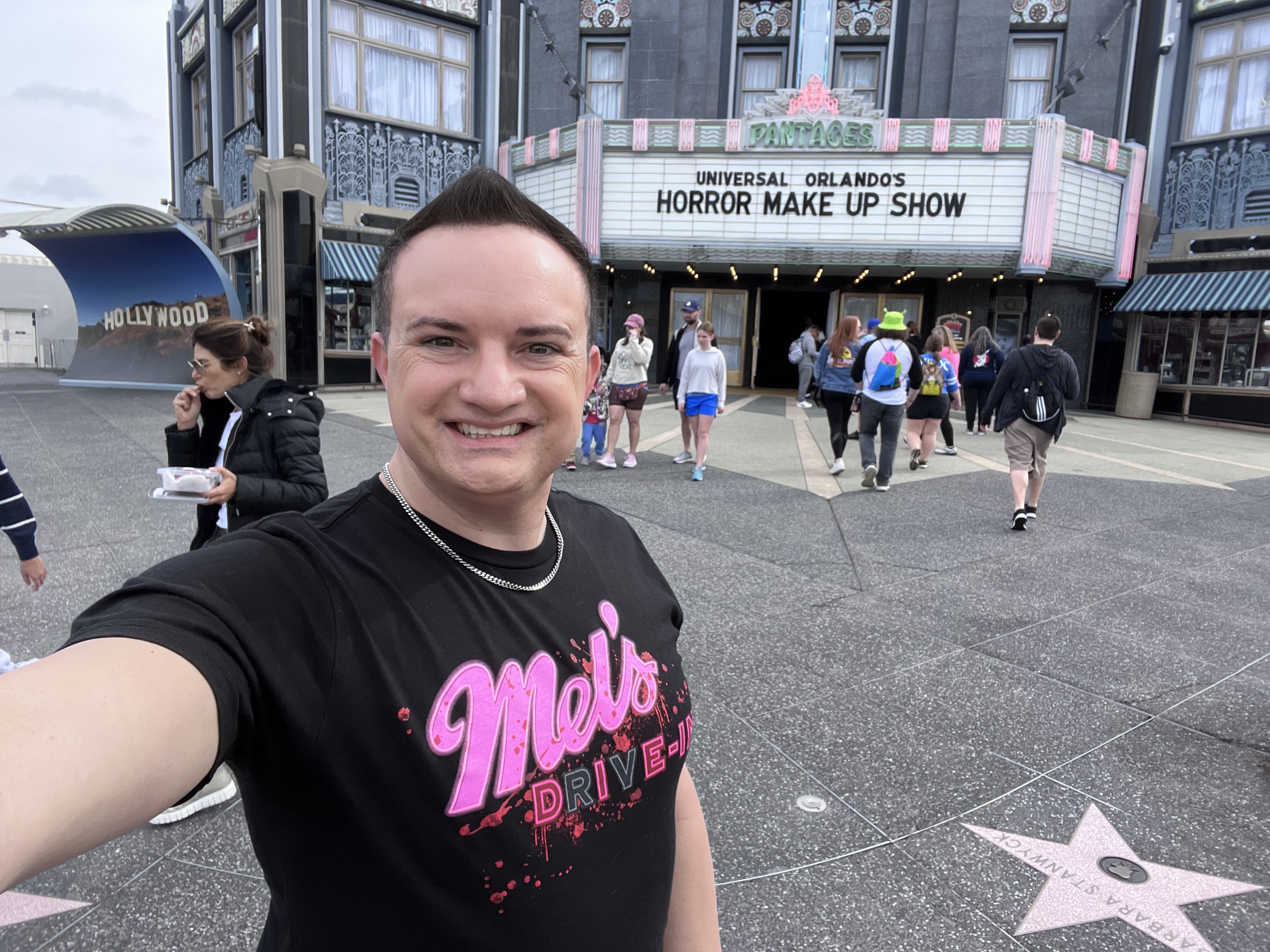
Ryan is the general manager for 90.7 WKGC Public Media and host of the show ReelTalk “where you can join the cinematic conversations frame by frame each week.” Additionally, he is the author of the upcoming film studies book titled Monsters, Madness, and Mayhem: Why People Love Horror. After teaching film studies for over eight years at the University of Tampa, he transitioned from the classroom to public media. He is a member of the Critics Association of Central Florida and Indie Film Critics of America. If you like this article, check out the others and FOLLOW this blog! Follow him on Twitter: RLTerry1 and LetterBoxd: RLTerry
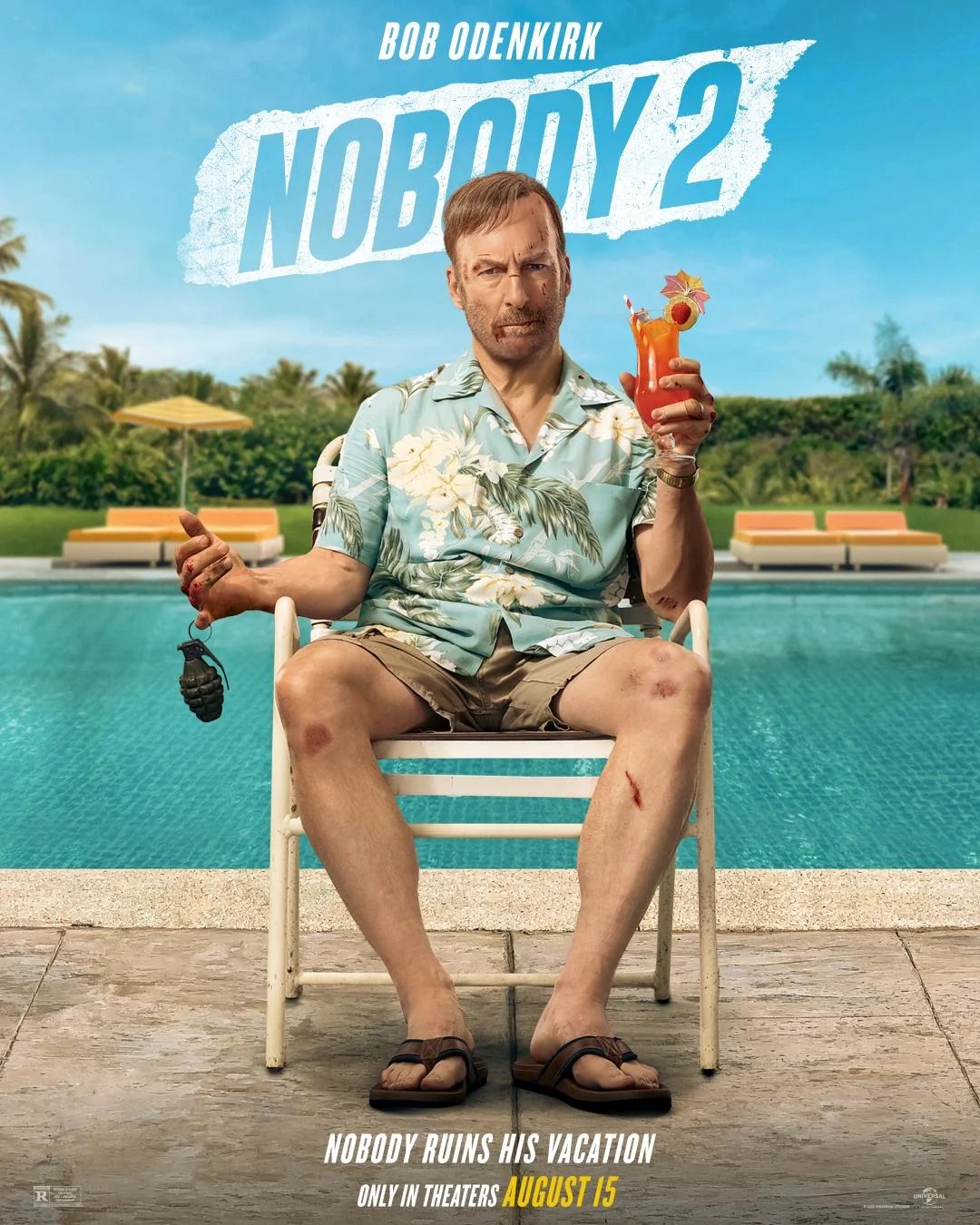
NOBODY 2 action movie mini-review

Lowbrow thrills, high-budget spectacle. Proof that sometimes all a B-movie needs is an A-list wallet to unleash maximum mayhem. At at one-and-a-half hours, its a fast-paced wild ride. Nobody 2 is precisely what you expect, plus you get treated to a rare appearance by big screen icon Sharon Stone.

Workaholic assassin Hutch Mansell takes his family on a much-needed vacation to the small tourist town of Plummerville. However, he soon finds himself in the crosshairs of a corrupt theme-park operator, a shady sheriff, and a bloodthirsty crime boss.

It’s as if the followup to 2021’s Nobody stumbled out of a neon-lit drive-in and somehow found itself with a blockbuster budget to burn. Where the first film offered a sly, bruised take on the “ordinary man goes berserk” formula, this sequel leans into the gleefully exaggerated: bigger fights, louder explosions, and a grin-worthy parade of bad guys to pummel. It’s still got that B-movie backbone—lean plotting, brisk runtime, and the sense that logic is secondary to spectacle—but it all works like a well-oiled machine.

While Bob Odenkirk’s Hutch delivers his outlandishly entertaining, no holds barred, logic-defying fight sequences, there’s the ace up the sleeve of Nobody 2: Sharon Stone. In a world where her film appearances have become a rare pleasure, her turn here as a campy, hyper-stylized villain is worth the ticket price alone. With every razor-edged line reading and wardrobe flourish, she seems to be savoring the role, delivering the kind of larger-than-life menace that feels ripped from the pages of a pulp novel. Stone doesn’t just play the villain—she plays with the villain, reveling in the absurdity without ever letting the stakes slip.

If the original Nobody was a gritty surprise, Nobody 2 is an unapologetic mash-up of grindhouse spirit and Hollywood muscle. It’s loud, it’s ludicrous, and it’s a fantastic time at the movies.

Ryan is the general manager for 90.7 WKGC Public Media in Panama City and host of the public radio show ReelTalk “where you can join the cinematic conversations frame by frame each week.” Additionally, he is the author of the upcoming film studies book titled Monsters, Madness, and Mayhem: Why People Love Horror. After teaching film studies for over eight years at the University of Tampa, he transitioned from the classroom to public media. He is a member of the Critics Association of Central Florida and Indie Film Critics of America. If you like this article, check out the others and FOLLOW this blog! Follow him on Twitter: RLTerry1 and LetterBoxd: RLTerry
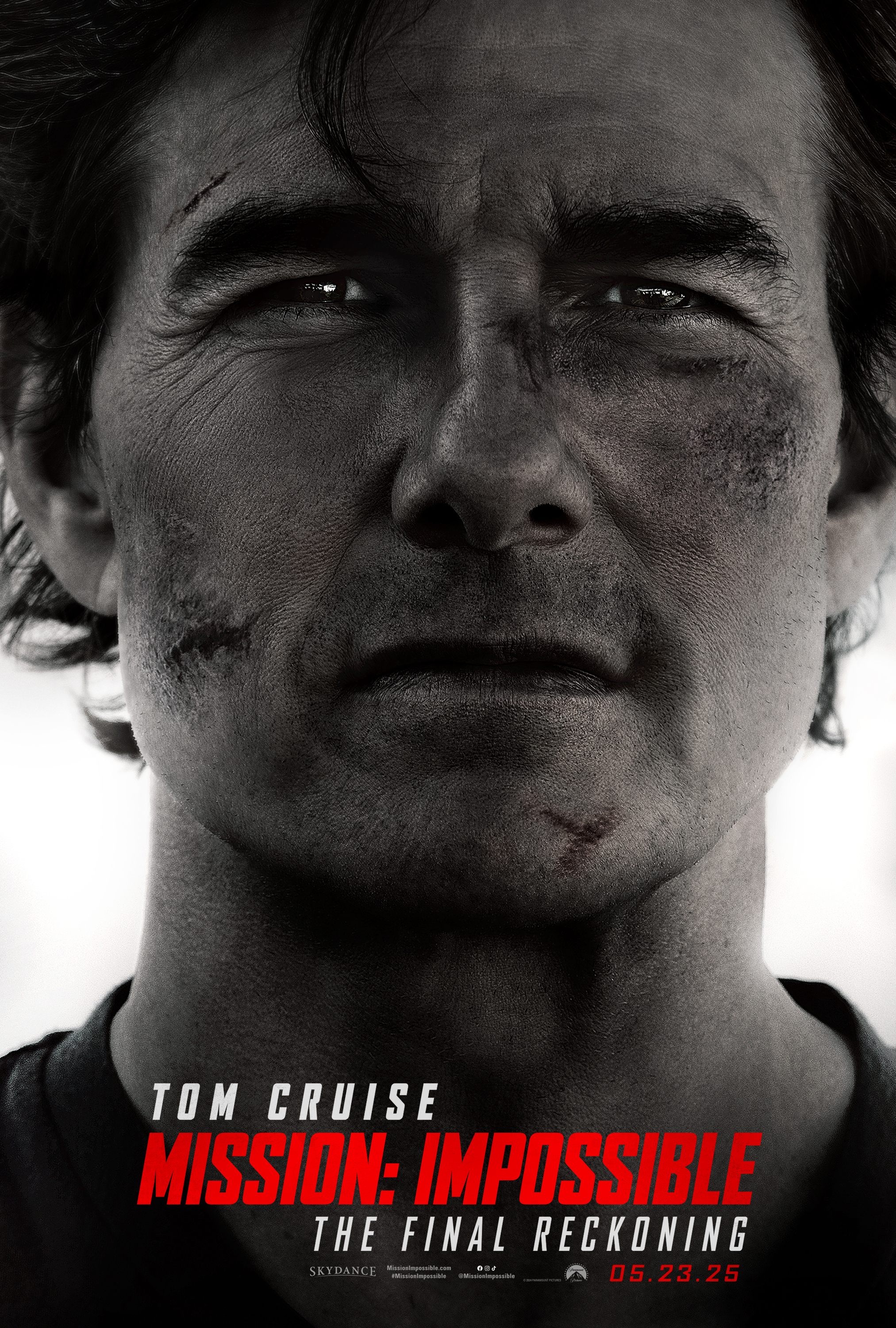
MISSION: IMPOSSIBLE–THE FINAL RECKONING film review

What a picture! Mission: Impossible–The Final Reckoning is an exhilarating end to a 29 year old journey. The scale and scope of the final chapter in Tom Cruise’s tenure as Ethan Hunt is out of this world. Beyond any shadow of a doubt, the cast and crew of this film delivered their best to “all those that [they] will never meet.” That’s us–the audience–we are those they will likely never meet. Such a fitting climax to one of the biggest franchises ever to hit the big screen. For everything the movie did right and excellent, it’s not without some shortcomings in the screenwriting. While the first act starts off a little clunky, it does eventually falls into place during the first act. Additionally, fans of the franchise will love the narrative connections to the preceding films, particularly Mission: Impossible and Mission: Impossible III. This is truly a cinematic spectacle deserving of every second on that big silver screen. Tom Cruise proves that he is still the definitive movie star.

Ethan Hunt and the IMF team race against time to find the Entity, a rogue artificial intelligence that can destroy mankind.

Writer-director Christopher McQuarrie brings Mission: Impossible (in its current incarnation) to a climactic close after 29 years. More than delivering a bombastic conclusion to the genre-defining franchise, he connects this film to all the preceding M:I films through both plot and character. Every moment feels earned–this movie and the cast and crew thereof–spare no expense of time or money in providing audiences with a spectacular cinematic experience that reminds us why big screen stories need the BIG SCREEN. Even though I do take issue with McQuarrie’s screenwriting in the first act–the first 15 minutes, or so, do feel a little disjoined and rushed–thankfully the remainder of the first act does fall into place. Not only do the characters have heart underscoring all the electrifying action sequences, the filmmakers involved in this have a heart for the audiences around the globe.

The IMF (Impossible Mission Force) oath reads, “We live and die in the shadows, for those we hold close, and for those we never meet.” And, in this movie, I don’t think that it merely means that the covert operatives and spycraft engineers carry out their missions behind the scenes of life, the way in which the line is delivered, I am all but certain that it’s a wink or nod to the audience indicating that McQuarrie, Cruise, and everyone involved make motion pictures for those they know, their friends and family, and everyone else out in the world that they may likely never meet. There is probably no other working actor out there that so vocally champions cinema like Tom Cruise. This is particularly true during and after COVID with his release of Top Gun: Maverick. Even in a press conference wherein Cruise was asked about the proposed international filmmaking tariffs by a reporter, and he redirected them to The Final Reckoning, because “we’re here to talk about the movie.” The trademark charisma, physics-defying stuntwork, and charm that Cruise brings to the screen serves as evidence why he truly is the definitive movie star working today.

Picking up in the months following the train incident from Dead Reckoning, The Final Reckoning thrusts audiences right into the middle of a world on the brink of WWIII. The entity has infected the internet and it looks like the end of the world, as we know it. Once again, Hunt is being hunted down by his government (and probably other governments too) because he refuses to let the United States have the key that would potentially give them control of the entity’s source code, because no one should be entrusted with that level of power or responsibility–not even Hunt and his IMF team. Ethan Hunt continues to stand up for what is right, the greater good even when it is the most unpopular stance or opinion to hold. Hunt and his team desire to destroy the entity so no one has access to its power and the entity cannot destroy the world so it and Gabriel can remake it in their image. The Final Reckoning forces us to look inward, and ask ourselves how we would react when faced with a world on the brink of disaster. Could we resist giving into our innate self-centered nature, even when disguised as the most logical choice? This movie is a challenge to humanity to always hold onto hope even when it appears to be impossible.

After the clunky start to the movie, the narrative begins to find its tone, pacing, and direction. I wouldn’t be surprised if there is a “McQuarrie Cut” that adds in cut scenes at the beginning. Other than the stars themselves, the star of this movie is practical effects and filmmaking themselves. The CGI is minimal, and is rarely front and center. McQuarrie and Cruise lean into practical effects, mechanical magic, and other elements that give the film a tangible dimension. You cannot replace the way real light bounces off real objects and into the camera lens in this outstanding motion picture. The Final Reckoning is as much a celebration of the decades-old franchise (and TV show even before the original movie in 1996) as it is a celebration of classical filmmaking. Even the scenes and sequences that felt a little too death-defying or unrealistic, they certainly feel naturalistic within the world on screen (though, I’d be lying if I said that some came a little close to being even unbelievable in a Mission: Impossible movie). Even thought he aerial stuntwork in this movie is the most intense we’ve seen, this movie also includes a lot of underwater stuntwork and action sequences. And I must say that is’t he dark, claustrophobic underwater sequences that had me on the edge of my seat. It really is nothing short of incredible what McQuarrie, Cruise, and their teams were able to do in this motion picture.

For fans of the franchise, particularly those that have rewatched the whole franchise leading up to this moment, there are characters from the past that appear in substantive ways and even plot points that were never fully explored int eh past are brought full circle. Few, if any, characters feel like one-dimensional space-fillers–which can easily happen in an action movie–every character has a purpose, has a motivation. We care about our central characters’ survival, we experienced a gut-wrenching death in Dead Reckoning, so we know that these IMF agents are human, they can die. All the more reason why we are completely invested in their survival.

Even though we may get a Mission: Impossible movie in the future, maybe even one with one or more of the IMF team members from this original run of movies, Cruise has stated, in not so many words, that this movie represents his final Mission: Impossible movie in which he is the star. If we have future M:I movies, I’d like to see him make an appearance or play a supporting role, because Tom Cruise IS Mission: Impossible. What I love about these movies is that they seek to entertain first and include any more thoughtful ideas or questions in the subtext or emotional drivers of characters. Entertainment first. So many movies nowadays have such a cynical view of life and traditional values, but here is franchise built on that which brings us all together as a community. High concept? Sure, but that high concept nature of the M:I movies has never meant a meaningless or vapid experience. These movies, and others like them (regardless of genre), are what cinema is all about. And I am sure going to miss looking forward to the next Mission: Impossible movie.

Thank you Tom. And thank you McQuarrie and past writers and directors for 29 years of unparalleled thrills and excitement on the silver screen.

Ryan is the general manager for 90.7 WKGC Public Media in Panama City and host of the public radio show ReelTalk about all things cinema. Additionally, he is the author of the upcoming film studies book titled Monsters, Madness, and Mayhem: Why People Love Horror. After teaching film studies for over eight years at the University of Tampa, he transitioned from the classroom to public media. He is a member of the Critics Association of Central Florida and Indie Film Critics of America. If you like this article, check out the others and FOLLOW this blog! Follow him on Twitter: RLTerry1 and LetterBoxd: RLTerry
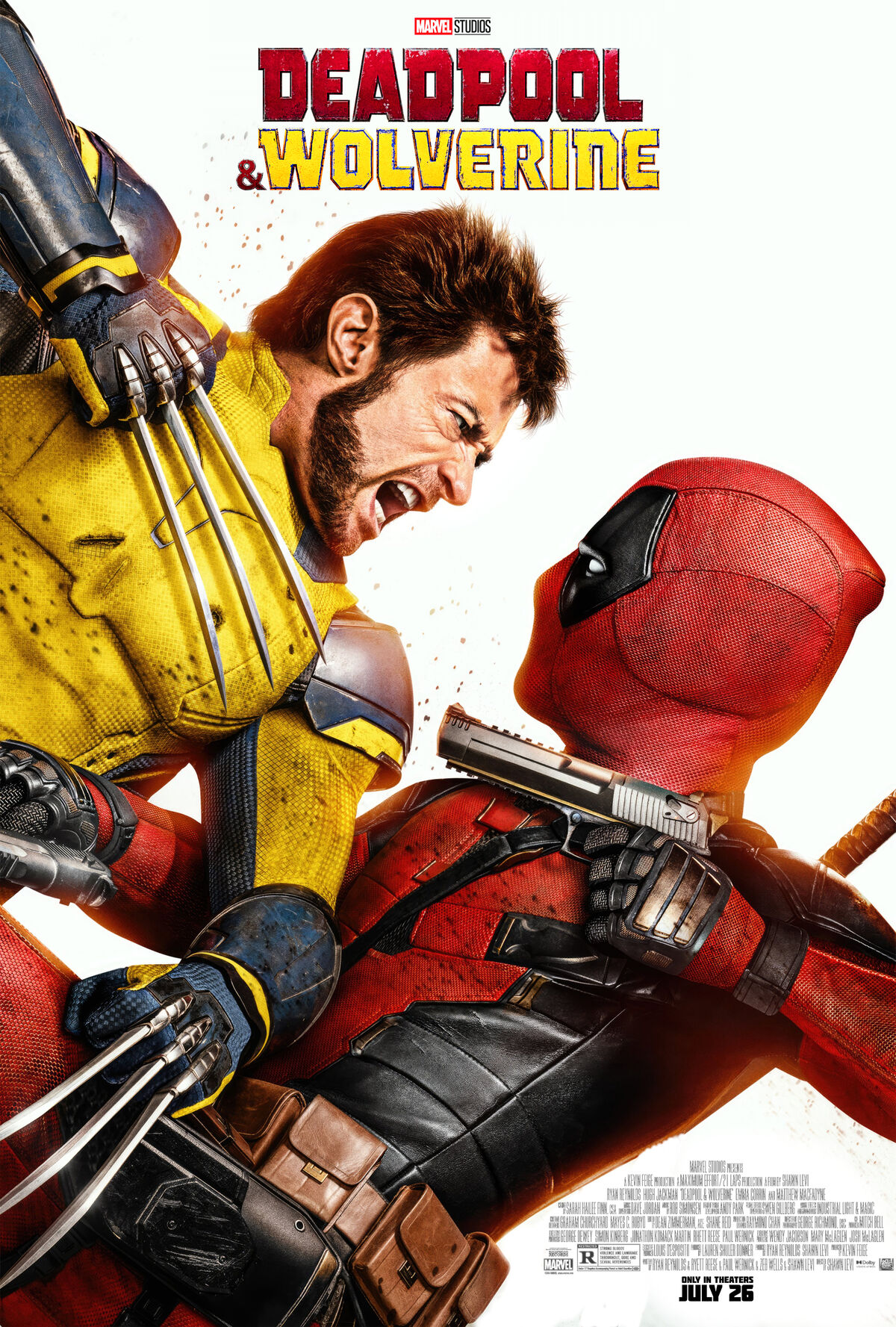
DEADPOOL & WOLVERINE movie review

Exhausting. Deadpool & Wolverine is a step down from its predecessors in terms of quality and cleverness of storytelling. While clearly intended to be a movie that reinvigorates the MCU, the screenwriting is both pandering and derivative. While effective in smaller doses, the hyper-meta humor is overplayed to the point of being obnoxious. Moreover, there are many gags that are recurring to the point of boredom. While expertly choreographed, shot, and edited, the endless barrage of fight sequences overstays its welcome. In terms of the premise, the whole multiverse idea that has been integrated into so many superhero movies (both MCU and DCEU) is overplayed. Had the movie been closer to 90-100 minutes, then perhaps the pacing would’ve been better and the Deadpool jokes, satire, and gags would not have felt overplayed, but the 2+ hours runtime works against the full potential of the narrative. If you can’t get enough of the Deadpool schtick, then you’ll undoubtedly like this movie. But if you were hoping for something as clever as the first two Deadpool movies, then you may be as disappointed as was I.

When the multiverse is threatened by a powerful Omega class mutant, Deadpool’s services are retained to protect the multiverse from complete collapse. In order to defeat this new deadly enemy, Deadpool teams up with the Wolverine, whom is recovering from psychological injuries.

Because of the movie’s setup, I had hoped that Deadpool and Wolverine’s goal would have been to eliminate all timelines except the sacred timeline (I guess that’s supposed to be the real/our world), putting an end to the multiverse, but that wasn’t the motivation or goal. So, I suppose that means the multiverse theory will continue steamrolling through this and other franchises. The whole multiverse theory needs to die. At this point, it is way past its half-life and rather limiting on the stories that can be told. Sounds counterintuitive, right? For how could a multiverse limit the stories that can be told? Simple. Everything is connected in a codependent sort of way. In a cinematic (including television counterparts) multiverse, no story, character, or plot is truly independent of the other; therefore, a filmmaker is unable to craft an original story; for any story involving the characters in a multiverse, has to fit in with the rest of the multiverse.

In a manner of speaking, a multiverse actually mitigates freedom of expression and variety of storytelling. When filmmakers return to crafting original expressions of stories and plots for comic book characters, then the quality of comic book movies may agin reach the levels of the Burton-verse. To this day, Batman 89 and Batman Returns are still the two best examples of superhero/comic book movies with X-Men the Animated Series being the best example of a superhero/CBM television series.

Fortunately, Hugh Jackman’s Wolverine’s gritty, no nonsense personality helps to balance out Ryan Reynolds’ manic Deadpool. While I have many reservations with this movie, I cannot deny the great chemistry between the two of them. Jackman’s X-Men the Animated Series inspired Wolverine was my favorite part of the whole movie. Partly because I grew up with X-Men TAS and have enjoyed the X-Men 97 series. Seeing that yellow and blue suit filled me with such happiness. Additionally, there are other nods to X-Men TAS and the Fox X-Men movies, including a particular surprise cameo that I know my friend Shawn of the Solving for X podcast will immensely enjoy! (If you’re an X-Men fan, then you should add this podcast to your lineup). What I liked most about this movie was the X-Men dynamic. Even though I have my reservations, I am curious how this newest iteration of cinematic X-Men will be adapted for the big screen. It is my hope that it will have the quality of storytelling of X-Men TAS that successfully addressed difficult topics in the real world both creatively and accessibly, all while bringing everyone to the table. Just as Professor X dreamed humans and mutants could engage in meaningful discourse one day.

Breaking the fourth wall and meta-humor can be effective tools for both humor and plot/character development; however, recurring pot shots and real-world references detract from the cleverness of the humor, and can ultimately take the viewer out of the movie. More so than the previous installments in the Deadpool franchise, this one is particularly packed with, what I am calling, hyper-meta humor. Hyper in that it’s so over the top and repetitive that it loses its charm quickly and grows stale. Most movies serve as a means of escape from the dullness, harshness, or complexities of reality; this is certainly true of superhero/comic book movies–or rather, was. I don’t know about you, but I don’t go into most movies hoping to be reminded of reality. Unless of course, for example, it’s based on a true story or a melodrama that is intended to evoke a real-world emotive response. So many of the jokes in Deadpool & Wolverine take me out of the movie, especially one recurring pot shot, that I won’t mention, that is borderline disrespectful of an historic Hollywood institution.

Despite most of the movie, in my opinion, to be lacking in genuine, clever humor, I manages to at least laugh here and there. The problem with a movie built entirely on the humor of middle school boys is that the move is ironically inappropriate for that same age group. When the first Deadpool released (by 20th Century Fox), they did the responsible thing by reminding parents that, even though this was a superhero movie, that its intended audience was 17+. I’ve yet to see an effort on Disney/Marvel’s part to remind potential audiences that this movie is rated R, and not appropriate for younger audiences due to the sexual innuendoes and language. Violence wise, other than the increased amount of blood, it’s on par with many PG-13 movies. When Deadpool hit the scene, he was different from that of most other superhero characters at that point, and his schtick was refreshingly funny; now, with the increased amount of middle school base humor in many comic book movies (mainly the MCU), it’s no longer refreshing and now borderline obnoxious. If I had to select one word that best describes Deadpool & Wolverine it would be obnoxious.

Ryan teaches Film Studies and Screenwriting at the University of Tampa and is a member of the Critics Association of Central Florida and Indie Film Critics of America. If you like this article, check out the others and FOLLOW this blog! Interested in Ryan making a guest appearance on your podcast or contributing to your website? Send him a DM on Twitter. If you’re ever in Tampa or Orlando, feel free to catch a movie with him.

Follow him on Twitter: RLTerry1 and LetterBoxd: RLTerry

FURIOSA: A MAD MAX SAGA

A meandering cinematic spectacle. FURIOSA: A MAD MAX SAGA delivers on immersive scale and scope, but fails to deliver on a compelling narrative. It’s an exhausting, endless chase through a desert wasteland that’s as devoid of life as the plotless story itself. Clearly writer-director George Miller demonstrates a love for the dystopic universe of Mad Max, but the narrative lacks focus and direction. However, he makes excellent use of world-building and drawing the audience into the high octane action. The problem is, that perpetual high octane action results in a disconnect between the audience and the characters and plot because interest in action alone isn’t sustainable. Ultimately, the spectacular visuals do not compensate for strength of story.

Snatched from the Green Place, young Furiosa falls into the hands of a great biker horde led by the warlord Dementus. Sweeping through the Wasteland, they come across the Citadel, presided over by the Immortan Joe. As the two tyrants fight for dominance, Furiosa soon finds herself in a nonstop battle to make her way home.

The setup of this saga in the Mad Max universe works quite well. In fact, I was pleasantly surprised during the first few minutes of the film because it begins as a character-driven narrative. Unfortunately, that feeling wouldn’t last long. After a fantastic start, the first act slows to a crawl, with only the chase across the desert to provide any kinetic energy. It would’ve worked quite well had there been a balance between the action and character moments, or the inclusion of emotional resets. But once that chase begins, it pretty much does so without ceasing for the remainder of the 2.5-hour movie.

At is most basic elements, well-written story features a well-defined central character with an external goal, and opposition to that goal. In Furiosa, the external goal is setup to be Furiosa returning home (to the Green Place), but then it changes direction to become something else. The something else to which it changes is no longer substantively supported by the setup of the movie and character of Furiosa. Related? Yes. But I do not feel that the movie that began, is the movie that finished. The something else to which it changes could have very well been incidental to achieving the goal of returning home, but instead the movie goes in a different direction in order to match up to Fury Road.

The scale and scope of the film, and immersive atmosphere is truly commendable. The lengths that Miller and his cast and crew had to go in order to film in such a desolate environment was not easy. And the hard work of crafting a world out of a wasteland is exceptional. It is entirely possible that the weakness of story is a result of Miller being director, producer, and writer. Often times, when there lack sufficient checks and balances between writer and director, the story suffers. Simply stated, sometimes a story makes sense in the mind of the director, but they aren’t as gifted at capturing and supporting that story on paper as a writer. And the same can be said for writers whom try their hand at directing. Just because it works on the page, doesn’t mean it works on the screen.

Ryan teaches Film Studies and Screenwriting at the University of Tampa and is a member of the Critics Association of Central Florida and Indie Film Critics of America. If you like this article, check out the others and FOLLOW this blog! Interested in Ryan making a guest appearance on your podcast or contributing to your website? Send him a DM on Twitter. If you’re ever in Tampa or Orlando, feel free to catch a movie with him.

Follow him on Twitter: RLTerry1 and LetterBoxd: RLTerry