All the Horror Presents Women in Horror Month!
Jump to the article of your choice below.
During the month of February, a group of podcasters and writers, including yours truly, are highlighting many leading women and final girls of horror films! Be sure to follow @AllTheHorror18 on Twitter for the links to all the podcasts and written articles from the participants in this limited time engagement. Each week starting on February 3rd, I will provide you with a character analysis of some of my favorite women in horror, and hopefully some of yours too! For the sake of simplicity, I will add each article to this blog entry. Be sure to visit last year’s Women in Horror article for character analyses of Nancy Thompson, Ellen Ripley, Annie Wilkes, and Clarice Starling. The horror genre, from its inception, has consistently been the most candid, progressive, and powerful of all the genres. Furthermore, it possesses an innate ability to be more truthful than a typical drama because we give it permission to challenge us in intimate ways. While there are many reasons for the timelessness and thought-provoking nature of horror, we are here to specifically focus on the women of horror. You don’t want to miss any of the great content coming your way during the month of February. Enjoy!
Click Below to Jump to the Article of Your Choice:
All the Horror Presents Women in Horror Month!
Jump to the article of your choice below.
During the month of February, a group of podcasters and writers, including yours truly, are highlighting many leading women and final girls of horror films! Be sure to follow @AllTheHorror18 on Twitter for the links to all the podcasts and written articles from the participants in this limited time engagement. Each week starting on February 3rd, I will provide you with a character analysis of some of my favorite women in horror, and hopefully some of yours too! For the sake of simplicity, I will add each article to this blog entry. Be sure to visit last year’s Women in Horror article for character analyses of Nancy Thompson, Ellen Ripley, Annie Wilkes, and Clarice Starling. The horror genre, from its inception, has consistently been the most candid, progressive, and powerful of all the genres. Furthermore, it possesses an innate ability to be more truthful than a typical drama because we give it permission to challenge us in intimate ways. While there are many reasons for the timelessness and thought-provoking nature of horror, we are here to specifically focus on the women of horror. You don’t want to miss any of the great content coming your way during the month of February. Enjoy!
Click Below to Jump to the Article of Your Choice:
- Elvira (Feb 3rd)
- Sidney Prescott (Feb 10th)
- Lin Shaye (Feb 17th)
- Annie Graham (Feb 24th)
Elvira
 In terms of horror movie hosts, there is probably no one more famous than Elvira the Mistress of the Dark (brilliantly played by horror legend Cassandra Peterson). While the character of Elvira only starred in two movies, she left two huge impressions on the horror community of fans. And it’s for her contribution to the community that I want to highlight her in my Women in Horror series. Many, if not most, horror fans love bad horror movies. There is something to be said about a schlocky horror (or science-fiction) movie that unites us in laughter. Perhaps it’s the infectious energy of the room to which we are drawn. These are the kinds of movies that we enjoy because they are usually made by fans of the genre, not unlike ourselves. Part of the experience of these movies is laughing at or along with it because it’s just so over-the-top or highly campy. Elvira knew this, and she found a way to package these movies in such a way that inspired a generation of filmmakers and lovers of the genre. From hosting late-night horror movies to starring in them, she is the perfect way to start out Women in Horror Month 2020.
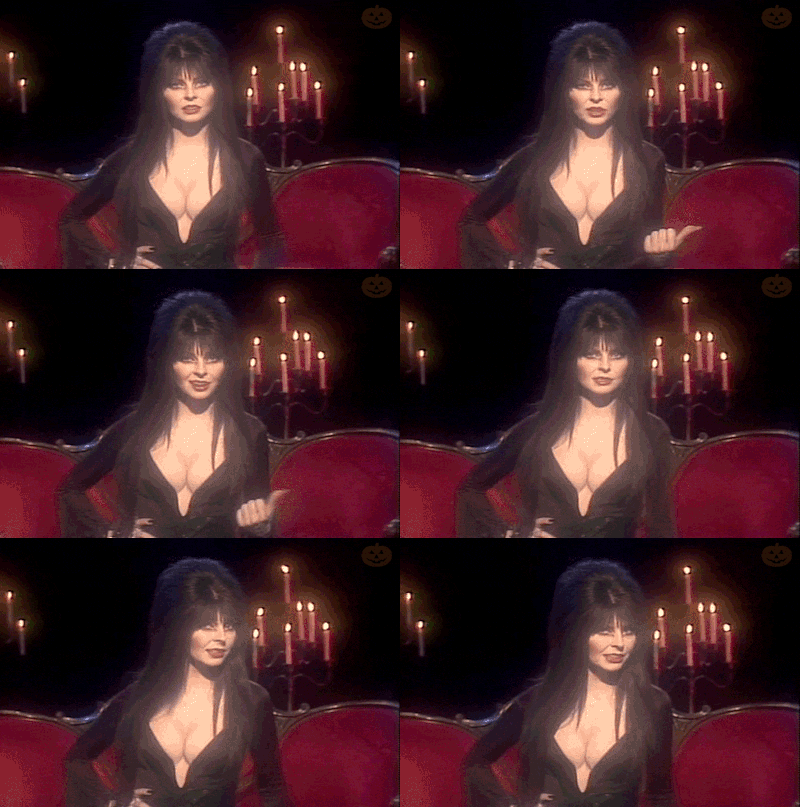 Before the cult classic Elvira: Mistress of the Dark, Elvira began hosting Elvira’s Movie Macabre where she would host B-grade (and even lower) horror and sci-fi movies. This is where she took essentially what Vampira did, and improved upon it, in the opinion of this critic anyway. Vampira certainly has her dedicated fans too. While many in Hollywood and around the world would so quickly dismiss these movies as television or cinema fodder, she breathed new life into them! In a manner of speaking, she is chiefly responsible for teaching us to appreciate these bad movies then and now! Podcasts like School of Schlock specialize in highlighting these terrible movies that we cannot help but love. Aside from her trademark provocative look, Elvira resonated with audiences because she would say the very things that we were already thinking. B-horror movies aren’t ones that you sit silently soaking in–you and your friends form the peanut gallery and lampoon everything from the actors to the script to the costuming, set design, and more! Elvira took what was happening in your living room and movie theatre, and channeled that, put her sultry, satirical valley girl spin on it, and championed it! And of course, she loved her double entendres and jokes about her two biggest assets.
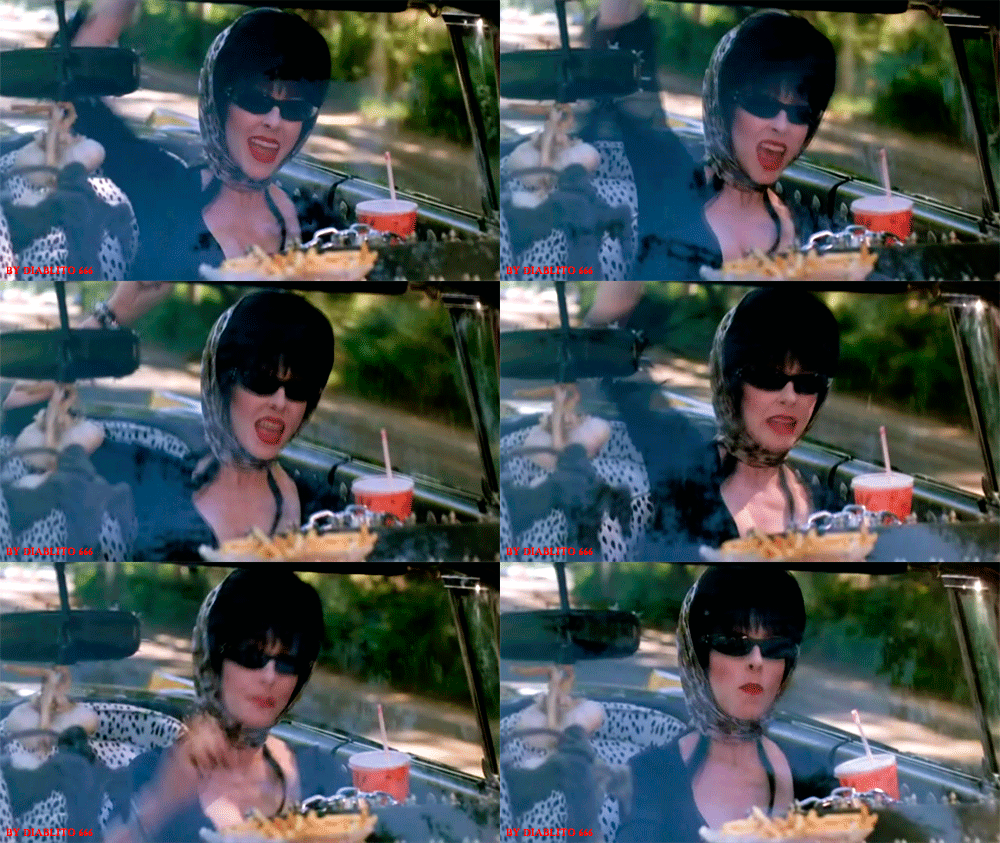 After several years of hosting her TV show, Peterson co-wrote Elvira’s cinematic breakout role as the title character in 1988’s Elvira: Mistress of the Dark. Without getting into the plot specifics, Elvira’s big screen debut was crafted in such a manner that it embodied what we loved about her TV series–her poking fun at bad horror movies–all the while the story is incredibly clever in its subversion of horror conventions and even includes a heartwarming subplot and theme of diversity and acceptance. Elvira is truly the medicine that the uptight, puritanical small town needed in order to grow as a community. Specifically, Elvira is the source of character-driven conflict that upsets the sense of normalcy in the town. As personable as Elvira is with everyone, although she does throw shade when needed, most of the townsfolk refuse to accept her. While town leader Chastity Pariah (yup, that’s her name) calls her “slimy, slithering succubus, a concubine, a streetwalker, a tramp, a slut, a cheap whore” because of her different style of dress and loud personality, the film shows us that it’s the town that has a problem.
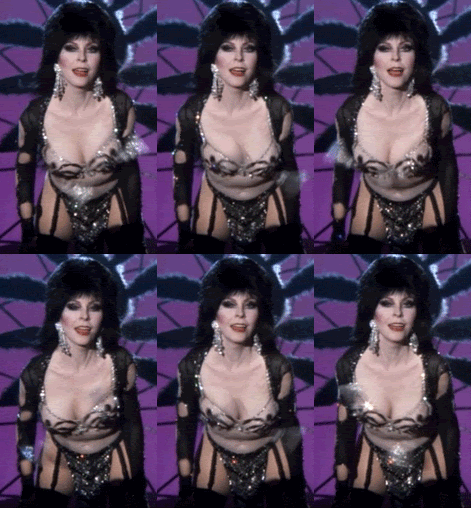 True to her character in this movie and her hostess self, she was always so much more than her sultry, overly sexed appearance, she shows audiences that you can be courageous, vulnerable, strong, crafty and still wear low-cut dresses all at the same time. These are the qualities we love about our final girls, and she embodies all of them. Despite the constant barrage of sex and tits jokes, she is a great example of the feminist heroine. Elvira also inspires us to strive for a positive body and self image through how she takes complete pleasure in (1) who she is (2) what she has to offer to the world and (3) the refusal to conform to antiquated societal norms or expectations. Elvira teaches and learns from the community but never loses herself or forgets who she is. After Elvira saves the town, she inherits the money she needs to open her Vegas show! So at the end of the movie, she experiences her dream and performs in Las Vegas! This highly entertaining moment is a brilliant reminder that success is often only achieved when you believe in yourself, even when nobody else around you does.
 Cassandra Peterson’s Elvira also inspired a long-running theme park show at Knott’s Berry Farm as part of its Halloween event Knott’s Scary Farm with her headlining. She is also a fan favorite for her high level of interaction with fans through her former Knott’s show as well as making regular convention rounds. Her trademark big hair, big boobs, cleavage-showing black dress, and high contrast makeup paired with her witty sense of humor and twisted optimism transformed her form one-time obscure horror movie hostess to a global brand! But she is so much more! Her influence reached beyond movies, TV, and theme parks. She became a cultural phenomena and icon in the gay community. And not just for drag queens; although, many drag queens–still to this day– love to impersonate her trademark physique as an homage to her positive impact on their lives. The gay male community (and the same can be said for the queer community at large) is often attracted to characters (or actors) that have to overcome societal prejudices, withstand ridicule, being thought of as less, and encouraged to simply conform for the sake of the larger community of people. Both in her debut movie (less so Haunted Hills) and TV series, she championed the ideas of positive self-worth, expression, inclusivity, acceptance, and sticking by one’s personal convictions. Her shows and movies aren’t about these ideas per se, but the subtext is consistently alive and well.
Before I close out the article, here is what some of Elvira’s fans love and respect about her:
Shawn of the Brunch With the Halliwells and Movie Geek and Proud podcasts states “I grew up watching Elvira’s movie and I have been to her Knott’s show countless times. I love Elvira for being a sexy and sex positive role model who is proud of her body. I love seeing a strong woman who dresses how she wants, and is strong willed and confident.”
Kahlib of the Macabre Media Podcast states, “Always love having diverse voices in the discourse and entertainment. Having a woman in mainstream horror convo breaks away from the male centric perspective.”
And Ph.D. in Criminology candidate Cassandra at the University of South Florida states, “to be perfectly honest, I’ve never seen her TV show or movies, BUT as a member of this society, I even know that Elvira has transcended past the niche market to which she technically belongs. Yes, she is campy, but she is highly respected for her being a touchstone of pop culture. She may not the traditional symbol of sexy; but her punk rock, gothic, busty self exudes confidence that we can all appreciate.”
Cassandra Peterson’s Elvira also inspired a long-running theme park show at Knott’s Berry Farm as part of its Halloween event Knott’s Scary Farm with her headlining. She is also a fan favorite for her high level of interaction with fans through her former Knott’s show as well as making regular convention rounds. Her trademark big hair, big boobs, cleavage-showing black dress, and high contrast makeup paired with her witty sense of humor and twisted optimism transformed her form one-time obscure horror movie hostess to a global brand! But she is so much more! Her influence reached beyond movies, TV, and theme parks. She became a cultural phenomena and icon in the gay community. And not just for drag queens; although, many drag queens–still to this day– love to impersonate her trademark physique as an homage to her positive impact on their lives. The gay male community (and the same can be said for the queer community at large) is often attracted to characters (or actors) that have to overcome societal prejudices, withstand ridicule, being thought of as less, and encouraged to simply conform for the sake of the larger community of people. Both in her debut movie (less so Haunted Hills) and TV series, she championed the ideas of positive self-worth, expression, inclusivity, acceptance, and sticking by one’s personal convictions. Her shows and movies aren’t about these ideas per se, but the subtext is consistently alive and well.
Before I close out the article, here is what some of Elvira’s fans love and respect about her:
Shawn of the Brunch With the Halliwells and Movie Geek and Proud podcasts states “I grew up watching Elvira’s movie and I have been to her Knott’s show countless times. I love Elvira for being a sexy and sex positive role model who is proud of her body. I love seeing a strong woman who dresses how she wants, and is strong willed and confident.”
Kahlib of the Macabre Media Podcast states, “Always love having diverse voices in the discourse and entertainment. Having a woman in mainstream horror convo breaks away from the male centric perspective.”
And Ph.D. in Criminology candidate Cassandra at the University of South Florida states, “to be perfectly honest, I’ve never seen her TV show or movies, BUT as a member of this society, I even know that Elvira has transcended past the niche market to which she technically belongs. Yes, she is campy, but she is highly respected for her being a touchstone of pop culture. She may not the traditional symbol of sexy; but her punk rock, gothic, busty self exudes confidence that we can all appreciate.”
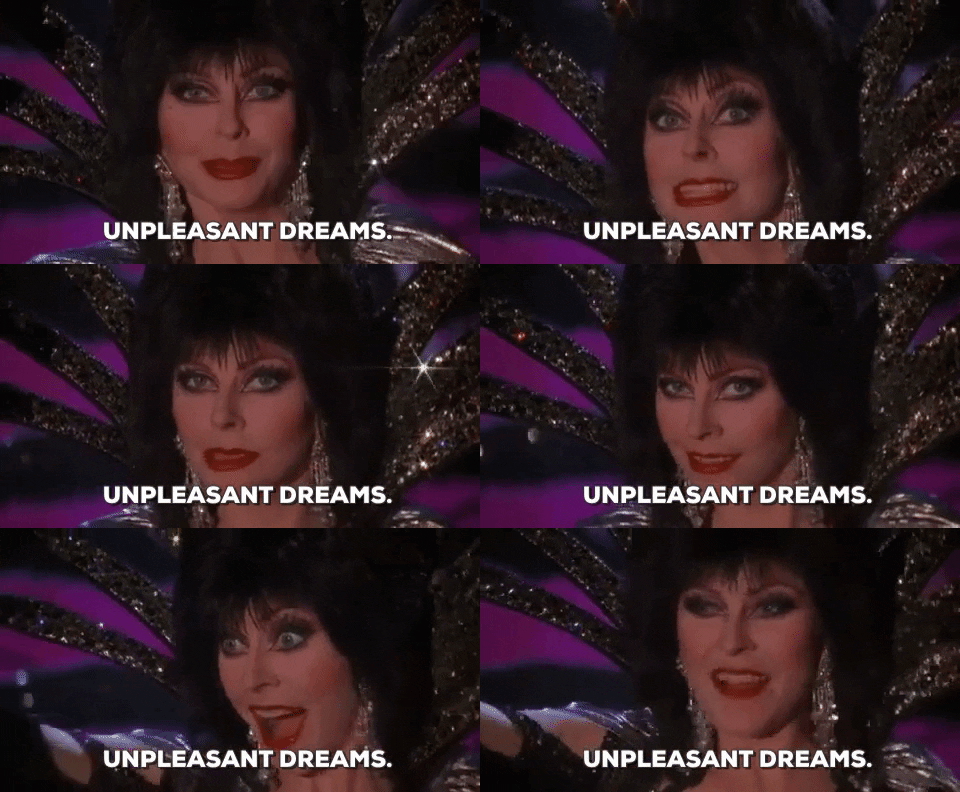 As you can see, Elvira is loved by her fans for not only how much fun she showed we can have with “bad” horror and sci-fi movies, but she was and is an icon of positive body image and confidence. Furthermore, she paved the way for the subculture of horror fans to let their freak flag fly, so to speak, in mainstream culture. One could say that she is the intersection of mainstream pop and geek subculture. Because Elvira loves her fans, you can often find her at Comic and Horror Conventions such as Spooky Empire, at which I had the privilege of being a guest panelist last year. For the longest time, Elvira never revealed to fans what HER favorite horror/sci-fi movie of all time was, and in a 2016 interview with People Magazine she revealed that her favorite horror movie is the Attack of the 50 Foot Woman, a movie that I saw for the first time over Christmas break with my family. Can’t say that it is a favorite of mine, but I can see why she is proud of it! Elvira used B and even C horror and sci-fi movies to inspire us to be proud of our guilty pleasure movies and the uniqueness that makes us who we are.
Sidney Prescott
Ghostface “Do you like scary movies?” Sidney “What’s the point? They’re all the same. Some stupid killer stalking some big-breasted girl who can’t act, who is always running up the stairs when she should be running out the front door. It’s insulting.” That opening question and brilliant rebuttal is synonymous with Wes Craven’s masterpiece Scream. It also sets the groundwork for the meta horror movie that we are about to watch in that it is fully aware of the traditional rules of the horror game. Not only was Scream a pivotal horror film that redefined the versatility of the genre, but Sidney stepped into the shoes of all the legendary final girls before her, and took the role in a new direction that cemented her in with the likes of Laurie Strode, Nancy Thompson, and others. Unlike other Craven final girls, she stands as the only one to survive a Wes Craven franchise. Yes, Nancy is brought back in New Nightmare but she is killed off in Dream Warriors. While the final girl conventions had been well-defined up to this point, Wes Craven used the character of Sidney as a conduit for the audience since the rules of slasher horror were all too cliche at this stage in the evolution of the American horror film.
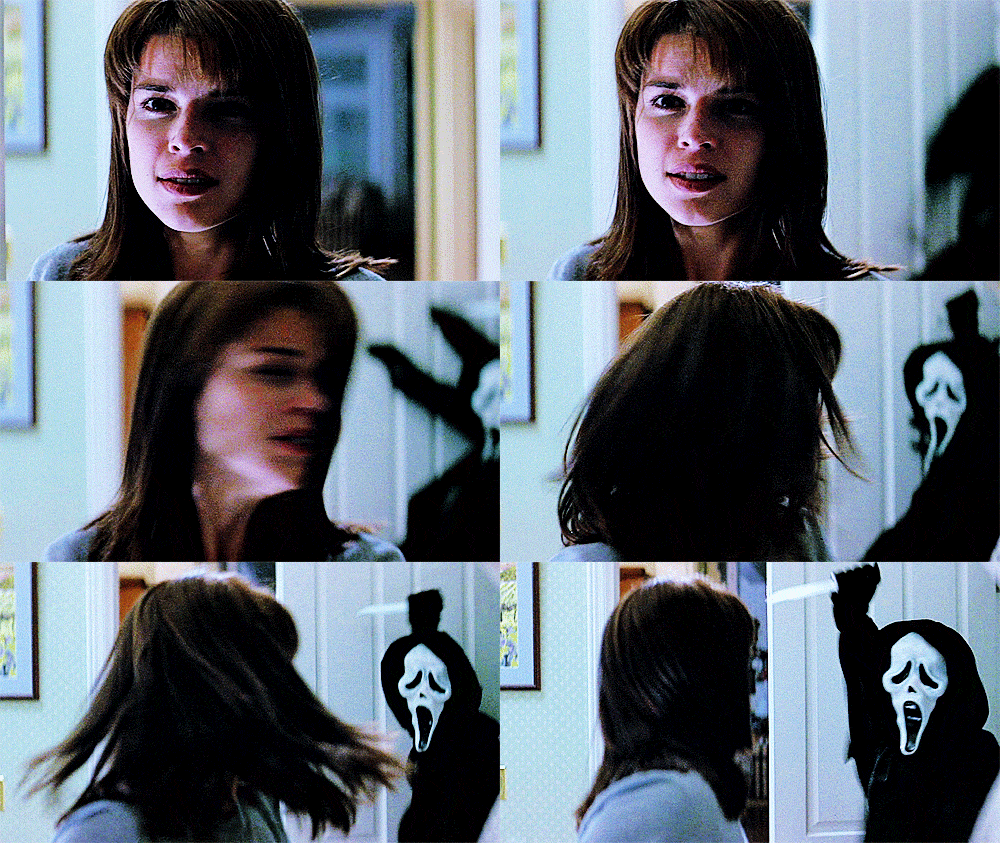 Much like with past final girls, Sidney is resilient, resourceful, sensible, and has an uncanny survivor’s reflex that is so incredibly well developed that she can simultaneously manage life’s complications and death with demonstrable hyper-focus. Furthermore, Neve Campbell’s Sidney was a powerful character for women because she demonstrated strength amidst adversity and responsibility when faced with difficult decisions. However, Sidney is not always the “good girl.” One of the longtime tropes of a final girl is one whom is chaste, but Sidney has had sex with her boyfriend prior to her mother’s brutal murder; however, she chooses when and only when she is good and ready, and when she isn’t dealing with the demons of her past or the serial killer of the present. Much like in the vein of Nancy Thompson, Sidney’s ability to outwit and survive Ghostface is based upon her cunning, not how “good” she is. She is ready and willing it fight for her life, and will stop at nothing until she rescues herself.
 We witness the emotional turmoil inside Sidney early on in the first Scream film when she decks Gale Weathers for asking her about the testimony that ostensibly put a man in prison for Sidney’s mother’s murder. When Ghostface threatens to take control of Sidney’s life, she responds by taking command of the stalking—to become the stalker instead of the one whom is stalked. Throughout the movie, we observe how Sidney displays strength of agency in her relationships with her boyfriend, friends, family, and others in Woodsboro. Although she turned down Billy when he wanted to have sex, early in the film, she finally determines that he has earned that privilege, and questions her decision not. This isn’t her first time with Billy, but the first time since her mother’s murder. Sidney isn’t the typical good girl or a superhero-like character in that she has complex emotions, many flaws, makes mistakes, and doesn’t always instantly know the best course of action to take. Even when she is at a loss of what to do, and feel overwhelmed, she never allows herself to become a victim of circumstance. Further evidence of her strength is shows by Sidney’s ability to laugh in the face of danger and love in the face of heartbreak and death. All of her qualities point to the desire to survive.
 Prior to Scream, slashers rarely targeted a single victim. For example, Laurie Strode happened to be in the wrong place at the wrong time in Halloween, the same can be said for Alice in Friday the 13th. Less so with Nancy in A Nightmare on Elm Street where Freddy eventually targets Nancy because she discovers his vulnerability. Even different from how Nancy was eventually targeted, Sidney was the sole focus of Ghostface from the very beginning. This target on Sidney means that killing her is the singular focus of Ghostface; and like Sidney’s internal need to survive, Ghostface will stop at nothing until Sidney is dead. But because Ghostface (Billy and Stu) has a flare for the theatrical, he torments, manipulates, and singles her out until Sidney finally fights back in that climactic third act where she turns the tables on Ghostface by using his own tools and knowledge against him. From using his own voice modulator on strategically creepy phone calls to using his own costume to frighten him, Sidney makes intentional decisions that greatly effect the balance of power. While Ghostface holds significant power in the beginning, Sidney erodes that power and takes it for herself. She proves that she has an even greater understanding of horror movies than Ghostface himself, or perhaps the versatility of the rules. Eventually audiences witness Last House on the Left levels of revenge. Interesting because Last House on the Left is Wes Craven’s breakout writing-directing project and redefined the genre with its sexploitation revenge plot.
 More so than any other Wes Craven (or horror movie in general) final girl, Sidney feels. She feels deeply. As mentioned earlier, even before the movie begins, she is dealing with the loss of her mother and the effects it has had on her other relationships, including her boyfriend Billy. From the moment we meet her to the last moment on screen, she is going though her own personal hell. Pressures are mounting all around her, but she never caves under them. Even when her friends and classmates are getting killed by a deranged masked killer, she rises to the occasion to face off with Ghostface. And not because she is endowed with superhuman strength, agility, resilience, or other uncanny ability, quite simply she knows that she has no other choice but to fight. Without seeing the film, if someone was to read my description of her actions, one may be inclined into believing that she is so strong and courageous that she is unrelatable or unbelievable. Not true. Upon watching the iconic film (or its sequels, of which Scre4m is the best IMO), it becomes clear just how believable and relatable she is. Never once does any of her actions come across as easy or convenient. Sidney earns every moment of survival through smart work and determination.
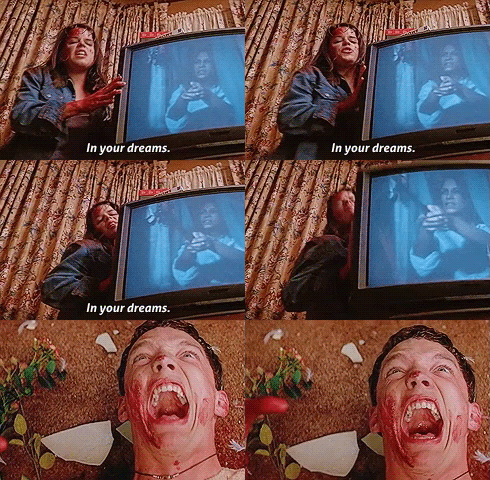 While a lot of the attention paid to Sidney involves her relationship and confrontation with Ghostface, she is the conduit through which we explore the power dynamic in romantic relationships as well. And the fact that her boyfriend is also her tormenter, offers bountiful material to explore. In many ways, the relationship between Billy/Sidney and Ghostface/Sidney parallels one another. Ghostface wants to penetrate Sidney with his knife, but she refuses to give up on resisting; likewise, Billy desires to penetrate Sidney with his own weapon but she withholds until she has worked through her personal demons. Billy attempts to make Sidney feel guilty for not engaging in her “girlfriendly” duties, as a misogynist such as Billy would put it; likewise, Ghostface tries his best to make Sidney feel guilty for the death of her mother. These parallels are why Sidney defeating Billy/Ghostface is so important and meaningful. Not only does she kill the demons that are presently haunting her, this defeat also allows Sidney to finally close the book on the demons of her past trauma.
I asked #FilmTwitter what it thinks of Sidney, and here are some of the responses I got!
Ian states, “Sidney Prescott is the final girl who breaks the rules and gets away with it. She’s tough, vulnerable, and will take things into her own hands. A great entry into the canon.”
The Boy, Booze, and Blood podcast states a rather contrarian opinion, but I appreciate it nevertheless, “I can’t stand Sidney in the first two movies…she’s so pompous…like, she’s too good for this to be happening to her. I love when she overhears the cheerleader in the bathroom that knocks her off her [high] horse…I’m team Gale all the way.”
Lydia states, “I think she was the 90s attempt at a Jamie Leigh Curtis type heroine. Tough, no nonsense, with the character development to show the impact the events have on her life and mental health. Much like you see with Laurie Strode.”
Charles shares these thoughts, “I thought it was very telling that Sidney wasn’t the most popular girl. She road the bus home, seemed very studious…but a very beautiful young lady obviously loyal but her spirit wounded. Maybe she actually KNEW about her mother’s affairs…that’s why she didn’t wanna have sex with anyone, not Billy, no one. Her convictions, smarts, and strength carried her through the murders.”
While a lot of the attention paid to Sidney involves her relationship and confrontation with Ghostface, she is the conduit through which we explore the power dynamic in romantic relationships as well. And the fact that her boyfriend is also her tormenter, offers bountiful material to explore. In many ways, the relationship between Billy/Sidney and Ghostface/Sidney parallels one another. Ghostface wants to penetrate Sidney with his knife, but she refuses to give up on resisting; likewise, Billy desires to penetrate Sidney with his own weapon but she withholds until she has worked through her personal demons. Billy attempts to make Sidney feel guilty for not engaging in her “girlfriendly” duties, as a misogynist such as Billy would put it; likewise, Ghostface tries his best to make Sidney feel guilty for the death of her mother. These parallels are why Sidney defeating Billy/Ghostface is so important and meaningful. Not only does she kill the demons that are presently haunting her, this defeat also allows Sidney to finally close the book on the demons of her past trauma.
I asked #FilmTwitter what it thinks of Sidney, and here are some of the responses I got!
Ian states, “Sidney Prescott is the final girl who breaks the rules and gets away with it. She’s tough, vulnerable, and will take things into her own hands. A great entry into the canon.”
The Boy, Booze, and Blood podcast states a rather contrarian opinion, but I appreciate it nevertheless, “I can’t stand Sidney in the first two movies…she’s so pompous…like, she’s too good for this to be happening to her. I love when she overhears the cheerleader in the bathroom that knocks her off her [high] horse…I’m team Gale all the way.”
Lydia states, “I think she was the 90s attempt at a Jamie Leigh Curtis type heroine. Tough, no nonsense, with the character development to show the impact the events have on her life and mental health. Much like you see with Laurie Strode.”
Charles shares these thoughts, “I thought it was very telling that Sidney wasn’t the most popular girl. She road the bus home, seemed very studious…but a very beautiful young lady obviously loyal but her spirit wounded. Maybe she actually KNEW about her mother’s affairs…that’s why she didn’t wanna have sex with anyone, not Billy, no one. Her convictions, smarts, and strength carried her through the murders.”
 I love the variety of opinions on Sidney! One thing’s for certain, she will never be killed off in a Scream movie because Wes Craven stated explicitly in his will that no more Scream movies were to be made after 4 (however, MTV got around that with the TV series). Even though there was the short-lived TV series, the character of Sidney cannot be included and killed off. She will live eternally! Perhaps she isn’t among the most talked about final girls, but she definitely left an indelible mark upon the slasher genre.
Lin Shaye
 Do you love Lin Shaye? If not, I urge you to reevaluate your priorities because she is incredible! There’s no arguing that Lin Shaye isn’t the matriarch of horror–our Horror Queen! From A Nightmare on Elm Street to 2001 Maniacs to Insidious to Room for Rent and even the remake of The Grudge. she has been delighting audiences with her memorable characters and creepy performances that keep us wanting more. Differing from a scream queen, a horror queen is a female actor whom has played numerous prominent, scene-stealing roles in horror, whether or not she is a “final girl”! Very early in her acting career, she began with A Nightmare on Elm Street as Nancy’s teacher–I mean, come on–it doesn’t get any more iconic than that! Not only did Shaye appear in one of the greatest horror movies of all time, but Freddy Krueger quite literally runs through her veins because she is the sister of New Line Cinema founder Robert “Bob” Shaye who took a chance on a Wes Craven screenplay, and literally made history! Lin was supportive of her brother back then, and continues to honor his legacy of horror in her own outstanding career that has spanned four decades. Her career is also a testament to all those who think they are too old to begin something. She didn’t begin acting until she was in her 30s, and the best years of her career didn’t truly happen for another 30 years. Sure she was working regularly, even appeared in films such as There’s Something About Mary and Dumb and Dumber, but she wouldn’t become the household name she is today until Insidious. Although she has appeared in films outside of horror, most of her performances have been in horror and horror-adjacent pictures. And she wasn’t just in them; every scene she is in, she instantly takes command of the screen and your attention. She has a way of instantly drawing you into her characters through her unapologetic authenticity and genuine emotion.
 Placing horror queen Lin Shaye in a movie is essentially a guaranteed box office success for audiences and investors. In a manner of speaking, what we are dealing with here is a legitimate movie star. Truth be told, 21st-century cinema does not see movie stars in the same way that the early and mid 20th century did. In early days of cinema, films were built on the back of the studio system stars. It was a Betty Hutton film, a Humphrey Bogart movie, a William Holden picture, a Bette Davis film, etc. I’d argue that Tom Cruise is the closest to a contemporary era movie star in the traditional sense that we have. But by extension, you can apply the same attributes to Lin Shaye by the cache that she brings to her films–she IS the box office draw for the films in which she is featured. Her name alone, attached to a horror movie, is enough to excite audiences and drive ticket sales. She is so much fun to watch in all of her horror movies. She is often portrayed as a kind-hearted grandma-type, but beneath that facade is often a sadistic executioner, wicked witch, or tortured soul. Tho, sometimes she is the hero as well, as we have seen in the Insidious movies. Perhaps she isn’t the lead in most of the movies that she is in (Room for Rent being an exception), but she steals the screen every moment she gets. No matter what kind of role she plays, she consistently looks as if she is having the time of her life playing all her serious and ridiculous characters.
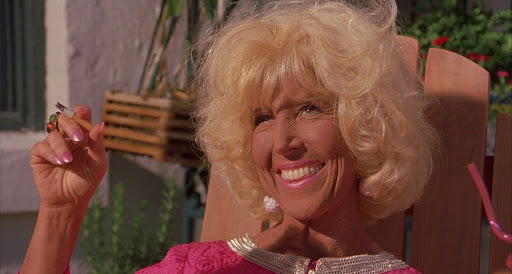 Like Robert Englund, Lin Shaye’s characters have always been quirky (There’s Something about Mary), delightfully odd (Insidious), and even sinister (The Grudge), or a combination of all the above, which is the case with her character in 2001 Maniacs. She also kicks other franchise installments up a notch with movies such as Ouija: Origin of Evil and The Grudge. If nothing else, what we can learn from her legacy is how much fun she is having! Whether it is a schlocky horror flick or the next contender for an award, she gives her characters 100%. Never phoning in a performance. Go big or go home. And it doesn’t look like she has plans on taking it easy anytime soon, Lin Shaye laughs as she remarks, “now that I’m 146 years old, I’m in demand. I love the fact that in a way, I’m defying people’s expectations. It’s great to be my age. I love that I’m 76 years old and I’m proud of it, but that isn’t my focus” (The Hollywood Reporter). She isn’t solely focussed on defying expectations, she isn’t fixated on being a leading lady, she doesn’t get caught up in her celebrity or making appearances on TV to stay in the eye of the public, she is focused on supporting horror and having the time of her life while doing it. She truly cares about her audience and fans more than simply working for a paycheck or earning credits.
 If you remove/replace Lin Shaye in the Insidious series, for example, the movies would likely not play out nearly half as well as they presently do. Lin and her characters are such a staple in the horror genre; she has regularly breathed life into numerous B-movies and indie films from campy to downright nightmare-inducing. You have to look no further than Critters, Dead End, or Midnight Man to witness her powerful screen presence. While she has appeared in far more B-movies and indie films than commercial blockbusters, it is clear that the producers of the Insidious movies recognized her pull with audiences because in each and every movie after the first, her character of Elise continues to rise in prominence. That really says something, ya know? It says something about her fanbase–it’s very much youthful! The target audiences for many horror movies is, I’d say 20 and 30-somethings. Of course, horror transcends the generations to continue to be a crowd favorite period. But the bulk of her fanbase isn’t our parents or grandparents, it’s us (speaking as a 30-something)! Perhaps that’s because of when she began to regularly pop up in commercial and indie films. Shaye attributes some of her success to her very youthful fanbase. She often remarks she is deeply touched that so many young people love to watch her films. How can we not?!? She continues to penetrate our emotions and thoughts with every character, with every film, with every horror convention.
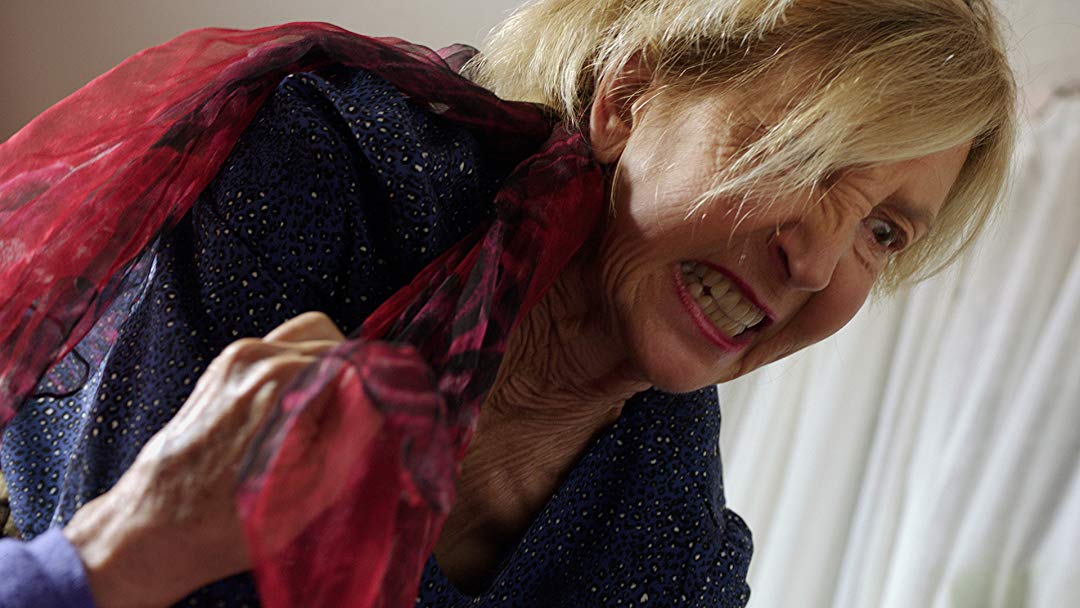 Not only is Shaye a prolific actor, but she is not satisfied in abiding by all the rules that came before her. She seeks to redefine what it means to be a “scream queen.” Prior to David Gordon Greene’s Halloween and Blumhouse’s Insidious, the term scream queen was largely used to describe a teenage or young adult female actor who was most often the “good girl” or final girl in a horror movie. While the term has some under increased scrutiny because some see it as something that a young female actor shouldn’t want to aspire to, I argue that it is an honor to be considered a scream queen! These are the characters that we love to remember and talk about. For the longest time, it did not seem that an older female actor could become a queen later in life, as there weren’t many movies or significant roles for older female actors. As progressive as the horror genre has always been–and yes, that means more progressive than straight dramas–there was an absence of defining roles for older female actors. Even older men had prominent roles in the genre. Think Robert Englund’s Freddy Krueger–and you know what, that’s great! But, where were the roles for older women?
 Enter 2010’s Insidious and 2018’s Halloween. In addition to being crowd favorites, and not just great horror films, but great films period, both of these films intentionally made the lead/chief supporting characters older women. And with that, Lin Shaye and Jamie Lee Curtis redefined what it meant to be a queen in the horror genre! I would be remiss to not mention Toni Collette’s Annie Graham in Hereditary and her Sarah Engel in Krampus and Vera Fermiga’s Lorraine Warren in the Conjuring or Norma Bates in Bates Motel as being more evidence that older women can capture our imaginations and give us nightmares! I love how the horror genre, more than any other, is giving these women a platform to exhibit such outstanding talent! Whether they are screaming or making us scream, all of these outstanding actors are pushing the boundaries, and redefining what being a scream queen (or horror queen) is all about. And these women are not playing some different iteration of the same character, each of these characters is unique! What they share in common is a fierce independent spirit and a strong refusal to become a victim.
I asked #FilmTwitter what it thought of Lin Shaye, and here are some of the comments!
Andrew from FriGay the 13th podcast states, “We [Andrew and Matty] met Lin Shaye at HorrorHound and she was the nicest, kindest, funniest person…her lineup of films throughout her career is unimaginable! A class act! And even in bad films, she is the standout.”
Take Too podcast exclaims, “a true horror movie icon!”
Drinking and Screaming podcast states, “Lin Shaye is a delight to watch on screen. Her career spans over [four] decades, making multiple iconic horror films along the way, making her a true Scream Queen. The Insidious series would NOT be the successful saga that it is without her.
And the Final Boys said, “Ohhhhh boyyyy 🙂 Lin Shaye is a legend! She truly embraces and embodies the horror genre.”
Enter 2010’s Insidious and 2018’s Halloween. In addition to being crowd favorites, and not just great horror films, but great films period, both of these films intentionally made the lead/chief supporting characters older women. And with that, Lin Shaye and Jamie Lee Curtis redefined what it meant to be a queen in the horror genre! I would be remiss to not mention Toni Collette’s Annie Graham in Hereditary and her Sarah Engel in Krampus and Vera Fermiga’s Lorraine Warren in the Conjuring or Norma Bates in Bates Motel as being more evidence that older women can capture our imaginations and give us nightmares! I love how the horror genre, more than any other, is giving these women a platform to exhibit such outstanding talent! Whether they are screaming or making us scream, all of these outstanding actors are pushing the boundaries, and redefining what being a scream queen (or horror queen) is all about. And these women are not playing some different iteration of the same character, each of these characters is unique! What they share in common is a fierce independent spirit and a strong refusal to become a victim.
I asked #FilmTwitter what it thought of Lin Shaye, and here are some of the comments!
Andrew from FriGay the 13th podcast states, “We [Andrew and Matty] met Lin Shaye at HorrorHound and she was the nicest, kindest, funniest person…her lineup of films throughout her career is unimaginable! A class act! And even in bad films, she is the standout.”
Take Too podcast exclaims, “a true horror movie icon!”
Drinking and Screaming podcast states, “Lin Shaye is a delight to watch on screen. Her career spans over [four] decades, making multiple iconic horror films along the way, making her a true Scream Queen. The Insidious series would NOT be the successful saga that it is without her.
And the Final Boys said, “Ohhhhh boyyyy 🙂 Lin Shaye is a legend! She truly embraces and embodies the horror genre.”
 Lin comments on the secret to her success, “I love finding my character, no matter what. I never really made a distinction between bit player and a big role. I’ve always just been obsessed with storytelling and feeling like I had an ability and talent to step into other people’s lives and live as that character. And that for me, that was always the fun. I become that other person and Lin sort of disappears in the background” (LA Times). Shaye is an incredibly talented character actor! Her level of talent, entertainment, and thrill is consistent. You are never disappointed by any of her performances. No matter how big or small the role, Shaye takes the fantastic and mediocre horror films to new levels to transform them into cinematic experiences that are incredibly enjoyable.
Annie Graham
“I am your mother!”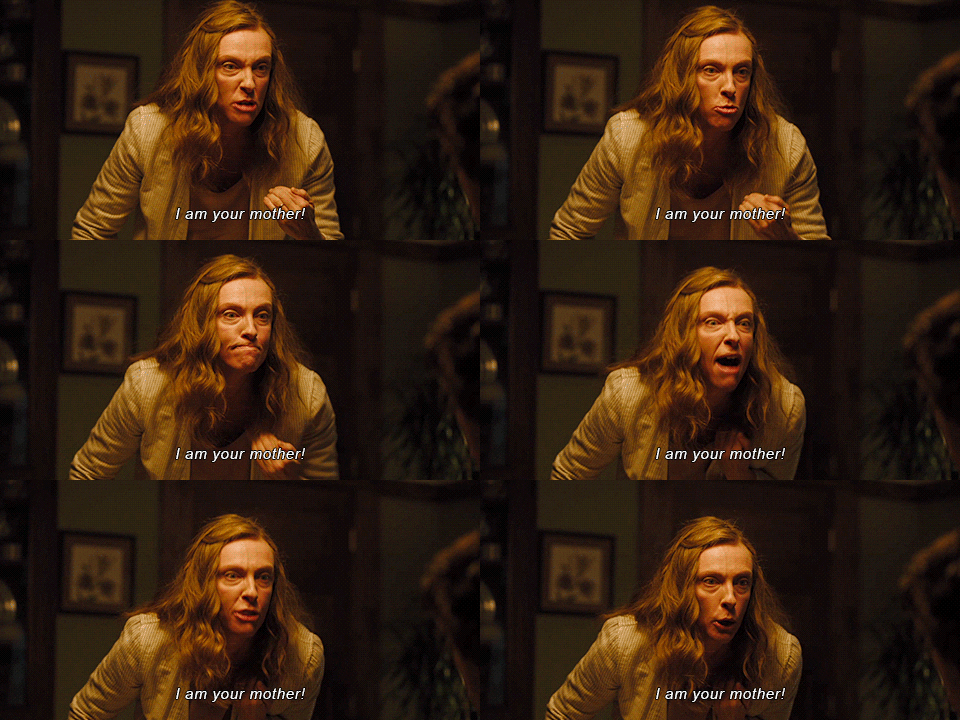 And the Oscar nominations for Best Actress in a Leading Role…ironically did not include the BEST performance of 2018, Toni Collette’s Annie Graham in Hereditary. And not just best performance in a horror film, but best performance period. The Academy mostly, but also the big award shows in general, continue to ignore horror genre when it comes to nominating motion pictures. While I could write an entire article on the greatness and relevance of the American horror film (as that is my area of expertise), I want to focus on the character of Annie Graham (and Collette’s performance) specifically. Her performance and character was a watershed moment, of sorts, for the American horror film. It had been quite a while since horror delivered such a complex character brought to life in a command performance. Not that this was the first outstanding lead performance in a horror film, but it was the first in a long time. The character of Annie is a true-to-life relatable character because she is going through grief, not unlike the grief that we experience when we lose a loved one. Because this is a film, it was necessary for Ari Aster to externalize all of her emotions. Motion pictures are a visually driven story medium after all.
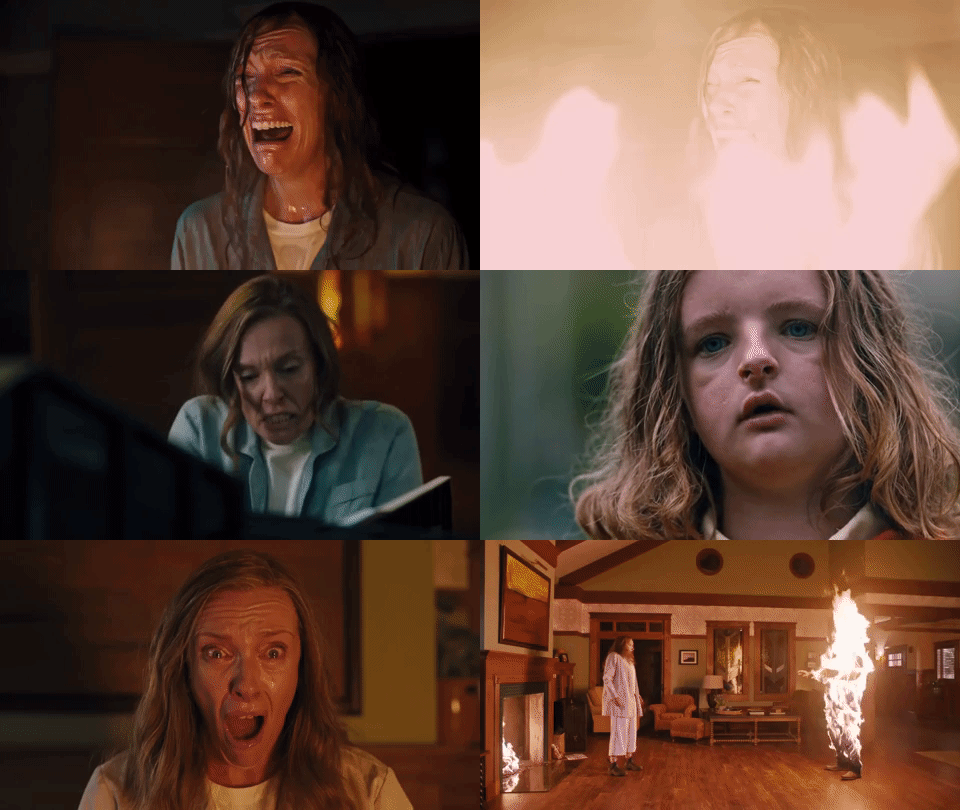 Collette’s captivating, terrifying performance as Annie Graham is one that certainly screamed Oscar contender. We are hard-pressed to find and encounter another more compelling and gritty performance. Annie is both a tortured daughter and reluctant mother, and provides us with so much material to analyze. Whether talking horror or other genres, the role of Annie Graham will go down in the record books as one of the most gut-wrenching characters of contemporary cinema. Collette’s performance is spellbinding as you get forcibly sucked into this twisted world of a family-heirloom evil. From the crazy outbursts to the intense brooding, lingering moments, Annie is our conduit for facing greatest fears of the far-reaching effects of loss in this unapologetic exploration of how hard it can be to cope with major losses while managing a marriage and motherhood. Being a mother is tough, sometimes on the best of days; and when great loss and a disconnect to that which was familiar happens, it tests the mind and heart’s ability to cope.
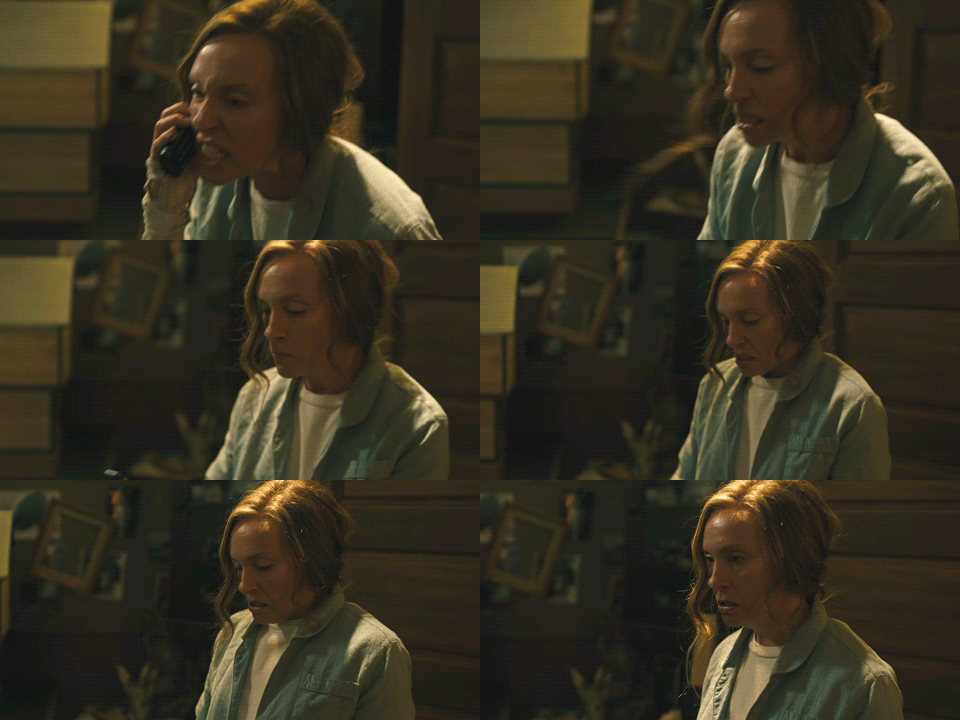 We cannot truly discuss the complexities of Annie without addressing that which isn’t even explicitly shown on screen. In order to fully understand Annie, we must first take time to acknowledge the context clues that point to the trauma of her past, a trauma that already existed even before the loss of her mother and daughter within a short time of one another. Part of Annie is stuck in this tortured past that is hinted at through the miniaturized, dollhouse-like pieces of art she crafts with meticulous precision. This is Annie’s method for coping with the ghosts of her past. We do not know precisely what happened to Annie as a girl, but she most likely grew up under the watchful eye of an overbearing, controlling mother. Only this depiction is one that she can control. But when events happen that are out of Annie’s control, she loses that sense of control and all hell breaks loose. We can relate to her on this level because we also go a little mad–“we all go a little mad sometimes”–when we cannot control the conflicts, struggles, and obstacles around us. I doubt many, if any of us, could keep composed when losing our mother and a child (or sibling) at nearly the same time. Annie is real, gritty, and transparent. While she may be collapsing under pressure, she refuses to give in to ending her own life, which she expresses a desire to do after she discovers the headless body of her daughter in her car.
 Loss, guilt, isolation, and grief are three of life’s experiences that we can all connect on because we all encounter them on out own journeys. And when we are suddenly hit with one (or more) of them, we grasp at straws trying to figure out how to cope. It’s a disruption in the patterns and rhythms by which we live our lives. What I love about the character of Annie is her determination to (1) deal with the trauma of her past (2) navigate the ocean of emotions associated with the two losses suffered and (3) maintain her marriage and motherhood of her son. She is unrelenting in her refusal to become a victim. This struggle to not fully give into the uncontrollable anger is not without its consequences or outbursts of a loss of momentary control. She is human. And she wanders the murky, windy path of grief, looking for answers to why. Of course, it’s this quest for answers that leads her down a dark road that Annie cannot possibly control. We cannot control how we manage grief, we have to allow the coping to take a natural course. Just like Annie, we too look for ways of overcoming the psychological and emotional pressures that come part and parcel with the effects of the loss of a loved one.
 Even when Annie tries to get her family to believe that she is a medium and can contact the dead, they either do not believe or choose not to believe. There are plenty of times in the movie that Annie simply wants someone to listen to her, hence why she makes the connection with Joan. When you listen to someone (not just passively hear them), but actively listen, you form a connection. It’s a means it heal the broken connections caused by loss and grief. And that is tangible evidence that Annie is searching for. Visible connections to begin to re-establish her life and role as a mother. Like Annie, we too desire to form meaningful connections. Without human connection, we can so easily lost our way or retreat into isolation. Annie’s fights these feelings of being isolated by her family, but she has an incredibly difficult time. We can relate with her struggle, as we too have experienced similar feelings. Annie is truly us in so many ways, and that is the power of the character. Genuine pain and anguish is depicted in the film and Annie responds to it in ways not unlike our own.
Perhaps the character of Annie will not be as memorable as other leading ladies of horror, but the performance by Toni Collette will certainly be talked about for a long time. Annie teaches us that navigating the complicated paths of loss, grief, guilt, and isolation can be difficult and take an immense toll on the human mind and body. I appreciate how she externalizes so much of what goes on inside the human mind.
Even when Annie tries to get her family to believe that she is a medium and can contact the dead, they either do not believe or choose not to believe. There are plenty of times in the movie that Annie simply wants someone to listen to her, hence why she makes the connection with Joan. When you listen to someone (not just passively hear them), but actively listen, you form a connection. It’s a means it heal the broken connections caused by loss and grief. And that is tangible evidence that Annie is searching for. Visible connections to begin to re-establish her life and role as a mother. Like Annie, we too desire to form meaningful connections. Without human connection, we can so easily lost our way or retreat into isolation. Annie’s fights these feelings of being isolated by her family, but she has an incredibly difficult time. We can relate with her struggle, as we too have experienced similar feelings. Annie is truly us in so many ways, and that is the power of the character. Genuine pain and anguish is depicted in the film and Annie responds to it in ways not unlike our own.
Perhaps the character of Annie will not be as memorable as other leading ladies of horror, but the performance by Toni Collette will certainly be talked about for a long time. Annie teaches us that navigating the complicated paths of loss, grief, guilt, and isolation can be difficult and take an immense toll on the human mind and body. I appreciate how she externalizes so much of what goes on inside the human mind.