On Cinema and Theme Parks (part 1)

My BookDo you love learning about the magic of movies and theme parks? So do I! Living in Tampa, I am surrounded by some of the world’s top destination white sand beaches and exciting theme parks just up the road. As a passholder to Disney World, Universal Studios, Busch Gardens, and SeaWorld, I frequent the parks nearly as often as I go the cinema. Having spent a great deal of time working in independent film, working for three years at Disney World, and now as a cinema and theme park critic, I have a great deal of passion for both storytelling mediums. And the amazing thing is that there is such a fantastic and symbiotic relationship between the two. Hence why I spent my Master’s program at the University of South Florida studying the place at which both converge. Specifically, I researched the elements of narrative, spectacle, pleasure, character, setting and more in terms of how they correspond with one another. Whether that is taking a movie and developing it into an attraction or taking an attraction (or entire section of a park) and developing it into a movie. Both are powerful means of conveying a story or message. I delve into what it takes for a movie to be a successful attraction or vice versa.

Although there have been peer-reviewed articles and books written on cinema, there definitely lacked empirical research on the theme park side. Furthermore, most peer-reviewed articles and books are so incredibly boring and pretentious to read. My goal was to break down both and write about them in such a way that it is fun to read about. Movies and theme parks are FUN! So, reading about the relationship between the two should be equally fun and interesting. Starting with the history of how cinema influenced the modern theme park design and finishing with some of what to expect in the future, this book has it all! Although I would prefer that you buy my book (on Amazon), I have selected excerpts from it that I will publish over the next few weeks as I work on my next theme park piece. I hope you enjoy!


WDW CastleIn today’s world of entertainment, where some media conglomerates own both film studios and theme parks, successful films sometimes bridge these two media to create the basis for new theme park attractions. The following research study seeks to define the elements that a film needs in order to be successfully translated to a live themed entertainment experience, thus eliciting the desired emotional response from the guests; and also the necessary elements that a theme park attraction needs in order to convey both spectacle and narrative regarding the film upon which it is based.  Although there are tools currently available to studio executives and creative staff at entertainment companies, this study will serve as a model using the ideas, theories, supporting evidences, and streamlining them into one study—a consolidation of tools, if you will.

As media companies grow, and both cinema and theme parks adapt to changing needs and desires of movie patrons and park guests, the leadership at these companies needs to have the appropriate information at their fingertips to create effective and memorable stories for the screen and park. This study highlights what the potential park guests or movie patrons are looking for in terms of what drives them to spend money on themed entertainment or the cinema. Condensing this complex set of desires into a simplified answer: in terms of cinema-based attractions, the audience is searching for attractions and rides that immerse themselves into a participatory environment in which they make a difference in the story and encounter the unique characters, settings, and plots from the movie.—they want to be viscerally engaged and transported into a world of fantasy or adventure.

Universal HollywoodEver since the late 19th and early 20th centuries, audiences from around the world have been drawn to the temple of the height of the visual and performing arts, the cinema. In many ways, the early days regarded the cinema as an attraction, an amusement. In fact, many of the first silent films were shown in carnivals. Nickelodeons dotted the landscape in drug stores and clubs. Elaborate and ornate movie palaces housed some of the first big screens, and orchestras played along with the narrative (Gunning, 1986). Over the last century, cinema has gone from existing in sideshows to being a dominant mass communication source that has evolved into the very rollercoaster to which many critics and lay people compare it; and, not only metaphorically.

From starting in carnivals to now being the inspiration for the most visited theme parks in the world, cinema has gone full circle and is now instrumental in an unparalleled synergy with themed entertainment. Over the decades, there has been a strong convergence between cinema and theme parks. Studio executives, filmmakers, and theme park designers are working together in ways that serve to support both the movies and the parks that have rides based on the movies. More than ever, filmmakers and attraction designers need to know what the cinema patron and park guest both want in order to create a synergistic and dynamic entertainment experience based on a single narrative.

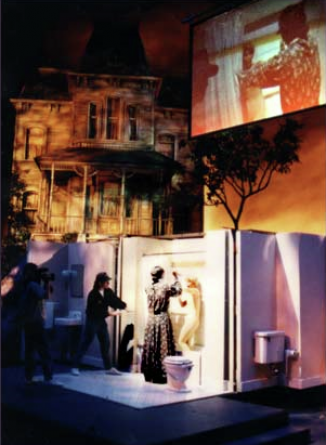
Hitchcock AttractionTwo of the greatest forces in media and entertainment are the cinema and theme parks; and for the latter part of the 20th Century and continuing strong into the 21st, the convergence between the cinema and theme park is becoming clear. Additionally, within the last several years, theme park attractions have inspired movies (e.g. Disney’s Pirates of the Caribbean and The Haunted Mansion). The relationship between the movies and theme parks is a strong one, but why is that so? Can one exist without the other? Or, is it a co-dependent relationship that benefits both entities? Perhaps it is all of the above. But, not every successful movie makes an equally successful theme park attraction. Often times, it is the Horror and Action genres that are used as the inspiration for successful attractions (e.g. ET-The Extra-Terrestrial, Jurassic Park, The Bates House and Motel, and Hitchcock: The Art of Making Movies).

As technology advances, the cinema and theme parks have adapted and evolved over the years to include the technology to both impress audiences and save money. Still building off the success of the cinema, theme parks have evolved their rides and attractions to go from the magic behind the movies to immersing the audience or guests into the movie itself. Likewise, studios and production companies are producing movies that act as attractions themselves. But, central to this study are the questions: why is it essential for the cinema to continue this synergy with the theme park industry, and what does it take for a movie to be a successful theme park attraction?

(Continue to Part 2)

“Risen” movie review

RisenThe Gospel–detective movie style! For more than 100 years, stories of Jesus have been the topic of movies. Many early works of cinema featured not only Jesus, but Moses, Sampson, David, etc, but this film is quite different in that it carries a much lighter tone than most faith-based productions. Sticking to the basics of what is known from the Bible and other Jewish and Roman historical accounts of the event, Risen lacks the pious and pretentious nature many of the films in this same sub-genre contain. Not quite cinematic per se or traditionally action-packed, the film has relatively slow pacing but keeps it interesting by supplying well-developed characters and simply the thrill of the original man-hunt. Although the message of the Gospel is clearly stated and shown in the movie, it does not come off as proselytizing. In many ways, the central character is an everyman because it is fairly easy to place yourself in his shoes–or sandals in this case–and imagine what it must have been like to have been in charge of guarding Christ’s tomb and then having to answer for the disappearance. One thing puzzles me; and that is Columbia Pictures’ timing of this release. Honestly, it makes more sense to have released it the weekend prior to Easter. Anyway, I digress.

Risen is about the most famous and controversial man-hunt in the history of the world–and no, I’m talking Jimmy Hoffa–but for the Jesus of Nazareth. You may have heard the Gospel before, but not like this. Follow Roman tribune Clavius (Joseph Fiennes) as he is personally commissioned by Pontius Pilate (Peter Firth) to supervise the burial and subsequent Roman guard of the famed tomb. Assisted by Lucius (Tom Felton), Clavius closely manages the burial of Jesus’ body and instructs the guards to keep watch to make sure the body is not stolen so Jesus’ disciples can claim resurrection. As we know from history, the tomb is discovered to have been blown open and thus begins Rome’s search for the body of Jesus in order to snuff out any uprising or violent radical upheaval. Clovis’ search for the body of the proclaimed messiah will force him to question his own beliefs as he encounters appearances and fervent faith that we cannot reconcile against the world he knows.

A history and mystery in one! From either objective or subjective points of view, this is my pick for the best “Jesus” film ever. And yes, I am including the box office smash Passion of the Christ in that assessment. But what makes this particular movie more receptive and less controversial and other faith-based films in the past? Answer: lack of pretense. Whether talking God’s Not Dead or Passion of the Christ, both films do not attempt to appeal to a broad audience. They play on the court with the rest of the faith-based movies both good and bad. Risen plays to the audience differently because it concentrates on developing the realistic historic characters by pairing what is known by way of Biblical or Jewish/Roman historic texts with logical conclusions or using context clues to fill in the gaps. The writers did an excellent job in developing the character of Clavius as someone with whom many in the audience could identify because whether believers int he resurrection or not, we have all questioned our various and respective beliefs at one point or another and often look for answers very much in the same way a detective solves a mystery.

Unlike other films where the focus is either directly or indirectly on Jesus, the focus of this film is primarily on the delicate political landscape between the Jews and Romans and of course our protagonist Clavius. However, this film uses the indirect approach to discover why Jesus’ was so special to his followers (and it still to this day). This indirect approach is far more effective for speeding the Gospel message than typical “Christian” films. Although this film is clearly about the mystery surrounding the resurrection of Jesus in the background, the foreground is a personal journey thus making it more of a historic film than a “Christian” one, so to speak. Therefore, most anyone who enjoys Roman or Jewish history will find something of interest in this film. The relationship between the Romans and Jewish leadership is handled very well. It shows the game the Romans had to play with the Jews in order to keep peace in Jerusalem–especially because Caesar is arriving soon and Pilate needs to show him that he has the Jews under control.

The person of Jesus is also handled better than any other film I have seen. He comes off as an average Joe–that is, an average Joe who can heal lepers. But, he connects well with the audience and is very much down to earth in his appearance and mannerisms. Sometimes it’s hard to understand why his disciples then and followers to this day would choose to follow such a man, but this film makes it clear why. He embodies love. On a lighter note, I’ve always found it funny that in most historic/Biblical films, such as this one, most of the characters speak with a British or transatlantic accent. Pretty sure that was not the case back then. But, at the same time, it does not hinder the story in any way. Although the film is a little slow and the pacing isn’t always executed well, over all, it keeps in line with the traditional three-act plot structure and sufficiently supplies the audience with the proper turning points. Risen also handles character development very well. I really appreciate the development of not only Clavius but also Pilate and Lucius as well. To an extent, we also see some development in some of Jesus’ disciples as well. At the end of the movie, the characters in the story felt like real people, and that is a remarkable achievement in this movie.

Ordinarily, we don’t see movies like this until Easter time. Even though we are a month out from it, I feel that if you enjoy Biblical or simply historic movies that are down-to-earth, written, acted, and developed well that you will enjoy this movie. Traditionally, I am not a fan of most faith-base movies because they are cheesy, pious, over the top, or just executed poorly; however, I very much enjoyed this film and hope you do too.

The Man Vanishes

ShrinkingManEvery once in a while, I make observations of trends in entertainment and media that I like to explore in hopes of encouraging further discussion; this is one of those topics: The portrayal of white heterosexual men in media has definitely changed since the days of Father Knows Best, Silver SpoonsAndy Griffith, and Leave it to Beaver. Just so we are clear, I am neither condemning nor condoning this changing portrayal in television and advertising. I am merely highlighting an element of the media based on both empirical and anecdotal evidences that, if for no other reason, is simply interesting to think about. Media should aim to be fair to all races, ethnicities, sexual orientations, religious beliefs, and genders in terms of their respective narrative portrayals. Of course, there is nothing wrong with stereotyping for comedic or dramatic effect; but, it should not become the norm or the status quo. But I digress; you could call the white heterosexual male in media the vanishing man because of how he has been treated over the years, especially in the last 20. The title I selected for this article is a play on of one of Hitchcock’s earliest film titles The Lady Vanishes.

Lucille Ball in her most famous roles in the series, except the Freezer episode.

Lucille Ball in some of her most famous roles in the series.

During the early days of entertainment media (both radio and television, and to some extent movies), the traditional male stereotype was one of strength, intelligence, rationale, and leadership; whereas the stereotype of women was unfairly characterized as ditzy, homebodies, less intelligent, overly emotional and mainly concerned with house chores and child rearing. Note: Lucille Ball’s character in I Love Lucy definitely doesn’t fit the aforementioned stereotype–and thankfully so–she did so much for the portrayal of women in media and gave us one of the most iconic characters that became such a part of Americana. Perhaps that’s why the show is still relevant today. On a side note, I watch it every morning at Planet Fitness while I use the elliptical. Anyway, over time, the stereotypes of men and women (and for the most part, unless otherwise stated, this article is referring to white heterosexual men and women) have shifted greatly. In recent decades, the past traditional female stereotypes have been rightly criticized for being unfair to women.

Cast of "Married with Children"

Cast of “Married with Children”

But, in an effort to be more fair to women, have men been dealt an unfair blow? In the past 10-20 years–mostly concentrated in, but not limited to, sitcoms–men are now almost regularly portrayed as unintelligent, irrational, disconnected, bumbling, and child-like; however, women are now shown as the grownups, leaders, intelligent, rational, and practical. This new type of man is seen in shows like The SimpsonsMarried with Children, Home Improvement, and most any Disney Channel or Nickelodeon show. When men are now shown in traditional roles, they are often portrayed as buffoons, clueless, and in need of guidance, often times by a woman or their kids. On the other hand, female characters in the media, like Progressive’s Flo, have evolved over time to be highly intelligent and superior to any male in the commercial. [Please note that I absolutely adore Flo, and find her commercials to be as entertaining as a typical television show.]

Throughout the media, we are seeing a greater diversity of players and representations of various groups such as gay men, in popular entertainment media; we are also seeing different roles for straight men. Mixed race couples can be seen, single parents are no longer regularly shown to be helpless, and non-traditional and extended family units can be found regularly. But in this effort to do good, the scales may have tipped in the opposite direction too much. Among other attributes mentioned earlier, the role of the father in the home is often devalued if existent at all; and men/partners/husbands are often seen as ineffectual and incompetant. A recent example of this can be seen in the Gogurt commercials where the father is preparing his kid’s lunch and the wife “busts his balls,” so to speak, for not packing a well-balenced lunch, which, for purposes of the commercial, means a Gugurt. Another example is the Allstate commercial where the couple is sitting in a cafe and the female driver receives the safe driving bonus check where as her husband or boyfriend does not. That is a common theme in many Allstate commercials. Interestingly enough, this vanishing man dilemma appears to be mostly limited to white men, while black men are usually portrayed as strong, masculine, and leaders in the house. However, in movies, black men are still more often portrayed as the villain and the white guy as the hero–a discussion for another time.

The cast of "Will and Grace." From left: Will, Jack, Karen, Grace

The cast of “Will and Grace.” From left: Will, Jack, Karen, Grace

Switching gears for a moment, the portrayal of gay males (mostly white) in the media has also changed over the last decade. Traditionally when portrayed, if portrayed at all, they were portrayed as silly, goofy, socially awkward, and the side-kick. But a lot has happened since the days of Will and Grace, which is arguably the launchpad of positive portrayal of a principle gay cast in a popular show. Generally speaking, gay [mostly white] males are now shown in a very positive light with characteristics from the silly to the serious in ads, television, and movies. A good example of this would be ABC’s Modern Family or the cancelled NBC show The New Normal, SmashProject Runway, and Glee are also examples of recent shows that feature prominent gay characters in a very positive/normal light, as opposed to the exaggerated characters of gay males in past shows.

Critically examining the media, it becomes clear that white heterosexual men are being systematically stereotyped as week, stupid, immature; and, it appears as though they are the only demographic group being portrayed that way on a regular basis. The desire not to offend gay men and heterosexual women has caused heterosexual men to be on the short end of the stick. In an effort to balance the scale of the representation of white men versus all other demographic groups/minorities, the media has tipped the scale in favor of the minority groups and not thought of how the portrayal is affecting men over the long run. In real life, there are gay, straight, black, white men of all personality types from the serious and responsible to the silly and ill-driven. So when we see only one side of that picture, the media just isn’t portraying a realistic portrait of men as they are today. In both television and movies, it appears as though women are being appealed to by making fun of men and showing them as ineffectual lovers and incompetent. This is increasingly witnessed in sitcoms because dramas have to be more serious and realistic, and not as regularly portrayed in works of cinema.

Not only in narrative television do you find this depiction of men, but you can increasingly find it in advertising as well. Advertisers have always known they need to write the commercials for the one in the family (or household) who does the shopping. Since a growing number of women are the keepers of the purse strings, it makes since for advertisers to gear advertisements toward women because it increases the probability that the product will be purchased. In the past, advertisements showed women how they could please their men by purchasing the right products and services. But now, we see advertising appealing to women by making fun of men. And, this is often combined with the topics that often come up during a girls night out. So, you will often see commercials highlight the incompetent father. In recent studies, research shows that 2/3 of younger men (teens, 20s, and 30s) enjoy shopping. Furthermore, with the numbers of married or partnered couples dwindling and young professionals staying single much longer than in the last generation, it will become necessary for advertisers of household items to appeal to both men and women. And if they are to sell to men, advertisers will need to ease up on how men have been portrayed in household item commercials. Again, this is a generalization because obviously there are commercials that are either neutral or appeal to the men of the house.

By making fun of men in order to appeal to women, are producers and advertisers accomplishing their goal? And, does this actually affect women’s attitudes toward produces, services, and entertainment? Perhaps this is a backlash to being looked down upon for such a long time. Many may see it that way. But, it still does not make it right or fair. Whatever the case, societal norms are changing and men and women are finding themselves in new roles. And, the American idea of masculinity is evolving rapidly as there is a wide range of stereotypes of male in the media ranging from the abusive to the grotesque and from the serious to the silly. In these roles, men are portrayed from only being able to solve problems through brut force to the gay male who relies upon sensitivity and creativity to the metrosexual (straight/effeminate) male. And in that realm of confusion, that may explain why we see these more negative representations of heterosexual males.

Striking a balance in the portrayal of genders in the media is a game

Striking a balance in the portrayal of genders in the media is a game

Hopefully, highlighting this issue will open the door for communication and discussion in terms of gender roles in todays’ society and how various groups of people are represented in the media. Perhaps, maybe this will help producers and advertisers to show all types of people in a more realistic light and not stereotype one group more negatively than another. Due to children being probably more porous than ever, and shaping their world view of men by how they view males in the media, perhaps this will encourage the creators of content not to paint men in such a negative way because there are plenty of examples of wonderful fathers, husbands, and boyfriends out in the world. Research shows that kids’ perceptions of men on television are not positive. And this is a dangerous slope. Many children see men on television as stupid and inept and women are portrayed as effective and intelligent. However, more recent commercials and shows have made an effort to show men in a more favorable light, and we could be seeing the pendulum swing back to a more neutral position.

One thing is for sure, it is up to the parent(s) to guide children as to what is real and not real. And, that males and females in television may not always exhibit characteristics that are desirable in the real world. It is important to stress that stereotypes do not represent reality, but merely a creative twist or embellishment on reality. At the end of the day, characters are created to sell a show. But, it is important to recognize that men may be being dealt a bad hand by the media, and creators should step back to see that the very thing that happened to women and gay males in the past is effecting the portrayal of heterosexual men today.

Ryan teaches Film Studies and Screenwriting at the University of Tampa. If you like this article, check out the others and FOLLOW this blog! Interested in Ryan making a guest appearance on your podcast or contributing to your website? Send him a DM on Twitter or email him at RLTerry1@gmail.com! If you’re ever in Tampa or Orlando, feel free to catch a movie with him.

Follow him on Twitter: RLTerry1

References

  • Abernathy, M., Professor of Communication Studies, Indiana University
  • Lucas, S., Professor of Sociology and Anthropology, Lake Tahoe Community College
  • Gender Ads Project, Accessed from http://www.genderads.com
  • Basow, S.A., Stereotypes and Roles, Thomson/Brooks Cole, 1992
  • Reeves, B., Children’s Perceptions of TV Characters, Human Communication Research, Vol 3, Issue 2

“Deadpool” movie review

Deadpool-poster-2Absolutely brilliant super not-hero film! For those who often get the feeling that I simply do not like high-concept or superhero movies, let this be evidence that there certainly ARE superhero films that I feel are exceptional. And this is definitely one of those movies. As many memes across social media have indicated–and I will reiterate–this movie is NOT for kids (and no, your kids are not the exception). This is a super not-hero [and the not is important, but you must see the movie in order to understand] movie that is written for a mature audience. From the groundbreaking self-aware opening credits to the perfectly paced and strategic adult-humor, this movie is sure to have you laughing from beginning to end. And it’s not just the writing that is super but the visual effects, stunt sequences, and fight scenes are far above par for this action movie genre. Ryan Reynolds captures the character of Deadpool so incredibly effectively that you will swear that he was made for this role. Not your Disney-Marvel movie, Fox and Marvel bring you a spectacular combination of action and comedy to show off this unique anti-hero, so to speak, for fans of the comic and those who just enjoy a super movie.

Former special forces Wade Wilson (Reynolds) leads a very interesting post-dishonorable discharge life as a mercenary. The last man you’d ever expect to fall in love with anyone, Wilson falls for a burlesque dancer (who most likely moonlights as a hooker–let’s be honest). Following months of unparalleled passion and ecstasy, and after the unconventional proposal, Wilson finds out that he has an aggressive form of cancer that is unfortunately late in discovery. Devastated, Wilson has no idea what to do, but does not want his fiancé to have to go down the cancer road with him even though she clearly states that she is in it for the long haul. Acting upon a chance meting with a mysterious and well-dressed man in a bar, Wilson takes the man’s advice and undergoes a treatment from another equally mysterious but more sinister scientist. The results of the treatment will become clear as Wade Wilson becomes Deadpool and develops into the most unusual super anti-hero ever to come to the screen.

Simply from the opening credits, it is clear that this movie is incredibly self-aware and playing to the audience one hundred and ten percent. BEST opening credits ever, in terms of creativity and being an extension of the narrative itself. The idea of a self-aware movie is not a common one to begin with and certainly not a trope of traditional superhero movies. I think that is what I appreciated most about the movie. The brilliance behind the self-awareness is that the film is equally self-aware as it does take itself seriously as a superhero movie. Never before have I witnessed the fourth wall being broken so incredibly much. For those of you who do not know what breaking the fourth wall is, in its simplest form, it is when the character addresses the audience. This is apparently an element that was brought over from the comic, according to my comic and anime enthusiast coworker that went with me to screen the movie last night. What makes Deadpool’s continuous commentary so effective and entertaining is the fact that he says what many of us would be thinking given if we encountered the same scenario. The candor is such a breath of reality within this world of fantasy or augmented reality.

So often a movie will either choose to rest upon its strong writing, impeccable acting/direction, or visual effects; the sheer remarkable innovation in this movie is supported by not one but all the aforementioned elements. Ordinarily, I am able to find flaws in a movie–especially within the superhero genre–but not this time. I suppose, the fourth wall was broken a little too much, but that would be the only flaw I could identify. Sometimes a movie can be a great superhero movie but not a great film; however, Deadpool exceeds expectations both as a superhero movie and as a film in and of itself. At first thought, you may feel that a movie with endless diegetic and non-diegetic commentary may overshadow or steel attention or coherence from the narrative itself, but the writers did such a fantastic job of integrating the narrative and commentary so seamlessly that the movie is doubly entertaining as it would be without the offensive, explicit, hormonal commentary from the earthiest and most human of superheroes. And yes, I realize I am using superhero even though Deadpool reminds me over and over again that he is not a hero, but you get the idea.

Ryan Reynolds is one of those actors who is equally talented as he is attractive, and he gets to show off for this movie in ways that many actors wish they could in movies. But, it does not come off as obnoxious at all. That’s the beauty in the direction of this movie. You’d think that his over sexualizing of himself and the continuous adult commentary that he (or the movie) would play off as exceedingly obnoxious, but you’d be mistaken. There is a perfect balance struck by the writers and director that enable Deadpool to be a total douchebag, but oddly enough, in the most endearing way. For fans of the X-Men comics, 90s cartoon, or the X-Men movies, you will get to witness a crossover of movies in Deadpool. In an ever growing effort to recruit Deadpool to join the elite mutant force lead by Charles Xavier, Colossus and Negasonic Teenage Warhead confront Deadpool. This subplot is an important elements to Deadpool because it helps to build Fox’s X-Men universe by bringing two franchises.

Without getting into a lot of IP (intellectual property) rights discussion, despite the procurement of Marvel in 2012, as long as Fox keeps making X-Men movies, Sony makes Spiderman movies (even though he is appearing in the Avengers series), and Universal Studios Florida keeps modifying and improving attractions, then Disney does not have the rights to use the respective characters in movies or rides. Now, IP rights are a little more complicated than that, but I wanted to provide you with a general idea. Back to the crossover. Including the X-Men in Deadpool is strategically important for three simple reasons: (1) as I mentioned earlier, it helps to rebuild and reinforce the respective timelines of both franchises (2) it builds the foundation for a larger character universe, much in the same way Disney is doing with the Avengers and related movies and (3) part of what makes Deadpool so incredibly fascinating is his ability to play the anti-hero off of legitimate superheroes or, as Fox is able to officially call them, mutants.

If you are a fan of Disney-Marvel’s Guardians of the Galaxy, and you are NOT a kid, then you will definitely enjoy Fox-Marvel’s Deadpool. Prepare yourself to experience a superhero-action movie like no other. From being mesmerized at the stunning visual effects and editing to the incredibly funny writing and acting, you are sure to be entertained and will definitely crave more. Good thing that Deadpool has already received the green light for a sequel.

The Hollywood Studio System: Employment Then and Now

One of the last remnants of Hollywood’s Golden Age, Grauman’s Chinese Theatre stands as a tribute to the movies that started it all.

One of the last remnants of Hollywood’s Golden Age, Grauman’s Chinese Theatre stands as a tribute to the movies that started it all.

In light of the recent film Hail, Caesar!, I thought it would be interesting to take a closer look at the old studio system and whether resurrecting some of the practices might actually prove to be a positive affect upon employment in media and entertainment.

The entertainment industry is evolving more quickly than it ever has, and film production companies and distributors are of no exception. Just like the advent of television had a major influence on the sharp decline of movie patrons in the 1950s and 60s, the advent of on-demand and streaming “television” and movie content today is having a major impact on entertainment sources today. But this article does not aim to analyze distribution, production, nor revenue; its aim is to analyze the state of employment opportunities in the film and narrative television industries. What better way to begin to explore this controversial topic than with the studios that started it all.

HISTORY

The famous entry gate to Paramount Pictures as seen in the 1950 film, all about the studio system, “Sunset Blvd.”

The famous entry gate to Paramount Pictures as seen in the 1950 film, all about the studio system, “Sunset Blvd.”

The rise and fall of the former “studio system” lasted for a period from the 1920s to the late 1960s, with the 1940s to the 1960s being the period of the downfall. During this time, there were five major film studios known as the Big Five, essentially controlling the film industry from production to distribution. The Big Five consisted of Paramount, MGM, RKO, Loew’s, Fox Pictures, and Warner Brothers. Though not as prominent, three smaller studios known as the Little Three, consisting of United Artists, Universal, and Columbia Pictures, were the chief competition. Regarded as the end of Hollywood’s Golden Era, the landmark Supreme Court decision in United States v. Paramount in 1948 marked the delcine of the Studio System. In short, over about a 15-20 year timespan, studios began opening their lots to independent filmmakers–independent of the Big Five (not independent by today’s definition), terminating permanent staff members, and refraining from entering into longerm contracts with performers and movie houses. Although the Walt Disney Company was not part of the Big Five nor the Little Three, it is the only studio today still operating as a studio from the old Studio System.

PRESENT DAY

The Bronson Gate at Paramount Pictures as seen today

The Bronson Gate at Paramount Pictures as seen today

With the major studios today only producing about 20 films a year, the majority of films releasing in first-run movie theatres are produced by independent producers. As stated earlier, this is not independent as we think today; independent by this definition means movies produced outside of the major studios, but often distributed by them (or a subsidiary). Think: Star Wars or Jurassic Park. Since the fall of the Studio System, big banks are more reluctant to invest in or finance films, so producers are responsible for securing their own funding. Less funding means fewer job opportunities for film and television graduates. Most film and television professionals in the entertainment business today are independent contractors–being attached to films and television shows for however long the production time or run-length is. Although a long-running television show provides more employment stability than films do, both are high risk professions. Of course, along with the high risk comes potentially great rewards.

According to Hollywood folk lore, making a wish at the famed Bronson Gate is said to bring good luck. This is me (30lbs ago!) on the Paramount Studio tour in March 2015.

According to Hollywood folk lore, making a wish at the famed Bronson Gate is said to bring good luck. This is me (30lbs ago!) on the Paramount Studio tour in March 2015.

Why would the return of some semblance of the old Studio System be a good turn of events in today’s economy? Simply stated: more jobs and opportunities for budding professionals and college graduates. Why is that? Any first-year film student can tell you that studios keep a low threshold of permanent staff members in administration and production. The majority of talent and crew on each film is independently contracted. And with gaining entry into a union becoming increasingly difficult, it leaves many potentially talented professionals out of work or in low-pay positions on low and moderate budget films. If the Studio System were to return, they would have the collateral that big banks are looking for to invest in films. After all, film, television, and to some extent theatre, are the United States’ largest exports even though they are only recently counted as part of the U.S.’ GDP (gross domestic product) in terms of evaluating the health of the economy. If there were more permanent positions in production with studios and production companies, the unemployment rate would drop significantly in entertainment because budding professionals and college graduates could land positions in which they could grow and excel.

An aerial shot of the Desilu Stages in Hollywood in the 1960s

An aerial shot of the Desilu Stages in Hollywood in the 1960s

But what about exploitation and monopoly? Are those not reasons why the Supreme Court stepped in? Yes. However, there are many reasons why personnel in entertainment today, as permanent staff members, would not undergo the same treatment. The reason: unions. SAG-AFTRA, IATSE, TEAMSTERS, and EQUITY do an excellent job at protecting creative peoples’ rights and opening doors of opportunity. But, it is becoming increasingly difficult to gain access into these organizations. And with the unions being the gatekeepers to opportunity in the industry, where is a budding professional or college graduate supposed to go? If studios produced more in-house movies and television shows, then that would require them to hire permanent staff members. Those seeking a career in the industry would find their place. Some may argue that production companies offer internships to recent graduates; but with lawsuits increasing in the last few years, internships are increasingly being seen in a negative light. One hypothesis is that unpaid internships are taking the place of entry level jobs. With the number of entry-level jobs decreasing since the recession began, the unemployment rate in entertainment is rising.

One way to combat the increased unemployment in entertainment business is to bring back the large studios that have the financial assets to offer and hire permanent positions. This would enable the studios to hire a number of cinematographers, writers, directors, etc. And, those individuals would work on the films produced by the respective studios. If studios were to increase the number of films produced each year, as they once did, then there would be more opportunities for professionals. Regarding the monopoly studios had on movie houses, the present laws on the books would not allow for a studio to have complete control over a particular theatre chain.

There is plenty of room for studios and production companies large and small. Unlike the days of the Studio System, in which outside companies could not shoot films or television shows on another company’s lot, the smaller studios should be allowed to still rent the stage and lot space as they do today. Of course, if Studios were producing more movies on their lots, that may cause the smaller companies to have to look elsewhere for locations. But, that could be a good thing; because if they purchased land for a backlot or sound stages, that would create more jobs for craftsman. In order to combat the rising unemployment rate in the entertainment business, professionals need to get together to develop ideas as to how to hire more personnel. Bringing back the Studio System is just one idea as to how to create more full-time jobs in film and television production.

One of the entrances to MGM Studios (now owned by Sony Pictures) in Hollywood

One of the entrances to MGM Studios (now owned by Sony Pictures) in Hollywood

With studios forced to produce more movies in order to make payroll, that could potentially mean more writers can sell their scripts and perhaps more original ideas will make their way to the silver screen. This action could create human resource databases at the various studios and production companies that would advertise vacant positions. Just like applying for a job at Disney World, you could see what positions are available. Bringing back a new Studio System would allow for studios to advertise full and part-time regular positions. For instance, you could see which studios are hiring cinematographers, directors, composers, etc. Professionals in the creative and technical arts would also benefit from employer provided health insurance and retirement. Although as independent contractors, film and television professionals make more money than working as a regular employee, regular employees benefit from regular paychecks and benefits, and to an extent job security.

Technology is making the production of movies and television shows more efficient than ever, so a major studio could hire permanent staff members to work as producers, directors, screenwriters, cinematographers, etc. Employment opportunity and stability are key elements to the health of an industry–even creative ones. Even though the old Studio System ran unchecked for many years, causing the eventual breakup, carefully constructed and regulated today, the return of a new Studio System could mean more jobs and opportunity for college graduates pursuing entertainment business careers. And just maybe, more movies!


BIBLIOGRAPHY

  • US adds entertainment and innovation to GDP, Time Magazine, http://entertainment.time.com/2013/08/01/hey-america-entertainment-just-made-you-hundreds-of-dollars-richer/
  • History of the Studio System, Encyclopedia Britannica, http://www.britannica.com/EBchecked/topic/394161/history-of-the-motion-picture/52153/The-Hollywood-studio-system
  • Paramount Pictures v United States, 334 U.S. 131 (1948)
  • Glatt v. Fox Searchlight Pictures, New York Southern District court, http://www.nysd.uscourts.gov/cases/show.php?db=special&id=300
  • US Bureau of Labor Statistics, http://www.bls.gov/ooh/entertainment-and-sports/home.htm
  • Glatt v. Fox Searchlight Pictures Inc. 2013 WL 2495140 (S.D.N.Y.) – See more at: http://blog.legalsolutions.thomsonreuters.com/legal-research/westlaw-topical-highlights-labor-and-employment-july-10-2013/#sthash.J9tcpnM1.dpuf
  • Hollywood Studio System Collection, http://mediahistoryproject.org/hollywood/
  • Bigelow v. RKO Radio Pictures, Inc., 327 U.S. 251 (1946)