On Cinema and Theme Parks (part 3)

Continued from Part 2My Book

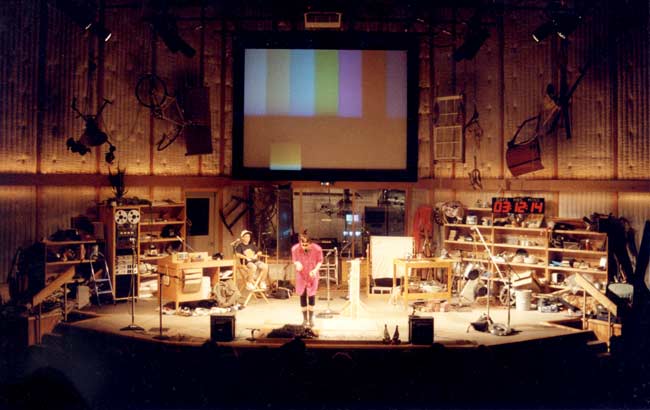
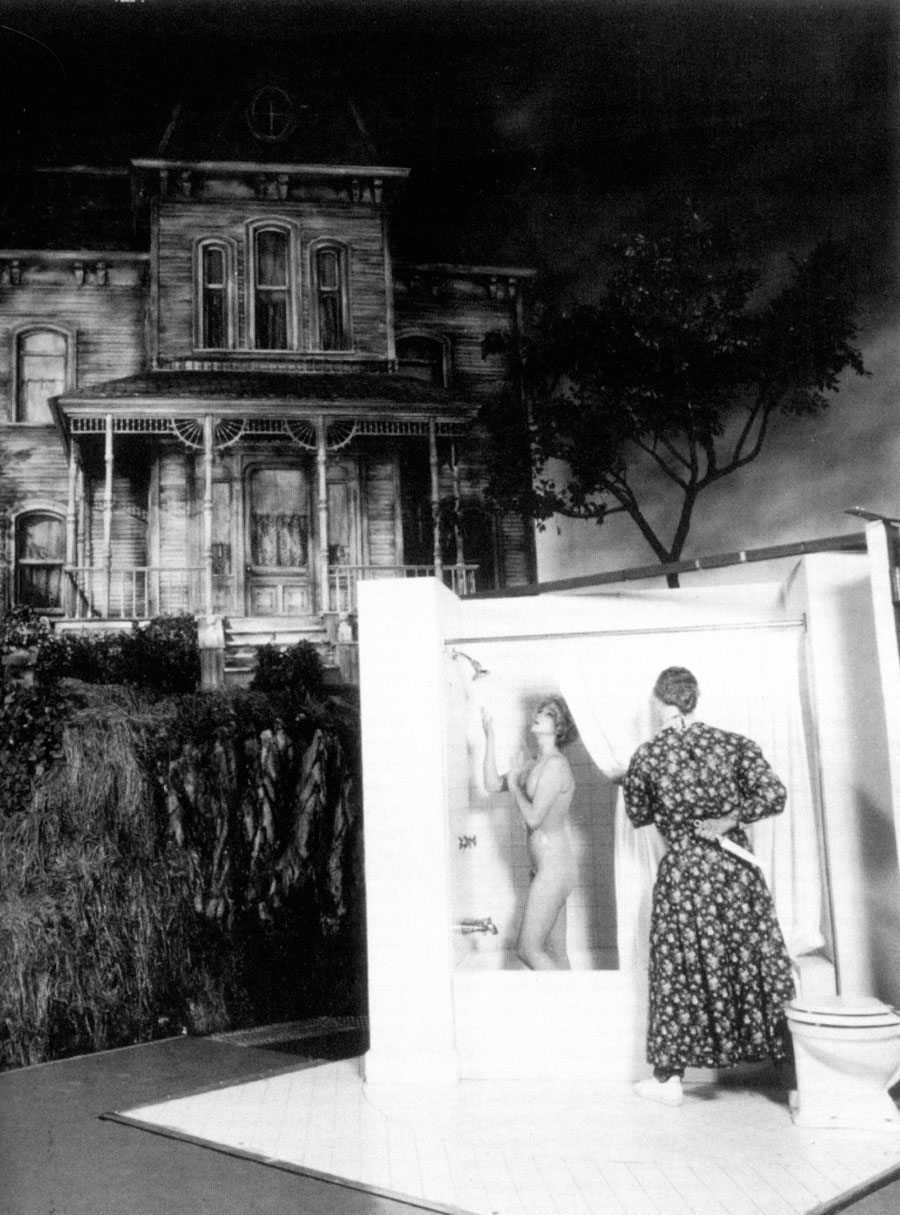
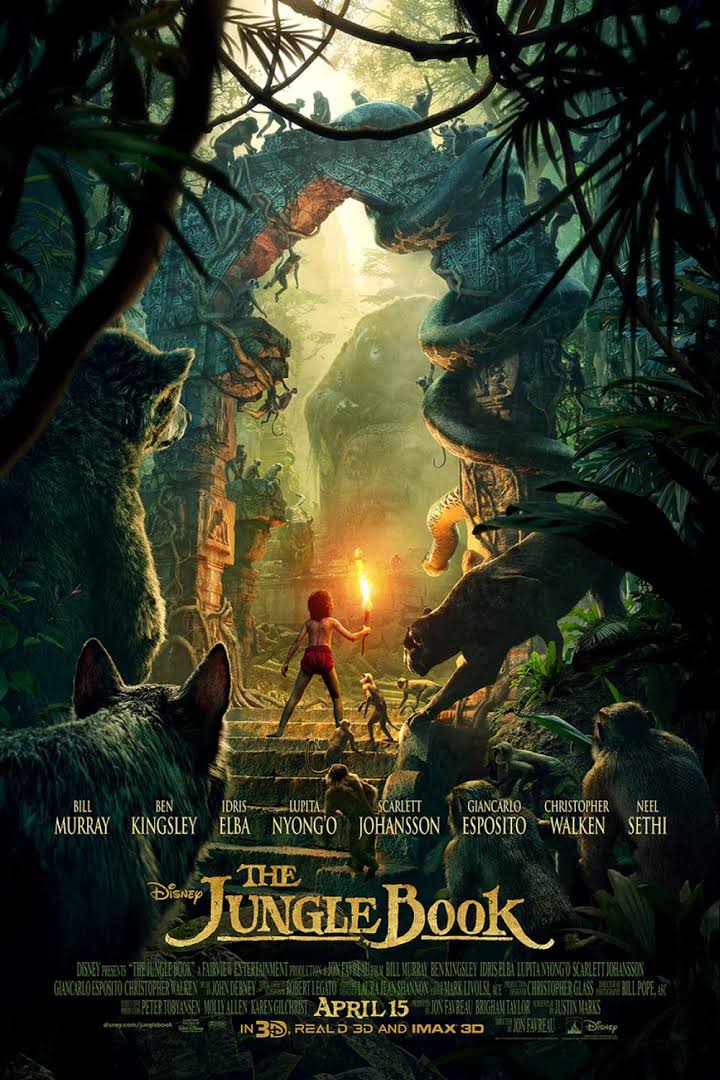
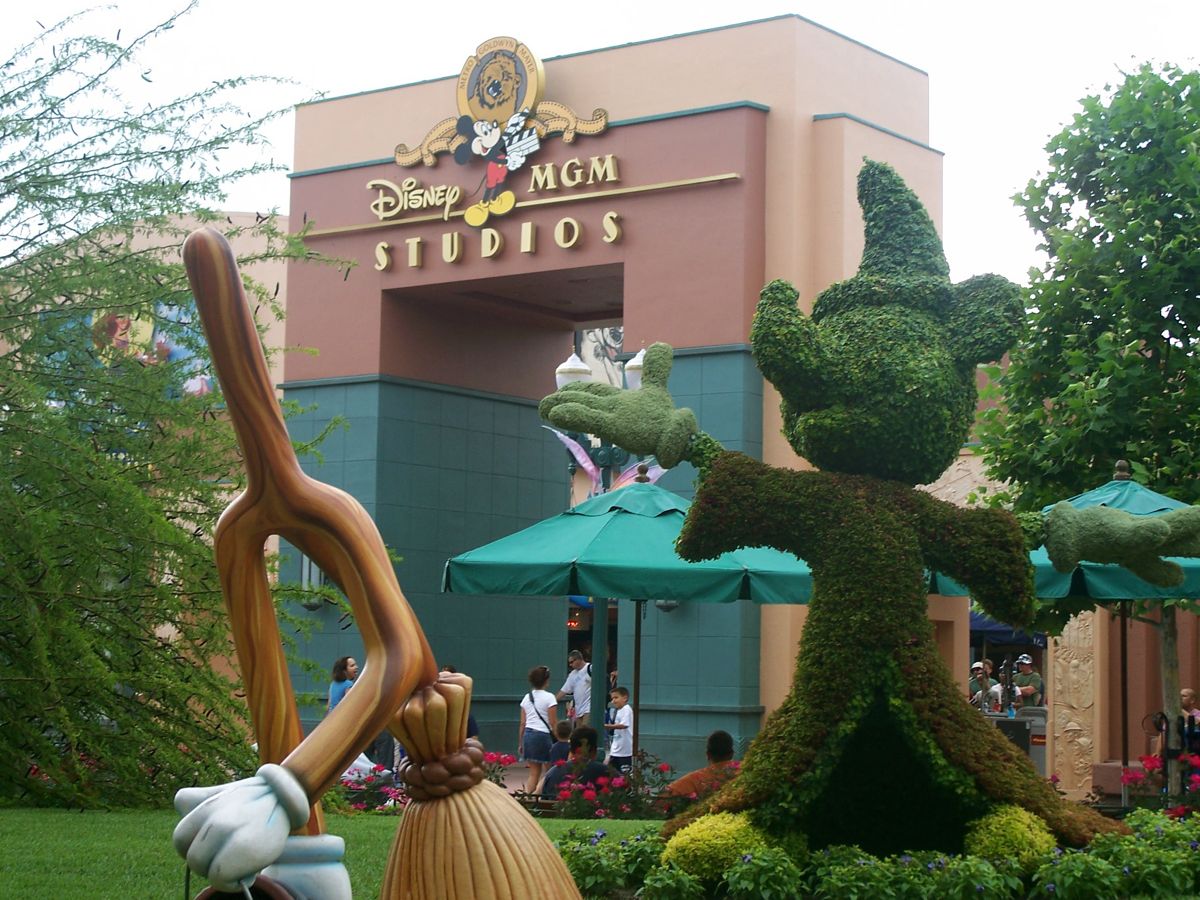
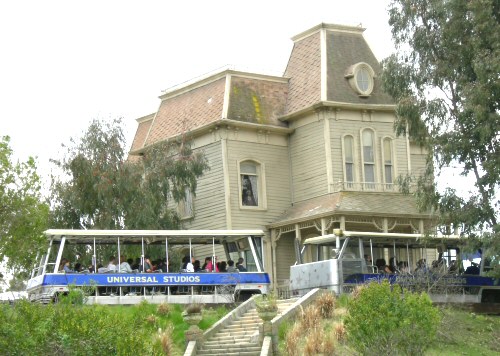
Some of the most impressive and revolutionary changes to the movie-based theme parks came to fruition in the 1970s and 1980s. This is the time that horror became the chief source of inspiration for attractions at Universal Studios Hollywood (Riley, 1998). The ride that ushered in the plethora of attractions based on some of the best horror movies of all time was Jaws. JawsThe Jaws Ride was opened as part of the studio tram tour in 1975, and was an immediate hit with the park guests. It was quickly followed by Kongfrontation and Earthquake: Ride it Out (Murdy, 2002). Just as audiences are fascinated by horror movies and seek to watch that which would be repulsive in real-life, they are equally interested in immersing themselves into the experience by way of a theme park attraction. This phenomenon is not limited to horror movies, because rides like Jurassic Park the Ride (Jurassic Park River Adventure in Florida), Revenge of the Mummy, and Pirates of the Caribbean beckon millions of guests a year (IAAPA, 2014). In addition to attractions based on the movies, movie studio executives and theme park engineers created attractions that embody what Carl Laemmle first envisioned, by taking the audience behind the magic of the movies. This is the case with the (now closed) Backlot Tour at Disney’s Hollywood Studios and Hitchcock: The Art of Making Movies at Universal Studios Florida (Murdy, 2002). The relationship between the cinema and theme parks is a strong one and creates an energetic synergy that entertains millions of people each year.

Not every movie-themed attraction is a smash hit with the guests, just like not every big-budget movie is a hit with movie patrons. Although well-intentioned by the producers of both, or even the media conglomerate that has major investments in or owns both, may desire and believe they did what it took to create the next blockbuster ride or movie, sometimes the guests fail to view the movie or attraction with the same lens the designers and backers used to create the film or ride. In terms of movie or intellectual property-based attractions, major theme parks can make mistakes or lose out because of the ownership of some parks changing from one conglomerate to another.

LightMagicNot every flubbed theme park attraction is a “ride;” sometimes it is a show or parade. The failure of a show/parade can be seen in the four month—yes, four—run of Disneyland’s Light Magic “street-tacular” (Krosnick, 2014).  More than another light parade, Light Magic condensed the number of parade floats ordinarily expected in a Disney parade to four large stages that, along the parade route, would burst into light, pyrotechnics, and digital projections. It was complete with a pantheon of Disney characters and music. Unfortunately, if you chose to stand in the wrong spot, all you get is darkness and vaguely familiar shapes of characters. Following a very poor reception by Disneyland passholders, the negative word of mouth was so severe that it effectively caused the closure of the new entertainment offering that sent $20MIL down the drain.

TombRaiderRideAccording to Theme Park Tourist (2014), popular seasonally operating Paramount’s Kings Island (purchased by Cedar Fair in 2007 and all Paramount property removed) spent $20MIL on a ride that lasted a mere five years. Based on the hit video game and blockbuster action movie Tomb Raider: The Ride was on par with Disney and Universal in respect to story, setting, and special audio/visual effects; however, after Paramount sold off its theme park investments to Cedar Fair, the ride got rebranded as The Crypt, a generic theme, and all direct associations with the movie and game Tomb Raider were removed following the 2007 operating year.  Interestingly, the ride attendance continually dropped following the rebranding, and the ride was eventually moved to Kings Dominion in Virginia in 2012. Although there may be other reasons as to why the ride became less popular and eventually moved to another park, it is conceivable to conclude that there is a special relationship between attractions and movies in a theme park. (Krosnick, 2014).

Continue to Part 4

Click here for Part 1

Click here for Part 2

“Whiskey Tango Foxtrot (or WTF)” movie review

WTFQuite the unexpected surprise from comedienne Tina Fey! Paramount Pictures’ Whiskey Tango Foxtrot is one part self-reflexive film on television news production and one part self-discovery. Unlike the feel of the previews, WTF is not really a comedy–not in the traditional sense anyway. There certainly are moments throughout the film that are funny and will cause you to chuckle, but it is definitely more of a drama. The brilliance of Fey’s acting in this movie is truly showcased by her ability to display that she can do serious just as well as funny. Most of the funny parts are given away in the previews, so don’t think you’re going to get more laughs during the movie. Based on actual events, WTF takes you behind the camera and behind enemy lines to depict what it is like for television news foreign correspondents in a war zone. Although the movie was not what I expected at all, I am very pleased with the story, all be it, slow burning. Beyond the self-reflexive subplot in the movie is the foreground story of self-discovery. Fey represents so many of us who just feel like we are spinning our wheels, treading water,  or even moving backwards. The inspirational elements of the movie come from her willingness to take chances, make mistakes, and get dirty (as the Magic School Bus‘s Miss Frizzle would say).

What would you do? You’re dissatisfied with your job as a television news writer/producer, have a mildly depressive boyfriend, small apartment, and just need to get away. If you’re Kim Barker (Tina Fey), then you head off to Kabul, Afghanistan to become a foreign correspondent during the early days of the War on Terror. After an expedited visa and passport, Barker embarks on her journey as a representative of the U.S. press in one of the most dangerous places on earth. Armed with her laptop, camera, notepad, and two staff members, she sets out to discover the real stories in Kabul and the surrounding areas. Thinking that she is the only girl in a military barracks, Barker is relieved to meet Tanya Vanderpoel (Margot Robbie) who takes Barker under her wings to show her the ropes of reporting the news amidst a war and hundreds of “thirsty” journalists and military personnel. While covering the stories of the war, Barker concurrently takes a journey of self-discovery that is filled with mountains and valleys.

Let’s be real here. Even if you analyze movies on a regular basis like me, you too were probably thinking that this would be a dramedy (drama/comedy). And yes, comedy is really drama in disguise; but I digress. The previews are certainly cut together in such a way that it looks like a very Fey-esque wartime comedy. I am not going so far as to saying that Paramount pulled a bait ‘n switch–because the movie is of a good quality and enjoyable–but the is no doubt that I went in expecting classic Fey and was presented with her more serious side. Still, through her witty quips and non-verbal dialog, she infuses conventional comedy and self-deprecating humor throughout the narrative. Like many dialog-driven dramas, even ones during a war, this movie has a very slow pace especially in the first act. Some additional comedy probably would have helped in the beginning to hook the audience. Speaking of the hook, that is probably what’s missing from the first few minutes of the movie. I think the studio sacrificed a traditional hook because the hook was Tina Fey herself. Fortunately, the film wastes no times in getting Kim Barker to Afghanistan, and that is definitely a good move. Although we are introduced to several chief characters in the movie, the focus is definitely on the character development of Barker with some minor development and introspect on the other principle players.

There are really two stories here: the foreground story of self-discovery and the background self-reflexive plot. Both are seamlessly married together in order to accurately tell both without sacrificing the other. Although we all know that there are foreign correspondents in war zones, we don’t always get to see what it’s really like to uncover stories, pitch to executives back in the states, and maintain sanity and safety; but through this film, we witness just how hard it really is to be a foreign television news correspondent. From networking, to interviewing, to shooting B-roll and stand-ups, Barker takes us on the journey from concept to delivery of producing news int he middle of a battle zone. Beyond the battle field, Barker is coping with her own personal and professional battles. If it isn’t the cheating boyfriend, it is the network who put her on the hourly plan and gives her no screen time. But, through it all, Barker never gives up and refuses to sit idly by and allow herself to be walked over. Fortunately, Barker does get her big break during the climax of the movie, but you’ll have to watch the movie to see what that is.

If you plan to see just one movie this weekend, I definitely encourage you to see this one. It’s gritty, funny, and inspirational. This is also a great opportunity to watch Fey in a more serious role and decide for yourself if she convinces you that she can play serious just as well as the comedy we all know and love her for. You may have seen other wartime movie, but this one plays out differently in that the focus is truly on the character development of the protagonist with the war merely being the backdrop and conduit through which we see her story of summits and pitfalls.

“London Has Fallen” movie review

LondonHasFallenJust another cliche political conspiracy action thriller, but definitely a fun ride! Movies like this one often receive flack for not having a cinematic narrative to accompany the larger than life display on screen. However, I like to look at movies such as London Has Fallen or last year’s Olympus Has Fallen as a way to experience great shallow spectacle and some laughs for a couple of hours. One of the chief reasons that this film is fun and exciting to watch is the cast. Gerard Butler, Aaron Eckhart, accompanied by the phenomenal Angela Bassett, and Morgan Freeman will have your attention throughout the story. It is very important for an otherwise cliche action political thriller to contain excellent actors who can add that touch of quality that films in this sub-genre of action need. A side effect of this film could be heightened awareness to the unrest in the middle east and terrorism when you least expect it. There really isn’t much to dissect or analyze in this movie, so it is one of those that you take for what it is. An action-packed couple of hours that is thrilling with some laughs here and there.

The Prime Minister of the United Kingdom is dead, and his funeral becomes the most highly secured event on earth. Politicians and leaders from all over the world gather to mourn the loss of a beloved leader. Along with the other world leaders, the U.S. President is also in attendance. When tragedy strikes at St. Paul’s Cathedral, many are left dead and injured. Just when the UK and the rest of the world thinks it can rely on its own military and palace guards, the terrorists have infiltrated the very inner workings of England’s security, military, and public safety. No one can be trusted. Armed with his “bourbon and bad choices,” secret service agent Mike Banning (Gerard Butler) protects President Asher (Eckhart) and Secret Service Director Lynn Jacobs (Bassett) and tried to get them to safety when all hell breaks loose. Vice President Trumbull (Freeman) must helplessly watch the terror unfold. Just when things couldn’t get any worse, Asher winds up in the hands of the terrorists and Banning must rescue him before he is publicly executed online.

What a weekend for movies. You have your choices of this one, ZootopiaWhiskey Tango Foxtrot (which I am seeing tonight), and more. Really looking forward to Tina Fey’s movie tonight.

On Cinema and Theme Parks (part 2)

My Book

(Continued from Part 1)

Understanding the synergy or convergence that exists between the cinema and theme parks requires looking to the history of the relationship between the two entertainment giants. Before Disney’s Hollywood Studios (formerly Disney-MGM Studios), Universal Studios Florida, and more than 40 years before Disneyland was opened, the founder of Universal Studios (studio) German immigrant Carl Laemmle, opened his 250-acre-movie-making ranch, just north of Los Angeles, to the public for a mere $0.25 (Murdy, 2002). More than side income for the trailblazing studio, most well-known for its pioneering of the horror film, the original studio tour began on the outdoor backlot in March 1915. Laemmle desired to immerse the “people out there in the dark,” as famously referred to by Norma Desmond in the timeless classic Sunset Boulevard, into the magic behind the screen (Sunset Blvd, 1950).

Interestingly, according to famed psychiatrist Sigmund Freud, horror is often concerned with revealing “other” scenes to the audience (Freud, 1919). And, keeping with this theoretical approach to horror cinema, Laemmle opened this “other” scene to the guests of Universal Studios Hollywood.  But more than horror, Laemmle also brought the studio guests face-to-face with western action/drama (Murdy, 2002). From early in the 20th century, the concept of cinema and theme park convergence was born. The happy marriage, however, was not to last very long. Upon the introduction of cinema sound, Laemmle was forced to close the studio “park” to the not-so-quiet guests in order to facilitate appropriate recording sound for the motion pictures (Murdy, 2002). The Universal Studios tour would remain closed to the general public for over 30 years. But, in 1961, the studio would once again open its gates to a new generation of movie lovers (Murdy, 2002). Between 1961 and 1964, Universal outsourced the famed tram tour to the Gray Line bus company.  Following a feasibility study, conducted by researcher Buzz Price, the same man who helped determine the locations for Disneyland and Walt Disney World, Universal decided to start its own tram tour of its facilities, and Universal Studios Hollywood opened in July 1964 (Murdy, 2002).

Following the ending of the Studio System, the now bankrupt motion picture studios had been purchased by various conglomerates looking for new sources of income (Riley, 1998). One of the sources of income that studios began investing into was the concept of movie-based theme parks. With the opening of Walter Elias Disney’s Disneyland in 1955, Universal Studios made the decision to incorporate stand-alone attractions into its newly reopened studio tour (Davis, 1996). Both Disneyland and the future Universal Studios used their intellectual property (IP) as the basis for creating theme park rides, shows, and attractions. Although movie studios as a “park” began with Laemmle, in its current incarnation, the convergence of cinema and theme park began with Disneyland, and later was perfected by Walt Disney World and Universal Studios Florida. Since the movie studios already had dedicated movie-going audiences, it made sense to capitalize on the idea of incorporating the concepts from the movies into attractions that the general public could enjoy and be immersed in (Davis, 1996). This action both acts as advertising for the respective studios and generates income for the movies and park improvements.

In today’s entertainment marketplace, media conglomerates are restructuring themselves to be as large a player in entertainment and media as possible with the ability to integrate various products and services into multiple areas of exhibition (Taubman, 1970).  This is easily witnessed in how the Walt Disney Company, Sony, and Comcast companies are setup. Walt Disney Company has significant investments in: motion pictures (i.e. Disney, Buena Vista, Touchstone), theme parks, TV (i.e. ABC, Disney Channel), leisure/tourism, radio, video games, stores, and record labels). Sony has investments in consumer/commercial electronics, computers, video game systems, motion pictures (i.e. Sony, Columbia, Tristar), television (CBS), record label, recording studios, radio, and stores. And, much in the same way, Comcast has investments in motion pictures (i.e. Universal Pictures, DreamWorks-SKG), theme parks, resorts, television (i.e. NBC, Golf, SyFy), video games, radio, record labels, and recording studios.

Whereas the fall of the original studio system set the precedent for media companies not to own or operate all the elements of media creation from conception to employment to production to the distribution, also known as vertical integration, companies are now embracing the idea of horizontal integration. Horizontal integration allows a media company to push or market its products or services through various media channels. And, this is a perfect example of why media conglomerates own and operate theme parks. This is a common practice by Disney and Universal in their respective parks and resorts. Disney can release a movie, base an attraction off that movie, use that movie as the basis for a video game, and even include costume characters in the parks and on the cruise ships. In the same vein, Universal can take one of its movie properties and integrate the characters and story into a theme park experience, use the concept for a video game, and maybe even develop a TV series as a spinoff of the movie. This type of integration allows the companies to effectively customize glorified marketing campaigns for their brand. Having a given branding on various commercial outlets allows a company to maximize its exposure to general audiences/customers (Taubman, 1970). As companies acquire more intellectual properties, media outlets, and commercial infrastructure, they are able to actively change entertainment offerings over the years; and this is definitely the case with the theme parks owned by media conglomerates that also have movie studio interests.

Continue to Part 3

On Cinema and Theme Parks (part 1)

My BookDo you love learning about the magic of movies and theme parks? So do I! Living in Tampa, I am surrounded by some of the world’s top destination white sand beaches and exciting theme parks just up the road. As a passholder to Disney World, Universal Studios, Busch Gardens, and SeaWorld, I frequent the parks nearly as often as I go the cinema. Having spent a great deal of time working in independent film, working for three years at Disney World, and now as a cinema and theme park critic, I have a great deal of passion for both storytelling mediums. And the amazing thing is that there is such a fantastic and symbiotic relationship between the two. Hence why I spent my Master’s program at the University of South Florida studying the place at which both converge. Specifically, I researched the elements of narrative, spectacle, pleasure, character, setting and more in terms of how they correspond with one another. Whether that is taking a movie and developing it into an attraction or taking an attraction (or entire section of a park) and developing it into a movie. Both are powerful means of conveying a story or message. I delve into what it takes for a movie to be a successful attraction or vice versa.

Although there have been peer-reviewed articles and books written on cinema, there definitely lacked empirical research on the theme park side. Furthermore, most peer-reviewed articles and books are so incredibly boring and pretentious to read. My goal was to break down both and write about them in such a way that it is fun to read about. Movies and theme parks are FUN! So, reading about the relationship between the two should be equally fun and interesting. Starting with the history of how cinema influenced the modern theme park design and finishing with some of what to expect in the future, this book has it all! Although I would prefer that you buy my book (on Amazon), I have selected excerpts from it that I will publish over the next few weeks as I work on my next theme park piece. I hope you enjoy!


WDW CastleIn today’s world of entertainment, where some media conglomerates own both film studios and theme parks, successful films sometimes bridge these two media to create the basis for new theme park attractions. The following research study seeks to define the elements that a film needs in order to be successfully translated to a live themed entertainment experience, thus eliciting the desired emotional response from the guests; and also the necessary elements that a theme park attraction needs in order to convey both spectacle and narrative regarding the film upon which it is based.  Although there are tools currently available to studio executives and creative staff at entertainment companies, this study will serve as a model using the ideas, theories, supporting evidences, and streamlining them into one study—a consolidation of tools, if you will.

As media companies grow, and both cinema and theme parks adapt to changing needs and desires of movie patrons and park guests, the leadership at these companies needs to have the appropriate information at their fingertips to create effective and memorable stories for the screen and park. This study highlights what the potential park guests or movie patrons are looking for in terms of what drives them to spend money on themed entertainment or the cinema. Condensing this complex set of desires into a simplified answer: in terms of cinema-based attractions, the audience is searching for attractions and rides that immerse themselves into a participatory environment in which they make a difference in the story and encounter the unique characters, settings, and plots from the movie.—they want to be viscerally engaged and transported into a world of fantasy or adventure.

Universal HollywoodEver since the late 19th and early 20th centuries, audiences from around the world have been drawn to the temple of the height of the visual and performing arts, the cinema. In many ways, the early days regarded the cinema as an attraction, an amusement. In fact, many of the first silent films were shown in carnivals. Nickelodeons dotted the landscape in drug stores and clubs. Elaborate and ornate movie palaces housed some of the first big screens, and orchestras played along with the narrative (Gunning, 1986). Over the last century, cinema has gone from existing in sideshows to being a dominant mass communication source that has evolved into the very rollercoaster to which many critics and lay people compare it; and, not only metaphorically.

From starting in carnivals to now being the inspiration for the most visited theme parks in the world, cinema has gone full circle and is now instrumental in an unparalleled synergy with themed entertainment. Over the decades, there has been a strong convergence between cinema and theme parks. Studio executives, filmmakers, and theme park designers are working together in ways that serve to support both the movies and the parks that have rides based on the movies. More than ever, filmmakers and attraction designers need to know what the cinema patron and park guest both want in order to create a synergistic and dynamic entertainment experience based on a single narrative.

Hitchcock AttractionTwo of the greatest forces in media and entertainment are the cinema and theme parks; and for the latter part of the 20th Century and continuing strong into the 21st, the convergence between the cinema and theme park is becoming clear. Additionally, within the last several years, theme park attractions have inspired movies (e.g. Disney’s Pirates of the Caribbean and The Haunted Mansion). The relationship between the movies and theme parks is a strong one, but why is that so? Can one exist without the other? Or, is it a co-dependent relationship that benefits both entities? Perhaps it is all of the above. But, not every successful movie makes an equally successful theme park attraction. Often times, it is the Horror and Action genres that are used as the inspiration for successful attractions (e.g. ET-The Extra-Terrestrial, Jurassic Park, The Bates House and Motel, and Hitchcock: The Art of Making Movies).

As technology advances, the cinema and theme parks have adapted and evolved over the years to include the technology to both impress audiences and save money. Still building off the success of the cinema, theme parks have evolved their rides and attractions to go from the magic behind the movies to immersing the audience or guests into the movie itself. Likewise, studios and production companies are producing movies that act as attractions themselves. But, central to this study are the questions: why is it essential for the cinema to continue this synergy with the theme park industry, and what does it take for a movie to be a successful theme park attraction?

(Continue to Part 2)