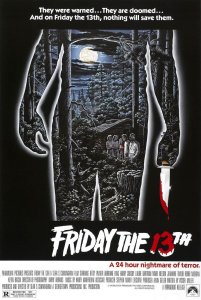
 Ch ch ch, ah ah ah. Celebrating 40 years of terror! The sleepaway summer camp experience was forever changed in the summer of 1980 when a slasher slaughtered a bunch of horny teenagers along the shores of Crystal Lake. Spanning more than three decades and a dozen feature films (too bad it’s not a baker’s dozen, wink), the Friday the 13th franchise made us never look at a hockey mask in the same way after Part 3. Releasing in 1980, Friday the 13th helped shape the modern slasher along side Texas Chainsaw Massacre and Halloween. A Nightmare on Elm Street would arrive in 1984. With his trademark hockey mask and machete, very few have lived to tell the tale of their encounter with one of the most terrifying slashers to ever appear on the silver screen. His body count is in the triple digits! From screen to screen, Jason has gone from the cineplex to your TV and computer by way of interactive media. Unlike the campy-ness of Freddy or more focussed kills of Michael, Jason is by far the scariest of his iconic counterparts.
Variety! That is what you get with Jason as opposed to Michael. Although Leatherface and Michael began the teen slasher genre, it was Jason who revolutionized it by his variety of gruesome methods of killing his victims. Whereas Freddy, much like a cat, loves to toy with his victims before going in for the final kill, Jason is a death machine who wastes no time in taking out all those who stand in his way. Motivated by his death brought about by teenage lifeguards making love while he drown in the murky waters of Crystal Lake, Jason typically murders those who are engaging in promiscuous activities. Sometimes, he will throw you for a loop by taking out someone in a wheelchair or another passerby. He is relentless. And before universe crossovers were commonplace between franchises, Freddy vs Jason got together for a terrifyingly good time in 2003, and then again at Halloween Horror Nights in 2016. While installments 2–12 feature the mask-wearing (burlap sack followed by goalie mask) machete yielding hulking man, the first film features Mrs. Pamela Voorhees (Jason’s mom) as the killer. It’s because of this that the original film feels much different than the others. But it certainly inspired the rest of the franchise. Think of the first one as Hitchcock’s Psycho in reverse, precisely how Norman thought it was happening. A killer mother who’s overprotective of her son. Although it’s not a “Jason” movie, it did lay the groundwork for the rest of the series and the ending of the film provides the haunting moment that gave birth to the lore and legend of Jason that would carry through the remainder of the films.
Keeping the identity of the killer a secret, until the very end of the film, sets this movie apart from its predecessors Halloween, Texas Chainsaw Massacre, and Jaws. Furthermore, Friday the 13th adds more gore, kills, and gruesome makeup effects that look cheesy today but were quite shocking, back in ’80, to up the ante against the competition. The news of the gruesome effects was so intriguing that horror fans turned out in masses to see the film. By all accounts the characters are not terribly memorable–we certainly don’t have a Laurie Strode–and the killer’s identity isn’t revealed long enough to truly form an opinion; but it’s that jump scare/twist at the end that gave birth to a mammoth of a franchise that has lasted for over thirty years on big and little screens alike.
The perspective of the killer. One of the most memorable elements from the original Friday the 13th is being in the shoes of our mysterious killer. Unlike other slashers that preceded, the identity is kept secret as I mention in the previous paragraph. But it’s HOW this is accomplished that still fascinates horror fans today. We are the killer, or at least, we see through the eyes of the slasher. By Miller writing this element into the screenplay, we are forced to see things from the killer’s perspective in order to relate to and empathize with the killer. Brilliant, really. Although we sometimes assume an objective position just before or during a kill, we spend enough time as the killer’s eyes that we begin to identify with the killer. Not only can we identify with the killer, but because the main characters are teenagers, and slasher horror films are particularly of interest to teens, teenagers can easily relate to the characters in the movie. Essentially, we have a perfect combination of relatability in this film. Audience members are forced, at times, to view characters and events from the killer’s perspective but many in the audience can and will concurrently identify with the main characters. A great way to scare the audience is to place them in a situation that is close enough to reality that the prospect of something similar happening is terrifying.
First appearing in Part II but not fully taking his iconic form until Part III, Jason Voorhees has endured as one of the most recognizable horror villains who still terrifies people today. Furthermore, he has evolved to represent various thematic symbols that provide ample opportunity for analyses and close readings. While Freddy’s motivation is clear–revenge, plain and simple but still solid–Jason’s motivation(s) is a bit more complex. His mother’s motivation is clear; much like Freddy, her motivation is revenge against the camp and those who represent the horny teenagers who allowed her son Jason to drown while “getting it on,” so to speak. Jason, on the other hand, demonstrates motivations that must reach beyond classic revenge. For starters, we cannot ignore his physiological deformities that undoubtedly affected his emotional and psychological health, predisposing him to atypical or abnormal behavior prior to his untimely drowning. Judging from the misty flashbacks in the original Friday the 13th while Mrs. Voorhees is delivering rushed exposition, we can gather from Jason’s shadowed body that he is likely afflicted with hydrocephalus, a condition that traps excess fluid in the cranial cavity that compresses the brain causing a significant loss of neural activity (essentially, born with brain damage). Beyond the internal problems from hydrocephalus, this abnormally developed cranium often causes the eyes to be widely spaced and the subject typically has an enlarged skull.
Now that we have established his cognitive and physiological disabilities, we can explore just how the aforementioned plus the persistent taunting, teasing, and physical abuse from the other campers in 1957 all formed the perfect storm to motivate Jason to be the unstoppable slasher we know today. If we follow the lore of the later films, we are prevued to Jason being forcibly thrown into the lake where he eventually drown while the camp counselors were engaging in the horizontal mamba. There is sufficient evidence from the cannon of Jason films that he likely suffers from schizophrenia. As many of us are aware, this emotionally and cognitively debilitating disease causes sufferers to hallucinate imagery and voices that are controlling their mind. Jason’s ability to communicate with his mother and Mrs. Voorhees’ ability to communicate with her son, is also evidence that the schizophrenia was passed from mother to son. In real life, this disease can be hereditary. So, it is not a far reaching plausible idea to hypothesize that Mrs. Voorhees passed her schizophrenia on to Jason. But unlike mother, Jason suffered from additional disabilities that increased the intensity of the cognitive disease.
Formerly known as multiple personality syndrome, dissociative identity disorder (DID) is another affliction that Jason demonstrates through his abnormal behavior. DID is a severe psychological disorder that fragments an individual’s personality into two or more distinct personalities (or identities) coexisting, switching from one to another. Think of it as two or more people inhabiting the same body. Although one can be predisposed to DID, as Jason likely was, this disorder is often brought on by repetitive childhood trauma (which Jason experienced). Perhaps sometimes “a cigar may only be a cigar” but in this case, a mask is more than a mask. The trademark hockey goalie mask! What is it? It’s a mechanism or tool that enables Jason to disconnect himself from the murders he commits. By wearing the mask, he figuratively dissociates himself from the gruesome murders. The wearing of the mask is a direct result of DID because the mind processes the mask as conduit through which to engage in abnormal behavior because the abnormal behavior cannot be reconciled against the true self. In a sense, the mask allows for active cognitive dissonance because the behavior is opposite of how the brain wants to process information or experiences. This dissociation with the violent behaviors, enables Jason to continue on his murderous campaigns without his conscience ever prompting him to question his choices. Without the mask, he is vulnerable and may even question what he is doing; but with the mask, he is a killing machine.
The setting of Friday the 13th is also something of note. Much like Hitchcock did with the privacy of one’s bathroom in Psycho, Miller set the events of the original at a summer camp in order to shock the mind because it’s an innocent place that is about to play host to something traumatic and uncanny. Kids and teenagers attend sleepaway summer camps every year. They are traditionally seen as places where you form platonic or romantic relationships with your fellow campers or counselors. They are places of innocence that get a violent treatment in this film. Unlike Psycho where we are not prevued to the violent past of the iconic location and thus proceed through the story with our guard down, we are immediately introduced to Camp Crystal Lake’s violent past between the opening scene and the townsfolk. So, we are primed to expect something macabre at the camp. This does one very important thing. The camp immediately possesses an eerie feel, a feeling of dread of what is about to happen. The once popular summer camp falls prey to something sinister that makes the grounds incredibly creepy. Loss of innocence can be read as a theme throughout the films because we have an innocent camp that is plunged into violence, camp counselors losing their virginity, or campers engaging in dangerous behaviors. When innocence is lost, that’s when the violence begins.
Violence and gore are commonplace today (perhaps to the detriment of horror films as it has become cliche), but back in 1980, most audiences were not expecting to see closeups of murderous acts, even after Halloween and Texas Chainsaw Massacre. Despite the cheesy nature of the practical effects with blood bags and prosthetics, the violence in Friday the 13th was unexpected. In many ways, this film revolutionized the genre. But the F13 franchise didn’t start out with overstuffing itself with gore. The body count in the original is the least of the series, but it is certainly the favorite in the series by a moderately wide margin, according to my personal poll and other polls online. Therefore, we have to draw the conclusion that it’s not Jason’s kills or the gore that prompt audiences to like one over the other. If seeing Jason kill people was what audiences were looking for, then the original would not be the favorite. Now, don’t get me wrong, Jason has some pretty awesome kills and he’s fun to watch; however, don’t assume that it’s the kills or violence themselves that make a horror movie a favorite. Interestingly, the original is quite tame compared to the rest, but it’s still regarded as the crowd favorite.
If you follow the horror community on #FilmTwitter and #HorrorTwitter, you’ve likely heard of the fight over the rights to the Friday the 13th name between the original writer Victor Miller and Sean S. Cunningham. As to not complicate this story with the details, the long and short of it is the copyright on the Friday the 13th title is expiring in 2020, and according to “Mickey’s Law” (an unofficial name for what I am about to describe because it was started by the Walt Disney Company in order to continually retain the rights to Mickey), it is time for the rights to be renegotiated or the name and original plot fall into the public domain. That’s right. This iconic name Friday the 13th is on the verge of belonging to the public. Miller urges that he has the rights to the name because the title along with the story was his original concept. Cunningham argues that Miller’s screenplay was work-for-hire. Under work-for-hire, Cunningham retains the rights and is able to make decisions with it. This is a classic IP lawsuit. But one that has major implications. Essentially, Miller wants to be (and in my opinion, rightly so) compensated for using the names Friday the 13th and Jason in future films and interactive media. While he does not have the rights to Jason’s trademark look, he could own the name itself. This legal battle surfaced after the launch of the recent Friday the 13th video game, and caused the next installment in the long-running franchise to be put on hold. The decision will likely boil down to whether Miller was hired to write the original screenplay or he developed it himself then sold/optioned it to Cunningham.
It’s been 40 years since we were first introduced to Camp Crystal Lake, and the horror landscape was forever changed. Mrs. Voorhees and Jason have been terrifying audiences since before I was born, and will continue to cause you or your kids to think twice about going to summer camp. I think summer camp was made more fun because there is a little piece of you that thinks Jason could be lurking outside your cabin. I don’t always ch, ch, ch but when I do, I always ah, ah, ah.
Happy Friday the 13th!
Ryan teaches screenwriting and film studies at the University of Tampa. If you like this article, check out the others and FOLLOW this blog! Interested in Ryan making a guest appearance on your podcast or contributing to your website? Send him a DM on Twitter or email him at RLTerry1@gmail.com! If you’re ever in Tampa or Orlando, feel free to catch a movie with or meet him in the theme parks!
Follow him on Twitter: RLTerry1

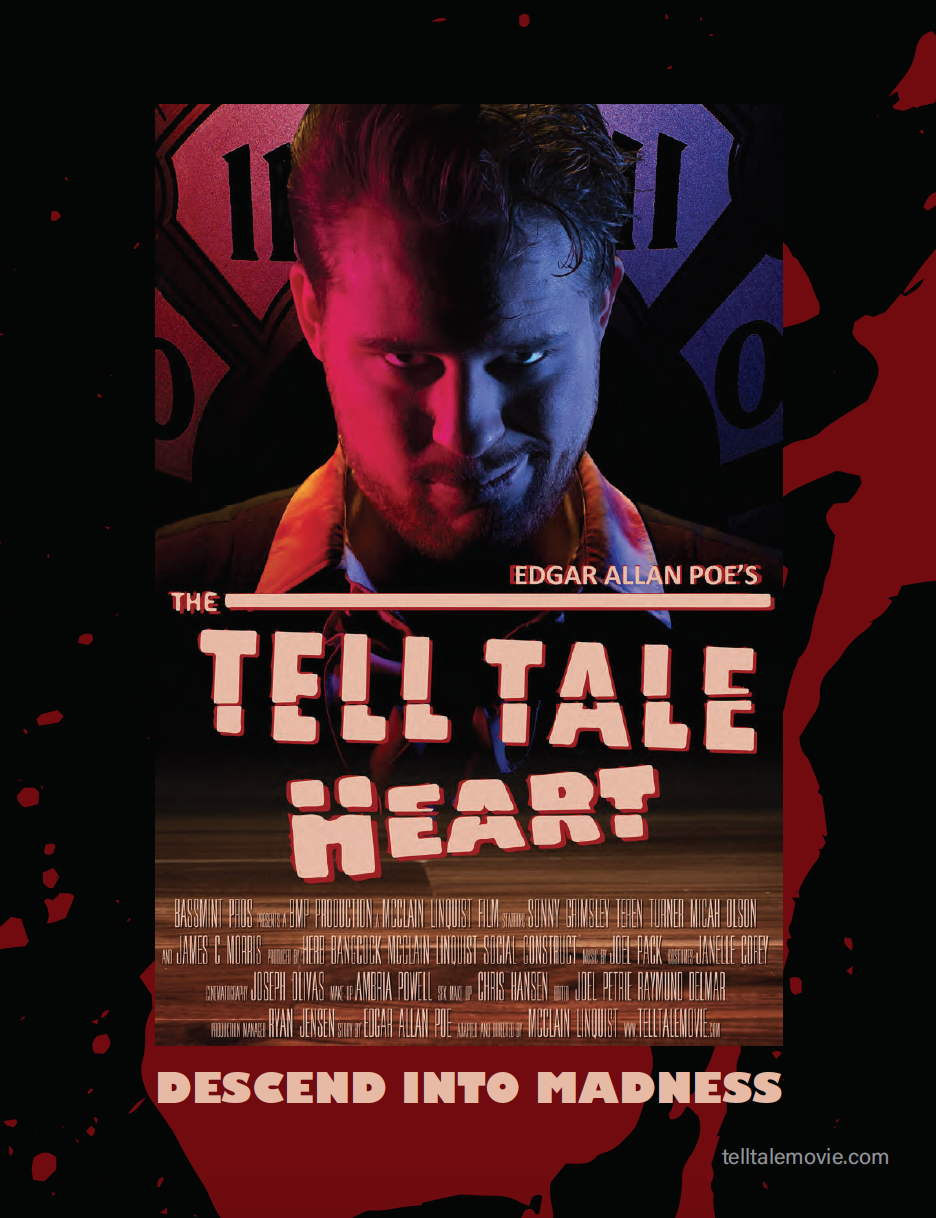 Tell-tale signs of outstanding cinematic talent right here! I don’t often choose to write a formal review of short films for which I receive screeners. Usually, I Tweet my thoughts on the film when I receive a request from an eager filmmaker who’s interested in what Professor Horror, as I’ve come to be known on #FilmTwitter, has to say about his or her motion picture endeavor. Writer-Director McClain Lindquist crafts a wholly original expression of the familiar macabre tale. While there have been many adaptations of Edgar Allan Poe’s The Tell-Tale Heart, this is arguably one of the best and freshest interpretations of the masterful storytelling of Poe. I appreciate this adaptation for its fresh take on a familiar story whilst delivering the visceral horror and intellectually-driven elements of the bizarre tale of murder. Every nuance of Poe’s short story is depicted with sheer reverence for the source material, while delivering an original expression of the timeless literary work.
 Lindquist reimagines this story through the lens of a David Lynchian approach (with the color pallet of David Fincher), delivering vibes of Muholland Drive. While there are clearly some cracks in the veneer related to the time period in which this story takes place, these cracks are insignificant enough not to detract from the overall cinematic experience. Lindquist should have selected either a modern or gothic period in which to set his adaptation. Actor Sonny Grimsley (what a great last name for horror) not only brings the words of The Narrator to the screen, but he talks to the audience with such incredible sincerity that the utter madness of it all is visualized beautifully. One of the points I hammer in my screenwriting class is dramatize don’t tell. Dramatizing means more than showing the audience the story, it means finding the conflict in every beat of every scene. Fortunately for this adaptation, Grimsley brilliantly dramatizes every word spoken in such a manner that you will be completely enveloped in the twisted tale to which he beckons you to listen.
 Both the cinematography and stylistic editing are on point, and compliment the tone wonderfully. Although there are a number of standout moments from the film, I want to highlight how the duality of the narrator was expressed dramatically through the use of costuming and set design as well as a mirror. It would be all too easy for The Narrator to express his duality through verbal exposition (as this is taken from a short story), but the creative choice to couple the words of Poe with these striking images shows a strong knowledge of how to effectively go from page to screen. Often short films suffer from poorly executed technical elements, but I am pleased to report that all technical elements demonstrate an exemplary understanding of the art and science of cinematic storytelling. In addition to the technical elements is the haunting and unsettling score by Joel Pack. Lacking a true score is all too commonplace in many short films; not so with Lindquists’s The Tell-Tale Heart, Pack’s score is a character in and of itself. However, it never steals the scene, which allows the audience to become fully wrapped up in everything The Narrator says and does. I love seeing practical effects in all films, but especially horror. Thankfully, there are plenty of gruesome special makeup effects in this film for even the most insatiable appetite for gore, which never falling into the gratuitous category.
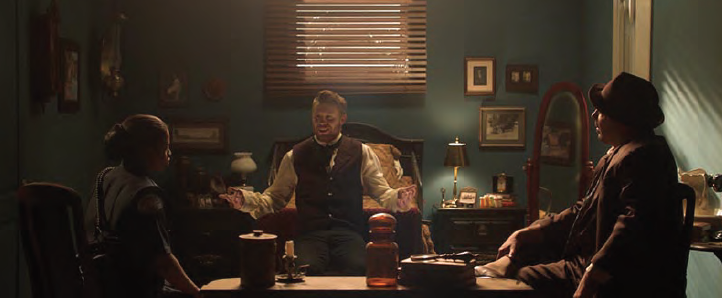 Lindquist certainly knows how to capture the madness in The Tell-Tale Heart. In many of Poe’s works, madness is often represented a lack of sufficient reasoning for committing murder or some other undesirable behavior. Lindquist illustrates The Narrator’s madness through the unreasonable rationale he uses to justify the murder of his roommate. Not only do we hear about the attempt at rationalization, it is dramatized for the screen. The only reason the narrator provides, in an attempt to justify the murder, is the simple fact that the roommate’s blind eye covered with a murky blue film bothers him a great deal–haunts him, even. He goes onto explain that he feels that he is being watched all the time. Being angered by the man’s eye is such a petty reason for the narrator to murder him, which proves that he is mentally unstable. Developing his plan for over a week, his madness is further represented through the meticulous premeditation of the method of murder. Furthermore, when The Narrator initially proposes that the “vulture eye” is his motive for murdering his roommate, he is not even fully certain that this was indeed his reason for committing the murder. And through the direction of Lindquist and the impeccable performance by Grimsley, we get into the mind of a madman in terrifying ways that are sure to induce nightmares.
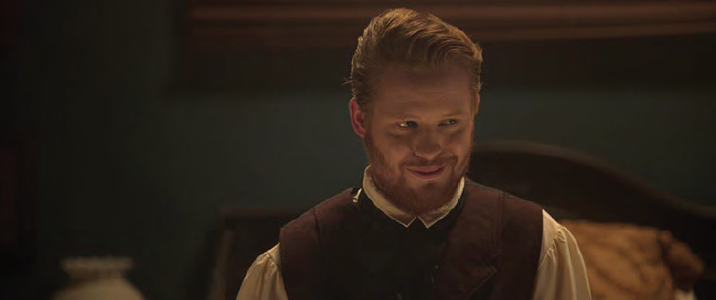 Lindquist’s The Tell-Tale Heart is evidence of a future successful career as a horror filmmaker. I am eager to follow his filmography as he will hopefully use this short film as a springboard to write and direct original content, because we need more original storytellers in this sea of remakes and reboots.
 Ryan teaches screenwriting at the University of Tampa. If you like this article, check out the others and FOLLOW this blog! Interested in Ryan making a guest appearance on your podcast or contributing to your website? Send him a DM on Twitter or email him at RLTerry1@gmail.com! If you’re ever in the Tampa area, feel free to catch a movie with him!