
Alfred Hitchcock: the First Director to Brand Himself (Part 2)

Beyond name or image recognition, there is more that Hitchcock did to build his brand. Before anything else was intentionally accomplished, it was important for Hitchcock to specialize quickly and stick to it. Other than Psycho and The Birds, the rest of Hitch’s films are suspense. And even Psycho and The Birds are suspenseful as well (but skew more towards the horror genre than suspense-thriller. Hitchcock specialized in the art of suspense. And you can learn more about this specific subject by reading the book Suspense with a Camera by Jeffrey Michael “the Hitchcock Whisperer” Bays. Having grown up in the silent film days, Hitchcock took the visual storytelling techniques used in those films and adapted them to “talkies.” Interestingly, while so many were turning visual films (a bit redundant since films should be visual) and including expansive dialogue (on the verge of sounding like a stage play), Hitch embraced the power of silence and minimalist dialogue that was truly an extension of the plot itself. The camera was the unspoken star of the movie.

Hitchcock was not only a master of suspense but was also a master at surrounding himself with talent. A quick glance over his prolific filmography (approx. 50 feature films plus many TV shows) reveals that he almost exclusively worked with the best talent on screen and behind the camera. Princess Grace Kelly, Janet Leigh, Jimmy Stewart, Carry Grant, Ingrid Bergman, Kim Novak, Tippi Hedron, Gregory Peck, and more. Hitchcock worked to forge relationships with the actors he wanted to work with. He made himself out to be someone they wanted to work with too. Of course, his reputation preceded him so many were predisposed to wanting to work with him even before meeting Hitch. This concept is referred to as branding by association. And you and I engage in this practice everyday on social media by following, commenting on, and tagging other users. We hope to be noticed, or we make ourselves someone that other influencers want to engage with. If you do all these actions under your name, then you are building your brand.

Creating engaging content, in which you are specialized, without knowing your audience can end in a lackluster performance. As a former marketing and sales professional, Hitch knew that he needed to identify his target audience to craft a story that would instantly resonate in a call to action (i.e. buying tickets). Through his studies and experience in marketing research and development, he knew how the human imagination worked and what cinematic elements would impact the audience most. Hitch started with the end result he wanted and worked backwards. Researchers call this inductive reasoning. By approaching his films this way, Hitch knew that the elements he chose to use and the method by which to execute them, he would achieve the desired result. The end result points us back to the “specialization’ step in the branding process because Hitch mastered the art of suspense with a camera evident in his ability to achieve it consistently. No one knew his audience better than Hitchcock did.

Although all the steps in Hitch’s branding process are vitally important, one step stands out in particular as perhaps the most important element. Take credit for your work. In no director today–or ever, really–have I witnessed a better and more entertaining example of taking credit for one’s work than Hitchcock. Between his famous cameo appearances and his show running of his title television program, which is largely what is responsible for making him a household name outside of cinephiles and film buffs, Hitchcock injected himself into our theatres and living rooms. And it’s that TV show’s opening that made the nine stroke profile sketch of Hitch world famous. In addition to taking credit for ones own work, there is also a need to allow others to promote you. And that’s where the critics and television hosts come in. Because of Hitch’s sense of humor and his mastery of cinematic storytelling, he was always a crowd favorite. Even though he never won an Academy Award (though, nominated several times), he was bestowed other awards in the US and UK. In fact, he was knighted by the Queen! So, we really should address him as Sir Alfred Hitchcock.

When many writers and directors were going full-talkie after Warner Bros. The Jazz Singer, in order to stand out from the crowd, Hitch made the decision to hold back on dialogue. Sometimes, Hitch would even have extended periods of near silence to place emphasis on the visual aspects of the conflict. Hitch described this practice of holding back on the dialogue, as holding back your cards. Using a poker game analogy, don’t lay all your cards on the table. Hitch desired to add multiple layers of conflict or dramatic irony to each scene. This process layers the story by adding new dimension to the conflict and dramatic irony. Hitchcock made it a point to guide the audience through the story versus telling them what was happening. Practices like this reinforce the idea of the Hitchcock brand.

Hitchcock’s mastery of suspenseful cinematic storytelling is demonstrated through his lack of detail-giving throughout his stories, whether we are talking his films or television shows. This action contributes to just why his films and shows are brilliant! In many ways, Hitch provides opportunities for the audience to figuratively contribute to the dialogue in the films. There is a high degree of anticipation as the audience does throughout the story; and it’s this heightened sense of anticipation that contributes to to engagement factor. Again, it may seem that there are other directors who have also done this, but Hitchcock was the first. And this is part of his brand.

What sets Hitchcock apart from his contemporaries as the first director to brand himself, is the important step of the branding process that requires the content, service, or product creator to elevate the product or service to an art form. We have plenty of examples of this today such as Apple, Lego, Disney, and yes even Michael Bay. Think about it. As soon as I mention Michael Bay, you instantly form an image of his style of motion pictures to mind. Furthermore, you know precisely what you are going to get (and not get) and you’re guaranteed to get more than two hours of explosions, homophobia, over-sexualization of women, lack of coherent plot, car chases and more. In fact, the concept of an explosion is synonymous with Michael Bay; it is his brand, so to speak. Hitchcock accomplished creating his brand decades before Bay. Whether talking about Hitchcock films today or back when they were first-run movies, the general public knew precisely what they were going to get with a Hitchcock film. Interestingly, this is why Psycho was such a big deal because Hitch broke some of his own rules to redefine the American horror film. And it’s this breaking of cinematic rules that made the film a success then and now.

Just because you have a logo, a recognizable name, and a record of successes, that does not mean that you are a brand. It’s like this: just because you have all the ingredients to make that fancy dish you had at that exclusive restaurant, that does not mean you can replicate the dish. You need the recipe that details the order and amounts. That is not unlike becoming a brand in the art and science of motion pictures. Part of being a brand goes beyond the product or service in which you have demonstrated specialization; you have to take all the respective elements of brand building, and then create an experience for the audience. Motion picture director branding is experiential. More than a couple hours of exceptional entertainment, the audience desires greatly to experience the director’s vision. Through his understanding of audience, Hitchcock knew how to activate movie goers and create an emotional connection between his name and image and what they desire for the best cinematic experience possible.

While the knowledge for motion picture producers and directors to use logos, color pallet, typography, iconography, design, and imagery strategically was not new with Hitchcock, he was the first director in Hollywood to combine the power of all those elements and the others that have been mentioned in this essay. Separately, each of the aforementioned elements can be influential tools; but combined, they are extremely powerful for developing a brand.

PART 1

Ryan is a screenwriting professor at the University of Tampa. If you like this article, check out the others and FOLLOW this blog!

Follow him!

Twitter: RLTerry1

Instagram: RL_Terry

Thrillz (theme parks): Thrillz.co
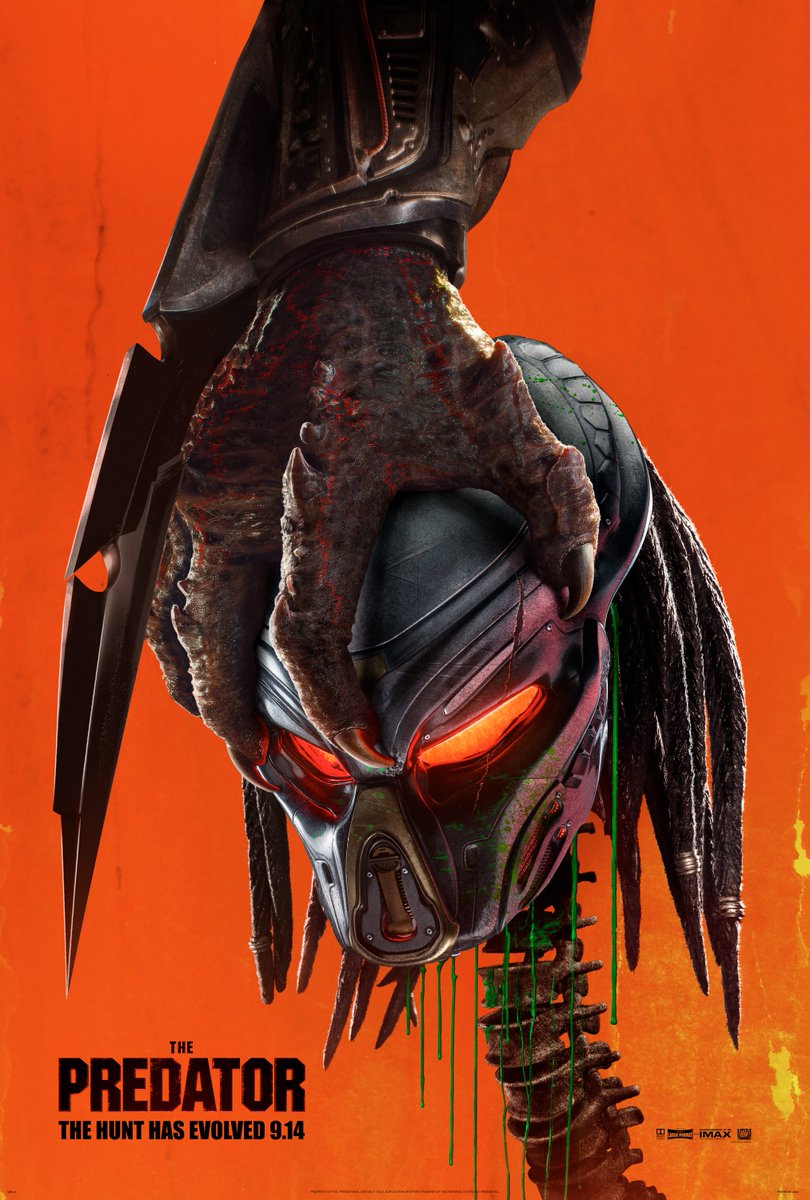
The Predator (2018) Review

A solid reboot/sequel for the Predator franchise! Don’t pay attention to the plethora of reviews from critics who are hating on Shane Black’s The Predator. With an entertaining action-horror plot, fantastic cast, and excellent pacing, this is the Predator that we wanted and got! And I am not alone in this, several podcasts and even the Roger Ebert site agree on Black’s Predator. The tone of the movie feels like a throwback to the original, while acknowledging the other movies to maintain just enough continuity where you don’t question where this film falls of what has happened prior. I went into this movie with moderately low expectations because of what I read in the initial reviews, but I was completely surprised by how much I enjoyed it. And not only me, all of my friends who were with me between Rounds 1 and 2 of Halloween Horror Nights opening weekend. You get it all, grizzly action, humor, and entertaining kills. Unlike past movies that tried to “improve” on their 80s predecessors, this quintessential action-horror takes us back to what made the 80s horror endure the test of time. Instead of building the movie around the title character, it builds it around the lead human cast. And a memorable cast of characters, at that. Where some reviewers have found irreverence or offensiveness in the fact that many of the characters demonstrate cognitive and emotional disabilities, this is actually what works well for the film. Furthermore, it highlights how emotional, physiological, or cognitive disabilities do not determine someone’s degree of courage, determination, empathy, or sense of humor. Each of the lead and supporting characters in the ensemble cast overcome any obstacles that stand in their way, whether the obstacle comes from within or from the outside. It is a fun, exhilarating horror movie that will keep you entertained!

“From the outer reaches of space to the small-town streets of suburbia, the hunt comes home. The universe’s most lethal hunters are stronger, smarter and deadlier than ever before, having genetically upgraded themselves with DNA from other species” (IMDb). When US Ranger McKenna (Boyd Holbrook) discovers a crashed space ship and loses his crew to a mysterious alien with futuristic weaponry, he salvages what he can find from the wreckage and mails–in Dr. Henry Jones fashion–it in order for it to not be confiscated by the US government. Unbeknownst to McKenna, the US government is aware of these Predators, and has one sedated for testing in a secret facility. When the US government gaslights McKenna and believes him to be maliciously upholding an investigation, he is thrown onto a bus of other veterans, whom the government does not want to deal with, to be taken to a mental hospital. When the Predator escapes the facility, McKenna teams up with his fellow soldiers on the bus to take down the alien killer before more harm can be done. Meanwhile, the situation is complicated when a boy accidentally triggers the return to Earth of an even bigger Predator, and only McKennas’ ragtag crew of ex-soldiers and an evolutionary biologist can prevent the end of the human race.

Since there isn’t much to analyze here, I am going to keep this one short. What I find most interesting about The Predator, is what it was NOT more so than what it was. It wasn’t another reboot of a past franchise that overly injects vapid dialogue and self-aware humor or a complex plot. The Predator heeds the maxim “simple plot, complex characters.” Moreover, it also wasn’t a parody or satirical piece that was making fun of the genre or source material as if it was no longer relevant to audiences. It would have been far too easy for Black to have made a mockery of this franchise or wrote-directed something that was just complete schlock; but he did what many thought was impossible with this horror creature feature. He revived what we loved about the original, made a few tweaks, and gave us a strong reboot/sequel that was incredibly entertaining to watch.

After watching the movie, I am left with the conclusion that Black was able to recapture what made the first one work so well and actually repeat it, with some exchanges of grizzly violence for humor. But why does this movie work so well? Black started with characters, then derived a plot from those characters with incredible precision and strategic pacing. The tone and rhythm of this movie are remarkable. Yes, remarkable. Black was able to achieve what fans of great action movies love and take for granted, but is highly difficult to pull off effectively. The placement of dramatic beats. The reason the plot of this movie works so well is because Black knew where to place the emotional and action beats, and how to build up to them, and drive them home. He connects to these beats through character-driven development through which plot is derived.

For fans of the franchise, this truly IS the Predator movie that you were hoping for. Even those who are new to the franchise will enjoy the movie because it works as both an homage to and a pioneer in rediscovering the attraction of this iconic creature feature.

Ryan is a screenwriting professor at the University of Tampa. If you like this article, check out the others and FOLLOW this blog!

Follow him!

Twitter: RLTerry1

Instagram: RL_Terry

Thrillz (theme parks): Thrillz.co

Halloween Horror Nights XXVIII Full Review

What an opening weekend! This past weekend saw the grand opening of Universal Orlando’s Halloween Horror Nights 28, and it has got to be the busiest weekend that I can remember in the last several years. Headlining this year’s HHN is Stranger Things and Poltergeist followed by eight other licensed and original IP houses. Boasting more houses than ever, HHN28 has got to be one of the best years yet. Although there is some disagreement on whether Stranger Things or Poltergeist is the best IP house or Slaughter Sinema or Scary Tales is the best original house this year, there is little (if any) disagreement on the level of attendance reaching epic proportions! Wait times for Stranger Things reached 150mins, and many other houses also had extreme wait times. Often, opening weekend tends to be less busy than the following weekends, but HHN fans were turning out in droves to attend Friday and/or Saturday nights. The energy level was incredible! Fans from all different age groups were all excited to enter the gates as the theme music from Stranger Things, Halloween, and Poltergeist filled the air. Armed with my Express Pass for Friday night and Rush of Fear HHN ticket, I was excited to meet up with my annual HHN crew for a night of frights and fun set to the beat of 1980s music and horror. One might even go so far as to say that this year’s HHN is an entertaining love letter to everything we loved about the 80s.

Prior to arriving at the archway, I just had get to the park. A lot easier said than done. There were so many horror fiends heading to HHN that the exit ramp from the 4 to the park was backed up to the driving lane. Not to mention the 40mph traffic all along I-4EB for miles and miles that I drove through. Once I finally got to the auto toll plaza for parking, I thought everything would move a little more smoothly. Nope. Although each of the toll booth holds two team members, from what I could tell, each booth had ONE–yes one–team member. After I finally parked, I looked at my watch and realized that nearly 45mins past from the exit ramp to the parking spot. Tip to Universal: please fully staff the booths to move cars through the plaza more efficiently. Once I made it to the archway, I had to pickup my tickets from the will-call kiosk. And just like usual, at the kiosk, neither liked my QR code nor my confirmation number. I encounter this problem every year. Any tips from those of you who do not have problems with the kiosk would be appreciated!

Finally, I was at HHN! Phew, what a process. But it was all worth it! One of my favorite things to observe is the variety of horror graphic T’s. So many different horror movies and fandoms represented. There is truly a sense of community at HHN. Maybe you don’t think about that at first because of the long standby (and even Express) wait times this year; but for those of us who love horror, this is the time of year (and the event) that we feel that we are not weird as characterized by popular culture at large. Even before I arrived, I had many fellow #FilmTwitter #Tweeps who hoped to see me, and I them, at the event. Unfortunately, I didn’t run into any of my Twitter followers at HHN this year, but I had a lot of fun following them, and reading what they thought about the different houses. Even though I did not end up meeting up with any of those I follow (or follow me) on Twitter, I felt connected to them through exchanging comments as we were all experiencing HHN at the same time. What I would like to see emerge from the Twitter and blogging communities as well as the #PodernFamily (podcasters) is to make an effort to connect in person as much as digitally. Perhaps many of us are covering HHN for our various media outlets; but at the end of the day, we are all there to have fun and should exhibit that same sense of community in person as we do through social media. Be social in real life!

(Twisted Tater has sense been added to the event)

Before I get into my brief review of each house, there is one other item of mention that I greatly missed at this year’s HHN. Twisted Tater. Yes. That spirally, starchy, fried goodness that has been a staple of HHN for what seems like forever. It was nowhere to be found. At least, I never found it nor did I see anyone post about it. Thankfully, my friend Dani and I had Twited Tater back during Mardi Gras, but we were both saddened that it was not part of HHN this year. Speaking of food, I do not feel that the selection of HHN food was as strong this year as it has been in the past. Yes, that Stranger Things cookie-like treat was popular on social media, but most of the HHN food seemed to skew towards sweets moreso than savory or starchy. In the future, aside from Twisted Tater returning, a nice balance of foods for any fix that an HHN guest may have, should be added. Oh yeah, Pizza-dogs need to return too! The fries just don’t do it. Speaking of fries, fresh cut fries would be a great addition to the food lineup!

Although it’s the houses that typically get the most attention running up to and during the event, after last year’s success of the elaborately immersive Trick ‘r Treat scare zone, the scare zones have begun to get an increased level of attention. Like with last year’s Trick ‘r Treat, it stands to reason that scare zones can definitely be used as a testing ground for future houses. The concept of testing an IP or concept for a house in a scare zone the previous year is not new, but it seems to be becoming more of the case over the last couple years. Scare zones this year are: The Harvest, Vamp ’85, Killer Clowns from Outer Space, Twisted Traditions, Revenge of Chucky, and I also count the annual chainsaw wielding clowns in Springfield.

The Harvest: Here you’ll encounter all the horrors you have ever feared were in your grandparents’ barn. I feel that this scare zone was a little weak compared to what is typically in this same area, but still a fun scare zone to get you in the mood for your night of horror. One of the best parts of the scare zone are the variety and amount of jack-o-lanterns! They are everywhere. It feels very much like Halloween!

Vamp ’85: Ring in the new year with 1980s vampires and music! Loved the small stage show! With many of the houses having roots in the 80s, this zone worked extremely well to continue that immersive love letter to the 1980s. Make sure to stay for the countdown but watch out for big haired vampires in flashy clothes!

Killer Clowns from Outer Space: My pick for favorite scare zone! Absolutely loved this scare zone, and I know you will to. Based on the cult classic, this scare zone has the best costumes and atmosphere. It successfully strikes that balance between horror and comedy, and works as a fun way to cleanse the pallet from the much darker areas of the rest of the park.

Twisted Traditions: Best part of this scare zone is the creepy church building! I walked though this scare zone a couple times, but unfortunately, I never felt that it actually accomplished what it set out to do. Only the church building is memorable. Couldn’t name one unique costume.

Revenge of Chucky: I was pretty hyped for this scare zone because I like the movies so much, but it was a bit disappointing. However, the interactive Good Guys display with Chucky was great! And that man baby you’ve probably seen on Twitter of IG was truly disturbing. I think it could have used a little more scare factor. Maybe even a Chucky jumping out at guests or something. It was okay, just not quite what I expected.

Now for what you really want to know about–the houses!

GET THE EXPRESS PASS even if just for one night, which is what I did. It is definitely worth the cost.

Poltergeist: MY FAVORITE HOUSE at HHN28! Such a successful translation from screen to live experience. All the moments from the movie that you want to see and experience are there! I wonder if real skeletons were used in the HHN house like in the movie, hence the curse and lore that follows Hooper and Spielberg’s movie to this day. You start in the back of the house in the pool then make your way through the infamous suburban home. The scares are perfectly effective and the production design is right out of the movie.

Stranger Things: This is likely the house that you may be looking forward to experiencing the most, as it is the other headliner house this year. The demogorgon will chase you throughout the house. All the scenes and locations from the show that you want to see are in the HHN28 house. And the lighting and special effects are spot on. From the living room with the Christmas lights to the Upside Dows, you will feel completely immersed in the world of Hawkins! The only negative criticism I have is the lack of live cast members. Yes, much has to do with an inability to cast kids in a house, but the absence was noticeable.

Halloween 4: With the highly anticipated Halloween (2018) releasing next month, Michael Myers once again returns to HHN! This is the third Michael house in the last few years with Halloween 1 and 2 with 3 being skipped since Michael is not actually in it. It’s a fun house for sure! And you get lots and lots of Michael. It’s been a while since I’ve seen H4; but from what I remember, this house does capture many scenes and elements of the movie. However, ultimately I feel that this house feels like more of a Michael Myers tribute than a “Halloween 4” house. This may be the case because HHN will be going on a Michael break for a while.

Trick ‘r Treat: In short, it works better as a scare zone than a house. That being said, it’s still a solid house with many of the scenes you want to see recreated. You’ll encounter Sam several times and you’ll get to see some of your favorite kills from the movie.

The Horrors of Blumhouse: If you need to skip a house for the sake of time, skip this one. Better than last year, but still (and according to most polls and reviews I’ve seen on Twitter) the least liked house at HHN28. At this house, you walk through Happy Death Day and First Purge. HDD was repetitive. Yes, I realize that is the point because the movie is a twisted Groundhog Day, but as a house it gets old quickly. And then The Purge movies just don’t translate well to a house, with the exception of the first one, which was more of a home invasion.

Scary Tales: My pick for best original house! From the moment you enter the Wicked Witch’s castle as she flies overhead, you will be completely immersed in the absolutely impressive production design that works perfectly around every corner. Each and every fairy tale was twisted beautifully. The effects were fantastic and the attention to detail was unlike anything I’ve seen in an original house before. What I find most interesting about the experience is that this house actually gets back to the original idea behind these tales in that most fairy tales were darkly cautionary stories told to influence a child’s behavior. Many are quite scary! So, this feels like an exaggerated version of how these tales were received back when originally written.

Slaughter Sinema: Close runner up to Scary Tales. Ever wanted to visit the world of those schlocky horror films of the 1980s??? Now is your opportunity to get inside the screen. Such a great house! While waiting in queue, you’ll get to watch trailers of some terrible, great horror movies. My personal favorite is Attack of the Swamp Yeti. The movies are so bad that I want to see each of them. Too bad that they are completely made up for this event. You’ll enter this house through an old drive in movie theatre then walk through each of the movies. There are some excellent kills and the production design is impressive!

Seeds of Extinction: Life after people! Visit an Arizona that is overrun by predatory plants and see you as their next dinner. A post-apocalyptic house is not entirely new, but this is a new twist on a past concept. We are used to being chased by zombies or creatures, but now you must fear plants. Some will eat you whole and others will shoot you with poisonous darts like the plants in Jumanji.

Carnival Graveyard: What is more terrifying than an abandoned carnival inhabited by hillbillies and killer clowns? Not much, haha. This house successfully combines the best of circus and hillbilly horror for one nightmarish house. Of all the original houses, this one is probably the most detailed. Even more than Scary Tales. The scares are so good! I like how the characters are extensions of the setting itself instead of feeling like their are just stuck in there to frighten us.

Dead Exposure: Ehh. This is a concept that has been done before, and like before, it fails to ever be truly scary. The idea is that you have been given an inoculation to prevent you from turning into a zombie after an outbreak at a facility. This shot is said to have nasty side effects such as disorientation. And on that, the house delivers in spades. The lighting design and special effects were so disorienting that I legitimately had trouble walking around to the point that is was annoying and not playful.

I did not experience Academy of Villains. And that is by choice. I felt like Harry Potter talking to Snape when he exclaims “how dare you stand where he stood…” That is how I felt because it’s now located in the stadium where Bill & Ted used to be. A horror comedy show that is built upon satire and parody is missing from the HHN28 lineup. If for no other reason, this show served as a means to take a break from the macabre and cleanse the pallet for more frights! I hope to see a show along these lines return one day.

Well, there you have it folks! A comprehensive review of Universal Orlando’s Halloween Horror Nights XXVIII. You definitely need to get out to HHN while it is going on. Fortunately for you, it just opened so you have several more weeks of HHN on select nights. With a variety of tickets and passes to choose from, there is a ticket for nearly every budget. If you can only go one night, I highly recommend getting the Express Pass. Otherwise, you may only make it to 2-3 or at the most 4 houses during your night.

Follow me on

The R.L. Terry ReelView (for films)

Twitter: RLTerry1

Instagram: RL_Terry

Checkout my book On the Convergence of Cinema and Theme Parks


Alfred Hitchcock: the First Director to Brand Himself (Part 1)

More than an instantly recognizable silhouette. Before the idea of a director branding him or herself became as common a goal as it is today, Alfred Hitchcock pioneered the very concept of a director developing a brand that would instantly be recognizable by millions. Not only was Hitch the Master of Suspense, and still is, but he was also a master of marketing. Unknown to many, Hitchcock worked in sales and marketing before he became one of, if not the, most recognizable name in cinematic history. Between his experience in marketing and with silent filmmaking, he was a master of captivating visual storytelling way before his most well known works of cinema. I teach media and screenwriting at the University of Tampa, and I’ve often told my students that writing a compelling, memorable, effective thirty-second commercial can be more difficult than writing a two-hour film. I realize that illustration overly simplifies the respective concepts; however, the idea is that if you can proficiently tell an intriguing or impactful story in thirty-seconds, then you can proficiently write a two-hour movie. Taking what worked well in advertising and marketing, and adapting it to a cinematic diegetic structure, Hitchcock was able to capitalize on his penchant for visual storytelling and ability to prompt desired physiological and emotional responses from the audience. The American Marketing Association defines a brand as “a name, term, design, symbol, or any other feature that identifies one seller’s good or service as distinct from those of other sellers.” The fact that Hitch’s name and silhouette have instant meaning, definition attached to them, is evidence enough that he was a master of branding.

Prior to understanding just how Hitchcock became the first director to brand himself, it is paramount to understand how a brand–more specifically brand recognition–comes to exist in the first place. A simplistic method of understanding what defines a brand takes the form of a relationship between an image (or idea) and the individual. Relationship is key. There is an emotion attached to the relationship between the image and the products or services that it represents; moreover, this relationship is not without a practical component such as cozy fur-lined boots or an automobile with consistent impeccable quality. By extension, the relationship between an individual and a brand can create a sense of importance, safety, or class. Once a relationship is formed, then the individual experiences both physiological and emotional reactions to the sight or sound of the image or idea. Think of that feeling you get when you see the Disney castle or hear “Wish Upon a Star.” Or perhaps, imagine how you feel or react when you see a BMW or wear a Rolex. These are iconic brands that mean something to many individuals. The mere exposure to the sight, sound, or message will prompt a comprehensive response within the mind and body. As the maxim goes, “imitation is the highest form of flattery;” therefore a quality, successful product or service will be copied but never fully replicated because there is always a secret ingredient that makes the original unique. In addition to the aforementioned, when an image or idea becomes a recognizable brand, then there is a power endowed upon that image that gives that company (that owns the image, product, or service) a kind of soft power that cannot easily be quantified but it’s quite real and figuratively measurable.

Not unlike Rolex, BMW, and Disney, Alfred Hitchcock was and is also a brand–and a powerful one at that. He was the first director to become a brand; and since then, others have tried to brand themselves as well. Some with success and others with defeat. One of the keys to Hitchcock’s ability to combine the words of marketing and filmmaking in order to not only develop a reputation but become a brand, Hitchcock recognized early in his career (especially after coming to the United States) the importance of promoting himself–his actual image–in conjunction with the promotion of a particular film. He demonstrated a clearly intentional desire to ensure that his name was at the forefront of the conscious of the American public. When a particular director, who consistently delivers quality or groundbreaking films, links the outstanding performance of the films with his or her image, then the mere sight of or name of that director carries priceless value. Following the breakup of the studio system over the late 1940s through the 50s, there arose an increased opportunity for to claim authorship of a motion picture. Prior to the decentralization of Hollywood, most movies were completely packaged by the Studio/distribution company, with the director playing a minor role. With the new opportunities to connect a motion picture to the director during marketing, it paved the way for directors to advance their own careers as well as the success of the movie. As studio authorship decreased, individual (director or producer) authorship increased!

According to Janet Staiger in her essay Creating the Brand: the Hitchcock Touch, she outlines four significant criterion that apply to image or brand as it relates to showbusiness. (1) the character persona that is created by selection of performances in film, tv, web media, etc (2) the performer (acting ability) in those mediums (3) the worker/laborer that develops from what is learned about the individual’s professional life in respect to business dealings and (4) the private persona that derives from the individual’s off-camera personal life. Whereas these criteria are more aligned with an actor or actress, these elements can be applied, by extension, to understanding Hitchcock as a brand. Hitchcock’s character can be seen through his genre selection–the types of films that a director authors. Think of his genre selection as the equivalent of the types of characters an actor or actress chooses to play. We recognize the performer element in Hitchcock’s consistent ability to direct the motion pictures with incredible precision and innovate programming for then-new mediums like television. Hitch’s worker/laborer attribute is found in what we know about his behind-the-scenes work on set and in the business offices. Most famously is his near-departure from Paramount when he went to make Psycho, for which they earmarked zero funding. He self-financed the iconic film and used his Alfred Hitchcock Presents crew. Passion, determination, and commitment witnessed. In terms of his private persona, Hitch was famously a practical joker and a family man. In fact, his daughter appeared in multiple episodes of Presents. All these elements together combine to create Hitchcock’s image.

But there is more to branding oneself than crafting an figurative or metaphysical image. There is the physical image that is recognized by the naked eye. After injecting himself into film social circles comprised of well-established directors, screenwriters, and even critics and journalists, he had a well-known name. And even though a name can carry power, it needs a tangible representation. Although one may assess that Hitchcock came up with that trademark minimalistic nine stroke silhouette, the inspiration came from a series of director sketches that appeared in The Motion Picture Studio journal in 1923. There, we have a group of then and now famous directors with Hitch appearing sideways with his famous belly out and hands in his pockets. By the 1930, Hitchcock was being heralded as a master of suspense. And that description of Hitch’s work continued until the moniker stuck in perpetuity.

In addition to the soon-to-be-moniker, film magazines took notice of his notable weight. By the late 1930s, it is said that Hitch already weighed in excess of 300lbs. As the maxim goes, “there is no bad publicity,” and that can definitely be witnessed in how Hitch’s brand continued to develop during his early days in America. The constant articles about his weight, the unprecedented success of his films, his cameos in those films, and sketched of Hitch, all those elements together created Hitch’s image. You can very much liken the evolution of the Hitchcock figurative image and physical logo to the evolution of Walt Disney’s image and either the Mickey ears or castle logo. Whereas the content of the motion pictures that both produced/directed respectively are quite different, they share one important element in common. They both injected themselves into the production and marketing of their work as much as possible. Although Walt Disney made himself into a brand (most solidly after Snow White), it was Hitchcock who was the pioneer in the very idea of a director creating his (or her) recognizable brand. In many ways, Walt follow Hitch’s direction to make his brand. But where did the famous nine stroke sketch come from? Well, according to author Robert Kapsis in his book Hitchcock: the Making of a Reputation, he drew the sketch himself in 1927 for the purpose of making it into a gift for his friends and colleagues. He created a wooden jigsaw puzzle with the iconic image an placed it in a small linen bag. I cannot think of anything more Hitchcock. This parallels how Hitch injected himself into his cinematic work both in the story itself, as a cameo, and in the marketing of his films.

Hitchcock knew that to create a brand–as everything he has accomplished for this result has been completely intentional–he needed to make a connection between his films and himself, and then himself to his name, and his name to the abstract profile. Then when someone sees the logo, they are immediately predisposed to feeling a certain way about Hitch and his films. It’s a bi-directional highway, so to speak.

Part 2

Ryan is a screenwriting professor at the University of Tampa. If you like this article, check out the others and FOLLOW this blog!

Follow him!

Twitter: RLTerry1

Instagram: RL_Terry

Thrillz (theme parks): Thrillz.co

“The Nun” Horror Movie Review

Well, it’s not the worst horror movie ever. Universes are popping up everywhere, and why should The Conjuring not follow in suit? Based on the real-life paranormal work of Ed and Lorraine Warren, there is certainly enough material from which to build a universe; but if this is a universe and the movies are planets, then perhaps The Nun will go by way of Pluto. Sometimes it’s included, sometimes it’s not. One may even go so far as to say that The Nun is truly unholy–an unholy hot mess of a movie. That’s not to say that it isn’t fun to watch. Like with horror movies, in general, it is a fun watch with a large group of people all reacting at the same time. While recent horror films focus on creating an atmosphere of dread and developing characters that the audience cares about, and then crafting twisted moments of terror such as A Quiet Place or Hereditary, this movie follows bad horror movie tropes that may aid in getting you to jump here and there, but ultimately fail at delivering anything truly scary or horrific. With German expressionism being at the very roots of the American horror film, as seen in NosferatuPhantom of the Opera, and DraculaThe Nun seems like such a missed opportunity to produce a terrifying gothic horror movie.

When a nun at a cloistered abby in the hills of Romania is discovered as having committed suicide by hanging, the Vatican calls upon the service of Father Burke (Birchir) to investigate the occurrence to determine if there is any unholy work at play. Under the advisement of the Vatican, Father Burke is asked to work with Irene, a young nun from a Catholic school because she has the gift of visions that may aid in their mission. Although Irene has yet to take her final vows, she agrees to accompany Father Burke to Romania to uncover why one of her sisters would commit suicide. Father Burke and Sister Irene soon discover that a most unholy spirit lives within the castle, and that the abby’s convent of nuns were protecting the world against a malevolent demon who must be sent back to the depths of hell.

Like many of you, I too was initially optimistic for this origin story as the glimpses of The Nun in the Conjuring movies are terrifying. Partly, these glimpses are creepy because we see very little of the nun. The demon nun suffers from some of the same problems that are witnessed in the Insidious movies. When the demon was shadowed, barely visible–but just enough to frighten you–he was scary; but then he turns into Darth Maul and loses that level of fright he had through most of the first movie. Simply stated, we saw too much of him. To the point that he almost became a parody of his former self. Likewise, the nun’s exaggerated features, yellow eyes, and jagged teeth quickly transition from scary to almost funny. Funny in that it felt campy or over the top. Director Corin Hardy obviously does not know the power of subtlety. Diegetically, the plot of The Nun plays out as incredibly predictable. The nun or another ghoulish apparition appears right when and where you expect it to happen. No surprises here. In an era that arthouse horror is attracting mainstream audiences–and making bank at the box office–it’s quite upsetting that a movie that had the setting and characters for arthouse horror decided to go the “paint by the numbers” route instead of joining other trailblazers.

A grossly underused setting. The movie begins in candle-lit hallways in a medieval castle in the foggy hills of Romania. Visually, the movie appeared to be setting up a story and setting that would have that beautifully dark gothic feel and look; however, it quickly turns into another generic haunted house movie. We begin with an incredibly effective foreboding atmosphere complete with everything you want to see in a gothic horror film, then scrap it for unimaginative rooms and cheap exploitation. Gothic horror films possessed an ability to depict terrifying stories with minimal dialogue. Dialogue was an extension of the plot; it did not force the plot. The Nun had all the right elements for a frightening horror film but failed to deliver the Conjuring universe movie we wanted or expected. It’s like, you can buy all the ingredients to make an exquisitely delicious dish you had at a French restaurant; but if you do not know or choose to ignore the proper amounts and order of the ingredients, then your dish will most likely fail to meet your expectations. Moreover, there were many moments that felt gimmicky, felt forced.

With such an amazing setting, the german expressionistic and gothic roots should have ben channeled more effectively. Whether you are familiar with the term or not, you are likely familiar with what it looks like–especially if you are a horror junkie like myself. The antithesis of French impressionism (art displaying authentic life), German expressionism sought to reflect real life but through metaphor, allegory, and symbolism. An indirect representation of observations of real-life. Expressionism allows the filmmaker to visually explore themes such as death, life, sex, institutions, religion, and more. The beauty is its ability to provide social commentary without being overt. Examples of German expressionism can be found in older films such as Nosferatu and The Cabinet, Dr. Caligari, mid-century films like Psycho and The Exorcist, but also found in newer films such as Batman Returns and Crimson Peak. Mostly associated with film noir, german expressionism is foundational to the looks and feel of horror films as well. Visually, German expressionism is characterized by exaggerated architecture, shadows, twisted landscapes, and sharp edges. The very look of it is creepy. German expressionism takes many visual queues from gothic architecture. It’s that gothic looks and feel that was mostly ignored in the setting and actions of The Nun even though it was a perfect candidate for it.

This movie will undoubtedly do well at the box office over the next couple of weekends as even “ehh” horror is bankable. Before I allow myself to get too discouraged, I look to how the sequel to Annabelle was fantastic after the first installment was a let down. If Annabelle Creation can improve upon its predecessor, then the forthcoming Nun sequel can do the same thing under the right direction with the right screenplay.