Cinema is big. It’s the Oscars that got small.

From the Big Screen to the Smallest: The Oscars and the Final Lament for Cinema
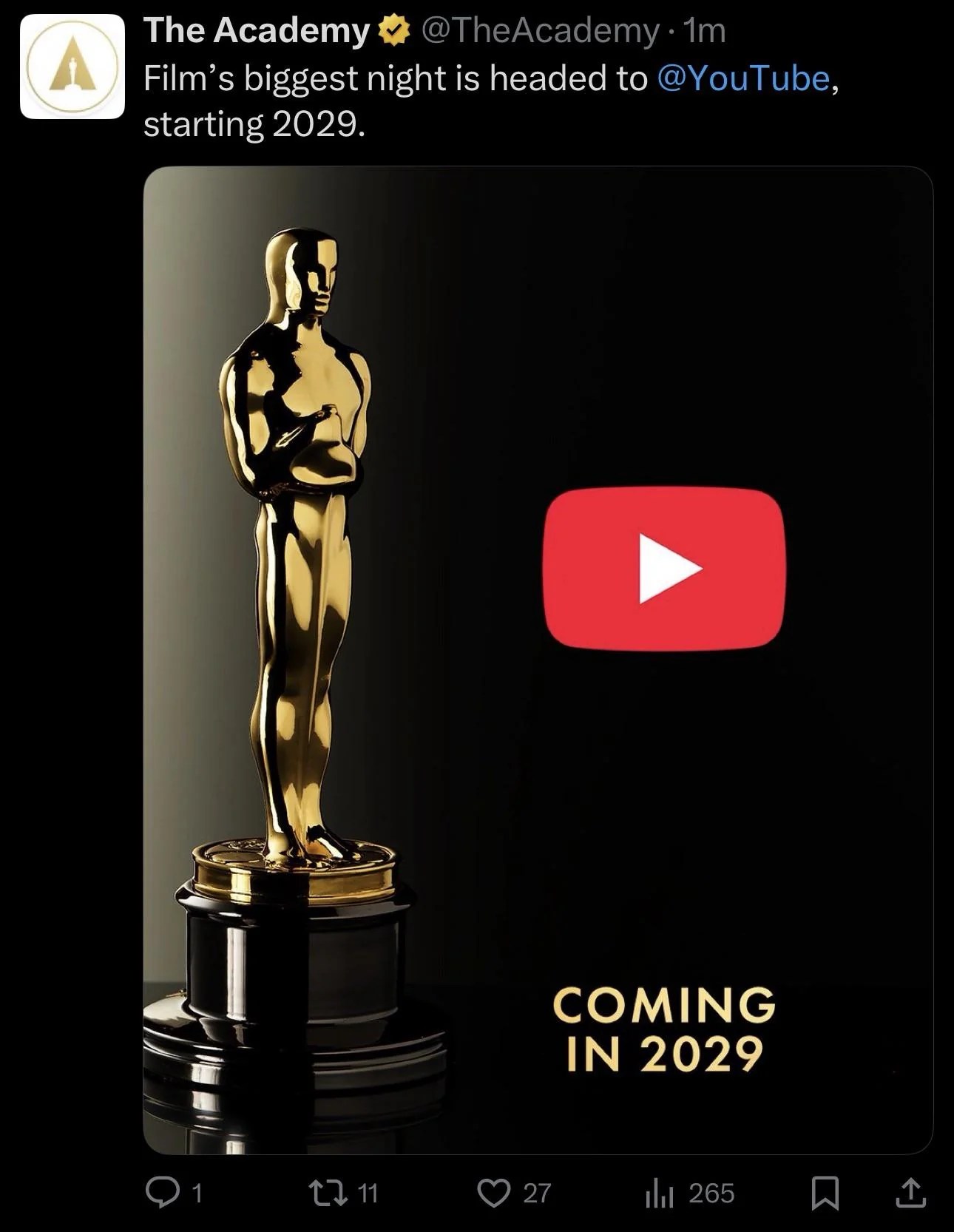
In 1929, the Academy Awards were born alongside the consolidation of cinema as the defining art form of the twentieth century. The Oscars did not merely honor motion pictures; they sanctified the big screen as a cathedral of light where stories were projected larger than life, and where audiences gathered together in reverent silence to be transformed. Nearly a century later, the announcement that the Oscars will move to YouTube in 2029 feels less like an adaptation and more like a capitulation. It’s a moment of inflection that reads, unmistakably, as a eulogy.

Anyone who has followed my work on Twitter or my blog for any length of time knows that I effectively gave up on the Oscars years ago. Even so, this announcement demands cultural analysis and reflection on its deeper implications. One needn’t be a devoted viewer of the ceremony to recognize the ongoing erosion of cinema itself; disengagement does not preclude clear sight, and distance often sharpens it.

There is a morbid irony in a ceremony created to celebrate cinema’s grand scale choosing to live on the smallest screen possible. The Oscars migrating to YouTube is not simply a platform change; it is a symbolic reversal of values. The institution that once affirmed spectacle, patience, and collective experience now aligns itself with the very medium that played a decisive role in cinema’s metaphoric death—fragmented attention, algorithmic taste-making, and content flattened into disposable scrolls. What was once king has voluntarily donned the motley of the court jester.

For decades, the Oscars functioned as a kind of cultural mass. Even when ratings declined, the ceremony retained its claim to seriousness. It insisted—sometimes stubbornly—that movies mattered, that craft mattered, that the labor of hundreds could still culminate in something worthy of ritual. To move this rite to YouTube is to concede that cinema no longer warrants ceremony at all. It is now content, indistinguishable from reaction videos, vlogs, and monetized outrage. The awards will play not to the gods of light and shadow, but to the lowest common denominator of engagement.

This decision cannot be disentangled from the broader arc traced in the manuscript on which I am presently writing Are You Still Watching? Solving the Case of the Death of Cinema, which is my followup book to Monsters, Madness, and Mayhem: Why People Love Horror releasing in October 2026. The internet did not merely change distribution; it reprogrammed desire. It replaced anticipation with immediacy, reverence with irony, and stars with personalities. The movie star—once a distant, luminous figure whose very remoteness fueled myth—has been rendered obsolete by constant access (except for you Tom Cruise–you are the last remaining movie star in the classical sense). When everyone is visible at all times, no one can remain larger than life. In this sense, the internet did not just kill the movie star; it dismantled the conditions required for stardom to exist.

The Golden Era understood something we have since forgotten: limitation creates meaning. The big screen mattered because it was rare. The theatrical experience mattered because it demanded surrender—of time, of attention, of comfort. The Oscars mattered because they crowned achievements that could not be reduced to metrics. Box office was discussed, but it did not dictate value. Craft, risk, and ambition still held currency. One cannot imagine the architects of Hollywood—those who built studios, nurtured stars, and believed in cinema as a national dream—viewing this moment without despair. The roll call of names etched into Oscar history now echoes like a rebuke.

The move to YouTube completes a long erosion. First came the shrinking theatrical window, then the dominance of streaming, then the rebranding of films as “content.” Each step was defended as pragmatic, inevitable, even democratic. Yet inevitability is often the language of surrender. By placing the Oscars on YouTube, the Academy signals that it no longer believes cinema deserves its own stage—literal or metaphorical. It accepts, finally, that movies are just another tile in the feed.

What makes this moment especially tragic is that it arrives cloaked in the rhetoric of accessibility. YouTube promises reach, youth, relevance. But to what end and at what cost? Cinema was never meant to be optimized for virality. Its power lay in duration, in immersion, in the audacity to ask audiences to sit still and feel deeply. An awards show on YouTube does not elevate cinema to the digital age; it drags cinema down to the logic of the internet, where attention is fleeting and meaning is provisional. That which is required by the desired algorithm will be that which dictates the ceremony and pageantry thereof.

And yet, this lament is not without pride. There was a time when this industry truly was an industry of dreams. When the Oscars crowned films that expanded the language of the medium. When a win could alter a career not through branding, but through trust—trust that audiences would follow artists into challenging territory. That history cannot be erased by an algorithm, even if it can be buried beneath one.

If the Oscars moving to YouTube does not signal the death of cinema, it is difficult to imagine what would. It is the final nail not because it kills something vibrant, but because it seals a coffin long prepared. What remains will continue to exist—films will still be made, awards will still be handed out—but the animating belief that cinema is a singular, communal art form has been surrendered.

The tragedy is not that the Oscars will stream on YouTube. The tragedy is that, in doing so, they admit they no longer know what they are mourning.

This loss of self-knowledge did not arrive overnight. Long before the platform shift, the ceremony began to erode its own authority through an increasing embrace of socio-political posturing by hosts and award recipients alike. What was once a night dedicated, however imperfectly, to the celebration of films, performances, and craft gradually transformed into a sequence of soapboxes. The Oscars mistook moral exhibitionism for relevance, and in doing so alienated a broad public that tuned in not for lectures, but for an affirmation that movies themselves still mattered.

This is not an argument against artists holding convictions, nor a denial that cinema has always intersected with politics. Rather, it is an indictment of a ceremony that lost the discipline to distinguish between art and advocacy. When acceptance speeches routinely overshadowed the work being honored, the implicit message was clear: the films were secondary. Viewers responded accordingly. Ratings declined not merely because of streaming competition, but because the ceremony no longer respected its own premise. Had hosts and winners remained anchored in the films—celebrating storytelling, performance, direction, and the collaborative miracle of production—the Oscars might have retained their standing as a cultural commons rather than a partisan spectacle.

In surrendering the focus on cinema itself, the Academy weakened the very case for its continued relevance.

Progress is often invoked as an unqualified good, but history suggests it is more accurately understood as an exchange—one that invariably involves loss. Sometimes that “loss” isn’t’ felt immediately, but there is inevitably some mild, moderate, or signifiant loss somewhere. Every cultural advance carries a cost, and the measure of true progress lies in whether what is gained outweighs what is surrendered. In the case of the Oscars, the pursuit of modernity, relevance, and moral signaling came at the expense of gravitas, neutrality, and shared cultural meaning. What was gained—momentary applause within narrow circles, fleeting relevance in the news cycle—proved insufficient compensation for what was lost: broad public trust, ceremonial dignity, and the sense that this night belonged to everyone who loved movies, not just those who spoke the loudest.

When institutions confuse change with improvement, they often wake to find that they have survived only in form, not in spirit.

Taken together, the Oscars decline follows a macabre logic—a ceremony founded to exalt scale, craft, and collective experience gradually surrendered its authority by de-centering movies themselves—first through moral grandstanding, then through technological appeasement, and finally through full assimilation into the internet’s attention economy. Each step was justified as necessary, inclusive, or inevitable. Yet the cumulative effect was corrosive. The Oscars did not lose relevance because audiences abandoned cinema; audiences abandoned the ceremony because it no longer stood for cinema as something distinct, demanding, and worthy of reverence.

What remains is a hollowed-out ritual, stripped of its gravitational pull, migrating to YouTube not as a bold reinvention but as an admission of defeat. The move completes the journey from cathedral to feed, from shared cultural moment to algorithmic afterthought. It confirms that the Academy has chosen survival at the cost of meaning—and in doing so, has preserved the shell of the institution while relinquishing its soul.

Gloria Swanson’s Norma Desmond, reflecting on the industry’s changing fortunes, once delivered an epitaph that now feels uncomfortably prophetic: “I am big. It’s the pictures that got small.” A century after the birth of the Oscars, her words resonate with renewed clarity. Cinema did not shrink because audiences demanded less; it shrank because its stewards accepted less.

The Oscars’ migration to the smallest screen is not progress; it’s the final confirmation that something vast, communal, and luminous has been allowed to diminish, and that what replaced it was not worth the cost. A ceremony that no longer centered movies should not be surprised when audiences stopped gathering to watch it. The move to YouTube, then, feels less like a sudden betrayal and more like the logical endpoint of a long retreat: from celebration to commentary, from reverence to rhetoric, from a shared night at the movies to just another argument in the feed.
Ryan is the general manager for 90.7 WKGC Public Media and host of the show ReelTalk “where you can join the cinematic conversations frame by frame each week.” Additionally, he is the author of the upcoming film studies book titled Monsters, Madness, and Mayhem: Why People Love Horror. After teaching film studies for over eight years at the University of Tampa, he transitioned from the classroom to public media. He is a member of the Critics Association of Central Florida and Indie Film Critics of America. If you like this article, check out the others and FOLLOW this blog! Follow him on Twitter: RLTerry1 and LetterBoxd: RLTerry
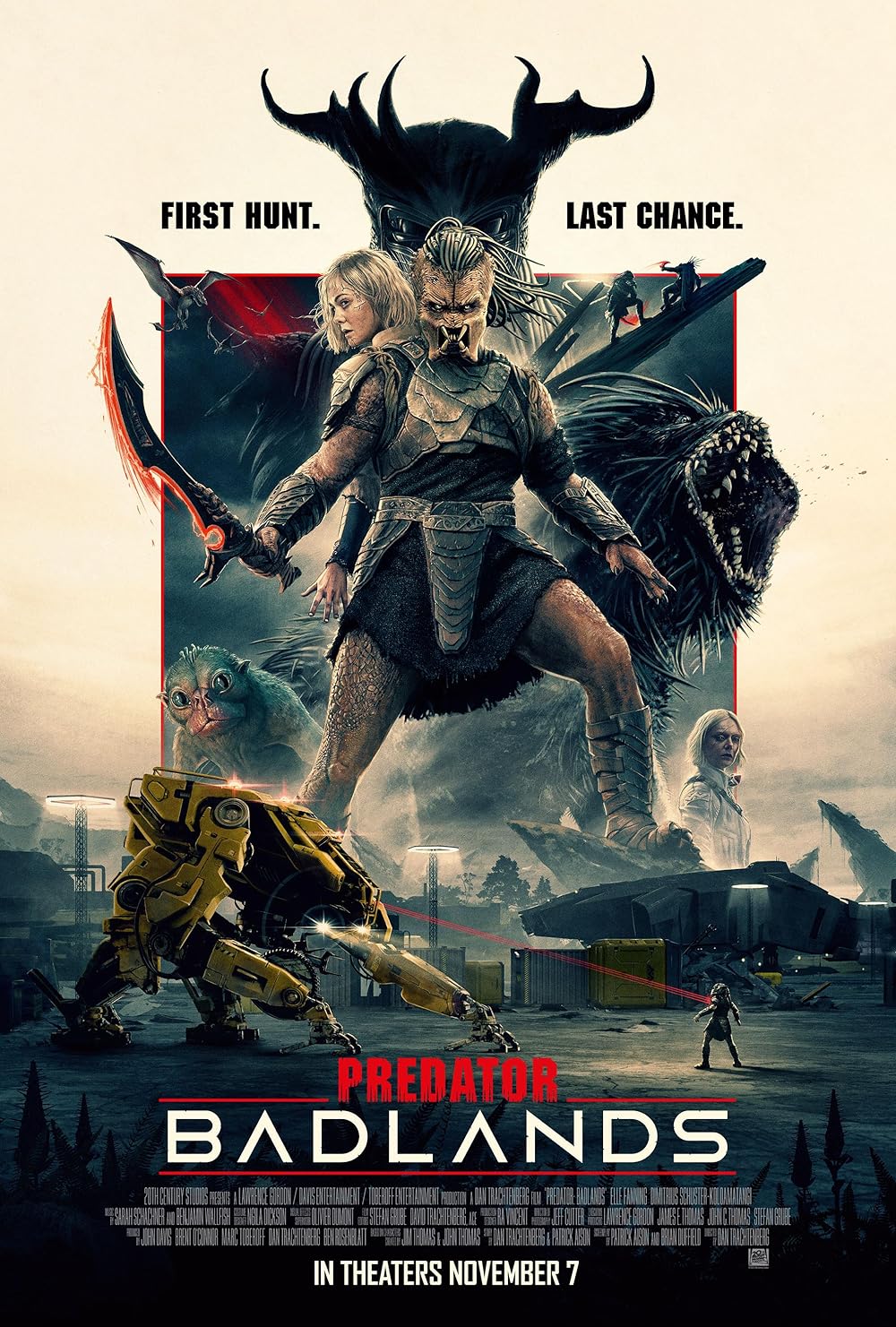
PREDATOR: BADLANDS movie review

Predator: Let’s Play. When streaming content hits the big screen.

Predator: Badlands is the equivalent of a “Let’s Play,” but with bigger explosions. The nonstop action, constant motion offer little to no substantive emotional investment. You’re an observer, not a participant—which might be fine for streaming, but it’s a strange fit for cinema. The latest in the Predator franchise plays like a two-hour sizzle reel with delusions of grandeur. It’s a glossy barrage of explosions, digital dust, and quippy one-liners that evaporate before they even hit the floor. By the time the credits roll–that’s if you haven’t fallen asleep—you’ve seen everything and felt nothing. It’s not that the film is aggressively bad—it’s that it’s aggressively empty–little more than content to pander to short attention spans with shiny movement instead of meaningful momentum.

Cast out from its clan, a Predator and an unlikely synthetic ally embark on a treacherous journey in search of the ultimate adversary.

The screenplay feels like it was written by an algorithm trained on reaction videos and Reddit threads. Every line of dialogue sounds like a placeholder; it’s as if someone said, “We’ll fix it later” or “funny line here,” and neglected to return to the page in order to fix it–before principle photography. There’s no sense of escalation, tension, or rhythm; it’s a series of flashy moments loosely stitched together, like a highlight reel of a game you didn’t play. Even the humor feels synthetic–much like the characters– punching at air instead of connecting with character or tone.

As for the characters, they exist mostly as camera targets. They are little more than digital avatars running, shooting, and shouting for reasons that never feel personal or compelling. The lead could be replaced by a different actor mid-film and you might not notice. This critic isn’t even convinced that Dek (our central Predator character) wasn’t entirely CGI, though it may have only been the facial area. “What’s my motivation?” Difficult to say–there wasn’t much upon which to build. Motivations are paper-thin, arcs nonexistent. The Predator itself, once a symbol of primal fear and unseen menace, now feels like a boss-level NPC waiting to be triggered by the next quick-time event.

Visually, Badlands has all the spectacle money can buy; but its spectacle is divorced from any meaningful purpose. The explosions are massive, the sound mix thunderous, and yet it’s as emotionally engaging as watching someone else play Call of Duty. Every frame screams “look at me!” without ever inviting you to feel something. The editing, too, is manic. And it’s not even as though the narrative demanded it; rather, the dynamic editing was most likely employed because the movie was terrified that you’d look away or down at your watch, which I did several times.

And maybe that’s the point. Predator: Badlands is far less like a movie and more like a cinematic exercise in a large scale “Let’s Play.” For those that are unfamiliar with the term, it’s a type of (usually) YouTube video of someone playing a video game and often their reactions to the game play. Think of it as a passive experience of someone else’s thrill ride. The ultimate, disconnected form of living vicariously. Don’t question anything, because it won’t take long to realize that this movie is hollow. You don’t engage; you just witness. The irony is that the film could’ve been a fascinating critique of screen-mediated experiences, but it never once stops to think.

This is just the latest in a growing trend from Disney’s genre arm: a reliance on brand nostalgia and visual polish in place of storytelling. Ever since the corporate appetite turned to IP recycling, the studio has mistaken familiarity for depth. Badlands is what happens when you try to “optimize engagement” instead of crafting a narrative, resulting in the film equivalent of clickbait dressed in billion-dollar armor.

Predator: Badlands doesn’t so much hunt its audience as it does chase its own tail. A movie that is fast, flashy, and utterly pointless; and desperately wants to go viral but forgets to be cinema. You don’t leave exhilarated; you leave wondering if you accidentally spent $15 to watch a YouTube compilation in IMAX.

Ryan is the general manager for 90.7 WKGC Public Media and host of the show ReelTalk “where you can join the cinematic conversations frame by frame each week.” Additionally, he is the author of the upcoming film studies book titled Monsters, Madness, and Mayhem: Why People Love Horror. After teaching film studies for over eight years at the University of Tampa, he transitioned from the classroom to public media. He is a member of the Critics Association of Central Florida and Indie Film Critics of America. If you like this article, check out the others and FOLLOW this blog! Follow him on Twitter: RLTerry1 and LetterBoxd: RLTerry
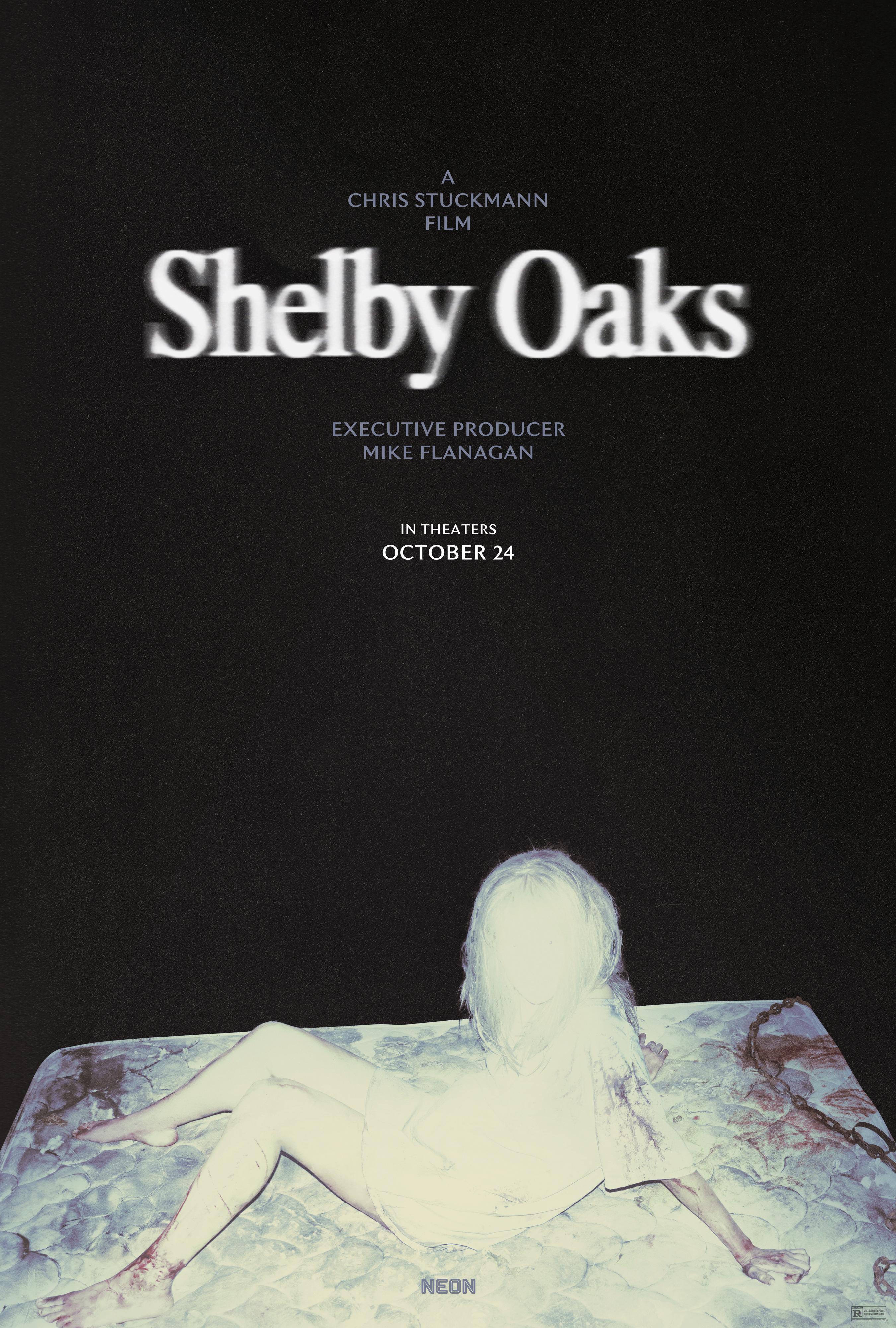
SHELBY OAKS horror movie review

A cautionary tale of when YouTubers confuse content with cinema.

Chris Stuckmann’s Shelby Oaks arrives with all the makings of a breakthrough: (1) it’s one of the most successful Kickstarter-funded indie films ever, and (2) it’s directed by one of YouTube’s most popular influencer-critics. In fact, I’ve used some of his videos in my own classroom—good material: informative, engaging, and accessible for budding cinephiles. But therein lies the rub: informative and engaging does not a motion picture make. The premise, though, is undeniably intriguing—a reimagining of familiar horror tropes with contemporary urgency. Stuckmann delivers a film that has the bones of something potent—think The Blair Witch Project meets Rosemary’s Baby: paranoia, obsession, and the horror of the unseen, all wrapped in a missing-person mystery and topped with a bow of supernatural dread.

Shelby Oaks is about Mia’s search for her long-lost sister and paranormal investigator Riley becomes an obsession when she realizes an event from her past may have opened the door to something far more sinister than she could have ever imagined.

Like many contemporary filmmakers–particularly those that got their start on YouTube–Shelby Oaks excels in technical achievement and marketing. The cinematography is confident and atmospheric, drenched in moody lighting that evokes gothic horror. There is little doubt that Stuckmann clearly understands shot composition, pacing within the frame, even editing in-camera and the importance of visual tone. All the technical elements are quite impressive for a debut feature. And if all a motion picture was–was the visual elements–it’d be easy to admire. But it isn’t. Even Hitchcock knew that. Which is why Hitch never wrote his own screenplays–he generated the idea, even outlined entire scenes and sequences–but he knew that he needed to work with a screenwriter, that understood the material, in order to fully realize his movie idea for the screen. What is greatly lacking in contemporary cinema is an understanding of what makes a great story–plot structure, mechanics, and the emotional substructure.

But Shelby Oaks falters where too many YouTube-born filmmakers stumble—storytelling. Shelby Oaks has a great idea for a movie, but not a fully realized narrative. At its core, the narrative never builds sufficient momentum. Why? Simple–because there’s no real opposition. “Evil,” in the abstract, isn’t conflict. Opposition must manifest into something tangible between the character and his or her external goal, whether that’s a person, a system, or her own inner demons. For all the supernatural activity in the film, there never truly emerges a character of opposition. The result is a macabre mystery that depicts scenes and sequences wherein Mia’s pursuit unfolds, but without the benefit of a tangible sense of escalation or even revelation. Shelby Oaks is more of a proof of concept rather than a complete story.

Stuckmann, for all his film knowledge, seems more comfortable replicating tone and texture than constructing narrative architecture. His background in reviewing movies gives him an eye for what looks right—but not yet the discipline to shape what feels right. He understands what sells, what gets views, and even genre conventions. But sadly, none of the characters, including Mia, possess real dimension or agency. She and the rest of the characters are vehicles for mood rather than emotional engagement.

What works on YouTube—enthusiasm, charisma, and technical dissection—doesn’t automatically translate to cinema. His channel reveals a deep love of horror and a commendable understanding of its visual language, yet Shelby Oaks exposes the gap between appreciating a genre and authoring it. The film lacks what isn’t needed in (and can even get in the way of) YouTube content: storytelling mechanics, structure, and the discipline of narrative design. It’s one thing to analyze story beats; it’s another to build them, to shape character arcs, rhythm, and tension through the grammar of storytelling rather than the syntax of spectacle. Often, YouTube videos have great hooks, but they lack the narrative substance behind the hook.

What’s most frustrating is how close Shelby Oaks comes to working. The concept is rich, and the craftsmanship is undeniably strong. Stuckmann clearly loves cinema, and there’s passion behind every frame. But cinema isn’t content creation—it’s storytelling. And storytelling requires more than aesthetic confidence; it demands structure, development, and resolution.

The YouTube garden is flourishing with emerging directors, cinematographers, and editors—talented creators who’ve mastered the language of cameras, lighting, and cutting for attention. But what it’s not producing are writers. The art—and science—of writing seems to be withering in the age of influencer cinema. Many creators know how to make something look good but not why it should matter. Storytelling requires patience, discipline, and a willingness to think beyond the thumbnail and algorithm. In a culture where speed and spectacle drive engagement, screenwriting—the slow, deliberate architecture of character, conflict, and change—feels almost antiquated. And yet, it remains the soul of cinema. Without writers, we get films that resemble content: sleek, competent, and hollow.

Shelby Oaks stands as a cautionary tale of when YouTubers confuse content with cinema. Furthermore, this movie is an example of the hollowness of contemporary cinema, how cinema is feeling more and more disposable as the months and years pass the silver screen. The tools are there, the ambition is there, but without mastery of story, all that remains are haunting images in search of a heartbeat.

Ryan is the general manager for 90.7 WKGC Public Media in Panama City and host of the public radio show ReelTalk “where you can join the cinematic conversations frame by frame each week.” Additionally, he is the author of the upcoming film studies book titled Monsters, Madness, and Mayhem: Why People Love Horror. After teaching film studies for over eight years at the University of Tampa, he transitioned from the classroom to public media. He is a member of the Critics Association of Central Florida and Indie Film Critics of America. If you like this article, check out the others and FOLLOW this blog! Follow him on Twitter: RLTerry1 and LetterBoxd: RLTerry

“Romeo Kills Juliette” international short film review

German writer-director Leon Zitz is back with his newest short film, which reinterprets the classic story of Romeo and Juliette through a post-modern lens that places Romeo and Juliette in a hopeless, dismal society from which Romeo and Juliette are desperately desiring to escape. Zitz has demonstrated his penchant for auteur filmmaking through his previous shorts Bus Stop, The Applicant, and Time’s Up. His cinematic approach often delivers a stylistically “indie” aesthetic similar to many A24 films. Unfortunately, like with many auteur indie filmmakers, the character development and plot often suffer. While the plot is weak and asks far too much of the audience, the strength of this short is in the cinematography and production design. There are many wonderful shots and sequences in this film; furthermore, Zitz showcases an innate talent for capturing the emotion of a scene. From the lighting to the camera angles, Zitz beautifully demonstrates how to create that cinematic look and feel. Each and every frame is intentionally crafted to deliver a particular mood. Story-wise, this rendition, of the most famous and tragic love story of all time, follows two star-crossed lovers in their will to escape their gritty, grim. depressing hometown. When Juliette unintentionally reveals a secret about Romeo, she seals her fate. Perhaps Romeo Kills Juliette falls short in writing, but it benefits from strong technical elements and overall aesthetic appeal. The potential of this reimagination of Romeo and Juliette is held back by lack of exposition and coherent plotting. Even when I encounter an aspiring filmmaker that shows weakness in an area or two (in this case, screenwriting), I do my best to focus on and highlight what they do well. And Zitz consistently demonstrates a love for the art of motion pictures in terms of the visual appeal. There is a refreshing, unfiltered organic nature to each and every frame in his work. So, show this aspiring filmmaker some love by watching his short today.

Ryan teaches screenwriting and American cinema at the University of Tampa. If you like this article, check out the others and FOLLOW this blog! Interested in Ryan making a guest appearance on your podcast or contributing to your website? Send him a DM on Twitter or email him at RLTerry1@gmail.com! If you’re ever in Tampa or Orlando, feel free to catch a movie with or meet him in the theme parks!

Follow him on Twitter: RLTerry1

“Rebirth” web series review

RebirthGritty and visceral. NonHuman Films’ Rebirth is a new web series that will beg for your attention. Pulling out all the cliche stops, and whatever else comes with AfterEffects templates, the prologue and episode I attempt to draw you in; and they are quite successful. The problem is that it is such a train wreck that you cannot look away. Complete with a highly ambiguous plot, choppy editing, and color temps and audio all over the spectrum, Rebirth needs to die and try to come back again another day. Adapted from the original series JacobRebirth is inspired by CreepyPasta and other urban myths. Mostly shot in the POV style, the majority of the cinematography is stylistic. However, not every style needs to leave the think tank at the fashion studio. YouTube and Vimeo present fantastic opportunities for aspiring professional visual storytellers to get films in front of people without having to rely on a distribution company; but because of this wide open door, there is a lot more mediocre content to sort through while searching for that movie with which to fill your weekday evening.

Structurally, the video suffers greatly. A traditional web series should be divided up into short segments that all tie together in an over-arching story. It should not come across as a short film that has been divided up simply by cutting the segments out of the main timeline. Unfortunately, the Prologue and Episode I come across as the latter. It is important for each web series video to follow the three-act structure while the whole series also follows the same. The dialog lacks development much in the same way the characters do. As videos (or film) are a visual medium, it is important for writers to “show, don’t tell;” and the perpetual narration serves as a distraction and occasionally comes across as redundant. For a sloppily produced web series, I’ll give it this: the editing stye is creative. I’m not claiming that it’s edited well by any means; but I can definitely infer the direction the editor was going. It’s sloppy and crude, but there is definitely potential there for horror film editing.

It is not unusual for a series to have a weak opening, although it is perhaps the episode that is the most important to hook the audience, as many will not progress past the first episode. That was certainly the case for me when I watched the then-anticipated Scream Queens on Fox. After the first episode was so painful to watch, I never gave it a second chance. Since web series don’t have near the money or publicity behind them, they more often than not have a difficult time hooking an audience. So, when I was invited as a member of the blogosphere to an early screening of Episode I part II, I went in with an open mind because perhaps it was walking out of the starting gate instead of sprinting. Unfortunately, I am left wondering what happened even after watching it twice. Due to the POV style of shooting and the disorienting music, I had great difficulty in following the story. However, it is certainly macabre and creepy. In many ways, it kind of reminds me of the previews for the Green Room horror movie featuring the accomplished Patrick Stewart, of all people. I cannot help but conclude that NonHuman Films does, albeit a moderately long shot, have a future in horror filmmaking. Just because a series is crudely produced, doesn’t mean that it is devoid of potential. I see the potential, but the company needs to spend more time developing the narrative and polishing the post-production elements.

Perhaps this cult series will find an audience, as so many online video do; but, it will not likely become material picked up by YouTube Red or other outlets for professional online distribution–not in its present form. This is one of those series that clearly has some budding talent behind it; but the leadership of the film series needs to regroup and identify methods to correct the presentation and storytelling.