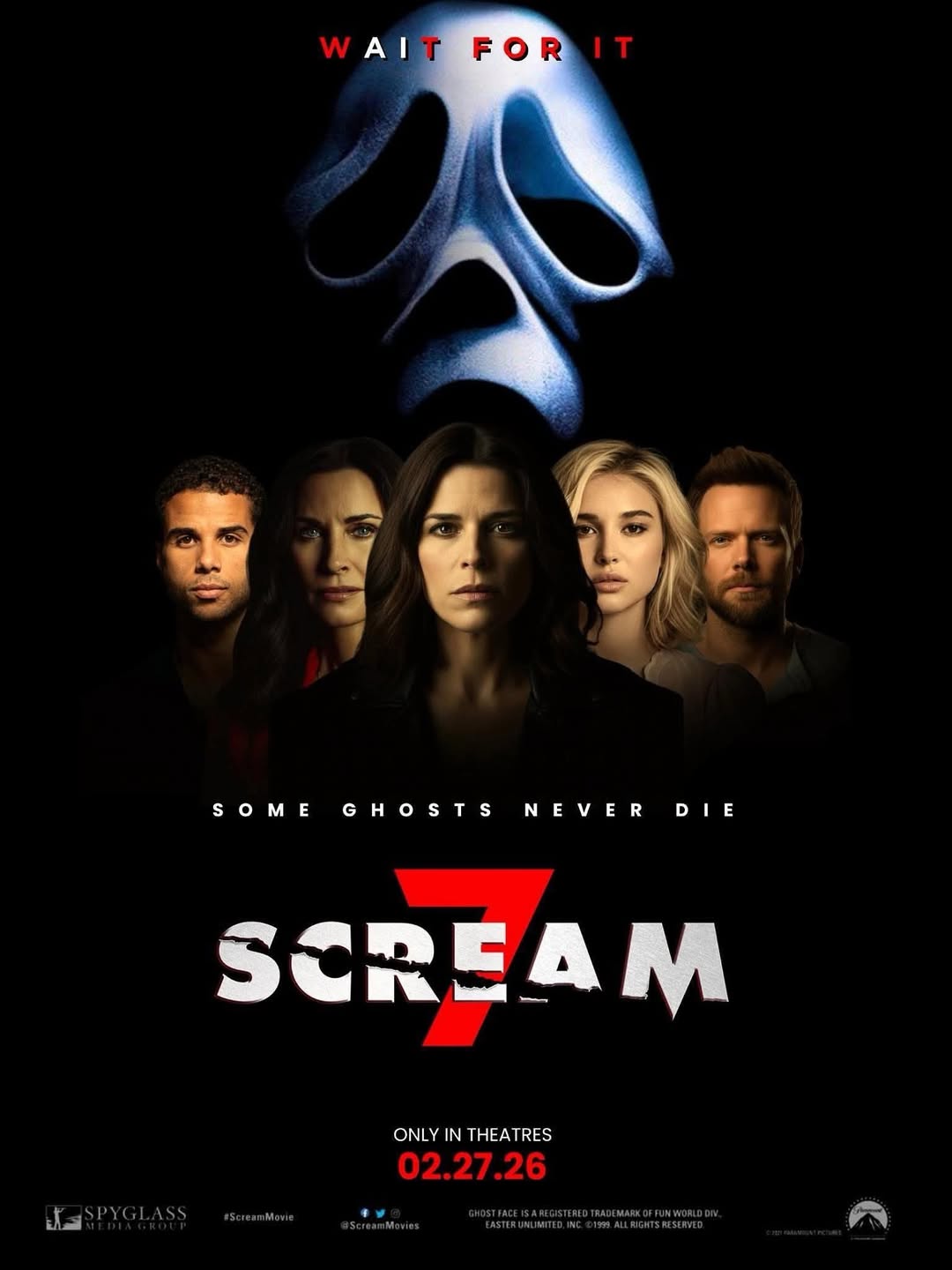
There is a difference between resurrecting a franchise and reviving its pulse. Scream 7 understands that distinction.
There is a difference between resurrecting a franchise and reviving its pulse. Scream 7 understands that distinction. This seventh installment aligns far more closely with Scream 2–4—with the 1996 original remaining peerless—than with the tonal divergence of entries five and six. It is not an attempt to eclipse the original nor to extend the reboot-era mythology. Instead, it is a recalibration: a deliberate return to the structural mechanics and tonal balance that once defined the series—brutal yet playful, self-aware yet grounded, meta without collapsing into parody. It restores the rudimentary whodunit spine, re-centers the franchise’s emotional trinity, and reasserts consequence in a narrative space that had begun to flirt with immunity. It may not reinvent the mask, but it remembers how to make it frightening—and fun—again.
The premise is straightforward: a new Ghostface emerges in the quiet Indiana town where Sidney Prescott has built a life beyond trauma. When her daughter becomes the next target, Sidney is pulled back into the cycle she has spent decades surviving. The simplicity is intentional. This is not a mythology-expanding installment. It is a structural restoration.
When I wrote about the original Scream in 2020, I emphasized how Wes Craven and Kevin Williamson fused satire and sincerity—how the film functioned simultaneously as genre critique and legitimately tense mystery. And in reflecting on Scream 4, I argued that the franchise’s survival depended on maintaining that balance between irony and genuine stakes. Scream 7 understands that lineage. It does not reinvent the formula; it reasserts it.
The humor is sharper than in the previous two entries, and the dialogue once again flirts with meta-awareness without dissolving into self-congratulation. More importantly, the whodunit framework returns to prominence. Scream has always been more mystery than massacre—a slasher disguised as a parlor game. Here, suspicion lingers. Motives matter. The audience is invited to participate again rather than merely observe. That interactive quality—so essential to the original—has been restored.
The kills are similarly recalibrated. They are decisive, occasionally shocking, and refreshingly unwilling to protect characters based on audience expectation. Supporting players are bloodied. Familiar faces are not insulated by nostalgia. The film reinstates a fundamental rule: no one is safe. In doing so, it restores tension that had softened in recent installments.
At the center of this recalibration is the reaffirmation of the franchise’s trinity: Sidney Prescott, Gale Weathers, and a classically-derived Ghostface presence that evokes the psychological intimacy of earlier entries. Strip Scream to its essentials and it has always revolved around those pillars. When they are foregrounded, the franchise regains coherence.
If Scream 4 was the franchise’s first major recalibration, Scream 7 feels like its long-delayed mirror. The fourth installment ushered Scream into the digital revolution—interrogating self-made celebrity, the commodification of trauma, and the toxic symbiosis between violence and visibility. It marked the franchise’s pivot from analog to digital, from landline terror to algorithmic notoriety.
Scream 7, by contrast, gestures toward cultural correction. In a late-2020s climate increasingly skeptical of hyper-digital performativity and increasingly nostalgic for tactile authenticity, this installment feels almost deliberately analog in spirit. The satire is restrained. The violence has weight. The mystery mechanics are foregrounded. If Scream 4 bridged the franchise into the digital age, Scream 7 gently guides it back toward its roots. Both are recalibrations—but pulling in opposite technological directions.
It would be naïve to ignore the production context that shaped this film. Melissa Barrera’s departure following her public political statements altered the series’ trajectory and necessitated a creative reset, with Kevin Williamson returning to write and direct. Freedom of speech is foundational—but not without professional consequence within corporate filmmaking. The result is a film structurally distinct from what entries five and six were building toward.
More concerning than the controversy itself is the critical climate surrounding the film’s release. Its unusually low Rotten Tomatoes score reads less like a measured assessment of craft and more like a referendum on production politics. Evaluated on narrative mechanics, tonal discipline, and franchise coherence, Scream 7 is far from a failure. It is focused, structurally sound, and far more aligned with the franchise’s DNA than its aggregate score suggests.
This return to form may also be more culturally resonant than some critics assume. There is a growing appetite—particularly among younger audiences—for analog aesthetics and classical genre storytelling. Eli Roth’s Thanksgiving proved that an original slasher can thrive in the 2020s. Scream 7 demonstrates that a legacy slasher can endure by remembering what made it compelling in the first place.
In retrospect, Scream 7 may not be the boldest chapter in the franchise—but it may prove to be one of the most necessary. It restores the mystery spine. It reinstates consequence. It reminds us that Ghostface works best when the blade cuts both ways—satire and sincerity, humor and horror. The original remains untouchable. But longevity in horror does not come from constant reinvention. It comes from understanding when to sharpen the knife rather than redesign it.
And sometimes, survival is less about evolution than about reclaiming your identity.
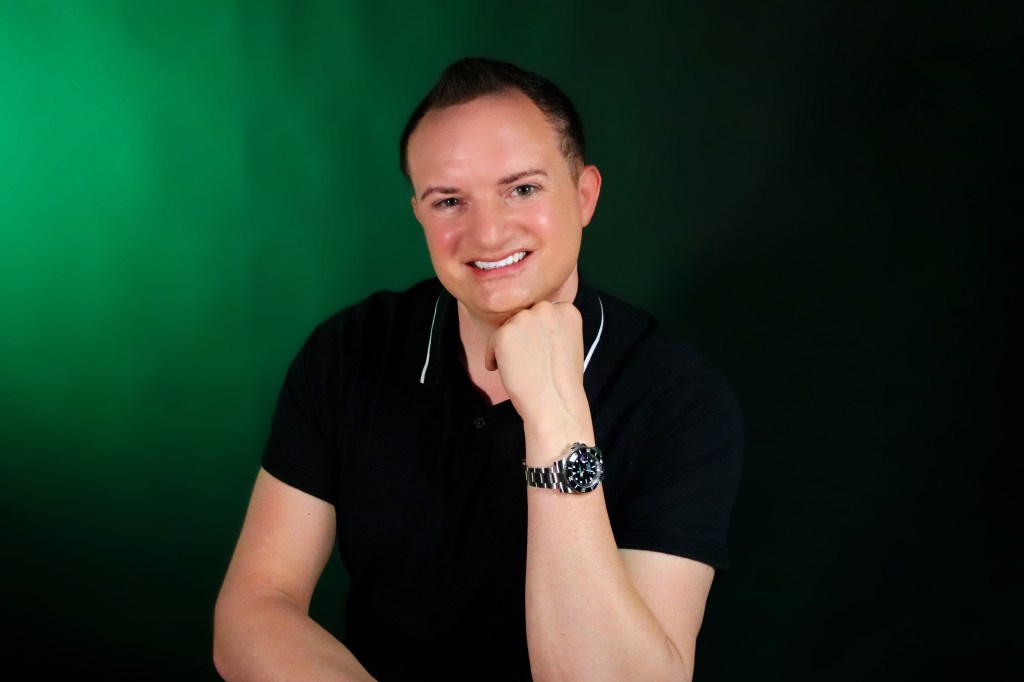
Ryan is the general manager for 90.7 WKGC Public Media and host of the show ReelTalk “where you can join the cinematic conversations frame by frame each week.” Additionally, he is the author of the upcoming film studies book titled Monsters, Madness, and Mayhem: Why People Love Horror. After teaching film studies for over eight years at the University of Tampa, he transitioned from the classroom to public media. He is a member of the Critics Association of Central Florida and Indie Film Critics of America. If you like this article, check out the others and FOLLOW this blog! Follow him on Twitter: RLTerry1 and LetterBoxd: RLTerry
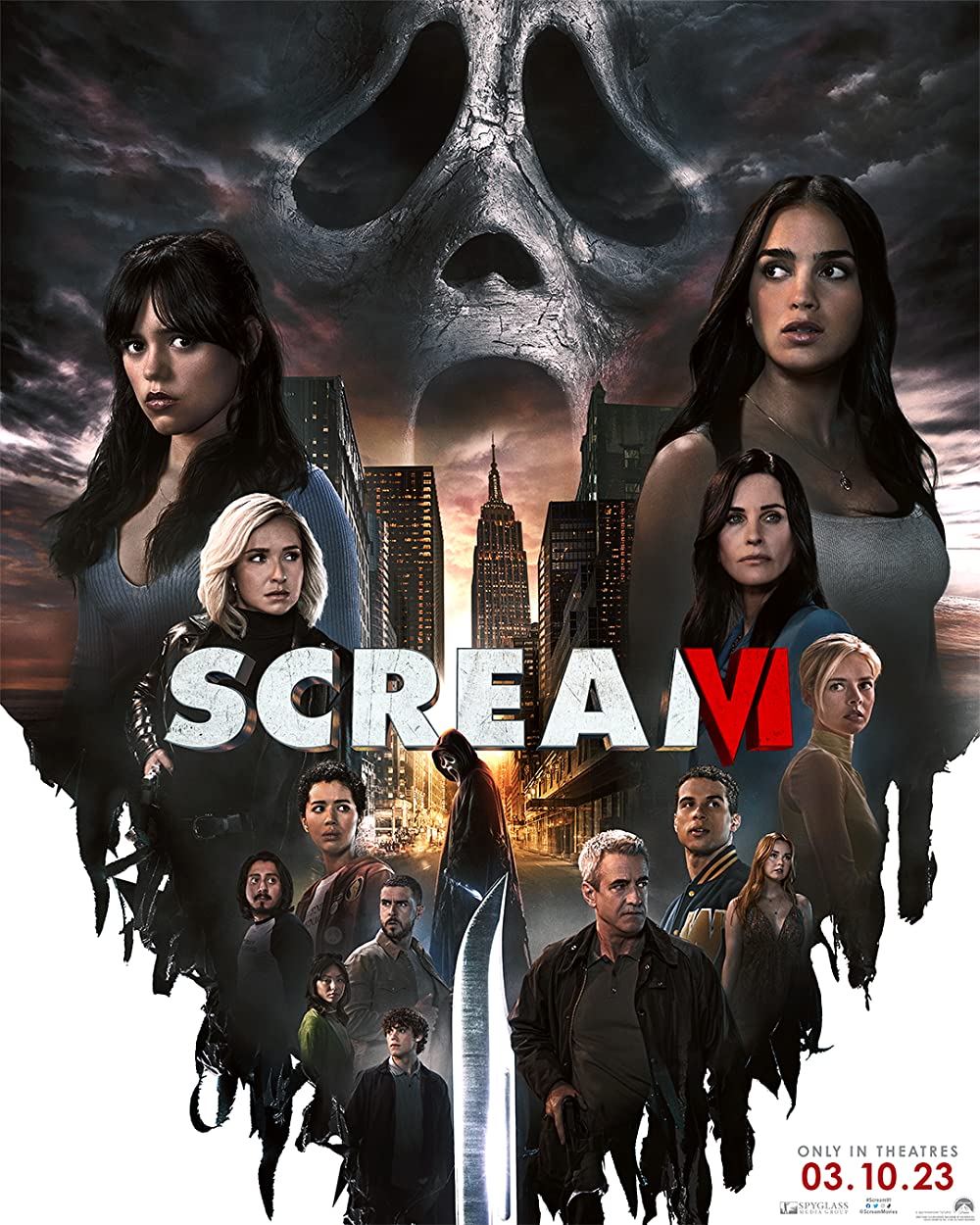
Ghostface takes Manhattan. Mostly forgettable, S6REAM is neither bad enough nor good enough to be remembered. This forgettable installment in the SCREAM franchise is written by the brilliant Ready or Not’s James Vanderbilt and Guy Busick, but you wouldn’t know it from the contrived, clunky plot the two screenwriters developed. More violence does not a great horror movie make; the amped violence is employed as a tool to compensate for the vapid storytelling. Overstuffed with characters and lacking in any real suspense or thoughtful plotting, SCREAM VI is what happens when stories are dumbed down for TikTok attention spans and those that eat up YouTube trash. The Ready or Not duo should have spent more time understanding why Kevin Williamson’s excellent original screenplay works rather than creating some insipid fan fiction featuring the iconic Ghostface. Suffice it to say, SCREAM 6 is enjoyable enough for legacy fans, but remaining invested in this movie will undoubtedly prove to be an exercise in tolerance for the absurd.
Four survivors of the Ghostface murders, leave Woodsboro behind for a fresh start in New York City. However, they soon find themselves in a fight for their lives when a new killer embarks on a bloody rampage.
The SCREAM franchise is famous for its (usually) thoughtful social commentary on the horror genre (more specifically, the slasher); by extension, these meta observations are applicable to society in general. Scream VI provides commentary on franchises and (to my delight, as a film professor) film studies! In fact, Samara Weaving’s character is a film studies professor with an expertise in horror (just like me!). What’s ironic is that for all the knowledge the screenwriters demonstrate in a critical analysis of tropes or patterns of a horror franchise, this movie fails to provide anything meaningful to add to the conversation.
The detrimental problem in this lack of anything new is that the movie loses any kind of real thrill; moreover, it loses any ability to resonate with audiences because of failing to tap into those most primal fears at the bedrock of horror. The very tropes the movie highlights are the very tropes that form obstacles that the movie never overcomes. Furthermore, the problematic screenwriting feels like a copy of a copy of a copy of a copy rather than anything innovative. It doesn’t redefine what it means to be a franchise, it falls victim to the same parasitic infection innate in most franchises.
One promise the movie’s publicity makes—and fulfills—is the amped up violence, both in terms of body count and level of trauma. And there are most certainly going to be those that use the violence as a barometer for satisfaction in watching the film. This is a flawed evaluation method because it has little to nothing to do with the actual storytelling methodology nor quality. Due to the exponentially increased violence, the pacing of the movie is in high gear the whole time, leaving little to no room for emotional resets or breathing room to build suspense or any tangible tension. S6REAM is a lackluster offspring of Wes Craven and Kevin Williamson’s desperately trying to evoke an affection for the legacy property.
Because of the overstuffed cast, there is little time to develop any level of empathy for the characters. The only characters to have any real agency are Gale Weathers and Samantha Carpenter. Even Kirby’s character (whom gets a highly anticipated return) is lacking in dimension or growth arc. Other problems in casting include Jena Ortega whom I cannot take seriously as a final girl because she may as well be Rey from Star Wars for all her invincibility and lack of flaws. I never felt once that her life was in any real danger. An important quality for a final girl is strength, failure, and resilience. Tara is lacking in all these important qualities.
Scream VI (and the predestined Scream 7) may prove to be the nails in the coffin for the slasher. It will take a screenwriter(s) or director that cares about going back to the roots and building upon the soul of legacy properties or the tropes to breathe life into the former screen king of the horror genre. In other words, screenwriters and directors that care about story integrity.
Ryan teaches Film Studies and Screenwriting at the University of Tampa and is a member of the Critics Association of Central Florida and Indie Film Critics of America. If you like this article, check out the others and FOLLOW this blog! Interested in Ryan making a guest appearance on your podcast or contributing to your website? Send him a DM on Twitter. If you’re ever in Tampa or Orlando, feel free to catch a movie with him.
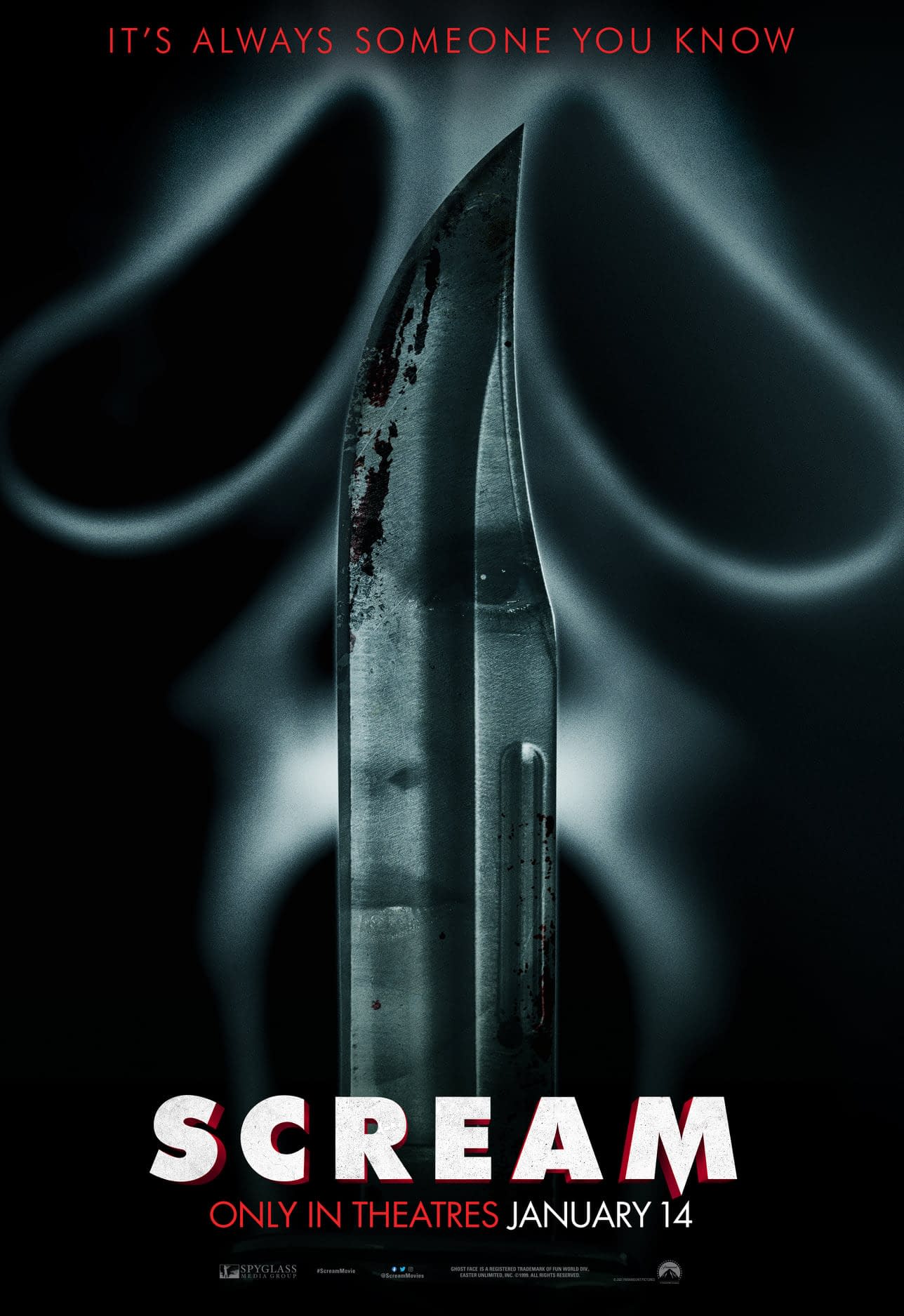
Familiar yet fresh. From the duo that brought you the smash hit Ready or Not comes the next instabment in the beloved SCREAM franchise. It’s been just over twenty-five years since Casey answered that fateful phone call from Ghostface and just over a decade since the late, great Wes Craven gifted us with SCRE4M before his tragic passing. And, now audiences are returning to Woodsboro. In a filmscape overstuffed with pretentious, stylized horror films that often forget that plot and characters are more important than the pretty packaging, comes a fresh interpretation of the classical slasher that is sure to thrill you! While the new SCREAM isn’t without its diegetic flaws (but, to go into that would mean spoilers), it is still entertaining and fun. Clearly, the screenwriters channeled the soul of the original SCREAM, a perfect film in my opinion, but put a relevant spin on it in order to resonate with contemporary audiences. What I can say, without going into spoilers, is that this movie has too many characters; to the point that some of them feel like furniture. Where you may connect quickly with the movie is in subtext of the film, which is grounded in a commentary on the slasher versus elevated horror (a term I absolutely detest, as I’ve previously written) and toxic fandoms versus studio execs green-lighting rebookquels or requel (as the movie states). These are the conversations that fans of horror have all the time, and you will find yourself vicariously engaged in the conversations as the characters are having their debates on screen. After the flop that was Halloween Kills, I was anticipating another vapid, pandering attempt to revive a legendary cinematic property. But, I was pleasantly surprised by how much I enjoyed this movie. We didn’t know we needed another SCREAM movie, but turns out that we did.
Twenty-five years after a streak of brutal murders shocked the quiet town of Woodsboro, Calif., a new killer dons the Ghostface mask and begins targeting a group of teenagers to resurrect secrets from the town’s deadly past.
Not only are Sidney, Gale, and Dewey back, but you’ll see some other familiar faces too. Here is where we can directly compare Halloween Kills and Scream (2022). Both movies brought back leading and supporting characters (and actors), but Scream succeeds in developing all of them enough for audiences to care about whether they live or die. Now, Scream does suffer from being overstuffed with ancillary characters, to the point that some are one-dimensional; however, the screenwriters do manage to give each some agency–some more than others. Other than rooting for Sidney, Gale, and Dewey to survive the blade of Ghostface, you may be hard-pressed to truly care whether some of the other characters live or die. Fortunately, as little as you may care about a particular character in this movie, you’ll still find yourself caring way more than you did for the cast of Halloween Kills.
The kills are great! And best of all, it doesn’t devolve into a completely unrealistic bloodbath. Yes, it is a little gorier and violent than the original (or even the subsequent previous sequels), but not overly so. This iteration of Ghostface may not have the one-liners of its predecessors, but Ghostface manages to get some zings in there. Unsurprisingly, there are many homages to the original SCREAM, but there are nods to other horror properties as well–the shower scene from Psycho makes a little cameo, and we spend a great deal of time with the Stab movies. Instead of rules to surviving a horror movie, we have rules to surviving a Stab movie or requel. Dylan Minnette’s character’s name is Wes, which is a great touch! In fact, the entire movie is dedicated to the life and legacy of the late, great Wes Craven.
This movie works because it takes itself seriously as a Scream movie (and by extension, the slasher), but allows itself to have fun along the way. Perhaps Generation Z does not appreciate the slasher for the cultural phenomenon that it was, but this movie may just be the thing to get them interested in discovering just how brilliant and fun slashers are. I feel confident that you will enjoy Scream as much as I did! Yes, I have my plotting and diegetic problems with it, but it doesn’t take away from the fun factor. This movie succeeds where Halloween Kills failed–it never forgot its roots in greatness. It remembered its branding, and stayed the course. Even though it may not be quite as good as SCRE4M, and with the original being peerless, this fifth installment justifies its existence and delivers laughs and thrills. Much like with Wes Craven and Kevin Williamson’s incomparable original, this one also knows what it is, and it rocks it!
And here is where you should stop reading unless you don’t mind spoilers.
Okay, if you’re continuing to read, I will interpret that as consent, and I will talk about elements of the film that involve spoilers. Not because I want to spoil it, but because it’s difficult to talk about the topics I want to address whilst completely avoiding them.
One of the best elements of the original SCREAM is the absolute perfection that the opening excruciating 13-minutes (that’s right 13), which is, in my opinion, the best and most effective opening of a film period. That opening literally does everything an opening should–you know precisely what the stakes are and what the film is about. Anyway. As to whether the opening of Scream (2022) is precisely 13-minutes, I do not know because I was not looking at my watch (but it feels that it could be 13-minutes). But I was eager for the opening for comparative analysis purposes. I wasn’t looking to see if it was as intense or brilliant as the original (because, let’s face it, that’s an overwhelming task), but I was looking to see if we would know everything we need to know and how high the stakes are going to be. Sadly, we learn that Tara (Jenna Ortega) did not die in the opening scene. And it was this poor decision that hung over me for the entire film. Because once we learn that Tara did not die, instantly any of the suspense and high stakes we had were rendered ineffective and futile. Tara should have died because then audiences would have realized that the stakes are high, and that no one is safe from the knife of Ghostface. Suffice it to say, this poor decision did not ruin the movie for me–I still had a lot of fun with it–but the power of the opening was muted and lacked anything memorable.
There are two arguments (or topics) at the center of the new Scream (1) elevated horror versus slashers and (2) toxic fans versus reboots/remakes. What I love about this, is that these two topics are such a part of the #PodernFamily (podcasters) and #FilmTwitter (film pundits and fans on Twitter) pantheon of conversations and arguments on a daily basis, especially when it comes to horror and legacy cinematic properties. Early on, in fact it’s in the opening scene, we are informed of Tara’s taste in horror: she prefers elevated (excuse me while I vomit at the term) horror like The Babadook, Hereditary, and The Witch. She slams slashers like STAB for being schlock devoid. Turns out, she underestimated the power and social commentary of slashers. Perhaps she should’ve spent more time in horror, because then she would’ve learned that horror has always been the most progressive of all the genres–not just in the last decade. Further along in the movie, we witness a debate over fans versus “requels” (wherein a movie is a combination of a reboot and sequel). While I am not a generally fan of rebooting a legacy franchise or tacking on a sequel that we didn’t need cinematically, so much of what is said in the entertaining exchange of the marketplace of ideas is incredibly meta because of how pervasive it is within the film community. And the plot of Scream (2022) plays right into both of the aforementioned commentaries on horror movies.
Of all the kills, my favorite one is right out of Once Upon a Time…in Hollywood. And I’ll leave it at that.
Ryan teaches American and World Cinema at the University of Tampa. If you like this article, check out the others and FOLLOW this blog! Interested in Ryan making a guest appearance on your podcast or contributing to your website? Send him a DM on Twitter or email him at RLTerry1@gmail.com! If you’re ever in Tampa or Orlando, feel free to catch a movie with him.
“Welcome to prime time” in the final article of my 2021 Sinister Summer series. This month’s article is covering the much lauded tertiary installment in the A Nightmare on Elm Street (ANOES) franchise Dream Warriors written by Wes Craven & Bruce Wagner (Maps to the Stars) and directed by Chuck Russell (The Blob, 1988), with returning ANOES stars Heather Langenkamp reprising her iconic role as the (in my opinion) definitive final girl Nancy Thompson, John Saxon as her father and the now disgraced former police Detective Thompson, Patricia Arquette in her breakout role, Laurence (credited as Larry) Fishburne, and of course Robert Englund as the terrifying and hilarious nightmare-inducing Freddy Krueger! Talk about a powerhouse cast! It’s not often that a sequel can rival the original installment in a horror franchise, much less the third installment. But A Nightmare on Elm Street 3: Dream Warriors (from hereon out Dream Warriors), is a heavy hitter that some even argue is better than the first one (a sentiment that I don’t share); however, it is certainly on par with the original, and that is largely due to the outstanding writing of Wes Craven. Dream Warriors is not simply a great horror film, it’s a great film period! And it’s Craven screenplays like the original, Dream Warriors, and New Nightmare that cement him as one of the great horror screenwriters of all time, not to mention his brilliant direction in the SCREAMfranchise (particularly the original and SCRE4M). While cinema academics and critics can argue all day long which is better (I or III), what both camps of subject matter experts can agree on is that THIS is the film that transformed Freddy from great horror villain to the revered, timeless icon of the horror genre that he is!
For those of you who haven’t seen this excellent work of horror cinema (what are you waiting for?!?). Expanding the story universe, the action takes place outside of the titular address 1428 Elm Street this time around; and instead focuses on a bunch of Springfield teens who occupy the local psychiatric institute. These teens are the last of the Elm Street children, and all suffer from various sleep disorders. The clinic’s answer: keep them doped up on dream blocking drugs (hypnocil). Nancy Thompson is now a graduate student at the institution whom specializes in sleep disorders. Through a series of accidents, she realizes that the patients are being hunted by Freddy Krueger in their dreams. Over the years, the stories of Freddy and the kills from seven years prior are all but the stuff of legend, and so Freddy has lost much of his power because no one remembers (or fears) him. That is all about to change when he figures out how to gain his former strength. Nancy becomes a de facto general as she leads her Dream Warriors into battle against the malevolent Freddy IN the dream realm.
The Dream Master is back, and with all the one-liners and signature kills that are on brand for him! Having seen his beloved character completely misinterpreted in the first sequel (Freddy’s Revenge, which was panned by critics but has sense seen a cult following within the gay community because of the homoeroticism in it), it was completely understandable that he wanted to return as the Godfather of Freddy this time around. He took on both co-writer and executive producer duties. Sharing story by and screenwriting credits with Bruce Wagner. The film’s director Chuck Russell also contributed to the script but only officially holds the director credit–not a bad deal. Before the first draft of Dream Warriors was written by Wes Craven, he conceived of an idea that the film’s characters be self-aware and the plot would play around with the idea of knowing what the horror tropes are and play it to both dark comedy and tragedy. New Line did not go for the idea, and said it wouldn’t work. Gee, a Craven-helmed self-aware horror movie that plays around with horror tropes to create a meta horror movie? Nah, that’ll never work. It would be another seven years before we would get meta horror in Wes Craven’s New Nightmare and nine years before SCREAM.
The final product of Dream Warriors differs greatly from Craven’s original ideas and screenplay for the film, which was much darker in tone (even darker than Freddy’s Revenge). In fact, the characters themselves were quite different in Craven’s original script. For example, Freddy does not have his trademark one-liners, so yes that means no “welcome to prime time, bitch!” (arguably his most Freddy line out of the whole series). Instead, he was much more brutal and violent, and even more graphic in how he taunted and terrorized the teens. The two elements that all, involved in the writing of this film, agreed on was that the teens would have special powers when in the Dream World with Freddy and the plot should include Nancy Thompson. When it was conceived to bring the teens into Freddy’s dream world, Craven questioned “why would Freddy be the only one to have powers here?” So the Dream Warriors were born. New Line eventually ordered a rewrite of the script to increase Freddy’s memorable, twisted sense of humor and witty one-liners and to transform the screenplay from an action-driven plot to a character-driven one. And it’s that character-driven nature of Dream Warriors that gives it the high level of quality that it has. It’s not just about Freddy or his kills, but it’s about the emotional hero journey of these vulnerable teens.
Responsible for the rewrites were Russell and Wagner. Analyzing the screenplay itself, it is clear that both Russell and Wagner were knowledgable in not only the previous two ANOES movies, but the nuance of the horror genre itself. Much more than in the original film, the rewrites also show a penchant for integrating pop culture influences into the dream-state personalities of the characters; and it’s the obsession with pop culture that ultimately contributes to their demise. Among other narrative elements, Russell and Wagner are particularly responsible for the demographic makeup of the teens that we get in the final product by changing many of the ages, sexes, and ethnicities of them. And talk about diversity in ethnicity, physical ability, intelligence, and gender! Jennifer, the young girl obsessed with TV and becoming an actress in Hollywood. Will, the young man confined to a wheelchair who is a huge nerd Dungeons and Dragons geek. Phillip, a young man who loves to create marionette puppets. Taryn, a former heroin addict looking to stay clean and sober. Joey, the quieter one in the group but incredibly horny for the ladies. Kristen (Arquette), who dreams of being an olympic gymnast and has a special kind of ESP that connects her with others. And Kincaid, a tough, short-tempered, and at times violent teen with a sarcastic sense of humor. Outside of Nancy, the other important adults include the often misinterpreted Nurse Ratched-like Dr. Simms, whom really is doing what she thinks is medically best for the teens to help them recover. And Max (Fishburne), the brave orderly.
Dream Warriors‘ screenplay is incredibly lean, and wastes no time in establishing the world of the disturbed teens before launching the audience, full-throttle, into the action plot. For starters, the opening scene of Dream Warriors is fantastic! I would put it up there with the opening to SCREAM, although SCREAM is at the top of my list of best openings–not just in horror-but in all of cinema. The opening to Dream Warriors is perfect because it re-introduces us to Freddy, including his grisly past and insight into the epic, terrifying dream world he creates for his victims. Furthermore, we get an elaboration on his backstory, including more insight into his fiery earthly death and his origin as “the bastard son of a hundred maniacs.” Adding to his intriguing, horrific origin is the idea that his mother was a nun, which is a terrifying idea that this horrific figure could have been spawned by any number of madmen raping a nun. All this adds to Freddy’s mythos and is perfectly accompanied by the iconic ANOES score. All these storytelling elements work together to set the tone for a masterful work of horror cinema. One that is more concerned with the characters, themes, and social commentary than merely the elaborate, entertaining, showman-like kills and memorable one-liners.
Showing the depth and complexity of the American horror film, this film tackles the tough, taboo subject of teen suicide. While teen suicide remains an issue today, it was more pronounce in the 1980s. Beyond after-school-specials and PSAs, this was a difficult subject for films (certainly at that time) to tackle. But when there is a tough subject to tackle, leave it to the American horror film to provide insight into and comment on it in unique ways. Much like Nancy and the Dream Warriors face their worst nightmares, the horror battles tough subjects face on! Not only does Dream Warriors tackle teen suicide, it also tackles drug addiction, broken families, self-esteem, and identity issues. A close reading of the imagery associated with the trauma experienced by the teens can be read as a metaphor of adolescence, transitioning from childhood into adulthood. Whether experiencing direct or implied trauma from Freddy, their family, friends, or the hospital staff, the teens endure gaslighting, imprisonment, mental rape, and attempted murder (and times, murder itself) all within the confines and intimacy of the mind. One can easily make the argument that Dream Warriors is a clever PSA on these subjects masquerading around as a horror movie.
Langenkamp’s Nancy’s return to the series showed us more mature side of Nancy. Gone was the shy girl turned bad ass from the original; now she truly was a survivor! And in Dream Warriors, she is the only adult authority figure that actually takes the time to listen to the teens, which is what ultimately points her in the direction of Freddy. Interestingly, her care for these teens evolves into a sort of maternal role in this film. Throughout this film (and franchise) there are images of mothers (and parental figures) that are explored through the conflicts, kills, and dreams. We know that Nancy had an absent mother before she got fired, so Nancy is striving to be the mother to these teens that she never had. While Detective Thompson is washed up at the beginning of this film, and took him a while to come around to Nancy’s plight in the original, he is actually one of the better parents (and fathers) we have in horror. And this film gives him a sort of redemption arc that I greatly appreciate.
Nancy also demonstrates the ability to be in a constant state of learning, even though she is a subject matter expert graduate student in this film. But Nancy is not without her own vulnerabilities. She may have exchanged her pink rose pajamas for 80s power suits, but she is still the same Nancy. Despite her more mature, calm, collected exterior, she is still haunted by her former Freddy nightmares and the ordeal from seven years prior. This makes her character incredibly relatable because she isn’t (and neither is anyone else in the movie) a superhero, she isn’t morally/ethically perfect, she is a flawed person like you and me. But she is harnessing the energy of these fears and flaws, and channeling them into making a difference in the lives (and dreams) of these teens.
The film is called Dream Warriors for a reason, and that reason is because each of the tormented teens gains supernatural power in Freddy’s dream world. And it’s not some arbitrary super power–no–it’s a power that is an answer to their vices and weaknesses. One of the common themes of horror is perceived powerlessness. And there is no better franchise for exploring powerlessness than ANOES because Freddy attacks you when you are your most vulnerable–when you’re sleeping. And we must all sleep at some point–it is unavoidable. Except in this film, his victims band together to battle Freddy on his own turf. While most of them wind up dead–after all, we are usually left with the final girl in slashers–they do not go down without a valiant fight! Through their nightmares, they show that they can overcome that which torments them. On the surface, they are fighting Freddy, but really, they are fighting their own personal demons that have traumatized them.
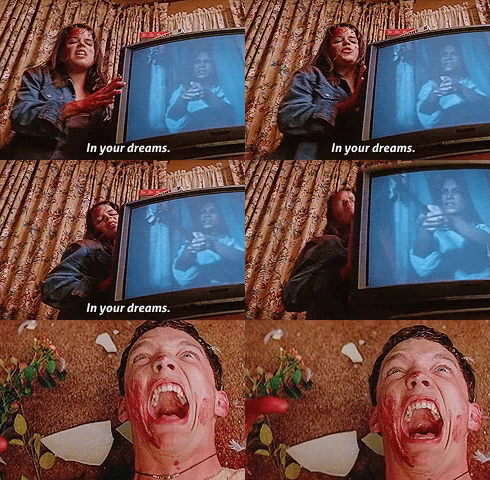
Now, it wouldn’t be ANOES movie without Freddy’s magnificently creative kills and catchy one-liners. And Dream Warriors has some of the best kills in the entire franchise! I do not have time to go through each of them, but I just have to highlight my absolute favorite Freddy kill and one-liner of all time. Not only is it mine, but this kill and accompanying one-liners are often in the Top 5 and even Top 3 from fans, critics, and scholars alike. And it’s Jennifer’s Welcome to Primetime kill!
The beauty of this particular kill lies not only in its simplicity, but in this scenes’s energy and showmanship that is 100% trademark Freddy from beginning to end! Jennifer is trying to stay awake by watching television in the TV room. Max comes in to escort her to bed because it’s late, but she begs him to let her stay up a little while longer. Reluctantly, he agrees to let her stay up and watch TV but he warns her that if she’s caught that he won’t help her out. She agrees and Max leaves. Thinking that the TV alone may not be enough to keep her awake, she burns herself with a cigarette. While much of this film could very well happen today, we get a totally 80s moment here with Jennifer watching the Dick Cavett Show featuring an interview with (and cameo by) the legendary Zsa Zsa Gabor! During the interview, Dick turns into Freddy and slashes at Ms. Gabor! Then the TV turns to that static screen that we don’t get anymore. Confused by what is happening and at the sounds of those all-too-familiar Freddy victim screams, Jennifer gets up and turns the channel knob, but it does seem to fix the problem. Angry at the TV, Jennifer smacks it and suddenly two razor-clawed mechanical arms burst out of the side and pick up Jennifer. Then Freddy’s TV antennae-wearing head emerges from the top of the TV and makes cinema history by saying, “this is it Jennifer, your big break…welcome to primetime, bitch!” Then smashes Jennifer’s head into the TV. And it is likely due to that kill and line that Freddy continued to develop more of a twisted sense of humor throughout the series. Of course, too much of a good thing is a bad thing, which we also see in the subsequent installments.
If Welcome to Primetime is the film’s (and possibly series’) best kill, this next kill is the most shocking out of the series. And it’s the death of final girl Nancy Thompson. Even though Nancy goes out as a ballsy warrior, it was completely unexpected that she would die. But that death made her return in New Nightmare all the better! In dying, Nancy successfully passes on the torch of the Elm Street protector to Kristen. While Freddy’s motivation for killing the other Elm Street teens in this movie is an extension of what drove him to murder the teens in the previous installments, his motivation for killing Nancy was more than revenge brought on by his death at the hands of the Elm Street parents; it was revenge for doing the impossible–defeating him by taking away the source of his strength: her fear. While it was “nothing personal” in the other murders, his desire to kill Nancy was very personal.
Dream Warriors was a hit with both critics and fans! How often do you hear that with horror movies, much less sequels. In fact, in my opinion as a film professor specializing in the American horror film, I argue that the best films in the ANOES franchise are: A Nightmare on Elm Street, Dream Warriors, New Nightmare, and Freddy vs Jason. The final script was praised highly for its pacing, thoughtful commentary, character development, and imagery. With a higher budget thanks to the successes of the original and Freddy’s Revenge, the special effects and set design were cutting edge! This is especially true of the scenes in Freddy’s Hell. Is the film flawless? No. However the few flaws the film does have in no way detract from the cinematic experience of the story. More than 30 years old, this film is widely considered to be among the best horror films of all time, and will continue to be the stuff of nightmares for decades to come.
Ryan teaches American and World Cinema at the University of Tampa. If you like this article, check out the others and FOLLOW this blog! Interested in Ryan making a guest appearance on your podcast or contributing to your website? Send him a DM on Twitter or email him at RLTerry1@gmail.com! If you’re ever in Tampa or Orlando, feel free to catch a movie with or meet him in the theme parks!
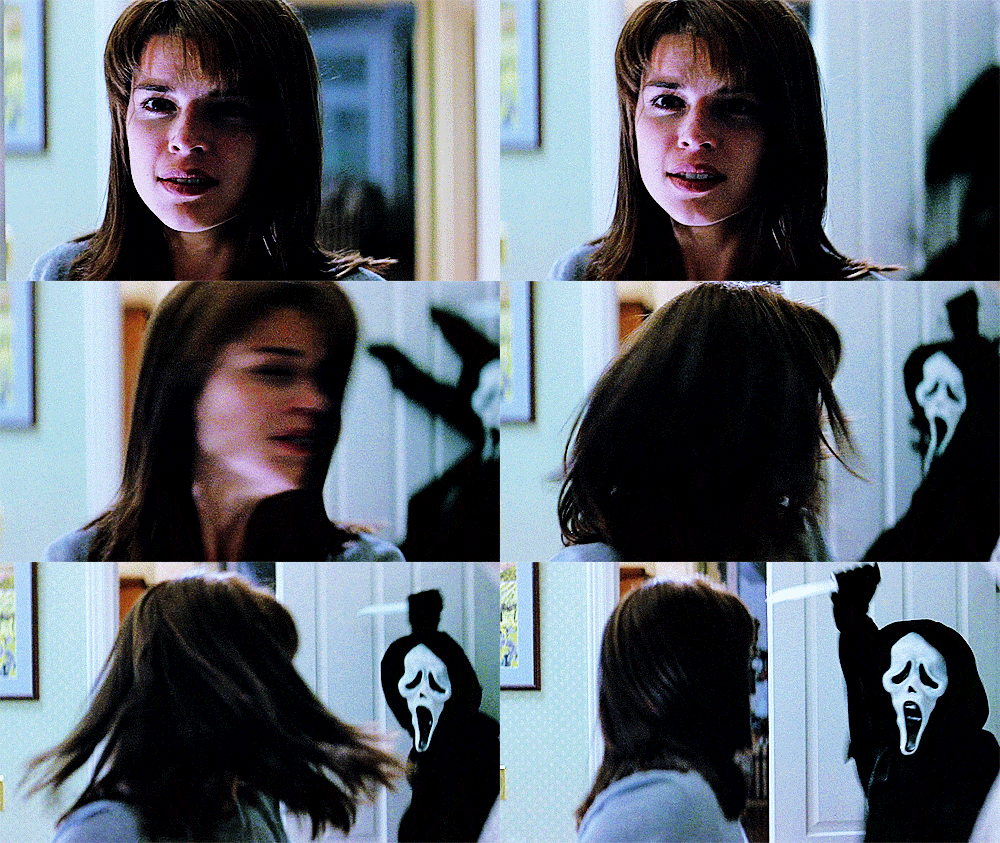
“Do you like scary movies?” Master of horror Wes Craven redefined the boundaries of horror with what many argue is the definitive example of meta horror SCREAM. Although I argue in my Sinister Summer 2019 article that Wes Craven’s New Nightmare was the first to explore the idea of meta horror,there is no doubt that SCREAM is the more popular and truly more meta film. One that not only comments on itself, but on the slasher genre specifically. With the recently greenlit SCR5AM sequel, I thought it would be fun to start out my Sinister Summer 2020 series with the OG! Scream is among my favorite horror properties because you can tell that Wes Craven simply loves the genre and finding new paths to original stories. There are plenty of reasons to love SCREAM. If, for no other reason, it boasts the most brilliant and shocking opening in–not only horror movies–but movies in general. Craven took what Hitch pioneered in Psycho, and amped up the speed at which a popular actress is killed. Whereas Marion Crane was killed off within the first act. Craven kills off American darling Drew Barrymore in the prologue of the film! Still to this day, the opening scene in SCREAM is still the most terrifying opening ever. By killing off Drew Barrymore at the beginning, this communicated to the audience that all bets are off. With the general public, let alone horror fans, becoming all too knowledgable of the rules of horror films thus possessing the ability to predict the outcome and plot turning points, Kevin Williamson and Wes Craven crafted a horror film that changes the rules by using them as a plot device to completely deconstruct the American horror slasher film genre.
But more than a satirical horror film, this film is equally scary. Whereas Scary Movie (the original title to Scream) would do similar things but through parody, slapstick and dark comedy, SCREAM maintains a serious tone throughout the film and never falls into parody. This serious approach is one of the reasons why this innovative film performed incredibly well then and still holds up today. Highly entertaining! This film holds your attention from beginning to end through an incredibly well-developed plot, complex characters, and conflict driven by the actions of the characters. This plot is simple–brilliant–but simple. By relying upon the characters to carry the story, the movie contains more subtext and substance than many others. When you have a character-driven plot, you need solid actors to bring it to life. And all the performances by the principal characters are absolutely perfect for the film. Everyone is so committed to their respective characters. Like bookends, the ending and beginning answer one another.Just as shockingly intense the opening scene is, the climax of the film is surprisingly noteworthy as well, and threw audiences for a loop as it abandons more conventional endings.
As you may know, Drew Barrymore was offered the role of Sidney Prescott. And this was in the mid 90s at the height of Barrymore’s star power. By her taking on the role of the lead character, her name would draw in even more people than would already be excited to see another Craven horror film. After reading the script, Barrymore suggested that she play the role of the opening death. She predicted many people would believe she would survive until the end, and audiences would be shocked by her character’s early demise. And you now what, she was right AND made horror history! Placing Barrymore prominently on the front of the poster, the studio featured her heavily in the various promotional campaigns, leading audiences to believe that Barrymore was the lead in the film. This marketing technique, taken right from the Psycho handbook, reinforced the twists and turns that SCREAM would deliver throughout the film. After that opening scene, audiences knew that all bets were off and that no one–not even American darling Drew Barrymore was safe.
Not only was SCREAM a pivotal horror film that redefined the versatility of the genre, but Sidney stepped into the shoes of all the legendary final girls before her, and took the role in a new direction that cemented her in with the likes of Laurie Strode, Nancy Thompson, and others. Unlike other Craven final girls, she stands as the only one to survive a Wes Craven franchise. Yes, Nancy is brought back in New Nightmare but she is killed off in Dream Warriors. While the final girl conventions had been well-defined up to this point, Wes Craven used the character of Sidney as a conduit for the audience since the rules of slasher horror were all too cliche at this stage in the evolution of the American horror film.
Much like with past final girls, Sidney is resilient, resourceful, sensible, and has an uncanny survivor’s reflex that is so incredibly well developed that she can simultaneously manage life’s complications and death with demonstrable hyper-focus. Furthermore, Neve Campbell’s Sidney was a powerful character for women because she demonstrated strength amidst adversity and responsibility when faced with difficult decisions. However, Sidney is not always the “good girl.” One of the longtime tropes of a final girl is one whom is chaste, but Sidney has had sex with her boyfriend prior to her mother’s brutal murder; however, she chooses when and only when she is good and ready, and when she isn’t dealing with the demons of her past or the serial killer of the present. Much like in the vein of Nancy Thompson, Sidney’s ability to outwit and survive Ghostface is based upon her cunning, not how “good” she is. She is ready and willing it fight for her life, and will stop at nothing until she rescues herself.
Prior to SCREAM, slashers rarely targeted a single victim. For example, Laurie Strode happened to be in the wrong place at the wrong time in Halloween, the same can be said for Alice in Friday the 13th. Less so with Nancy in A Nightmare on Elm Street where Freddy eventually targets Nancy because she discovers his vulnerability. Even different from how Nancy was eventually targeted, Sidney was the sole focus of Ghostface from the very beginning. This target on Sidney means that killing her is the singular focus of Ghostface; and like Sidney’s internal need to survive, Ghostface will stop at nothing until Sidney is dead. But because Ghostface (Billy and Stu) has a flare for the theatrical, he torments, manipulates, and singles her out until Sidney finally fights back in that climactic third act where she turns the tables on Ghostface by using his own tools and knowledge against him. From using his own voice modulator on strategically creepy phone calls to using his own costume to frighten him, Sidney makes intentional decisions that greatly effect the balance of power. While Ghostface holds significant power in the beginning, Sidney erodes that power and takes it for herself. She proves that she has an even greater understanding of horror movies than Ghostface himself, or perhaps the versatility of the rules. Eventually audiences witness Last House on the Left levels of revenge. Interesting because Last House on the Left is Wes Craven’s breakout writing-directing project and redefined the genre with its sexploitation revenge plot.
While a lot of the attention paid to Sidney involves her relationship and confrontation with Ghostface, she is the conduit through which we explore the power dynamic in romantic relationships as well. And the fact that her boyfriend is also her tormenter, offers bountiful material to explore. In many ways, the relationship between Billy/Sidney and Ghostface/Sidney parallels one another. Ghostface wants to penetrate Sidney with his knife, but she refuses to give up on resisting; likewise, Billy desires to penetrate Sidney with his own weapon but she withholds until she has worked through her personal demons. Billy attempts to make Sidney feel guilty for not engaging in her “girlfriendly” duties, as a misogynist such as Billy would put it; likewise, Ghostface tries his best to make Sidney feel guilty for the death of her mother. These parallels are why Sidney defeating Billy/Ghostface is so important and meaningful. Not only does she kill the demons that are presently haunting her, this defeat also allows Sidney to finally close the book on the demons of her past trauma.
There is more to a great slasher that the final girl and villain; those elements alone do not a classic make. Although there were many fantastic horror films in the 1990s, I argue that SCREAM is THE decade defining horror film. Other significant contributions to 90s slasher horror are I Know What You Did Last Summer, Halloween H20, and The Faculty. Because of how well it holds up, it’s hard to believe that it’s been nearly twenty-five years since SCREAM began terrifying audiences around the globe. With witty dialogue, twisted plot lines, and pop culture references, SCREAM has earned its tenure amongst other classic horror motion pictures. The strength of SCREAM is in the screenplay by Kevin Williamson brought to life by the brilliant Craven direction. In any film, the screenplay is responsible for the very framework of the film. More than a map between the beginning and end, the screenplay dramatizes conflict and manifests ideas in either a linear or nonlinear storytelling structure. Think about it: a screenwriter is the very first person to see a movie–even before the director. He or she knows this cinematic story inside and out. And it’s the challenge of the screenwriter to take the cinematic vision from his or her mind, and translate it for the screen in an effective method for crafting an emotional and psychological connection between the audience and characters.
Screenplays are responsible for crafting a compelling narrative out of otherwise disconnected ideas, simple plots, or premises. This is where the very foundation of a motion picture lies. Without a well-crafted screenplay written by a writer who cares, the characters lack motivation, there is little cause & effect or meaning to the plot devices. The words of a thoughtful screenplay form visual statements that allow for the motion picture to be supported by subtext or purpose. One of the most important elements in a screenplay that so often gets overlooked is the task of creating a cast of extremely likable and realistic characters that the audience instantly becomes invested in. Kevin Williamson’s SCREAM screenplay offers audiences an exciting film with ample twists & turns, with an almost whodunit quality about it. As mentioned earlier in the article, SCREAM is one of the first horror films to approach horror from a meta perspective. The film takes a self-referential look at horror cinema by poking fun at the clichés for which the genre is well-known while simultaneously playing into almost every single one of them. But the film never patronizes its audience nor acts as if the audience is not in on the joke.
Often imitated, but never replicated, SCREAM is a pivotal horror film that pushed the boundaries of the horror genre and cinema at large. It represents the third time that Wes Craven was instrumental in redefining the genre: the first time was Last House on the Left then A Nightmare on Elm Street and lastly SCREAM. More than any other director, Craven has been the most pioneering in the genre. While he may have more box office flops than successes on his filmography, his films consistently sought to be trailblazers. In terms of studio history, he quite literally saved New Line Cinema from closing when he wrote and directed A Nightmare on Elm Street. And one could even say that Craven saved the slasher genre from extinction with SCREAM.
Ryan teaches screenwriting and American cinema at the University of Tampa. If you like this article, check out the others and FOLLOW this blog! Interested in Ryan making a guest appearance on your podcast or contributing to your website? Send him a DM on Twitter or email him at RLTerry1@gmail.com! If you’re ever in the Tampa area, feel free to catch a movie with him!






 R.L. Terry ReelView