On Cinema and Theme Parks (part 3)

Continued from Part 2My Book

Some of the most impressive and revolutionary changes to the movie-based theme parks came to fruition in the 1970s and 1980s. This is the time that horror became the chief source of inspiration for attractions at Universal Studios Hollywood (Riley, 1998). The ride that ushered in the plethora of attractions based on some of the best horror movies of all time was Jaws. JawsThe Jaws Ride was opened as part of the studio tram tour in 1975, and was an immediate hit with the park guests. It was quickly followed by Kongfrontation and Earthquake: Ride it Out (Murdy, 2002). Just as audiences are fascinated by horror movies and seek to watch that which would be repulsive in real-life, they are equally interested in immersing themselves into the experience by way of a theme park attraction. This phenomenon is not limited to horror movies, because rides like Jurassic Park the Ride (Jurassic Park River Adventure in Florida), Revenge of the Mummy, and Pirates of the Caribbean beckon millions of guests a year (IAAPA, 2014). In addition to attractions based on the movies, movie studio executives and theme park engineers created attractions that embody what Carl Laemmle first envisioned, by taking the audience behind the magic of the movies. This is the case with the (now closed) Backlot Tour at Disney’s Hollywood Studios and Hitchcock: The Art of Making Movies at Universal Studios Florida (Murdy, 2002). The relationship between the cinema and theme parks is a strong one and creates an energetic synergy that entertains millions of people each year.

Not every movie-themed attraction is a smash hit with the guests, just like not every big-budget movie is a hit with movie patrons. Although well-intentioned by the producers of both, or even the media conglomerate that has major investments in or owns both, may desire and believe they did what it took to create the next blockbuster ride or movie, sometimes the guests fail to view the movie or attraction with the same lens the designers and backers used to create the film or ride. In terms of movie or intellectual property-based attractions, major theme parks can make mistakes or lose out because of the ownership of some parks changing from one conglomerate to another.
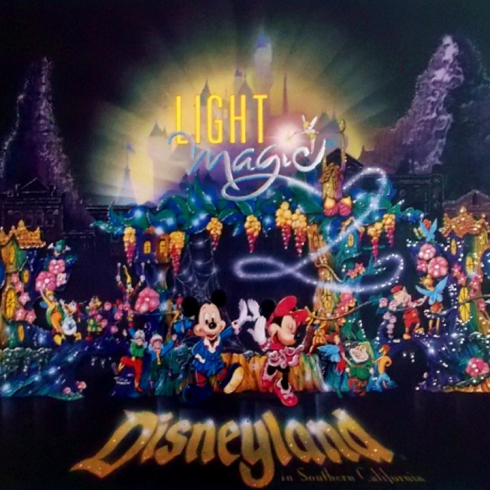
LightMagicNot every flubbed theme park attraction is a “ride;” sometimes it is a show or parade. The failure of a show/parade can be seen in the four month—yes, four—run of Disneyland’s Light Magic “street-tacular” (Krosnick, 2014).  More than another light parade, Light Magic condensed the number of parade floats ordinarily expected in a Disney parade to four large stages that, along the parade route, would burst into light, pyrotechnics, and digital projections. It was complete with a pantheon of Disney characters and music. Unfortunately, if you chose to stand in the wrong spot, all you get is darkness and vaguely familiar shapes of characters. Following a very poor reception by Disneyland passholders, the negative word of mouth was so severe that it effectively caused the closure of the new entertainment offering that sent $20MIL down the drain.
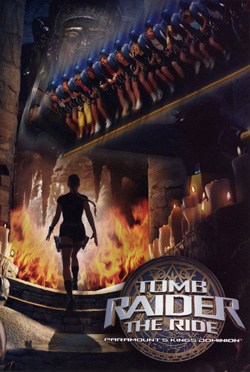
TombRaiderRideAccording to Theme Park Tourist (2014), popular seasonally operating Paramount’s Kings Island (purchased by Cedar Fair in 2007 and all Paramount property removed) spent $20MIL on a ride that lasted a mere five years. Based on the hit video game and blockbuster action movie Tomb Raider: The Ride was on par with Disney and Universal in respect to story, setting, and special audio/visual effects; however, after Paramount sold off its theme park investments to Cedar Fair, the ride got rebranded as The Crypt, a generic theme, and all direct associations with the movie and game Tomb Raider were removed following the 2007 operating year.  Interestingly, the ride attendance continually dropped following the rebranding, and the ride was eventually moved to Kings Dominion in Virginia in 2012. Although there may be other reasons as to why the ride became less popular and eventually moved to another park, it is conceivable to conclude that there is a special relationship between attractions and movies in a theme park. (Krosnick, 2014).

Continue to Part 4

Click here for Part 1

Click here for Part 2
On Cinema and Theme Parks (part 2)

My Book

(Continued from Part 1)

Understanding the synergy or convergence that exists between the cinema and theme parks requires looking to the history of the relationship between the two entertainment giants. Before Disney’s Hollywood Studios (formerly Disney-MGM Studios), Universal Studios Florida, and more than 40 years before Disneyland was opened, the founder of Universal Studios (studio) German immigrant Carl Laemmle, opened his 250-acre-movie-making ranch, just north of Los Angeles, to the public for a mere $0.25 (Murdy, 2002). More than side income for the trailblazing studio, most well-known for its pioneering of the horror film, the original studio tour began on the outdoor backlot in March 1915. Laemmle desired to immerse the “people out there in the dark,” as famously referred to by Norma Desmond in the timeless classic Sunset Boulevard, into the magic behind the screen (Sunset Blvd, 1950).

Interestingly, according to famed psychiatrist Sigmund Freud, horror is often concerned with revealing “other” scenes to the audience (Freud, 1919). And, keeping with this theoretical approach to horror cinema, Laemmle opened this “other” scene to the guests of Universal Studios Hollywood.  But more than horror, Laemmle also brought the studio guests face-to-face with western action/drama (Murdy, 2002). From early in the 20th century, the concept of cinema and theme park convergence was born. The happy marriage, however, was not to last very long. Upon the introduction of cinema sound, Laemmle was forced to close the studio “park” to the not-so-quiet guests in order to facilitate appropriate recording sound for the motion pictures (Murdy, 2002). The Universal Studios tour would remain closed to the general public for over 30 years. But, in 1961, the studio would once again open its gates to a new generation of movie lovers (Murdy, 2002). Between 1961 and 1964, Universal outsourced the famed tram tour to the Gray Line bus company.  Following a feasibility study, conducted by researcher Buzz Price, the same man who helped determine the locations for Disneyland and Walt Disney World, Universal decided to start its own tram tour of its facilities, and Universal Studios Hollywood opened in July 1964 (Murdy, 2002).

Following the ending of the Studio System, the now bankrupt motion picture studios had been purchased by various conglomerates looking for new sources of income (Riley, 1998). One of the sources of income that studios began investing into was the concept of movie-based theme parks. With the opening of Walter Elias Disney’s Disneyland in 1955, Universal Studios made the decision to incorporate stand-alone attractions into its newly reopened studio tour (Davis, 1996). Both Disneyland and the future Universal Studios used their intellectual property (IP) as the basis for creating theme park rides, shows, and attractions. Although movie studios as a “park” began with Laemmle, in its current incarnation, the convergence of cinema and theme park began with Disneyland, and later was perfected by Walt Disney World and Universal Studios Florida. Since the movie studios already had dedicated movie-going audiences, it made sense to capitalize on the idea of incorporating the concepts from the movies into attractions that the general public could enjoy and be immersed in (Davis, 1996). This action both acts as advertising for the respective studios and generates income for the movies and park improvements.

In today’s entertainment marketplace, media conglomerates are restructuring themselves to be as large a player in entertainment and media as possible with the ability to integrate various products and services into multiple areas of exhibition (Taubman, 1970).  This is easily witnessed in how the Walt Disney Company, Sony, and Comcast companies are setup. Walt Disney Company has significant investments in: motion pictures (i.e. Disney, Buena Vista, Touchstone), theme parks, TV (i.e. ABC, Disney Channel), leisure/tourism, radio, video games, stores, and record labels). Sony has investments in consumer/commercial electronics, computers, video game systems, motion pictures (i.e. Sony, Columbia, Tristar), television (CBS), record label, recording studios, radio, and stores. And, much in the same way, Comcast has investments in motion pictures (i.e. Universal Pictures, DreamWorks-SKG), theme parks, resorts, television (i.e. NBC, Golf, SyFy), video games, radio, record labels, and recording studios.

Whereas the fall of the original studio system set the precedent for media companies not to own or operate all the elements of media creation from conception to employment to production to the distribution, also known as vertical integration, companies are now embracing the idea of horizontal integration. Horizontal integration allows a media company to push or market its products or services through various media channels. And, this is a perfect example of why media conglomerates own and operate theme parks. This is a common practice by Disney and Universal in their respective parks and resorts. Disney can release a movie, base an attraction off that movie, use that movie as the basis for a video game, and even include costume characters in the parks and on the cruise ships. In the same vein, Universal can take one of its movie properties and integrate the characters and story into a theme park experience, use the concept for a video game, and maybe even develop a TV series as a spinoff of the movie. This type of integration allows the companies to effectively customize glorified marketing campaigns for their brand. Having a given branding on various commercial outlets allows a company to maximize its exposure to general audiences/customers (Taubman, 1970). As companies acquire more intellectual properties, media outlets, and commercial infrastructure, they are able to actively change entertainment offerings over the years; and this is definitely the case with the theme parks owned by media conglomerates that also have movie studio interests.

Continue to Part 3

On Cinema and Theme Parks (part 1)

My BookDo you love learning about the magic of movies and theme parks? So do I! Living in Tampa, I am surrounded by some of the world’s top destination white sand beaches and exciting theme parks just up the road. As a passholder to Disney World, Universal Studios, Busch Gardens, and SeaWorld, I frequent the parks nearly as often as I go the cinema. Having spent a great deal of time working in independent film, working for three years at Disney World, and now as a cinema and theme park critic, I have a great deal of passion for both storytelling mediums. And the amazing thing is that there is such a fantastic and symbiotic relationship between the two. Hence why I spent my Master’s program at the University of South Florida studying the place at which both converge. Specifically, I researched the elements of narrative, spectacle, pleasure, character, setting and more in terms of how they correspond with one another. Whether that is taking a movie and developing it into an attraction or taking an attraction (or entire section of a park) and developing it into a movie. Both are powerful means of conveying a story or message. I delve into what it takes for a movie to be a successful attraction or vice versa.

Although there have been peer-reviewed articles and books written on cinema, there definitely lacked empirical research on the theme park side. Furthermore, most peer-reviewed articles and books are so incredibly boring and pretentious to read. My goal was to break down both and write about them in such a way that it is fun to read about. Movies and theme parks are FUN! So, reading about the relationship between the two should be equally fun and interesting. Starting with the history of how cinema influenced the modern theme park design and finishing with some of what to expect in the future, this book has it all! Although I would prefer that you buy my book (on Amazon), I have selected excerpts from it that I will publish over the next few weeks as I work on my next theme park piece. I hope you enjoy!


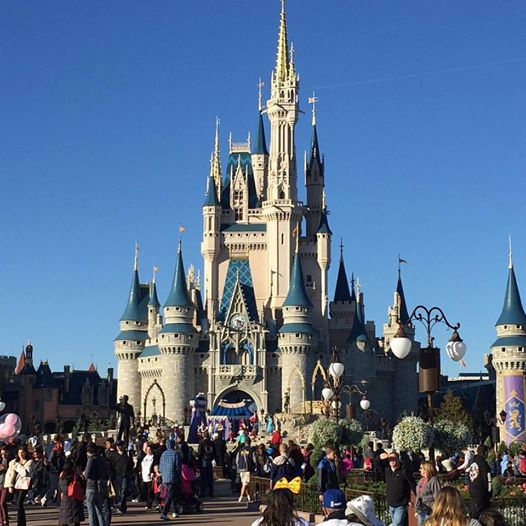
WDW CastleIn today’s world of entertainment, where some media conglomerates own both film studios and theme parks, successful films sometimes bridge these two media to create the basis for new theme park attractions. The following research study seeks to define the elements that a film needs in order to be successfully translated to a live themed entertainment experience, thus eliciting the desired emotional response from the guests; and also the necessary elements that a theme park attraction needs in order to convey both spectacle and narrative regarding the film upon which it is based.  Although there are tools currently available to studio executives and creative staff at entertainment companies, this study will serve as a model using the ideas, theories, supporting evidences, and streamlining them into one study—a consolidation of tools, if you will.

As media companies grow, and both cinema and theme parks adapt to changing needs and desires of movie patrons and park guests, the leadership at these companies needs to have the appropriate information at their fingertips to create effective and memorable stories for the screen and park. This study highlights what the potential park guests or movie patrons are looking for in terms of what drives them to spend money on themed entertainment or the cinema. Condensing this complex set of desires into a simplified answer: in terms of cinema-based attractions, the audience is searching for attractions and rides that immerse themselves into a participatory environment in which they make a difference in the story and encounter the unique characters, settings, and plots from the movie.—they want to be viscerally engaged and transported into a world of fantasy or adventure.

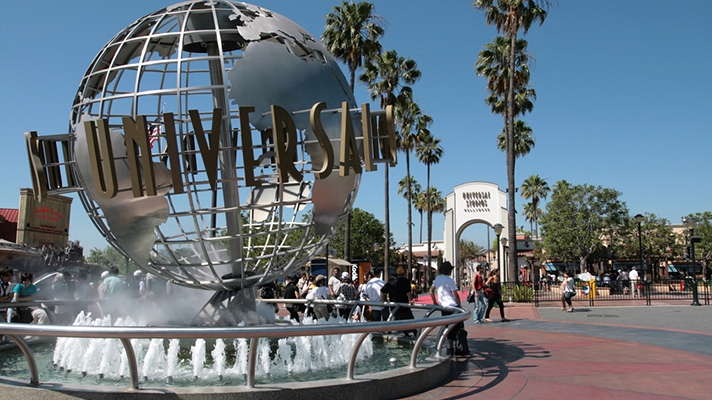
Universal HollywoodEver since the late 19th and early 20th centuries, audiences from around the world have been drawn to the temple of the height of the visual and performing arts, the cinema. In many ways, the early days regarded the cinema as an attraction, an amusement. In fact, many of the first silent films were shown in carnivals. Nickelodeons dotted the landscape in drug stores and clubs. Elaborate and ornate movie palaces housed some of the first big screens, and orchestras played along with the narrative (Gunning, 1986). Over the last century, cinema has gone from existing in sideshows to being a dominant mass communication source that has evolved into the very rollercoaster to which many critics and lay people compare it; and, not only metaphorically.

From starting in carnivals to now being the inspiration for the most visited theme parks in the world, cinema has gone full circle and is now instrumental in an unparalleled synergy with themed entertainment. Over the decades, there has been a strong convergence between cinema and theme parks. Studio executives, filmmakers, and theme park designers are working together in ways that serve to support both the movies and the parks that have rides based on the movies. More than ever, filmmakers and attraction designers need to know what the cinema patron and park guest both want in order to create a synergistic and dynamic entertainment experience based on a single narrative.

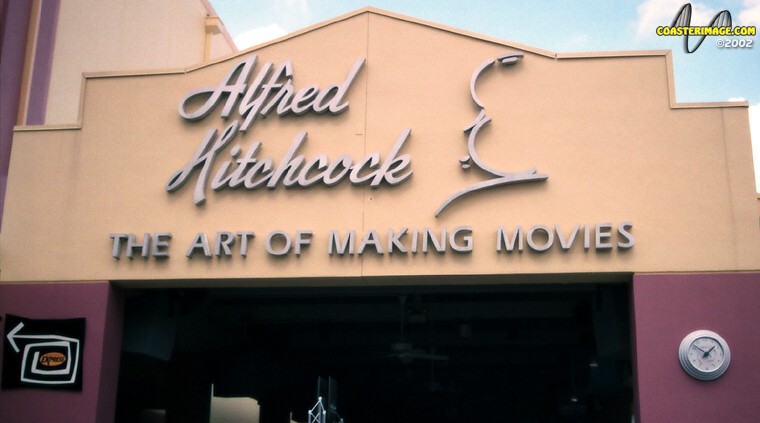
Hitchcock AttractionTwo of the greatest forces in media and entertainment are the cinema and theme parks; and for the latter part of the 20th Century and continuing strong into the 21st, the convergence between the cinema and theme park is becoming clear. Additionally, within the last several years, theme park attractions have inspired movies (e.g. Disney’s Pirates of the Caribbean and The Haunted Mansion). The relationship between the movies and theme parks is a strong one, but why is that so? Can one exist without the other? Or, is it a co-dependent relationship that benefits both entities? Perhaps it is all of the above. But, not every successful movie makes an equally successful theme park attraction. Often times, it is the Horror and Action genres that are used as the inspiration for successful attractions (e.g. ET-The Extra-Terrestrial, Jurassic Park, The Bates House and Motel, and Hitchcock: The Art of Making Movies).

As technology advances, the cinema and theme parks have adapted and evolved over the years to include the technology to both impress audiences and save money. Still building off the success of the cinema, theme parks have evolved their rides and attractions to go from the magic behind the movies to immersing the audience or guests into the movie itself. Likewise, studios and production companies are producing movies that act as attractions themselves. But, central to this study are the questions: why is it essential for the cinema to continue this synergy with the theme park industry, and what does it take for a movie to be a successful theme park attraction?

(Continue to Part 2)

“Hail, Caesar” movie review

HailCaesarA brilliant post-war self-reflexive commentary on the Hollywood studio system. Go inside classic showbiz! Before the decentralization of “Hollywood” filmmaking, the big studio was king. And Hail, Caesar captures the socio-economic mountains and pitfalls of the decline of the Golden Age of Hollywood perfectly, complete with a pure message about love, dedication, and highbrow humor along the way. You couldn’t have asked for a better cast. From the excellent writing to the impeccable acting, this film is sure to provide you with old-school style entertainment paired with plenty of topics of discussion–especially for cinema scholars and historians like myself. Return to the Hollywood that still inspires dreamers today and experience life in the studio system. This is one of the best self-reflexive films about Hollywood itself since Singin’ in the Rain. Although, the social-commentary is more or less a plot device that plays in the background while the main plot is the true focus of this exceptional narrative. Truly a remarkable film that will likely find its way into sociology and film studies classes alike.

Hail, Caesar takes place during the final days of filming of an adaptation of the story of the Christ. During a set break, Baird Whitlock (George Clooney) is drugged and kidnapped by a couple of extras and taken to a secluded beachside mansion in Malibu. Meanwhile, Eddie Mannix (Josh Brolin), head of physical production for Capital Pictures, is busy running the show–from personnel management to the shuffling around of actors. Early on, you learn that Mannix is being aggressively pursued by the Lockheed corporation and he must decide either to pursue a career that will allow him to be with his family more and retire early or remain in Tinseltown to head up production and develop motion pictures.

Where to begin?!? As a peer-reviewed published cinema [and themed entertainment] scholar and historian, there are are so many different ways of applying a critical analysis to this film. Leaving the cinema last night, I was perplexed as to how to write about it. Ordinarily, I have a general idea of the direction I will head in my review by the time the credits roll–not this time. There is definitely a subplot in the movie that would be great material to dissect and analyze but I don’t want to spoil that for you; although, I can say that is is very apropos for that period in 1940s/50s Hollywood.

In order to analyze the material that I found most interesting, I want to first spend a moment on the film itself. Even before watching it, you already know that it boasts a brilliant cast and thankfully everyone lives up to the expectation that comes with their respective talent. From the leading players down to the A list cameo appearances, all the actors bring a unique flavor to the overall recipe of the movie. One of the elements that stands out the most is the attention to detail in the classic Hollywood production design. Essentially, we are watching a movie containing the making of another movie. The matte backdrops and traditional rear projection doesn’t stop in the story of the film being made in Hail, Caesar, but the classic production styles and designs cross over into the production of the Hail, Caesar itself. From the color schemes to the wardrobe and makeup, the attention to detail is flawless. Although much more humorous and satirical than the epitome of self-reflexive post-war Hollywood films, Billy Wilder’s Sunset Boulevard, Hail, Caesar does a superb job of going inside the word of showbiz and highlighting positive and negative consequences of the former studio system.

The film opens up with Mannix pulling Gloria DeLamour (Natasha Bassett) from an unauthorized photoshoot because the image the studio has of her could be tainted. That is really the first glimpse into what life was like for stars who worked in the Hollywood Studio System. Not limited to the talent, Mannix even told directors who would star in the pictures that they were hired to direct. Capital Pictures pulled a cowboy off his motion picture to then star in a drawing room comedy. When you worked for the studio, you worked FOR the studio. From your image to the projects you worked on (whether talent or technical crew), your every move was managed by the studio heads. Sounds like the perfect setup for exploitation, doesn’t it? In many ways, yes. However, the studio system also provided a central hub for working in motion pictures. One of the scenes shows Mannix walking down a corridor of editing offices, and that is something that isn’t quite the same today. Studios had exponentially more full-time staff until the final collapse of the studio system in the late 1950s/early 1960s. You had a regular job Monday-Friday and were typically on a salary. You were provided meals and other amenities during the work day. Yes, many aspects of your career were managed–even down to who accompanied you to the premiere of the film you either worked or starred in. But, many more people were employed by the studio directly than today. Just something to think about.

The studio is aptly named Capital Pictures. And rightly so, because at the heart of the movie, the two-fold plot of the film contains socio-economic commentary. The counterpart to the socio-economic side is about being dedicated to one’s true passions. Mannix can easily represent anyone who has a job that they work hard at and are dedicated to but often drawn to opportunities that would be easier and make more money. Do you choose to follow your passion? Or, do you choose the easy way out that would be more profitable? You will have to see the movie in order to discover how Mannix dealt with that real-world conundrum. Although the story of the passion of Christ is a backdrop in the film, it actually plays quite an important role near the end of the third act. The message of love transcends the screenplay (being shot in the movie) and impacts the actors and studio leadership. There are so many wonderful elements to discuss in Hail, Caesar and I have just touched on a few of them. I encourage you to make your way to the cinema this weekend in order to experience it for yourself.

“Sisters” movie review

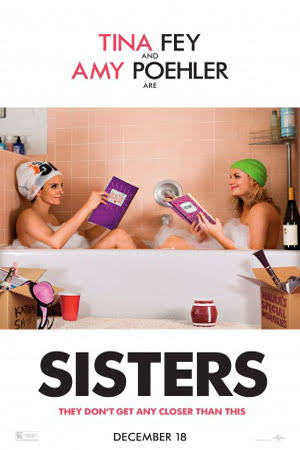
SistersA comedy that only Tina Fey and Amy Poehler could pull off! Since I had already seen my “movie of the week” when I screened 13 Hours, I used my Thursday night, which is typically reserved for the movie I review, to just kick back and relax with a comedy starring two amazing comediennes who have been coming into our living rooms for nearly two decades. At first glance, Sisters may seem like another crass, brassy, stupid comedy; but, a closer examination reveals that it is actually quite brilliantly structured and directed–the acting speaks for itself. For those who have studied film or entertainment in general, you are well aware that a well-written and directed comedy is actually drama in disguise. No story exists without conflict, and comedy is often frocked with conflict because that is where the “funny” or comedic “irony” comes from. Whereas this film is certainly not one that is made to be added to the library of great films or one that is meant to typify the art of cinema, it IS produced to entertain and bring about immense laughter from the audience. Sisters is a great way to spend a couple of hours with your sister or close friends and enjoy the uplifting message with a massive dose of Fey-Poehler comedy.

When their parents sell the family house in Orlando, sisters Maura (Poehler) and Kate (Fey) are requested to head down to the sunshine state to clean out their childhood room–which may as well be a bottomless pit of 80s and 90s memorabilia. With only one weekend to accomplish the near impossible, Maura and Kate are overwhelmed and  quickly become distracted with a desire to have one more night of youthful, wreckless fun before they say goodbye to the house in which they grew up. Each dealing with a source of negative stress in their respective personal lives, these two sisters decide to invite old classmates and friends to the party of the century to recapture their glory days. When the party begins to spiral out of control, Maura and Kate soon realize that their parents may not have a house to sell.

As there really is not a whole lot to dissect, in terms of the plot or technical components, I do want to take a moment to further highlight why this was a well-produced and directed comedy that is probably a little too underrated. Going in with fairly low expectations, I was delightfully surprised at how well the comedy was put together. Ordinarily, comedies like this one do not receive December releases because of the blockbuster or “Oscar” movies. So, I was curious as to why Universal related the film then it did. After having watched the movie, it was clear why Universal was confident in the December release because, in addition to having a comedic duo in leading roles, it is definitely a great movie to watch with your own sister or brother. The movie has great acting, a heartwarming story, and however over-the-top excellently written comedy.

If you do not laugh during this movie, then you are not alive. I cannot imagine a better cast for the film. That is probably because this is a unique brand of drama in disguise that Fey and Poehler can bring to the big screen. Both Maura and Kate feel like real sisters and deal with many issues that real-life sisters may deal with as they get older. The earthiness and realness of the characters bring about fantastic candor from the parents as well as confessions that have been kept secret between the sisters. Within this “let’s recapture our glory days” comedy is a love story that fits perfectly into the plot and does not feel jammed in there just to have romantic subplot. There are even times that you may identify very closely with the sisters, parents, or even some of the classmates.

It isn’t often that I truly enjoy a comedy such as this one, but the chemistry between Poehler and Fey is memorable. Whether you have a sister (or brother) or not, this movie is one that will make you laugh and perhaps even cry just a little.