“On Cinema and Theme Parks” (part 8)

My Book

For the movie studio (or media conglomerate), the theme park provides a seemingly limitless opportunity to cross-promote imagery and narratives from the screen into the park. This accomplishes the desire to advertise new movies and television programs and to sell merchandise pertaining to the various movies and themes that the park showcases. Either way, this two-fold process generates income to sustain the endeavors of the company (Davis, 1996)

Unlike SeaWorld Parks and Entertainment and Cedar Fair (parent company to Cedar Point), Disney and Universal use their parks for more than cross-promotion and merchandising opportunities. Until the late 1990s/early 2000s, they also used their parks as production studios and offices that acted as a counterpart to the Hollywood divisions (StudioCentral.com). The television channel Nickelodeon also operated two sound stages plus production offices at Universal Studios Florida (Riley, 1998). So, in addition to using the intellectual property provided by the movie and television studios, the two media giants used their parks as production facilities to create new media and entertainment content and create production jobs in Central Florida (Milman, 2001). Beyond MGM’s timeless logo featuring the Latin inscription ars gratia artis (art for art’s sake) surrounding Leo the Lion, the cinematic works and television programs can be converted from visual art to commodities because they now have a material place to exist in the real world accessible by millions.
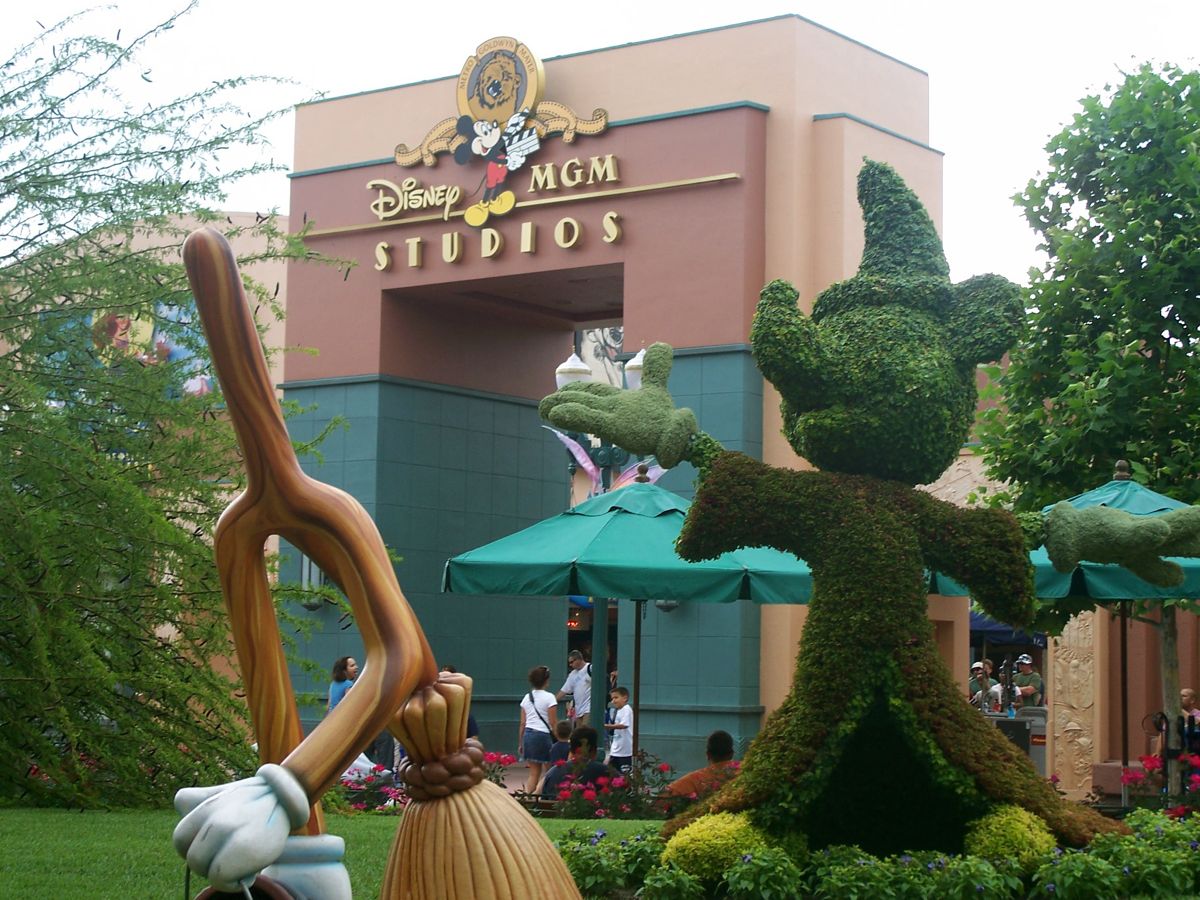
DisneyMGMIn essence, the entertainment elements and advertising materials are so thoroughly fused that it is nearly impossible for the average park guest to tell them apart. Beyond the surface level of movies and theme parks, there is evidence that, when planning a blockbuster movie, the studio has it in its mind whether of not this movie would be good to ride or be used as a theme in a park for shows and other attractions. Susan Davis (1996) explains that the media conglomerates, that primarily run the theme park industry, can pull from other media resources by way of acquisitions, partnerships, and licensing in order to grow and widen audiences and park guests. A classic example of this is the (no longer active) partnership Disney had with MGM Studios. Disney’s licensing deal with MGM allowed the company to use the iconic MGM logo and pull from its film library.
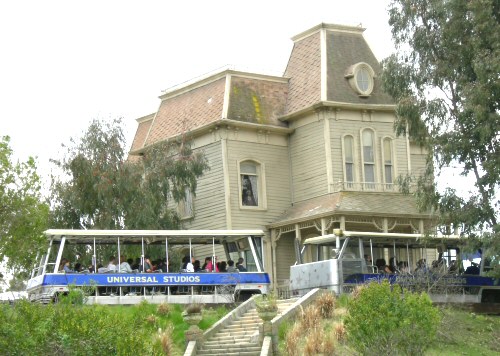
2006_psychotramIt’s well established that theme parks are an outlet for the parent companies that own them, and the movie studios they also own, to act as conduits for one another: the end result being cash flow. But, there are different ways of utilizing the cinema to benefit the theme park experience (Riley, 1998). Whereas Disney uses the characters in its movies to bolster the parks’ influence, Universal Studios (Hollywood and Florida) took a different approach (although, Universal is trending toward the Disney model in recent years). Universal Studios uses its studio tour(s) to blend labor with spectacle (Murdy, 2002). This offers the park guests a glimpse into how films are made. In recent years, this has provided less of a pull since it is common knowledge that a large portion of filmmaking exists within a computer. Universal Studios presents cinema and television history, production techniques, and special effects to impress the audiences and guests. So, one could assess that Universal Studios parks are self-reflexive in their choice of entertainment. At least this was true until park guests demanded more thrill rides and less education and appreciation for film and television art and history (Murdy, 2002).

Find out what you missed by buying my book on AMAZON!

To return to the beginning of this series, click HERE

“The Boss” movie review

TheBossA truly diversified portfolio of comedic stock! Last year Melissa McCarthy was a spy; and this year, she’s the boss. Over and over again, McCarthy proves that she is a brilliantly talented funny lady. And whereas some may see this movie as a sloppy pandering comedy, I see it as a fantastically entertaining movie with a pretty good plot filled with well-developed characters. No story exists without conflict, and comedy is no different. The best comedies are those full of conflict that ignites the hilarity and irony. Very much in the vein of other McCarthy comedies, The Boss is over the top. But, that’s perfectly acceptable because the movie certainly opens with a larger than life scene, and the movie never pretends to be something that it’s not. This type of comedy knows exactly what it is, and it rocks it! I always have more respect for movies that do not pretend to be anything other than what they are. It’s designed to provide an escape from the doldrums and mildly depressive lives many of us have and provide us with the best medicine–laughter. Is this new comedy on par with Bridesmaids or Spy? No. But, is it funny, filled with fun characters, conflict, and satire/parody? YES.

Universal Pictures’ The Boss is a slapstick comedy about media and economy mogul Michelle Darnell (McCarthy) who has pulled herself up from the tragic and challenging roots of her childhood to become the CEO of multiple Fortune 500 companies. But, like with all good things…after inside information, Michelle is found guilty of insider trading after a tipoff from a former friend turned enemy of hers. Having all her assets frozen, personal property confiscated, and losing her house, Michelle has no where to go after her short four-month stint in a white collar correctional facility. She has to turn to her former executive assistant Claire (Kristen Bell) for help. After driving Claire and her daughter crazy, Michelle is forced to start pulling her weight, which means taking Rachel, Claire’s daughter, to her Dandelions meeting (totally a parody of the Girl Scouts). That proverbial meeting proves to be just the catalyst Michelle needs to return to the top. However, she will soon come face to face with all new challenges in her business and personal life as she rises back to her previous epic heights.

At first glance, this movie appears to be another zany comedy that only McCarthy can pull off. Much in the same way Amy Poehler and Tina Fey are often type casted. But, a closer look at The Boss reveals a surprisingly well-developed and executed plot that is incredibly well-paced and includes impeccable comedic timing. Like with Poehler and Fey’s Sisters, this movie too has a heart-warming message throughout the narrative. You’ll just have to watch it to find out what that is. Like with the opening scene at Chicago’s United Center with Darnell descending to the stage on a fiery phoenix alive with pyrotechnics, Michelle herself is larger than life. Interestingly, this opening parallels the career or acting-style of McCarthy. She is the type of actor that has yet to prove a wide range of characters; but with the characters she plays, she is often the most dominant character whether among the supporting or leading cast. We expect her to provide us with that which we are accustomed to watching and enjoying. And in that respect, she has yet to fail her audience.

The phoenix at the beginning also symbolizes, as many of us know, the rising from ashes of defeat to become even more resilient and powerful than before. The character of Michele Darnell is very much a phoenix in this story. But is she the only phoenix? No. Michelle’s former assistant Claire is also a type of phoenix. Granted, she was not on top of the world and fell from splendor, but she also takes a journey similar to the phoenix. As Michelle’s assistant, she had a good job (although not paid nearly as well as she should have been)–let’s just go with the fact that she was employed. When Michelle lost her assets, she was no longer able to pay Claire and she was forced to take employment elsewhere. From riding around with Michelle in Cadillac Escalades to working in a cubical in a administrative pool, Claire fell from the glamour she was associated with by extension. After several turning points in the movie, which you will just have to see for yourself, Claire begins to rise up to achieve goals she never thought she would–personal and professional triumphs.

Unlike many comedies, this one has a dynamic range of dialog, physical antics, and high brow humor that is sure to keep you laughing during the movie. Furthermore, contrary to how many may perceive or expect of comedies, it is important that the audience not continuously laugh the entire time. If there is so much “funny” in the story structure, then the moments that should elicit the most laughter won’t succeed because they will just fall in line with the rest. It’s like Michelangelo’s famous Sistine Chapel ceiling fresco. Although I have never been, from others who have told me about their travels, the ceiling is not nearly as impressive as one may think it to be. Why is that? Because there are many painted ceilings throughout the chapel so Michelangelo’s masterpiece is fairly anti-climactic. Fortunately, The Boss strikes a pleasant balance and timing between the high comedic elements in plot and dialog. Another component of this movie that is sure to please the audience is the cameo by Kathy Bates! Thats right. Better known for her more serious roles, Kathy Bates is one of the most amazing actors because she can truly play a wide range of characters in film or television from the serious to the funny. It takes only the highest level of acting to be able to deliver brilliance in such a short amount of screen time. Plus, having Bates just classes up the film a little!

If you love Japanese katana fights, this movie has it! If you are a fan of McCarthy’s style of comedy? You won’t be disappointed. Having a bad week and just need to laugh for a while, then this movie is for you! There is little that I did not enjoy about this comedy. By no means to I argue that this is an amazing film–certainly that isn’t the case. But, is it s FUN movie that is actually well-produced, written, and acted? Yes it is.

“On Cinema and Theme Parks” (part 6)

My Book

Successful movie-themed attractions (stage shows or rides) create an atmosphere that is often built upon a foundation consisting of confrontation and direct simulation rather than long, sustained narratives. Whether watching a show on a stage or experiencing a ride-like attraction, the park guest is subjected to a series of physical and/or emotional shocks throughout the abridged narrative. Physical movement is also a strong element in an effective and successful movie-themed attraction design. This creates the illusion that the audience member is not only watching the action or horror take place, but part of the story as well. Implementing the use of special effects such as lighting effect or water also improve the guest experience by bringing the narrative to life.

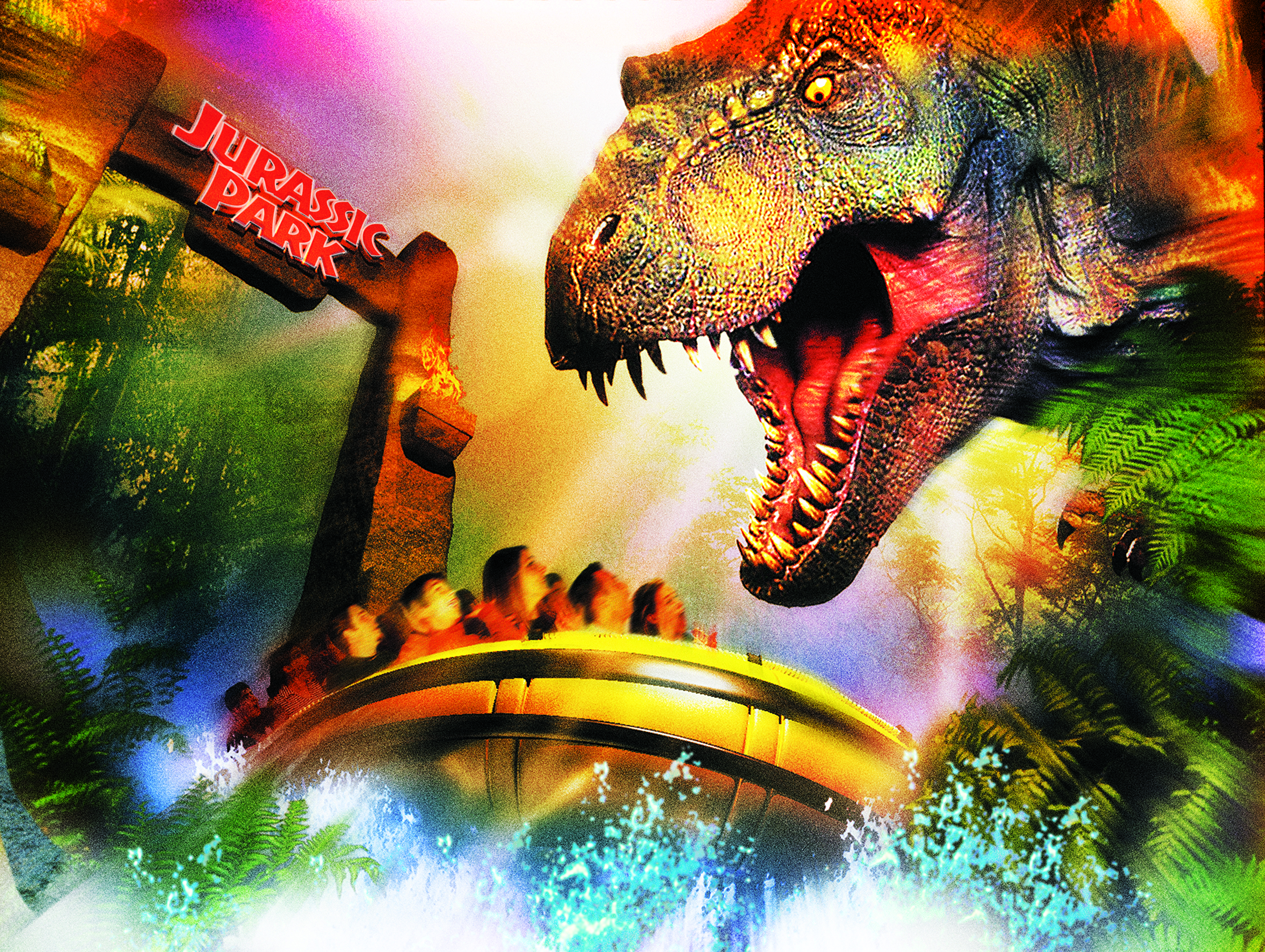
jurassic_park_river_adventureIn the contemporary theme park model, designers seek to create a relationship between the narrative and the audience (or park guest); this is what Geoff King (2000) refers to as “the cinema of attractions.” The park guests want to be transported from a world in which they are spectators to a world in which they are participants in the story. But, themed entertainment has come a long way from its inception into modern society. How the film theme has been fused with theme park attraction design has evolved over the decades to create the convergence and synergy that exists today. This is mostly due to the understanding of spectacle versus narrative. Although these two elements work seamlessly together in a themed attraction, they are not synonymous with one another. An excellent example of a horror/action film that is both spectacle and narrative, and furthermore, is both a film and a ride is Jurassic Park.

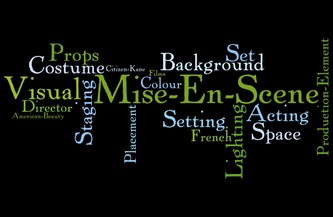
A similar example of the infusion of the aforementioned is Jaws. Just as the use of digital special effects (or visual effects) has evolved in film, the use has also evolved in theme parks. Digital (or visual) effects is a broad term, as it covers a range of possibilities that include computer-based or computer-generated effects (Wood, 2002). The “spectacle” of film and theme park rides possesses the ability to transform the narrative, thus adding an extra dimension to the story progression. However, ultimately within the full-spectrum of the elements that make up a film or ride based on a movie, spectacle is subordinate to narrative. Spectacle is needed to dazzle and simulate, but is essentially lifeless without the narrative. (Wood, 2002). Unlike a narrative, which can have great depth, spectacle “is often understood as a particular kind of extended special dimension…depthless, or as having an excess of surface…more image-full than mise-en-scene (meeze-on-syn) everything that appears before the camera and its arrangement, composition, blocking, and lighting] as it accumulates ever more details” (Wood, 2002, 373).

mise en sceneSpectacle should never be relied upon to carry a narrative, but should be considered a useful tool in enhancing the visceral experience of the narrative. Spectacle possesses the ability to be used to create a dynamic time and space through which the narrative expands and can sometimes be manipulated (Wood, 2002). Digital effects can be used to advance the story or comment on the relationship between characters and their respective environments. In terms of theme park attractions, specifically those based on movies, adding spectacle to the narrative of the ride serves to enhance the overall experience of the park guest. The use of spectacle enables the settings, events, and characters to come to life for the park guests experiencing the live movie-based narrative. Effectively used, the guests should feel as though they get transported from the real world to the world of the movie. Theme parks offer escapes from reality; this is also true of most movies. So, by utilizing the tangible benefits of both narrative and spectacle, the designers are successful in creating the illusion that the guest is either witnessing or part of the story.

University of Central Florida professor Andy Milman (2001) further explores this relationship between cinema and theme parks in his writings in the Journal of Tourism (2001). Exploring the infrastructure of the movies, theme parks, and the convergence of the two is a complex research area that is increasingly becoming more important as the movie studios turn to theme parks for revenue, and the theme parks depend on the movie studios for creative direction and expansive guest experiences. In the article Movie Induced Tourism, authors Roger Riley, Dwayne Baker, and Carlton S. Van Doren (1998) explain that movies provide both the objective and subjective material that capture peoples’ gaze and influence them to travel to the places depicted in movies.  The concept of traveling to locations where movies were made has a direct relationship with the concept of designing theme parks based on movies and showcasing the magic behind the movies (Riley et al, 1998). This concept can be seen in some of the most visited parks in the world. One of the goals of a studio like Warner Bros. is to get the fans of the Harry Potter books and movies to the Wizarding World of Harry Potter at Universal Studios Florida; and, by way of the flip side of the coin, one of the goals of the theme parks (mainly Disney and Universal) is to turn park guests into movie audience patrons (Milman, 2001).

You can always find out what you missed by buying my book on Amazon!

Return to the beginning of this series by clicking PART 1

“On Cinema and Theme Parks” (part 5)

My Book

Over the decades, there has been a strong convergence between cinema and theme parks. Studio executives, filmmakers, and theme park designers are working together in ways that serve to support both the movies and the parks that have rides based on the movies. Historically, the beginning of the convergence of cinema and theme parks became apparent in the late 1970s. Following the decline and eventual fall of the original Hollywood studio system in the 1960s, there are some areas that have changed in the production of films (and other entertainment media). According to Allen Scott of UCLA in the writings of Dr. Ralph Casady (1957), some of the changes and transitions dating back to the 1970s are: (1)The penetration of digital technology into all stages of motion picture production (2)The intensified geographic decentralization of production in the greater LA area (3)The proliferation of new markets based on the cross-promotion of intellectual property rights (4)The increased penetration into themed entertainment and video gaming and (5)The merging of, or buying out of major studios by giant multinational media conglomerates (2001). Along with anti-trust government regulation as a result of the Paramount Decision* and the reluctance of big banks to continue to finance motion pictures, film studios were forced to seek new revenues from other sources.

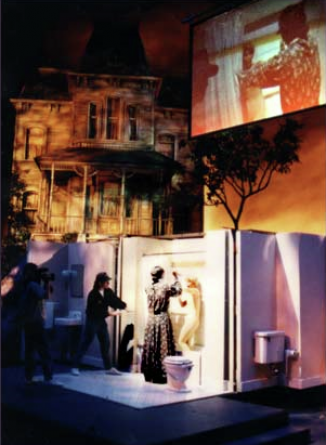
Inside the show building from the former Hitchcock: the Art of Making Movies attraction at Universal Studios Florida.

Inside the show building from the former Hitchcock: the Art of Making Movies attraction at Universal Studios Florida.

More than ever, filmmakers and attraction designers need to know what the cinema patron and park guest both want in order to create a synergistic and dynamic entertainment experience based on a single narrative. The idea is to generate a similar or complementary emotional response during the themed attraction to that experienced by the movie patron during the respective movie. According to researchers Enrique Bigne, Louisa Audreu, and Juergen Gnoth (2004) of Tourism Management, visitor emotions, in a theme park environment, influence satisfaction and behavioral intentions; and, emotions consist of two independent dimensions: pleasure and arousal (2004).  Theme parks are a form of leisure activity because they provide an opportunity for entertainment during an individual’s discretionary time (Milman, 1991). More specifically, movie-based theme parks provide live themed entertainment experiences that immerse the individual into the world of filmmaking or into the narrative itself. As media conglomerates continue to grow and acquire theme park properties (either through the development of new or re-envisioning of old ones) and intellectual property licenses, the popularity of movie-based theme parks will likely continue to grow.

(Check out what you missed by buying my book on Amazon)

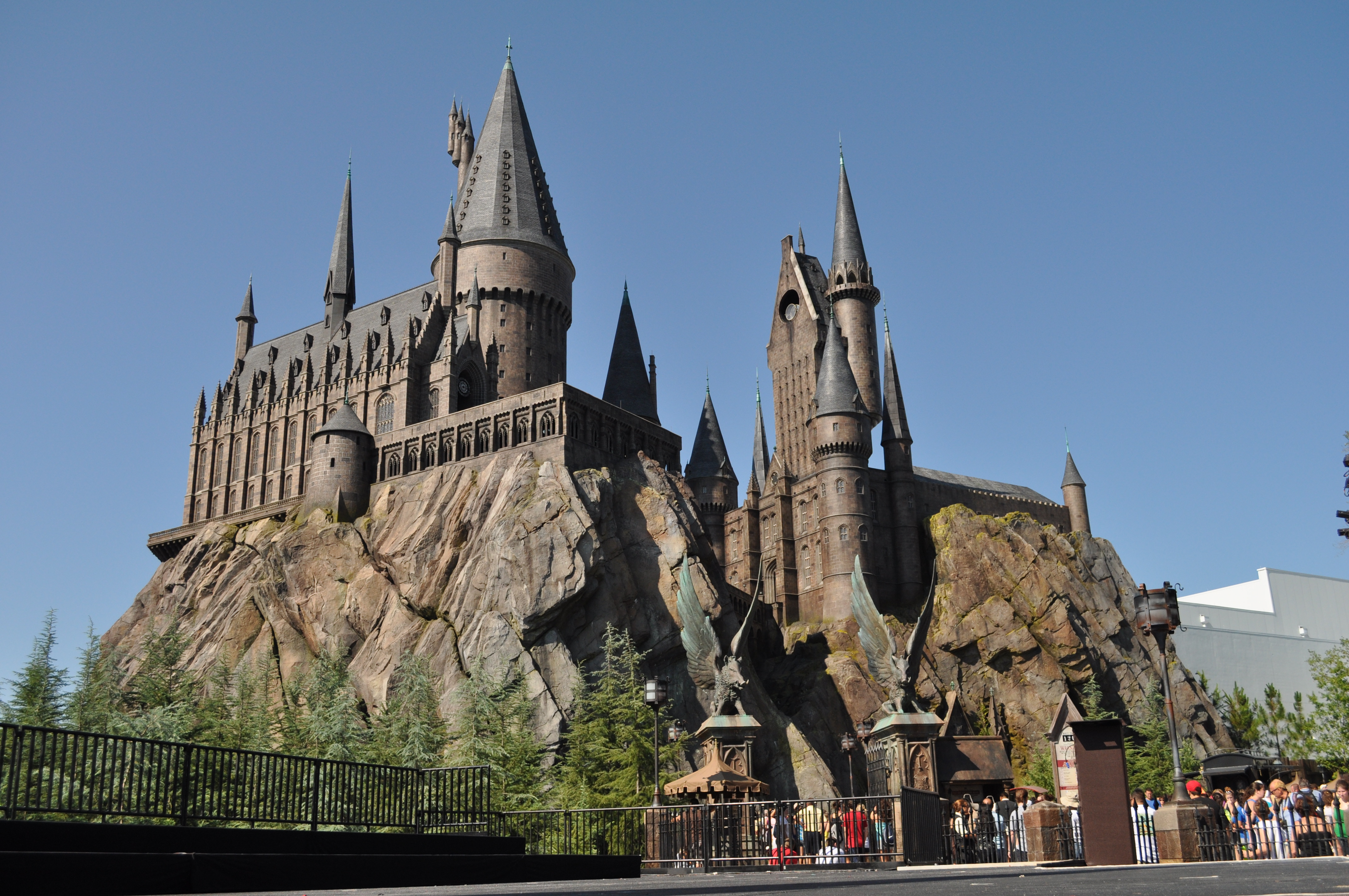
Harry Potter and the Forbidden Journey at Universal's Islands of Adventure

Harry Potter and the Forbidden Journey at Universal’s Islands of Adventure

The creators of theme park attractions from movies have to keep in mind two areas to communicate through the attraction: (1) selecting elements from the setting, characters, and narrative to translate; (2) Translating the aforementioned elements in a manner which can be communicated in a physical, tangible, multisensory way. Theme parks have traditionally used two models for cinema-based attractions. Examples of these models can be found at the Universal Studios Florida park (Failes, 2014). One model is the behind the scenes of movie-making and the other model is the ‘ride the movie’ concept (“ride the movies” is the original slogan for Universal Studios Parks). The former is traditionally more of a stage show that takes the park guests on a journey through the production process of a movie (i.e. Earthquake: Ride it Out or Hitchcock: The Art of Making Movies). The latter is usually a more conventional amusement ride that involves moving vehicles through the world and characters of the movie, often facing some sort of challenge within the narrative (i.e. Harry Potter: The Forbidden Journey and StarTours: The Adventure Continues). In recent years, there has been a move from the “behind the scenes” rides/shows to more participatory rides, placing the park guest into the narrative as a de facto character from the movie.

* U.S. V. PARAMOUNT PICTURES, INC., 334 U.S. 131 (1948) The US Government forced the eight major/minor studio players to end the practice of block booking (meaning, films would now be sold on an individual basis), divest themselves of their respective theatre chains (sell them off), and modify the practice of long-term employee contracts (though, this would continue until the 1960s). This marked the beginning of the end of the Studio System, AKA Hollywood’s decentralization.

For previous articles this series, click here:

“On Cinema and Theme Parks” part 4

My Book

Continued from Part 3

One medium being the extension of, or exhibiting a direct connection to, another medium is not a new concept. In fact, this concept of media convergence has been around for as long as multiple mediums have existed. In order to better understand the convergence or synergy that exists between cinema, in particular horror film, and theme parks, it is crucial to understand how we arrived at this point. One thing that film and themed entertainment both have in common is that each tells a story—in a different manner. But, the narrative is often quite similar. Prior to theme parks and cinema (film), there were plays, novels, and oral stories/traditions. The novel is an extension of the oral story, the play is an extension of the novel, cinema is an extension of the play, and the theme park is an extension of cinema. According to Dr. Henry Jenkins, “there has been an alarming concentration of the ownership of mainstream commercial media, with a small handful of multinational media conglomerates dominating all sectors of the entertainment industry” (2004, p1). This is clearly seen in the acquisition, exhibition, and development of theme park attractions based upon movies and, to a lesser extent, television shows.

The first cinemas were setup more like attractions than actual theatres. Perhaps more than coincidentally, theatres began springing up at the same time Coney Island opened its turnstiles around the beginning of the twentieth century; and at this time, cinema itself was still very much viewed as an attraction (Gunning, 1986). According to Tom Gunning (1986), “it was precisely the exhibitionist quality of turn-of-the-century popular art that made it attractive to the avant-garde” (1986, p66). So this concept of the convergence of cinema and theme park (or attraction) is one that dates all the way back to the early 1900s. Since some of the earliest films were of a surreal or horror nature, it is of no surprise that horror played a large role in the development of the cinema attraction. Much in the same way that early cinema was essentially a variety show, in essence, lacked a continuous diegesis, or narrative, the convergence of cinema and theme parks offers a variety of cinema-based attractions that are, indirectly at best, connected to each other. However, instead of the film, itself, being the attraction, cinema-based theme parks and attractions use the narrative provided by a work of cinema and uses elements of that film that can be translated into a real-world experience.

But as with any media convergence, there are also pitfalls to such a synergy between two powerful media. In order to best understand the pitfalls and promises in such a meeting, it is imperative to discuss convergence of two media in and of itself. Understanding the concept of convergence will better prepare filmmakers and themed entertainment designers to select the best elements of films to translate into themed attractions based on movies, in particular horror or action. According to the leader of research into the area of media convergence Henry Jenkins (2004), “media convergence is more than simply a technological shift. Convergence alters the relationship between existing technologies, industries, markets, genres, and audiences. Convergence refers to a process, but not an endpoint” (P1). Over the years, the relationship between cinema and theme parks has shifted. Before, cinema was the attraction; and now, the attraction is infused with cinema. And the handful of multinational media conglomerates own both methods of the exhibition of creativity. With the exception of the Walt Disney Company, many of the other media conglomerates have prominent interests in theme parks and film and television studios; and some also have interests in Broadway productions (i.e. Universal Studios’ Wicked and Sony Pictures’ Spider-Man).

Crossing over into new arenas of revenue requires access to vast media libraries, and that is what many of media conglomerates have at their disposal. This ability to converge areas of media interest in order to generate more revenue is something that contrasts with old Hollywood. Jenkins (2004) remarks that “old Hollywood focused on cinema, [and] the new media conglomerates have controlling interests across the entire entertainment industry” (P34). This convergence greatly influences the way society consumes media and entertainment (everything from movies to theme parks to music to toys and games). More than a cross-promotion of entertainment and media products, the convergence of cinema and theme parks is “a reconfiguration of media power and a reshaping of media aesthetics and economics” (Jenkins, 2004, P35). This reconfiguration comes in many shapes and forms. And, the horror film has found a place within the new configuration of entertainment media synergy. Specifically, the horror film has been used instrumentally in this reconfiguration; evidence of this can be seen in the prolific number of television shows (most popularly zombie shows), movies, and horror/Halloween themed events at theme parks (e.g. Busch Gardens’ Howl-O-Scream and Universal Studios’ Halloween Horror Nights). In these events, horror films provide a vast heritage from which theme parks can draw characters and plots to create temporary attractions to generate more income for the media company. Looking at many of the opening day attractions at movie-based theme parks, horror films were the first films to be translated into themed entertainment.

Part 1

Part 2

Part 3