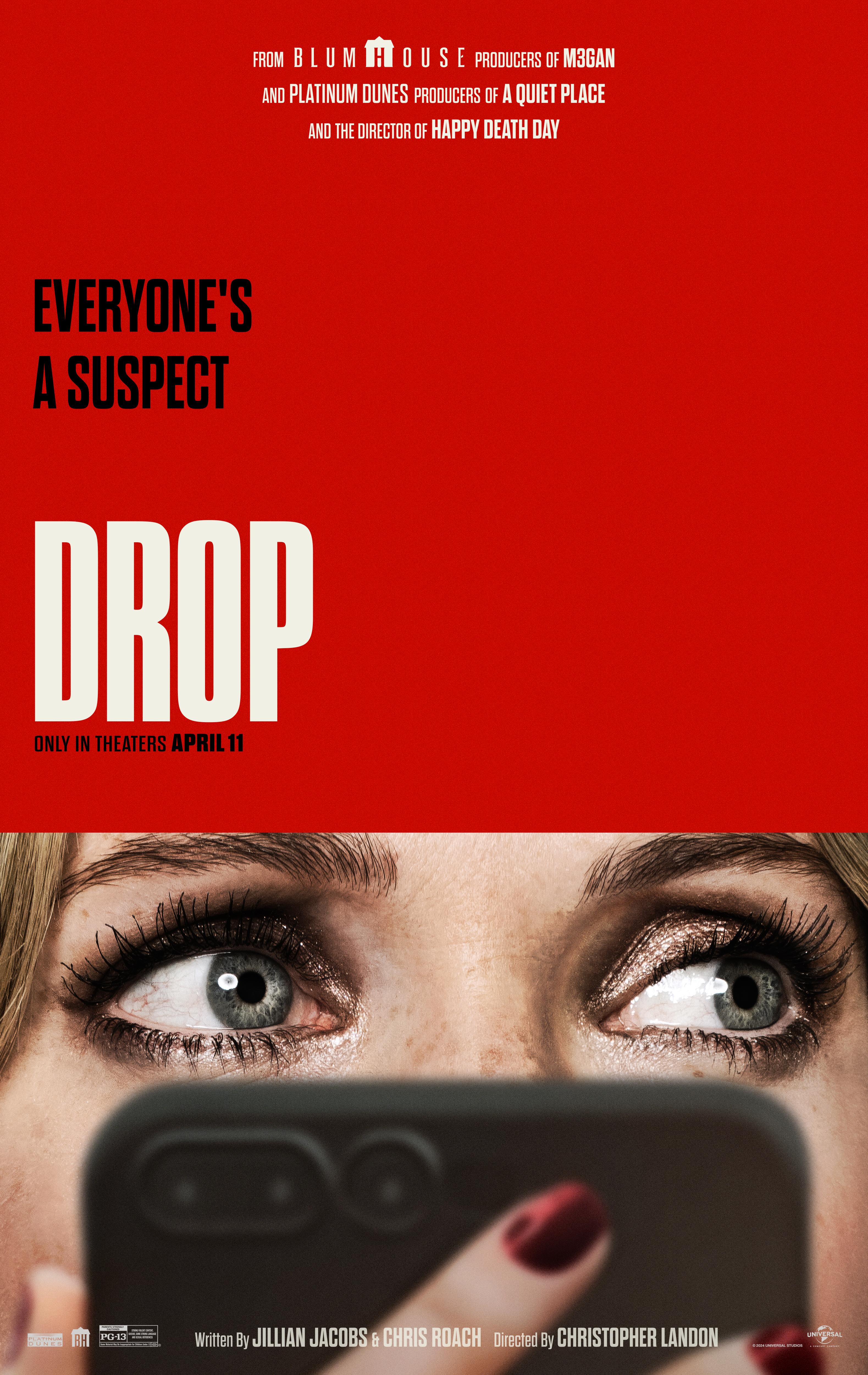
DROP (2025) movie mini-review

“Drop” in on a lot of fun at the cinema. Universal and Blumhouse’s Drop is a highly entertaining Lifetime-esque thriller that requires a prescription-strength dosage of suspension of disbelief. With a charming cast and adrenaline pumping suspense and tension, Christopher Landon’s latest movie delivers an engaging time at the cinema.

Violet is a widowed mother who goes to an upscale restaurant to meet Henry, her charming and handsome date. However, her pleasant evening soon turns into a living nightmare when she receives phone messages from a mysterious, hooded figure who threatens to kill her young son and sister unless she kills Henry.

If you enjoy the Lifetime movies of the 2000s, then this is right up your alley. The stakes are high and you’ll empathize with our central character of Violet, and root for her and her family’s survival. Because the lead cast quickly makes a meaningful connection with the audience, the plot holes (and there are many) almost feel irrelevant because the movie’s strength isn’t so much in the realism of the plot as much as it is in the naturalism of the plot. The movie is disconnected sufficiently enough from reality that it functions as an escapist picture, therefore the fact that there is little to no way this plot could ever happen due to the ridiculous nature. Between the high camp, high stakes, and charming cast, Drop blends the aesthetics of a high-budget thriller with the emotional pitch of a Lifetime movie—often to hilarious and unexpectedly entertaining results.

From writer-director Christopher Landon, Drop is directed with the kind of slick, over-serious tone that almost dares you not to laugh, Drop thrives in that uncanny cinematic space where implausibility meets irresistible entertainment (a.k.a. the Lifetime movie formula). The film is not so much interested in realism as it is in emotional immediacy—and it serves it with gusto. What makes Drop work is the sheet Oscar-level commitment. In an era wherein movies that typically fall in the vein of this one, wink at the audience to cue them in on the joke, this movie never acknowledges the absurdity of the premise. Which proves to be the winning hand, because the audience’s experience is surprisingly immersive. The stakes may be inflated, but the emotions feel real in the moment, and that’s what keeps viewers engaged. it to be consumed by its tornado of drama.

Even though the movie never becomes self-aware of its absurdity, that isn’t to say that the campy levels of plot devices and drama don’t play a role–on the contrary–the movie’s absurdity is its strength. Whether you’re watching in genuine suspense or howling with friends at the sheer audacity of it all, Drop delivers. And it’s way more fun than it has any right to be. Solid as the plot is from a storytelling mechanics perspective, it definitely defies conventional logic. But the movie completely surpasses any expectations I had going into the movie. Drop is a deliciously unhinged suspense thriller that feels like a Lifetime movie on a Red Bull bender—highly recommended for fans of unintentional camp and cathartic chaos.

Ryan is the general manager for 90.7 WKGC Public Media in Panama City and host of the public radio show ReelTalk about all things cinema. Additionally, he is the author of the upcoming film studies book titled Monsters, Madness, and Mayhem: Why People Love Horror. After teaching film studies for over eight years at the University of Tampa, he transitioned from the classroom to public media. He is a member of the Critics Association of Central Florida and Indie Film Critics of America. If you like this article, check out the others and FOLLOW this blog! Follow him on Twitter: RLTerry1 and LetterBoxd: RLTerry

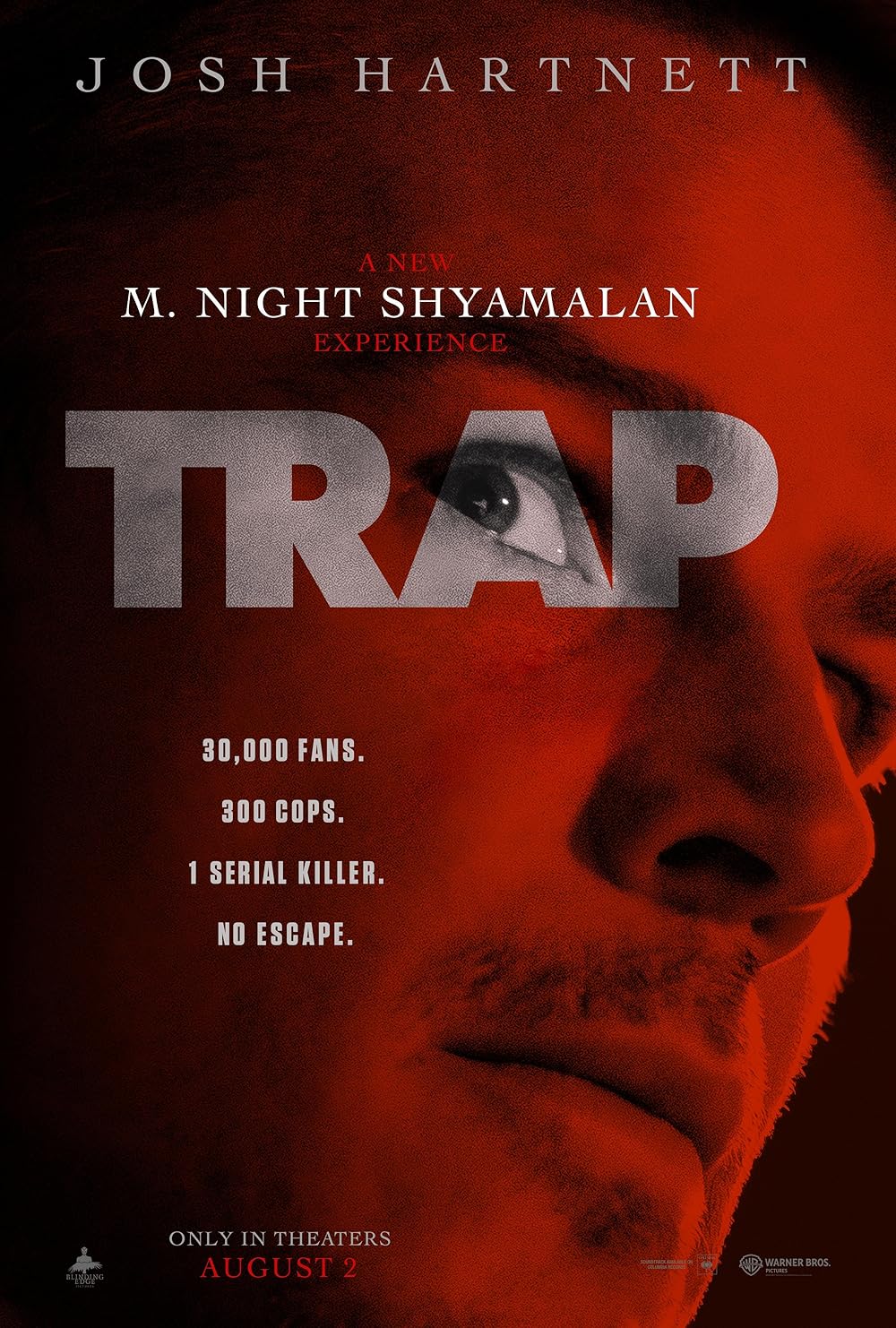
TRAP movie mini-review

A mediocre thriller that is sufficiently enjoyable. M. Night Shyamalan’s TRAP, starring nineties heartthrob Josh Hartnett, is a perfectly satisfying way to spend a rainy afternoon. The most enjoyable aspect of the movie is the performative dimension. Hartnett delivers a chilling performance as the serial killer The Butcher. Before you @ me, his identity is revealed early in the movie. But that’s the point, it’s not a movie that builds its suspense on the identity of the killer; rather, the suspense is built upon how he is going to escape the FBI after being tracked to the Lady Raven concert in Philadelphia. Hartnett’s performance is completely unsettling from the beginning when we sense that there is something a little off about his character. There is a side-plot that goes nowhere, that feels superfluous, but otherwise, it is a tightly written script with thoughtful pacing and a nice payoff. I appreciate this vehicle that allows Hartnett to showcase the range of his talent. Because he pulls off warm and charming and completely unnerving. The cameo by screen legend Hayley Mills was a nice touch, and Shyamalan’s daughter also delivered a solid performance as the trusting daughter. While I cannot say that I was particularly wowed by this movie, I can say that I enjoyed my time well enough. It’s a fun movie that provides a thrilling ride for the relatively brief runtime.

Ryan teaches Film Studies and Screenwriting at the University of Tampa and is a member of the Critics Association of Central Florida and Indie Film Critics of America. If you like this article, check out the others and FOLLOW this blog! Interested in Ryan making a guest appearance on your podcast or contributing to your website? Send him a DM on Twitter. If you’re ever in Tampa or Orlando, feel free to catch a movie with him.

Follow him on Twitter: RLTerry1 and LetterBoxd: RLTerry

BASIC INSTINCT (1992) a Throwback Thursday review

Still suspenseful and seductive! The Paul Verhoeven hypnotic neo-noir thriller continues to entertain and fascinate us more than three decades later. Exemplary direction, writing, and acting. Every storytelling element works flawlessly together to craft a film that was a cultural phenomenon and made Sharon Stone a household name. The heavily Hitchcockian-inspired film also contains characteristics of giallo that assault the senses and add a cloak and dagger quality to the string of mysterious, gruesome crimes. The effective use of red herrings and misdirection adds to the tension, keeping audiences guessing until the final reveal. Recently, I used this film in class, and my students, none of whom had seen it before, found it to be captivating, thoughtful, and provocative.

The mysterious Catherine Tramell (Sharon Stone), a beautiful crime novelist, becomes a suspect when she is linked to the brutal death of a rock star. Investigated by homicide detective Nick Curran (Michael Douglas), Catherine seduces him into an intense relationship. Meanwhile, the murder case becomes increasingly complicated when more seemingly connected deaths occur and Nick’s psychologist and lover, Beth Garner (Jeanne Tripplehorn), appears to be another suspect.

Basic Instinct both pays homage to and yet subverts expectations and tropes we have of film noir. This psychosexual suspense thriller draws inspiration from the works of Alfred Hitchcock and Dario Argento, particularly Vertigo, Psycho, and Suspiria in its exploration of manipulation, sexuality, and obsession. The use of shadowy lighting, ominous music, and morally ambiguous characters all contribute to the film’s rich noir aesthetic. That, coupled with unraveling the alluring mystery of the ice pic wielding killer, makes this a gripping sensory explosion motion picture tour de force.

Jerry Goldsmith’s phenomenal score plays a vital role in shaping the film’s atmosphere, mood, and emotional impact. Through its seductive melodies, tense rhythms, and character motifs, the music enhances the storytelling and helps to create a compelling and immersive cinematic experience. Whether accompanying intimate moments or intense suspense and violence, the music enhances the audience’s experience and adds an immersion to the storytelling. Goldsmith is an underrated composer because, not only did he deliver this seductive score, but he also wrote themes and music for Gremlins, Alien, Star Trek: the Next Generation, The Omen, and more. In addition to a prolific library of work in cinema and television, his compositions also demonstrate a wide rage of styles, unlike most other composers. When discussing great composers of the music of cinema, he should definitely be in the conversation.

At its core, this seductive film explores themes of obsession, desire, power, and manipulation. The film delves into the darker aspects of human psychology, particularly the blurred lines between love, lust, and violence. It also examines the idea of control, both in personal relationships and within the criminal justice system. In an analysis of the film, one of my students described it as a chess game, with Tramell being the white pieces and Nick being black. After all these years, I never thought to read the film as a chess match, each character attempting to out maneuver the other. While the film has long sense been thought of as an elaborate cat and mouse game, I feel my student offers a much more precise reading of the film as a chess game.

Sharon Stone’s iconic career-defining role as Catherine Tramell is characterized by her magnetic presence and undeniable charisma. From the moment we meet her lounging at her beach house by the waterside, she exudes confidence and allure, drawing others into her orbit with ease. Her character subverts stereotypes, presenting a complex and empowered female character of opposition whom is both alluring and dangerous. In every scene in which she appears, she delivers her performance with incredible gravitas. And it’s this performance by which the film owes so much of its enduring legacy. That interrogation scene alone, wherein she is simultaneously in complete control of the interview whilst embracing her sexuality is still one of the best single scenes of all time, especially when exploring feminist cinema.

She isn’t a strong female character because the men around her are weak or incompetent at their jobs, she is a strong character–period–because those that surround her are smart and driven. Yet, Catherine Tramell continually proves herself throughout the film to be cunning, calm, confident, and in control of any situation in which she finds herself. Suffice it to say, Stone’s Tramell is a complex and enigmatic character who embodies the archetype of the femme fatale, a seductive and dangerous woman who manipulates those around her for her own gain. The femme fatale represents a beautiful symphony of duality that continually draws us into the story.

Tramell’s sexuality is a central aspect of her character, and Stone portrays her with a sense of agency and empowerment. She is unabashedly sexual, embracing her desires without apology or shame. Stone’s performance balances Tramell’s overt sexuality with a sense of control and autonomy, challenging traditional gender norms and expectations. Tramell is a complex character that defies social norms and mores, wielding her sexuality as a means of empowerment in a male-dominated world.

In the film’s exploration of the darker aspects of the human psyche, both Nick and Catherine become completely consumed by their mutual attraction and psychological gamesmanship, blurring the lines between lust and danger. In many ways, they are mirror images of one another, which may explain the instant fascination each has with the other. The film explores the consequences of unchecked desire and the destructive nature of obsession. Moreover, the film explores heteronormative gender norms and that liminal space between personal and professional boundaries.

Tramell’s overt sexuality challenges Nick’s masculinity and authority, leading to a complex dynamic characterized by dominance and submission. This exploration of heteronormative gender dynamics adds dimension to their relationship and underscores the film’s themes of control and manipulation. One can even take this further to read the ice pic itself as a phallic weapon that Tramell has commandeered. She exerts control over the penetrative ice pic just as she has exerted control over Nick, or at least Nick’s perception of her. Concerning the manipulation of perception, this aspect to the plot and characters is a fantastic homage to Vertigo.

Michael Douglas’ performance of the deeply flawed detective Nick Curran may not get the attention that Stone’s Catherine Tramell does, but he delivers an incredibly strong performance of the recovering alcoholic and struggling sex-addict. Nick, a man whose moral and ethical compass is constantly being tested, struggles with his past and his predisposition to impulsive behavior. His vulnerabilities and inner demons make him a compelling character, as he navigates a dangerous world while battling his personal demons.

His attraction to Tramell blurs the lines between his personal desires and professional duties, compromising his judgment and objectivity. This vulnerability adds depth to his character, showcasing his susceptibility to manipulation. Throughout the film, Nick seeks redemption for his past mistakes, making his character journey one of self-discovery and catharsis. Nick’s experiences in the roller-coaster of an investigation provide him with the tools to confront his inner turmoil and ultimately finds closure. This character arc adds emotional depth to the narrative and allows the audience to empathize with his struggles.

Basic Instinct simultaneously checks all the boxes for neo-noir, and still manages to break ground! It’s a mind-bending, mesmerizing thrill ride from start to finish that continues to age beautifully like a fine wine. It’s a bold and controversial thriller that continues to captivate audiences with its exploration of sexuality, heteronormative roles, power, and psychological intrigue.

Ryan teaches Film Studies and Screenwriting at the University of Tampa and is a member of the Critics Association of Central Florida and Indie Film Critics of America. If you like this article, check out the others and FOLLOW this blog! Interested in Ryan making a guest appearance on your podcast or contributing to your website? Send him a DM on Twitter. If you’re ever in Tampa or Orlando, feel free to catch a movie with him.

Follow him on Twitter: RLTerry1 and LetterBoxd: RLTerry
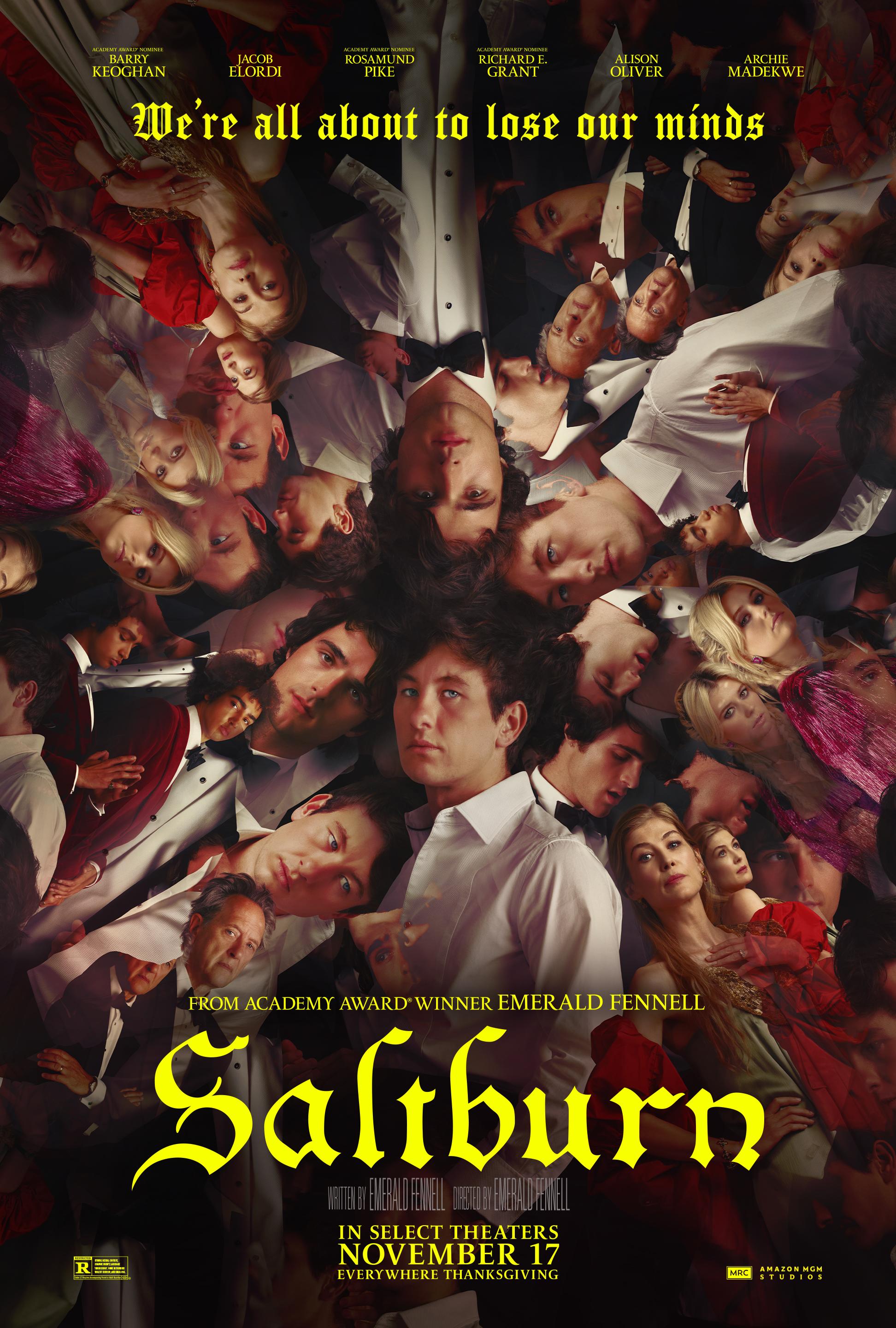
SALTBURN film review

An intoxicating and provocative neo-gothic film that is tonally all over the place. Heathers meets Cruel Intentions meets Flashdance(?) in a film that is incredibly stylistic but lacks any lasting entertainment value, except for the very end. Emerald Fennel (Promising Young Woman) delivers a sensory explosion critique on the facades we project through a story of the shifting balances of power, obsession, and deception. Is it a dark comedy? Is it a psychological thriller? Answer: it’s both and neither, and to that end, it’s potential for motion picture excellence is hampered. The tone of the film is incredibly uneven; and not one single character is likable. Saltburn presented many opportunities for effective, intentional camp, but chose to go the more serious route and play it straight.

Oliver (Barry Keoghan), a freshman at Oxford, is invited by classmate Felix’s (Jacob Elordi) family’s country estate for an exciting summer, but things are not what they seem and soon the fantastical estate falls victim to deception and manipulation.

The aforementioned movie examples in the opening paragraph each feature an aspect of this film; but each of those three examples offers a great deal more in entertainment value, not to mention lasting impact upon popular culture. Even though the central character’s external goal doesn’t become clear until the end, it is a thoughtfully plotted film that you wish you had enjoyed more in order to watch it again. However, the very last scene of the film is one that takes direct inspiration from Flashdance, and will be what is likely talked about for years to come. Too bad the rest of the film wasn’t as fun and entertaining as the final scene. Saltburn is neither an uplifting story nor is it a cautionary tale; it’s uncomfortably somewhere in the middle.

Clearly Emerald Fennell has a fantastic eye for shot composition and a demonstrable talent for crafting environments that stimulate the senses and emote. And that is to be commended. Few directors have a gift for creating and capturing settings and environments that communicate a discernible mood, tone, or emotion. We witness this in German Expressionism, which is at the root of gothic and many horror films. No surprise then that this film is incredibly neo-gothic in story and setting. Saltburn embodies uses both the technical and performative dimensions of the mise-en-scene to challenge audience perceptions; moreover, gothic films concern themselves with sexuality and audience response thereto. The collective imagery in this film generate a kind of spectacle for the audience to draw us into a heightened state of unease or fear. Fennell’s Saltburn is an exemplary motion picture for the art of drawing the audience into the world inhabited by the characters, and beckons you to join them.

Sounds great, right? If there were any characters worth caring about, then Saltburn could indeed be the masterpiece that many have claimed it to be. Fennell nailed the neo-gothic aesthetic and further stimulated our senses with the film’s intoxicating sexuality, but there isn’t a single character that you care enough about whether they live or die. These characters will both attract and repulse you, but more repulsive than attractive. No doubt that Oliver will become the stuff of erotic fan fiction and dreams, but even he isn’t likable in the end. And when delivering a melodrama about facades, pretenses, obsession, and deception, whether the film ends on a high or low note, there should always be at least one character the audience can root for, can truly care whether they live or die.

The story of Saltburn is inspired by the narratives of both Heathers and Cruel Intentions. And I don’t mention this to in any way suggest that Saltburn is derivative–it’s not–but to draw parallels to similar films. While I feel that both of these movies are much more rewatchable than Saltburn, if you like those two movies, you will likely enjoy it, even if you watch it one time. Where Heathers and Cruel Intentions succeed and Saltburn fails is in the entertainment value and tonal consistency. It’s as if Fennell was so concerned with provoking and sensually stimulating the audience that she forgot that the film should still be entertaining. Just because a film contains dark comedy or scathing social commentary doesn’t mean that it’s excused from providing entertainment for the audience.

What I will remember most is the ending of the film, which I cannot talk much about because of spoilers; however, I know that Fennell must love Flashdance because the final scene of the film is clearly inspired by the audition and triumph scene when Alex (and the dancers portraying her, haha) dance to Flashdance…What a Feeling! by the late Irene Cara. Even though we love Flashdance, we all know the plot is honestly not very good, but what saves the movie that literally defined the music, dance, and fashion of the 1980s is the uplifting, inspirational story and the high degree of entertainment value, not to mention one of the best jukebox soundtracks of all time (it won both an Oscar and Grammy for best original song).

Even though the tone may be inconsistent and characters unlikeable, the film certainly delivers on immersive atmosphere and a spider-like web of deception and manipulation with a great cast.

Ryan teaches Film Studies and Screenwriting at the University of Tampa and is a member of the Critics Association of Central Florida and Indie Film Critics of America. If you like this article, check out the others and FOLLOW this blog! Interested in Ryan making a guest appearance on your podcast or contributing to your website? Send him a DM on Twitter. If you’re ever in Tampa or Orlando, feel free to catch a movie with him.

Follow him on Twitter: RLTerry1 and LetterBoxd: RLTerry
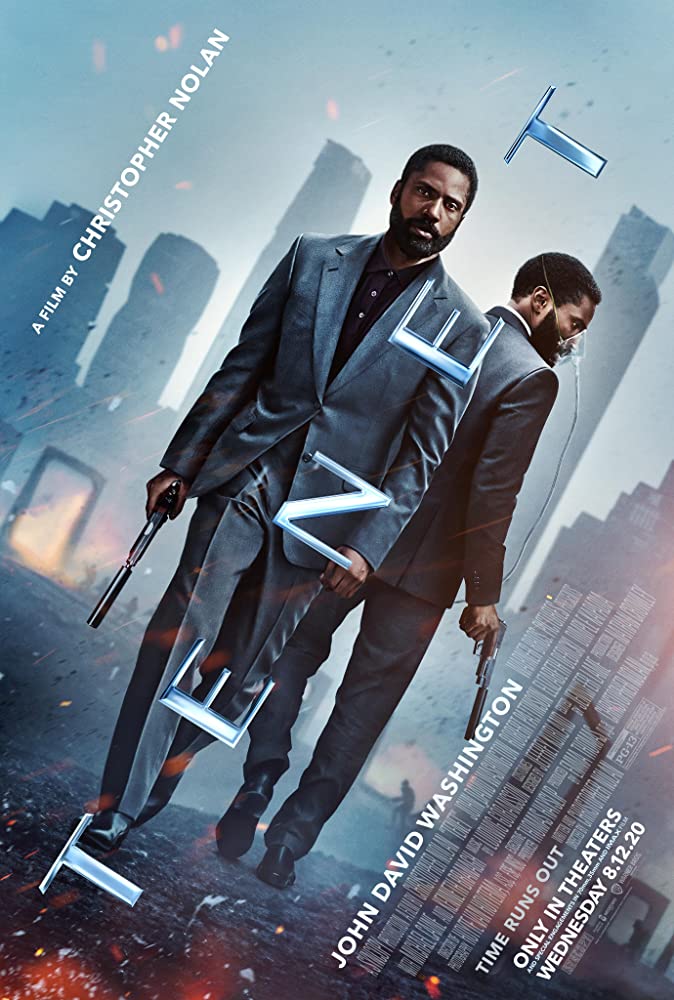
“TENET” Film Review

By Leon Zitz

What starts out as a sleek and well executed, but still fairly standard, espionage film with some interesting sci-fi ideas, turns into a mind-blowing “time travel” action-thriller that will have you staring at the screen, mouth agape in awe. “Armed with only one word TENET, and fighting for the survival of the entire world, a Protagonist journeys through a twilight world of international espionage on a mission that will unfold in something beyond real time” (IMDb). And that is all you want or need to know going into this film.

The film is like a loop, closed in itself, similar to Nolan’s earlier film Memento but much more complex, even more complex than Inception. Previous events of the film will get re contextualized in the second half and inserts that viewers might not even have noticed start to become make sense and become important. TENET definitely warrants multiple viewings to catch all these little details, but the surface plot and the characters’ goals are kept simple so that even if not completely understanding why or how, the viewer is never lost in what is going on.

Aside from digital compositing, which is seamless, the film employs almost no computer generated effects, all action scenes are choreographed and shot practically. Unfortunately due to this age where everything you can think of is made possible computer generated effects, this might only become impressive to the viewer if he is made aware of how the effects were achieved. Fortunately, unlike some other recent productions which rely heavily on CGI, TENET will stand the test of time and may thus even become more impressive for future viewers.

The Film’s weak point is its characters. We don’t learn much about “Neil,” played by Robert Pattinson, and “The Protagonist,” played by John David Washington, aside from surface level information and they aren’t developed much until the very end of the film. Kenneth Branagh does a good job as the sometimes scenery chewing but still fairly standard villain character. The heart and soul of the movie is Elizabeth Debicki’s character “Ka,t” who is the most developed character in the film and arguably the most emotionally affected by the events of the film.

Needless to say this is not a character-driven film, instead TENET is highly plot driven but as long as viewers are aware of that they will be satisfied. If you are looking for more than your average spy action thriller but aren’t expecting a philosophical masterpiece then this is the film for you.

This article was written by our German correspondent Leon Zitz. Be sure to checkout his Instagram and YouTube pages. You can also checkout my review of his latest film Romeo Kills Juliette.

Ryan teaches screenwriting and American cinema at the University of Tampa. If you like this article, check out the others and FOLLOW this blog! Ryan is also the creator of the Four’s a Crowd sitcom podcast now streaming on your favorite podcatcher. Interested in Ryan making a guest appearance on your podcast or contributing to your website? Send him a DM on Twitter or email him at RLTerry1@gmail.com! If you’re ever in Tampa or Orlando, feel free to catch a movie with or meet him in the theme parks!

Follow him on Twitter: RLTerry1