TOP 10 FILM SCORES OF THE 1970s: AN ECLECTIC DECADE OF TRANSFORMATION

Film scoring in the 1970s was nothing short of revolutionary. This was a decade in which composers and filmmakers experimented with sound in bold, unprecedented ways. Sweeping orchestras still had their place, but they now shared the stage with eerie minimalism, jazz-infused soundscapes, synthesizers, and even progressive rock. The result was a period of extraordinary breadth and innovation—one that gave us some of the most iconic film music ever written.

At the heart of this decade stood John Williams and Jerry Goldsmith, two composers who dominated in very different ways. Williams revived the lush, symphonic tradition and brought it back to the masses with scores that became cultural phenomena. Goldsmith, meanwhile, was the chameleon—endlessly inventive, prolific, and daring, whether working with avant-garde techniques, electronic experimentation, or lyrical orchestrations. Yet the decade was not defined by them alone. Outsiders like Goblin, with their phantasmagorical score for Suspiria, or directors such as John Carpenter, who electrified horror with nothing more than a chilling piano rhythm in Halloween, proved that iconic film music could be born outside the studio system. Jazz, soul, and early R&B also found their way into major works, mirroring the diverse cultural pulse of the era.

The soundscape of the 1970s was one where tradition collided with innovation. Bernard Hermann closed out his legendary career with Taxi Driver, a jazz-infused urban nightmare that distilled both character and city into sound. Jerry Goldsmith, the consummate innovator, moved effortlessly from the operatic choral terror of The Omen to the avant-garde dissonance of Alien and the melancholy trumpet of Chinatown—not to mention his enduring Star Trek theme, launched in The Motion Picture. Mike Oldfield’s Tubular Bells, adapted for The Exorcist, demonstrated that minimalist rock could chill as deeply as any orchestra. And Williams resurrected the grand symphonic tradition with Jaws and Star Wars, reintroducing sweeping themes and leitmotifs to a new generation. Taken together, these works made the 1970s both a bridge and a launchpad: honoring the past while daring to explore the future.

Audiences witnessed a resurgence of the full-bodied symphonic score, reviving the golden-age practice of leitmotif-driven composition. But while many scores channeled old Hollywood, these same scores were blazing new trails–trails that future filmmakers would tread and further develop in their own voices. Yet the 1970s were hardly a return to tradition alone. From fragmented jazz and abrasive brass to minimalist repetition that conveyed inevitability, film scores proved that music could disturb and destabilize as effectively as it could uplift. Musical expressions across a wide spectrum were represented and fused throughout the decade. This eclecticism was witnessed in the integration of jazz, rock, and popular styles into film scoring. Jazz, long associated with improvisation and urban grit, seeped into dramas and thrillers, while progressive rock and folk elements brought an otherworldly quality to European cinema.

This embrace of contemporary genres reflected the cultural currents of the 1970s, when popular music increasingly shaped the everyday soundscape. Although electronic instruments are often associated with the 1980s, experimentation with synthesizers truly began in the 1970s. By blending traditional compositional techniques with new technology, composers created atmospheres that felt immense, uncanny, and otherworldly. Horror, in particular, became the proving ground for these sonic experiments. From the satanic choral grandeur of The Omen to the eerie repetition of The Exorcist, the avant-garde unease of Alien, and the surrealism of Suspiria, horror films became laboratories for innovation—setting trends that rippled across genres.

The eclecticism of 1970s film scoring mirrored the turbulence and transformation of American life during that same decade. The United States was navigating a shifting cultural landscape—post-Vietnam disillusionment, Watergate’s erosion of political trust, an energy crisis, and social movements that challenged the norms of race, gender, and identity. Just as the nation was renegotiating its sense of self, film music was renegotiating its role in storytelling. The return of grand symphonic scores reflected a yearning for stability, heroism, and mythmaking in a time of uncertainty. At the same time, the rise of dissonance, minimalism, and electronic experimentation resonated with audiences living through an era of anxiety and rapid change. Just as the decade was defined by eclectic fashion, political unrest, and artistic upheaval, so too was its film music characterized by hybridity, boldness, and the breaking of old rules. The cinema became a cultural mirror, wherein the nation’s contradictions—fear and hope, nostalgia and progress, tradition and innovation—were set to music.

The 1970s also reasserted film scores as cultural touchstones, in ways not witnessed since Herrmann’s Psycho. John Williams work and name became instantly recognizable beyond the movie theatre, entering the cultural lexicon in a way few film scores had before. Jerry Goldsmith pushed the boundaries of what film music could evoke, Nino Rota created hauntingly elegant themes with operatic weight. Meanwhile, Mike Oldfield’s Tubular Bells proved that a minimalist rock piece could achieve global recognition and forever alter the sound of horror. Collectively, these works and more reestablished film music not merely as background support, but as a defining element of a film’s identity—inseparable from its success and enduring in the popular imagination.

The 1970s forever changed how we would hear cinema.

This week, on my show ReelTalk on WKGC Public Media, I sat down with music professor Dr. Steven DiBlasi to countdown our Top Ten Film Scores of the 1970s. Our respective lists both aligned and diverged, covering the wide spectrum of great, memorable film music that was the 1970s. Below, you will find our respective Top 10 lists, but for the full conversation (approx 1hr), you’ll want to listen to the episode!

Listen

Top 10 Film Scores of the 1970s

Mine (Ryan’s)

Dr. DiBlasi’s

  • 10. Taxi Driver (Bernard Herrmann, 1976)
  • 9. The Godfather (Nino Rota, 1972)
  • 8. Chinatown (Jerry Goldsmith, 1974)
  • 7. The Omen (Jerry Goldsmith, 1976)
  • 6. Alien (Jerry Goldsmith, 1979)
  • 5. Star Wars (John Williams, 1977)
  • 4. Jaws (John Williams, 1975)
  • 3. Suspiria (Goblin, 1977)
  • 2. Halloween (John Carpenter, 1978)
  • 1. The Exorcist (Mike Oldfield, 1973)
  • 10. The Petrified Forest (Toro Takemitsu, 1973)
  • 9. Days of Heaven (Ennio Morricone, 1978)
  • 8. Space is the Place (Sun Ra, 1974)
  • 7. A Clockwork Orange (Wendy Carlos, 1971)
  • 6. Don’t Look Now (Pino Donaggio, 1973)
  • 5. Shaft (Isaac Hayes, 1971)
  • 4. Taxi Driver (Bernard Hermann, 1976)
  • 3. Chinatown (Jerry Goldsmith, 1974)
  • 2. Hurricane (Nino Rota, 1979)
  • 1. Star Trek: TMP (Jerry Goldsmith, 1979)

Ultimately, the 1970s was a transformative decade of film music, both a bridge and a launchpad. It bridged the golden age of orchestral scoring with the bold experimentation of the modern era, while launching the blockbuster tradition and electronic innovation that would dominate the decades to come. The eclecticism of 1970s film music remains its hallmark, and its influence can still be heard in how cinema sounds today.

Ryan is the general manager for 90.7 WKGC Public Media in Panama City and host of the public radio show ReelTalk “where you can join the cinematic conversations frame by frame each week.” Additionally, he is the author of the upcoming film studies book titled Monsters, Madness, and Mayhem: Why People Love Horror. After teaching film studies for over eight years at the University of Tampa, he transitioned from the classroom to public media. He is a member of the Critics Association of Central Florida and Indie Film Critics of America. If you like this article, check out the others and FOLLOW this blog! Follow him on Twitter: RLTerry1 and LetterBoxd: RLTerry

STAR TREK: PICARD series review

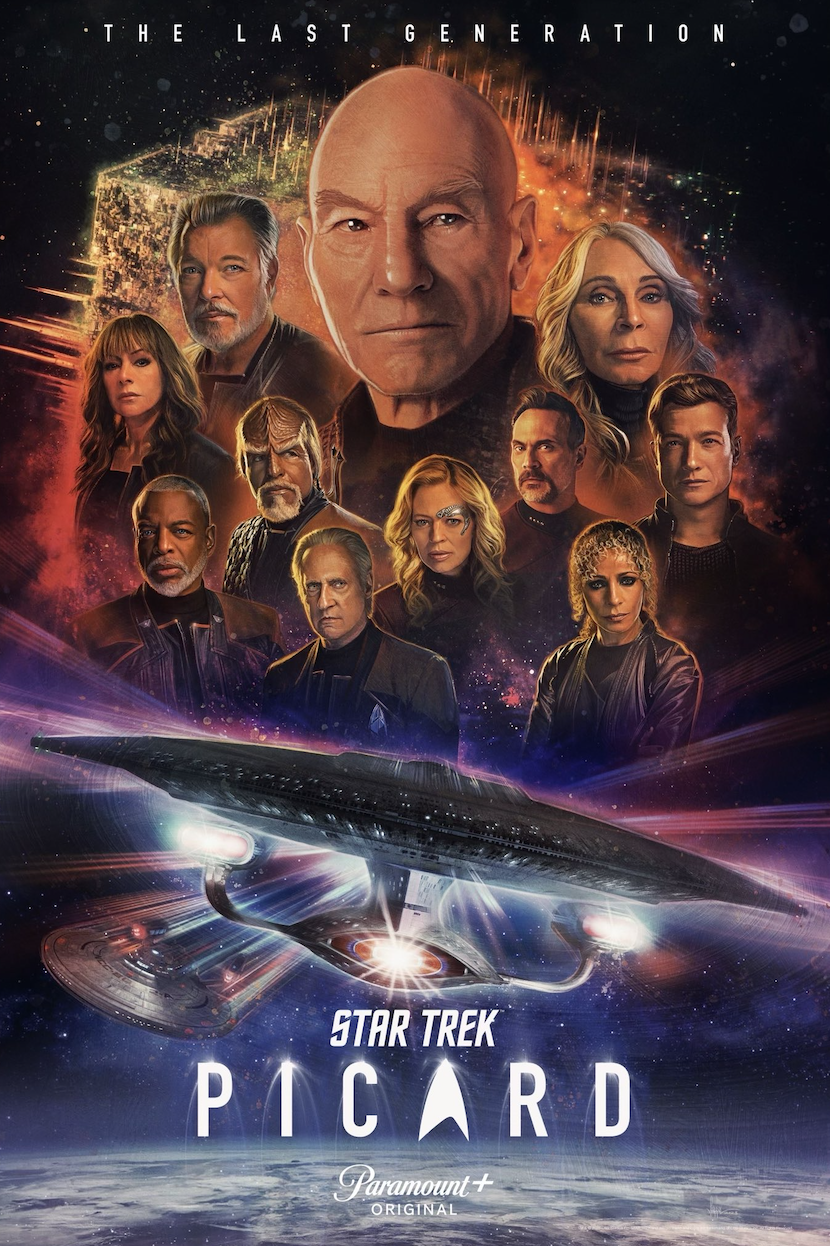
The Return of the Picard. After a watchable first season, absolute garbage second season, Star Trek: Picard finishes its final season with an immensely welcomed (near) return to form. In a media landscape that increasingly demonstrates an aversion to the past in an effort to improve or refresh legacy characters or series, the ups and downs of Star Trek: Picard (from hereon Picard), prove that some characters and stories were already exemplary in substance and form from the beginning. Suffice it to say, it boldly goes where it has been before and shows it can thrive.

The third and final season of Picard has resonated with Star Trek fans young and old because it finally went back to its roots, went back to why these characters are beloved and an integral part of the cultural zeitgeist. At least, refocused on that goal, anyway. While I don’t feel that it landed sure-footedly on a return to the Star Trek (TNG, Voyager, and DS9) formula, it was in the ballpark of what makes those series rewatchable over and over. Hardly a week goes by that I am not rewatching TNG and Voyager (DS9, lesser so).

The characters, plots, and themes continue to teach us, they remain culturally relevant. TNG represented Roddenberry’s best expression of his idea launched in the 60s with Desilu Productions at Paramount (yes, that means Lucille Ball was in-part responsible for the launch of Star Trek: TOS). At the heart of what makes Star Trek, STAR TREK are the stories that can only happen on Star Trek and the exploration of what it means to be human, whether that is the 24th century or the 21st. Secondary to the aforementioned is the episodic format that Strange New Worlds and Lower Decks has proven is the best expression of Trek plots. On that topic, the last two episodes of Picard felt like an old school two-parter TNG in all the best ways possible. Why stick to the formula? Because it WORKS.

Anytime a Trek series has deviated from the formula or format, it has proven to be less successful with audiences. If it’s not broke, DON’T fix it. Not everything needs to be a 10-hour movie season after season. Why? Because a serialized format lacks the latitude to explore a variety of characters and plots. Serialized shows are ultimately limited to the stories they can tell, because they ultimately have one main outside/action plot supported by one or more inside/emotional subplots or motivations. The episodic format provides numerous opportunities to dive into Star Trek in both plot and character. While even in its third season, Picard is serialized, the structure of the episodes leans into a quasi-episodic format.

Up until the third season, and even at the beginning of the third season, Picard engaged in perpetual character assassination. Completely retconning the best of our friends from The Enterprise D, E, and Voyager. It’s like, the writers of Picard never watched The Next Generation or Voyager, much less rewatched the timeless series.

Not to oversimplify, but to spotlight the sins of the writers, Picard was reduced to someone that represented an outdated way of life and was responsible for negative development of those around him, Seven of Nine was no longer a strong character of mind and body that wasn’t afraid to question decisions in the pursuit of efficiency and order, Guinan was no longer a comforter and wise counselor and her younger-self hated humanity instead of always seeking the best in them, Riker was too quick to admit defeat and appeared to lose strength of character, Starfleet was constantly disparaged as an antiquated and corrupt institution, and I could go on. Fortunately, Q, Worf, Dr. Crusher, and Data were mostly treated with care, and actually felt like they should after we last saw them in Star Trek: Nemesis (or Voyager, which is the case with Q).

Another area where this series negatively deviated from the TV series is the significant increase in course language, especially in seasons one and two. I am glad they mostly fixed that in season three. Star Trek was always something that whole families could watch, and it upset me when Picard didn’t feel like something for whole families. My hope is that Star Trek, moving forward, will be a show that kids and teens today can watch with their parents in order to form the same kind of fond memories I have from watching TNG and Voyager with my family growing up. Star Trek is family, and “on the Starship Enterprise, no one is alone.”

But by the last few episodes of Picard season three, our friends were back to being themselves! It was so incredibly refreshing when our friends returned to their true selves. The return to form and character reunion that Sir Patrick Stewart said he was not interested in at the announcement of Picard, turned out to be the very thing that the series needed and lacked through most of its run.

This character mix was perfection, as Seven would put it, from season three of TNG and beyond. Each one of them represented a different element of humanity, and only when together can we truly explore the human condition. Star Trek needs its Captain. Whether we are talking Picard, Sisko, Janeway, Pike, or Kirk. And that captain needs to be a strong leader, upholding the best expression of the morals, ethics, and order of Starfleet. It doesn’t mean those values and beliefs can’t be challenged–we certainly saw many times Picard challenged Starfleet’s decisions over the course of TNG–but it’s the pursuit of the best humanity can be to one another that is most meaningful. It’s what keeps Q always curious about humanity, in particularly Picard, a strong moral center.

Picard season three embraces this return to form, despite the naysayers that are negatively criticizing the show for looking backwards instead of forwards (which the Star Trek TV series consistently did). Clearly those that are accusing Picard of a disappointing third season missed the whole point of what makes something Star Trek, what makes Picard the definitive Starfleet captain and role model for his crew and all of us. It’s the same thing that fascinated Q: Picard’s (and for us Star Trek‘s) order, morals, ethics, and reflection of humanity. Just because a series continues to feature starships, uniforms, military-like rules, and an ethical center does not mean it is look backwards–those are the tentpoles that significantly impact the form the show takes and the viewer experience. Remove the tentpoles, and the show collapses.

I remember very little from the first and second seasons, but you know what I do remember? Opening with the Enterprise-D and Data/Picard in the series pilot, the Q scenes from season two, and the return to the stately peerless bridge of the Enterprise-D in the final two episodes of the third season and series. Why? Because if you are reviving a series or crafting a long-awaited spinoff series, you have to start with what is most familiar and true to character and plot, and go from there. If there is an established storytelling formula, then follow it. Formulas are formulas for a reason: they work, they’ve been proven to work.

While there are elements in the story of the third season that feel like Wrath of Kahn meets First Contact meets The Best of Both Worlds, that’s because those two movies and that highly rated two-parter from Season 2/3 of TNG represent the best of Star Trek. Why not take inspiration from them??? There was very little of Seasons one and two of Picard that I felt would inspire new fans to seek out the TV series or previous movies. But season three will undoubtedly prompt those that have not seen the TV series or First Contact to seek them out.

And DON’T stop watching when the credits roll, because there is a mid-credit bonus scene that gave me the BIGGEST smile! Because of the cameo AND how it perfectly sets up a spinoff series with a new generation of Enterprise crew.

The following section(s) contains some series finale spoilers.

The series finale features the rescue of Starfleet and humanity by the crew of the Enterprise-D. In the series, the Enterprise was always the calvary, and it plays out in the series finale as well. And for what it’s worth, the series explains how Geordi was able to rebuild the former flagship of Starfleet following the disastrous crash in Star Trek: Generation (1994) well enough. The showdown is a cross between The Best of Both Worlds and First Contact. And as such, nothing happens that isn’t somewhat predictable, but it’s okay. HOW the story unfolds is exciting because Picard finally embraces its legacy. In a media landscape of TV series that really feel like long movies, this one feels more like a TV show, and that’s a great thing! Trek excels more on TV than it does in the cinema because of the formula of its storytelling.

I love how Picard reclaims his legacy as the definitive Starfleet captain and simultaneously allows himself to be vulnerable enough to embrace his former love Dr. Crusher and his son Jack. When Picard encounters his son reprising the role of Locutus of Borg, Picard must deal with the trauma of that experience that has haunted him throughout his life and risk it all to save his son. This demonstrates tremendous growth for Picard. While this is going on, we witness the ramifications of the human youth’s corruption and assimilation by the Borg. For those that appreciate the thoughtful subject matter of Trek, this can be read as a cautionary tale of how the impressionable youth of our world are the most susceptible to toxic ideology under the guise of peace and a pain-free existence. In other words, an ideology that claims to be able to build a utopia, but utopia is an impossibility, and the pursuit of it comes at the cost of the loss of individuality and human dimension. While the series lacked the thought-provoking content of the TV series, these last few episodes attempt to get back to that.

Also, I love how Seven of Nine gets promoted to the Captain of the newly christened Enterprise-G, flanked by Raffi (a character for whom I never particularly cared, because the show made her unlikable in the first two seasons, and never gave her any real agency until season 3) as her No.1, and Jack Crusher as special counsel (a sort of Deanna Troi minus the empathic abilities). The new Enterprise has her crew, all set for new adventures!

So what is that mid-credit scene? Jack is putting away his belongings in his quarters on the Enterprise-G when Q shows up. That’s right, John de Lancie returns as the indelible Q. Jack questions him because he thought the trial against humanity ended. Q responds with Picard’s trial ended, but Jack’s is just beginning. Does this mean a Star Trek: the New Generation series featuring this crew plus occasional appearances by Q? I certainly hope so.

There you have it! A triumphant return of Star Trek. Perhaps the series started out, and even developed negatively, but it finished well. I’ve been a fan of Star Trek ever since my family would gather around the TV to watch TNG and Voyager each week with a pizza. These characters, settings, and even plots feel like a warm hug from a long-lost friend. I hope that Strange New Worlds, Lower Decks, and the series that Picard will hopefully inspire become the types of shows that years from now we will still be rewatching over and over.

Ryan teaches Film Studies and Screenwriting at the University of Tampa and is a member of the Critics Association of Central Florida and Indie Film Critics of America. If you like this article, check out the others and FOLLOW this blog! Interested in Ryan making a guest appearance on your podcast or contributing to your website? Send him a DM on Twitter. If you’re ever in Tampa or Orlando, feel free to catch a movie with him.

Follow him on Twitter: RLTerry1 and LetterBoxd: RLTerry

AMERICA’S HEART PROBLEM

As I look over the major events in our country over the last couple of years, I am left with one question: What does it mean to be human?

And what does that have to do with the ideologically polarized time in which we find ourselves, you may ask? EVERYTHING.

Studying and teaching film has its benefits way beyond cinematic critical analysis. Since film is a reflection of life, we can learn a lot about a people by analyzing motion picture art. Granted, much of what we study in film is in retrospect, but these same approaches can be used to study current trends in storytelling media, which often parallel events in real life.

For example, my area of expertise is the American Horror Film, and as I wrote in the chapter on horror cinema of the 1970s, in my forthcoming book Why Horror?, I found the parallels between 1970s America shockingly similar to 2020s America. From the fights over abortion to inflation to civil rights to the rise of the new right and new left, much of what we are experiencing now can trace its roots back to the chaos of the 1970s.

But I digress.

What does it mean to be human? 

Everything we are facing in our tumultuous socio-political landscape has its roots in that philosophical question. One of the many reasons why I love Star Trek, in particular The Next Generation, is because of its central theme: the persistent exploration of humanity: What does it mean to be human? If we can answer that question, then so many of our other problems will solve themselves. Can logic and reasoning solve everything? No. But it’s far less chaotic and more strategic than constantly addressing symptoms of a larger generational illness through ideological positioning.

What is that illness, exactly? I believe it is the lack of a moral compass.

While there has been a distorted, warped definition of what it means to be liberal, I want to remind you that pure liberalism is a philosophical approach that considers all available empirical and anecdotal evidence to arrive at a solution that opposes fascism and authoritarianism in all their forms. It is not—and should not be—used as a synonym for either the political left (or for progressivism), any more than conservatism (or legalism) should be used as a synonym for the political right.

It takes only one generation to bring about the demise of a society. Just like the Roman Empire imploded—fell apart from within—our own American Empire is crumbling from within. About one-and-a-half to two generations ago, our public school systems began to drift away from teaching morals and ethics in formal classrooms. Combine that with the dissolution of the American family and the widespread abandonment of parental responsibility for teaching morals and ethics, and we can trace most of our societal problems back to this shift.

Why? Because we began to devalue truth in exchange for opinion, expression, and relativism. And when there is no truth, there is no means to know what is right or wrong. Think of it this way: a compass rose would be useless for navigation if it didn’t point to the true north. If a user of a compass was able to simply choose which north they wanted, then it would render navigation an exercise in futility. There can’t be more than one north anymore than there can be more than one truth. Without compasses (or GPSs) that are fixed to recognize the geographic north, no one is able to successfully navigate.

By not teaching the difference between right and wrong, fact and opinion, etc., children and young people since the mid-to-late ‘90s onward have not been reared and educated to respect parents, leaders, peers, and even one’s adversaries. Contrary to popular belief, respect doesn’t mean weakness or complacency. One can completely and vehemently disagree with someone, yet still be respectful.

I cite how Maverick responds to his leaders in Top Gun: Maverick, or how Jean-Luc Picard responds to countless admirals in Star Trek: the Next Generation when he is at philosophical or diplomatic odds with them. Even when Captain Picard is addressing his subordinates, he is always respectful, yet may fundamentally disagree with them. A great example of this is when he wanted Lt. Worf to donate his blood to save the life of a Romulan, but Worf refused. Captain Picard could have ordered him, but he chose not to out of respect for Worf’s dignity.

America has a gun heart problem.

By eliminating morals and ethics from our public school classrooms, educators no longer teach what is right and wrong (in the eyes of the law and humanity).

Growing up in and being educated by a system that values relativism over logic and reasoning gives birth to the kind of rampant disrespect for humanity that we’ve seen in the Pulse Massacre (in which I lost a friend and former coworker), Sandy Hook, Parkland, and Robb Elementary schools, the mass shooting in Buffalo, NY, Columbine, Uvalde, and more. Are gun laws perhaps a little too loose? Sure, I’ll give you that. Should there be universal background checks? Probably. Should the age to buy a firearm be increased to 21? Perhaps. Should military assault-style rifles be banned to the general public? Many think so.

The shooters in all those examples placed greater value on what they wanted, what they believed, and what they felt was the appropriate course of action than on the value of each and every human life. When one is reared in an environment devoid of consistent respect for others, then there is no reason not to behave inhumanely. It’s not mental illness that is driving these mass shooters (although I’m sure there is some correlation), but it’s the devaluing of human life that is the root cause. After all, this abominable action is justified or true to them. It all gets back to the heart.

If we look at this issue from a biological perspective, from the time male puberty sets in, through adolescence, until early to mid-20s, young men have raging hormones. And while we tend to associate these hormones solely with sex drive, we often forget that these same hormones and other chemicals predispose a young man to increased aggression. While some countries choose to require military service after high school, the U.S. doesn’t have any programs like that. Why is this important? Because in countries wherein there is required military service after high school for young men, they are better able to channel their predisposition to aggression in constructive ways. Not only does this provide seat time while the chemicals level out, but it also forces young men to deal with and manage these emotions.

I’m not stating that this is the only option the U.S. has for providing a method for young men to manage this biological and cognitive developmental stage, but it does demonstrate the need for a means for young men to have an avenue through which they can be educated as to how to behave like gentlemen and control their urges. Whether in military service or education, young men should be taught the difference between recognizing an impulse and acting upon it. Between inaction and impulse, there is a realm of good taste that is begging for attention.

Moreover, this stage in life also demonstrates why it’s important for a young man to have a father or a father figure in his life, because he needs to know how to be a man. Without a father at home or even a father figure in a boy’s life, there is an increased risk of inability to deal with the raging hormones and other chemicals as childhood transitions into adulthood.

For every action we take, there are consequences, be they good, bad, or indifferent. And contrary to postmodern belief, we ARE responsible for our actions. Does that mean our actions aren’t influenced by our environment? No, they most certainly can be, and often are. But at the end of the day, we—not the world—pull the trigger on our actions and are responsible for our decision(s)

But addressing these issues only fixes symptoms (i.e. the clear bigotry that motivates a variety of violence and hate speech). And by only treating symptoms, the root cause will continue to fester and get more septic over time. We will be better off by treating the cause, and then the symptoms correct themselves. Much more efficient. Children and teens today (and I’d venture to include young adults) have little fundamental understanding of (1) what it means to be human and (2) human dignity. When human life is devalued, then the risk of violence increases exponentially.

When does life become human?

Think of it this way: a baby can’t not be human until it is any more than it is human until it isn’t. It’s either human or not. It’s not complicated. Logically, the fetus is either a human child or a benign tumor, because it cannot simultaneously be both. Moreover, if we are in agreement that ending human life (when not in self-defense of one’s life or defense of one’s country when at war) is murder (and I’d hope we’re all in agreement on that), then ending unborn human life is also murder. But, if a human is only human when we decide it is, then it’s not murder because there is no standard for human life.

A great example of protecting sentient life (in all forms) can be found in the Star Trek: the Next Generation episode “The Offspring.” This is the episode wherein Data creates his child Lal. We witness Picard protecting the human rights of Lal when Starfleet informs Data and Picard that it will be removing Lal from the Enterprise to study her. Picard delivers this wonderfully profound line, “There comes a time when men can no longer blindly follow orders.” And he is willing to put his career on the line for a life.

Science, science, science. We hear so much about science nowadays; however, many only cite science when it supports their ideology. Science is science, regardless of what one believes. The great thing about scientific observations is that they can be either proven or disproven.

While science cannot answer questions that are a matter of philosophy or faith, such as the origins of the universe or is God real, science can help us to understand a great many things, such as the heartbeat in a sentient being indicating life.

So if we agree that intentionally ending a human life is murder, and murder is immoral, then we have to then conclude that intentionally ending the life of an unborn child is also murder. Moreover, this decision also influences whether or not the murder of a pregnant woman is—in fact—a double homicide. If the unborn child isn’t human, then there isn’t a double homicide; but if the unborn child is human, then a double homicide has been committed. Again, the unborn child can’t simultaneously be both human and non-human, as that would be illogical. If we begin to decide when a baby is or isn’t human (based upon personal opinion or choice), then we will be living by double standards and ignoring the science.

Well, what about surprise pregnancies? Okay, perhaps we need to revisit high school biology. Other than an immaculate conception, no pregnancy is a complete surprise. If you’re hetero, and you do the deed, a possible consequence is pregnancy. It’s not rocket science. It’s barely high school science. What there are, are unplanned or unintended pregnancies. Big difference between surprise and unplanned.

The only sure-fire method for preventing pregnancy for hetero couples is to not have sex. But we’re all human, and have human needs. And according to Maslow’s Hierarchy of Needs, sex is a basic need. Therefore, the reasonable solution is to offer morning-after pills, easy/free access to contraceptives, and financial assistance for mothers that have little to no means to care for a child.

Fortunately for most people in the United States, there is likely a Department of Health office or clinic in your area, and they have condoms they will gladly give you. Many offices, you just walk in and take a bunch out of a basket. There IS easy and free access to contraceptives. For those who fear this SCOTUS decision could affect alternative pregnancy procedures, such as IVF or surrogacy, there simply isn’t evidence to support that conclusion because those procedures seek to create and foster human life, not end it.

Earlier in the Next Generation episode “The Offspring,” Data informs Picard that he can deactivate Lal if her creation is problematic. Picard sharply responds, “It’s a life Data, you cannot simply activate and deactivate it.”

Protected rights and expression

We are all deserving of respect. Respect from those with whom we agree and disagree. The gross lack of human dignity and respect I observe around me, whether in real life or online, is dangerous. When young people are brought up not to value human life (including the life of those with whom they disagree), then they will interpret respect and dignity through their own eyes. Schools and other organizations that are focused on consistently highlighting the differences between people are actually fueling the problem.

From a position of logic, there is no white America, black America, hetero America, homo America, or Hispanic America, there is only America. Likewise, there aren’t white humans, black humans, Hispanic humans, hetero humans, homo humans, etc. Only humans who happen to be one or more of the above. Each with their own respective worldviews, beliefs, dreams, and fears. Once we begin to think of ourselves as one people, one nation, then we can fix so many of our problems.

On a biological level, there are two sexes: male and female. That’s it. Not opinion. Fact. It’s science, plain and simple. That said, while we are either male or female biologically, the manner in which we express ourselves is not limited by that binary; we can express our gender any way we want. You can be a feminine man or a masculine woman, or even androgynous. It doesn’t change the anatomy or chemistry; but fortunately, we are not limited to a binary means of expression.

The latitude of creative personal expression is as wide as the color spectrum! Every human is deserving of respect and dignity. Be different! It’s okay! Be proud of who you are, in whatever aesthetic form that takes! Just know that some will not accept your gender expression; but that’s unfortunate for them, because they will miss out on getting to know you.

The recent Supreme Court ruling in favor of the coach from Washington state that was disciplined by his school administration for holding prayer after football games at the 50 yard line, is another hot topic. 

Instantly, I saw countless posts on Twitter citing the separation of church and state. What many people don’t realize is that the principle has far more to do with State-sponsored or State-mandated religion than it does religious expression.

Moreover, it is not the equivalent of freedom from religion. That is a gross misinterpretation. What this separation means is that the State will not forcibly impose religious beliefs on citizens. Even though there is a movement (largely within the woke ideology) to dissociate the United States from its foundation in morality, the Constitution and our laws are influenced by Judeo-Christian principles (and for this, let’s look at George Washington’s farewell address):

Of all the dispositions and habits which lead to political prosperity, religion and morality are indispensable supports. In vain would that man claim the tribute of patriotism who should labor to subvert these great pillars of human happiness, these firmest props of the duties of men and citizens. The mere politician, equally with the pious man, ought to respect and to cherish them. A volume could not trace all their connections with private and public felicity. Let it simply be asked where is the security for property, for reputation, for life, if the sense of religious obligation desert the oaths, which are the instruments of investigation in courts of justice? And let us with caution indulge the supposition that morality can be maintained without religion. Whatever may be conceded to the influence of refined education on minds of peculiar structure, reason and experience both forbid us to expect that national morality can prevail in exclusion of religious principle.

While morality and religion are at the foundation of our great country, federal, state, and local governments are not to force matters of faith on citizens. According to The Constitution, these rights are endowed by our creator; therefore, the Constitution protects innate rights, rather than granting rights that were not present to begin with. We have human rights from our very beginning as a human. Allowing for or permitting religious expression is not the equivalent of forcing it on someone.

Make It So

Life is unfair. Shocking, I know. And no amount of legislation can ever make it fair. Utopia is an idea, not a destination. Some people will always have it harder than others. But that is why we create systems that provide tools to individuals that want to reshape their future. It takes hard work. But just like working for your first car, you will value it so much more than if it was given to you. It works against all logic and reasoning to devalue one group in order to place greater value on another. Or blame one group for the problems of another. It’s counterproductive.

From the time we are born, we are selfish. We have to learn not to be selfish. If we are not teaching our children the value of respect, logic, and selflessness, then they will grow up ignoring those foundational concepts and grow in selfishness, which can lead to destructive behaviors. That would be a far more constructive conversation than the age at which discussions of sex and gender expression should take place.

Let’s do the next generation a favor by showing them that they need a moral compass to successfully navigate life and to know what it means to be human.

One of the reasons why Star Trek’s Q is fascinated by humanity, in particularly Picard, is humanity’s moral center, which is something lacking in the Q Continuum. Let’s start instilling into our children and young people the importance of morals, ethics, and logic. Next time you are faced with a loaded sociological or political question, think about it from a logical perspective, because it will help to place you on a stable path devoid of counterintuitive, cynical theories.

Ryan teaches Film Studies and Screenwriting at the University of Tampa. If you like this article, check out the others (which are mostly film reviews and deep dives) and FOLLOW this blog!

Follow him on Twitter: RLTerry1

Review of “Star Trek Picard” Season 1

For the full audio review and discussion with the Besotted Geek Podcast, click HERE.

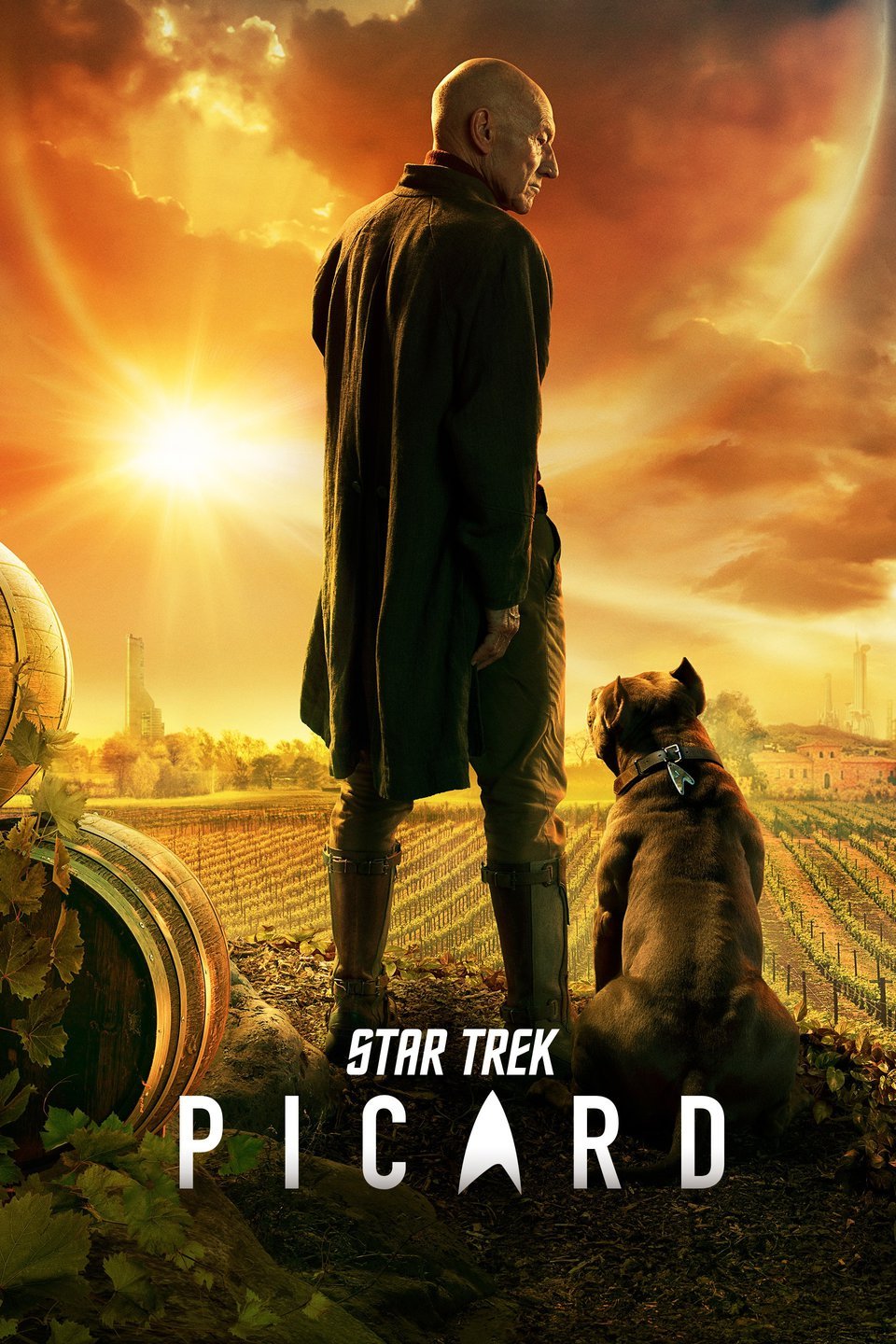
Engage! Captain Jean Luc Picard is back in CBS All Access Star Trek Picard! The premiere season wrapped up this past week, and I absolutely loved every minute of it. And it’s not just getting to see the definitive captain of the Enterprise or a handful of familiar, beloved characters from Next Generation and Voyager; this show has the warp core of TNG whilst delivering a fresh story, perfect for 2020. What separates Star Trek from Star Wars is the former’s character-driven exploration of humanity at the core of every episode. While there may be action and adventure in most episodes, the action elements are serving as a conduit through which the characters explore what it means to be human–whether organic or synth. When the show was formerly announced by Sir Patrick Stewart, he made a point that Jean Luc Picard would not be the captain that you remember from TNG, that the events of Star Trek Nemesis greatly impacted Picard. And he was right. At least, in part. However, he is still very much Captain Picard, just a version whom has been disillusioned by Starfleet that has lost its way and carrying the burden of losing a close friend due to self-sacrifice.

We sometimes remark that we may have the weight of the world on our shoulders, but Picard quite literally has the weight of the galaxy on his shoulders. Throughout the TNG series, Captain Picard gave his officers and crew, and by extension the audience, the impression that he was consistently as strong as a mountain, even though we still got glimpses into his softer side on occasion. The Picard we follow in Star Trek Picard is a relatable, believable Picard that that has withstood decades of psycho-social trauma, but in his heart, he remains the Picard we have known and loved since his first took command of the Enterprise D. This first season of Picard follows our title character as he is on his journey to rediscover the self that made him great.

Without getting into spoilers, retired Admiral Picard finds himself caught in the middle of a war between synthetic humanoids and the vile, calculating Romulan Empire after encountering a young lady he believes to the the daughter of Data whom is later assassinated by Romulan covert operatives. When a Starfleet synth researcher at the Daystrom Institute informs Picard that Data’s daughter may have a twin, Picard sets out to find her and stop the Romulan covert operation. When Starfleet refuses to temporarily reinstate Picard, he takes matters into his own hands, and finds a crew and ship for one last mission. Along his mission to find out why the Romulans are attacking Synths and to find Data’s other daughter, he encounters Star Trek Voyager’s Seven of Nine (who later becomes a regular on the show), Will Riker and Deanna Troy, and other familiar characters. While the series is incredibly thrilling, it manages to still drive home the philosophical ideas that have always been at the foundation of Star Trek.

When developing a series based upon a beloved one that is so incredibly engrained in popular and geek culture, there is a risk that it may either pay too much fan service in order to appease lifelong fans, sacrificing a truly original story; or it may do the opposite and sacrifice what fans love in exchange for taking a familiar IP in new directions to attract new fans. Thankfully, Star Trek Picard falls somewhere in the middle, skewing a little towards the former more so than the latter. But ultimately, it is on brand with TNG (and a little STV). In the beginning, I didn’t particularly like Picard because I was looking for the captain that I remember; but therein lies what makes this series deep. Audiences are rediscovering Captain Picard as he is doing very much the same. It took most of this season for him to remember who he truly is. And little by little, I began to get glimpses of the captain that we all respect and love. Just as time, in real life, changes, so does time in a TV series. Starfleet is not the same as we remember, but that is to be expected after nearly 20 years since we last saw it. Some of the moments that may make longtime friends have tears in their eyes is when we see the Enterprise D and Picard in his TNG uniform. Won’t lie, there are moments that this series did bring tears to my eyes.

I can only imagine that in the series’ development, the writers and producers thought of which past characters to include in this new series as regulars or one-offs. And it’s of no surprise that Voyager’s Seven of Nine was likely at the top of their lists. She is inarguably the most popular fan favorite out of Star Trek Voyager. In many ways, she was STV’s answer to Data and Spock, and truly brought the former series into its own after she was introduced in Season 3. Like Picard, she too has changed over the nearly 20 years since we last saw her. But she is, at her core, still the Seven we respected and loved from Voyager. I can liken Picard to Voyager in that the introduction of Seven was the missing element from the cast and plot in order for it to feel fully fleshed out. She still challenges authority when the logic doesn’t compute but seeks to understand what it means to be human and a team player throughout her return to the Star Trek universe. Something that I don’t particularly care for with the return of Seven, she is much more of an action hero than engineering genius or intellectual as she was on Voyager. I miss her oddly precise moral compass and inquisitive nature from Voyager; but, it’s not a big deal. I will chalk it up to one of those stubborn fan ideals. Even as much as I appreciate and enjoyed Star Trek Picard, even I have things that I miss about the old series and would have liked to have seen.

I am excited for the second season of the series! I approached this new series with cautious optimism, and it mostly met, and even exceeding my expectations a few times. Yeah, there are elements with which I am disappointed, but that is naturally the case whenever an older series is reimagined more than twi decades since the TV series ended to make way for the movies. All in all, I am not disappointed in anything that keeps me from enjoying season one and looking forward to season two. After an interview with Sir Patrick Steward on The View, we learn that Whoopie Goldberg will be reprising her role as Guinnan in season two. I hope we also get John de Lancie back as Q! Outside of my favorite TNG character of Picard, Q is right up there! Every episode of TNG and even the 2-3 STV episodes he was on were crowd favorites because his chemistry with Picard (and to a lesser extent Janeway) was priceless. At the heart of this series is what has long since given Star Trek greater depth than Star Wars, and that is the blending of social commentary with what it means to be human. Those same philosophical questions are alive and well in Star Trek Picard, and if you’re a fan of TNG and STV, I’ve a feeling that you will mostly likely enjoy this new series as much as I did.

Don’t miss the two-part discussion on the season finale and a recap of the whole series on the Besotted Geek Podcast, where I sit down with Stork and Peacock.

Ryan teaches screenwriting at the University of Tampa. If you like this article, check out the others and FOLLOW this blog! Interested in Ryan making a guest appearance on your podcast or contributing to your website? Send him a DM on Twitter or email him at RLTerry1@gmail.com! If you’re ever in the Tampa area, feel free to catch a movie with him!

Follow him!

Twitter: RLTerry1

Instagram: RL_Terry

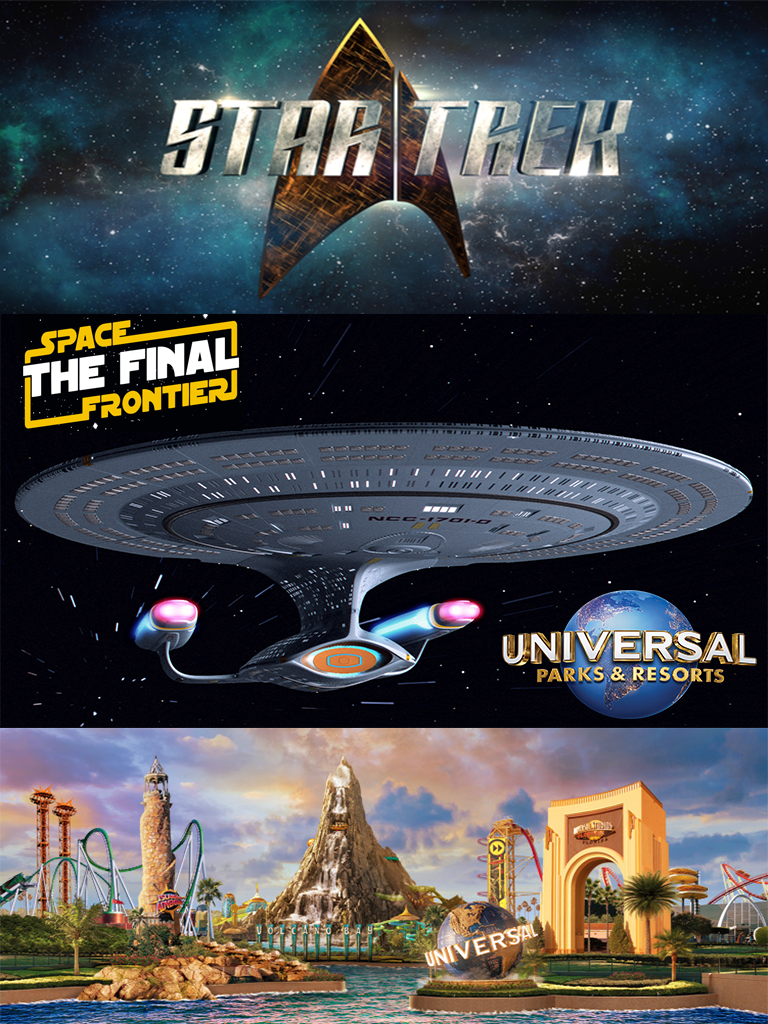
Star Trek Warping into Universal Orlando Resort? Engage!

To boldly go where no one has gone before! Ordinarily, I don’t make it a point to write about rumors. But, being a longtime Star Trek fan (specifically TNG followed by Voyager), I thought that this would be a fun one to discuss. Rumors of a Star Trek attraction or land have been floating around for a while, but more recently gained traction after discussions of a new attraction coming in the relatively near future. According to the Disney and More blog, Universal Orlando is considering licensing the Star Trek IP from Paramount for an attraction or land. Less of a rumor really, Universal Orlando IS considering The Bourne Identity or Star Trek franchise for the old T-2 (Terminator 2: 3D) building [UPDATE: recent news suggests UO is deciding between Jason Bourne and James Bond for the old T2 show bldg]. In terms of franchise strength, Star Trek is a no-brainer given the two choices; however, the direction for theme parks in the 21st century is building entire worlds that immerse the park guest into–not only the respective movie(s)–but into the universe of the IP. Therefore, it would be more advantageous to utilize the T-2 show building for Bourne than Star Trek. Why? Because Bourne exists in the “real world,” it fits in well-enough with the Beverly Hills set; it’s believable in that present location. However, Star Trek brings with it decades of stories that would be better suited to its own land. With the confirmed 4th theme park (confirmed, but no properties associated with it yet) coming in the near future, the Star Trek IP might just find itself a home at the 4th gate. Perhaps the 4th park will have Nintendo, DreamWorks, and now Star Trek. Talk about a powerhouse of IPs.

With the attendance slipping at Universal Parks and Resorts in 2017, after years of encroaching upon Disney numbers and growth, Universal Parks is definitely working diligently to not fall behind. I imagine that the Universal Creative executives and directors are all-hands-on-deck with the opening of Toy Story Land this year and the highly anticipated Star Wars: Galaxy’s Edge in 2019 at both Disneyland and Walt Disney World. As big as Harry Potter is (and it IS), it cannot compete against Star Wars as an equal (in terms of the fanbase, merchandise, etc). But, combine DreamWorks, Nintendo, and Star Trek with the expanding Harry Potter offerings at the parks, and then you likely have what it takes to be a formidable competitor against Disney, Star Wars, Pixar, and Marvel. Not to mention who winds up with 20th Century Fox, given that Comcast (parent company to NBC-Universal) is offering an all cash deal that dwarfs the Disney bid. If Star Trek doesn’t go in Universal Orlando’s 4th theme park, then it’s entirely possible that it might be what is used to eventually replace Marvel Superhero Island at Islands of Adventure.

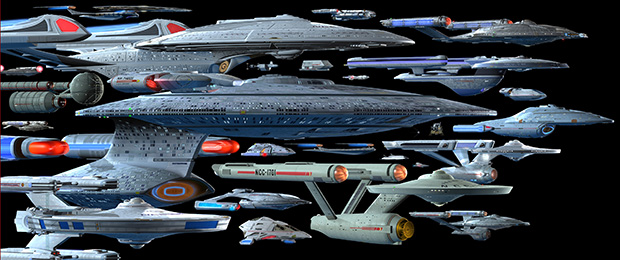
Without getting into the argument that one is science-fiction (Star Trek) and other other kin to Future-Fantasy (Star Wars), one of the primary differences between the two franchises is Star Trek‘s lack of memorable or reoccurring planets that factor into the plot. By extension, this makes developing a world difficult because it limits the number of places that you can transport your park guests. Star Wars is more focussed on the conventional adventure whereas Star Trek is traditionally more focussed on the human condition. One’s internal and the other external. That does spell difficulty for adapting Star Trek to a theme park setting, and by the same token, works brilliantly for Star Wars. Maybe it doesn’t have any memorable planets, but Star Trek does have a HUGE iconic location that can effectively be translated to an experiential theme park setting: the Enterprise! My personal favorite being none other than the NCC-1701-D under the leadership of the definitive Star Trek captain–Captain Picard! Regardless of which iteration of the Enterprise (or Voyager) may be your favorite, there are plenty of ways to adapt it into multiple attractions. Star Trek also has some incredible villains such as The Borg and Romulans and famous anti-heroes like Q.

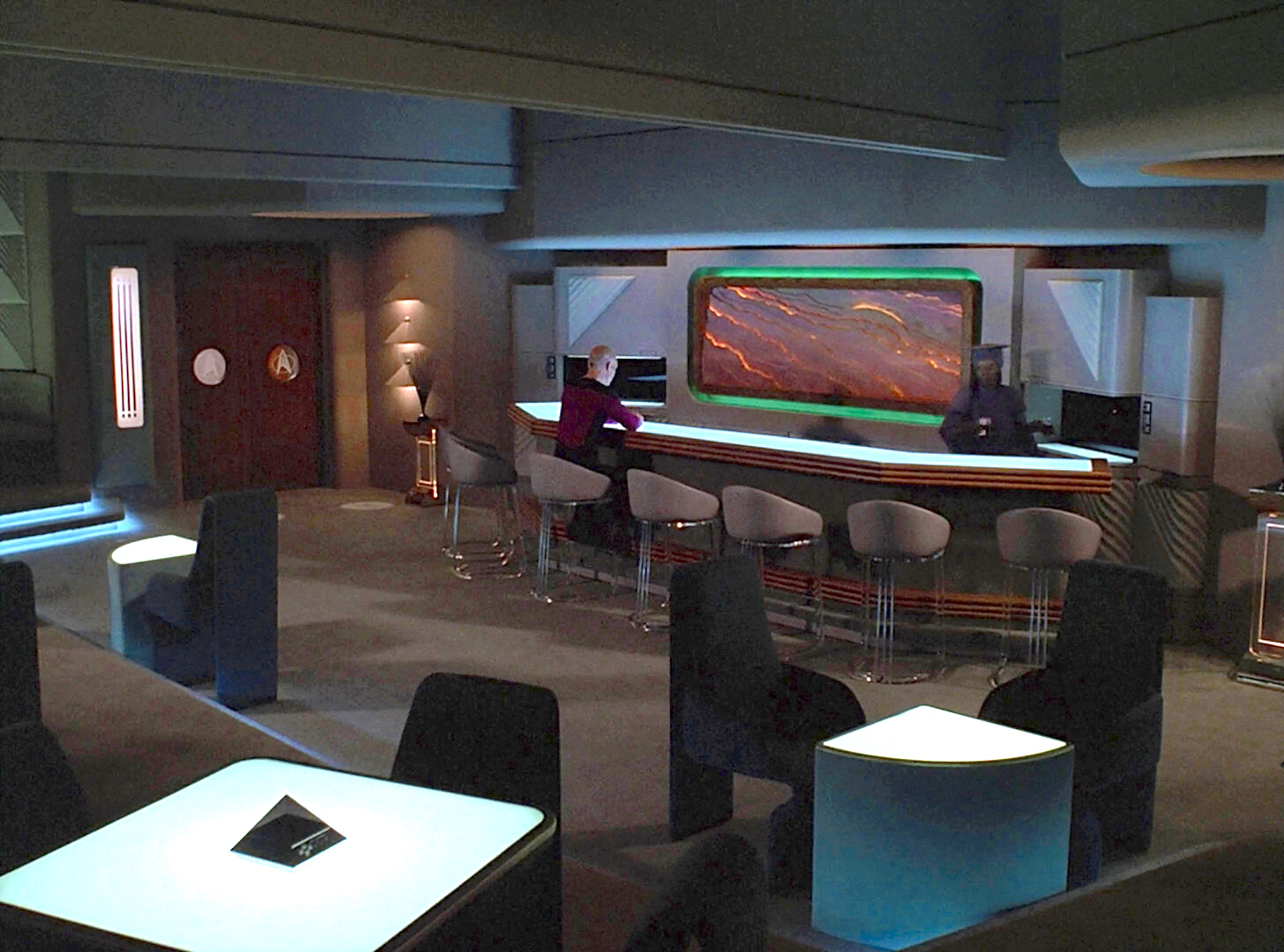
Just off the top of my head, here are some great ideas for attractions and offerings in the future Star Trek land: For starters, the famous 10-Forward lounge on the Enterprise D would make for an excellent bar & grill for park guests. The trademark transporter serves as an excellent platform on to conceptualize a ride. Just the bridge of the Enterprise makes the perfect backdrop of a simulator style attraction in the vein of Star Tours at Hollywood Studios (but on steroids). A brilliant platform to build an attraction from is the holodeck. The possibilities of sourcing that location to inspire an attraction are as infinite as the imagination. One-off special events are a no-brainer too. A Star Trek land would make for the perfect location of a Star Trek convention, just as Star Wars Galaxy’s Edge will undoubtedly serve as the location for Star Wars conventions. In terms of resorts, the often references and occasionally visited planet of Risa (from TNG) could be a perfect resort or developing a hotel that immerses the guests into the world of the Enterprise. The guest rooms would be modeled after the ones on the starship and there are plenty of lobby, lounge, and restaurant ideas too.

Only time will tell if these rumors are true. I certainly hope they are! If not, maybe Universal will consider the idea with so many people talking about the rumor. Here’s to the future of possibilities coming to theme parks in the coming years. Engage!