MICKEY 17 film review

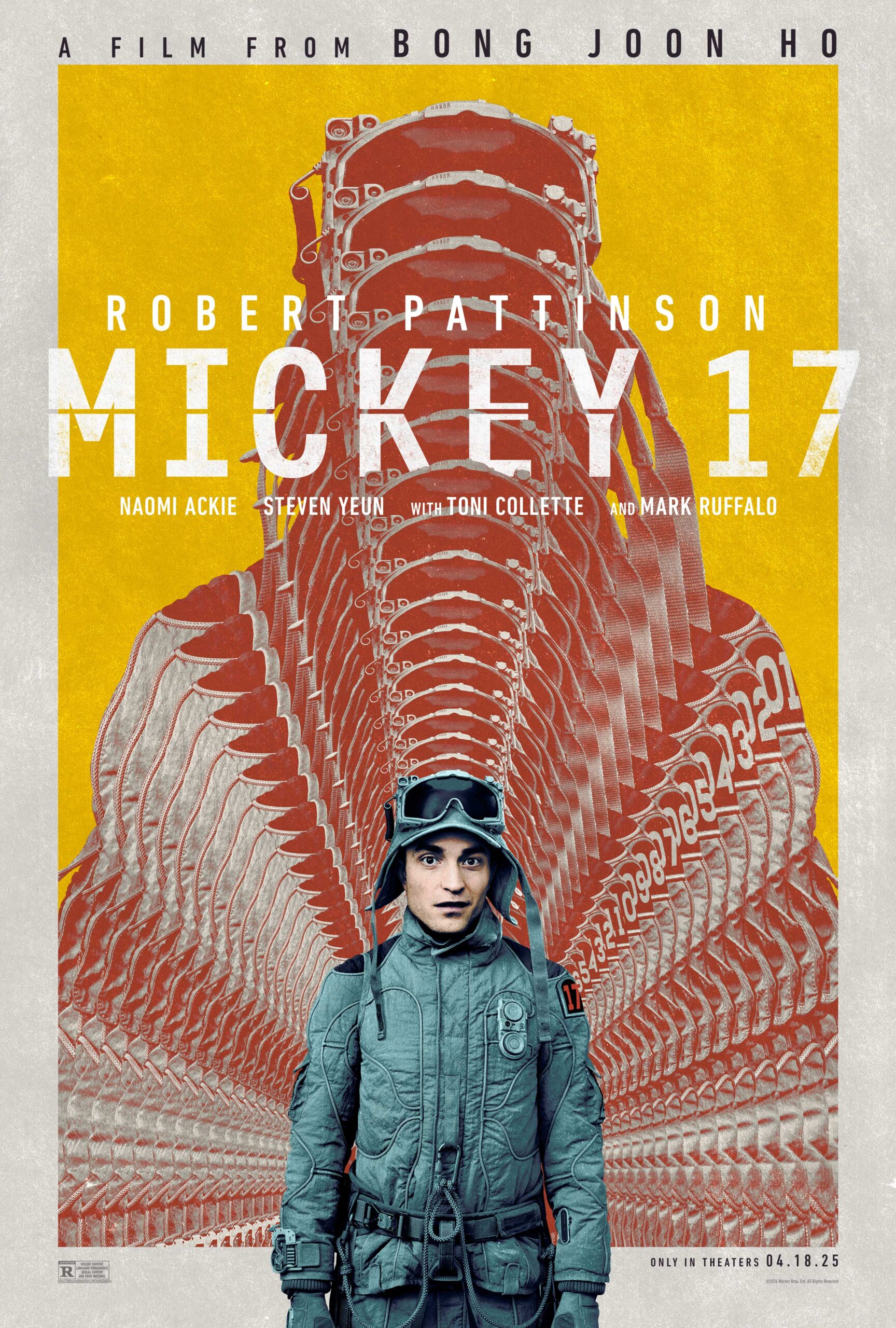
Ambitious but disjointed. Bong Joon-ho’s newest film Mickey 17 excels in technical achievement but the full impact of the story demonstrates greater concern for its satire, message, and world building than it does its plotting and structure. Blending multiple genre conventions, Joon-ho’s science-fiction, dark comedy begins with an intriguing premise underscores with existential questions, but ultimately doesn’t feel cohesive from beginning to end. Despite the exhaustive satire–which is entertaining at first–the film works excellently as a critique of the prolific mediation of society, obsession with the idea of self-made celebrity, and the camera fame. Additionally, it presents an exploration of humanity’s fixation on replication and surveillance. Perhaps the film doesn’t call out any particular app or platform, it certainly drives home the point that a monster can be created through obsession with one’s image, control, and manipulation of others.

Mickey Barnes (Robert Pattinson), a disposable employee, is sent on a human expedition to colonize the ice world Niflheim. After one iteration dies, a new body is regenerated with most of his memories intact.

Despite an intriguing premise, the narrative often succumbs to prolonged scenes and sequences, subplots that lack meaningful purpose, and over-explanation in come places whilst lack of purpose exists elsewhere. While the third act is strong and completely engaging, the first act is protracted and the second act is plagued by poor pacing brought on by a wandering direction. The protracted first act delays audience immersion into the core narrative. What would’ve served the plot better as a brief prologue, turns into most of the first act. Even though the film maintains a modicum of innovation and freshness, it struggles to sustain momentum, resulting in a clunky and disposable experience.

The film delivers a relatively strong performative dimension, which helps to keep the audience engaged–however weak the engagement–in the story. And, Robert Pattinson performance strikes a nice balance between nuanced and manic, which mimics the film’s darkly comedic tone. Between his and the other leading actors performances, collectively they add a rolling punchline to the monotony of many scenes and sequences in the film. Mark Ruffalo’s depiction of the authoritarian leader, Kenneth Marshall, is audacious and campy, but doesn’t take long for this performance to become exhaustive–a little goes a long way with Marshall. Playing Marshall’s wife is horror-fan favorite Toni Collette, and even her character overstays her welcome in most of the scenes in which she appears.

Both the plotting and character issues can be connected to the screenwriting, which lacks direction, purpose, and refinement. Mickey 17 is another example of a director with a great, even innovative movie idea, but should work with a screenwriter with a command of proper screenwriting conventions and mechanics to craft the story for the page, and eventually the screen. This issue is not unique to Joon-ho, but a recurring problem I find with many (if not most) writer-directors. Few directors can write as well as they direct; and the inverse is also true–few screenwriters can direct as well as they can write.

Mickey 17 serves as a critique of the mediation of society, wherein informative, entertaining, and surveilling media technologies devalue the individual resulting in individuality with dimension being reduced to a character or commodity to be traded and exploited for the sake of ratings and celebrity. Mickey’s existential crisis of repeatedly dying and being reprinted underscores the alienation experienced in a society that commodifies human existence. Furthermore, Keneth Marshall’s obsession with control and his self-made celebrity mirrors the obsession many have, in the real world, with their “celluloid” self–or more accurately today–their digital self.

Everything Marshall said or did was ran through an image consultant and production crew on how it would look on camera. Looking at the real world, each of those squared images on Instagram or vertical video on SnapChat or Tik Tok, only show an edited version of the subject–the framing and editing is specifically manipulated and articulated to shape the audience’s perception. While this is to be expected in motion pictures and television shows, many of these self-made celebrities and influencers on social media want the audience believe they are being authentic, when it’s all a facade. In this obsession with the camera and “framed” image, society is exchanging that which is real with a projected authenticity; furthermore, the lines between what which is real and that which is fictionalized (or augmented) are becoming increasingly blurred.

Bong Joon-ho’s Mickey 17 blends satire with science fiction but the film’s underdeveloped plot and uneven character portrayals prevent it from reaching the potential this film demonstrably had with the talent behind it.

Ryan is the general manager for 90.7 WKGC Public Media in Panama City and host of the public radio show ReelTalk about all things cinema. Additionally, he is the author of the upcoming film studies book titled Monsters, Madness, and Mayhem: Why People Love Horror. After teaching film studies for over eight years at the University of Tampa, he transitioned from the classroom to public media. He is a member of the Critics Association of Central Florida and Indie Film Critics of America. If you like this article, check out the others and FOLLOW this blog! Follow him on Twitter: RLTerry1 and LetterBoxd: RLTerry
ALIEN: ROMULUS review

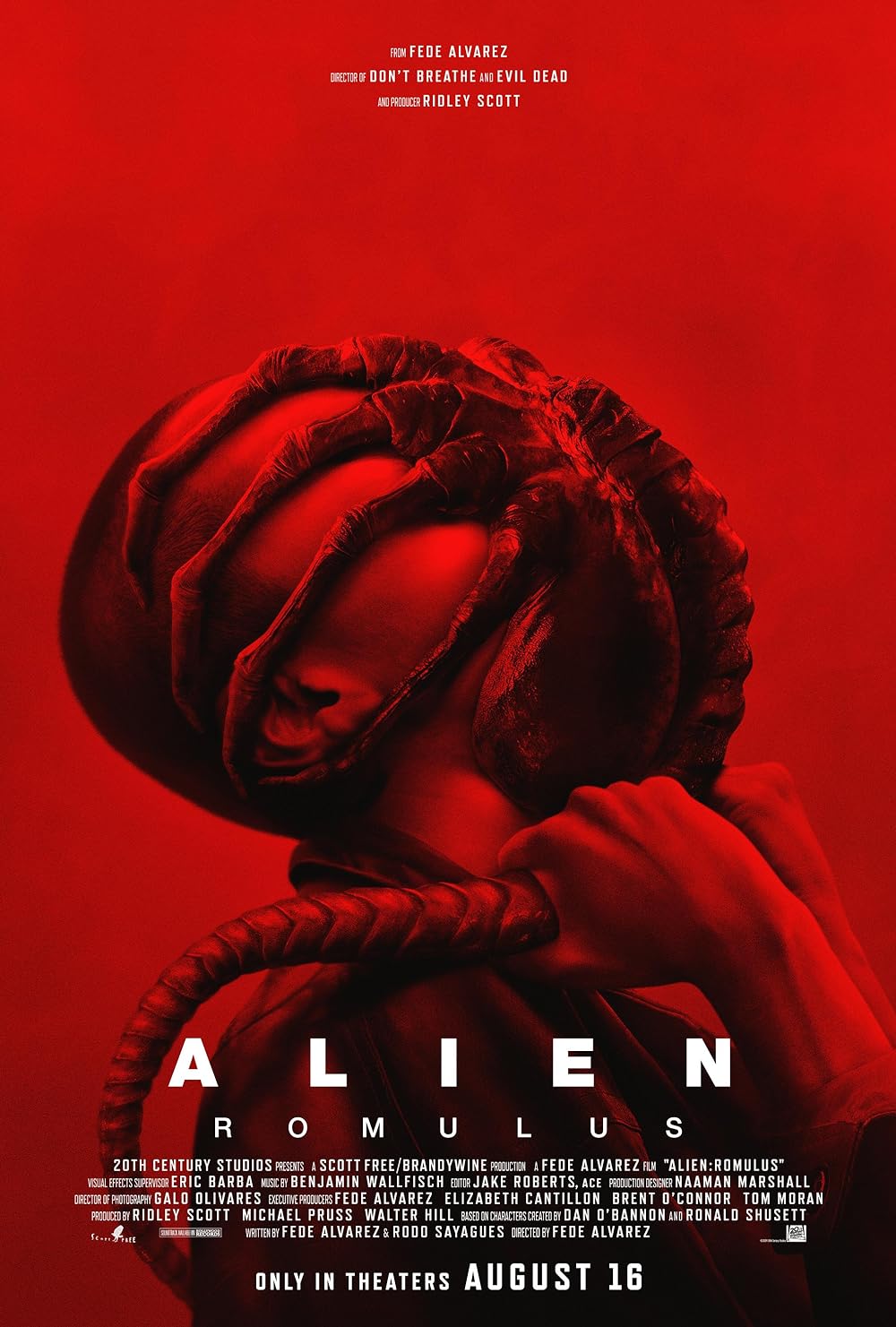
In space, these characters are screaming for dimension. Fede Alvarez’ Alien: Romulus is the closest in form that we have had since the masterful Alien (1979). And while the premise and plot are fairly solid, the plotting and exquisite design cannot compensate for the poorly written characters.

The most human character is a synthetic human, and he is the only character that is thoughtfully crafted. When characters struggle to connect with audiences, then the audience couldn’t care less whether they live or die–ostensibly mitigating any real stakes. The central character is mostly flawless and we never feel as though that they will be injured, much less die (I’m avoiding spoilers). The original Alien delivers incredibly well-written and developed characters that we want to survive. Alien: Romulus‘ characters–well–they should’ve all perished for lack of anything truly compelling. Additionally, this cast is way too young to be taken seriously in these roles that would be better suited for a cast that was at least 10–15 years older.

Where the film does succeed is the throwback design and feel of everything from beginning to end. Even the CG is integrated very well with the much-welcomed use of practical effects. Practical beats CG, nearly every time. Even though this movie is releasing more than forty years from the original, it feels very much connected to that iconic motion picture in form. Everything from the production design to the sounds to the music kept me from completely disengaging from the film. Alvarez has a fantastic eye for composition and atmosphere, but his screenwriting and character development are not on par with the technical achievement of the film. If you love the original Alien, then definitely see Romulus, and have fun with it. But I don’t imagine you will be rewatching this one over and over like the one that started it all. At least, it was way more meaningful than anything that released after Aliens.

Apologies for the short review of a movie that I highly anticipated. But Disney chose not to screen the film for all the critics in the CACF.

Ryan teaches Film Studies and Screenwriting at the University of Tampa and is a member of the Critics Association of Central Florida and Indie Film Critics of America. If you like this article, check out the others and FOLLOW this blog! Interested in Ryan making a guest appearance on your podcast or contributing to your website? Send him a DM on Twitter. If you’re ever in Tampa or Orlando, feel free to catch a movie with him.

Follow him on Twitter: RLTerry1 and LetterBoxd: RLTerry
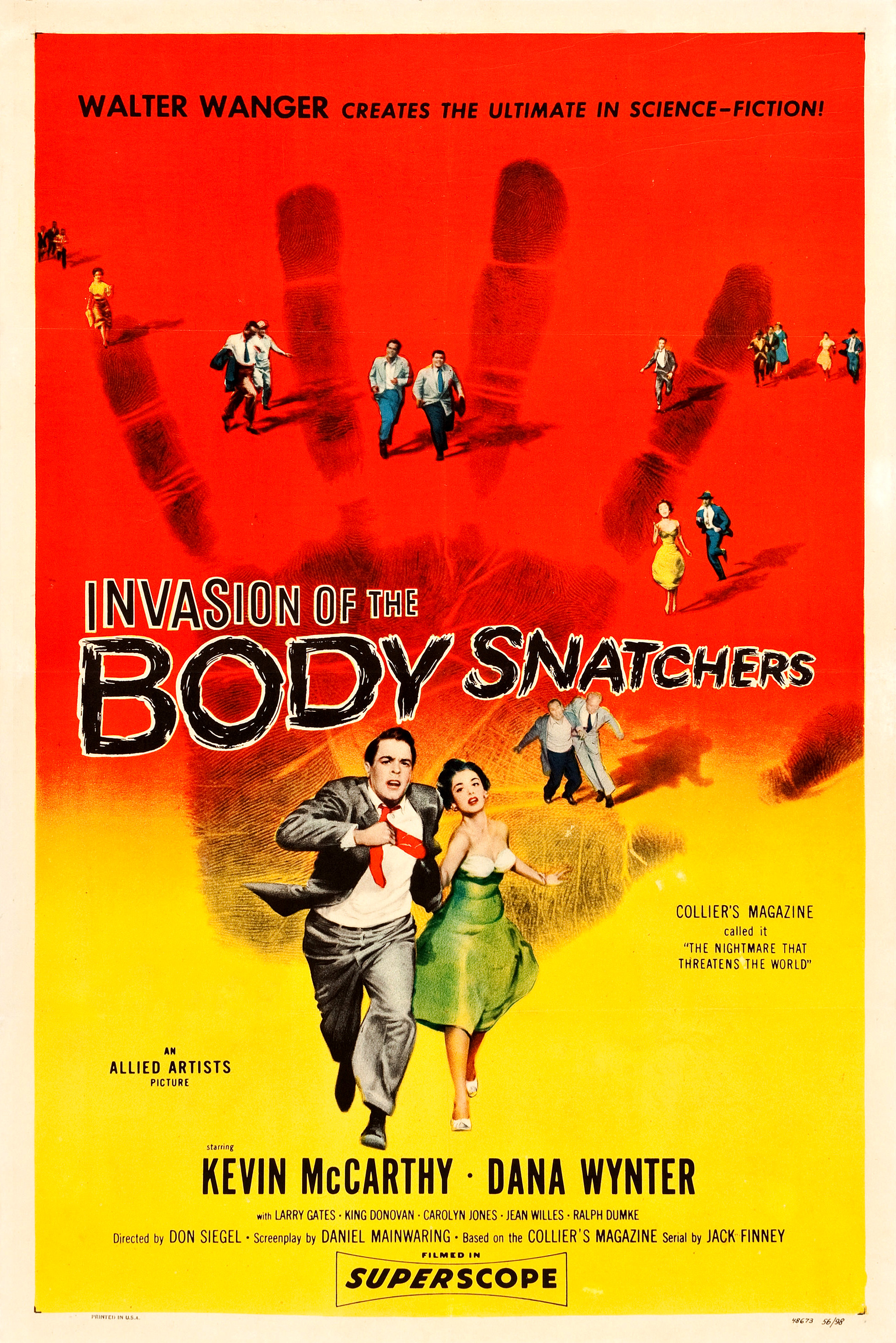
INVASION OF THE BODY SNATCHERS (1956) Throwback Thursday Review

A timeless, terrifying motion picture! Based on the Collier’s magazine serial turned book The Body Snatchers by Jack Finney, directed by Don Siegel, and produced by Walter Wanger (of Cleopatra infamy), this Allied Artists’ motion picture is the single best representation of the fears and anxieties of the 1950s. But the beauty of this particular picture is that its themes including the fear of conformity, loss of identity, dehumanization, loss of individuality, and even vulnerability are still relevant today, perhaps even more so than they were at the time this seminal horror film was released. 

In Santa Mira, California, Dr. Miles Bennell (Kevin McCarthy) is baffled when all his patients come to him with the same complaint: their loved ones seem to have been replaced by emotionless impostors. Despite others’ dismissive denials, Dr. Bennell, his former girlfriend Becky (Dana Wynter) and his friend Jack (King Donovan) soon discover that the patients’ suspicions are true: an alien species of human duplicates, grown from plant-like pods, is taking over the small town.

While this film sits comfortably in the horror/sci-fi subgenre, it shares a lot of characteristics in common with film noir. Between the recurring narration, a central character in over his head, and the fact events do not turn out favorably for the central character, it pulls on the best of the film noir apparatus to craft a highly unnerving cinematic story that prompts one to think about the state of the world around him or her. 

Perhaps in its day, Invasion of the Body Snatchers was a commentary on the threat of communism/socialism on the American republic, but that is not the only subject to which this film can speak to us decades later. Could it still be read as a warning against the threat of communism today? Sure. But, communism doesn’t look or act like it did back in the 1950s. That’s the danger inherent with famous allegorical films such as this one; the well-known danger is pigeonholing it into only ever meaning what it meant back during the days of the Cold War. When in fact, this film can be read as a commentary on a variety of topics, depending on the worldview of the audience member. 

Whatever the form the existential enemy takes, whether you choose to read it as a commentary on communism, socialism, nationalism, or woke-ism (more accurately defined as applied/reified postmodernism), this film speaks to that which is defined as a threat to one’s present existence. When we label what this film is about, we limit its potential to speak to us. So, it’s better to read the film through its various themes versus defining what the enemy is. From beginning to end, the film depicts events and behaviors that rob individuals of expression, identity, competition, entrepreneurship, and choice in exchange for homogeneity, group think, forced societal roles, and emotion. Ostensibly, this film is about an enemy that seeks to dehumanize and force conformity upon everyone—a world in which everyone is equal and exactly the same versus a world in which we are all equal but definitely not the same. The film demonstrates what happens when we are asleep to the threat of the enemy, and it comes in like a thief in the night. And when we finally recognize the threat, it’s all but too late for us, for humanity, for freedom.

The film begins laying the pipe for the second act reveal of the pod people all the way at the beginning. It’s a scene to which many may not pay particular attention; it’s the scene wherein Miles notices that the Grimaldi vegetable stand is no longer open. One of the characteristics of a society that demonstrates a lack of support or simply opposes free enterprise (or by extension the marketplace of ideas), is manifested in this imagery. Farmer Grimaldi abandoned his private farming business in exchange for supporting the planting and harvesting of the alien pods. Other disturbing imagery is the crisis between the second and third acts wherein Miles and Becky are told that the pod people (replicants of their human counterparts) mean them no harm and want to provide a peaceful existence. The real horror here is that the peaceful existence comes at the cost of freedom and one’s unique identity (all the traits that make one a unique man or woman). These pod people are devoid of any genuine emotion, only exhibit the pretense of it, and see individualism as a threat to their existence.

Invasion of the Body Snatchers is a call to action; it’s a wakeup call to all those that watch it to stand vigilant against tyranny, to stand guard against threats both seen and unseen that seek to undermine what it means to be human. Furthermore, the film posits the idea that the deadliest enemy may not be the one that can be viewed with the naked eye; rather, the deadliest enemy is the one that sneaks in unbeknownst to most individuals. Or maybe it comes disguised as something that sounds great on the surface, but only seeks the destruction of uniqueness, freedom of expression, the marketplace of ideas, and the human dimension of existence. 

Due to the timelessness of the message of this terrifying film, we are drawn back to it time and time again. We are reminded to stand guard against an enemy that seeks to destroy our very way of life. It’s a story of survival and the great cost of freedom. A recurring theme throughout the horror genre is the theme of survival, and Invasion of the Body Snatchers is a brilliant exploration of how to survive against mounting odds that appear unstoppable. Horror films have a way of causing us to rally, causing us to come together in support of our right to survive. There is no other genre that inspires us to fight the enemy like a horror film.

Ryan teaches Film Studies and Screenwriting at the University of Tampa and is a member of the Critics Association of Central Florida and Indie Film Critics of America. If you like this article, check out the others and FOLLOW this blog! Interested in Ryan making a guest appearance on your podcast or contributing to your website? Send him a DM on Twitter. If you’re ever in Tampa or Orlando, feel free to catch a movie with him.

Follow him on Twitter: RLTerry1 and LetterBoxd: RLTerry
DUNE (2021) Review

Audacious sci-fi scale, but a vapid adaptation. Dune is a stunning sci-fi/action visual spectacle that delivers rich imagery and epic fight choreography; but falls short in translating the thoughtful, complex themes and mythology of the source material, which get buried in heavy handed exposition or are entirely cut. Dune (part one) is the first part of the of an epic sci-fi tale about Paul Atreides, son of Duke Leto of house Atreides and Lady Jessica, a sister of the Bene Gesserit who are sent by the Padisha Emperor from their home world Caladan to govern the Planet Arrakis after the Departure of House Harkonnen. If you haven’t read the book and this sentence sounds overly expositional and convoluted to you this is how you’re going to feel throughout 80% of the films dialogues. However, I’m sure you’re not going to see Dune for the dialogue and it has plenty to offer aside from that.

Director Denis Villeneuve wanted to make this a “Star Wars for adults” and with that he succeeded. Dune boasts impressive visuals and epic conflict but in a more mature manner than the Star Wars films. Instead of using colorful light sabers people are stabbing each other with actual knives. Still not much blood is seen, thanks to the film’s PG 13 rating, but that seems to be unavoidable in today’s industry. The Designs are kept very close to the book, especially the Ornithopters which actually have flapping wings unlike in previous adaptation by David Lynch. Some of it may be because of the improved technology after nearly 40 years but I believe the production designers were definitely trying to stay faithful to the source material. All in all the depictions of technology, lifeforms and other things will satisfy fans of the book, although the production design was a bit too monochromatic for my personal taste. The visual direction is similar to other works by Villeneuve: simple and effective. The camera itself is not here to show off. That’s what the Sandworms, spaceships and battles are for. The cinematography by Greig Fraser is dark and moody, which fits the more adult tone this film is going for.

Continuing with its mission to be an adult Star Wars, it’s also more complex editing wise with mystic visions by the protagonist Paul sprinkled throughout the film by Villeneuve’s frequent collaborator editor Joe Walker. The visual effects shots are done in similar manner to the rest of the camerawork. They are impressive but only there to move the story along and not at all show-offy. The hand to hand combat sequences, of which there are quite a few, most of which look very practical are impressive as well. One can clearly see the effort the actors put into making them appear so effortless. That also includes the main cast, no stunt doubles here! There is one early fight or rather training scene between Chalamet (Paul Atreides) and Brolin (Gurney Halleck) where their skills are put on full display.

Now the actors of which this film has many and many famous ones also did very well, even despite the fact that most of their job consists of spouting exposition and fighting. Rebecca Ferguson as Paul’s mother Lady Jessica being the clear standout and stealing every scene she’s in. Timothée Chalamet has his edgy teenager moment, which in this case fits the character who is still coming to terms with his new place in the complicated conflicts and power structures of Dune but doesn’t really have any other stand out moments. Zendaya, the other perhaps controversial star of this film, also doesn’t stand out much, neither in a negative nor positive way. Her character only really appears in the film towards the end so there’s not really enough to see for a final verdict.

Now on to the not so good aspects of the film. Although the conflict in Dune is still very complex and probably closer to Game of Thrones than Star Wars it’s still very simplified if not dumbed down compared to the complex political intrigues and power plays of the novel to fit the limited runtime of the film format. The complex world of the Dune universe also has to be explained to viewer somehow, which here is mostly done through expositional dialogue. The exposition is well integrated to the story as Paul, the protagonist is also learning about most of these things but it can become a bit overbearing as said before. This can leave viewers who are not familiar with the source material overwhelmed and confused about the particularities of the story and story world. Nevertheless the film should still be enjoyable as an epic sci fi tale about family, power and mysticism, even if it takes some time to understand surrounding lore. Hopefully this film will also motivate a new generation of Dune fans to dive into the world that Frank Herbert created in his books.

Written by German correspondent Leon Zitz.
Be sure to check out his Instagram to see what he’s working on!

Sinister Summer: ALIEN Retrospective

Alien (1979) - IMDb

This. Is. ALIEN. You are with. Sigourney Weaver. Aboard the spaceship Nostromo. Caution. The area you are en-ter-ing is extremely dan-ger-ous. Something has gone wrong… If you get why I punctuated that the way I did, then you remember the ALIEN scene on the former Great Movie Ride at Disney’s Hollywood Studios (oh how I miss that attraction). Ridley Scott’s science-fiction horror masterpiece that convinced you that “in space, no one can hear you scream” is still the definitive science-fiction/space horror film. Furthermore, it reinvented the space-horror movies from the 1950/60s. Sitting between Halloween and Friday the 13th, this film came as a surprise for the horror genre because it countered the direction that the horror genre was going by reimagining the emerging slasher genre in a setting that is more terrifying and limiting than a house or town in which a serial killer is slaughtering teenagers. Just 10 years after the Apollo moon landing, this film takes on characteristics of that which is frightening about this new frontier that we are exploring. What if there is a killing machine monster out there? Scary stuff.

Steam Workshop::Alien (1979) Tour Inside The Nostromo

Until ALIEN, movies and TV shows set in space depicted a clean, optimistic, new world. ALIEN subverts this expectation by delivering a used, broken-in, aged space. The Nostromo was nothing like the U.S.S. Enterprise from Star Trek or the Star Destroyers from Star Wars. The design of the Nostromo communicated a dirty, dingy space that is far less appealing than the world of the United Federation of Planets. The effect of this upon audiences was fantastic because it made the future look far more realistic than anything that had come before it. The world of ALIEN truly felt like a future that was used. Indirectly, this intentional design also shows us that the passengers aren’t heroes, highly intellectual explorers, or uniquely skilled individuals. The rough design of the Nostromo parallels the roughness, lack of refinement in the characters. Again, they feel like real people, a people that we could connect with in ways that we could never connect with the characters from space-horror and monster movies in the past. The future, as illustrated in this film, is relatable. From the design of the Nostromo to the development of the characters themselves, audiences are invited into a world stepped in expressive meaning and emotion.

Beyond taking the horror genre into space and integrating some of the psychological horror and slasher elements outlined in PsychoHalloween, and others, Scott’s Alien also provided horror audiences with a new type of final girl, social commentary on gender roles, heteronormativity, and human sexuality. Much like the Freudian components of Hitchcock’s Psycho, this horror film also explores the deep fears and desires that are often suppressed by the subconscious. Furthermore, the film also explores the fears associated with child birth by “impregnating” men resulting in body horror trauma. The counterarguments to heteronormativity is manifested in Ellen Ripley as an androgynous female who behaves in a very masculine way, the film provides an opportunity to talk about gender roles.

Although Ripley is, for all intents and purposes, not even on our radar for nearly 45mins into the film, following a tragedy, she is thrust into the forefront of this mission. Scott’s Alien dared to challenge the status quo in order to deliver the first female action hero, and place her in center stage. The long and short of it is that Ripley subverts the typical science-fiction hero trope to embody both the feminine and masculine to redefine what a hero is within the sci-fi/horror genre. Breaking gender norms for the time, she was neither arm candy, simply a side kick nor required rescuing by a male character. Her character and actions were not defined by gender. She is our final girl, and so much more. Not only did the character of Ripley contribute significantly to horror, she also broke ground for female heroines in the world of cinema at large. 

I Hope This Awesome ALIEN: COVENANT Movie Connection Rumor is True —  GeekTyrant

Like Clarice Starling in Silence of the Lambs, Ridley is also someone who is equal parts female and male. In fact, you could argue that she takes on more masculine characteristics as the narrative plays. This playing with the roles of men, women, and their respective bodies and minds can be realized when viewing the character of the xenomorph as the “monstrous feminine.” The monstrous-feminine is a psychological construction generated by male anxieties about the female body and sexuality. Scott’s Alien depicts the maternal body as monstrous. More specifically, the film repeatedly examines the scene of birth or origin. Interestingly, there are three different representations of the concept of birth in the film. In terms of the production design, Alien can be likened to a gothic horror set in space. Scott’s brilliant design conveys to the audience the extreme isolation and claustrophobia. There is also an fascinating dichotomy in the worlds that are represented in this film by pitting the mechanization and technology of the organization for which our explorers work and the monstrous origin world of the alien, which we learn more about (whether you like the films or not in the prequels).

Your central character need not always be the first or second character we encounter in a screenplay. This is true with Ripley as she emerges as the central character midway through the film. However, we are given hints at her destiny throughout the first act in subtle ways. It was important to the plot to establish her as a woman in order to make her actions later on in the film so kickass and assumption shattering. Had she been seen as “masculine” or strong from the onset, then we would not be as impressed with her actions–we would expect them. Part of her power as a strong female character in horror is taking what we assumed about her (or a female character in general) and subvert our predisposition. Whereas Ripley is not the first female heroic character in a horror film, she is one that never becomes subjected to the male gaze or becomes some fantasy version of a woman. Even though female heroic characters who wear sexy clothes, wield phallic guns, or use their bodies as femme fatals can be strong characters, they are still some heteronormative fantasy for a male screenwriter or director. 

Essentially, the aforementioned female characters lack an authentic humanity. Ripley is strong, vulnerable, independent, scared, mortal; these elements that make her believably human. There is so little suspension of disbelief in her character that she could nearly exist in real life. Furthermore, her character is incredibly complex; she exhibits strong intuition and intelligence, chutzpah, is brash, talks about PTSD, outspoken, rigidly wants to go by the book instead of saving a man’s life, has a natural beauty but doesn’t spend much time on hair or makeup. All these traits portray someone who has incredible depth and dimension. She is a survivor. No matter how grizzly, messy, constricting, or frightening her soundings become, she remains steadfast, collected, and brave. As the 1970s saw many changes in censorship, ratings, guidelines, etc., the ability to show gorier, more visceral body horror special effects, and on screen violence allowed Scott to confront the character of Ripley with cinematically innovative ways to test her resilience and survivorship. 

The character of Ellen Ripley is also a strong pillar of the American horror film by virtue of her representation of gender politics. Even before it became popular, in more recent times, to use both male and female characters in motion pictures as a conduit to comment on the state of affairs for a particular group within our society, Ridley Scott crafted a visual masterpiece that did just that. Highly innovative, forward thinking, and progressive. The subtext of the film confronts us with a woman trying her best to fit into a man’s world. In addition to that subtext, research into the screenplay for this film shows that all the characters were written as gender neutral. Interesting stuff, right?!? Another gender-related observation in the character of Ripley, is her both metaphorically and physiologically clothing herself in masculinity all while remaining a women. In one scene, Ripley steps into a space suit. And this space suit can be read as Ripley playing the role of a man while remaining a women at her core in order to challenge the patriarchal system to prove that she is capable of anything that a masculine hero is. 

Ripley is a highly intelligent character, realizes that about herself, and does not allow herself to be patronized or undermined. She does her job aboard the Nostromo like a legit boss. She knows procedure and protocol, and will follow it in order to protect her crew. Figuratively, she is protecting the ship from being willfully penetrated by a foreign object. This could be read as a commentary on rape. She is forcefully overruled, and we all know what happens next. Further commentary depicts male characters “forgetting” that Ripley is the senior officer. But because she is female, they feel they know better. I bet they wish they had followed her orders. Although much of what I’ve written deals with the masculine qualities of Ripley, her character would not have been as powerful a character if it wasn’t for her feminine side as well. When all hell is breaking loose, she soothes the nerves of the crew and offers comfort. Exemplary motherly qualities. Had a man been in her role, then he would most likely have not exhibited such love for the crew. Her success as a hero has as much to do with the touch of a women as it does the chutzpah of a man.

Alien's Chestburster Scene Real Meaning Explained | Screen Rant

Another motherly quality found in Ripley is her persistent urge for the crew to function as a group. Through the brilliant cinematography, we are consistently shown a group that is fractures and continually fails to band together until it is too late. Interestingly, each character meets his or her demise because of a tragic flaw and failure to group together to function as ONE crew instead of self-centered individuals. Had the group functioned as one, then more may have survived. This hypothesis is witnessed in the Ripley in Act 3 because she essentially embodies all the good qualities found in the other characters (think Captain Planet). She combines what everyone did well into one character. That is why she is the final girl. Only by combining all the qualities of the crew was she able to go toe-to-toe with the Xenomorph killing machine. 

John Kenneth Muir's Reflections on Cult Movies and Classic TV: Cult-Movie  Review: Alien (1979)

There are actually three prominent female characters in Alien. Ripley, the Xenomorph, and The Nostromo. Although Ripley is our central character, I would be remiss to not mention the other two that could be analyzed individually themselves. Much like Ripley exhibits both masculine and feminine characteristics, so does the Xenomorph with a mouth that oscillates between vaginal and phallic in nature. And finally, The Nostromo ostensibly gives birth to all the astronauts at the beginning of the film; and therefore could be referred to as the mother ship. Playing around with gender does not stop there. The facegrabber impregnates a male character and he gives birth to the Xenomorph. Underscoring so many elements and conflicts in this film is this idea of subverting gender identity with the intent to horrify by tapping into primal heteronormative fears. And let’s face it, child birth is terrifying.

The extent to which the special effects still hold up terrifying well in this motion picture is just one of many reasons why CGI can never replicate the way real like bounces off real objects and into the camera lens. Practical effects have literal depth and dimension–nothing simulated or recreated here. Practical effects offer the actors the opportunity to engage and interact with the world in which their respective characters live, work, play, and sometimes die. The single scene that stands out to me, and remains one of the best of all time is the “chestbuster” scene.

What an entrance! In addition to terrifying the audience, it threw the cast for quite the loop too; furthermore, this scene represents the first good look we have at the alien creature, even though it’s in its infant stage. Interestingly, the actors were literally taken by surprise because they had a general idea of how the scene was going to play out, but they were not informed as to specifics. Suddenly, Kane begins thrashing around so violently that everyone has to hold him down on the table, requiring everyone to move in closely to the body (a prosthetic one at this point). Just as the crew is holding onto Kane tightly, the alien BURSTS through Kane’s chest! His innards and blood spew everywhere! The actors’ reactions are grounded in realism, because these are authentic, unrehearsed reactions, which only adds to the gravity of the entire scene. Genuine reactions. You cannot get that with CGI. I mean, how is one supposed to fear for their life when acting next to a tennis ball on the end of a stick or string???

Unfortunately, all the sequels failed to live up to the substantive nature of the original and devolve into a generic futuristic action-adventure series; but the original ALIEN delivered a nightmare-inducing “haunted house” meets Jaws movie set in the far reaches of space where “no one can hear you scream,” and provided us with the breakthrough character of Ellen Ripley.

This image has an empty alt attribute; its file name is profile_pic.jpg

Ryan teaches screenwriting and film studies at the University of Tampa. If you like this article, check out the others and FOLLOW this blog! Interested in Ryan making a guest appearance on your podcast or contributing to your website? Send him a DM on Twitter or email him at RLTerry1@gmail.com! If you’re ever in Tampa or Orlando, feel free to catch a movie with or meet him in the theme parks!

Follow him on Twitter: RLTerry1