
Netflix “YOU” Season 2 Review

Wow! That was bonkers good! I don’t know about you, but I binged the entire series in two nights. Simply couldn’t put it down, a fitting bibliophile metaphor as it were. Your favorite book-loving serial killer is back–and he’s moved. Now living in LA, a city he repeatedly detests, Joe (now Will) has his eyes set on a new object of his undying affection, appropriately named Love. He fled Brooklyn to LA to reinvent himself and find a new life–as so many people so when they movie to Los Angeles. But his eyes are not on the silver screen, they are on a hipster organic grocery store and book shoppe. Once he begins his job there, the hijinx are in high gear! After the critical success and highly positive audience reception of Season One, I honestly didn’t expect Season Two to hit the bar that the first one did–I was wrong. After being informed on the Bingeables Podcast during our recording of Don’t Trust the B in Apt 23 that Season Two was even better than Season One, I was intrigued! While it was already on my list of shows to watch, I quickly moved it to the front of the queue. In order to talk about how and why this season works as well, if not better, than the first, it will be necessary for me to go into spoilers. So consider this your spoiler warning. If you plan to see it, and have not, stop here, go binge the show, then come back. Believe me, you’ll want to binge it because it is just that good!

One of the main characteristics of the experience watching YOU that was such a staple in season one was just how much we rooted for our antihero Joe Goldberg, despite him being a sadistic, book thumping, stalker. Perhaps it’s his good looks, oddly loving heart (and I do mean odd), and authenticity. While we may find his behaviors detestable, contemptible, and reprehensible, there is a refreshing since of authenticity that we seldom witness anymore in an age of social media facades and social pretenses. It’s this fascinating dichotomy that we love about Joe/Will. For purposes of this article, I will refer to him as Will, as that is his name for most of this season. Whereas in Season One, Will was lacking an equally intelligent and cunning character of opposition, he has met his match in Candace–yes–that Candace. You can’t outrun murder, or in this case, attempted murder. Candice is back, and she is pissed.

We pickup at the tail end of Season One when Candace surprises Joe at the bookstore. Only this time, she is in control of the situation. But does she turn him into the police? No, that would be too easy. Her goal is to ruin him and make him as scared as she was. She prefers executing a slow, painful defeat. He decides to flee to the one city that he hates more than any other: Los Angeles. Where else do you go to reinvent yourself and hide from the world? Once Will relocates to LA, the hijinks and prolific number of crimes ensue!

All those thrills and chills from season one are back with vengeance in season two. Furthermore, the series continues positing the questions and making observations about masculinity, femininity, friendships, romantic relationships, and social media. One of the biggest differences between this season and the last is that we now have the stalker becoming the stalked. So there is the stalking between Love and Will, but then Will is being stocked by Candice. And even Candice is being stalked during the season. So many layers! Don’t worry, all these layers are not confusing. There is plenty of exposition laying pipeline along the way to understand the various dynamics. While Will goes even darker than in the previous season, you will undoubtedly still root for this antihero. The added complexity of Candace gives way to a more intriguing plot that will have you on the edge of your seat. In addition to the present story, you also get to learn more details about how the relationship between Candace and Joe ended. And you will be blown away! No wonder why Joe was so shocked to see her at the end of Season One.

At first, Will recognizes his psychological problems and refuses to engage in romantic thoughts or behaviors with Love, but soon he falls into his old ways but approached them differently. There is far more rationalization than before, and that makes everything so much more frightening. It doesn’t take long for Will to give up on keeping Love at arm’s length, he’s soon back into his old ways as she is now the object of his affection. More so than in the first season in which Will targeted people that came between him and Beck, this time, he targets those who seek to blow the cover on his darker side that could end his friendship turned relationship with Love. Unlike Beck, Love genuinely returns Will’s affections, which actually complicates things. In addition to his romantic affections, Will also quasi adopts a teenage girl in his apartment complex because he feels that she needs someone to talk to and look after her since her sister (her guardian) is off chasing stories a lot of the time. This friendship adds in another relationship that Will has to protect at all costs. Not only must he not disappoint Love (and her brother, with whom she has a co-dependent relationship) but he must not disappoint his neighbor.

Although I saw the big twist coming shortly before it was revealed, it was still a pleasant surprise! It was the perfect way to end this absolutely bonkers season. While Will thought he was alone in his personal struggles, he now knows that others share his same penchant for stalking and “protecting” loved ones. But therein lies the conflict and a newfound fear for Will, he now knows that he may become someone whom needs You’s special blend of stalking and protecting. He goes from apex predator, if you will, to being knocked down a rung on the food chain.

I appreciate You‘s commentary on modern relationships, masculinity, and femininity. A lot has changed in dating over the last 10-20 years, and You has a way of creatively exploring all the added complexities that social media and the re-defining of traditional gender roles in relationships. You also depicts different kinds of relationships. We have the warped-yet-traditional romantic relationship between Will and Love, the bro-mantic friendship between Forty and Will, the lesbian relationship between Love’s best friends, and the quasi-parent-child relationship between Will and Ellie (his neighbor’s kid sister). Each of the aforementioned relationships contain their own respective set of unique dynamics that Will must navigate in order to keep his dark secret hidden from those whom he legitimately loves. Of course, with a devoted love like his, you may be better off with enemies. Beyond friendship and romantic relationships, You also provides commentary on sexuality and the expression of it. This season plays around with the various ways people express their sexuality and personalities. Characters that you first think are heterosexual are, in fact, homosexual, and those whom you first think are homosexual are, in fact, heterosexual. It’s fascinating to see characters refusing to comply with the de facto rules society has for both groups of people, and express themselves however they like regardless of sexual orientation.

We witness much more of the Dexter side to Will. And, the wildly popular show gets referenced in this season. Like Dexter, Will has a quality about him that we just cannot seem to help but root for. Not in the same way as Dexter, because he primarily only killed those whom were criminals in some form or fashion. Although Will demonstrates some of the same habits, he also regularly kills innocent people that find out his secret, and that’s the different between the two anti-heroes. But not all the killing is due to Will’s penchant for forcibly creating relationships. Love joins in on the action when she realizes that Will is not unlike herself. Interestingly, it is not Will whom has the highest body count, it’s Love. The one kill that Will does have is technically accidental, whereas Love’s are completely intentional crimes of passion. Simply stated, Love and Will are made for one another.

What a fantastic season! And a third season has been greenlit, so we may get to see what Will makes of his new next door neighbor.

Ryan teaches screenwriting at the University of Tampa. If you like this article, check out the others and FOLLOW this blog! Interested in Ryan making a guest appearance on your podcast or contributing to your website? Send him a DM on Twitter or email him at RLTerry1@gmail.com! You can catch Ryan most weeks at Studio Movie Grill Tampa, so if you’re in the area, feel free to catch a movie with him!

Follow him!

Twitter: RLTerry1

Instagram: RL_Terry
“Underwater” Horror Movie Mini Review

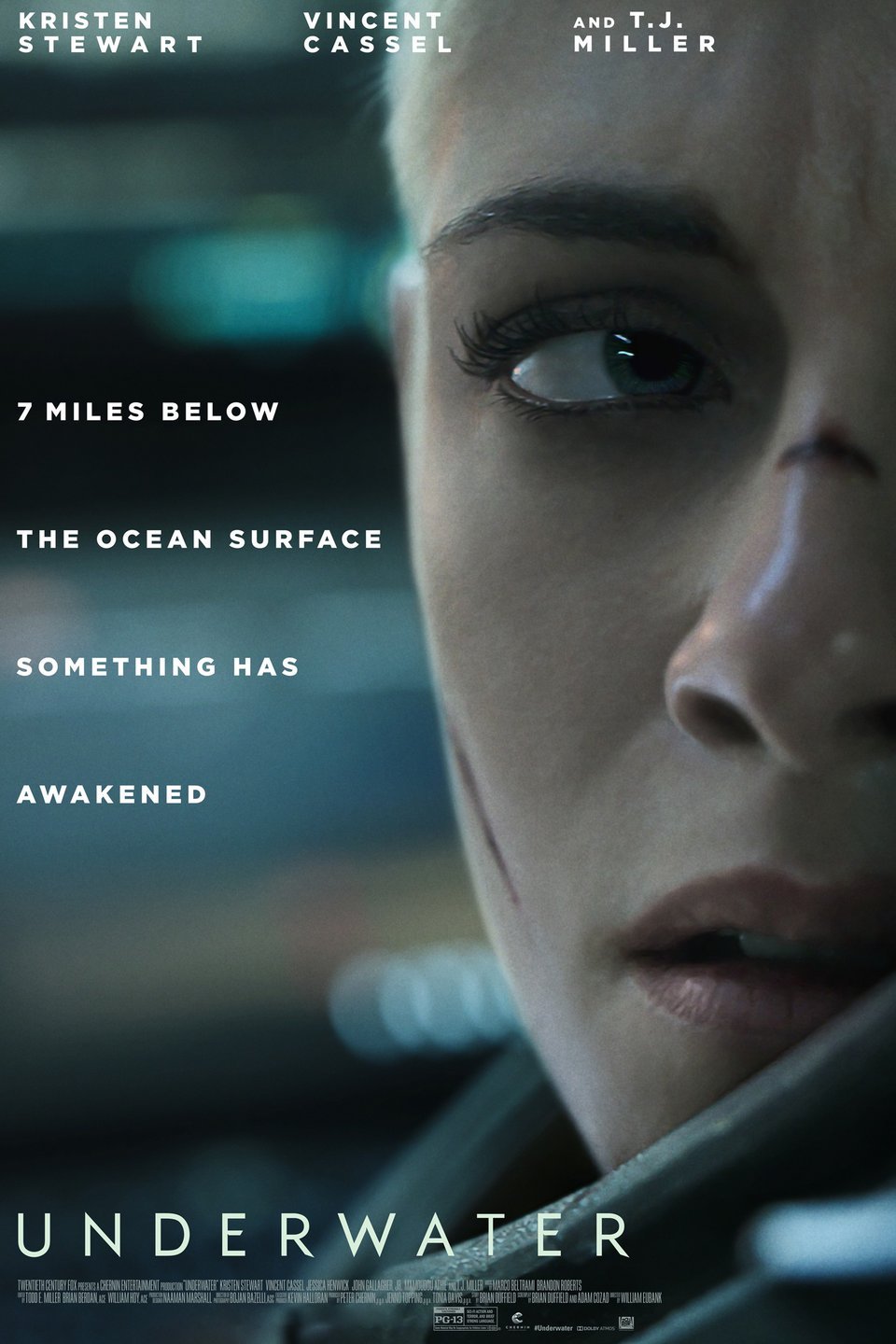
I nearly suffocated from the lack of exposition. Underwater is the kind of horror movie that begins with a solid (albeit common) premise, attaches lots of talent to make it look good (including the cinematographer from A Cure for Wellness), but forgets that the movie needs a story that is more than a series of bullet points. It’s no surprise that it’s clearly an Alien knockoff with heavy influences from Deep Blue Sea and The Poseidon Adventure, but it’s only that in premise and look only. Even Deep Blue Sea has a better plot and characters than this movie. What Alien and Deep Blue Sea have in common that Underwater should have done, but didn’t, is establishing the world and characters in normal settings before the big event upsets everything. It’s not a spoiler when it happens within the first few minutes–the giant facility in which the characters work explodes. We no sooner meet our central character then the facility blows up. We have nearly zero frame of reference for anything that is going on. And the confusion won’t stop there. For most of the movie, you will be lost in the questions you have that should be answered by the film. For instance, why are there just a handful of people in a facility that is literally miles deep and wide? For what and why are they drilling? And what exactly are the areas of specialization of the cast (we only know one). Underwater is teetering between two genres: disaster and monster movies, but it should have committed to one or the other. This mishmash of tropes and plot devices just makes for a convoluted mess. A mess that some exposition could have helped clear up. Although the direction is fairly solid, it cannot make up for a poorly written story. I feel that everyone involved was doing their best to make something of the anemic script they were delivered. It’s my advice not to take the plunge into Underwater.

Ryan teaches screenwriting at the University of Tampa. If you like this article, check out the others and FOLLOW this blog! Interested in Ryan making a guest appearance on your podcast or contributing to your website? Send him a DM on Twitter or email him at RLTerry1@gmail.com! You can catch Ryan most weeks at Studio Movie Grill Tampa, so if you’re in the area, feel free to catch a movie with him!

Follow him!

Twitter: RLTerry1

Instagram: RL_Terry
“The Grudge” (2020) Horror Movie Mini Review

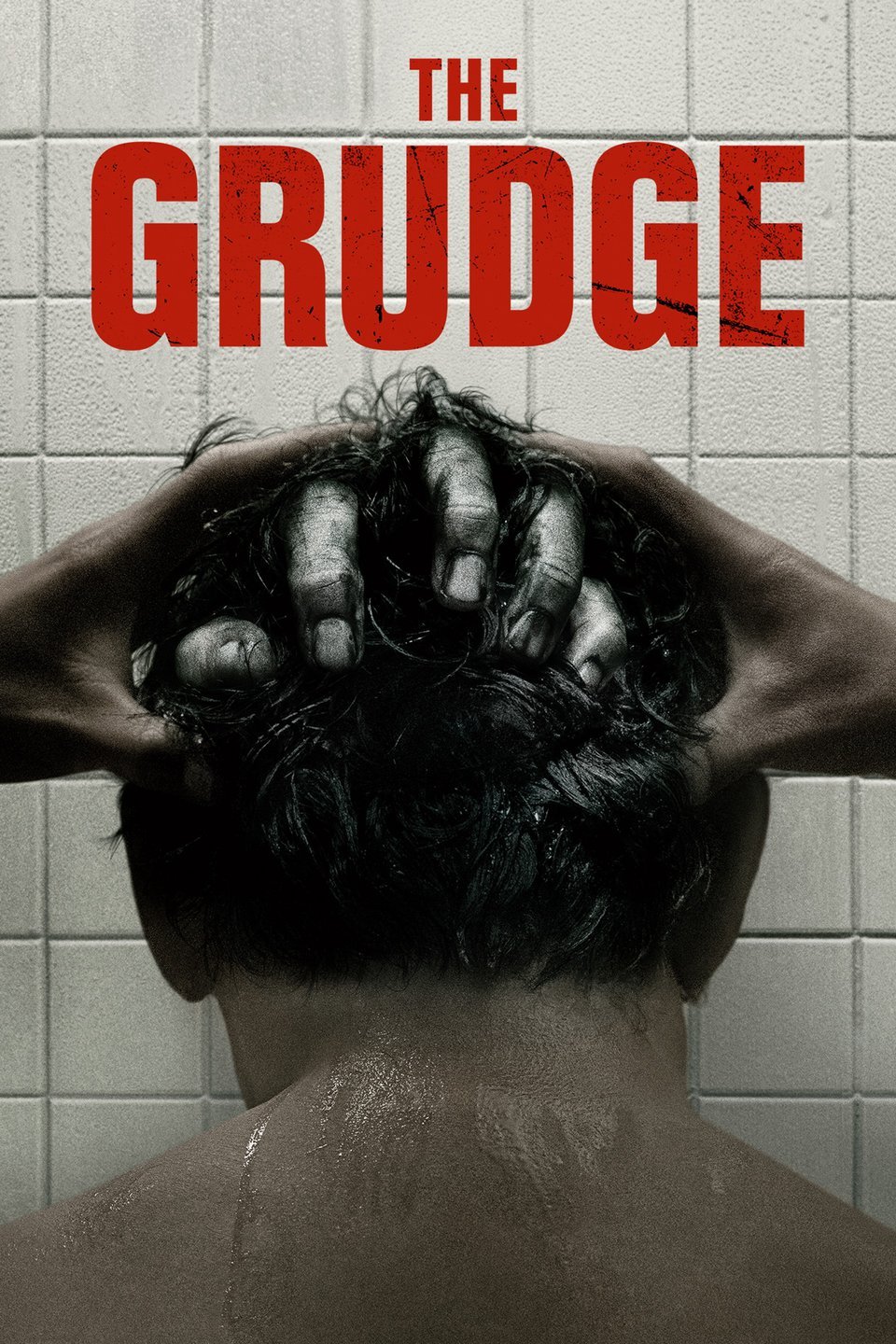
A begrudging start to 2020 horror. The Grudge is the second American remake of the 2002 Japanese movie by the same name, written and directed by Nicholas Pesce, known for Piercing and The Eyes of My Mother. Before I get into why this movie is simply not good, I want to point out what it did well, never mind that what it succeeded at couldn’t fill a post-it. What to make of this hot mess of a remake? From what I can tell, Pesce attempted to apply his brand of filmmaking–that has been championed by critics–to this post-modern horror staple property. Unfortunately, most of the movie was not executed well. With a couple of exceptions that I want to highlight. (1) Casting and (2) Atmosphere that were thoughtful.

The name Lin Shaye is no stranger to horror fans. And it’s not just because she is Producer Robert Shaye’s (of A Nightmare on Elm Street fame) sister, but she is a true horror queen! Appearing in dozens of horror movies, she is an utter delight in everything that she is in. She can be courageous and comforting (Insidious), hilariously campy (2001 Maniacs), or nightmarishly creepy (The Grudge). She delivered a fantastic performance in last year’s Room for Rent as well (which made my Top 10 Horror movies of 2019 list). She is little more than a bit part in The Grudge but she is truly frightening and unsettling. Completely committed to the character amidst a poorly written movie, she does everything in her power to save this ill-conceived remake. Even though I imagine she is aware of how bad this movie it, she gives it her all because she simply loves horror!

Secondly, the atmosphere in this movie actually works well. Perhaps this bright spot gets lost in the poor direction and abominable screenplay, but the production design, lighting, sound, and cinematography that creates the unnerving settings works very well. We spend most of our time in a few locations, so a lot of thought was put into the design of these settings. Not to the extent that any of these locations become characters in and of themselves, but the atmosphere of dread is something positive that this movie has it offer. Surprisingly, the premise of the movie isn’t bad; unfortunately, the execution is where things went array. Pesce appears to have strived for an anthological structure to the IP, but it just felt like a convoluted diegetic mess of timelines. Had he taken a page out of the Michael Dougherty handbook (Trick R Treat), then perhaps this approach would have worked much better.

The end result of the poor writing and direction is a boring, predictable horror movie. A most unfortunate way to start 2020.

Ryan teaches screenwriting at the University of Tampa. If you like this article, check out the others and FOLLOW this blog! Interested in Ryan making a guest appearance on your podcast or contributing to your website? Send him a DM on Twitter or email him at RLTerry1@gmail.com! You can catch Ryan most weeks at Studio Movie Grill Tampa, so if you’re in the area, feel free to catch a movie with him!

Follow him!

Twitter: RLTerry1

Instagram: RL_Terry
Ryan’s Top 10 Films of 2019

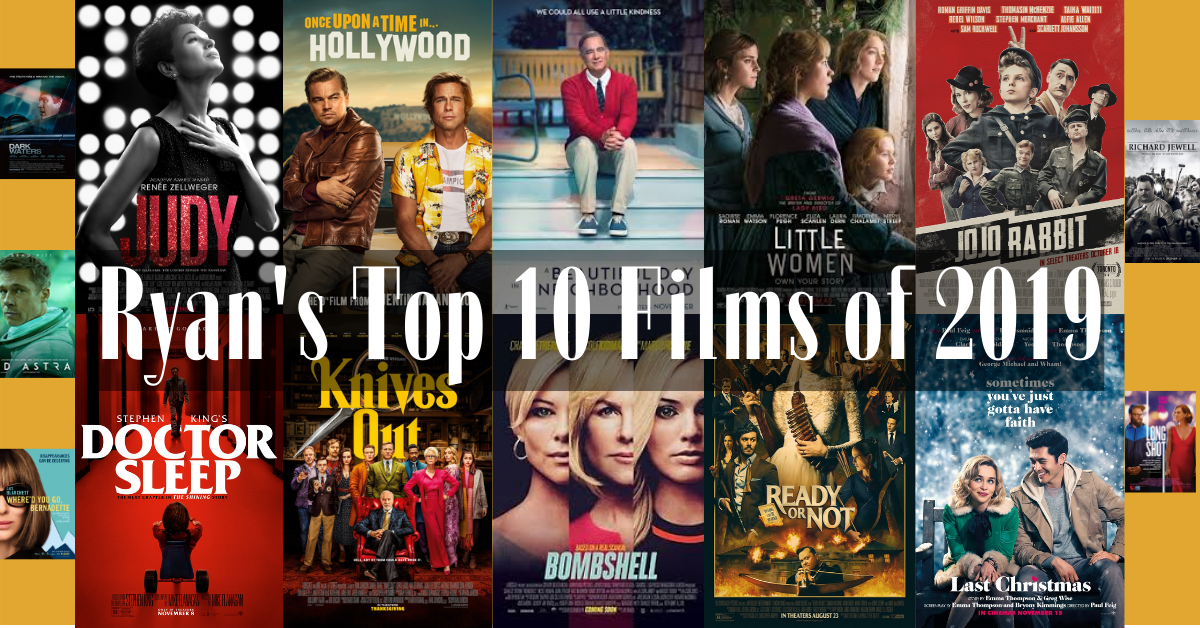
Ryan's Top 10 Films of 2019 (1)Here it is! My Top 10 Films of 2019. Last week, I published my Top 10 Films of the Decade, but here is my selection for Best Films of 2019. It’s been quite the banner year for cinema, and it was so difficult to narrow my list down to 10 plus a handful of honorable mentions, but I am ready to share it with the world.

10. Last Christmas: Paul Feig’s Last Christmas, written by Emma Thompson, is a heartwarming Christmas movie that is surprisingly deep and thought-provoking. I appreciate the unconventional approach to Christmas movies this one takes. It doesn’t hold back on the cynicism that many people have about life or about the holiday season. The movie depicts true-to-life people that experience real struggles within the family unit and from the outside. 

9. Ready or Not: Outstanding! Ready or Not is a brilliant horror comedy from start to finish. Fantastic screenplay, cast, direction, effects, everything works flawlessly. Probably the most fun movie of the summer. It’s a no holds barred dark comedy full of entertaining, campy dialogue and gruesome kills. Not since the cult classic Clue, has there been such an excellent horror comedy heavily influenced by the concept of a game. Samara Weaving slays audiences as the wedding dress wearing Grace as she transforms into this movie’s answer to Kill Bill.

8. Bombshell: Explosive! Bombshell is a brilliantly orchestrated and riveting film that takes you behind the scenes at Fox News in the months leading up to the oust of news business mogul Roger Ailes. Follow Megyn Kelly, Gretchen Carlson, and (fictionalized) Kayla as they battle the courts of public opinion and the seemingly impenetrable fortress of Fox News to take down the repulsive Roger Ailes. I went into this film prepared for a snark-filled satire, but what I was presented with was a meticulously written and directed docudrama that struck a fantastic balance between feature news story, so to speak, and motion picture.

7. Knives Out: Spectacularly crafted Whodunit! The kind of movie that would make J.B. Fletcher proud. Written and directed by Rian Johnson, Knives Out is a sleek modern interpretation of the a classic murder-mystery movie. He pays homage to Agatha Christie’s Poirot mysteries in terms of premise, but subverts what audiences expect out of a Christie mystery with his original expression, told through an outstanding screenplay complete with everything you want to get out of a Whodunit. You get it all: virtually everyone has a strong motive, plenty of deception, and a fortune at stake.

6. Doctor Sleep: A brilliantly unsettling and crisp horror film! Mike Flanagan’s Doctor Sleep is both an adaptation of the Stephen King novel, by the same name, and a direct sequel to Stanley Kubrick’s The Shining. Although many unplanned sequels to iconic classics are challenged to justify their own existence, and often fail to live up to the magic of the original, Flanagan defies the fate that so often befalls sequels and delivers a compelling film worthy to be connected to Kubrick’s cinematic masterpiece. Whereas the storytelling could have taken the easy way out, knowing that you would blindly accept virtually everything as long as you get to check back into The Overlook, it still offers a compelling, challenging narrative that brilliantly sets up the showdown at the most infamous hotel in all literature.

5. Jojo Rabbit: A complex film about a complex subject, but finds a delicate balance between humor and respect for the subject matter. Taika Waititi is offering a new perspective through the mind of a child of Nazi Germany. If Cabaret depicted the age of innocence that ended with the rise of the Third Reich, then JoJo Rabbit depicts innocence and disillusionment in the final days of the war. On the surface, this film comments on how Jojo’s worldview of the Jews transforms; however, there are nods to other groups that were also seen as undesirables such as gays. The fact that is wasn’t only the Jews whom found themselves targets for annihilation is often forgotten by the masses. Though there are times that Waititi comes close to crossing the fine line that he is dancing, he never crosses it, which allows the film to be enjoyable and comment on coming of age in a rather provocative way.

4. Little Women: Familiar yet fresh! Greta Gerwig’s Little Women is modern story of the complex emotions, societal expectations, and ambitions of women masquerading around as a period drama. It feels both “of its time” and “today.” While to the casual observer, this may seem like a story for women, young and older alike, it is a powerful story for anyone that has dreams but feels trapped by whatever societal or familial forces. Little Women is incredibly heartfelt and uplifts the human spirit. There is something for everyone in this movie that remains committed to its literary roots, yet plants itself in a modern garden to be appreciated by and inspire all those whom choose to watch it. Greta Gerwig’s masterful storytelling is evident from beginning to end, and all the performances are excellent. You will undoubtedly fall in love with this story all over again, or will fall in love for the first time.

3. A Beautiful Day in the Neighborhood: Outstanding motion picture that celebrates the power of kindness in a real tangible way. Marielle Heller’s A Beautiful Day in the Neighborhood starring Tom Hanks as Fred Rogers and Matthew Rhys as the skeptical journalist Lloyd Vogel. While you may think that this is a movie about the beloved children’s television host, Mister Rogers is a supporting character in this move that is truly about Lloyd Vogel’s personal journey through grief, forgiveness, and learning kindness. It’s a portrait about being human, and all the struggles and obstacles that come with it. Perhaps there has been no greater (non-documentary/bio pic) motion picture that has so accurately captured the human kindness at its best. Mister Rogers was not only an influential children’s television host, but he left a powerful legacy for everyone.

2. Once Upon a Time in…Hollywood: “The Hollywood that never was, and always will be” in this QT film that subverts expectations and delivers in spades. The ninth film from writer-director Quentin Tarantino is a brilliant historical fiction inspired by real events and people in film/television and Hollywood history. If you’ve been to Disney’s Hollywood Studios, you’ll recognize the opening quote. For the cinephile or film/TV/Hollywood history geek, this film will sweep you up in the story and setting; however, general audiences may find it difficult to connect to the otherwise fantastic story. Thankfully, the performances from the three leads DiCaprio, Pitt, and Robbie and strong supporting cast will keep you entertained for the rather lengthy runtime regardless if historic Hollywood is of interest to you or not. Once Upon a Time in… Hollywood represents a brilliantly entertaining homage to what is largely considered the end of the Golden Age in Hollywood.

Before I reveal my No.1 pick, here are some honorable mentions:

And the No.1 film of the year is…Judy: A truly gripping motion picture that will bring you to tears during this somewhere over the rainbow redemption story. Bring tissues. Renee Zellweger is captivating as Judy Garland, and you’ll swear that you’re watching Garland on the big screen. Although we may be familiar with the broad strokes career of the legendary entertainer, this film goes beyond the headlines and tabloids to deliver a true life story that could ironically be titled A Star is Born, or perhaps reborn. Ironic in that this film shows the life of a movie star after the lights have faded and the offers stop coming in, much like the movie she starred in. It’s a rise and fall story, of sorts, but is more precisely a fall and rise story as the movie focusses in on the last year of Judy Garland’s life. Whether you are a fan of the iconic diva or not, if you love command performances, then you do not want to miss the uncanny performance of Zellweger as Judy. All the way down to the mannerisms, vocal inflections, and over all behavior, she IS Judy. Although we all know of the tragic ending, no mistaking it, this film is an inspirational story of redemption.

There you have it, folks! My Top 10 of 2019. It’s been a great year at the cinema, and I look forward to what 2020 has in store for us.

Ryan teaches screenwriting at the University of Tampa. If you like this article, check out the others and FOLLOW this blog! Interested in Ryan making a guest appearance on your podcast or contributing to your website? Send him a DM on Twitter or email him at RLTerry1@gmail.com! You can catch Ryan most weeks at Studio Movie Grill Tampa, so if you’re in the area, feel free to catch a movie with him!

Follow him!

Twitter: RLTerry1

Instagram: RL_Terry

“Little Women” (2019) Review

Authentic. If I had to sum up the experience of watching Greta Gerwig’s Little Women, then that’s the one word I would choose. Thankfully, I am not limited to simply one word to describe this brilliant adaptation of Louisa May Alcott’s best-selling, timeless novel. Being out of town visiting family for a couple of weeks, I do not have the same amount of time to watch movies at home or at the theatre, as my family isn’t nearly the film fan as I am. However, when my mom wanted to go to the movies, and asked me if I wanted to see Star Wars (again), I countered her idea with suggesting Little Women. She was utterly delighted to see the movie, and I am so glad that my mom and I got to watch this movie together. Just now, my mom walked through the living room (as my head is buried in my laptop) and exclaimed “I just loved that movie, the story is so familiar yet so fresh.” Sounds like something I would write. To my mom’s point, I feel strongly that the reason she feels that was is because this is modern story of the complex emotions, societal expectations, and ambitions of women masquerading around as a period drama. It feels both “of its time” and “today.” While to the casual observer, this may seem like a story for women, young and older alike, it is a powerful story for anyone that has dreams but feels trapped by whatever societal or familial forces. Little Women is incredibly heartfelt and uplifts the human spirit. Just the gift of the season we needed. There is something for everyone in this movie that remains committed to its literary roots, yet plants itself in a modern garden to be appreciated by and inspire all those whom choose to watch it. Greta Gerwig’s masterful storytelling is evident from beginning to end, and all the performances are excellent. You will undoubtedly fall in love with this story all over again, or will fall in love for the first time.

Following the lives of four sisters, Amy (Florence Pugh), Jo (Saoirse Ronan), Beth (Eliza Scanlen) and Meg (Emma Watson), as they come of age in America in the aftermath of the Civil War. Though all very different from each other, the March sisters stand by each other through difficult and changing times.

While the 1933 version starring Katherine Hepburn has long sense been seen as the gold standard, I will be so bold as to state that this may be regarded as the best adaptation of Alcott’s timeless novel. Ever since I saw Frances Ha, I’ve known that Gerwig is destined for cinematic greatness. Her trademark artistic expression and ability to disarm even the most hardhearted, is witnessed time and time again in this film. Furthermore, Gerwig possesses a unique gift that quickly establishes empathy from the audience and begins to develop a relationship between them and the central character(s) quickly and effectively. For those of you whom are familiar with Gerwig’s semi-autobiographcial debut of Frances Ha, you will undoubtedly pick up on hints of Frances in our central character of Jo March. Although Gerwig has demonstrated an uncanny ability to write and direct, the real power of this film comes form her knowing the novel from cover to cover; the only way to intertwine the original narrative with the journey of the author is to have known everything there was to know, and then some, about Little Women. Gerwig’s creative decision to meld the Jo’s struggles and joys of being our de facto Alcott with the original story allows the film to comfort audiences with the familiar while wowing them with a fresh, modern interpretation of the story.

I love the five primary archetypal characters we have in this film. Jo is the rebellious independent thinker but struggles with loneliness, Meg desires a more traditional life but has a strong will, Amy has a creative spirit but desires to be a kept woman, Beth is empathetic selfless and nurturing, and Laurie is a self-centered bachelor whom lacks direction and focus yet wants to love. These characters provide ample opportunity for the audience to connect with one or more of them. The relatively simple plot of the film paves the way for complex characters and prolific amounts of dramatic conflict. While the main plot is about Jo and her goal of publishing a novel, all the other character have their own respective goals that support the subplot and are the conduit through which the subtext flows. While the characters remark that domestic struggles and joys are not entertaining, the irony is that these are the very things that make for a strong film. Strength of character is witnessed in how a character responds to and is affected by conflict–we love to see the reactions. No two characters respond to the same stimulus in the same way, and they each speak with their own voice. Through these characters, we experience triumphs, struggles, love, and loss. No Mary Sues in this bunch, nothing comes easy for any of them; and they work diligently to achieve what they want, whether that is marriage or a career. Each and every goal is earned, the windup equals the payoff.

Before addressing the technical elements that worked flawlessly, I cannot ignore the one element that did not work for me, at least in the beginning. And even then, I merely got used to it as the film went on. The editing. There are times that I was taken out of the movie by the pacing and structure of the editing choices, but ultimately it did not greatly hinder my experience of watching this future classic. It took several scenes, before I realized that we had more then one concurrent timeline. As a matter of fact, I believe we had three (1) present day (2) seven years earlier and then (3) shortly before present day. I’ve read that there are only two timelines, but I truly feel that I was following three different ones. I wasn’t always sure where I was in the trifecta of timelines. Eventually, I realized that I could follow the color palette, hair styles, and costumes as my timeline token. If we were going to alternate between present day and the past, I would have preferred if Gerwig took a page out of the Fried Green Tomatoes handbook for two concurrent storylines.

Now that’s out of the way, I have to remark on how much I love the cinematography, costuming, and production design. The cinematography works in tandem with the tone of each scene; moreover, there are moments that the cinematography is snug and warm, and other times that it is distant and cold. The emotion of the scenes is communicated lowkey through the camera choices. Period dramas are known for great opportunity for costuming to shine, and this film is no exception. Much like one’s fashion choices, in real life, are often an expression of the soul, so are the costumes of the lead and supporting cast. The costumes are almost characters in and of themselves. We can read some into the personality of the characters by the choice in attire. Along those same lines, the production design is also an extension of these characters. The locations, sets, and set dressing communicate so much about where these characters are mentally and where they want to be. The various production design teams demonstrate a keen eye for even the smallest detail that communicates the right mood, texture, subtext, or atmosphere. Period dramas sometimes struggle with making the locations and settings feel like real places that the audience can smell, feel, and touch; but this isn’t true with this film.

Greta Gerwig’s Little Women is truly a wonderful Christmas gift this season. You will laugh and cry along with these endearing characters in this Civil War era world in which the story unfolds. Gerwig takes the timeless story and brings it into a modern world to entertain and inspire a whole new generation.

Ryan teaches screenwriting at the University of Tampa. If you like this article, check out the others and FOLLOW this blog! Interested in Ryan making a guest appearance on your podcast or contributing to your website? Send him a DM on Twitter or email him at RLTerry1@gmail.com! You can catch Ryan most weeks at Studio Movie Grill Tampa, so if you’re in the area, feel free to catch a movie with him!

Follow him!

Twitter: RLTerry1

Instagram: RL_Terry