
BASIC INSTINCT (1992) a Throwback Thursday review

Still suspenseful and seductive! The Paul Verhoeven hypnotic neo-noir thriller continues to entertain and fascinate us more than three decades later. Exemplary direction, writing, and acting. Every storytelling element works flawlessly together to craft a film that was a cultural phenomenon and made Sharon Stone a household name. The heavily Hitchcockian-inspired film also contains characteristics of giallo that assault the senses and add a cloak and dagger quality to the string of mysterious, gruesome crimes. The effective use of red herrings and misdirection adds to the tension, keeping audiences guessing until the final reveal. Recently, I used this film in class, and my students, none of whom had seen it before, found it to be captivating, thoughtful, and provocative.

The mysterious Catherine Tramell (Sharon Stone), a beautiful crime novelist, becomes a suspect when she is linked to the brutal death of a rock star. Investigated by homicide detective Nick Curran (Michael Douglas), Catherine seduces him into an intense relationship. Meanwhile, the murder case becomes increasingly complicated when more seemingly connected deaths occur and Nick’s psychologist and lover, Beth Garner (Jeanne Tripplehorn), appears to be another suspect.

Basic Instinct both pays homage to and yet subverts expectations and tropes we have of film noir. This psychosexual suspense thriller draws inspiration from the works of Alfred Hitchcock and Dario Argento, particularly Vertigo, Psycho, and Suspiria in its exploration of manipulation, sexuality, and obsession. The use of shadowy lighting, ominous music, and morally ambiguous characters all contribute to the film’s rich noir aesthetic. That, coupled with unraveling the alluring mystery of the ice pic wielding killer, makes this a gripping sensory explosion motion picture tour de force.

Jerry Goldsmith’s phenomenal score plays a vital role in shaping the film’s atmosphere, mood, and emotional impact. Through its seductive melodies, tense rhythms, and character motifs, the music enhances the storytelling and helps to create a compelling and immersive cinematic experience. Whether accompanying intimate moments or intense suspense and violence, the music enhances the audience’s experience and adds an immersion to the storytelling. Goldsmith is an underrated composer because, not only did he deliver this seductive score, but he also wrote themes and music for Gremlins, Alien, Star Trek: the Next Generation, The Omen, and more. In addition to a prolific library of work in cinema and television, his compositions also demonstrate a wide rage of styles, unlike most other composers. When discussing great composers of the music of cinema, he should definitely be in the conversation.

At its core, this seductive film explores themes of obsession, desire, power, and manipulation. The film delves into the darker aspects of human psychology, particularly the blurred lines between love, lust, and violence. It also examines the idea of control, both in personal relationships and within the criminal justice system. In an analysis of the film, one of my students described it as a chess game, with Tramell being the white pieces and Nick being black. After all these years, I never thought to read the film as a chess match, each character attempting to out maneuver the other. While the film has long sense been thought of as an elaborate cat and mouse game, I feel my student offers a much more precise reading of the film as a chess game.

Sharon Stone’s iconic career-defining role as Catherine Tramell is characterized by her magnetic presence and undeniable charisma. From the moment we meet her lounging at her beach house by the waterside, she exudes confidence and allure, drawing others into her orbit with ease. Her character subverts stereotypes, presenting a complex and empowered female character of opposition whom is both alluring and dangerous. In every scene in which she appears, she delivers her performance with incredible gravitas. And it’s this performance by which the film owes so much of its enduring legacy. That interrogation scene alone, wherein she is simultaneously in complete control of the interview whilst embracing her sexuality is still one of the best single scenes of all time, especially when exploring feminist cinema.

She isn’t a strong female character because the men around her are weak or incompetent at their jobs, she is a strong character–period–because those that surround her are smart and driven. Yet, Catherine Tramell continually proves herself throughout the film to be cunning, calm, confident, and in control of any situation in which she finds herself. Suffice it to say, Stone’s Tramell is a complex and enigmatic character who embodies the archetype of the femme fatale, a seductive and dangerous woman who manipulates those around her for her own gain. The femme fatale represents a beautiful symphony of duality that continually draws us into the story.

Tramell’s sexuality is a central aspect of her character, and Stone portrays her with a sense of agency and empowerment. She is unabashedly sexual, embracing her desires without apology or shame. Stone’s performance balances Tramell’s overt sexuality with a sense of control and autonomy, challenging traditional gender norms and expectations. Tramell is a complex character that defies social norms and mores, wielding her sexuality as a means of empowerment in a male-dominated world.

In the film’s exploration of the darker aspects of the human psyche, both Nick and Catherine become completely consumed by their mutual attraction and psychological gamesmanship, blurring the lines between lust and danger. In many ways, they are mirror images of one another, which may explain the instant fascination each has with the other. The film explores the consequences of unchecked desire and the destructive nature of obsession. Moreover, the film explores heteronormative gender norms and that liminal space between personal and professional boundaries.

Tramell’s overt sexuality challenges Nick’s masculinity and authority, leading to a complex dynamic characterized by dominance and submission. This exploration of heteronormative gender dynamics adds dimension to their relationship and underscores the film’s themes of control and manipulation. One can even take this further to read the ice pic itself as a phallic weapon that Tramell has commandeered. She exerts control over the penetrative ice pic just as she has exerted control over Nick, or at least Nick’s perception of her. Concerning the manipulation of perception, this aspect to the plot and characters is a fantastic homage to Vertigo.

Michael Douglas’ performance of the deeply flawed detective Nick Curran may not get the attention that Stone’s Catherine Tramell does, but he delivers an incredibly strong performance of the recovering alcoholic and struggling sex-addict. Nick, a man whose moral and ethical compass is constantly being tested, struggles with his past and his predisposition to impulsive behavior. His vulnerabilities and inner demons make him a compelling character, as he navigates a dangerous world while battling his personal demons.

His attraction to Tramell blurs the lines between his personal desires and professional duties, compromising his judgment and objectivity. This vulnerability adds depth to his character, showcasing his susceptibility to manipulation. Throughout the film, Nick seeks redemption for his past mistakes, making his character journey one of self-discovery and catharsis. Nick’s experiences in the roller-coaster of an investigation provide him with the tools to confront his inner turmoil and ultimately finds closure. This character arc adds emotional depth to the narrative and allows the audience to empathize with his struggles.

Basic Instinct simultaneously checks all the boxes for neo-noir, and still manages to break ground! It’s a mind-bending, mesmerizing thrill ride from start to finish that continues to age beautifully like a fine wine. It’s a bold and controversial thriller that continues to captivate audiences with its exploration of sexuality, heteronormative roles, power, and psychological intrigue.

Ryan teaches Film Studies and Screenwriting at the University of Tampa and is a member of the Critics Association of Central Florida and Indie Film Critics of America. If you like this article, check out the others and FOLLOW this blog! Interested in Ryan making a guest appearance on your podcast or contributing to your website? Send him a DM on Twitter. If you’re ever in Tampa or Orlando, feel free to catch a movie with him.
Follow him on Twitter: RLTerry1 and LetterBoxd: RLTerry

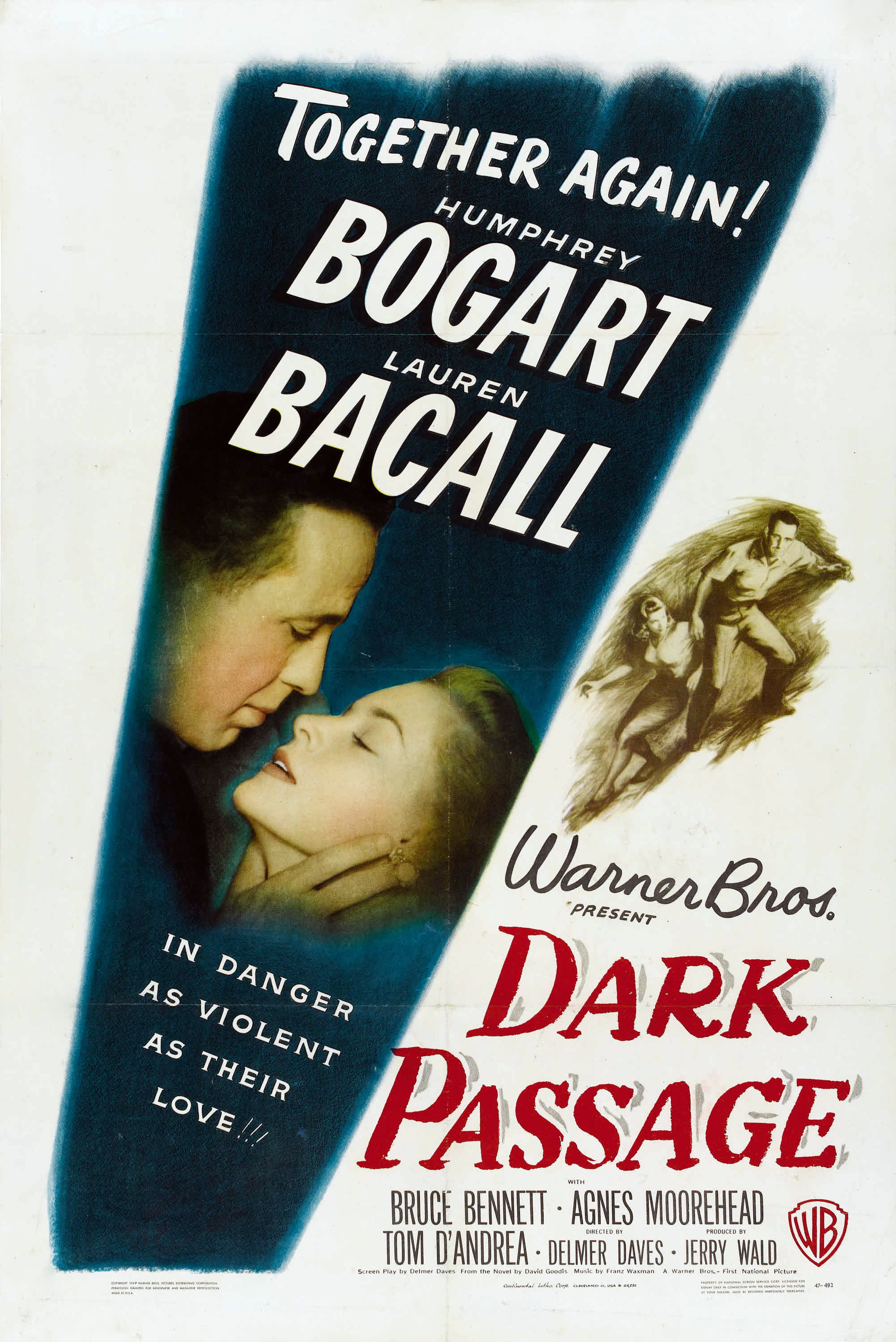
DARK PASSAGE (1947) throwback Thursday review

Spectacular and immersive! Dark Passage is the outstanding Bogie-Bacall film noir that you’ve likely never seen or even heard of, but you’ll want to change that. From beginning to end, this motion picture never ceases to draw you into its mysterious, seductive atmosphere. Bogie delivers a noteworthy performance through his dynamic facial expressions and body language, but it’s Bacall that steals the show through her sultry, smart, and sensational screen presence and performance. Dark Passage simultaneously checks all the film noir boxes whilst delivering something fresh and exciting.

Vincent Parry (Bogart) has just escaped from prison after being locked up for a crime he did not commit–murdering his wife. Vincent finds that his face is betraying him, literally, so he finds a plastic surgeon to give him new features. After getting a ride out of town from a stranger, Vincent crosses paths with Irene Jansen (Lauren Bacall), who believes in his innocence and helps him unravel the mystery surrounding his wife’s murder.

The most striking production element of Dark Passage is its innovative use of motivated camera framing and movement, which provides a unique and immersive perspective for the audience. By presenting the action from Vincent’s point of view (POV), the audience is drawn into his experiences and emotions, creating a sense of empathy and connection with the character. This technique adds a layer of suspense and tension to the film, as the audience is kept in the dark about Vincent’s true identity until later in the story. While POV camera is commonplace today, in the 1940s it was almost unheard of, which may have contributed to the reception of the film. But, if you’re searching for an excellent example of emotive POV camera, then definitely add this movie to your watch list.

Thematically, the film concerns itself with exploring concepts such as identity, justice, and redemption. Vincent’s transformation through plastic surgery raises questions about the nature of identity and whether changing one’s appearance can truly alter who they are on psychological, physiological, and emotional levels. As Vincent searches for his late wife’s real killer in order to clear his name, he grapples with issues of morality and the quest for justice in a corrupt world.

Underscoring the aforementioned themes is the compelling and complex relationship between Vincent and Irene. Irene’s unwavering belief in Vincent’s innocence provides him with hope and motivation to continue his search for the truth. Their growing bond adds depth to the story and serves as a contrast to the darker elements of the plot, because of the humor generated by their conflicting personalities. Film noir isn’t characterized merely by grayscale images (commonly referred to as black and white), but specifically the high contrast between light and dark. The high contrast isn’t only communicated visually, but is communicated thematically as well. In Dark Passage, the humor in Vincent and Irene’s relationship is the light to the film’s dark elements. 

Lauren Bacall delivers a captivating performance as the determined Irene Jansen, Bacall’s portrayal of Irene is both alluring and sympathetic, adding depth to the character and serving as a crucial counterpart to Humphrey Bogart’s Vincent. Bacall’s performance exudes confidence and intelligence, traits that are essential for Irene as she navigates the morally ambiguous world of the film noir genre.

Perhaps the very definition and embodiment of femme fatale, Bacall communicates strength and cunning whilst never at the expense of sensuality and seduction. Moreover, she simultaneously conveys both fortitude and vulnerability beneath her character’s poised exterior. Bacall authentically portrays a relatable human dimension, allowing the audience to empathize with Irene’s plight and unwavering support for Vincent.

Furthermore, Bacall brings a sense of sophistication and glamour to the role, seamlessly fitting into the noir aesthetic. Her distinctive voice and sultry demeanor add to Irene’s allure, making her a memorable presence in every scene in which she appears. Humphrey Bogart delivers a compelling and nuanced performance in the film, even when we do not see him. Even his voice work is outstanding. His portrayal of Vincent is a masterclass in film noir acting, showcasing his ability to convey complex emotions and inner conflict.

Bogart’s performance is particularly noteworthy for his use of facial expressions and body language to convey Vincent’s emotions. Even when his face is hidden from view during the first part of the film, Bogart manages to convey a wide range of emotions through his voice and physical presence alone. His expressive eyes, in particular, become a focal point for conveying Vincent’s inner turmoil and determination.

Bogie’s performance is a truly an underrated performance in his illustrious career. With his skillful portrayal of Vincent Parry, Bogart elevates the film beyond its genre trappings, creating a compelling and unforgettable character that lingers in the minds of audiences long after the credits roll.

On an aesthetic level, one of film noir’s most striking elements is the high contrast grayscale imagery. The moody grayscale cinematography brilliantly captures the shadowy streets of San Francisco, thus crafting an atmosphere of dread. Beyond mere aesthetics, however, the lighting and camera movement communicate a sense of unease and mystery, mirroring Vincent’s (and by extension film noir’s) emotional journey through this murky world of crime and deception.

Why isn’t this brilliant picture more well-known? Most likely the reasons are three fold (1) competition from other better-known Bogie-Bacall collaborations like The Big Sleep (2) overt subjective camera framing and movement and (3) availability on broadcast/cable TV and home video.

Points one and three are somewhat interlinked because other Bogie-Bacall pictures like A Gentleman’s Agreement and The Big Sleep are much better known because they received higher praise from critics and audiences (even though Dark Passage received mostly positive reviews at the time of its release). And because of this, other Bogie-Bacall pictures received more airtime on broadcast and cable TV and were more widely available to own on home video and DVD. The second point, which may have led to the mixed-positive reception, concerns the (what would’ve been interpreted at the time as experimental) subjective camera techniques. In retrospect, the POV shots are an outstanding use of motivated camera movement that simultaneously conveys the film’s theme of identity and advances the plot. 

While not as well-known as it should be, Dark Passage holds significance within the film noir genre and remains appreciated by cinephiles for its innovative cinematography, compelling performances from Bogie and Bacall, and atmospheric storytelling. And underscoring the technical and performative achievement is the film’s exploration of identity and injustice. It remains a captivating and influential motion picture.

Ryan teaches Film Studies and Screenwriting at the University of Tampa and is a member of the Critics Association of Central Florida and Indie Film Critics of America. If you like this article, check out the others and FOLLOW this blog! Interested in Ryan making a guest appearance on your podcast or contributing to your website? Send him a DM on Twitter. If you’re ever in Tampa or Orlando, feel free to catch a movie with him.
Follow him on Twitter: RLTerry1 and LetterBoxd: RLTerry

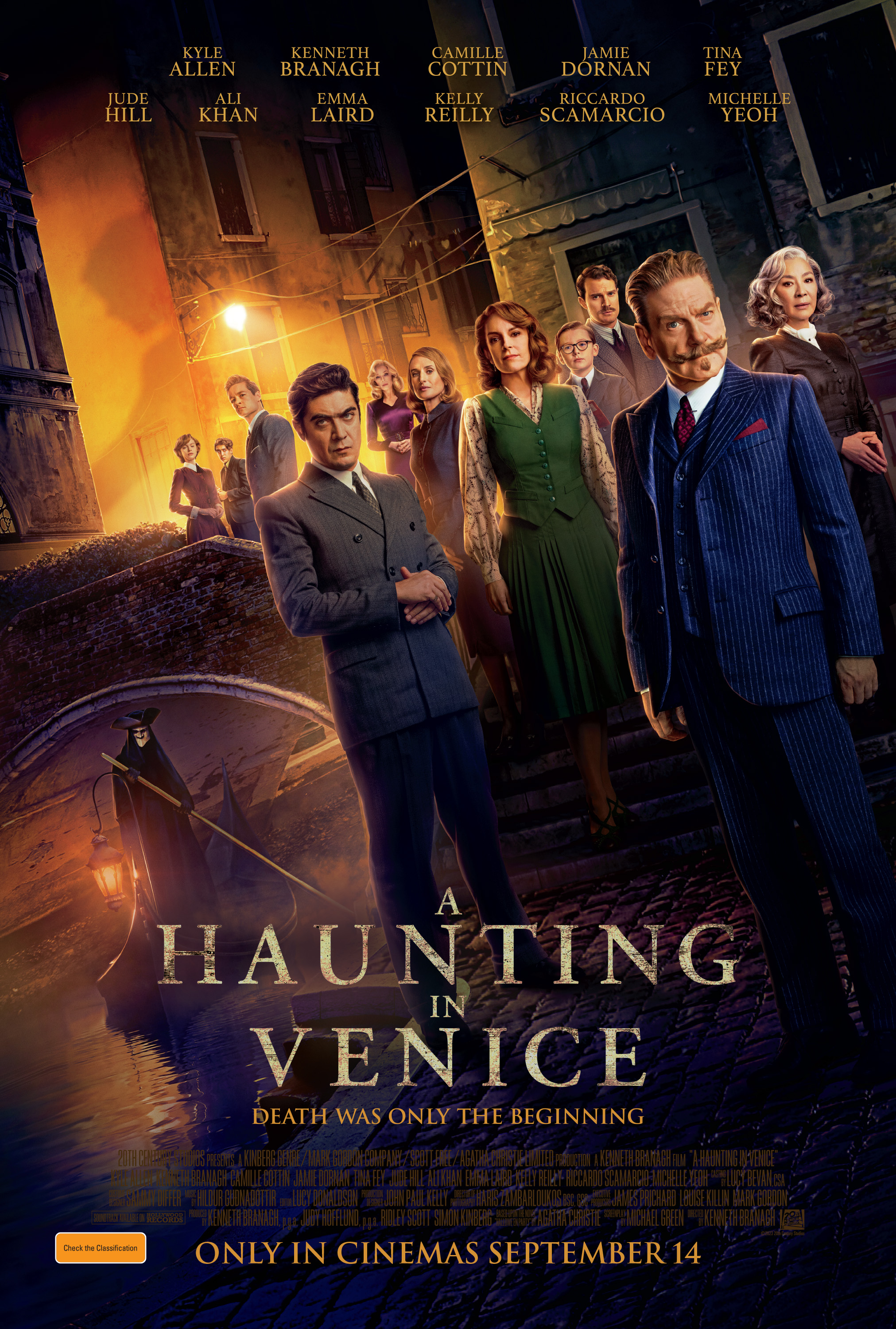
A HAUNTING IN VENICE murder-mystery movie mini review

Starts well, but finishes sloppily. The creepy atmosphere and surprisingly good scares aren’t enough to save A Haunting in Venice from mediocrity. I applaud and even praise Kenneth Branagh for attempting to revive the classic Hollywood murder-mystery movie, but perhaps Christie’s works have been adapted and served as inspiration so many times, that it is nearly impossible to adapt them for the screen–and hope to deliver something new or refreshing. Compared to Branagh’s two previous Christie adaptations, this one excels in atmosphere and character, but the story is underwhelming. Moreover, most of the clues are for the audience and not for Poirot. There is little earned by Poirot in this movie; and what he does discover, often makes little sense logically. At the end of the movie, the audience is left wondering how and why what Poirot learned actually led him to the big reveal.

Probably the shortest review I have ever written. But with this past week being a combination of my birthday and dealing with a personal matter, I am unable to focus intently on this movie. Of course, it doesn’t help that it was neither good nor bad enough to be truly memorable.

Ryan teaches Film Studies and Screenwriting at the University of Tampa and is a member of the Critics Association of Central Florida and Indie Film Critics of America. If you like this article, check out the others and FOLLOW this blog! Interested in Ryan making a guest appearance on your podcast or contributing to your website? Send him a DM on Twitter. If you’re ever in Tampa or Orlando, feel free to catch a movie with him.
Follow him on Twitter: RLTerry1 and LetterBoxd: RLTerry

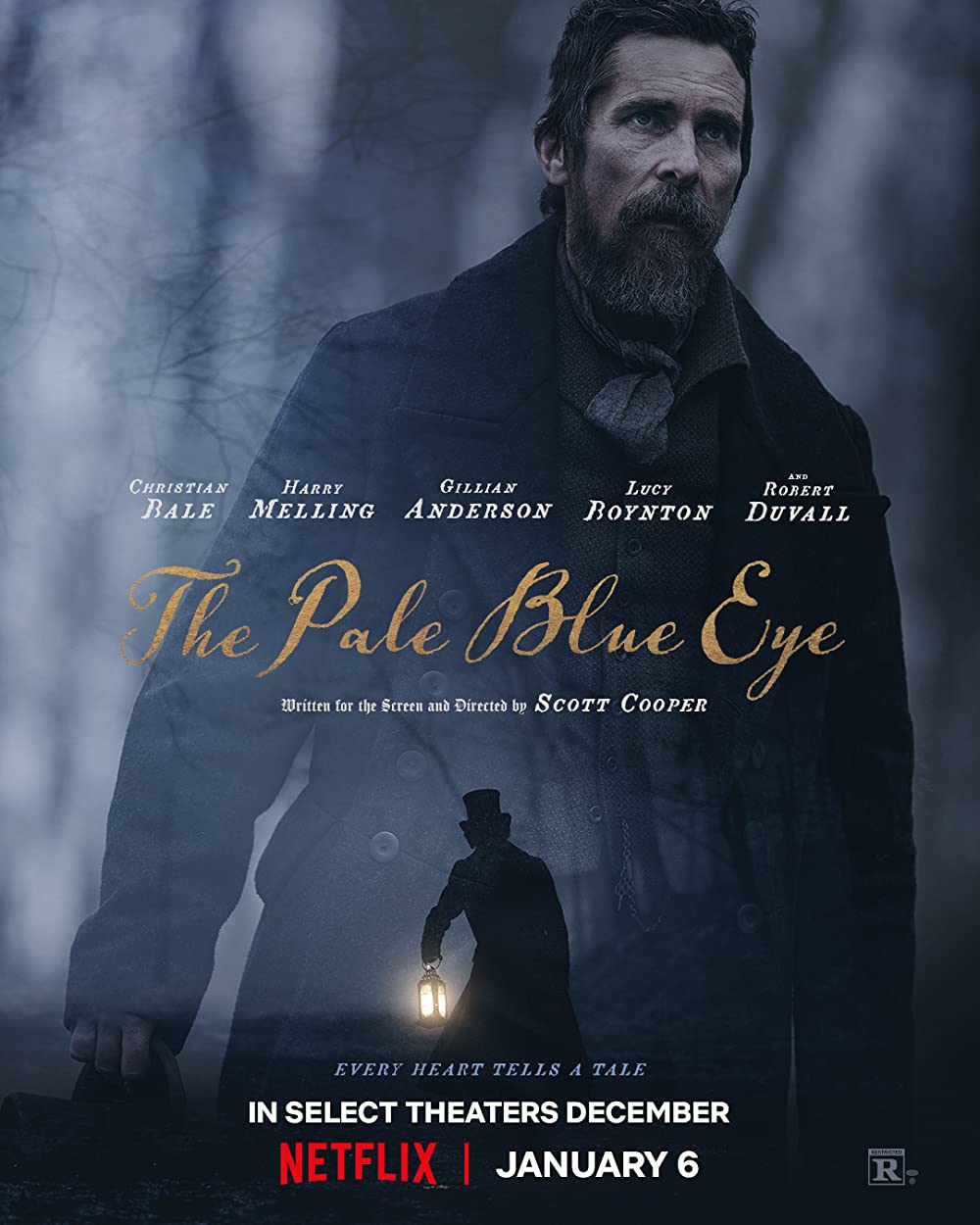
THE PALE BLUE EYE period mystery review

The unsettling atmosphere will transport, while the macabre mystery intrigues. Scott Cooper’s The Pale Blue Eye is both a period murder-mystery drama and serves as an imaginative origin story for Edgar Allan Poe. With skeletons in every character’s closet, the enigma of a mystery will beckon audiences to solve the mystery along with Christian Bale’s character. Based on the novel by the same name, the film adaptation is in the same vein as The Cursed from earlier this year and Antlers from last year. Both of which are among my favorites of the last two years. So, if you liked either of those films, you will mostly likely enjoy this one as well. In addition to the aforementioned, the film also reminds me a little of Tim Burton’s Sleepy Hollow (1999). Unlike the film’s to which I have likened this one, The Pale Blue Eye is heavier on mystery than it is horror. While Edgar Allan Poe’s short stories and poems have been the inspiration for hundreds of films, and his writing itself, foundational in the development of the American Horror Film (expressionism+surrealism+Freud+Poe), this is one of few films that feature Poe himself–or rather–a fictionalized version of the towering literary figure. What I appreciate about this imaginative origin story is showing a different side to Poe–a side that is actually funny and quirky. Because this is a mystery, I am unable to discuss details as that could spoil important plot points. But it’s important to note that this film’s mise-en-scene strikes a balance between one that is concerned with atmosphere and proper plotting. So often, films that are heavy on atmosphere are lacking in the story-structure department, but not this one. Despite the runtime of 2-hours, no scene ever lingers too long. If you enjoy period murder-mysteries, then you’ll undoubtedly enjoy this film. The Pale Blue Eye hits cinemas on December 23rd and Netflix on January 6th.

Ryan teaches Film Studies and Screenwriting at the University of Tampa and is a member of the Critics Association of Central Florida. If you like this article, check out the others and FOLLOW this blog! Interested in Ryan making a guest appearance on your podcast or contributing to your website? Send him a DM on Twitter. If you’re ever in Tampa or Orlando, feel free to catch a movie with him.

Follow him on Twitter: RLTerry1

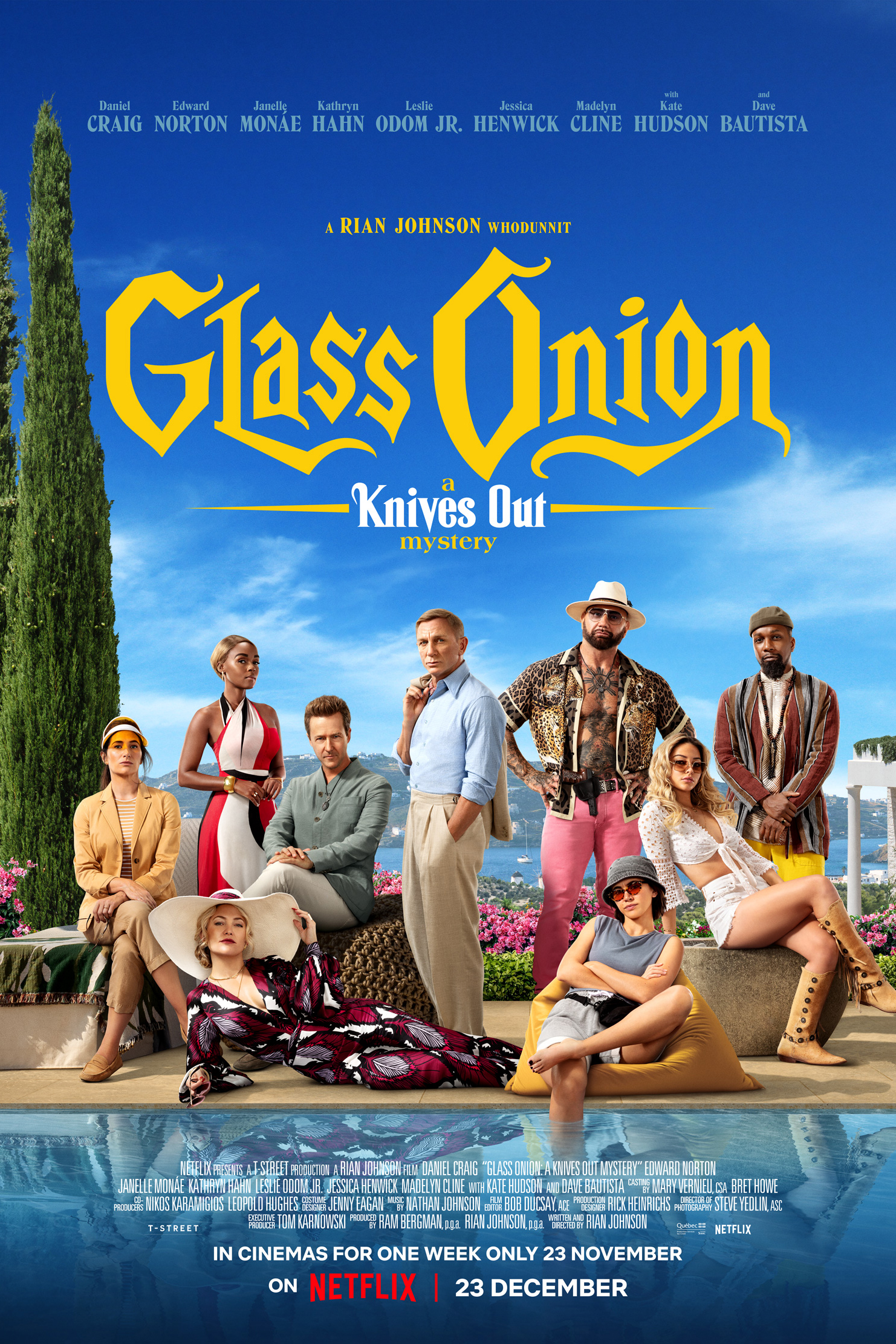
GLASS ONION: A KNIVES OUT MYSTERY whodunit movie review

Cloth Mask: a COVID Mystery. The real mystery is why Johnson didn’t turnover his idea for this chapter in the fledgling franchise to a different screenwriter. World famous detective Benoit Blanc is back, but this mystery suffocates under constant reminders of the varying degrees of response to COVID-19. At the core of this Knives Out installment is an intriguing mystery; however, throughout the whole movie, the audience is reminded of about two years of recent history that most people would rather forget. The best part of the movie is a cameo, near the beginning, of a truly legendary TV detective. Even if you don’t want to watch the whole movie, watch the first few minutes, because you will undoubtedly love the cameo as much as I did.

Tech billionaire Miles Bron invites his friends for a getaway on his private Greek island. When someone turns up dead, Detective Benoit Blanc is put on the case.

Before I break down my thoughts on the movie, just who is that legendary TV detective that surprises us with a heartwarming cameo? None other than Dame Angela Lansbury, aka Murder, She Wrote‘s Jessica Fletcher! Knowing she makes her final film appearance in a murder mystery is incredibly poetic, and will absolutely thrill audiences.

While there is certainly a time and place for films that depict or are an abstract representation of events and people from real life, for purposes of inspiring conversations, most fictional films should transport us, be a momentary break from the negative stressors of life. From beginning to end, Glass Onion is a manifestation of COVID Theatre–and not for purposes of parody or satire–because it’s neither funny enough to be parody nor clever or thoughtful enough to be satire. Even though Rian Johnson is reprising his role as the writer-director of this one, the loss in quality from the brilliant Knives Out to this installment is rather conspicuous. Perhaps this is yet another example of why some directors need to stick to directing, and turn their ideas over to a screenwriter. Evidence of the poor pacing and structure is demonstrably witnessed in the simple fact that nothing big happens for an hour and fifteen minutes into the movie.

Another troubling aspect of this movie is the showdown. And no, I am not about to get into spoilers. But it’s a subject matter that certainly requires critiquing. Keeping in mind that when Glass Onion was written, Johnson could not have possibly known about now-recent headline-grabbing events (in Europe presently) about a group that feels by being a (to quote the movie) a disruptor that they can get their way. And in the film, something rather disturbing happens that could very well serve as inspiration for the continued despicable actions of this group. When these events began happening a few months ago, Johnson (or Netflix) should have rewritten and shot the ending because as it stands, the ending is tasteless.

The set and production design of the movie is nothing short of impressive. While the constant reminders of COVID do nothing to transport us to another world, the setting of this movie certainly does! I absolutely love witnessing the hand of the artist in the design of the palatial house and manicured gardens of the location where the murder mystery takes place. Much like the house in the original Knives Out felt like the Game of Clue, this one delivers a similar feel, which causes the house to feel like a character in and of itself.

While the story execution and writing leave much to be desired, the casting is great! Daniel Craig’s Benoit Blanc is just as entertaining as he was in the first movie. Outside of the foghorn leghorn detective, Jannelle Monáe delivers a fantastic performance as the ex-wife of our murder mystery weekend host Miles Bron, enthusiastically played by Edward Norton. You’ll recognize many to the other cast members and there are a few cameos that will garner a laugh or two. Some of the characters aren’t given much to do, so they become filler. But for the characters that have something of substance to do, they are mostly entertaining.

Unlike the previous movie, this one feels very “Netflixy,” so it’s not one that benefits from a theatrical viewing. Watching it at home will be sufficient enough. However, an advantage to watching it during its limited theatrical run is avoiding spoilers on social media.

For more on the movie, visit Netflix.com/GlassOnion.

Ryan teaches Film Studies and Screenwriting at the University of Tampa and is a member of the Critics Association of Central Florida. If you like this article, check out the others and FOLLOW this blog! Interested in Ryan making a guest appearance on your podcast or contributing to your website? Send him a DM on Twitter. If you’re ever in Tampa or Orlando, feel free to catch a movie with him.
Follow him on Twitter: RLTerry1