Too little plot spread across too much movie. Although I have not seen the short film Bag Man on which this movie is based, it is clear that there were many good elements in the short but unfortunately not enough plot, character development, nor turning points were added to take this short, and turn it into a feature length science-fiction urban fantasy movie. The pacing is inconsistent. My friend who screened the film with me last night likes to refer to this concept as the accordion dilemma. Long, drawn out boring parts that are quickly pushed together for an exciting moment, then stretched out again. Personally, watching this movie felt like sitting on the I-4 between Orlando and Tampa. There is also the concern that the film is depicting the wrong image for young men. One can easily read this movie as a troubled young man, with an ex-con brother and grieving father, who only feels powerful when he has a firearm at his side. Not the kind of message we want to send to young people. Had the film focussed more on character development, and the relationship between the two brothers, then this may have made a solid drama. As it stands, the film sits at an uncomfortable crossroads between genres that ultimately fails to deliver a memorable movie.
When salvaging one of the hundreds of vacant buildings in run-down Detroit, Elijah (Myles Truitt) stumbles across the remains of a battle between futuristic-looking soldiers. Near the soldiers is a powerful ray gun that he claims as his own. At home, his father (Quaid) is still grieving over the loss of his wife and troubled over the return of his other son, now ex-con Jimmy (Reynor). When Jimmy asks his father for $60K to pay off a gang that protected him in prison ran by Taylor Bolek (Franco), his father tells him to get a job. When Jimmy executes a plan to acquire the money by arranging a heist with the Taylor’s gang, and things go wrong, Jimmy finds himself on the run. Fearful for his brother’s life, Jimmy persuades Elijah to come on a road trip to Lake Tahoe where the plan is to meet their father later on. Soon, both brothers find themselves running for their lives from a sadistic gang and other-worldly soldiers. Fortunately, Elijah has a weapon that will do more than simply protect and destroy.
The Baker brothers have included many effective elements for telling their story in this film; however, proper pacing, a sense of urgency, character and plot development are not connected fluidly. Furthermore, there are many sequences of just driving–endless driving. Much like the Hobbit movies featured lots of scenes of running. My favorite scene in the movie is when Jimmy is teaching Elijah how to drive, and has him doing donuts in the parking lots of a seedy motel. The look on Elijah’s face was priceless, and it was in that moment that a real connection was felt between the brothers. Otherwise, the rest of the scenes in the movie are forgettable. Even the “sci-fi twist” that is referenced in marketing materials feels more like a mechanical explanation than a resolution that packs a punch.
Visually, the film worked. Clearly, the Baker brothers have sufficient experience at communicating messages through imagery–and no mistaking it–that is incredibly important to a motion picture. This is likely due to their experience in directing commercials, which successfully tell stories in 30secs or less. Unlike other science-fiction films that rely almost entirely on digital effects, in a refreshing manner, the Baker brothers pair the practical with the digital to create a sense of realism in the film. Even the futuristic weapons and other technology feel grounded in reality–they play by the same rules of physics we do. The film may suffer from a terrible screenplay; but it excels in areas such as cinematography and editing. Not entirely sure what possessed a studio junior executive to green-light this, but I imagine they won’t be green-lighting projects for a while now. From what I’ve been told about the short film, the ending of this feature adaptation was changed. My guess is that it was changed in order to setup a sequel–a sequel that we will probably never be seen if the film does poorly this weekend at the box office.
If you enjoy science-fiction urban fantasy movies, then you may find some entertainment value in this. The movie works better as the pilot to a limited run series on Netflix, Hulu, or Prime than a feature film. Perhaps that is where this story will wind up. With changes to the screenplay, it could find a life on a streaming service; but as feature film, it did not deliver the simple plot and complex characters needed.
Ryan teaches screenwriting at the University of Tampa. If you like this article, check out the others and FOLLOW this blog! Interested in Ryan making a guest appearance on your podcast or contributing to your website? Send him a DM on Twitter!
Remarkably spellbinding! Searching takes the concept of “screen life” movies to impeccable levels. Although the concept of a film relying entirely on computer screens is not new, this is the first time that it has been executed perfectly. The first wide-release film to take this approach was 2015’s Unfriended, and it was quite the pioneer in its approach to essentially adapting Agatha Christie’s And Then There Were None, with the end result being pretty good. The following films to take the approach, including the more recent Unfriended: Dark Web, failed to tell a coherent story. Learning from the successes and failures of this cinematic concept of the past “computer screen” films, writer-director Aneesh Chaganty, along with co-writer/producer Sev Ohanian, crafts a suspenseful thriller that truly understands the power of the internet and how it enables and affects our actions. There is genuine emotion felt in this film. You will truly care about the lead characters and remain hooked for the entire film. Chaganty seems to have taken a page right out of the Alfred Hitchcock playbook for suspenseful storytelling that relies upon character development, twists of the everyday, and only use on-screen violence or graphic details to supplement the story. This tension-filled voyeuristic crime drama is successfully created–not through viruses, the supernatural, dark web or illegal activities–but through the mundane things we do everyday. Perhaps this film uses modern technologies to tell the story, but the soul of this film is brilliant old-fashioned suspense. And that solid foundation is why this film will do incredibly well.
Following the tragic death of wife and mother Pam, David (John Cho) and his daughter Margot are forced to move on with their lives, doing their best to cope with the loss of their loved one. Over the couple of years since his wife’s death, David and his daughter have drifted apart but still maintain a relationship. Loss of a mother and wife has a major impact upon a family. After Margot fails to return home after a study group session at a classmate’s house and repeated unreturned texts and phone calls, David fears that something terrible has happened to his daughter. When another classmate informs David that Margot never showed for a trip on which she was invited, David reports her as missing to the police. Detective Vick (Debra Messing) heads up the investigation into the whereabouts of Margot that immediately leads nowhere. Lead after lead leads the investigation to believe that Margot may have simply ran away. Convinced that his daughter did not run away, because of so many elements of the investigation not adding up, David turns to the one piece of evidence that was initially overlooked by the police, Margot’s laptop. Following the cookie crumbs left in the seemingly mundane websites visited by Margot, David begins to connect the dots that will hopefully lead him to what happened to his daughter.
No spoilers here. In fact, I urge those who have seen it to NOT spoil it for everyone else. In a manner of speaking, this film feels very much like Psycho must’ve felt when it was released. Hitchcock mandated that no one be allowed to enter the auditorium after the movie began; and furthermore, he insisted on an adherence to strict show times. In fact, much of how our modern cineplexes are run today are a product, in part, by the release of Psycho. The closest I will get to spoiling is informing you that there is an amazing twist ending. Just when you think the story is coming to a close, watch out! Taking what Unfriended (the original, not crappy indirect sequel) did well, and learning from what Dark Web failed to do, Chaganty’s Searching provides audiences with a fantastic experience visually, and anchors the plot with strategic, effective emotional beats.
The story is just as much emotional as it is visual. Possibly even more emotionally and psychologically-driven than the images the frame can capture. Whereas other films that rely upon what we do on our computers fail to have genuine, authentic characters, Searching depicts everyday, real life people doing what millions of others do. How often have many of us been able to talk to complete strangers about something that we are uncomfortable talking to our family or closest friends about? That is precisely what Margot does. Providing additional commentary on the mediation of society through digital media, Chaganty highlights our digital selves versus our actual selves. This is evident in the healthy social life Margot was leading her dad to believe she was experiencing; when in actuality, she was quite alone and simply focussed on school work and little else. David realizes that he didn’t know his daughter at all.
Previous “computer screen” concept movies pretty much involved never leaving the primary computer screen–easily becoming visually exhausting. Chaganty’s thriller chooses to switch from iMac, to iPhone, to PC (with Windows XP), to online news footage. These changes prohibit the setting from ever becoming too familiar or boring. The minor changes keep the senses heightened. Hitchcock earned his moniker by consistently delivering suspenseful cinematic excellence; and this suspense was executed with visual precision coupled with strong emotion. Chaganty very much patterns his modern suspenseful crime drama after the exemplary work of Hitchcock. Different from previous films using real-time on a computer to allow the plot to unfold, this film takes place over a week–closer to more traditional “movie time.” One may be inclined to conclude that the tension feel less intense because of not watching the plot unfold in real time, but that is definitely not true with Searching.
From the moment Margot’s missed facetime and phone calls fail to waken her father to the heart-pounding conclusion, the tension is in high gear. Hitchcock describes suspense as the having to do with the audience having sympathy for the characters and an intense need for something dramatic or shocking to happen. While the audience does not want something bad to happen to the lead characters, they are still at the movie in hopes that something terrible happens. Ironic, isn’t’ it? Much like Hitch delivered suspense through information, Chaganty does the very much the same with Searching. Another way Hitch delivered and ensured a suspenseful atmosphere in his films was having two important events happing concurrently. With David and Vick very much leading their own investigations respectively, we often experience this dichotomy. And Hitch is certainly famous for his twits, and this film contains some fantastic red herrings and twists to the tension-filled plot.
Presently in a limited release, with the film opening everywhere August 31st, Searching is a phenomenal whodunit build upon effective suspense and visceral tension. You will be glued to the plot and feel the emotional rollercoaster experienced by David as he searches for his daughter. Chaganty has proven himself through demonstrable evidence that he understands suspenseful storytelling. Because the film exists in the everyday world we live in, it may get you thinking twice about the degree to which your own life is mediated by technology. The social commentary in the movie also reminds us to be ever vigilant who we correspond with through live video and chats. For you never know to whim you are really speaking.
If you’ve enjoyed this article, be sure to check out all my past ones! You can search for a film by title to see if I’ve written on it. Don’t forget to follow my blog by clicking the blue button in the upper left!
Visually stunning! You’re missing out if you do not choose to see Alpha in IMAX this weekend. The experience of many movies does not significantly change between standard and IMAX screenings, in my opinion; but because of the sweeping landscapes in Alpha, you’ll certainly want to experience it IMAX. However, I do not recommend watching it in 3D. The advanced screening to which I was invited was 3D, and I feel strongly that the cinematography is better appreciated in 2D. Alpha is one of those films that flies under the radar because it is quite niche in nature. Ordinarily, I am just as excited to see the smaller films as the big ones; but this is even a film that I wasn’t thinking much about. The power of visual storytelling is felt in this film that is set shortly after the last ice age, for there is minimal dialogue. And the dialogue that is in the film, is found in the subtitles because the film is in an unfamiliar language. Neither the foreign tongue nor the subtitles take away from the film. In fact, the absence of English and the minimal dialogue enable the audience to focus on the action. If you’re a dog lover or simply interested in anthropology, then this is a film for you.
Alpha tells the story of how the wild dog (or wolf) became man’s best friend. Taking place at the end of the last ice age, a northern European tribe of men is making the arduous journey across the tundra to the sacred hunting grounds where the bison roam before the first snow. On his first tribal hunt, Keda, son of the chief, is put to the test to evaluate his ability to provide for himself and his family, and eventually his tribe. While he “leads with his heart more than the spear” as his father notes, he father believes that he will make the tribe proud. Following a tragic accident during the hunt, Keda’s father and tribe fear him dead and must return to the settlement before the blistering winter sets in. Waking from a coma on the side of a cliff, Keda is determined to make it back to his home. Facing a perilous journey, he must pull on all the lessons he learned from his father in order to survive the vicious frontier. Along the way, Keda encounters a lone wolf left for dead, abandoned by his pack, with whom he develops a friendship after many weeks, and both help each other, against all odds, remain alive in the treacherous wilderness.
If you can make it through the first act, then you will greatly enjoy this intense film. Thankfully the first act was edited in such a way that is does have a hook at the beginning, but the remainder of the first act is relatively slow compared to the rest of the film. Acts two and three, provide audiences with a gripping story of survival against the elements and unforgiving landscape. Diegetically, Alpha is pretty straight forward high concept plot that is simple to grasp. Survival. However, due to the simplistic plot, the film is able to dive deep into character development. Simple plot, complex characters. Much like with A Quiet Place earlier this year, Alpha is a testament to the power of visual storytelling. The juxtaposition between the vast open vistas, hills, and valleys and the intimate story between Keda and Alpha, is fantastic. Quite the contrast. The stories of Keda and Alpha parallel one another, as both were left for dead by their respective tribes. In the tribes’ defense, both were genuinely thought to be dead. Alpha must work though wild instincts to trust Keda, as Keda is working to rehabilitate Alpha; likewise, Keda must work through his own weaknesses to teach himself how to survive and trust Alpha. Overcoming adversity and establishing trust are themes through the story. Even though the end is predictable, your attention is still captured for the duration of the film to witness just how Keda and Alpha are going to survive. The ending does hold a surprise for the audience, and for the characters I might add.
For lovers of anthropology or our canine friends, this is definitely a film that you will enjoy. Although the film has a PG-13 rating for intense moments, I would rate it PG. The film also possesses an inspirational nature about it, because we have all found ourselves in the wilderness trying to survive. Maybe we haven’t been stranded in the unforgiving tundra, but metaphorically we have been there.
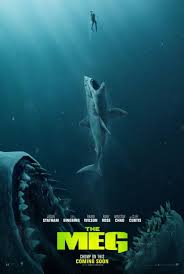
They finally got a bigger boat. But, it’s still no match for the Megalodon! Maybe The Meg lacks the cinematic genius of Steven Spielberg’s Jaws and maybe it isn’t as thrilling as The Shallows and perhaps it doesn’t have the parody and satire of Sharknado, but good thing for you, it doesn’t pretend to be any of those. It proudly hits theatres everywhere this weekend as a thrilling larger than life creature feature horror film about a gigantic shark that wreaks havoc in the waters of southeast Asia until Jason Statham dives in to save the day. Another title for this shark movie of epic proportions could be Dive Hard (haha). With clear homages to Jaws, Deep Blue Sea, and Jurassic Park, this film plays out as an unconventional love letter of sorts to the aforementioned movies, and the man vs nature horror genre as a whole. Even though recent news suggests that Statham is unhappy with the theatrical we are getting (because it lacks much of the violence that was shot in order to keep a PG-13 rating), you are in for a fun time witnessing the aquatic carnage and high seas action. Movies like this one are designed for one purpose, to entertain you at the megaplex for a couple of hours during oppressively hot summer days of August. At the end of the day, The Meg is an exponentially more expensive SyFy Channel original movie with a fantastic lead actor who plays Jason Statham better than anyone else. But you know what, it’s a lot of fun to watch! Dive right on into the action this weekend.
After a deep sea submarine exploring the Mariana Trench is attacked and stranded by an unknown force, the chief researcher at a state-of-the-art underwater facility, bankrolled by an eccentric billionaire, contacts deep sea rescue diver Jonas Taylor (Statham). With time running out for the submarine crew, Jonas must overcome psychological obstacles from his past in order to lead the mission to rescue the team. Unbeknownst to the research team, they’ve encountered an unimaginable threat that makes its way from the deepest depths of the ocean to crowded beaches. The team must work together to stop the monstrous killing machine knows as the megalodon.
Filled with cliches and homages, director Jon Turteltaub clearly did not set out to direct a Jaws for 2018 nor did he set out to make a comedy like Sharknado, but he did create a fantastically fun shark horror movie that takes itself just seriously enough but still remains playful–as much as you can with a man-eating giant pre-historic shark. The scene with the helicopter flying through the islands to the research facility is taken right out of Jurassic Park. And it arrives at an underwater research facility that is taken directly from Deep Blue Sea, and then several shots and musical scores pay homage to Jaws throughout the remainder of the film. For all the tropes and cliches in the film, they are each executed strategically with wit and style. Statham is great as the hero, and I can think of few other actors who could have done such an excellent job with this film. Bruce Willis is honestly the only other name that comes to mind to have done the character justice. Comparing this creature feature horror film to the other big one this summer Jurassic World Fallen Kingdom, I can honestly that I enjoyed The Meg more. And that is hard to admit since I am a card-carrying member of the Jurassic Park fan club.
If you enjoy fun horror films, do yourself a favor and swim to your local cinema to come face-to-face with Megalodon. You may notice that this review is a lot shorter than my typical ones, and that is because some movies are just meant to be enjoyed for what they are instead of analyzing the storytelling and experience.
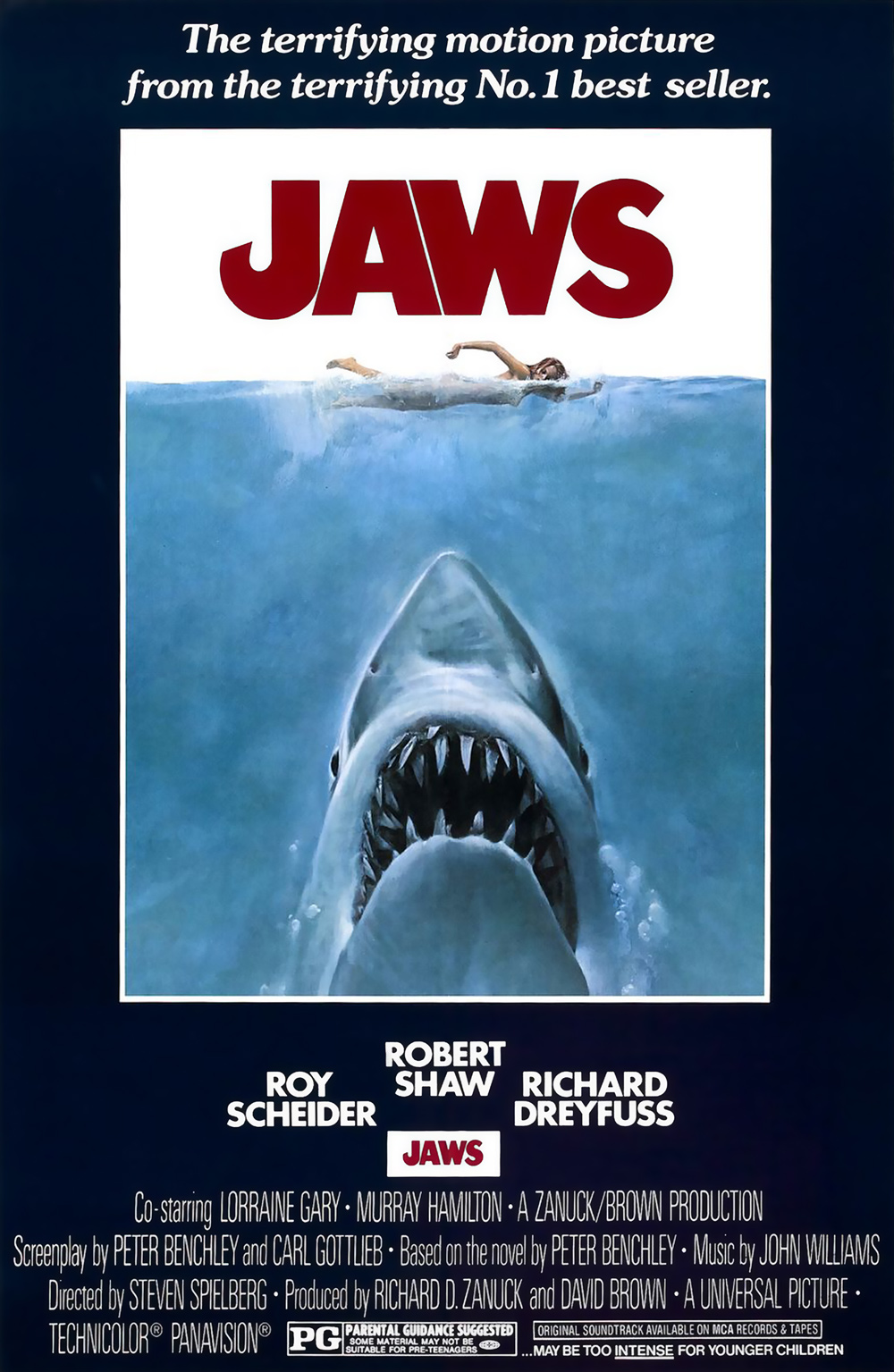
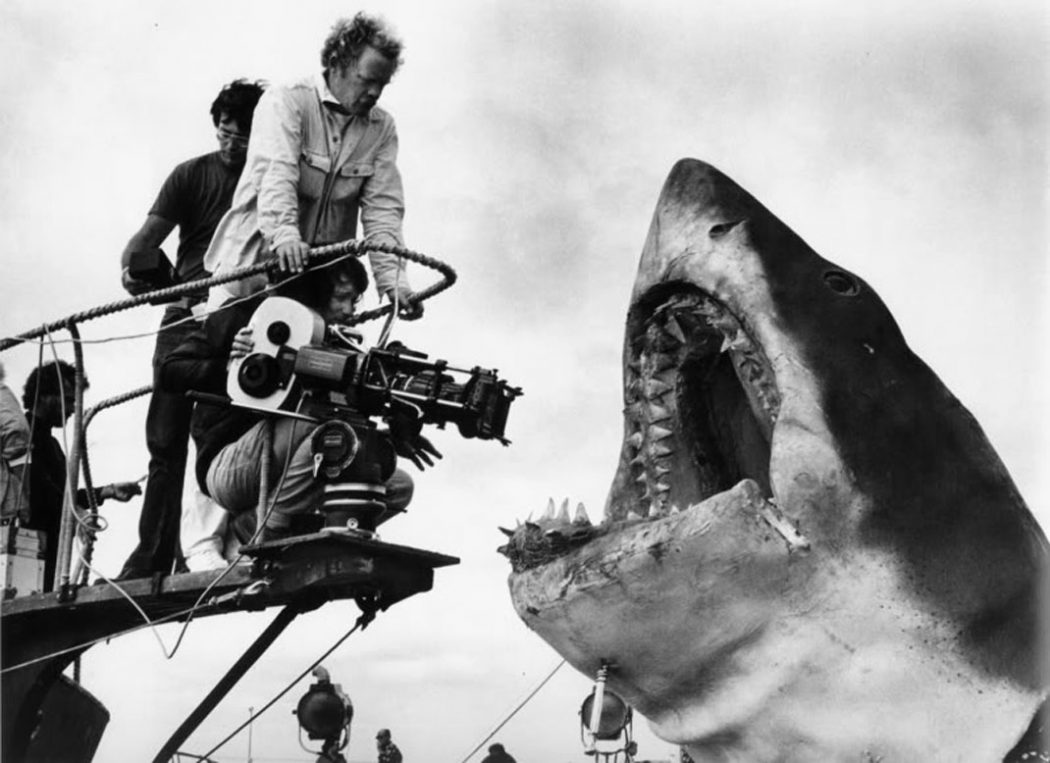
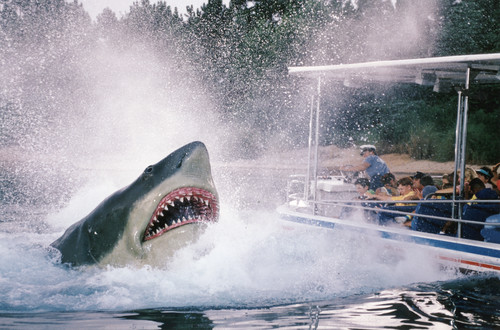
The original blockbuster! With The Meg opening tonight, the next article in my Sinister Summer series is a retrospective on Jaws (1975). And, we still “need a bigger boat” after all these years. Beginning with the iconic minimalistic score by John Williams, Steven Spielberg’s Jaws is still keeping people out of the water more than forty years later. Beyond the film, you can still face off with the most famous shark in cinema history at Universal Studios Hollywood. A favorite for folks to watch on July 4th each year (as I do), this film became the standard for the modern horror creature feature. And at only four minutes on screen, Bruce (Jaws’ nickname), successfully terrified audiences then and continues to frighten beachgoers today. For all intents and purposes, this iconic film set the bar for and essentially created this subgenre of horror movies featuring man-eating monsters from the natural world that exist in places where we typically find joy and relaxation. The ocean, theme parks, rivers, lakes–these innocent places become the setting for unimaginable terror.
If you are old enough to have watched it in theatres in 1975 or fortunate enough to have attended the special 40th Anniversary screenings back in 2015, then you can attest to the film’s evergreen ability to scare you out of your wits. When I watched it on the big screen in 2015, the auditorium was filled nearly to capacity with kids, teenagers, and adults. To see this iconic film on the big screen was truly a memorable experience. Especially so around where I live, since the gulf beaches are just down the road. The atmosphere was incredibly fun. All of these fans, most of which had likely seen Jaws before, were gathered together to relive the terrifying experience of a man-eating shark terrorizing a small New England town during the July 4th holiday season. But why would so many people pay to see a film that they had seen at no additional cost on TV or watched on DVD/BluRay?
Much in the same way Alfred Hitchcock’s Psycho is often credited, and rightly so, for being the first modern horror film and forerunner to the classic slasher; likewise, Spielberg’s adaptation of Peter Benchley’s novel Jaws is credited as the first modern creature feature horror film and forerunner to the blockbuster (or event movie). I am not negating King Kong, Creature from the Black Lagoon, or other predecessors; it’s important to take note of the word modern. Aside from excellent, visionary direction, both Psycho and Jaws have three important elements in common (1) powerhouse cast (2) strategic suspense and (3) a brilliant, oft-parodied, burned in your mind musical score.
It probably seems like you were born with John William’s two-note Jaws theme in your head, much like Bernard Hermann’s Psycho screeches. The terrifying suspense of Jaws comes in the form of a PG movie. That’s right, Jaws is rated PG. But this film delivers a bigger and more memorable punch than any gory torture porn horror film ever could. The groundbreaking structure of both these legendary films are the prototypes from which their respective branches of horror films are derived. They are the blueprint, if you will, for suspense and horror. The manner in which the suspense is drawn out for most of the movie assists in the ability to enjoy it over and over again, without it ever feeling like a B movie. The drawn out suspense engages you emotionally and psychologically. The feeling of dread lingers and lingers. In fact, you don’t truly see Bruce until the third act of the film when he jumps out of the water in an attempt to bite off the arm of Chief Brody. This intentional drawing out of suspense makes the delivery of that moment pack a powerful punch, an assault on the eyes and mind. Both Psycho and Jaws benefit from an excellent cast. The respective casts could not have been any better. Interestingly, in order to not allow the cast to overpower the story or shark, Spielberg didn’t choose actors with an instant command presence. But they displayed a strong presence nevertheless. It never feels as if they are acting, but truly become the characters they are portraying. The relatability of the characters is partly due to the screenplays, but it takes phenomenal actors to successfully bring these characters to life. Spielberg would repeat this same successful approach to creating blockbusters E.T. the Extra Terrestrial and Jurassic Park.
For more on suspense, checkout this video featuring Hitchcock himself.
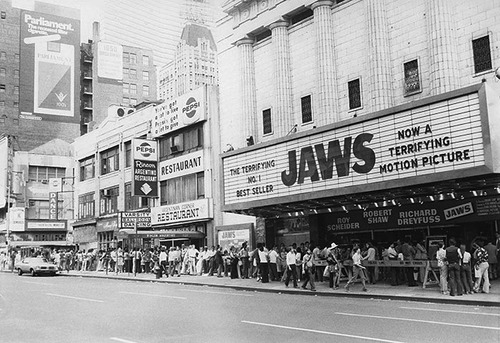
When Jaws is referred to as the original blockbuster, it’s not simply due to being the first film to break the $100mil box office sales mark, toppling the records previously set and held by The Exorcist and The Godfather. That is a valid observation, but is ultimately incidental. Reasoning behind this thriller’s ability to create the concept of a blockbuster movie is the fact Jaws was seen as an event not to be missed. Looking back at the original crowds of 1975, you’d think the movie was a one-night-only big event. Hence the term blockbuster. The common adjective attributed to big summer movies literally derives from the fact that queues for the box office wrapped around city blocks. It busted the block, so to speak. And the rest is history! Coupled with the summer release date and ticket sales, the allure of Jaws generated levels of enthusiasm and interest never seen before. The film took in so much money at its opening, that it nearly made up the entire production budget by the end of the first week. Furthermore, distribution and marketing companies began to use Jaws as a model for future marketing efforts in order to attempt to generate another blockbuster effect. After Jaws in 1975, the next big blockbuster would be George Lucas’ Star Wars IV: A New Hope in 1977. All these factors contribute to the iconic status of Jaws in terms of its contribution to film business.
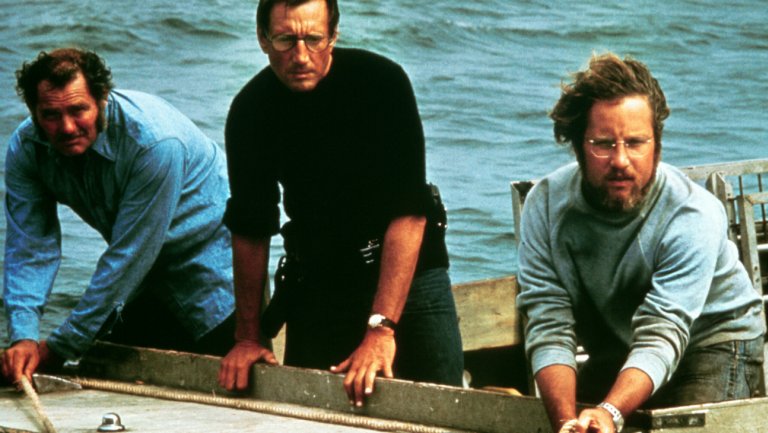
Instead of building a thriller on shock value, disturbing imagery, or jump scares, author Peter Benchley’s screenplay for Jaws focussed on crafting a cinematic atmosphere that had an intimate, claustrophobic feel built upon well-crafted drama through character development and conflict, at the center of which is a little heart. Different from contemporary creature features, Jaws picks off swimmers in the single digits and those attacks all happen at a single beach on a small island off the coast of Massachusetts. And instead of an entire agency hunting down the man-killer shark, three unlikely men are forcibly thrown together in order to track down and eliminate the terror from the waters off Amity Island. Keeping the principle cast and environment small, enabled the drama to perform strongly. Big things do come in small packages. Coupled with the strong performances from the entire leading cast, this brilliant combination of cinematic elements works together to give us some of the most memorable lines, scenes, and cinematography in movie history. Furthermore, real people swept up into an impossible situation and foolish decisions enable the audience to identify with the characters and the setting in ways that make the terror feel all the more real and close to home–or the beach.
While Bruce is often thought to be the villain of Jaws–and no mistaking it, he is definitely an antagonist–I argue that the true opposition to the goal in the plot is Amity’s mayor. If we accept the goal is to apprehend or kill the man-eating shark, then Vaughn serves as opposing that action. Perhaps you’ve never though of the true villain of Jaws being Mayor Larry Vaughn. A close analysis of the plot reveals that Jaws (Bruce) functions more as a catalyst for the principle conflict between Chief Brody and Vaughn. Other than the death at the beginning of the film, the Mayor is indirectly responsible for the remaining deaths. After all, it’s due to his utter complacency, negligence, and classic greed that led to the other deaths. For most of the film, we spend far more time with Chief Brody’s continued conflict dealing with the social pressures, desires, and ill-fated decisions of his boss than we do with shark attacks. Mayor Vaughn fails to acknowledge the sheer gravity of the dangerous situation, and close Amity’s beaches in order to keep his citizens safe. In effect, he fed them to the shark. Seems like a villainous action to me. Bruce was being a shark, Vaughn was the villain.
Often the central character’s development hinges on the direct and indirect conflict with the opposition to the goal of the plot. In this scenario, Mayor Vaughn stands between Brody and Bruce. The moments in which Brody demonstrates measurable growth in his character arc are when he attempts to stand up to the Mayor showcasing a contrast between public safety and a combination of politics and economics. Unfortunately, we never witness Brody truly standing up to the Mayor to enact measurable change per se; however, it isn’t needed because we witness several moments of Brody shouldering the responsibility of protecting the citizens of Amity as a civil servant. By contrast, Vaughn is more preoccupied with a warped view of civic responsibility that places more importance on increasing the bottom line of the local businesses than public safety. He rationalizes his position opposing the advice of Brody by engaging in classic psychological defense mechanisms such as denial, displacement, and projection. Vaughn’s actions throughout the film depict an elected leader with misplaced priorities in order to better his own career.
The success of Jaws and reasons why it continues to stand the test of time has more to do with the beauty in simplicity and strategic marketing than Spielberg’s filmmaking. Don’t get me wrong, Spielberg is an excellent storyteller and directed many of our favorite films such as this one, Jurassic Park, E.T., Poltergeist (with Tobe Hooper), and more, but it’s the strong screenplay and innovative marketing efforts that give Jaws the chutzpah it has. Jaws quite literally changed the way studios market “blockbuster” films. Prior to Jaws‘ release, the only films to get wide, general releases were B-movies and exploitation films, but Universal Pictures took the chance at cramming Jaws into as many screens as possible, and it paid off in spades! Jaws wasn’t the first film to book theatres in this was, but it was the first to be well-received by by critics and fans. The film was an instant success!
Even if you trust the statistics that you are more likely to be injured or die in a car accident than be attacked by a shark, Jaws still leaves you wondering what may lurk in the depths of the ocean, and by extension lakes and rivers (thanks in part to Animal Planet’s River Monsters). There is a lingering feeling, even if in the back of your mind, that a man-eating shark could live in our oceans. That is the power of this film and why it has continued to pervade popular culture for more than 40 years. Its influence on popular culture is certainly not limited to the dozens or imitations such as Lake Placid, Piranha, Deep Blue Sea, or parodies like Sharknado, but it serves as the inspiration for Discovery Channel’s Shark Week, the Monster Jam monster truck Megalodon, theme park attractions, and the music is often used in unrelated TV shows and movies. Lines, imagery, music, and characters are permanently embedded in the psyche of the general public.

 Too little plot spread across too much movie. Although I have not seen the short film Bag Man on which this movie is based, it is clear that there were many good elements in the short but unfortunately not enough plot, character development, nor turning points were added to take this short, and turn it into a feature length science-fiction urban fantasy movie. The pacing is inconsistent. My friend who screened the film with me last night likes to refer to this concept as the accordion dilemma. Long, drawn out boring parts that are quickly pushed together for an exciting moment, then stretched out again. Personally, watching this movie felt like sitting on the I-4 between Orlando and Tampa. There is also the concern that the film is depicting the wrong image for young men. One can easily read this movie as a troubled young man, with an ex-con brother and grieving father, who only feels powerful when he has a firearm at his side. Not the kind of message we want to send to young people. Had the film focussed more on character development, and the relationship between the two brothers, then this may have made a solid drama. As it stands, the film sits at an uncomfortable crossroads between genres that ultimately fails to deliver a memorable movie.



 R.L. Terry ReelView