F1 THE MOVIE film review

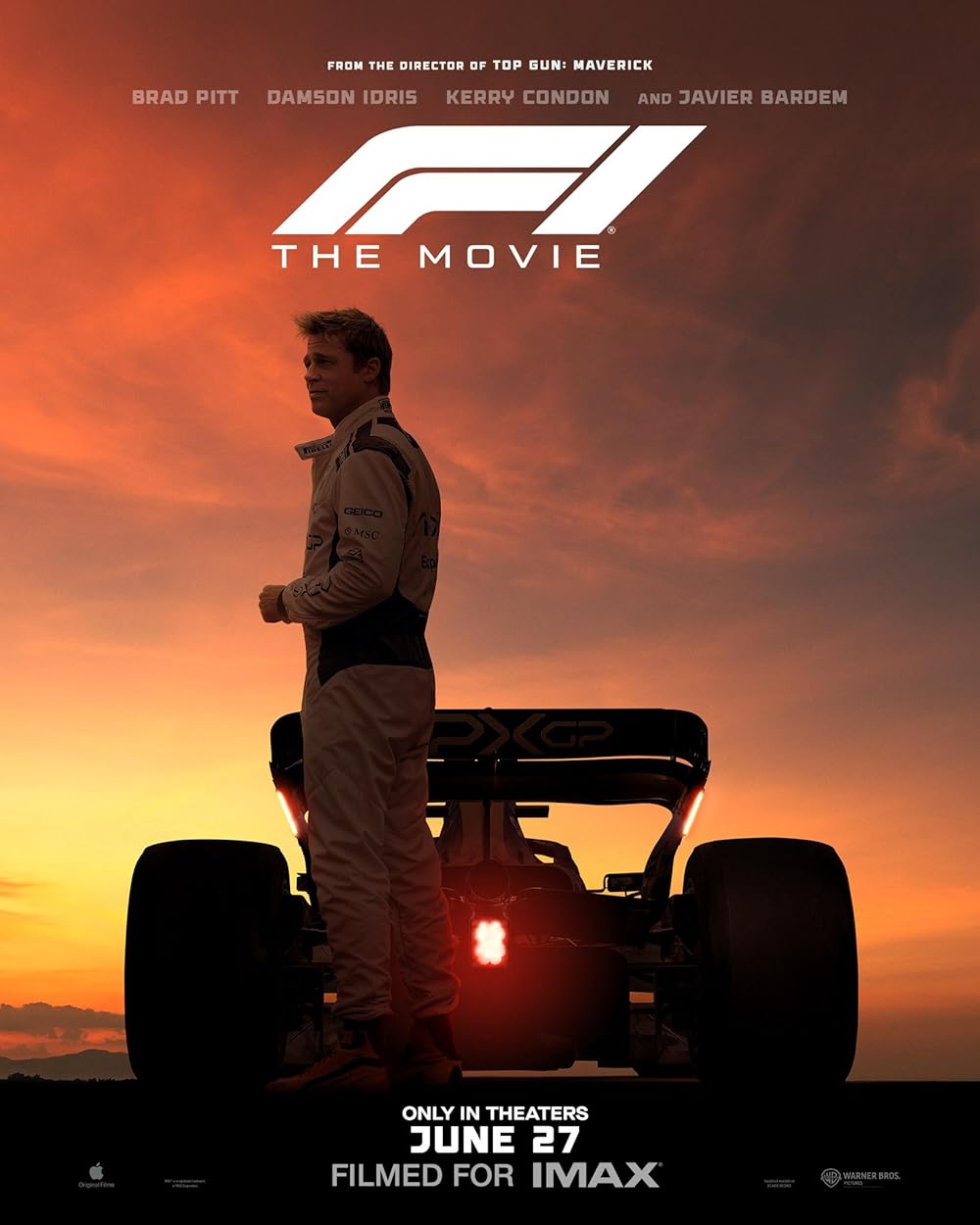
Starts on high octane, finishes on fumes. From the exhilarating technical achievement to the fantastic cast chemistry to the underdog story of redemption, it would appear that the “formula” for F1 was of sound design and execution; unfortunately, the character development is rushed and the third act simply doesn’t offer the adrenaline-pumping suspense and action as do the firsts two acts.

In the 1990s, Sonny Hayes (Brad Pitt) was Formula 1’s most promising driver until an accident on the track nearly ended his career. Thirty years later, the owner of a struggling Formula 1 team convinces Sonny to return to racing and become the best in the world. Driving alongside the team’s hotshot rookie, Sonny soon learns that the road to redemption is not something you can travel alone.

If for no other reason, see this film on the biggest screen with the highest quality sound because Joseph Kosinski’s F1 is why the BIG screen was made. From beginning to end, the cinematography and editing deserve top billing for this picture because you will feel that you are right there in the crowd or with the drivers along the Grand Prix. Even if you know little to nothing about Formula 1 racing, you will never feel lost as there are sufficient context clues and exposition to keep you along for the 200mph ride. It would have been too easy to lean into the racing sequences, but the racing punctuates the rest of the story, so each and every time you are on the track of the Grand Prix, there has been an emotional and chemical reset from the previous racing scenes. Both the sound design and cinematography are outstanding in this octane-fueled motion picture.

The score from Hans Zimmer serves as a direct extension of both action and character in F1. His energetic score blends sweeping orchestration with pulsating electronic textures that wrap audiences in the big screen story. Zimmer’s ability to craft a human story inside a mechanical world is on full display in the film. Where his brilliance as a composer is witnessed most is in the rhythmic choices scene to scene. He employs musical motifs that emulate machinery or momentum, which in a sport where every millisecond matters, Zimmer’s percussive, syncopated techniques mirror the precision and stakes of the most elite motorsport. In a film that captures a motorsport that crosses cultural boundaries–a global sport–Zimmer’s score represents a cross-section of the various regions of the world that play host to Formula 1 and seamlessly transcends cultural boundaries, creating a sort of global score that resonates with audiences from around the world.

While the plotting is sound, and serves as the foundation for a compelling story, where the film suffers is in the character development and third act. The setup in the first act informs the audience of everything needed to understand our two central characters of Sonny and Joshua (Idris) and the two vastly different worlds in which they live yet are connected by the thrill and love of racing. Of course, this thrill and love is expressed differently based upon the difference in both generation and worldview. Everything needed for a compelling character journey formula is there, but falters in the third act. Underscoring the story is social commentary on our drive (or motivation) for pursuing a passion, be that a career or by extension, a hobby. And it’s in this motivation that we witness our central characters develop over the course of the narrative conflict.

Sonny is a cynical former (generation X) Formula 1 driver, that was once heralded as the newest star on the Grand Prix circuit. In contrast, Joshua “JP” is the (generation Z) talented and charismatic driver that is obsessed with his image (with help from his press manager). Both drivers excel in talent, but are each battling their own respective demons. Sonny and JP develop over the course of the film–each man’s worldview challenged. Sonny has to grow in team spirit and JP has to grow in humility. The character arcs on which both characters are traveling begin and even develop in compelling ways, even resonating with audience members that are somewhere on the spectrum between both individuals; but, the change in both characters is too rapid when the resolution comes in the third act. JP’s scenario appears to be the perfect canvas on which to paint a portrait of what happens when we lose focus on the love of a sport and rather find ourselves lost in the celebrity of it, lost in the toxic social media swamp. Sonny’s character arc feels more complete, but even his switch from where he was to where he ended resolved itself too quickly, losing the full impact that it could have had.

Kosinski’s casting decisions result in a cast that demonstrates excellence in chemistry. There is an authenticity in the relationships and dynamics among the lead and supporting cast. Never once, did I feel that I was watching actors–rather–I felt I was watching real Formula 1 drivers, crew, and investors. I completely buy the longtime relationship between Sonny and Reuben (Bardem), even though we spend minimal time on the history of their friendship. And the clashes between Sonny and the pit crew and directors never felt rehearsed or contrived.

Even though there are shortcomings in the third act, the film remains an exhilarating experience. Movies like this is that for which the BIG screen was created–to capture larger than life stories that most audience members will never face or experience.
Ryan is the general manager for 90.7 WKGC Public Media in Panama City and host of the public radio show ReelTalk “where you can join the cinematic conversations frame by frame each week.” Additionally, he is the author of the upcoming film studies book titled Monsters, Madness, and Mayhem: Why People Love Horror. After teaching film studies for over eight years at the University of Tampa, he transitioned from the classroom to public media. He is a member of the Critics Association of Central Florida and Indie Film Critics of America. If you like this article, check out the others and FOLLOW this blog! Follow him on Twitter: RLTerry1 and LetterBoxd: RLTerry

40 YEARS OF FLASHDANCE…What a Feeling! a retrospective review

What a feeling! Grab your leg warmers and can of Aqua Net as we hit the dance floor to celebrate the cultural phenomenon that was and still is Flashdance.

The Oscar (and Grammy) winning dance movie Flashdance turns 40 this year on April 15th. Can you believe it’s been four decades since the iconic movie defined the music, dance, and fashion of the 1980s??? Forty years of electrifying music and dance that dazzles the senses. Winning the late Irene Cara and legendary composer Giorgio Moroder the Best Original Song Oscar and Grammy for Flashdance…What a Feeling! (Moroder was also nominated in the same year for his Scarface score) and earning Michael Sembello an Oscar nomination for Maniac, the titular 80s movie Flashdance remains an icon of music and dance that has transcended the decades and continues to be emulated in other media today. This is not a movie to be taken seriously; it’s a movie to be felt and experienced. And to its credit, it has remained popular. Take your passion and make it happen!

In case you are new to planet earth, Flashdance tells the story of Alex Owens (Jennifer Beals), a beautiful young woman who works a day job in a steel mill in Pittsburgh and dances in a bar at night. When Alex discovers that her handsome boss, Nick Hurley (Michael Nouri), is both interested in her and supportive of her performing career, she renews her efforts to get accepted into a prestigious dance conservatory. Although Alex is frightened of failure, she is cheered on by Nick, as well as by her mentor, former ballet performer Hanna Long (Lilia Skala).

More than a cultural smash hit, it was a tremendous success at the box offie too, because Flashdance is the third highest grossing film of 1983 behind Return of the Jedi and Terms of Endearment. In retrospect, this movie is veritably responsible for reviving the modern movie musical with its sexy complex dance sequences, bold fashion, and use of popular music.

Not many films can be recognized by a single shot, this is expressly true with those that may not have even seen the film, but Flashdance is instantly recognized by Beals’ silhouette leaning back on the chair with water dousing her. That cinematic moment has been parodied and paid tribute to in dozens of movies and TV shows from Elvira: Mistress of the Dark to Family Guy and even Deadpool 2. From Beals’ off-the-shoulder grey sweatshirt in the famous bra-removal scene to her knee-high leg warmers, bikini bottoms, and taut physique, many scenes in this movie will forever be engrained in our minds. It’s remarkable how this cheesy, low-budget dance film influenced the culture of an entire decade and continues to reassert itself in popular culture to this day. The incomparable footprint left by this movie can be felt everywhere.

It’s funny, whenever critics and fans talk about Flashdance, it’s almost never about the plot. Is there anything inordinately wrong with the plot–no–but there is nothing particularly remarkable or subversive about it either. It’s a simple variation of the rags to riches story or simply realizing a dream despite obstacles. At the intersection of performance art and motion pictures is where this movie lies, and lies there incredibly comfortably and confidently.

Flashdance is a movie which uses a paper-thin plot to connect sequences of montages and dance numbers, one right after the other–yet–somehow audiences, for forty years, are raptured by the music and dance. I cannot think of another movie that defied the odds of success and became a legitimate classic in the way Flashdance did.

It’s as if Bruckheimer and Adrian Lyne studied the elements of what makes a movie successful in the box office (and in popular culture), and then took those basic elements and loosely connected them together. Catchy music, bold fashion, sexy or provocative dances, mild/brief nudity, and relatable characters, these are the elements that Bruckheimer and Lyne put together in order to create movie magic and fantastic success. Then cap it all off with pure, unfiltered triumph in front of those that once looked down upon, and were skeptical of the central character.

Never once do you buy that Alex is a welder; furthermore, in retrospect, it’s clear that there are multiple people serving as the dancing Alex (which is something that is film is widely known and yet rocks it!). But it doesn’t matter. Why? Because it’s nearly impossible to watch this movie and not get drawn into its glitzy fantasy! But while we are on the topic of the Alex’ dancing in the film, I feel it’s important to highlight the talent that brought the exotic dancing to life! Working as Beals’ dancing body-doubles were accomplished dancers Marine Jahan, Sharon Shapiro, and breakdancer Richard “Crazy Legs” Colón.

Despite the contrived plot, the movie is not without deeper meaning. Some of the themes that can be closely read in Flashdance concern ideas such as identity, class, and cultural norms/expectations whether or not there is any absolution. Without stooping to pedantic commentary, the movie provides thoughtful content for those that seek a greater understanding of what the film has to say about the human experience. “When you give up your dream, you die.” A bit cliche perhaps, but still serves as the reminder that we do need our dreams in order to have something toward which we strive. We may never experience or realize that dream, but it’s the pursuit that is most meaningful.

We witness that there are many layers to Alex; she is a complex individual with multiple interests. She is just as confident and comfortable on a dance floor as she is welding as she is at a fine dining restaurant. This is such an important message that continues to be relevant–if not even more so–today! Flashdance is a reminder that diversity within a given group is so very important. Often times, popular culture projects prejudices, behaviors, and expectations onto a given group of people (or onto an individual within a group). Diversity of groups of people should never mean uniformity of thought within that group, it means there are a variety of individuals within any given group of people that have their own fears, beliefs, goals, and dreams. Alex may be a woman, but she is by no means obligated to only behave like a typical woman. Neither does she disparage those that would behave more typically; this movie celebrates variety! Variety of dance, variety of music, variety of people.

The degree to which this movie influenced virtually every area of popular culture is incalculable. Even exercise videos changed overnight. I posit that it’s entirely possible that 80s and 90s aerobics videos wouldn’t be the same if it wasn’t for Flashdance. For example, the footprint of this movie can be seen in the music, movements, and fashion of those Jane Fonda style aerobics videos. Even descendants of this stylistic athletic fashion can be observed in nearly every downtown and suburban area today; but we now refer to it as athleisure apparel.

Flashdance is the very definition of a crowd-pleasing film that defied the expectations of critics in 1983 and continues to be beloved by contemporary critics and audiences of all walks of life. The legacy of this movie is felt throughout media of all kinds! Even those that have never seen the movie recognize it by the music or iconic water dance shot. It’s a light-hearted melodrama that you cannot help but love. Just close your eyes, and feel the timeless rhythm of Flashdance!

Ryan teaches Film Studies and Screenwriting at the University of Tampa and is a member of the Critics Association of Central Florida and Indie Film Critics of America. If you like this article, check out the others and FOLLOW this blog! Interested in Ryan making a guest appearance on your podcast or contributing to your website? Send him a DM on Twitter. If you’re ever in Tampa or Orlando, feel free to catch a movie with him.

Follow him on Twitter: RLTerry1 and LetterBoxd: RLTerry

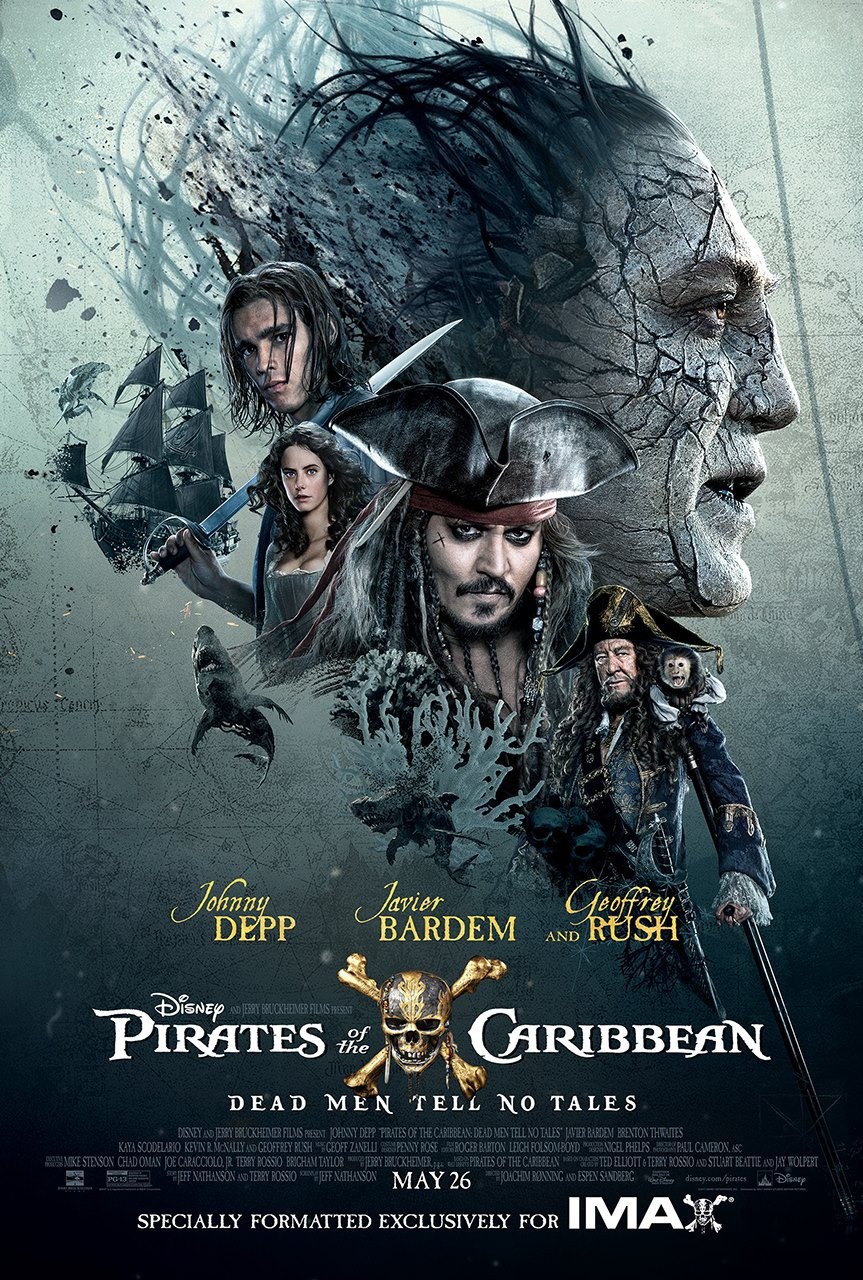
“Pirates of the Caribbean: Dead Men Tell No Tales” movie review

Of all the tales that the depths of the ocean contain, this one is quite shallow. Disney’s latest installment in the swashbuckling franchise Pirates of the Caribbean: Dead Men Tell no Tales proves that neither changing directors, writers, nor the inclusion of an undead Javier Bardem, can bail enough water out of a sinking ship. No doubt the next chapter in the life and times of Jack Sparrow was one to be anticipated by fans, but sadly the writing was not strong or developed enough to carry the waning film series. This film reminds me of the Child’s Play franchise. What??? That is likely what you’re saying. But hear me out. After the first two Chucky films, the studio realized that the series was not working as a hard horror film, so the studio went the camp route and capitalized on the ridiculousness of the characters and the situations. Dead Men Tell No Tales contains many camp elements such as completely ludicrous antics and escapes that are even too much for a Mission Impossible movie. Although there is an attempt at some closure between characters at the end of the film, it plays out as forced and on-the-nose. Still, there are moments that will mildly tug at your heartstrings during the showdown, but it’s not enough to add any dimension to this flat tale. One thing that this Pirates movie has going for it is the impressive visual effects. Both the editing and score are pretty outstanding, and certainly add to the experience of the film. However, if you watch the movie in 3D, as I did because there wasn’t a 2D option at the earliest showing, some of the magic of the undead pirates will be lost due to noticeability of editing. Over all, Disney’s Pirates of the Caribbean: Dead Men Tell No Tales is a great popcorn movie and a fun one to watch with friends or the family. Be sure to stay after the credits for a sneak peek at the next (and hopefully last) one.

Return to the swashbuckling world of the franchise inspired by the iconic Pirates of the Caribbean attraction at Disney Parks! Many years after the encounter with Davy Jones, Jack Sparrow (Depp) is being sought out by a young Henry Turner (Brenton Thwaites)–yes, that Turner. After witnessing his entire ship’s compliment slaughtered by ghost pirates led by Captain Salazar (Bardem), Turner is even more determined to find Captain Jack. Unbeknownst to Turner, Jack Sparrow’s fortune is not what it used to be. With his luck turned sour, Sparrow is captured and Turner must free him if the ghost pirates are to be stopped and the curse of Davy Jones lifted. By sheer happenstance, Sparrow is sentenced to die alongside an accused witch named Carina (Kaya Scodelario). If that wasn’t bad enough, Captain Barbosa (Rush) has been cornered by Salazar into leading him to Sparrow as well. Other than a need to find Jack, Turner, Salazar, and Carina all share a common interest in locating the trident of Poseidon. That trident is the key to unlocking the power of the ocean and breaking curses.

Like so many franchises that have come before, Disney’s Pirates of the Caribbean appears to have suffered the same fate. Although this can’t be said of every franchise, the area that fairly consistently fails to deliver is strong writing inclusive of plot and character development. Often times it seems that story is exchanged for merchandising, impressive visual effects, or pandering in longstanding franchises. After an outstanding opening sequence that instantly hooks you, the rest of the movie just plays out so paint-by-the-numbers that it becomes nearly predictable and lacks any real substance. Sometimes franchises fall into the trap of realizing that it can no longer take itself seriously and allows the camp factor to increase significantly. That is the one word that pretty much sums up this film: camp. Whether you are talking the perpetually drunk Jack Sparrow (yes, even more than usual), unbelievable escapes that defy all logic and past precedents set is previous films, or the supernatural playing off more as a joke than a serious plot device, there are many elements in this film that attempt to cover up poor writing by going for the flash in a pan approach.

One of the down sides to the recent Guardians of the Galaxy I found was the film only focusing on Acts I and III, leaving out the chunk of story development typically found in Act II. By the same token, Dead Men Tell No Tales spends most of the time in Act II, leaving Act I and again Act III to be rushed through. The common variable in both scenarios is a weak third act. To explain where I feel that this movie should have ended and the next one begin would give away a plot spoiler, so I won’t mention it. However, there is a place in this film in which there is a great opportunity to end this story on a high note of anticipation of what is to come but it just rushes through the rest of the story. Had more time been spent on developing a solid story, then this Pirates movie would definitely have turned out much better. Sadly, it seems like more time was spent in post-production and scoring the film. Certainly, the talent behind the lead characters is excellent. Perhaps the writing is poor and the screenplay was weak, but with a lead cast of Depp, Rush, and Bardem, the movie is fun to watch. And sometimes that’s all you want–a good popcorn movie.

If you ARE looking for a good popcorn movie to watch with your family or friends over the holiday weekend, then checkout Disney’s Pirates of the Caribbean: Dead Men Tell No Tales. Can’t promise that you will enjoy the story as much as the original, but you’ll still have a good time. Perhaps the sequel to this film will be stronger and pick up where this one failed to deliver.

Written by R.L. Terry

Edited by J.M. Wead