F1 THE MOVIE film review

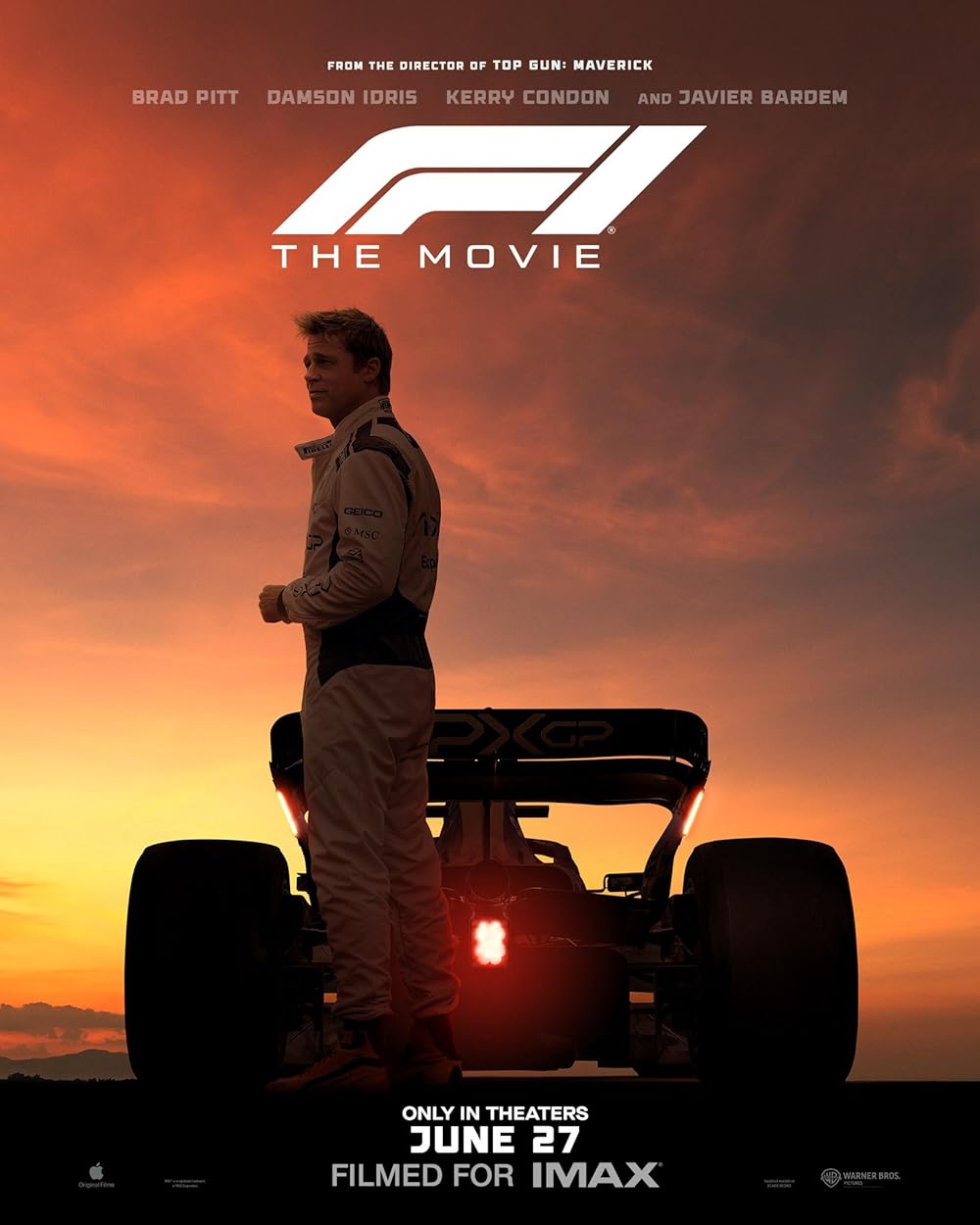
Starts on high octane, finishes on fumes. From the exhilarating technical achievement to the fantastic cast chemistry to the underdog story of redemption, it would appear that the “formula” for F1 was of sound design and execution; unfortunately, the character development is rushed and the third act simply doesn’t offer the adrenaline-pumping suspense and action as do the firsts two acts.

In the 1990s, Sonny Hayes (Brad Pitt) was Formula 1’s most promising driver until an accident on the track nearly ended his career. Thirty years later, the owner of a struggling Formula 1 team convinces Sonny to return to racing and become the best in the world. Driving alongside the team’s hotshot rookie, Sonny soon learns that the road to redemption is not something you can travel alone.

If for no other reason, see this film on the biggest screen with the highest quality sound because Joseph Kosinski’s F1 is why the BIG screen was made. From beginning to end, the cinematography and editing deserve top billing for this picture because you will feel that you are right there in the crowd or with the drivers along the Grand Prix. Even if you know little to nothing about Formula 1 racing, you will never feel lost as there are sufficient context clues and exposition to keep you along for the 200mph ride. It would have been too easy to lean into the racing sequences, but the racing punctuates the rest of the story, so each and every time you are on the track of the Grand Prix, there has been an emotional and chemical reset from the previous racing scenes. Both the sound design and cinematography are outstanding in this octane-fueled motion picture.

The score from Hans Zimmer serves as a direct extension of both action and character in F1. His energetic score blends sweeping orchestration with pulsating electronic textures that wrap audiences in the big screen story. Zimmer’s ability to craft a human story inside a mechanical world is on full display in the film. Where his brilliance as a composer is witnessed most is in the rhythmic choices scene to scene. He employs musical motifs that emulate machinery or momentum, which in a sport where every millisecond matters, Zimmer’s percussive, syncopated techniques mirror the precision and stakes of the most elite motorsport. In a film that captures a motorsport that crosses cultural boundaries–a global sport–Zimmer’s score represents a cross-section of the various regions of the world that play host to Formula 1 and seamlessly transcends cultural boundaries, creating a sort of global score that resonates with audiences from around the world.

While the plotting is sound, and serves as the foundation for a compelling story, where the film suffers is in the character development and third act. The setup in the first act informs the audience of everything needed to understand our two central characters of Sonny and Joshua (Idris) and the two vastly different worlds in which they live yet are connected by the thrill and love of racing. Of course, this thrill and love is expressed differently based upon the difference in both generation and worldview. Everything needed for a compelling character journey formula is there, but falters in the third act. Underscoring the story is social commentary on our drive (or motivation) for pursuing a passion, be that a career or by extension, a hobby. And it’s in this motivation that we witness our central characters develop over the course of the narrative conflict.

Sonny is a cynical former (generation X) Formula 1 driver, that was once heralded as the newest star on the Grand Prix circuit. In contrast, Joshua “JP” is the (generation Z) talented and charismatic driver that is obsessed with his image (with help from his press manager). Both drivers excel in talent, but are each battling their own respective demons. Sonny and JP develop over the course of the film–each man’s worldview challenged. Sonny has to grow in team spirit and JP has to grow in humility. The character arcs on which both characters are traveling begin and even develop in compelling ways, even resonating with audience members that are somewhere on the spectrum between both individuals; but, the change in both characters is too rapid when the resolution comes in the third act. JP’s scenario appears to be the perfect canvas on which to paint a portrait of what happens when we lose focus on the love of a sport and rather find ourselves lost in the celebrity of it, lost in the toxic social media swamp. Sonny’s character arc feels more complete, but even his switch from where he was to where he ended resolved itself too quickly, losing the full impact that it could have had.

Kosinski’s casting decisions result in a cast that demonstrates excellence in chemistry. There is an authenticity in the relationships and dynamics among the lead and supporting cast. Never once, did I feel that I was watching actors–rather–I felt I was watching real Formula 1 drivers, crew, and investors. I completely buy the longtime relationship between Sonny and Reuben (Bardem), even though we spend minimal time on the history of their friendship. And the clashes between Sonny and the pit crew and directors never felt rehearsed or contrived.

Even though there are shortcomings in the third act, the film remains an exhilarating experience. Movies like this is that for which the BIG screen was created–to capture larger than life stories that most audience members will never face or experience.
Ryan is the general manager for 90.7 WKGC Public Media in Panama City and host of the public radio show ReelTalk “where you can join the cinematic conversations frame by frame each week.” Additionally, he is the author of the upcoming film studies book titled Monsters, Madness, and Mayhem: Why People Love Horror. After teaching film studies for over eight years at the University of Tampa, he transitioned from the classroom to public media. He is a member of the Critics Association of Central Florida and Indie Film Critics of America. If you like this article, check out the others and FOLLOW this blog! Follow him on Twitter: RLTerry1 and LetterBoxd: RLTerry
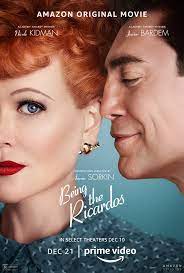
BEING THE RICARDOS film review

I Love Being the Ricardos. Whether you are a fan or scholar of I Love Lucy or not, this biographical motion picture is for you! Go behind the walls of 623 E. 68th St. (an address that in real life would be in the East River), and get up close and personal with one of the toughest weeks in Lucille Ball and Desi Arnaz’ careers and the run of the sitcom. Being the Ricardos also represents Aaron Sorkin’s directorial debut, and be brings with him his penchant for exploring the human condition through dialogue steeped in subtext, thus adding the dramatic dimension to the dialogue. What I appreciate about Sorkin’s approach is how he seamlessly layers two timelines and a meta narrative into one another, in a manner that is consistently driving the plot forward in terms of plot and character. While the central focus of the film is on Lucille Ball being accused of being a communist, there are ancillary stories on Desi’s affairs and Vivan Vance’s complicated relationship with Lucille Ball and her character Ethel Mertz. William Frawley is depicted as the most level-headed out of the whole cast. Other dynamics of the mother of all sitcoms include the the power dynamic between the writers Madelyn Pugh, Bob Carroll Jr., and executive producer Jess Oppenheimer. Throughout the film, one theme is clear: home. What does a home mean or look like to you? Lucy desires a home, and she will fight for it.

In 1952, Hollywood power couple Lucille Ball and Desi Arnaz face a series of personal and professional crises that threaten their careers, their relationship and their hit TV show.

With so many layers at play, it may have proven to be disastrous for many if not most writer-directors, but not Aaron Sorkin. Any reviews you’ve heard or read that suggest Being the Ricardos is too inside baseball are wildly exaggerated. Yes, there is a greater appreciation for the film by those that know I Love Lucy well, but even those that only know of the sitcom will appreciate it. The friend that attended with me had virtually no substantive knowledge of I Love Lucy, yet he laughed along with this film, and knew precisely what was going on and why it was so important. If you are a member of the creative economy that runs, writes for, or acts in a sitcom, then you will have a greater level of empathy and understanding for the ups and downs faced by writers, actors, producers, and sponsors in Being the Ricardos.

Being the Ricardos starts out “in the future” with interviews with the (late in real life) Jess Oppenheimer, Bob Carroll Jr., and Madelyn Pugh about I Love Lucy and that week–and they all had the same reaction. Although I thought the three comedy writers had passed away, I was completely convinced that Sorkin was interviewing the TV legends. I actually had to check Wikipedia for the death dates. Anyway. The illusion of a documentary layer added to the authenticity of this film. Periodically throughout the film, we return to our writers and executive producer for some retrospective commentary on the “past” or “present” story. These interview segments provide a more substantive context for the conflict to follow. Furthermore, it adds come comedic relief for the otherwise serious film.

Often times, these type of biographic motion pictures work to humanize or make relatable the central figure(s), and Sorkin’s film does just that. Even though the world knows that Lucille Ball and Desi Arnaz divorced in 1960 (following the final performance of the Lucy Desi Comedy Hour), we still think fo them as the madly-in-love couple at 623 E. 68th St (and later at their house in West Chester, CT). Going behind the scenes, we witness four actors with their own demons and flaws. Perhaps you can identify with the struggles experienced by Lucy, Desi, Vivian, or William (Bill). And not just them, but Madelyn, Bob, and Jess too. More than a historical biographical picture, this is a motion picture that is very much a story of what it means to be human that is paired with a deep dive into one of the most beloved TV shows of all time.

Kidman’s performance as Lucille Ball and Javier Bardem’s performance as Desi are excellent! While Bardem may not disappear behind the costuming, hair, and makeup to the degree that Kidman does, he had Desi’s mannerisms and body language down pat! Clearly, he spent a great deal of time preparing for a role that has major shoes to fill, or should I say bongos to play. From her voice to her appearance to her body language, Nicole Kidman will wow you with her portrayal of the Queen of Comedy Lucille Ball. Kidman’s preparation for this role of a lifetime paid off in spades. If I didn’t know any better, I’d almost believe that I was watching Lucille Ball on screen. It reminds me, in many ways, of Jessica Chastain’s outstanding performance as Tammy Faye in (my favorite film of 2021) The Eyes of Tammy Faye.

For fans of the show, you may notice some continuity errors. Now, these errors don’t detract away from the film, but may surprise you. The show is in the middle of the second season, but the apartment set is the apartment they would move into after Little Ricky was born in Season 3. The giveaway was the window in the back. And in the film when they are referring to baby the Ricardos will have, it’s actually Desi Jr. that would be born during the third season and not Lucie, which is what is depicted in the film.

While we get a flashforwards to the famous grape vat scene, we do not get the most famous scene from I Love Lucy of all time: Vitameatavegemin. It is referenced, but we do not get to see Kidman recreate this scene. Maybe it’s a bonus feature on the BluRay. I hope so anyway!

Ryan teaches American and World Cinema at the University of Tampa. If you like this article, check out the others and FOLLOW this blog! Interested in Ryan making a guest appearance on your podcast or contributing to your website? Send him a DM on Twitter or email him at RLTerry1@gmail.com! If you’re ever in Tampa or Orlando, feel free to catch a movie with him.

Follow him on Twitter: RLTerry1

“Pirates of the Caribbean: Dead Men Tell No Tales” movie review

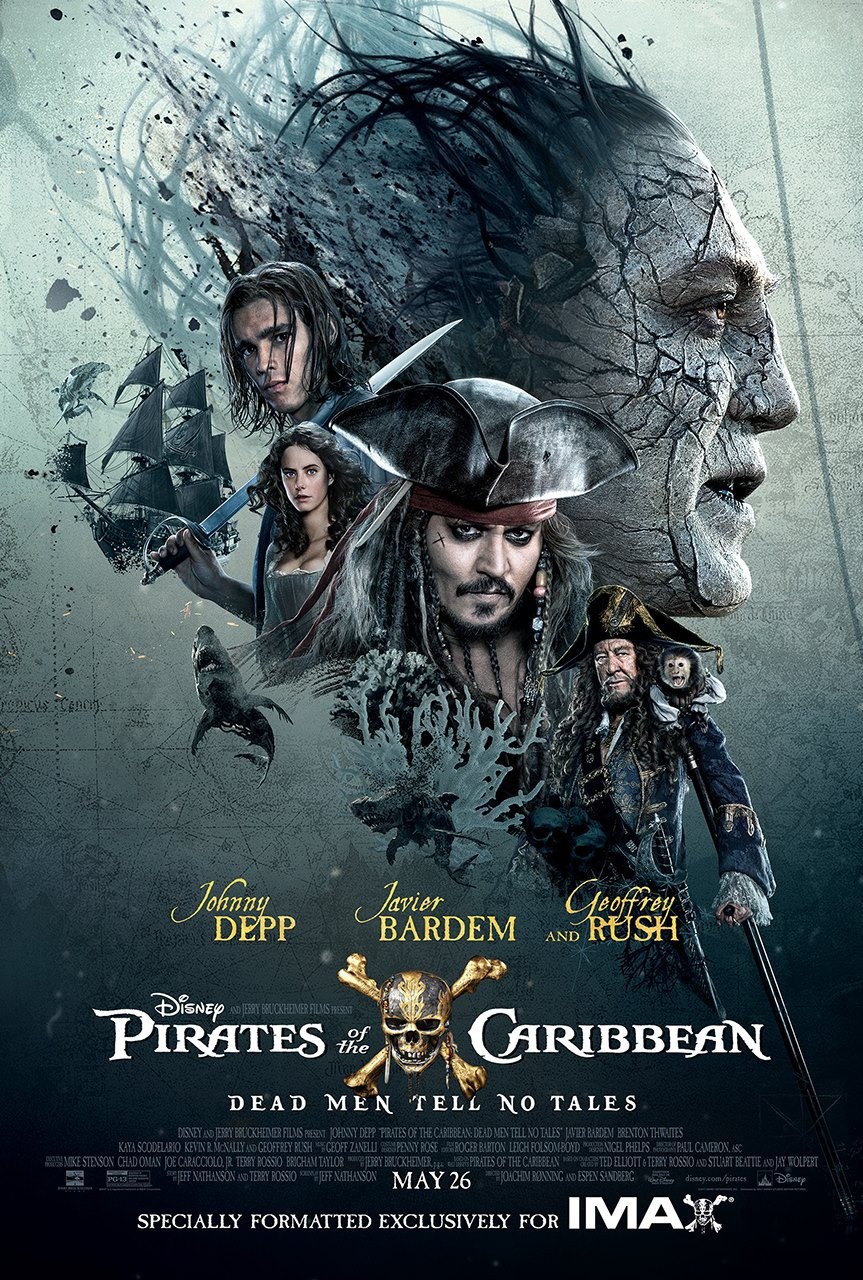
Of all the tales that the depths of the ocean contain, this one is quite shallow. Disney’s latest installment in the swashbuckling franchise Pirates of the Caribbean: Dead Men Tell no Tales proves that neither changing directors, writers, nor the inclusion of an undead Javier Bardem, can bail enough water out of a sinking ship. No doubt the next chapter in the life and times of Jack Sparrow was one to be anticipated by fans, but sadly the writing was not strong or developed enough to carry the waning film series. This film reminds me of the Child’s Play franchise. What??? That is likely what you’re saying. But hear me out. After the first two Chucky films, the studio realized that the series was not working as a hard horror film, so the studio went the camp route and capitalized on the ridiculousness of the characters and the situations. Dead Men Tell No Tales contains many camp elements such as completely ludicrous antics and escapes that are even too much for a Mission Impossible movie. Although there is an attempt at some closure between characters at the end of the film, it plays out as forced and on-the-nose. Still, there are moments that will mildly tug at your heartstrings during the showdown, but it’s not enough to add any dimension to this flat tale. One thing that this Pirates movie has going for it is the impressive visual effects. Both the editing and score are pretty outstanding, and certainly add to the experience of the film. However, if you watch the movie in 3D, as I did because there wasn’t a 2D option at the earliest showing, some of the magic of the undead pirates will be lost due to noticeability of editing. Over all, Disney’s Pirates of the Caribbean: Dead Men Tell No Tales is a great popcorn movie and a fun one to watch with friends or the family. Be sure to stay after the credits for a sneak peek at the next (and hopefully last) one.

Return to the swashbuckling world of the franchise inspired by the iconic Pirates of the Caribbean attraction at Disney Parks! Many years after the encounter with Davy Jones, Jack Sparrow (Depp) is being sought out by a young Henry Turner (Brenton Thwaites)–yes, that Turner. After witnessing his entire ship’s compliment slaughtered by ghost pirates led by Captain Salazar (Bardem), Turner is even more determined to find Captain Jack. Unbeknownst to Turner, Jack Sparrow’s fortune is not what it used to be. With his luck turned sour, Sparrow is captured and Turner must free him if the ghost pirates are to be stopped and the curse of Davy Jones lifted. By sheer happenstance, Sparrow is sentenced to die alongside an accused witch named Carina (Kaya Scodelario). If that wasn’t bad enough, Captain Barbosa (Rush) has been cornered by Salazar into leading him to Sparrow as well. Other than a need to find Jack, Turner, Salazar, and Carina all share a common interest in locating the trident of Poseidon. That trident is the key to unlocking the power of the ocean and breaking curses.

Like so many franchises that have come before, Disney’s Pirates of the Caribbean appears to have suffered the same fate. Although this can’t be said of every franchise, the area that fairly consistently fails to deliver is strong writing inclusive of plot and character development. Often times it seems that story is exchanged for merchandising, impressive visual effects, or pandering in longstanding franchises. After an outstanding opening sequence that instantly hooks you, the rest of the movie just plays out so paint-by-the-numbers that it becomes nearly predictable and lacks any real substance. Sometimes franchises fall into the trap of realizing that it can no longer take itself seriously and allows the camp factor to increase significantly. That is the one word that pretty much sums up this film: camp. Whether you are talking the perpetually drunk Jack Sparrow (yes, even more than usual), unbelievable escapes that defy all logic and past precedents set is previous films, or the supernatural playing off more as a joke than a serious plot device, there are many elements in this film that attempt to cover up poor writing by going for the flash in a pan approach.

One of the down sides to the recent Guardians of the Galaxy I found was the film only focusing on Acts I and III, leaving out the chunk of story development typically found in Act II. By the same token, Dead Men Tell No Tales spends most of the time in Act II, leaving Act I and again Act III to be rushed through. The common variable in both scenarios is a weak third act. To explain where I feel that this movie should have ended and the next one begin would give away a plot spoiler, so I won’t mention it. However, there is a place in this film in which there is a great opportunity to end this story on a high note of anticipation of what is to come but it just rushes through the rest of the story. Had more time been spent on developing a solid story, then this Pirates movie would definitely have turned out much better. Sadly, it seems like more time was spent in post-production and scoring the film. Certainly, the talent behind the lead characters is excellent. Perhaps the writing is poor and the screenplay was weak, but with a lead cast of Depp, Rush, and Bardem, the movie is fun to watch. And sometimes that’s all you want–a good popcorn movie.

If you ARE looking for a good popcorn movie to watch with your family or friends over the holiday weekend, then checkout Disney’s Pirates of the Caribbean: Dead Men Tell No Tales. Can’t promise that you will enjoy the story as much as the original, but you’ll still have a good time. Perhaps the sequel to this film will be stronger and pick up where this one failed to deliver.

Written by R.L. Terry

Edited by J.M. Wead