Halloween Horror Nights XXVIII Full Review

What an opening weekend! This past weekend saw the grand opening of Universal Orlando’s Halloween Horror Nights 28, and it has got to be the busiest weekend that I can remember in the last several years. Headlining this year’s HHN is Stranger Things and Poltergeist followed by eight other licensed and original IP houses. Boasting more houses than ever, HHN28 has got to be one of the best years yet. Although there is some disagreement on whether Stranger Things or Poltergeist is the best IP house or Slaughter Sinema or Scary Tales is the best original house this year, there is little (if any) disagreement on the level of attendance reaching epic proportions! Wait times for Stranger Things reached 150mins, and many other houses also had extreme wait times. Often, opening weekend tends to be less busy than the following weekends, but HHN fans were turning out in droves to attend Friday and/or Saturday nights. The energy level was incredible! Fans from all different age groups were all excited to enter the gates as the theme music from Stranger Things, Halloween, and Poltergeist filled the air. Armed with my Express Pass for Friday night and Rush of Fear HHN ticket, I was excited to meet up with my annual HHN crew for a night of frights and fun set to the beat of 1980s music and horror. One might even go so far as to say that this year’s HHN is an entertaining love letter to everything we loved about the 80s.

Prior to arriving at the archway, I just had get to the park. A lot easier said than done. There were so many horror fiends heading to HHN that the exit ramp from the 4 to the park was backed up to the driving lane. Not to mention the 40mph traffic all along I-4EB for miles and miles that I drove through. Once I finally got to the auto toll plaza for parking, I thought everything would move a little more smoothly. Nope. Although each of the toll booth holds two team members, from what I could tell, each booth had ONE–yes one–team member. After I finally parked, I looked at my watch and realized that nearly 45mins past from the exit ramp to the parking spot. Tip to Universal: please fully staff the booths to move cars through the plaza more efficiently. Once I made it to the archway, I had to pickup my tickets from the will-call kiosk. And just like usual, at the kiosk, neither liked my QR code nor my confirmation number. I encounter this problem every year. Any tips from those of you who do not have problems with the kiosk would be appreciated!

Finally, I was at HHN! Phew, what a process. But it was all worth it! One of my favorite things to observe is the variety of horror graphic T’s. So many different horror movies and fandoms represented. There is truly a sense of community at HHN. Maybe you don’t think about that at first because of the long standby (and even Express) wait times this year; but for those of us who love horror, this is the time of year (and the event) that we feel that we are not weird as characterized by popular culture at large. Even before I arrived, I had many fellow #FilmTwitter #Tweeps who hoped to see me, and I them, at the event. Unfortunately, I didn’t run into any of my Twitter followers at HHN this year, but I had a lot of fun following them, and reading what they thought about the different houses. Even though I did not end up meeting up with any of those I follow (or follow me) on Twitter, I felt connected to them through exchanging comments as we were all experiencing HHN at the same time. What I would like to see emerge from the Twitter and blogging communities as well as the #PodernFamily (podcasters) is to make an effort to connect in person as much as digitally. Perhaps many of us are covering HHN for our various media outlets; but at the end of the day, we are all there to have fun and should exhibit that same sense of community in person as we do through social media. Be social in real life!

(Twisted Tater has sense been added to the event)

Before I get into my brief review of each house, there is one other item of mention that I greatly missed at this year’s HHN. Twisted Tater. Yes. That spirally, starchy, fried goodness that has been a staple of HHN for what seems like forever. It was nowhere to be found. At least, I never found it nor did I see anyone post about it. Thankfully, my friend Dani and I had Twited Tater back during Mardi Gras, but we were both saddened that it was not part of HHN this year. Speaking of food, I do not feel that the selection of HHN food was as strong this year as it has been in the past. Yes, that Stranger Things cookie-like treat was popular on social media, but most of the HHN food seemed to skew towards sweets moreso than savory or starchy. In the future, aside from Twisted Tater returning, a nice balance of foods for any fix that an HHN guest may have, should be added. Oh yeah, Pizza-dogs need to return too! The fries just don’t do it. Speaking of fries, fresh cut fries would be a great addition to the food lineup!

Although it’s the houses that typically get the most attention running up to and during the event, after last year’s success of the elaborately immersive Trick ‘r Treat scare zone, the scare zones have begun to get an increased level of attention. Like with last year’s Trick ‘r Treat, it stands to reason that scare zones can definitely be used as a testing ground for future houses. The concept of testing an IP or concept for a house in a scare zone the previous year is not new, but it seems to be becoming more of the case over the last couple years. Scare zones this year are: The Harvest, Vamp ’85, Killer Clowns from Outer Space, Twisted Traditions, Revenge of Chucky, and I also count the annual chainsaw wielding clowns in Springfield.

The Harvest: Here you’ll encounter all the horrors you have ever feared were in your grandparents’ barn. I feel that this scare zone was a little weak compared to what is typically in this same area, but still a fun scare zone to get you in the mood for your night of horror. One of the best parts of the scare zone are the variety and amount of jack-o-lanterns! They are everywhere. It feels very much like Halloween!

Vamp ’85: Ring in the new year with 1980s vampires and music! Loved the small stage show! With many of the houses having roots in the 80s, this zone worked extremely well to continue that immersive love letter to the 1980s. Make sure to stay for the countdown but watch out for big haired vampires in flashy clothes!

Killer Clowns from Outer Space: My pick for favorite scare zone! Absolutely loved this scare zone, and I know you will to. Based on the cult classic, this scare zone has the best costumes and atmosphere. It successfully strikes that balance between horror and comedy, and works as a fun way to cleanse the pallet from the much darker areas of the rest of the park.

Twisted Traditions: Best part of this scare zone is the creepy church building! I walked though this scare zone a couple times, but unfortunately, I never felt that it actually accomplished what it set out to do. Only the church building is memorable. Couldn’t name one unique costume.

Revenge of Chucky: I was pretty hyped for this scare zone because I like the movies so much, but it was a bit disappointing. However, the interactive Good Guys display with Chucky was great! And that man baby you’ve probably seen on Twitter of IG was truly disturbing. I think it could have used a little more scare factor. Maybe even a Chucky jumping out at guests or something. It was okay, just not quite what I expected.

Now for what you really want to know about–the houses!

GET THE EXPRESS PASS even if just for one night, which is what I did. It is definitely worth the cost.

Poltergeist: MY FAVORITE HOUSE at HHN28! Such a successful translation from screen to live experience. All the moments from the movie that you want to see and experience are there! I wonder if real skeletons were used in the HHN house like in the movie, hence the curse and lore that follows Hooper and Spielberg’s movie to this day. You start in the back of the house in the pool then make your way through the infamous suburban home. The scares are perfectly effective and the production design is right out of the movie.

Stranger Things: This is likely the house that you may be looking forward to experiencing the most, as it is the other headliner house this year. The demogorgon will chase you throughout the house. All the scenes and locations from the show that you want to see are in the HHN28 house. And the lighting and special effects are spot on. From the living room with the Christmas lights to the Upside Dows, you will feel completely immersed in the world of Hawkins! The only negative criticism I have is the lack of live cast members. Yes, much has to do with an inability to cast kids in a house, but the absence was noticeable.

Halloween 4: With the highly anticipated Halloween (2018) releasing next month, Michael Myers once again returns to HHN! This is the third Michael house in the last few years with Halloween 1 and 2 with 3 being skipped since Michael is not actually in it. It’s a fun house for sure! And you get lots and lots of Michael. It’s been a while since I’ve seen H4; but from what I remember, this house does capture many scenes and elements of the movie. However, ultimately I feel that this house feels like more of a Michael Myers tribute than a “Halloween 4” house. This may be the case because HHN will be going on a Michael break for a while.

Trick ‘r Treat: In short, it works better as a scare zone than a house. That being said, it’s still a solid house with many of the scenes you want to see recreated. You’ll encounter Sam several times and you’ll get to see some of your favorite kills from the movie.

The Horrors of Blumhouse: If you need to skip a house for the sake of time, skip this one. Better than last year, but still (and according to most polls and reviews I’ve seen on Twitter) the least liked house at HHN28. At this house, you walk through Happy Death Day and First Purge. HDD was repetitive. Yes, I realize that is the point because the movie is a twisted Groundhog Day, but as a house it gets old quickly. And then The Purge movies just don’t translate well to a house, with the exception of the first one, which was more of a home invasion.

Scary Tales: My pick for best original house! From the moment you enter the Wicked Witch’s castle as she flies overhead, you will be completely immersed in the absolutely impressive production design that works perfectly around every corner. Each and every fairy tale was twisted beautifully. The effects were fantastic and the attention to detail was unlike anything I’ve seen in an original house before. What I find most interesting about the experience is that this house actually gets back to the original idea behind these tales in that most fairy tales were darkly cautionary stories told to influence a child’s behavior. Many are quite scary! So, this feels like an exaggerated version of how these tales were received back when originally written.

Slaughter Sinema: Close runner up to Scary Tales. Ever wanted to visit the world of those schlocky horror films of the 1980s??? Now is your opportunity to get inside the screen. Such a great house! While waiting in queue, you’ll get to watch trailers of some terrible, great horror movies. My personal favorite is Attack of the Swamp Yeti. The movies are so bad that I want to see each of them. Too bad that they are completely made up for this event. You’ll enter this house through an old drive in movie theatre then walk through each of the movies. There are some excellent kills and the production design is impressive!

Seeds of Extinction: Life after people! Visit an Arizona that is overrun by predatory plants and see you as their next dinner. A post-apocalyptic house is not entirely new, but this is a new twist on a past concept. We are used to being chased by zombies or creatures, but now you must fear plants. Some will eat you whole and others will shoot you with poisonous darts like the plants in Jumanji.

Carnival Graveyard: What is more terrifying than an abandoned carnival inhabited by hillbillies and killer clowns? Not much, haha. This house successfully combines the best of circus and hillbilly horror for one nightmarish house. Of all the original houses, this one is probably the most detailed. Even more than Scary Tales. The scares are so good! I like how the characters are extensions of the setting itself instead of feeling like their are just stuck in there to frighten us.

Dead Exposure: Ehh. This is a concept that has been done before, and like before, it fails to ever be truly scary. The idea is that you have been given an inoculation to prevent you from turning into a zombie after an outbreak at a facility. This shot is said to have nasty side effects such as disorientation. And on that, the house delivers in spades. The lighting design and special effects were so disorienting that I legitimately had trouble walking around to the point that is was annoying and not playful.

I did not experience Academy of Villains. And that is by choice. I felt like Harry Potter talking to Snape when he exclaims “how dare you stand where he stood…” That is how I felt because it’s now located in the stadium where Bill & Ted used to be. A horror comedy show that is built upon satire and parody is missing from the HHN28 lineup. If for no other reason, this show served as a means to take a break from the macabre and cleanse the pallet for more frights! I hope to see a show along these lines return one day.

Well, there you have it folks! A comprehensive review of Universal Orlando’s Halloween Horror Nights XXVIII. You definitely need to get out to HHN while it is going on. Fortunately for you, it just opened so you have several more weeks of HHN on select nights. With a variety of tickets and passes to choose from, there is a ticket for nearly every budget. If you can only go one night, I highly recommend getting the Express Pass. Otherwise, you may only make it to 2-3 or at the most 4 houses during your night.

Follow me on

The R.L. Terry ReelView (for films)

Twitter: RLTerry1

Instagram: RL_Terry

Checkout my book On the Convergence of Cinema and Theme Parks


“The Nun” Horror Movie Review

Well, it’s not the worst horror movie ever. Universes are popping up everywhere, and why should The Conjuring not follow in suit? Based on the real-life paranormal work of Ed and Lorraine Warren, there is certainly enough material from which to build a universe; but if this is a universe and the movies are planets, then perhaps The Nun will go by way of Pluto. Sometimes it’s included, sometimes it’s not. One may even go so far as to say that The Nun is truly unholy–an unholy hot mess of a movie. That’s not to say that it isn’t fun to watch. Like with horror movies, in general, it is a fun watch with a large group of people all reacting at the same time. While recent horror films focus on creating an atmosphere of dread and developing characters that the audience cares about, and then crafting twisted moments of terror such as A Quiet Place or Hereditary, this movie follows bad horror movie tropes that may aid in getting you to jump here and there, but ultimately fail at delivering anything truly scary or horrific. With German expressionism being at the very roots of the American horror film, as seen in NosferatuPhantom of the Opera, and DraculaThe Nun seems like such a missed opportunity to produce a terrifying gothic horror movie.

When a nun at a cloistered abby in the hills of Romania is discovered as having committed suicide by hanging, the Vatican calls upon the service of Father Burke (Birchir) to investigate the occurrence to determine if there is any unholy work at play. Under the advisement of the Vatican, Father Burke is asked to work with Irene, a young nun from a Catholic school because she has the gift of visions that may aid in their mission. Although Irene has yet to take her final vows, she agrees to accompany Father Burke to Romania to uncover why one of her sisters would commit suicide. Father Burke and Sister Irene soon discover that a most unholy spirit lives within the castle, and that the abby’s convent of nuns were protecting the world against a malevolent demon who must be sent back to the depths of hell.

Like many of you, I too was initially optimistic for this origin story as the glimpses of The Nun in the Conjuring movies are terrifying. Partly, these glimpses are creepy because we see very little of the nun. The demon nun suffers from some of the same problems that are witnessed in the Insidious movies. When the demon was shadowed, barely visible–but just enough to frighten you–he was scary; but then he turns into Darth Maul and loses that level of fright he had through most of the first movie. Simply stated, we saw too much of him. To the point that he almost became a parody of his former self. Likewise, the nun’s exaggerated features, yellow eyes, and jagged teeth quickly transition from scary to almost funny. Funny in that it felt campy or over the top. Director Corin Hardy obviously does not know the power of subtlety. Diegetically, the plot of The Nun plays out as incredibly predictable. The nun or another ghoulish apparition appears right when and where you expect it to happen. No surprises here. In an era that arthouse horror is attracting mainstream audiences–and making bank at the box office–it’s quite upsetting that a movie that had the setting and characters for arthouse horror decided to go the “paint by the numbers” route instead of joining other trailblazers.

A grossly underused setting. The movie begins in candle-lit hallways in a medieval castle in the foggy hills of Romania. Visually, the movie appeared to be setting up a story and setting that would have that beautifully dark gothic feel and look; however, it quickly turns into another generic haunted house movie. We begin with an incredibly effective foreboding atmosphere complete with everything you want to see in a gothic horror film, then scrap it for unimaginative rooms and cheap exploitation. Gothic horror films possessed an ability to depict terrifying stories with minimal dialogue. Dialogue was an extension of the plot; it did not force the plot. The Nun had all the right elements for a frightening horror film but failed to deliver the Conjuring universe movie we wanted or expected. It’s like, you can buy all the ingredients to make an exquisitely delicious dish you had at a French restaurant; but if you do not know or choose to ignore the proper amounts and order of the ingredients, then your dish will most likely fail to meet your expectations. Moreover, there were many moments that felt gimmicky, felt forced.

With such an amazing setting, the german expressionistic and gothic roots should have ben channeled more effectively. Whether you are familiar with the term or not, you are likely familiar with what it looks like–especially if you are a horror junkie like myself. The antithesis of French impressionism (art displaying authentic life), German expressionism sought to reflect real life but through metaphor, allegory, and symbolism. An indirect representation of observations of real-life. Expressionism allows the filmmaker to visually explore themes such as death, life, sex, institutions, religion, and more. The beauty is its ability to provide social commentary without being overt. Examples of German expressionism can be found in older films such as Nosferatu and The Cabinet, Dr. Caligari, mid-century films like Psycho and The Exorcist, but also found in newer films such as Batman Returns and Crimson Peak. Mostly associated with film noir, german expressionism is foundational to the looks and feel of horror films as well. Visually, German expressionism is characterized by exaggerated architecture, shadows, twisted landscapes, and sharp edges. The very look of it is creepy. German expressionism takes many visual queues from gothic architecture. It’s that gothic looks and feel that was mostly ignored in the setting and actions of The Nun even though it was a perfect candidate for it.

This movie will undoubtedly do well at the box office over the next couple of weekends as even “ehh” horror is bankable. Before I allow myself to get too discouraged, I look to how the sequel to Annabelle was fantastic after the first installment was a let down. If Annabelle Creation can improve upon its predecessor, then the forthcoming Nun sequel can do the same thing under the right direction with the right screenplay.

Alfred Hitchcock: the Art of Making Movies (1990-2003)

Since we are gearing up for the highly anticipated Halloween events at theme parks around the country and with Halloween Horror Nights Orlando and Howl-O-Scream Tampa beginning soon, I thought it would be fun to take a look at one of my all-time favorite attractions at Universal Studios Florida that was built around the magic of movies and the macabre. Alfred Hitchcock: the Art of Making Movies was an opening day attraction at Universal Studios Florida, and stood as tribute to the Master of Suspense and father of the modern horror film from 1990 to 2003. In addition to the attraction/show in Production Central near the front entrance of the park, the Bates Motel and house were located near E.T.. This set was used for the filming of Psycho IV: the Beginning, and welcomed guests from 1990 to 1998. The very heart of Universal Studios Florida was immersing the park guests into the magic of filmmaking and creating an experiential journey, placing you on the set of your favorite movies. Shifting away from the magic of movie making to completely immersing park guests into the movie worlds themselves, Universal Orlando replaced the Hitchcock attraction with Shrek 4D. Fortunately, the Horror Makeup Show and the seasonal Halloween Horror Nights event still keep the heritage of horror and suspense alive, as Universal essentially invented the American horror film. As I love exploring the past, present, and future of the parks, I thought it would be fun to hop in the wayback machine to analyze just why this attraction was popular then, and why there’s been a resurgence of interest and popularity. Perhaps we will see Hitchcock return to Universal Studios Florida in a move permanent way in the future with horror and suspense films being some of the biggest box office and critical success of recent years. Prior to analyzing the former Florida attraction, it is important to head to the other side of the country to briefly visit the word famous studio tour at Universal Studios Hollywood! Believe it or not, the Universal Studios tour dates back to 1915. That’s right. It predates Walt Disney’s Disneyland. So, one could hypothesize that Disney appropriated the idea of turning a movie studio into a theme park from Carl Laemmle and Universal Studios. Starting as a walking tour that included a stunt show until “talkies” forced the studio to shutter the tour, until it reopened as the tram tour in the 1960s, one of the crowd favorite parts of the tour is driving past the infamous Bates Motel and Bates House. As the tram passes the iconic motel and house that set the bar against which all other horror films would be judged, an actor portraying Norman Bates charges toward the tram wielding the famous butcher’s knife (Murdy, 2002). Even though the audience knows this is a tour behind the scenes of the most utilized backlot and studio in the world (Milman, 2001), there is something uniquely special about this chance encounter on the tour. And, that something is what the designers of the guest experience on the studio tour use to bring about the successful convergence combining both the original movie and the live experience. In order to successfully complete the transposition from the movie to the live experience, the attraction designers tapped into the uncanny or unheimlich (Freud, 1919) of Psycho and utilized the elements of terror and shock to facilitate the aura of horror that exists just by looking upon the timeless motel and house. Uncanny, referring to that which is revealed that should remain hidden–the return of the repressed. For more on how Freud’s uncanny influences horror films, please see my article The Psychology of Horror.  Central to Psycho and the single most famous moment in cinema history (Cosgrove, 2013) is the brilliantly perfect shower scene. And, it served as the main event at the former Universal Studios Florida Hitchcock attraction. Hitchcock: The Art of Making Movies. took park guests into the world of suspense and horror as meticulously crafted and defined by Alfred Hitchcock. For those who have seen Psycho, the very sight of the motel and house is enough to strike fear into the mind and bloodstream. It is representative of the very best that horror cinema is able to offer society. In no attraction, based off a work of horror, is there a better example of the very essence of the magic of creating horror films than in the synergistic experience of beholding the four-fold elemental process of Hitchcock: The Art of Making Movies. Checkout this video from Defunctland. The aforementioned attraction was divided up into four distinct parts, with the famous shower scene being the central focus (ThePsychoMovies.com, 2014). According to an interview with one of the producers of the attraction, Susan Lustig describes the process of creating a horrific live experience from the horror of the iconic movie itself. Just like a horror movie is divided up into parts, or has a cinematic structure, so too did the Hitchcock attraction. There are many parallels between the famous shower scene and the live attraction. In the movie, the sequence leading up to the shower scene is very much a preshow in the same way the attraction contains a preshow area. The preshow in the movie is when Norman is gazing through the peephole into the room of Marion as she undresses. Just like Norman is visually gathering information about Marion, the park guests in the preshow area gather information about Hitchcock’s career and a glimpse into his masterful techniques. Checkout the old preshow video below courtesy of OrlandoRocks! Next, the park guests sit through clips of 3D versions of Dial M for Murder and The Birds. Before 3D movies became commonplace in your local cinema, Hitchcock experimented with it back in the mid 20th century. Much like he was a pioneer of more traditional visual storytelling, he also experimented with color 3D films. On the note of his groundbreaking decisions as a film director, Hitch was also a pioneer in the early days of television with his show Alfred Hitchcock Presents. While sitting in the Hitchcock 3D theatre, park guests watched an entire scene from Dial M for Murder and select scene from The Birds. In a manner of speaking, this part of the attraction worked to assault the eye with suspense and terror; moreover, this presentation prepped the mind for experiencing the horror in the next room. Paralleling this element of the attraction to the film, is Norman’s actions after he spies on Marion and before “mother” takes over. Between the time Norman looked upon Marion through the peephole and puts on the wig and dress, he sits in the kitchen and presumably debates with mother on what to do. In a similar way, you were also faced with what to do with the information you gathered from the presentation. You could go onto the next room or exit the attraction. As we all know, following that scene, “mother” returns to the bathroom to save her son from Marion. And you, much like Normal/Mother, will soon head to the infamous Bates Motel bathroom. The old Hitchcock 3D theatre is the one currently used by Shrek 4D, an attraction that pales in comparison. After the 3D movie, the park guests enter the Hitchcock Stage and look upon recreations of the motel, shower, and house. The main show at the attraction is the Hitchcock Stage where the infamous shower scene is reenacted before a live audience. A side note: if you experienced the Krampus HHN26 house, then you were in the old Hitchcock stage! In addition to the Bates House and Motel, there is a recreation of the tub/shower used by Hitchcock to film the scene. At this point in the movie, Marion is thoroughly enjoying her shower, cleansing herself from her transgression of stealing the money. Hitch constructs the scene in such a way that the audience gets both objective and subjective camera shots from inside and outside the shower. All of a sudden a shadowy figure approaches the opaque shower curtain and throws it open, wielding a knife. The sinister figure stabs Marion repeatedly; and through more than fifty cuts (editing cuts), the scene is played before the people in the dark. Likewise, this same scene is brought to life for the studio audience at Hitchcock: The Art of Making Movies. Through mechanical engineering and film production techniques, the cast of the show reveals how the master of suspense filmed this iconic scene. Whereas you may think that this reveal of the “man behind the curtain,” so to speak, may impact the brilliance of this scene, it actually gives audiences a greater appreciation of it. It’s attractions like this that I miss from the Universal Studios parks and resorts lineup. In order to experience the show for yourself, checkout the following video from Nick Chander. Following the show on the Hitchcock Stage, the park guests walk into a museum-like room revealing many of Hitchcock’s secrets and techniques in some of his most notable films. It parallels the end of Psycho when the psychiatrist is analyzing Norman and explaining how and why he did what he did. You could even peer through binoculars to the apartment building across the street just like in Vertigo. For the cinephile or film buff, this museum opened eyes and minds to the magic that was the films of Hitchcock. If there was any doubt that he was a pioneer ahead of his time, which may explain why he never won an Oscar but was nominated several times, then this exhibition puts those doubts to bed. Just like Norman was the forerunner to the classic slasher and father of cinematic psychopaths, Hitchcock is still the master of the art of suspense and horror cinema. Horror has always been popular and bankable; however, in the last several years with arthouse horror making it big, classic franchises getting new installments, and horror television taking off with the debut of American Horror Story, there has been a resurgence in popularity among general audiences and younger millennials. Since horror is the best genre for creatively and viscerally exploring what it means to be human, social and institutional constructs, gender roles, religion, and more, the general public is drawn to it in order to provide a different perspective on social commentary. With this newfound interest in the macabre, Alfred Hitchcock is once again in the forefront of minds. When movies such as the recent Searching and others such as Get Out, A Cure for Wellness, and A Quiet Place being compared to Hitchcock–or at least elements of the respective films–those whom are developing their taste for cinema look to see why and how Hitch was influential. Interest in the Master of Suspense is once again growing. With such an interest and growing fanbase, perhaps Universal will once again look for a way to integrate Hitchcock into the park, even if just for HHN.
Ryan teaches screenwriting at the University of Tampa. If you like this article, check out the others and FOLLOW this blog! Interested in Ryan making a guest appearance on your podcast or contributing to your website? Send him a DM on Twitter or email him at RLTerry1@gmail.com! If you’re ever in the Tampa area, feel free to catch a movie with him! Follow him! Twitter: RLTerry1 Checkout my book On the Convergence of Cinema and Theme Parks Bibliography
  • Cosgrove, Ben, The Shower Scene in Psycho, Time Magazine, November 16, 2012
  • Davis, Susan, The Theme Park as a Global Industry, Media Culture and Society, Sage Publications, July 1996
  • Freud, Sigmund, The Uncanny, The Complete Psychological Works of Sigmund Freud, Hogarth Press, London, 1919
  • King, Geoff, Ride-Films and Films as Rides in the Contemporary Hollywood Cinema of Attractions. Cineaction, 2000
  • Milman, Andy, Future of Themed Entertainment, Journal of Travel Research, Sage Publications, 2001
  • Murdy, John, The World Famous Universal Studio Tour, The Park Insider Magazine, Summer 2002
  • Movie Massacre.com, Dismantling of Universal Studios: Bates Motel and House, June 21, 2010, Accessed from http://www.moviemassacre.com/blog/the-evolution-of-universal-studios-florida-part-1
  • Oliver, M., & Bartsch, A. (2010). Appreciation as Audience Response: Exploring Entertainment Gratifications Beyond Hedonism. Human Communication Research
  • Psycho, Directed by Alfred Hitchcock, Universal Studios, 1960
  • Singer, Matt, Jaws and the Changing Face of Movie Theme Parks, Independent Film Channel website, 2011
  • Universal Studios Florida Attraction, The Psycho Movies.com, Accessed from http://www.thepsychomovies.com/archive/floridaattraction.html

Sinister Summer: “The Silence of the Lambs” retrospective

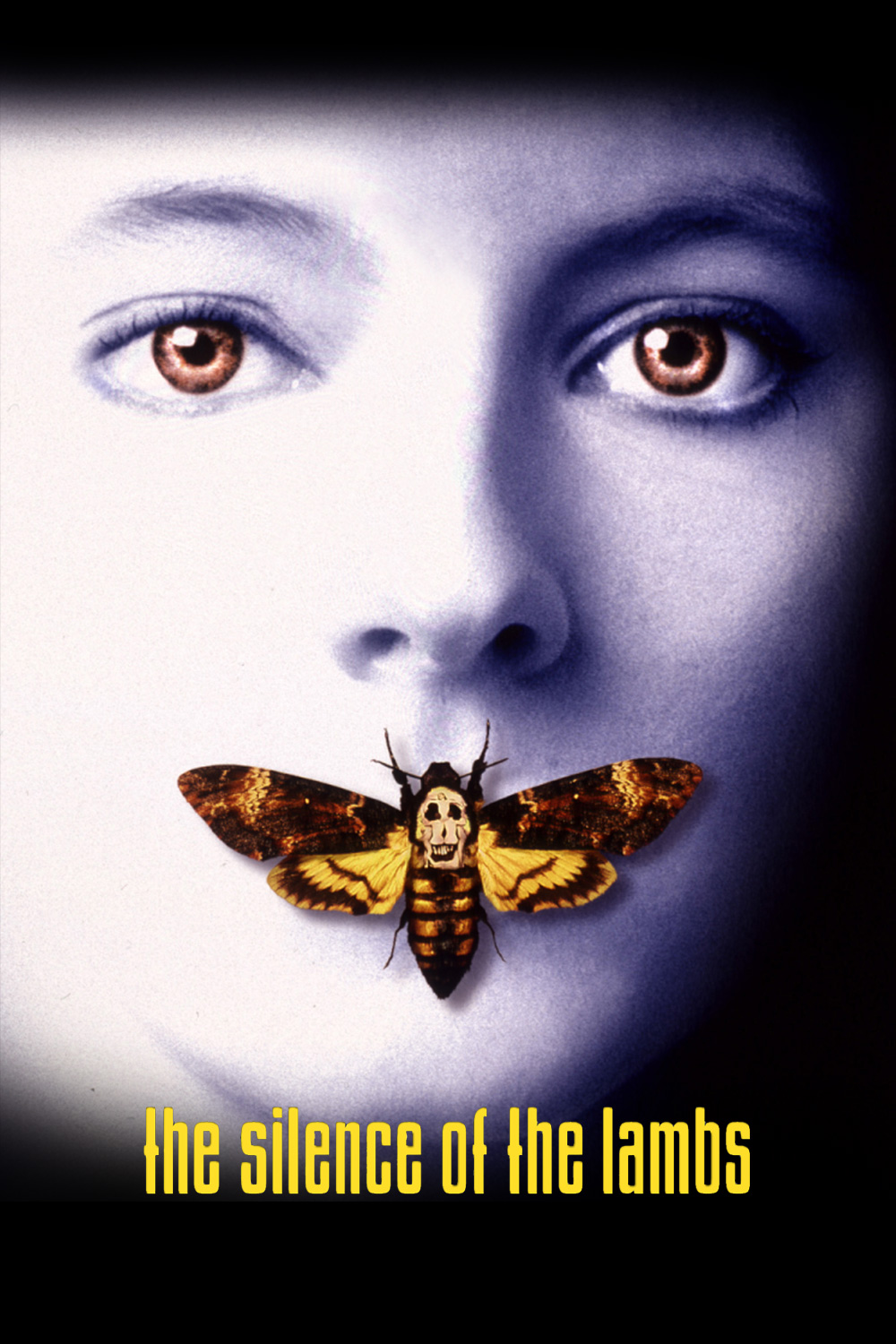
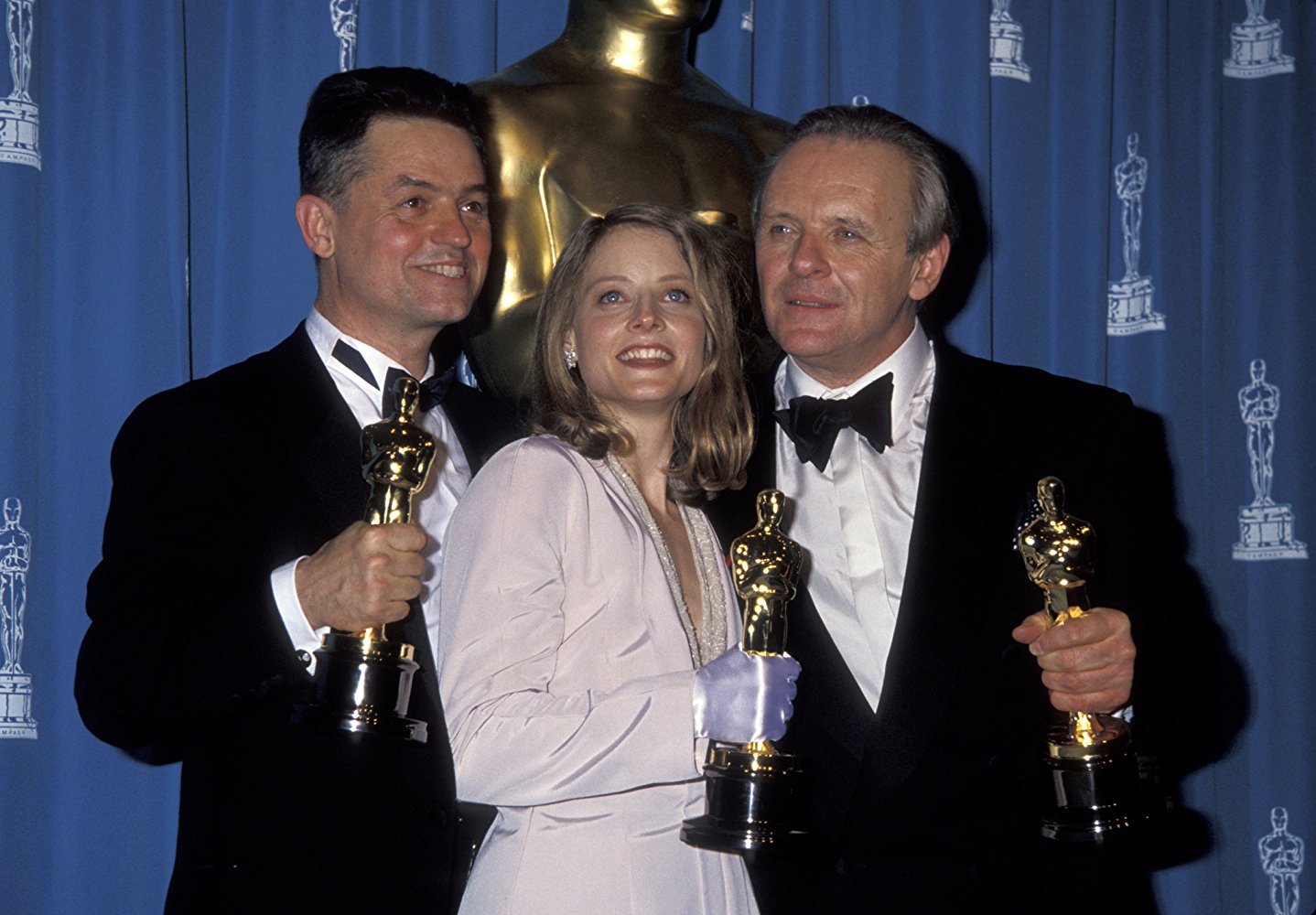
“Good evening, Clarice.” How many of you have never thought of fava beans and chianti in the same way since then? Quite literally inventing a new genre that combines elements of horror, suspense, and crime to create the crime thriller, The Silence of the Lambs remains the motion picture that typifies the genre. More than 27 years later, Silence still holds up and continues to terrify audiences today. Whereas this iconic film may not be considered horror, by today’s understanding and expectation by many, it was certainly widely considered horror when it was released in 1991. A sleepy success, I might add. Essentially, Silence is an indie film that flew in under the radar but soon grew to be immensely popular and critically acclaimed. Silence is also one of only three films to win “the big five” Academy Awards (picture, director, lead actor, lead actress, and screenplay). This, in and of itself, serves as demonstrable evidence that The Silence of the Lambs is one of the most influential and profound films of all time–across all genres. Furthermore, there is not one single moment that I would change because it is cinematically perfect just the way it is. It is arguably a dark crime-thriller, but it is also very much a horror film. When asked which category I put it in, I respond with horror. Why? Because there is certainly intent to horrify audiences during particular scenes in the film; whereas, a crime-thriller tends to not overly concern itself with the intent to horrify. The intent to horrify is what defines it as a horror film first and crime-thriller as a very close second.

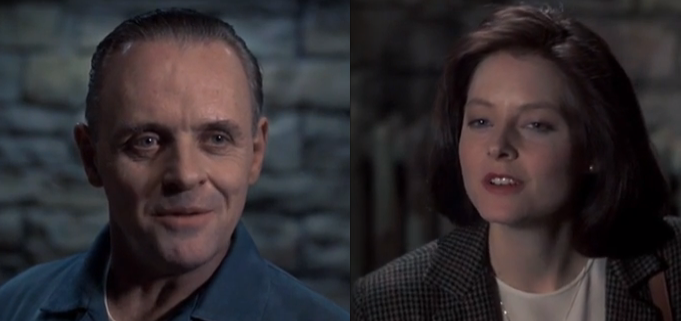
A senator’s daughter is kidnapped, and it is believed to be the work of a serial killer. After serial killer “Buffalo Bill” (Levine) leaves a trail of mutilated bodies of female victims behind, FBI forensic psychology director Jack Crawford recruits Clarice Starling (Foster), a sharp cadette, to interview famed psychiatrist, cannibal, and psychopath Dr. Hannibal Lecter (Hopkins). Crawford hopes that Lecter can provide insight into the case in order to apprehend Buffalo Bill. While tracking down Buffalo Bill with assistance from Lecter, Starling must confront her own internal fears in order to overcome all obstacles to catching Buffalo Bill before he kills again.

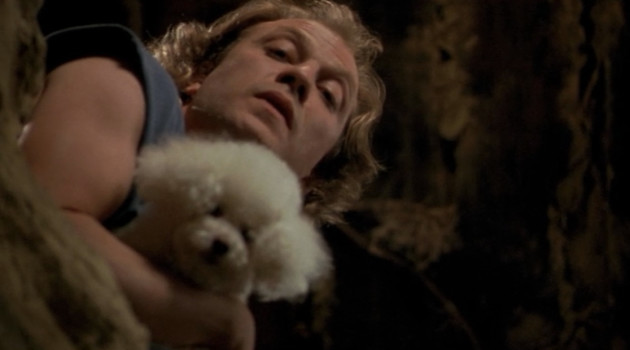
Most notable in Silence of the Lambs are the performances of Anthony Hopkins, Jodie Foster, and don’t forget Ted Levine. While Hopkins and Foster get most of the attention, Levine delivers a command performance as Buffalo Bill. Delivering a spine-chilling and exhilarating performance as Dr. Hannibal Lecter is Sir Anthony Hopkins. The performance was so intensely perfect that he won his Oscar for male actor in a leading role with fewer than 15mins on screen. Hopkins gave us an uncompromising performance that caused audiences to be frightened and yet love him at the same time. Furthermore, this performance ushered him into the company of the likes of Jason, Freddy, and other icons of horror. Foster’s Academy Award winning role as Clarice Starling was gripping, engaging and pivotal. Her phenomenal performance gave a much-needed voice to feminism–a voice that was sorely missing at the time–and is still needed today. She was strong, feminine, smart, vulnerable, and clever all at the same time. Not nearly receiving the accolades he should, Ted Levine’s Buffalo Bill is masterfully delivered. His terrifying portrayal of this character was dark, twisted, and mesmerizing. In fact, his oft quoted line “it rubs the lotion on its skin or else it gets the hose again” appears in memes, parodies, and other media. His character was even used in an episode of Family Guy. Levin’s Buffalo Bill, much like Lecter and Starling, was instantly iconic. What is the common element found in each of these performances? Uncompromising devotion to the character that brings about a believability that few actors have been able to encroach upon.

What a screenplay! One of the foundational parts of visual storytelling that I feel is largely missing from many modern horror films is a solid screenplay. Adapted from the novel written by Thomas Harris, Ted Tally’s Oscar-winning screenplay for Silence is incredible. Although there are some differences between the screenplay and the novel, the screenplay is widely seen as an excellent adaptation and even praised for its more unnerving ending compared to the novel. While some negatively criticize the screenplay for portraying transgendered (or more broadly queer) individuals as being predisposed to abnormal or violent behaviors, Tally’s screenplay comes to the defense by including dialogue that transgendered individuals are prone to pacificity plus no scientific correlation between, what we would now call the LGBTQ community, and violence. Starling is never objectified by Lecter; and any other character objectifying or patronizing her, she quickly diverts attention back to the case. She isn’t modeled as a sex symbol; funnily enough, Lecter refers to her clothes as frumpy, cheap, and her entire persona is barely beyond her background as “poor white trash” from West Virginia. The screenplay contains a healthy, progressive message for feminism–more specifically–women working in a man’s world. Foster’s Starling gave a voice to those women who are working diligently to prove that they are just as capable (and in some cases maybe even moreso) as any man in a given profession. Some film scholars and critics have referred to Silence of the Lambs as one of the most feminist films of all time. Prior to Silence, there were few horror, crime, or film noir motion pictures with strong female protagonists (Ridley Scott’s Alien being another example).

Executing his impeccable vision for this iconic film, the late director Jonathan Demme guided this film from screenplay to screen, blazing new trails for a genre not typically known for high caliber, excellent motion pictures. Moreover, the film was so successful that junior executives at studios would pitch other screenplays as “the next Silence of the Lambs.” Most remarkably about the direction of the film is the success at overcoming prejudices held against visually and psychologically disturbing stories that involve graphic language, cannibalism, nightmarish serial killers, nudity, self-mutilation, and (although mostly off-screen) violence. There are Hitchcockian tones in the suspense and violence that can be seen in the off-screen violence, framing, lighting, and angles. That which is in the mind is more frightening than what the naked eye can see. Demme’s Silence is arguably seen as a model for other horror and thriller filmmakers, and is often imitated but never has been replicated. The power of subtlety. Demme communicated so much emotion through subtle movements and strategic dialogue rich with subtext. One element that is common amongst Best Picture winners is the ability to take what was then “present day” and make it timeless. The plot, characters, and setting feel ageless. Genuine fear can be felt throughout the film because Demme channeled that which terrifies him in real life. It’s authenticity is uncanny. Much like Psycho was groundbreaking for modern horror films featuring psychopaths and twist endings, Silence of the Lambs was groundbreaking in that it relied upon the everyday world rather than supernatural forces to shock with unbelievable credibility and realism.

While the director, screenwriter, and actors are the principle forces behind the success and timelessness of Silence, the film would not have won best picture without amazing editing, music, cinematography, and other technical elements. The best editing and cinematography occurs when you don’t see the seams or think about camera placement or angle. Superior editing and cinematography enable the characters and plot to maintain center stage. The world Demme desires to portray in the motion picture was to be as real as possible. Hence why you won’t find lengthy shadows, set decoration that stands out from the world that it inhabits, and music that enhances but never overpowers a scene. Demme and his director of photography Tak Fujimoto worked together to strategically include a motif of birds that are literal and metaphoric. This is evident in not only Clarice “Starling” but in the crows at the beginning, stuffed owl in the Your Self Storage unit, and even in the line at the crucial turning point, “it’ll be terns for us too.” Birds are an important element in films, not limited to horror films. Specifically terns was used in place of turns because terms are a protected bird species, much like the mind of Dr. Lecter. Birds are a common motif or symbol in films, and can be used to represent different concepts or ideals.

Thematically, Silence is incredibly rich. These themes are brought out through the strange relationship shared by Lecter and Starling. There is a high level of respect mutually expressed by both characters, albeit unconventional. This strained relationship is observed in the similarities between Lecter and Starling. Examples of the parallels between Starling and Lecter include the feeling, they both experience, of being ostracized by the world in which they respectively live and work. Lecter from the human race, for his psychopathy and cannibalism; and Starling by the law enforcement profession because she is a women in a time that women were not commonly pursuing careers in law enforcement. They both occupy a prison. Whereas Lecter’s prison is a literal one, Clarice’s is a metaphoric one because of the men that literally and figuratively tower over her, establishing her boundaries. Clarice may not have a doctorate but she can easily match wits with Lecter in the shared power they both have to manipulate and persuade with cunning. Less obvious is the shared past they both have as victims of abnormal upbringings. Lecter was a victim of child abuse, and this ca be inferred in his dialogue with Clarice (note: Demme should have underscored this a little more) with Clarice being left an unloved orphan to be raised by distant relatives. Shared childhood trauma. These similarities are what forge the bond between these two strong characters. Demme and Fujimoto reinforced these themes and relationships with visual storytelling elements in order to personify and manifest in dynamic ways that hook and mind and eye.

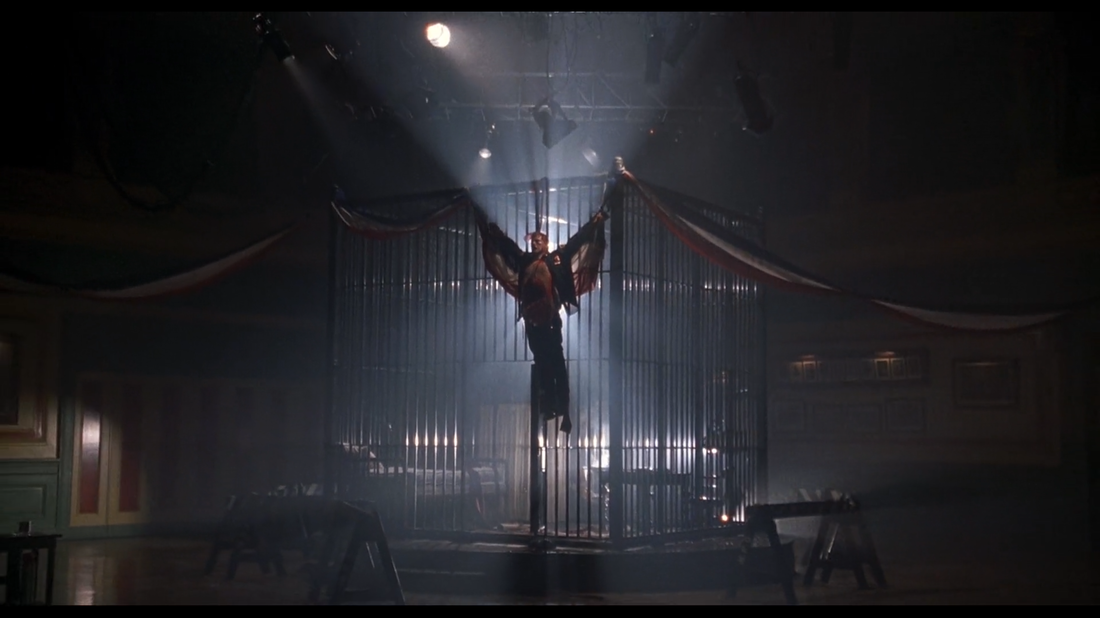
Jonathan Demme’s The Silence of the Lambs remains one of the most iconic films in cinema history and will continue to have an evergreen shelf-life. It’s a multidimensional motion picture that frightens and intrigues. It is an arthouse film that achieved commercial success. Perhaps Red Dragon and Hannibal do not live up to the quality of experience of Silence but they by no means infringe on the ability for Silence to terrify us today. From the buildup to the introduction of Dr. Lecter to the trademark moth cocoon in the throat of the original victim. Furthermore, Demme continues to drive up the suspense and tension that create frightening thoughts and imagery through the use of interiors and exteriors of houses and buildings that represent the minds of characters (i.e. Buffalo Bill’s house and lair). We continue to seek this film out for its ability to manipulate our minds and eyes through strategic and artistic use of story and image. And you know what? We love these characters. We like and can identify with Clarice, have an unconventional respect and even like Dr. Lecter, and are completely intrigued and disgusted by Buffalo Bill.


Ryan teaches screenwriting at the University of Tampa. If you like this article, check out the others and FOLLOW this blog! Interested in Ryan making a guest appearance on your podcast or contributing to your website? Send him a DM on Twitter!

Follow him!

Twitter: RLTerry1

Instagram: RL_Terry

Thrillz (theme parks): Thrillz.co

“The Meg” movie review

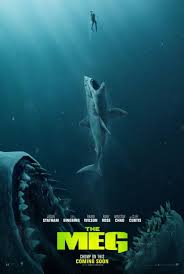
They finally got a bigger boat. But, it’s still no match for the Megalodon! Maybe The Meg lacks the cinematic genius of Steven Spielberg’s Jaws and maybe it isn’t as thrilling as The Shallows and perhaps it doesn’t have the parody and satire of Sharknado, but good thing for you, it doesn’t pretend to be any of those. It proudly hits theatres everywhere this weekend as a thrilling larger than life creature feature horror film about a gigantic shark that wreaks havoc in the waters of southeast Asia until Jason Statham dives in to save the day. Another title for this shark movie of epic proportions could be Dive Hard (haha). With clear homages to JawsDeep Blue Sea, and Jurassic Park, this film plays out as an unconventional love letter of sorts to the aforementioned movies, and the man vs nature horror genre as a whole. Even though recent news suggests that Statham is unhappy with the theatrical we are getting (because it lacks much of the violence that was shot in order to keep a PG-13 rating), you are in for a fun time witnessing the aquatic carnage and high seas action. Movies like this one are designed for one purpose, to entertain you at the megaplex for a couple of hours during oppressively hot summer days of August. At the end of the day, The Meg is an exponentially more expensive SyFy Channel original movie with a fantastic lead actor who plays Jason Statham better than anyone else. But you know what, it’s a lot of fun to watch! Dive right on into the action this weekend.

After a deep sea submarine exploring the Mariana Trench is attacked and stranded by an unknown force, the chief researcher at a state-of-the-art underwater facility, bankrolled by an eccentric billionaire, contacts deep sea rescue diver Jonas Taylor (Statham). With time running out for the submarine crew, Jonas must overcome psychological obstacles from his past in order to lead the mission to rescue the team. Unbeknownst to the research team, they’ve encountered an unimaginable threat that makes its way from the deepest depths of the ocean to crowded beaches. The team must work together to stop the monstrous killing machine knows as the megalodon.

Filled with cliches and homages, director Jon Turteltaub clearly did not set out to direct a Jaws for 2018 nor did he set out to make a comedy like Sharknado, but he did create a fantastically fun shark horror movie that takes itself just seriously enough but still remains playful–as much as you can with a man-eating giant pre-historic shark. The scene with the helicopter flying through the islands to the research facility is taken right out of Jurassic Park. And it arrives at an underwater research facility that is taken directly from Deep Blue Sea, and then several shots and musical scores pay homage to Jaws throughout the remainder of the film. For all the tropes and cliches in the film, they are each executed strategically with wit and style. Statham is great as the hero, and I can think of few other actors who could have done such an excellent job with this film. Bruce Willis is honestly the only other name that comes to mind to have done the character justice. Comparing this creature feature horror film to the other big one this summer Jurassic World Fallen Kingdom, I can honestly that I enjoyed The Meg more. And that is hard to admit since I am a card-carrying member of the Jurassic Park fan club.

If you enjoy fun horror films, do yourself a favor and swim to your local cinema to come face-to-face with Megalodon. You may notice that this review is a lot shorter than my typical ones, and that is because some movies are just meant to be enjoyed for what they are instead of analyzing the storytelling and experience.

Checkout my retrospective on JAWS!

If you liked this review, be sure to follow my blog by entering your email address in the follow area!